

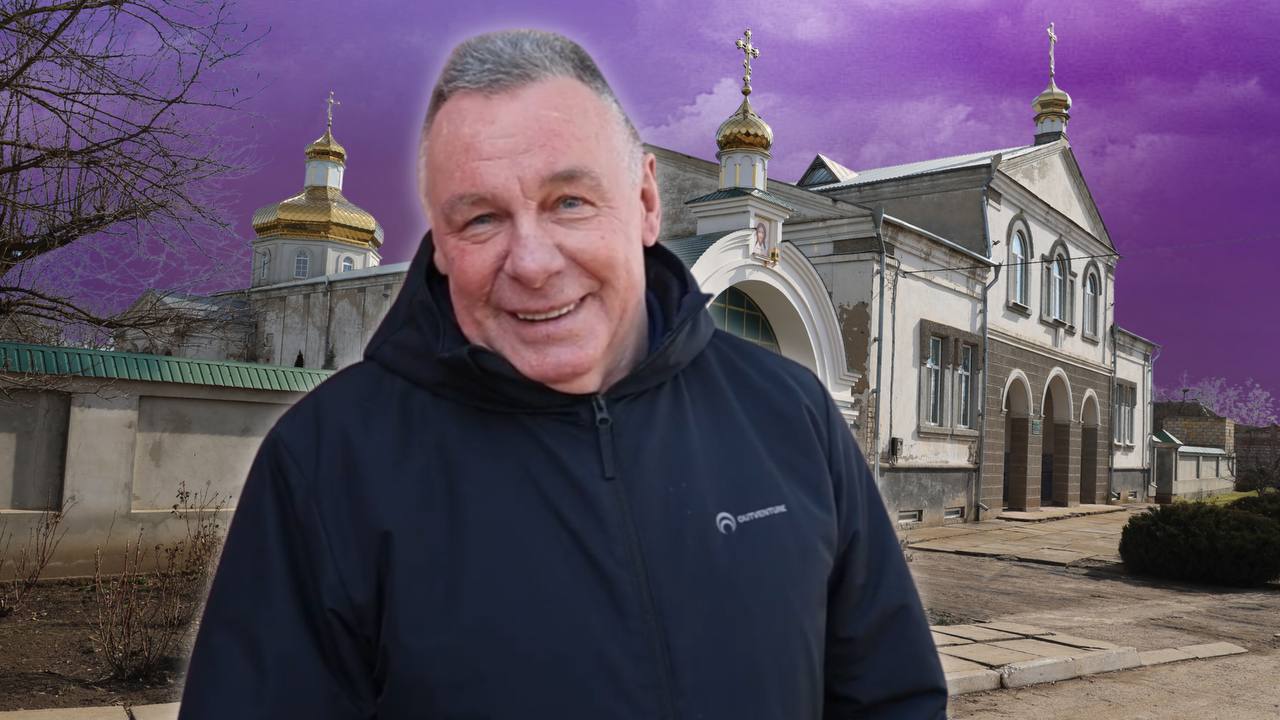
Two years ago, when we visited the village of Muzykivka, which is located near Kherson, it seemed as if nothing was happening here. Yes, the village existed, slowly healing the “scars” of war, but mostly lived on dreams. Now everything has changed. Gradually life has returned here, and now Muzykivka — a village that, one could say, is being rebuilt. They are creating youth and veterans’ spaces here, expanding the CNAP, negotiating for the first ATM, which had not been possible to install even before the full-scale invasion.
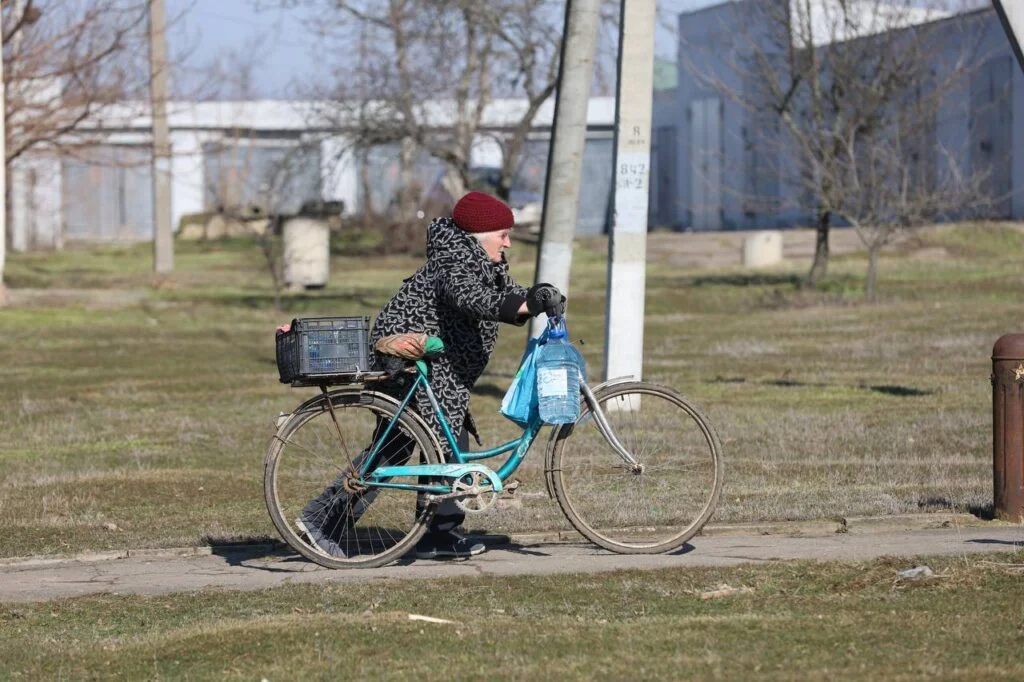
Of course, the thought that the settlement was emptying was not absent, because even during the day, when the MOST film crew arrived there, there were few people on the streets. However, locals say that new residents are appearing, including internally displaced persons.
According to Larysa Kosarieva, acting director of the communal institution “Center for the Provision of Social Services”, the population of Muzykivka now totals 3 thousand people. The village also has 194 registered veterans–combatants and 180 active servicemen. The CNAP, one could say, was largely opened specifically in the direction concerning veteran support. In particular, the Single Veteran Window is already in operation.

The Center also provides services to the elderly and people with disabilities; social work specialists work here. Plans include launching a passport issuing machine that will issue Ukrainian citizen passports and passports for traveling abroad.
The head of the Muzykivka village military administration Ihor Pidhorodetskyi gives a small tour of the village. First of all, he shows the Alley of Hope, which was recently opened.

“These are servicemen missing in action,” he says. “This Alley gives us hope that they are alive and will return home.”

There is also an Alley of the Fallen in Muzykivka. The local authorities try to take care of their families, regularly meeting and collecting requests.
“And this,” he shows the park area, “we carry out activities to green the community. We want to make a recreational park here for people and children, so there will be a place to gather.”

Thanks to timely preparation, the Muzykivka community got through the winter well, Pidhorodetskyi says. Generators were purchased for critical infrastructure, so both the authorities and educational institutions were able to operate without interruptions.
Ihor Pidhorodetskyi headed the Muzykivka village military administration in 2022. He recalls — at that time there was no electricity in the village, there were disruptions to heating, difficulties accessing food. Later it was possible to establish a flow of humanitarian aid and contact with regional authorities, and the situation gradually improved.

According to the head of the VMA, it is more difficult for the local authorities today, because earlier problematic issues could be “pushed” onto the deputies — today one person, the leader, bears the responsibility.
Construction is ongoing in Muzykivka. Design and estimate documentation has already been developed for the construction of a Safety Center, which will include a police officer unit, ambulance services, and fire protection. In addition, a Community Center has already been equipped. Staff say that it operates under the “Patronage” and “Happy Longevity” programs and includes about 20 participants.
Lyudmyla Kolisnichenko, inspector of the urban planning and architecture sector of the Muzykivka village council, shows us a room under renovation in which several grandmothers are playing dominoes.

There will be a youth space here. The woman says that the tender procedure has already been completed and the furniture has been ordered. A veterans’ space will operate nearby in the same building.

“This was supposed to be the second phase of the kindergarten, but due to the fact that such a number of children is absent, it is unrealistic to finish it. Therefore they decided to make a veterans’ space. It is being organized as a joint initiative of three communities: Oleshky City Council allocated one million hryvnias, Vynohradivska – 500 thousand, Muzykivska — 2 million invested”, – she says.

Ihor Halyaninov, who moved to Muzykivka from Kherson, says: before the war he worked in the marketing department of the Kherson Ship Repair Plant. After the start of the full-scale invasion, he and his wife moved closer to relatives in Muzykivka. Here the man began working in the village military administration — he handles military registration. He also headed the initiative to create the Council for IDPs, which helps displaced people in arranging all the necessary documents.
There are still plenty of problems in Muzykivka. In particular, according to Ihor Pidhorodetskyi, the issue of payments is acute for residents, since there is still not a single ATM in the settlement. Before the war, banks refused installation due to an insufficient population; now — because of the security situation.
“We are negotiating in this direction. The process is not fast, everything must be by the law — examinations, a special location, etc. I think there will be success on this issue,” he says.
Muzykivka also lacks doctors, notes head nurse Olena Tsokol. Currently only a 77-year-old feldsher works at the paramedic point, and the main bulk of work is carried out with the help of telemedicine and volunteer organizations — “Doctors Without Borders”, INTERSOS come to Muzykivka. The Kherson Regional Children’s Hospital helps with medical care for children.
Despite the shortage of specialists, locals note that they are satisfied with medical services.
“We are fine. They call us when children need vaccinations or need to be examined. We arrive, everyone works, everyone is in their places,” says Muzykivka resident Anna.
Muzykivka is gradually returning to life. Of course, the traditional challenges for frontline communities remain, yet the perseverance, courage and belief of residents in their cause convince that even during war development and reconstruction are possible if people truly desire it.
