


In a reality where teenage life increasingly takes place between air raid sirens, remote lessons and forced isolation, conversations about mental health stop being abstract. This topic becomes a daily necessity, as basic as safety or access to education. It is in this context that the youth mental health ambassadors program “Impulse”, implemented by the public organization “Teach For Ukraine” as part of the multi-year resilience program 2024-2026 (MYRP), is funded by Education Cannot Wait (ECW) and implemented with the support of the Ministry of Education and Science of Ukraine.
For the Kherson team this participation is not just an educational project, but an attempt to maintain connection, create a space of support and learn to be a support for one another in conditions when the outside world often does not provide that support.
A space where teenagers talk to teenagers
“Impulse” is a program built on the principle of “peer to peer”. Its idea is that teenagers themselves can best support their peers, because they speak the same language, experience similar emotions and go through similar experiences.
As participants explain, these are not ordinary lectures or formal classes, but a living interaction where there is room to talk about burnout, to discuss anxiety, and to look for simple but effective ways to recover.
The program started in September 2025 and immediately covered several regions, primarily frontline areas. The Kherson team became part of this initiative from the first months of its implementation.
Four days offline that gave a sense of togetherness
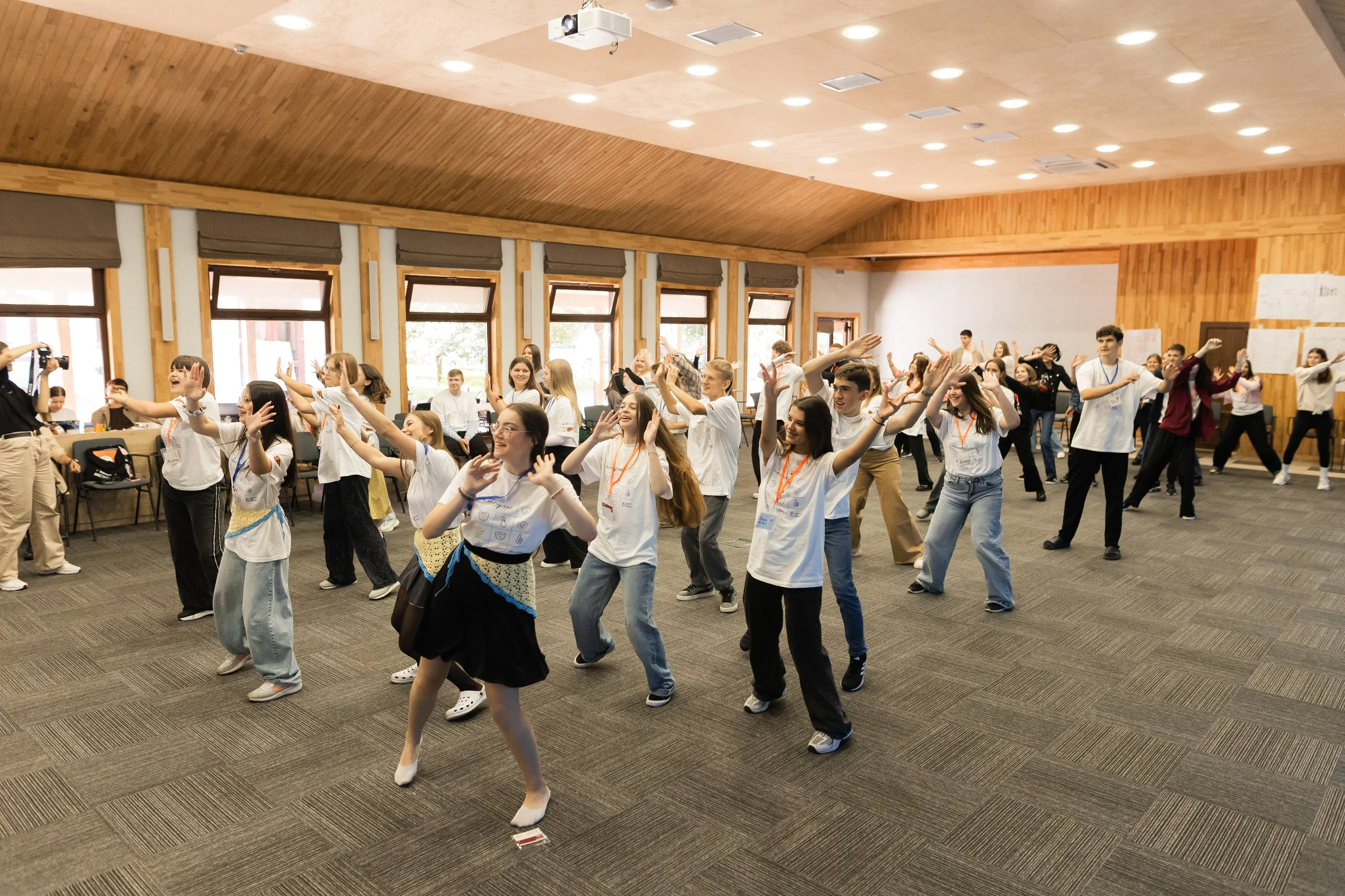
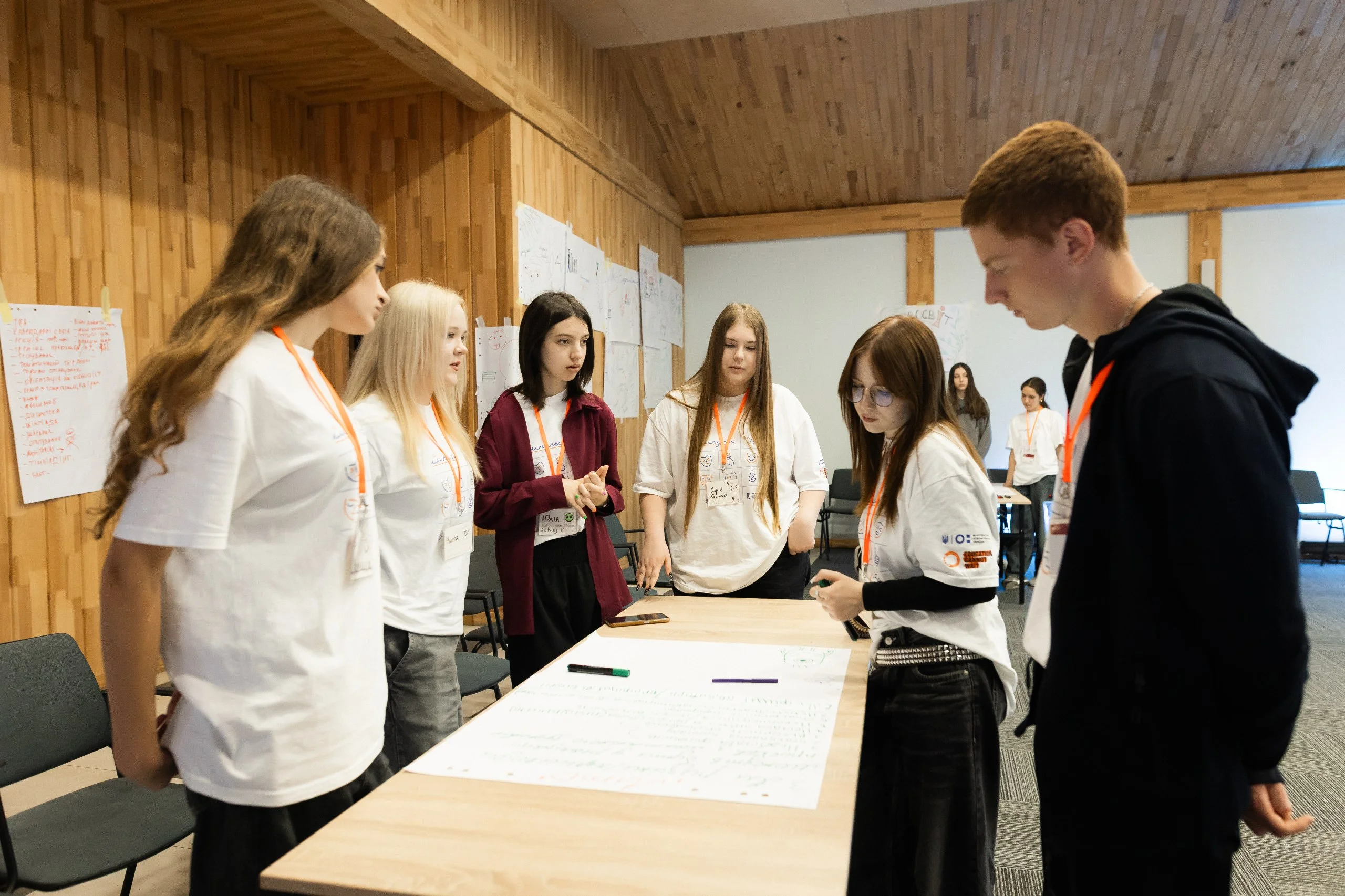
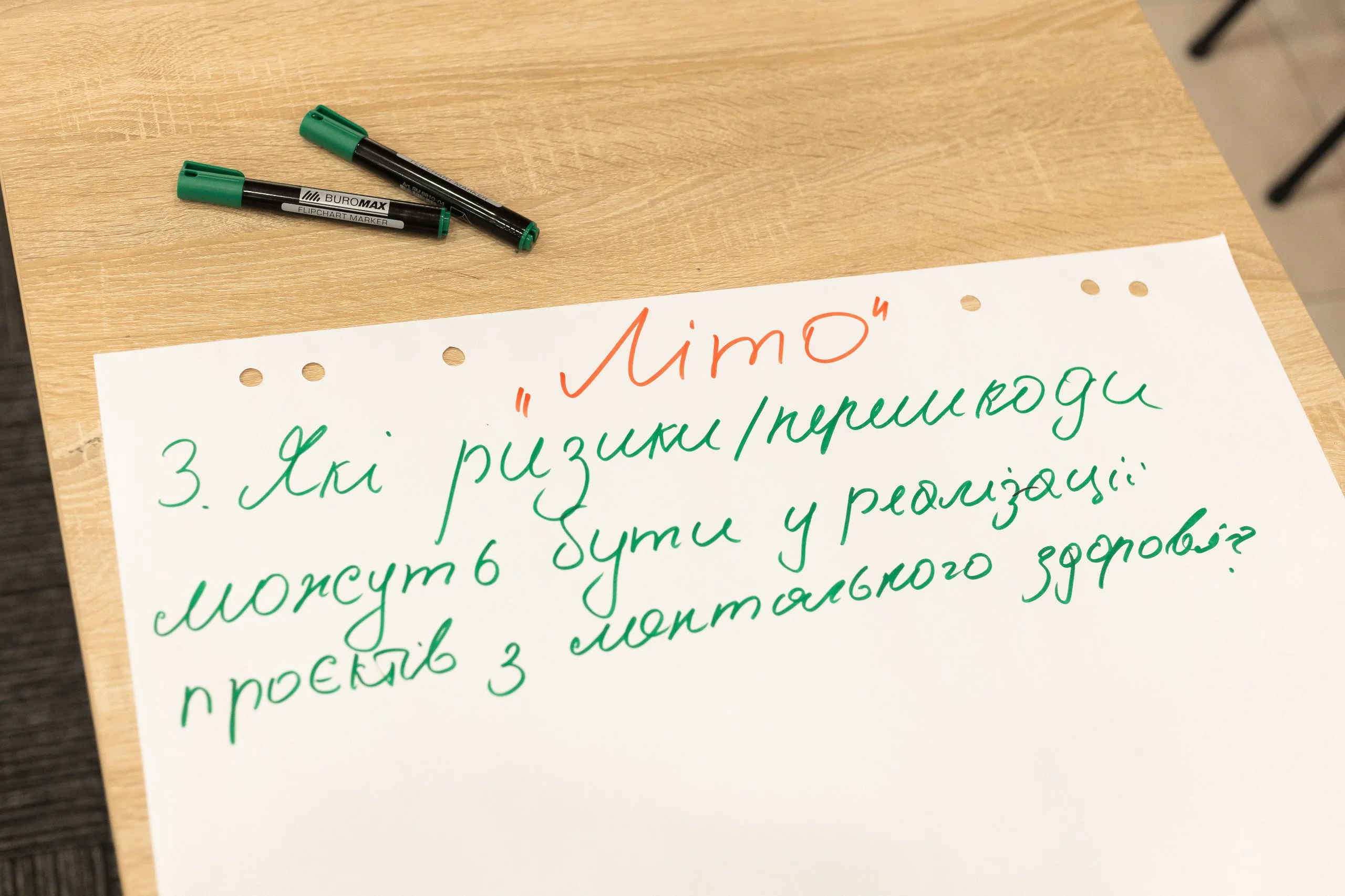
Although the main work takes place online, at the start participants had the opportunity to meet offline — during a four-day training in September.

The coordinator of the Kherson team, Hanna, recalls that this experience was especially valuable because of the opportunity for live contact.
“We are used to learning happening remotely, to everyone being scattered across different cities and even regions. And here there was an opportunity to gather together, get to know each other, see each other in person. The kids talked a lot, discussed ideas, completed joint tasks, learned to compromise and to listen. And it was a very important experience that is hard to replace with an online format,” she says.
According to her, after returning from the camp the feeling changed. There was an understanding that they could not only participate in the program, but actually influence the environment around them.
“I think we returned with the feeling that we have tools and can change something. That we are not just participants, but people who can initiate, propose and do,” adds the coordinator.
Working in conditions where it’s hard even to concentrate
The Kherson team works in different conditions than most program participants — fully online.
“The fact that the city is under constant shelling very much affects the children. It’s about the sense of safety, concentration, and overall condition. In such conditions learning is remote, and the hardest thing is not to lose connection with each other,” says Hanna.
Therefore one of the team’s main tasks became consciously maintaining this connection. Not a formal one, but a living one — with the understanding that behind every message there is a person with their own experiences.
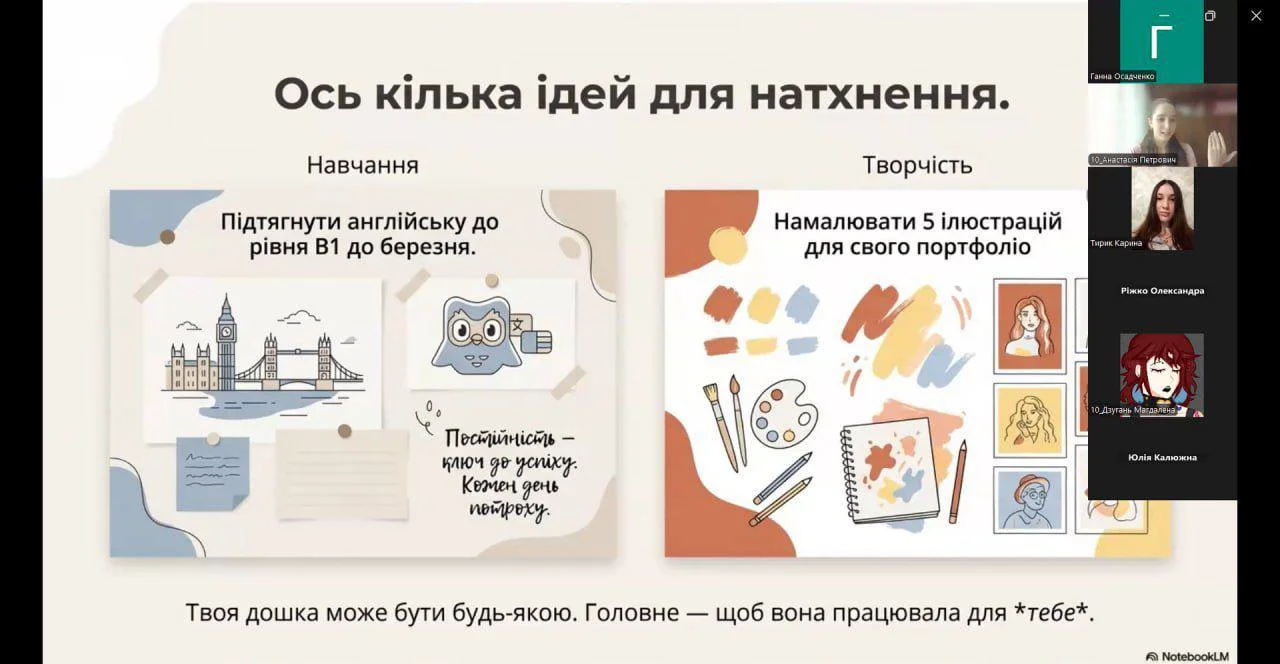
“In such conditions it is very important to find a point of support. Not only for yourself, but also for others. Because sometimes even a simple conversation can become support,” she adds.
After the training the team did not immediately start holding meetings. First they decided to understand what exactly worries their peers.
The research by the NGO “Teach For Ukraine” on the impact of adolescents’ wellbeing on their learning showed that 41% of adolescents have difficulties with concentration, 40% — with memory, and 34% — with thinking. At the same time 44% of respondents have a high level of intrinsic motivation to learn.
The ambassadors independently developed a survey for students in grades 5–11. It asked about things that often remain out of attention: what exhausts, what worries, what helps to recover, what they want to talk about.
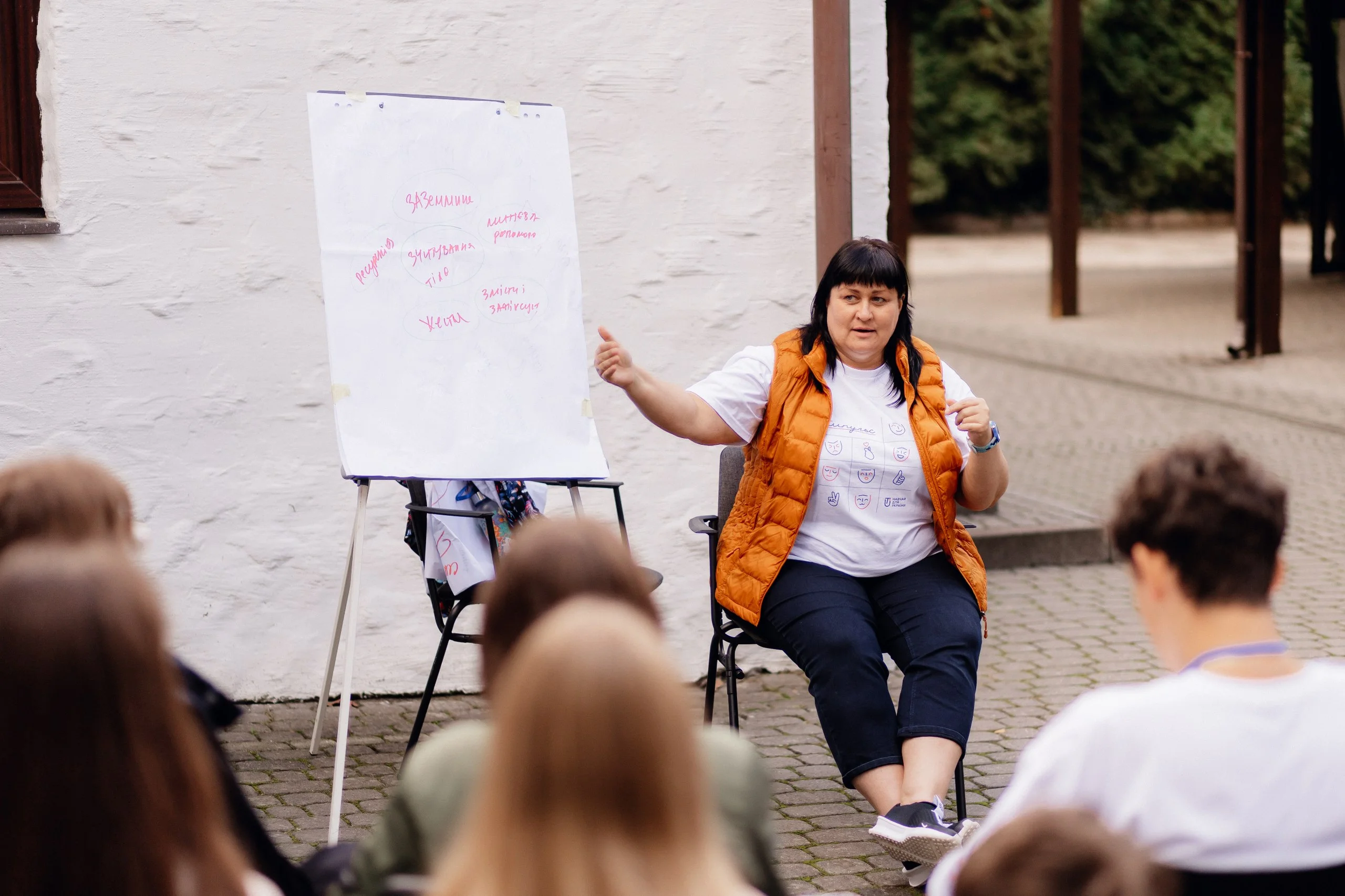
“We received the answers, processed them, made diagrams, discussed together. And from this we began to form ideas. It was clear that some people needed to talk about burnout, some about emotions, some about motivation. And we started from that,” the coordinator says.
This approach made the activities not abstract, but as close as possible to real needs.
Challenges, discussions and even movie screenings
The team chose various formats — from discussion clubs to interactive meetings and challenges in Telegram.
One of the most notable was the challenge “My source of energy”. Participants shared what helps them recover: hobbies, habits, simple joys.
“It was a Telegram community where we created separate threads for each challenge. For example, in the ‘source of energy’ we posted photos and told what supports us for two weeks. And it was very lively — everyone joined, commented, and supported each other,” Anastasia says.

Thematic meetings also became popular. In particular, a discussion club about motivation, workshops on emotions and burnout.
Participants separately mention the movie screening — a format that had a strong response.
“We chose the film by voting, then watched it together online and discussed it. It was not just about watching, but about the opportunity to talk about meanings, about what each person felt,” says Anastasia.
“We understand each other better”
Dominik, a 10th grade student, says he agreed to participate in the program from the NGO “Teach For Ukraine” without hesitation.
“They offered it to me, told me briefly about the essence and I immediately understood that this is something worth trying. I didn’t even doubt it, I just knew that I needed to move forward,” he says.
For him this participation is first and foremost about an experience that goes beyond the program.

“I gained experience that helps me not only here. I feel more confident, I understand how to act, how to support a person if they are struggling. And that is very important,” adds Dominik.
Anastasia admits that at first she hesitated because of school and workload.
“It was the start of tenth grade, new topics, and I was afraid of missing something. But in the end I decided that this experience was worth it. And I did not regret it,” she says.
The main reason why teenagers join the program is simple: they want to help.
“We understand each other better. And sometimes simple words of support from a peer can mean more than anything else,” the participants explain.

Small changes that become noticeable
According to the ambassadors, after the activities they began to notice changes among their peers.
“Students became more open, friendlier, and more likely to reach out. And not only to teachers, but also to each other. These are small changes, but they are noticeable,” says Dominik.
At the same time the team emphasizes: it is important to respect trust. If someone reaches out personally, such conversations remain between the participants.

Working with topics of emotions and stress inevitably affects the ambassadors themselves, but the team understands and accepts this.
“For us it is normal to say: ‘I am not in resource today, I am having a hard time.’ And that is not a problem. We can postpone some tasks, support each other, and then return to work,” explains the coordinator.
This approach becomes part of the culture of care that the team is trying to spread.
How to understand that a child is struggling
Among the signals to pay attention to, participants name loss of interest in usual activities, constant fatigue and indifference.
“If a child says that they don’t want anything, that nothing makes them happy, and this repeats and lasts for some time — that is already a signal. Here it is important to look not at one case, but at the pattern,” Hanna explains.
The main advice for parents voiced by program participants is: don’t overcomplicate.
“Sometimes it is enough to simply ask: ‘How are you?’ Not to force them to speak, not to pressure, not to devalue. And to make clear that you are nearby,” says the coordinator.
Even if a teenager is not ready to talk immediately, it is important that they know that the opportunity exists.
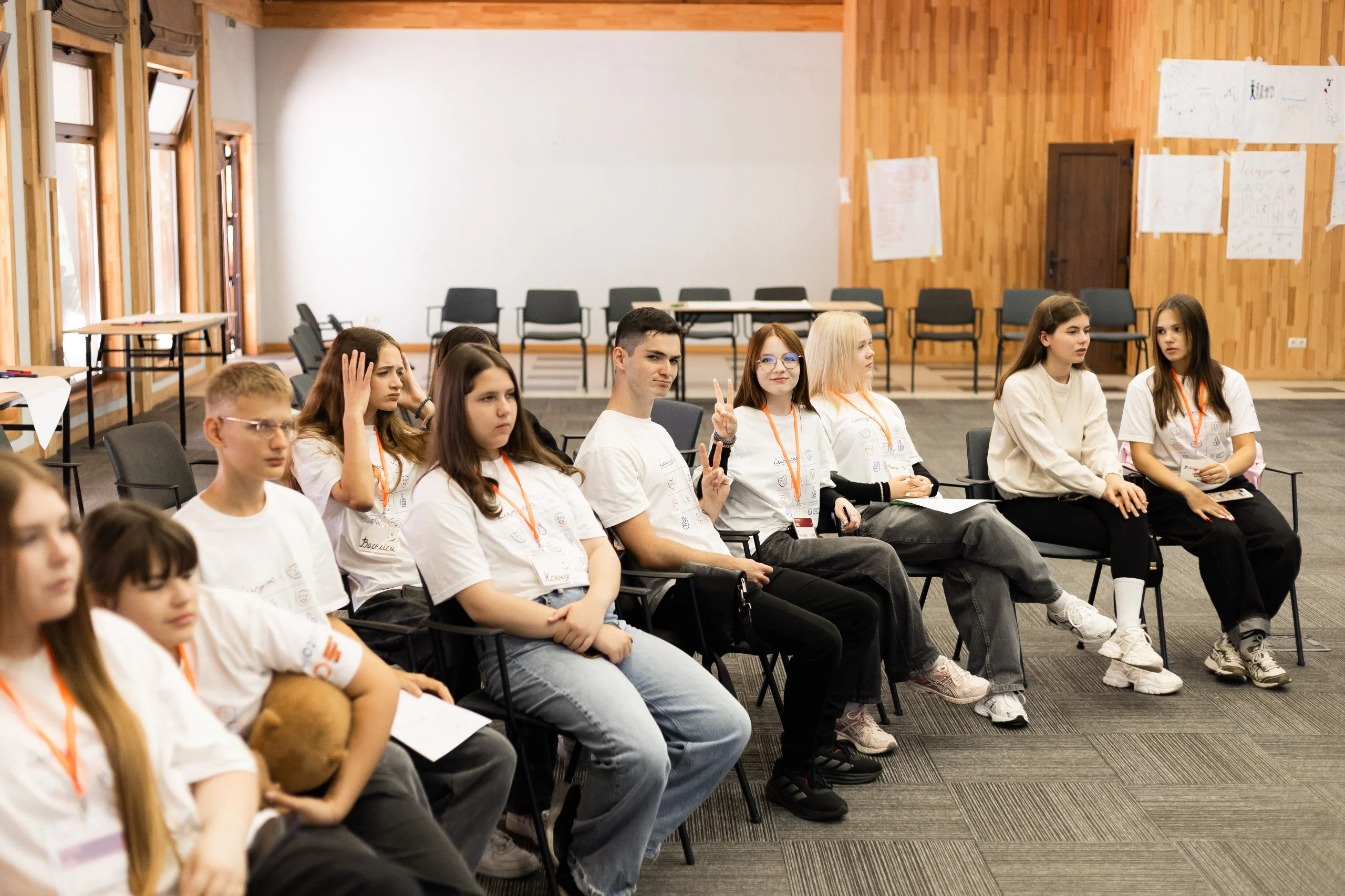
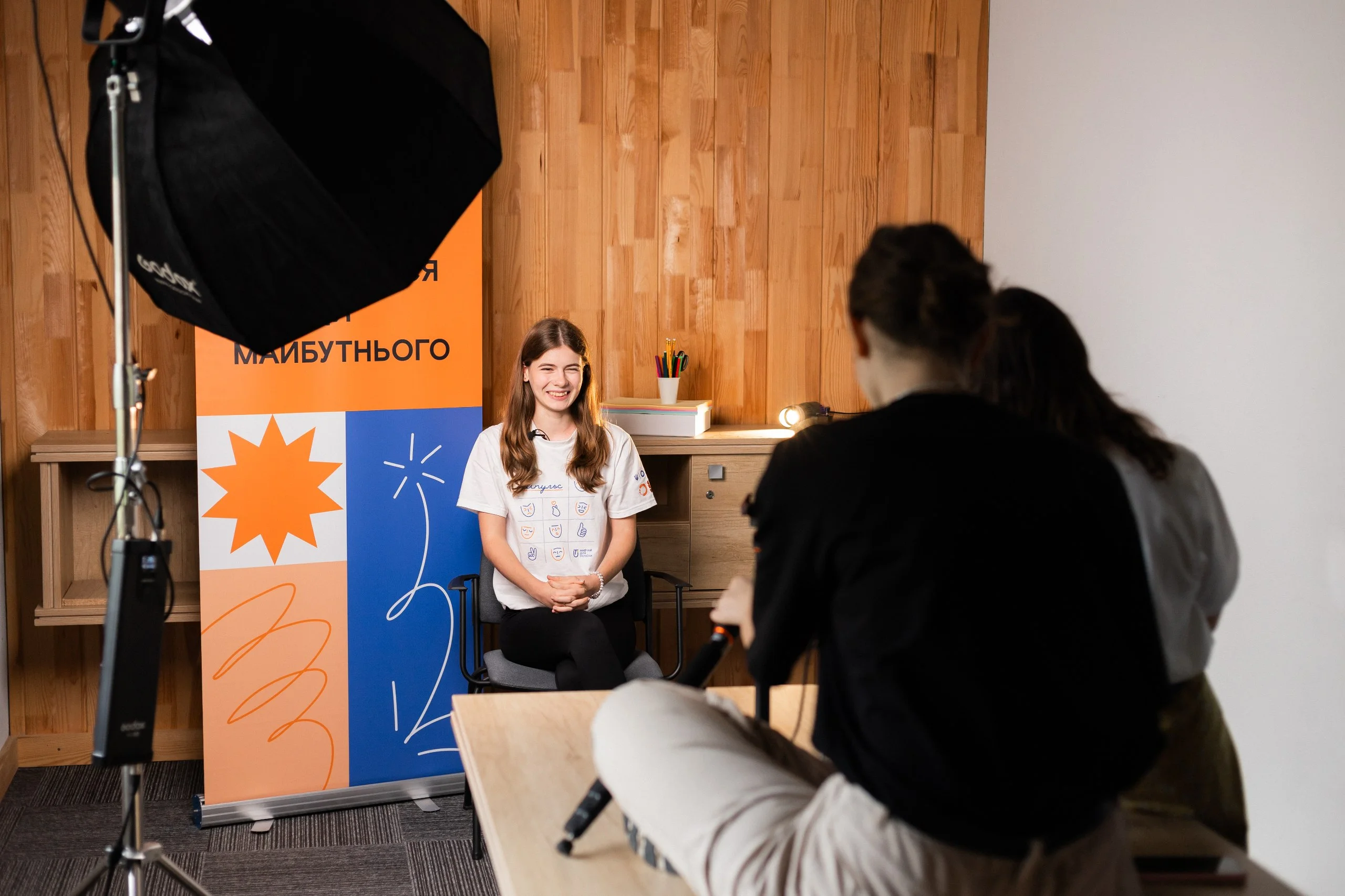
The “Impulse” program shows that teenagers are capable of taking responsibility and creating change if they are given space.
“They don’t just listen, they propose ideas, support others, take responsibility. And they do it very sincerely,” Hanna concludes.
In this sense the school appears not only as a place of learning, but as an environment where a child can be heard and feel important.
“A ‘Pill into the Future’”
Program participants talk about its effect as long-term.
“It is like an investment in the future. If children now learn to understand themselves, talk about emotions, and support others, then later they will build the same environment for their own children,” says the coordinator.
In a world where uncertainty and stress have become the norm, such skills are no longer optional. They become basic.
And perhaps it is from such small initiatives — conversations, meetings, simple “how are you?” — that changes begin, which later shape an entire generation.
The youth mental health ambassadors program “Impulse”, implemented by the public organization “Teach For Ukraine” as part of the multi-year resilience program 2024-2026 (MYRP), is funded by Education Cannot Wait (ECW) and implemented with the support of the Ministry of Education and Science of Ukraine.