

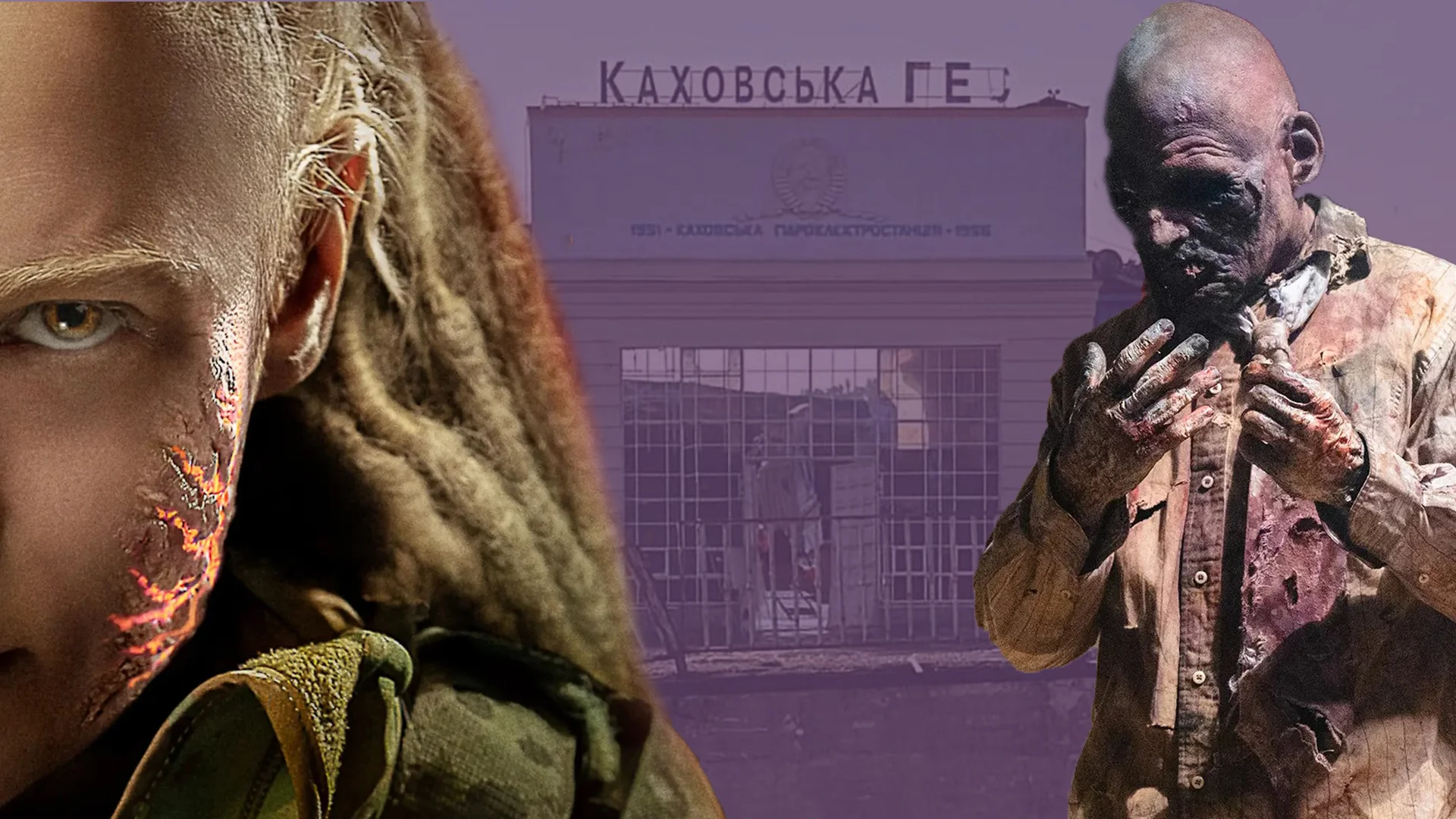
The further I watched this film, the more I feared that the final scene would be a passionate kiss against the backdrop of a huge explosion. Because the horror film by the Film.UA studio “Kakhovka Object”, which was released on screens on October 1, 2025, turned out to be so full of movie clichés, epigonism, problems with basic logic and simply silly moments that a banal and repeatedly parodied finale would have seemed quite natural after that.
However, although the film’s ending was different, it still did not please with originality. The authors followed a path trodden by the creators of a huge number of horror movies and ended the story with an ellipsis. Expecting a sequel?
The action of the film takes place seemingly in the Zaporizhzhia region, but the title and the main location (the facility under the Kakhovka Reservoir) link it to the Kherson region.
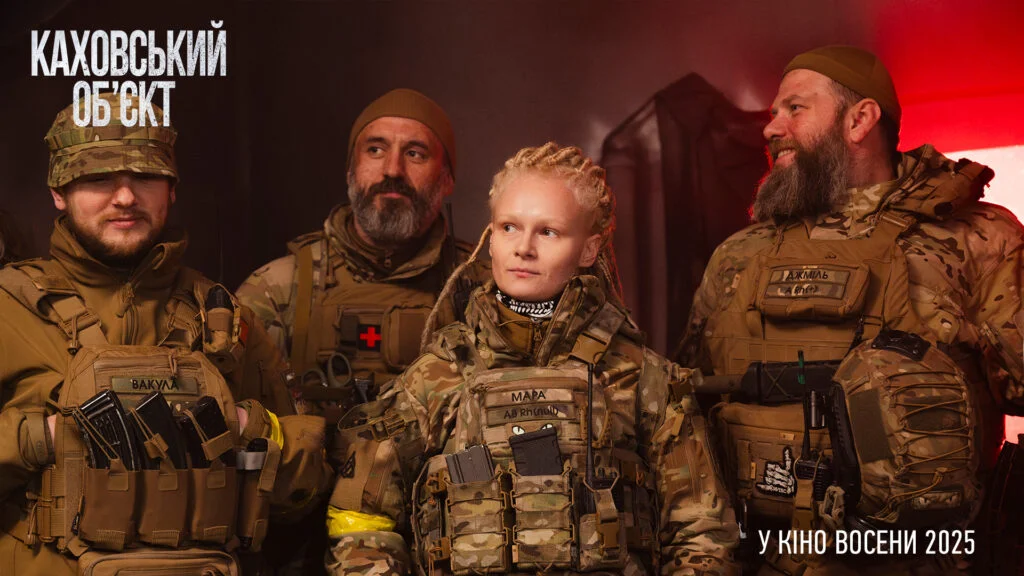
Film poster
That’s why we paid attention to the film. What has been happening in the Kherson region since February 24, 2022 deserves depiction in works of art, including cinema. You can find plots for dramas, tragedies, and even comedies. A lot has happened. And there’s room for horrors too. So the film’s genre affiliation itself did not arouse prejudice. But there are questions about the execution of the idea. And many.
High rating and empty halls
“Kakhovka Object” received 7 points on IMDB, i.e., it has a rating that many films—Ukrainian and otherwise—could envy.
Director Oleksii Taranenko shot a horror film with action elements. The main roles were played by Maryna Koshkina, Dmytro Pavko, Volodymyr Rashchuk, Andrii Zhila.
The plot of the film resembles old and not-so-old films about zombie-Nazis, especially “The Bunker” (United Kingdom, 2007), where, as in “Kakhovka Object”, there is a scientist searching for information about an experiment to create super-soldiers, a group of soldiers escorting him, and zombies into which test subjects were turned as a result of an unsuccessful experiment.
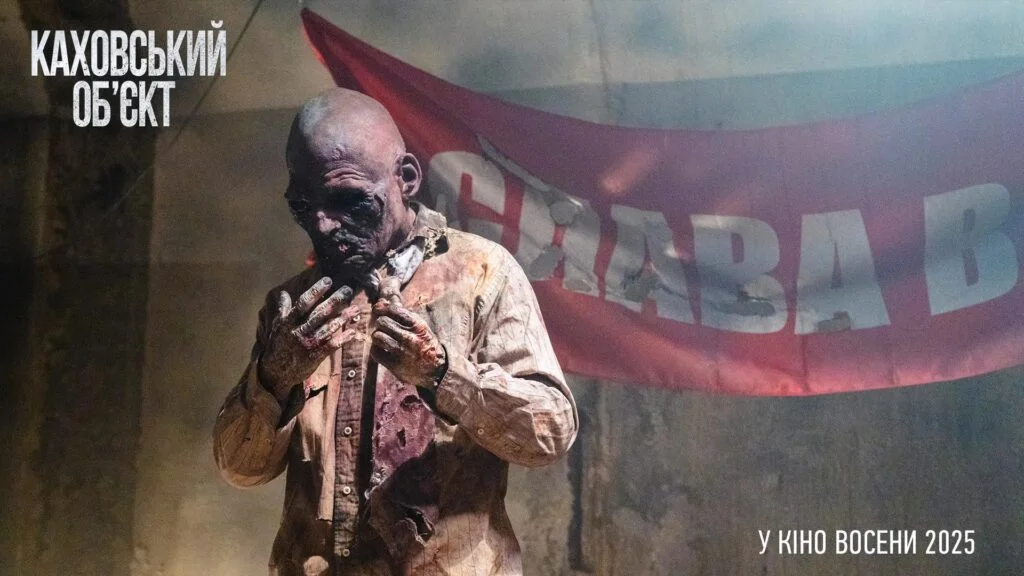
Reviewers have already written about the similarity of the Ukrainian film to the most famous horror of the Nazi-zombie subgenre—”Overlord” (2018), to the British horror “Deathwatch” (2002), to the well-known film franchise “Resident Evil”, to the Russian film “Paragraph 78” (2007), to “Carrie” (1976), “Miss Peregrine’s Home for Peculiar Children” (2016), to “Alien” (1979), and to “For Reasons of Conscience” (2016)…
Also, during the viewing computer games were often recalled. In particular, Half-Life and Diablo.
Some film scholars, analyzing the film, recalled a dozen or more films. In other words, they implied that “Kakhovka Object” is a patchwork quilt of film quotes, and collectively—epigonism that feeds on epigonism.
Horrors are, for the most part, audience films, i.e., films for a wide audience capable of attracting a large number of viewers, unlike narrowly specialized or arthouse films. “Kakhovka Object” is definitely not arthouse. But…
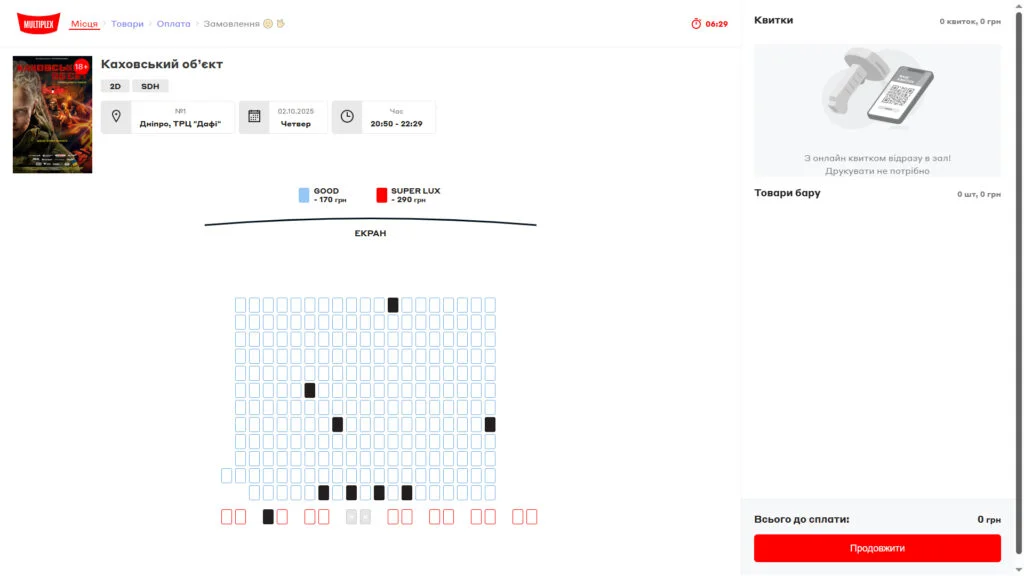
In the cinema hall in Dnipro where I watched the film there were in total… six viewers. That’s very few even though the screening was daytime. Judging by the data on the cinema chain’s website where the film is showing, it is most in demand in Lviv, but even there, to put it mildly, turnout is far from sold-out.
“Kakhovka Object” is a low-budget film for its genre. The film’s budget, according to Ukrainian media, is $500,000. These are Film.UA’s own money and funds from private investors. State funding, as the film’s producer claims, was not involved. It’s still impossible to say what box office the film will collect. The production company’s previous project—”Konotop Witch”—collected over one million dollars at the box office and became the highest-grossing Ukrainian horror.
Plot
In “Kakhovka Object”, a group of Ukrainian soldiers is searching for comrades who went to investigate a bunker found under the bottom of the Kakhovka Reservoir at a location where the concrete slabs somehow did not become covered with a thick layer of silt after almost 70 years underwater. The Ukrainian soldiers decided to investigate the bunker because they noticed that Russians had broken the concrete and crawled into the resulting hole.
For some reason, only three of our soldiers went to explore the mysterious underground facility that had attracted the enemies’ interest. And they disappeared. The unit command and other soldiers, for reasons known only to the film’s authors, reacted indifferently and did nothing for several days. But as soon as Maryna (in the film she is more often called by her call sign—Mara), a soldier and the sister of one of the missing, appeared, the command sends a search group led by her.
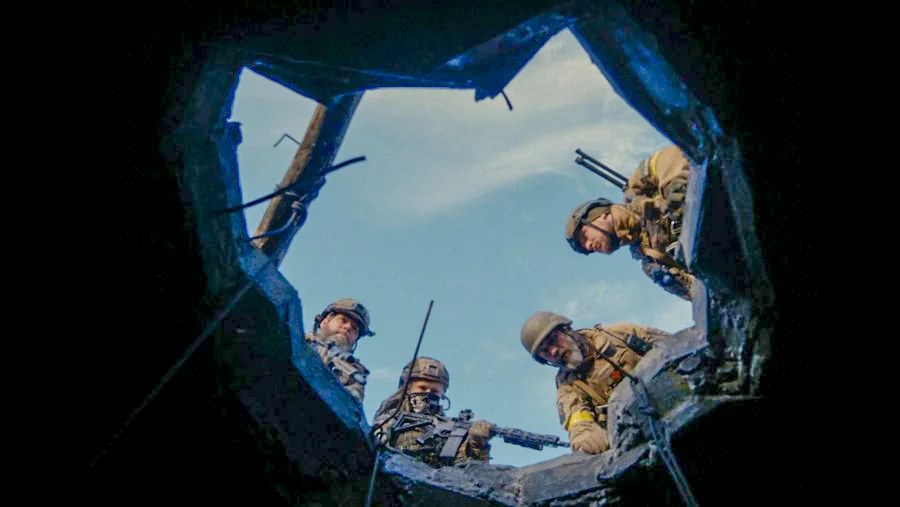
It turns out that the hole is an entrance to a secret bunker where, in the 1950s, Soviet scientists tried to create super-soldiers. Of course, something went wrong, so the bunker with a bunch of zombies and mutants was sealed, that is, the entrance was closed with ordinary construction concrete slabs, and the area was later flooded. Now Ukrainian soldiers have to fight their way through hordes of victims of Soviet experiments, find their comrades, and finally destroy the dangerous facility. And they do this, though not without losses.
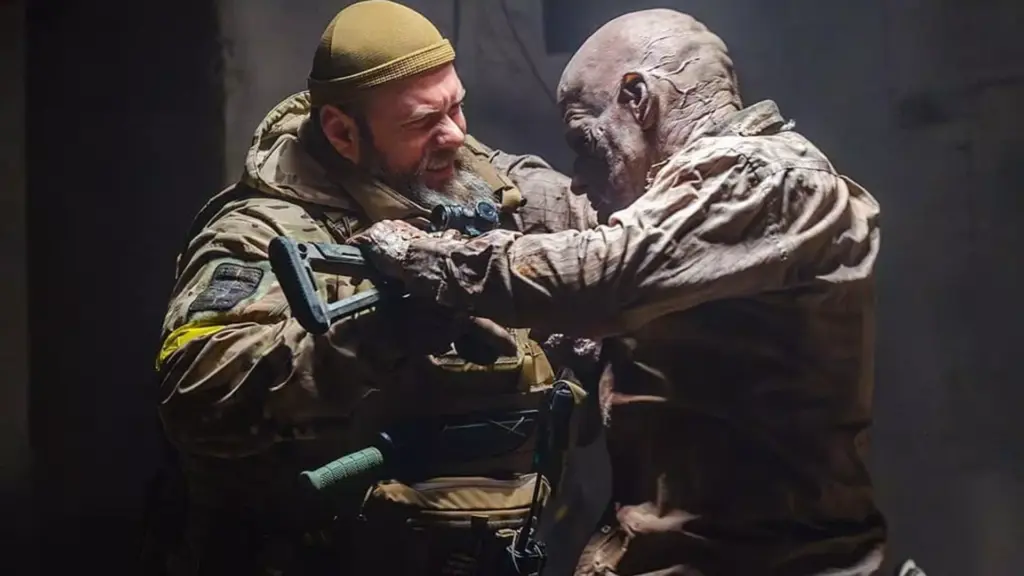
However, we know that “Kakhovka Object”, like “Konotop Witch”, is a film from Film.UA’s announced franchise “Heroines of Dark Times”. From publications in Ukrainian media it is already known that the third film will be about a policewoman who will exterminate… vampires. Therefore the ending of “Kakhovka Object” (a sort of happy end, but with a hint of a possible continuation of the story), perhaps, is simply a nod to the tradition of ending horror films with an ellipsis and a trademark gimmick of the franchise’s creators, because in the last scene with this film’s main heroine the heroine of “Konotop Witch” speaks.
Characters
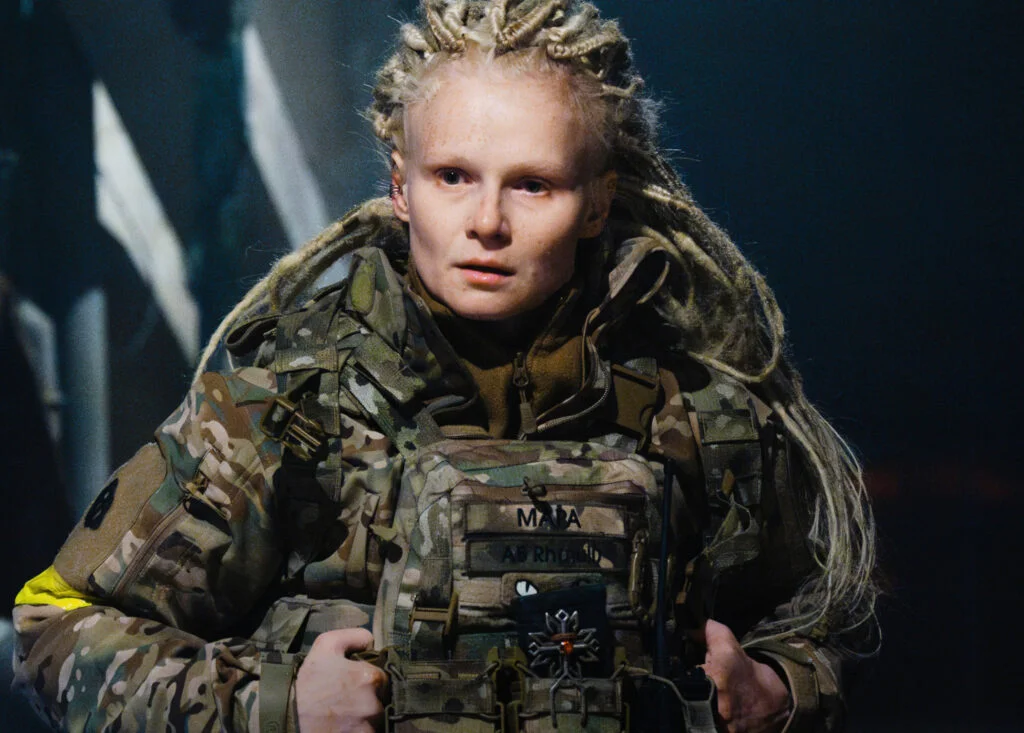
Mara (played by Maryna Koshkina) — the film’s main character — wears a hairstyle of long dreadlocks reaching almost to her waist. She speaks in short, “staccato” sentences. Her facial expression is maximally serious, not a hint of a smile. She constantly demonstrates detachment, superiority, and in her relationship with her brother even behaves like a dominant and even an abuser, explaining it as love and care. Almost until the end of the film she does not understand why her brother dislikes this multi-year “attraction of unheard-of sensitivity” so much. Mara is from Donetsk. She is deeply psychologically traumatized because she survived the death of her parents in 2014, when a Russian shell hit their house. To avenge them, she joined the Armed Forces. And she is also a witch, possessing paranormal abilities inherited from her grandmother.
The Ukrainian soldiers who help Mara search for her brother — Mara’s former classmate Dzhmil (Volodymyr Rashchuk), Monakh (Oleksandr Yatsentyuk) and Vakula (Mykhailo Dziuba) — although secondary characters, look livelier than the main heroine, who gives the impression of a bio-robot.
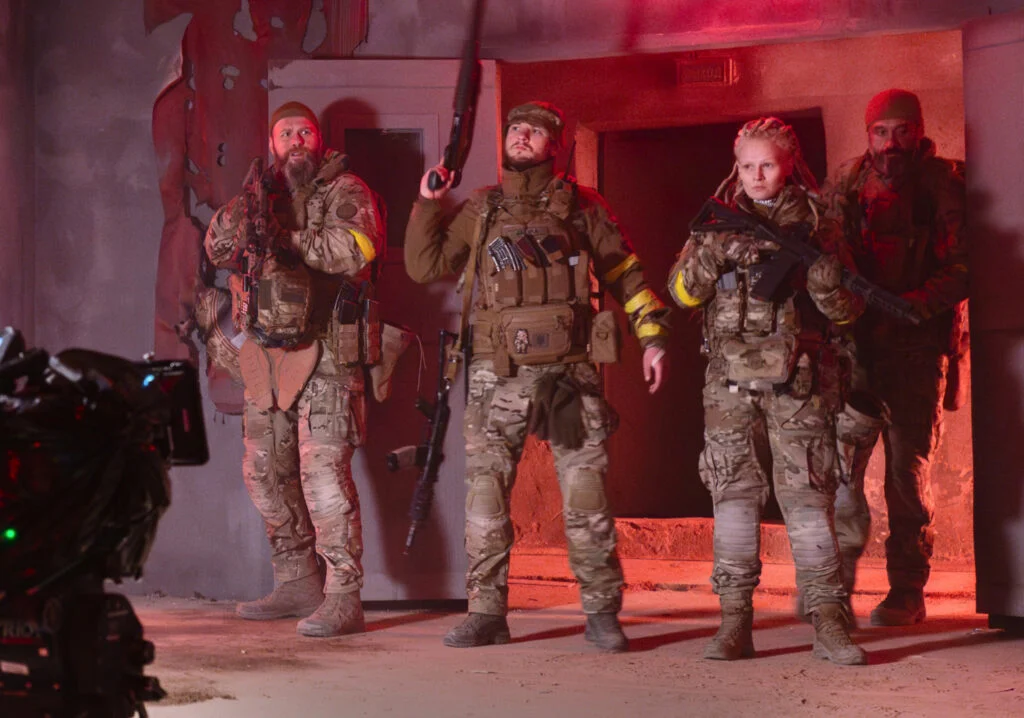
It is precisely the dialogues of these soldiers that are the greatest success in this film of its screenwriter Yaroslav Voytsehek. The jokes, although not liked by many reviewers, are not forced, not “pulled by the ears”. There is obscene language too, but like the jokes, it does not look like an artificial insertion and does not spoil the perception.
A character worthy of special mention is Volodymyr Karlov (Andrii Zhila) — a Russian scientist obsessed with the revival of the USSR (he even looks as if he just arrived from the ’70s), ready to do anything for a “higher purpose”. He is the son of an employee of that secret laboratory, one of the few, or maybe the only one, who survived the catastrophe. The Russian soldiers who penetrated the laboratory were escorting Karlov. And again one can say that only the film’s creators know why only three soldiers accompanied the Russian scientist. Even though Karlov, to get protection, probably told the Russian military leadership what is hidden in the bunker and what danger it might pose.

Karlov in the interpretation of the film’s authors and actor Andrii Zhila is not just a Russian, but a grotesque, even caricatural “die-hard vatnik”. He, together with Soviet zombies, embodies totalitarian-communist evil. And it is he who, while singing the USSR anthem, injects himself with a drug that will turn him into a monster-leader of the bunker zombies. After transforming, the scientist-monster will deliver a speech about “one people” and set a pack of zombies on the Ukrainian soldiers.
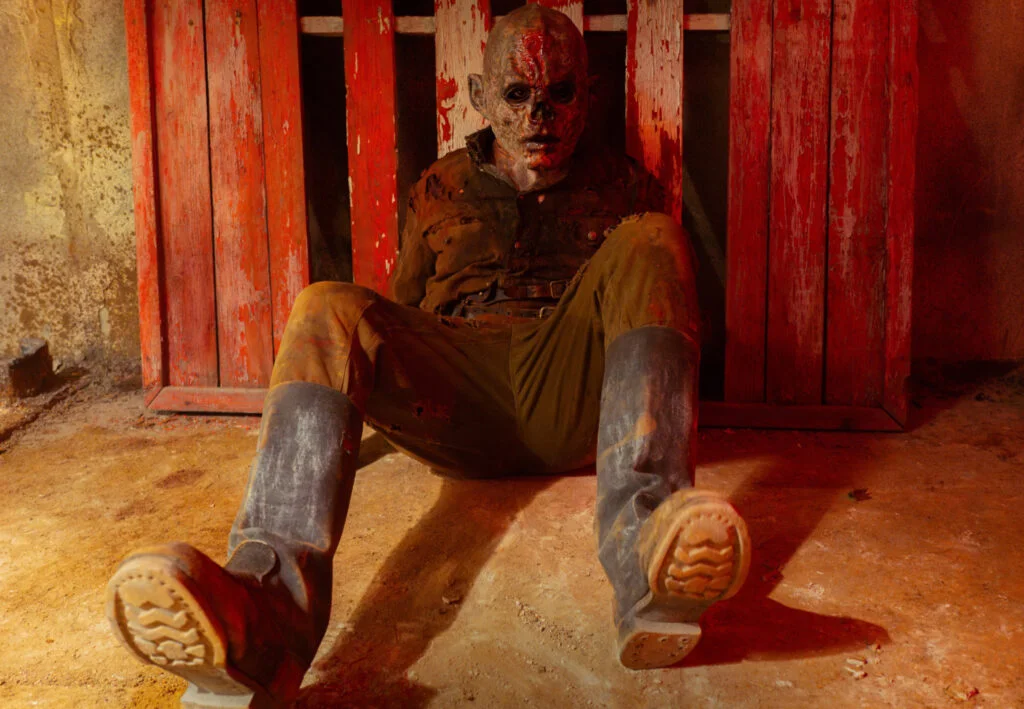
By the way, Karlov went into the bunker for components of the drug developed by his father, to mix them with what he created himself using his father’s notes. The creators of the film decided not to explain to viewers what these components are and how they retained their properties after lying for 70 years.
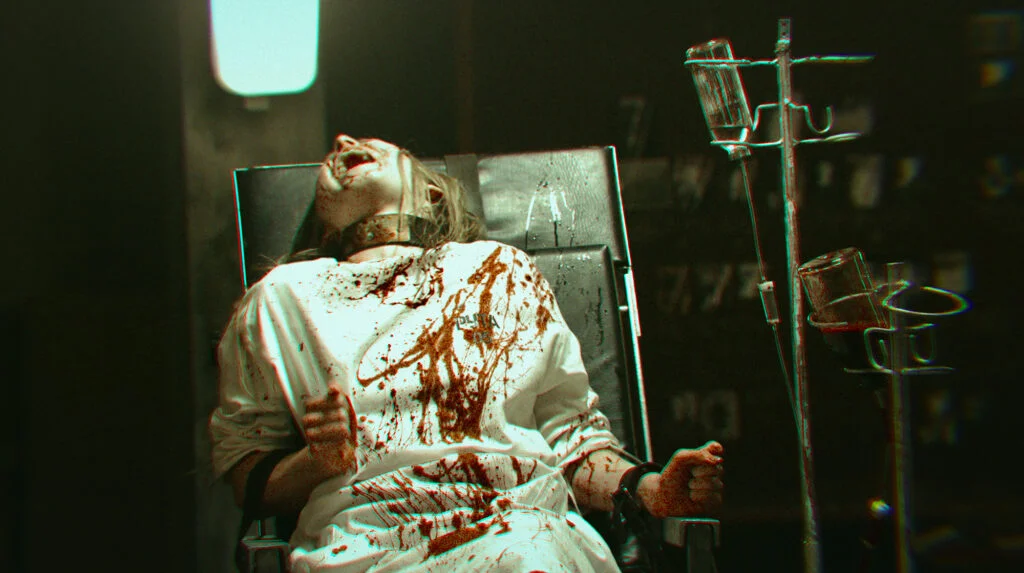
In fact, the authors decided not to explain many things, offering viewers simply to watch the action without pondering a considerable number of, to put it mildly, strange things related to the motivations and actions of the characters and the action itself. One need only look at the chaotic movement of the characters through the bunker, which sometimes could only be explained by teleportation. Although the film spoke about movement across several levels of the bunker, the viewer almost does not see the characters’ movements between these levels.
The soundtrack of the film is provided by the band KARNA, which calls itself a “Hutsul metal band”. The band plays nu-metal (nü-metal or aggro-metal). This genre combines heavy metal with elements of hip-hop, funk, grunge, industrial and alternative rock.
What’s Kherson region’s connection?
Almost nothing. It only figures indirectly in the title and the vast majority of the film’s events take place under the bottom of the Kakhovka Reservoir.
But if the authors had thought to place the Soviet secret bunker, for example, in Donbas under a spoil tip and call the film “Donbas Object”, it would have changed nothing.
Yet at the same time “Kakhovka Object” is probably the first Ukrainian feature film about the Russo-Ukrainian war in which the Kherson region figures in any way.
And it’s very sad that this film turned out to be a category B film (low-budget cinema for an undemanding audience), and not a film that would have artistic value, whose viewing would leave an aftertaste not dominated by predominantly negative emotions and would prompt reflection, rather than simply cause one to mentally ask the rhetorical question: “What was that even?!”.