

The results of the 2025 Science Images Contest have been published, the goal of which is to populate Wikipedia with high-quality photographs across various fields of knowledge. Among the winners and distinguished works – there are images related to the Kherson region.
This was reported by the press service of the NGO “Wikimedia Ukraine”.
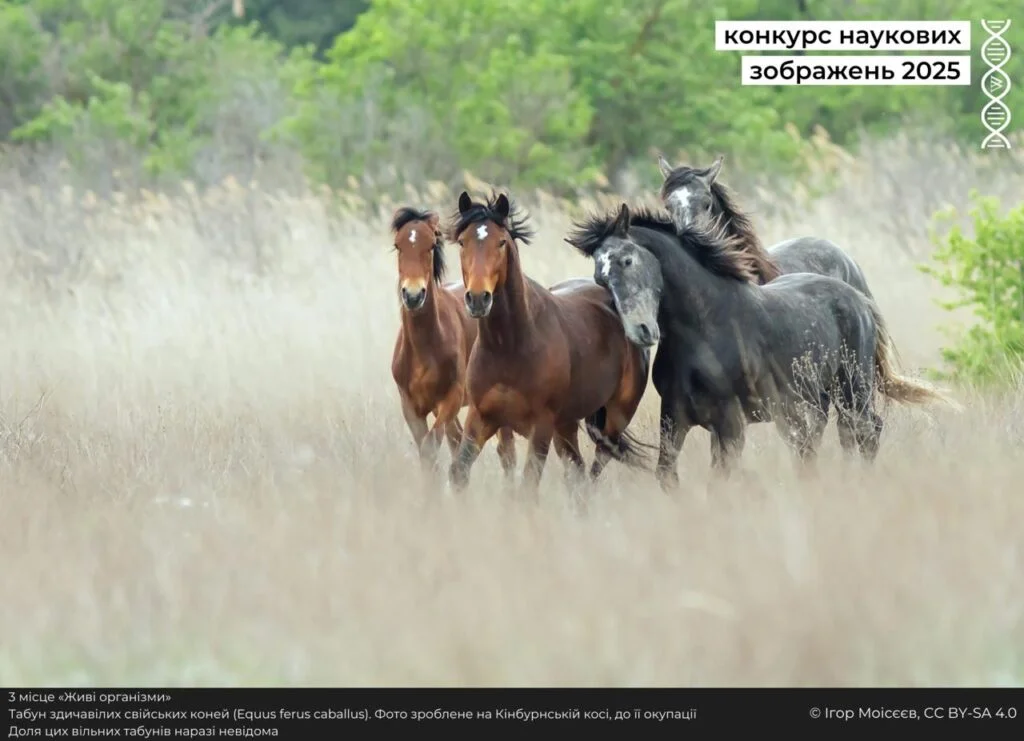
Thus, 3rd place in the category “Living organisms” was awarded to a photograph of a herd of feral domestic horses on the Kinburn Spit. The author of the photo, Ihor Moiseyev, took this shot before the start of the full-scale invasion. Their fate on the occupied spit currently remains unknown.
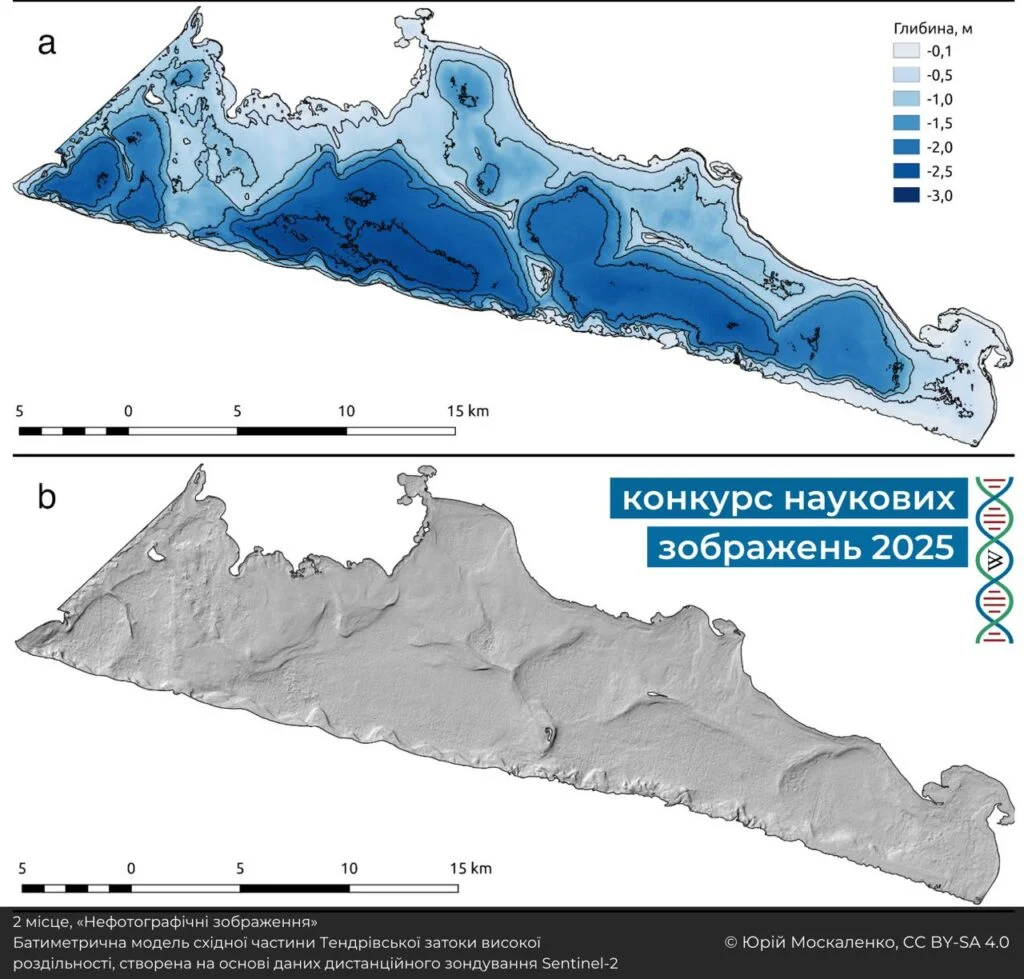
Also among the top three in the category “Non-photographic images” was a bathymetric model of the Tendrivska Bay, created by Yurii Moskalenko based on satellite data. This model demonstrates in detail the seabed relief of the eastern part of the bay, which is critically important for monitoring the region’s ecosystem.
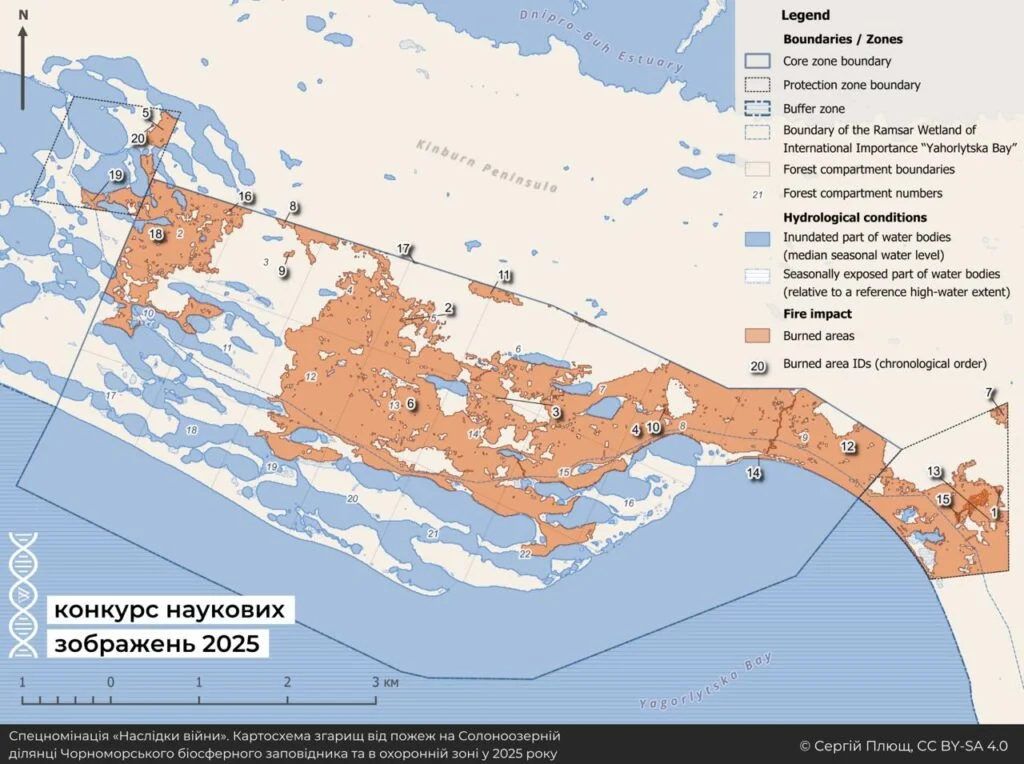
In the special category “Consequences of the war,” Serhii Pliush won with a map of burn sites in the Chornomorskyi Biosphere Reserve.
Due to the occupation, scientists do not have physical access to the territories of the Solonoozerna sector, so fire monitoring is carried out remotely. This work has become important evidence of environmental crimes by the Russian Federation against the reserve, which is part of the UNESCO network.
“The reserve exists, scientists continue their work, and remote methods make it possible to record the scale of impacts and accumulate an evidentiary base for future restoration,” — noted the author of the work, Serhii Pliush.
The best Ukrainian works will now take part in the international stage of the contest, the results of which will be announced at the end of 2026.
The awards ceremony for the Ukrainian winners will be held online and offline on Saturday, March 28.
Recall, the Science Images Contest, aimed at collecting photographs and graphic images that document the world of science for illustrating Wikipedia articles, ran from 20 November to 20 December 2025.
76 participants submitted 744 images — the most in any year since the record 2020. The works competed in five categories: “Microscopy”, “Living organisms”, “People in science” and “Non-photographic images”, “General category” and the special category “Consequences of the war”.