

This small village in Kherson region was famous for its incredibly beautiful nature and the Ostap Vyshnia museum-estate, which a Kyiv developer restored at his own expense several years ago. Today people would come here for hunting and fishing, and locals would gladly welcome tourists because there was something to show. But after the full-scale invasion, only the name Krynky remains from the settlement. As a result of Russian aggression, the village was completely destroyed and is now known as the site of bloody battles where a large number of Ukrainian defenders were killed or went missing. For many families, the events in Krynky became the start of endless searches and hopes. MOST collected several stories of those who held the bridgehead on the left bank of Kherson region and who are still unaccounted for.
“I won’t wash his jacket, because our little son says: ‘it smells like dad’”
We meet Yuliia Shynkaruk in a small café in Vinnytsia. The young woman brought two large portraits with her. In one — their happy close-knit family; in the other — her husband in military uniform embracing their small son.
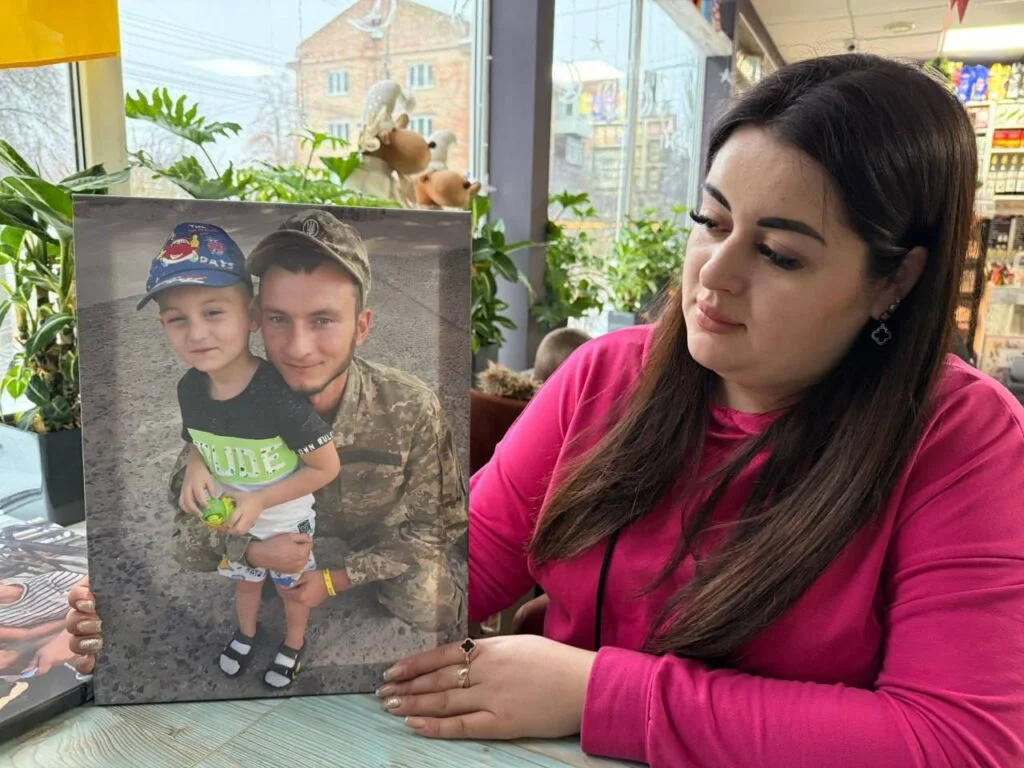
“I’m waiting for him in any condition — even without a leg, without an arm, but alive. And so that we have a family like before. And so that I can be happy again,” Yuliia says.
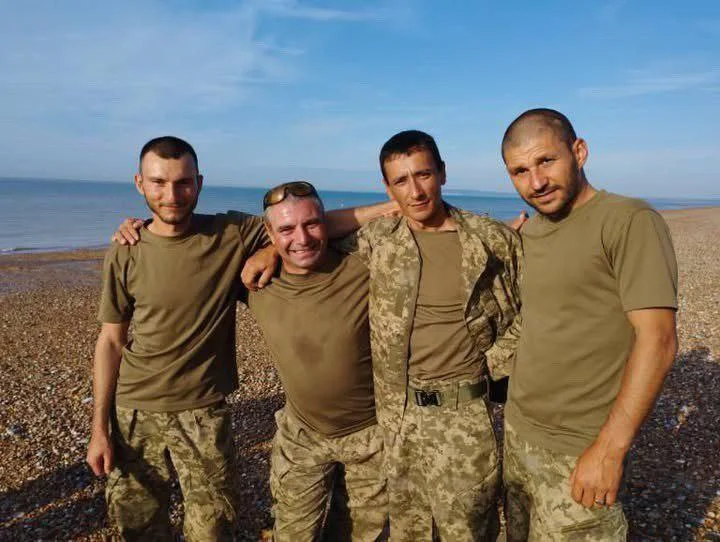
Yuliia’s husband is marine Oleksandr Shynkaruk; he went missing in Krynky on May 7, 2024. Before he ended up in real hell, in 2023 he went to military exercises in the United Kingdom. After returning, he served with his unit in Mykolaiv region, and in October that year he and his comrades were transferred to the Kherson direction. Yuliia says she once managed to come with their son to see her husband in a village on the right bank of Kherson region. At the beginning of February 2024 Oleksandr came on leave and spent three weeks at home with his family in Vinnytsia region. After that he went back to the same direction. The woman recalls sending her last package to her husband at the beginning of April — it contained treats for his birthday. Oleksandr was in touch with the family every day. Back then Yuliia had no idea that a month later a new countdown in her life would begin…
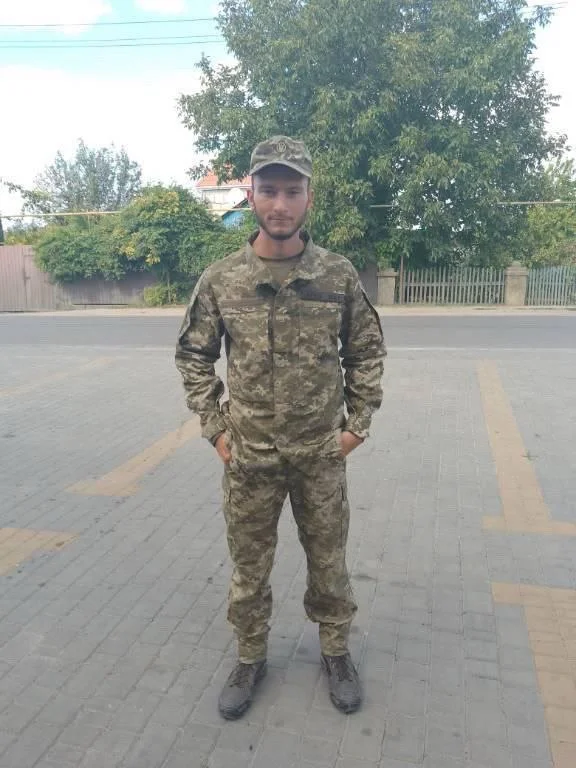
“Around April 12 my husband tells me: ‘Yulia, I’m on the list, I’m going to the left bank, to Krynky.’ I told him: run away. But he said: ‘No, that won’t happen!’ And on the 15th, at 4 a.m., they took him there. He got into a boat, called and said I love you, don’t worry, don’t cry, everything will be fine. He left me the phone numbers of the guys he went with, I wrote them all down. In the evening we managed to reach the senior sergeant. He said it had been hard, but they had crossed to the left bank. I felt calmer then,” the woman recalls.
That year Easter fell on May 4. Yuliia knew that the defenders on the left bank felt the holiday too. The defenders in Krynky received “packages” — drones from the right bank carrying Easter cakes. But on that very day a wave of anxiety hit the soldier’s wife. Despite the absence of news that could upset her, the woman could not find peace. Her heart sensed something irreparable.
“My mother had just arrived from Odesa region. We were sitting together, and suddenly a cup that was standing in the children’s room split in two on its own and fell. I started trembling, I had a premonition, I told my mother: something happened. And a week later, on May 9, there were preparations to visit the cemetery — we were getting ready to clean my grandparents’ graves — when someone knocks on the door. It was the territorial recruitment center and with them the village head and an ambulance crew. I open the door and realize it’s over, I start crying and screaming. They read me the notification that Sasha had gone missing,” Yuliia recounts.
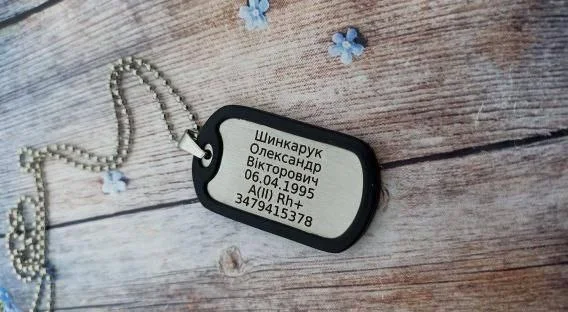
The territorial recruitment center and the police station. Filing applications and DNA samples — a standard procedure for relatives of the missing. Yuliia also began her own investigation. In particular, she decided to look for her husband through social networks. It seemed to her that this was the fastest way to get the information their family was waiting for. Instead, the posts attracted the attention of the occupiers. Yuliia began to be blackmailed. According to her, these people called from Luhansk, from a prison where Ukrainian defenders are held in horrific conditions. The occupiers use prisoners to extort money from relatives of missing or deceased servicemen of the Armed Forces. Understanding who she was dealing with, Yuliia communicated only in the presence of a police officer.
“They put a condition to me: ‘If you want to hear your husband’s voice, top up the account.’ I topped up 300 hryvnias and a hoarse voice and a cough were heard on the line. I thought it was a wounded man forced to speak. The voice was completely unfamiliar, I said: this is not my husband. Then they said to transfer one and a half thousand for medicine, I transferred it. The policeman asked me not to do that, but I still hoped that maybe my husband was there. Then they asked: ‘Are you alone in the room?’ I said: yes. And he told me: ‘Then turn on the camera, show what underwear you’re wearing and your breasts, otherwise we’ll kill him now’ … Imagine what filth,” the woman recalls.
Realizing her husband was not there, Yuliia turned off her phone. For some time she still received messages with photos of grave crosses. They wrote, allegedly here lies your husband, that he was killed. In subsequent messages they demanded 50,000 — for smuggling a living man into Ukraine.
After blocking all such writers, the woman posted a call on social media to find relatives of the guys who went missing in 2023–2024 on the Kherson direction in Krynky. That’s how she managed to reach a community of people united by a single goal — to find their relatives. It has now become an NGO called “Krynky. The Way Home”. Mothers, wives, sisters of defenders missing on the left bank do everything so Ukraine and the world do not forget Krynky and keep searching for their loved ones.
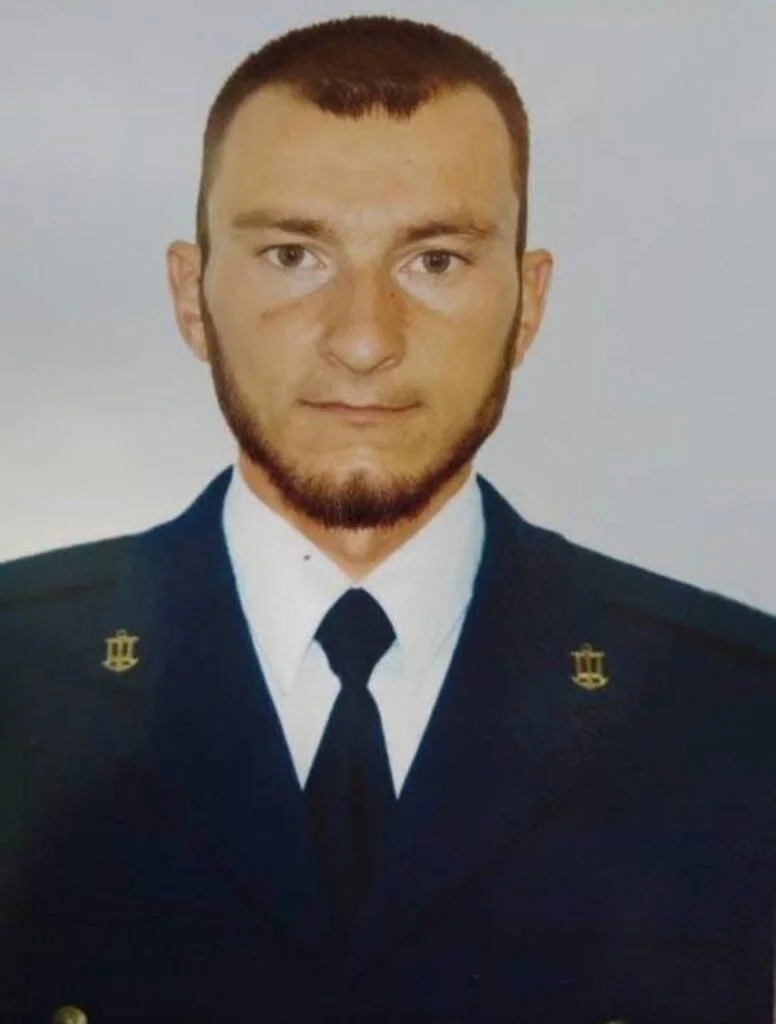
Oleksandr Shynkaruk is officially listed as missing. So far there is no news about him. Yuliia says their six-year-old son asks every day when going to bed and when waking up where his father is and when he will be back. To calm the child, the mother plays him old voice messages: “Good morning, son! How I love you, kisses, hugs.” Oleksandr sent them to the family when he went to the positions…
“They sent my husband’s clothes in a bag. I was afraid to open it for four months. Then I finally reached in, took out the jacket and said — I won’t wash it until he returns. I wear that jacket at peaceful rallies. And the child says: mom, it smells like dad…”, Yuliia Shynkaruk says.
He proposed to the woman he loved, but then came Krynky…
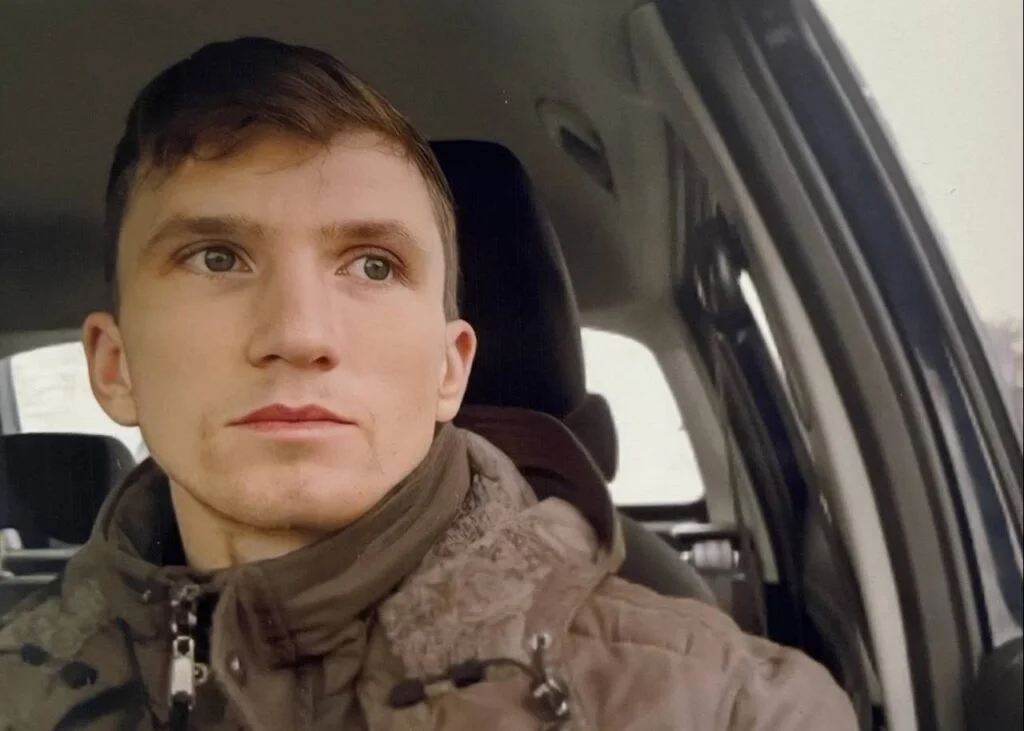
Pylyp Nikitin from Odesa region went missing when he was 30. An officer. A graduate of the Kharkiv Railway Academy. In 2019 he carried out tasks in the ATO. Then he served in Kharkiv — in the Air Force. Literally on February 22, 2022, Pylyp Nikitin’s contract with the Armed Forces expired and he had to decide whether to continue service. But the full-scale invasion changed everything — the lieutenant stayed on the Kharkiv direction. Pylyp’s mother, Mariia Nikitina, says that in 2023 he performed indispensable work at the headquarters. She still does not know how and why the lieutenant ended up in Krynky.
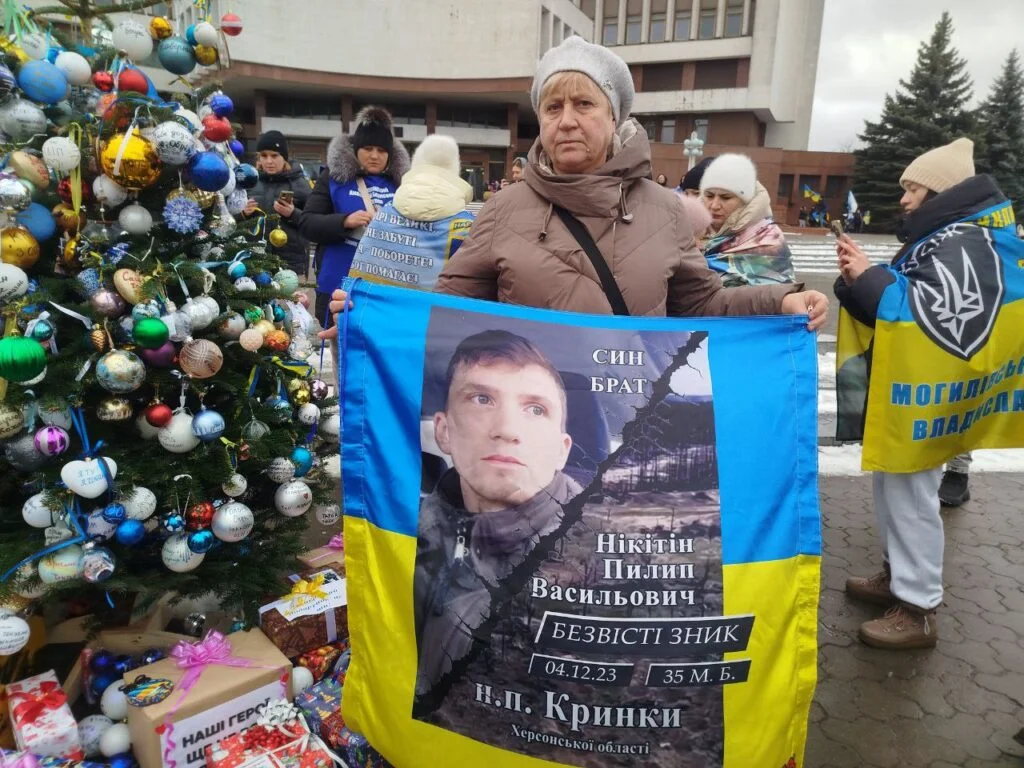
“If my son didn’t call for two days, I worried a lot. But I knew he was at the headquarters and no one would let him go. On December 2, 2023, Pylyp called me and said: ‘Mom, for two–three days there will be no contact with me because I will be in a basement. Don’t worry, everything is fine.’ So I calmed down. But it turned out he was heading to Krynky,” Mariia Nikitina said.
Pylyp never reestablished contact. And on December 8 the territorial recruitment center staff brought the mother a notification that her son went missing in Krynky in Kherson region. Over time the woman managed to talk to Pylyp’s comrades. They said he supposedly had a choice not to go to the left bank and they asked him not to. But the lieutenant, who usually carried out strategically important tasks at the headquarters, went where it was extremely dangerous. He didn’t tell his mother about it, so as not to upset her.
In search of her son, Mariia Nikitina, she says, went through “seven circles of hell.” Not having the official act of an internal investigation into the circumstances of Pylyp’s disappearance, she wrote many appeals, reaching the highest instances — the Ministry of Defense, the Ombudsperson, the President… And only eight months after receiving the terrible news did the mother manage to read the act she had been waiting for. According to her, the document is quite formal and contains few details about her son’s disappearance.
“They wrote that Pylyp was on a boat that came under indirect artillery fire. My son and another comrade disappeared from that boat. Then one guy told me: ‘Unfortunately, Pylyp died, he’s at the bottom of the Dnipro.’ But he didn’t see it himself. There is no person who saw it. Later a guy who returned from captivity said there is an 80% chance that Pylyp is in one of the Russian colonies. But there is no official information about this, and therefore no status of prisoner. I searched in various Telegram channels where Ukrainian captives are shown and wrote everywhere. Nothing is known,” Mariia says.
Mariia also shared very personal information about her family. The thing is, she and her husband adopted Pylyp when he was five. The boy was an orphan and ended up in an orphanage. The Nikitins raised him as their own, putting their whole soul into the child. As an adult, he found adoption papers and decided to look for his relatives.
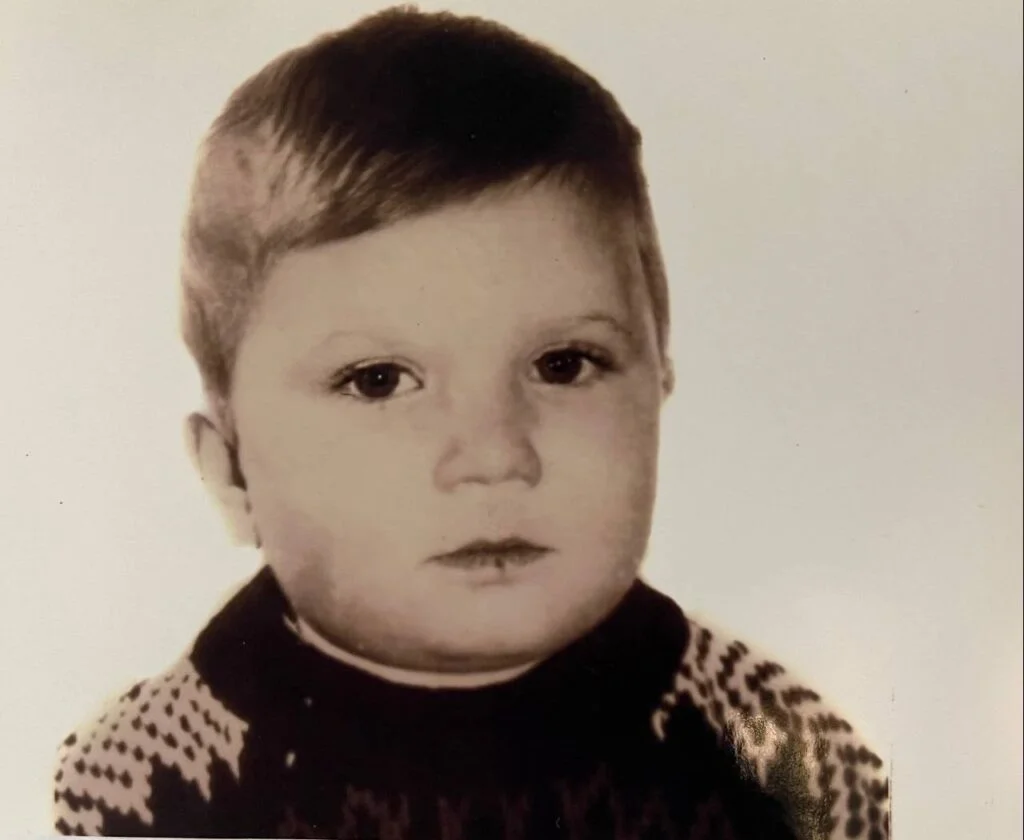
Thanks to a well-known TV project he managed to find his biological brothers and sister. Pylyp kept in touch with them. And that relationship is now very important in the search for the serviceman. DNA samples can only be taken from blood relatives of the missing. Pylyp’s biological sister provided her biomaterial. His mother prays that genetic testing will not be needed and that her son will return home alive.
“Once I went to Odesa to look through the catalog of the deceased. It was extremely hard. I wait for my son, I pray for him constantly. He is the sun for me, the meaning of life for me and my husband. I also regularly order a forty-day memorial service in church for the fallen guys whose names Pylyp once gave me. My son appeared in dreams to me and my husband several times. A relative of ours dreamed of him, and when asked ‘Why don’t you come home?’ he said — ‘You will find out later.’ I only hope that my son is in captivity and will come home,” says Mariia Nikitina, whose son is missing.
In summer 2023 Pylyp proposed to the woman he loved. They planned to get married. But war intervened in their dreams and plans. In December that year the defender did not return from the left bank of Kherson region.
“Until that day I had no idea where Krynky were”
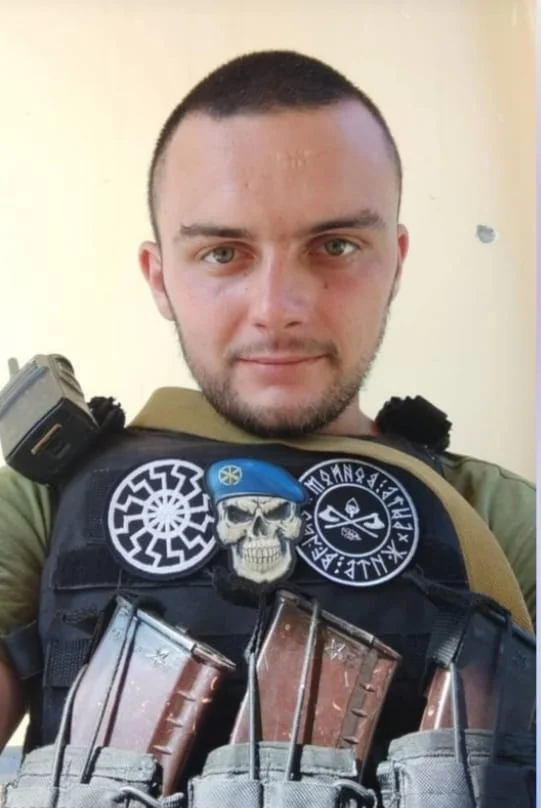
Twenty-two-year-old Vladyslav Sviatnyi, while still a conscript, signed a contract in 2023. Even when the full-scale invasion began, his family was confident he would not end up at the front because Vlad remained in Mykolaiv with his unit. As part of a quick reaction group he went on patrols. Returning from a mission he always called: ‘Mom, everything is fine!’ But at the beginning of 2024 the young man was sent to a training center and told: ‘After training we’re going to the left bank, to Krynky.’ Olga Sviatna, Vlad’s mother, admits she had no idea what Krynky were or the significant difference between the left and right banks of Kherson region.
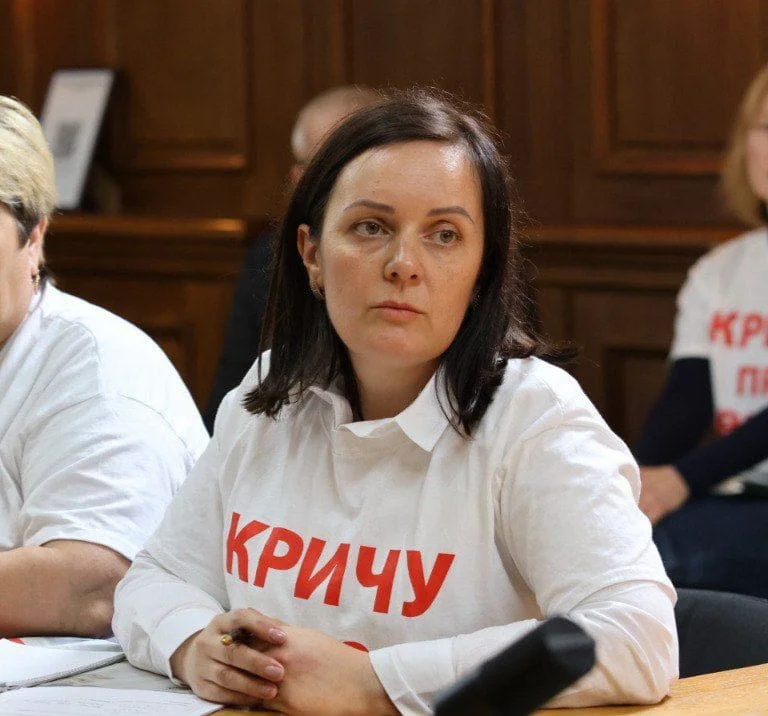
“Kherson had already been liberated. As for the left bank — we only understood that that territory remained occupied. And since we had no relatives there, I didn’t delve into the matter. When my son said they were being sent to Krynky, I looked at the map and it was all ‘red’… And Vlad said: ‘Mom, it’s a bridgehead, the guys are holding it, don’t worry, you’ll get calls every four days. I’ll be back in two weeks, don’t worry!’” Olga Sviatna recalls.
Two weeks later Vlad did not return. For a month his mother kept in touch with the commanders. They told her her son was fine. There was no contact with him personally. Olga says that when troops were crossing to the left bank they were forbidden to take phones. Some had gadgets with them, but they couldn’t call. In March, having no contact with her son, Olga began insisting that his group be rotated and brought back. A few days later she received the news: Vladyslav was missing. Later, through social networks, the woman found relatives of a man who had been in the same group as Vlad. She hoped to get answers to the main question: what happened to her son and where is he now?
“That soldier was undergoing rehabilitation. Evacuated, he was in critical condition, couldn’t walk. I was not given contacts. Finding that person turned out to be quite a quest, but I managed. He told me: ‘Your son died, I heard it on the radio, accept it.’ He said the guys stormed some position and they were hit after shelling. But, to be honest, I didn’t believe it because, apart from that man’s words, there was nothing,” Olga recounts.
Like many relatives of the missing, Olga waited a long time for the investigation report. All because her son served in one unit but was seconded to another. These are two different branches of the military, so the correspondence was double, which took time. When the mother finally received the investigation act, she didn’t believe what was written.
“It states that Vlad carried out a mission with two fellow servicemen. That they were wounded and fell back, and my son presumably died during an assault. It also says the body is in a basement. Then they sent me my son’s things that he left in the place where he lived before being sent to Krynky. I see that all the patches with his data are in a little bag, meaning he didn’t take them with him. How did they identify that the deceased was my child? He was seconded and hardly knew anyone there. And Vlad disappeared on March 17, but the investigation began on March 18 and was finished on the 19th. I don’t trust it, it’s a worthless piece of paper, as they say,” Olga says.
Since then Olga Sviatna has received a number of messages from soldiers from various brigades who returned from Krynky. The most interesting thing is that the information varied drastically. Someone said Vlad died and that a drone saw a lifeless body near one of the houses. Later another soldier denied that version, saying it was definitely not Vladyslav Sviatnyi. Then information appeared that he was allegedly seen in captivity. Official confirmations — none, as well as evidence of the boy’s death.
For almost two years now Olga Sviatna has been fighting to find the truth about her son’s fate, and not only his. She is a co-founder of the public organization “Krynky. The Way Home”. Every day she searches for any information about defenders who went missing on the left bank of Kherson region. The organization includes more than 200 relatives of the missing. They appeal everywhere, demanding to be told what is being done to find their relatives who disappeared during the operation in Krynky.
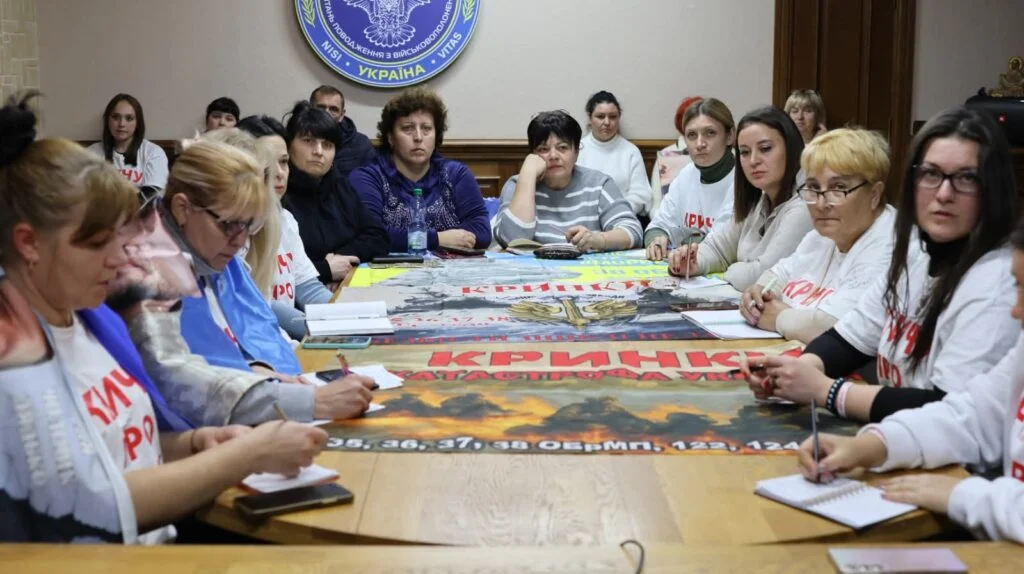
“Sometimes people ask me: why do you hold actions in different cities? I answer that the geography of missing defenders is very wide, and not all families can come to Kyiv because there are elderly parents, wives with small children. When we come to a region, locals can join. And people in other oblasts should know about the tragic events in Krynky,” Olga Sviatna says.
According to official data, 788 Ukrainian servicemen went missing in Krynky. According to the NGO “Krynky. The Way Home”, the fate of at least 2,000 defenders who took part in this operation is unknown. The number of dead with issued death certificates who have already been buried is more than 210. Ukraine repatriated 19 bodies of defenders from Krynky.