

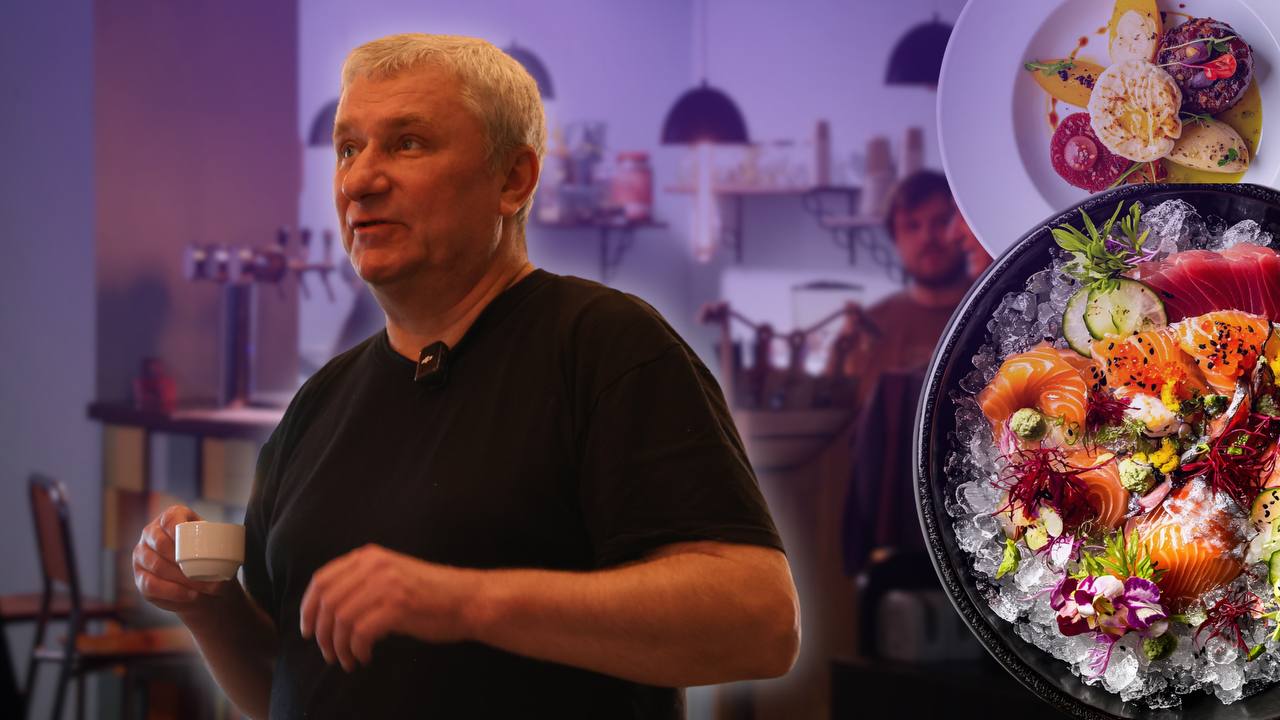
The alarm at six, a quick look out the window, – and there is a silence that never guarantees safety. Dmytro gets ready for work, walks the familiar turns of the Shumensky neighborhood, greets those who also stayed in Kherson. This is the second piece in the series «One Day With» – stories about the people who keep the city moving. Today – about a waiter who works and finds happiness in small things.
Six in the morning. Dmytro wakes up and dives into a ritual honed by years into automatic habit: TikTok, a cup of coffee, a cigarette, a shower. And then he definitely shaves.
«If I don’t shave, the feeling is like a hangover», – he says.
It’s not about aesthetics or dress code requirements. It’s about how a person keeps themselves together despite all the surrounding factors. After shaving – the TikTok feed, get dressed and off to work – to the restaurant «Liman», where he works as a waiter.
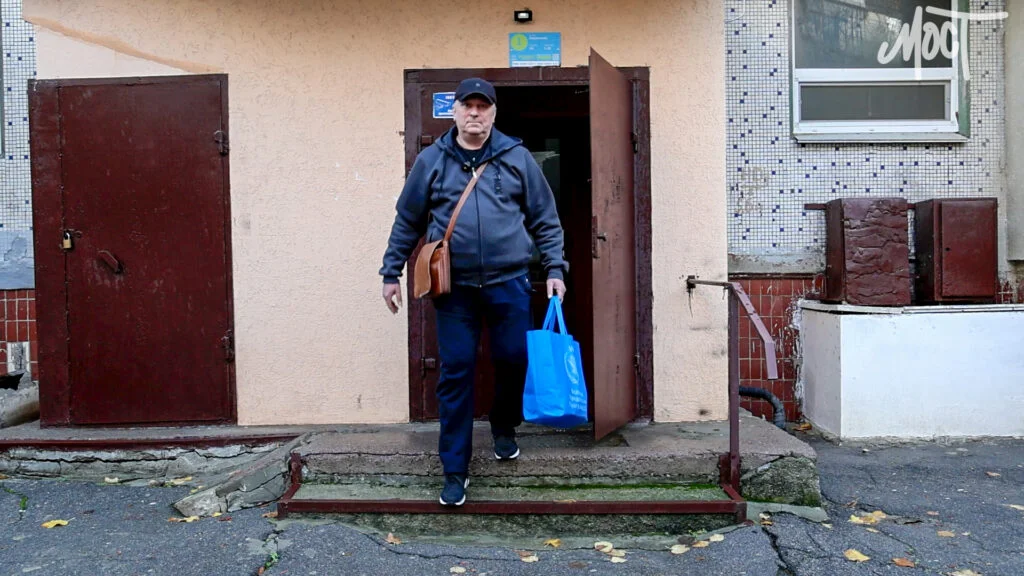
At home his wife, daughter and two small dogs wait for him. But now he has to work, so Dmytro leaves the entrance, greets briefly and heads off along the familiar route through the Shumen market.
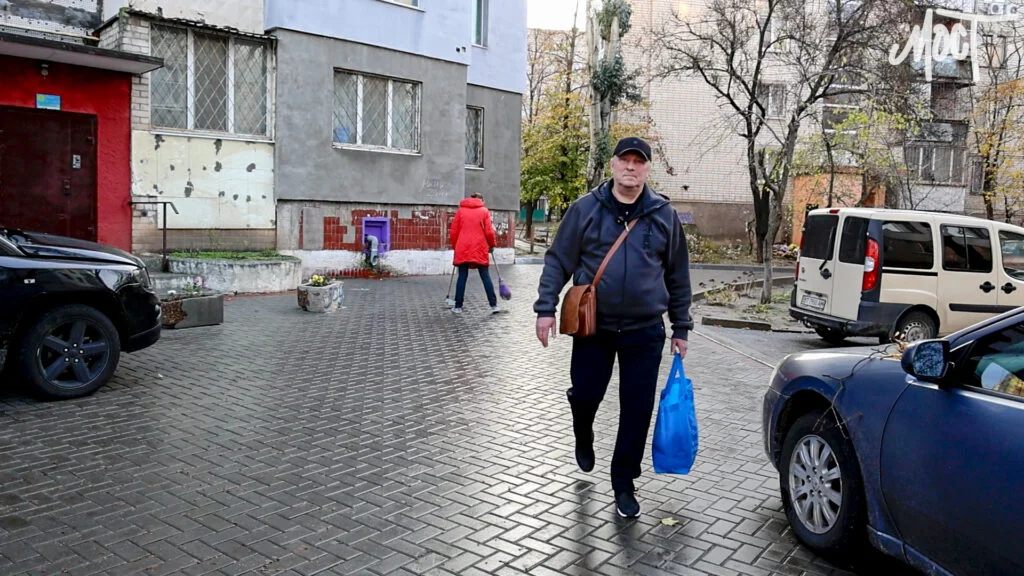
He stops by a cigarette stall, buys a pack, drops a brief «thank you» and goes on. Next stop – water and coffee.
«So I buy a little bottle of sweet water, take a couple of sips and give it away. And then the next day deja vu», – he explains this ritual.
«The first time I was going to work – I see – they were selling coffee, I bought it and somehow it stuck…», – Dmytro recounts the start of this tradition. He finishes the cigarette and continues along the usual route, quickly and confidently.
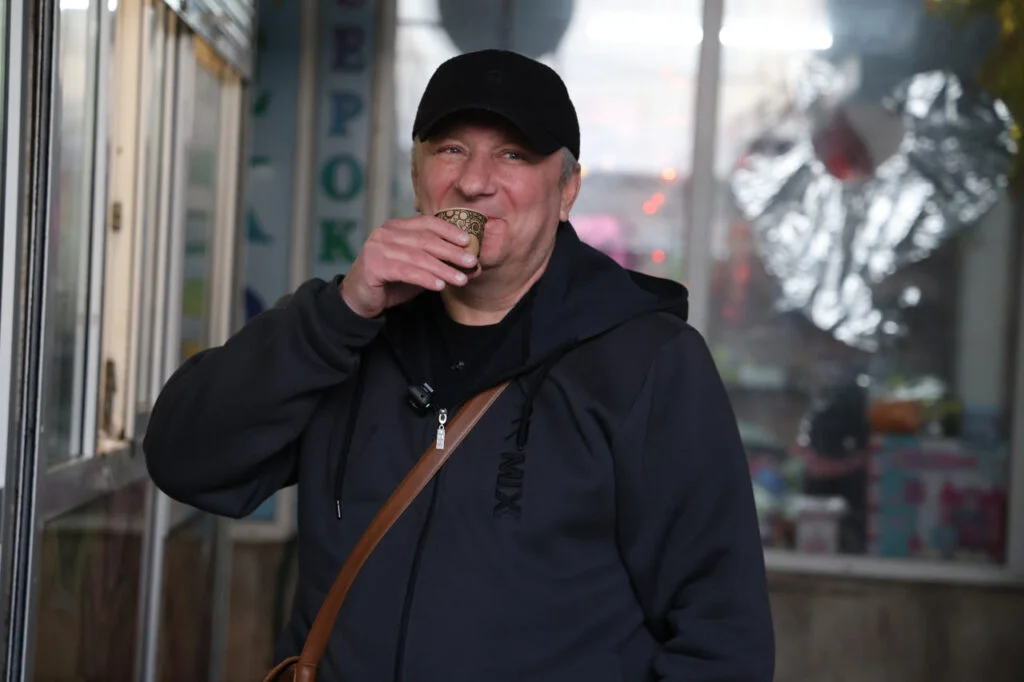
«When I go to work, I walk fast. I get there quickly, but walking home from work – ooo, it’s so long. I’m tired from work, my legs hurt…», – Dmytro shares.
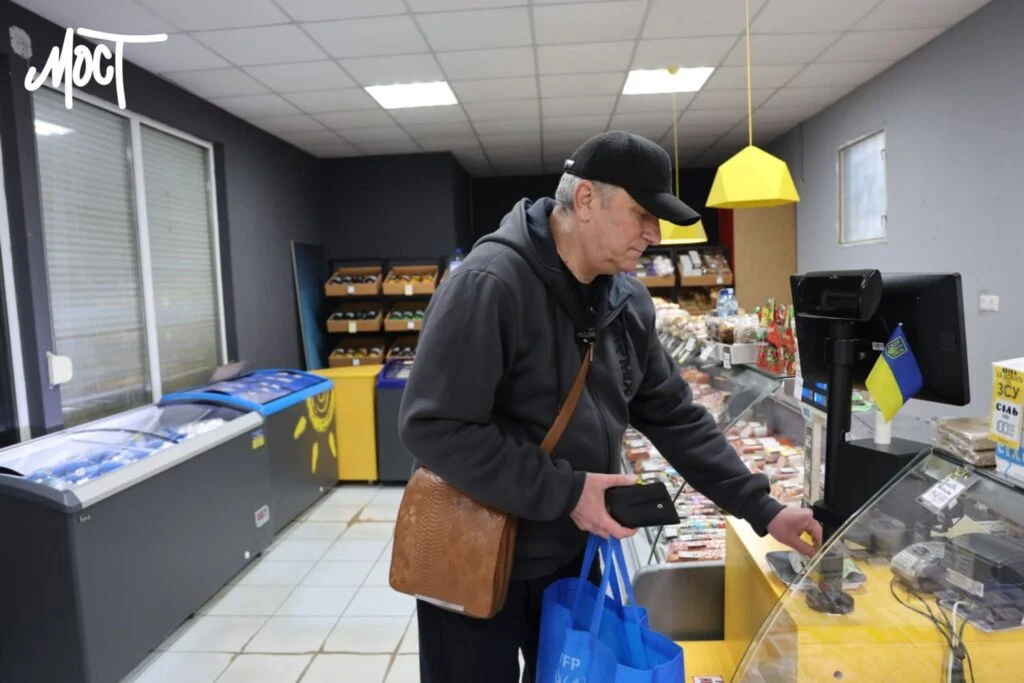
On the way another stop – the shop. «Give me ryazhenka, please», – Dmytro asks, then explains: «Ryazhenka – is my favorite dairy product. And a few cans of beer». The beer, he says, is for the evening.
TikTok, incidentally, made Dmytro locally known – he’s recognized at the markets, even friends from Estonia said they saw him in recommendations. Such unexpected visibility in the digital age, when even a waiter from front-line Kherson can become a face remembered thousands of kilometers from home.
Wherever Dmytro has worked in recent years, he becomes the star of the establishment, because he takes part in all the filming, creating whole sketches about the life of the venues.
He arrived at the restaurant first today. «No one is here yet, I’ll be the first», – Dmytro notes, phone in hand. A few minutes until opening – the last islet of privacy before the space fills with guests, orders, movement.
He watches videos on the channel where his older daughter took her first steps in an acting career. This was one of the most popular YouTube channels in its time, content for which was produced in Kherson before the war. It still has millions of views, although it is almost not updated.
“Now my daughter studies at Karpenko-Kary. She already works, often delights us and the little one with gifts”, – he says warmly.
Vlad arrives – «this is Vlad – the best bartender in Kherson», – Dmytro introduces him without a trace of irony. «Hi», – they exchange brief greetings as they raise the restaurant’s shutters. The sign reveals the inscription “Liman. An establishment with a Kherson accent”.
«There are far fewer people now, many have left. Before the war there were a lot of people in the city», – Dmytro says, starting the workday. «Many are afraid (he speaks about the visitors). They can sit for a couple of minutes, a strike nearby – they get up and leave. That happens… Sometimes – zero reaction», – he continues.
The war, by the way, also came to his home, leaving its traces.
«There were two strikes on the neighboring house both this summer and last, in the same spot. And I have a shard from each strike. The first time it pierced the window, the wardrobe and the fridge. And the second time a fragment is sticking out of the kitchen ceiling», – Dmytro tells in a fairly calm tone.
Dmytro begins preparations for the workday: he clears dishes from the tables where a noisy group of Kherson journalists sat last night.
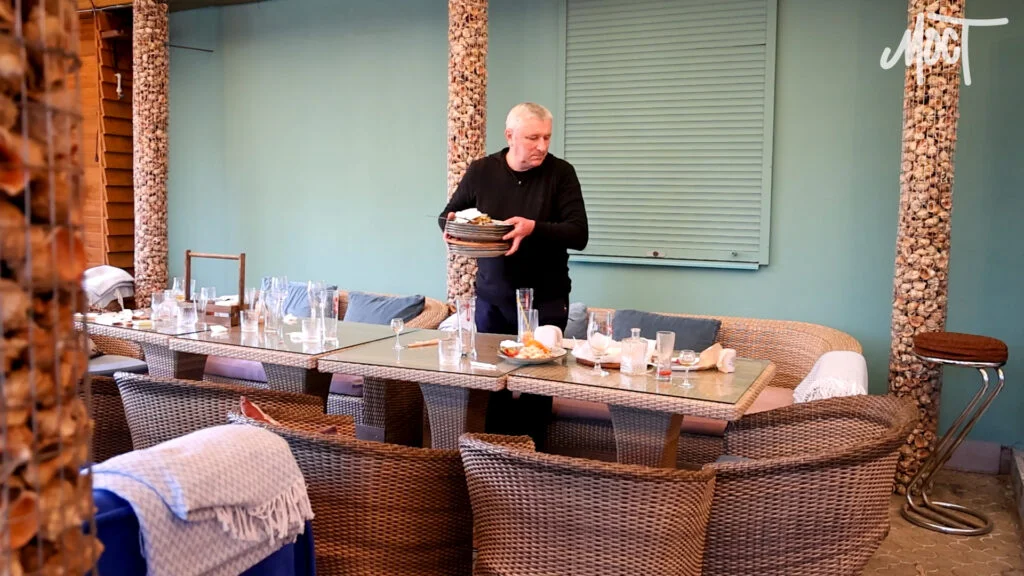
They saw the media people off for so long that the dishes couldn’t be cleared before curfew. Dmytro arranges the glasses, sprays the tables with cleaning solution, moves furniture, gets out cloths, sweeps. Mechanical movements repeated every day, thousands of times over thirty years in the profession.
«My grandmother was a teacher, my mother a teacher. And I studied for two years, then I was expelled. And I had to go to the mine», – Dmytro recounts. The mine seemed like stability, but the result in that field had no happy ending.
He worked at two mines – the work was dangerous, exhausting, but at the time it was a prospect. Then, in ’94, during mass layoffs, he was fired, and life took another unexpected turn.
«I was walking, I see – it said “cooks and waiters needed”. I came in and said: I’m a waiter, although I had never worked. And they said: we don’t need waiters, we need cooks. I hadn’t worked as a cook», – he says with a sly smile.
But Dmytro is persistent and thanks to improvisation, courage, willingness – he found his calling.
«I knew there was a vocational school in Kherson where they trained cooks. I said: I graduated from the Kherson school. And they said: all right, start work. I started the next day and immediately there was a banquet», – he says. – Imagine: no experience, and a banquet. There was an older woman, the head chef. She said: prepare the herring. “I took it, but which end do you start from — I had no idea? She asked: have you never worked? I said: no. She said…” – he puts a finger to his lips, imitating a gesture of silence. He says he learned beside that woman for about twenty days, absorbing basic skills, and then began working independently as a cook. Five years in the kitchen, then a move to waiting tables. He worked as a bartender, worked as an administrator – went through all the rungs of the restaurant business, understood it from the inside, from different positions.
«My first place that really stuck in my memory was “Alex”. Then – “Fried Boar”. I worked there eight years – from Alex’s opening to its closure I worked there”, – he recalls.
That café on the corner of then Ushakova and Kozatsky was quite expensive for Kherson in the late ’90s.
He remembers the menu of those times with nostalgia: «The kitchen was simple: cutlets, roast. Roast – 15 hryvnia, cutlet – 6 hryvnia, a large glass of beer – 2.50. Oleg Mishukov loved our cutlet, he ordered it all the time».
Simple food, affordable prices, rooms filled with people… Today everything is different. Different prices, a different reality, a different context for the profession.
«When clients don’t like something, does it affect you?» – we ask Dmytro. «I get upset, very, very much», – he answers sincerely. It’s strange, because by observation most of his colleagues with that experience long ago developed an immunity to others’ dissatisfaction, learned to abstract, separate work from the personal. But he still takes it to heart when a guest doesn’t like something.
«If a guest is middle-class – that’s the most adequate contingent, for me», – he adds.
The workday picks up pace. Dmytro ties his apron – a gesture that marks the transition from a private person to a professional role.
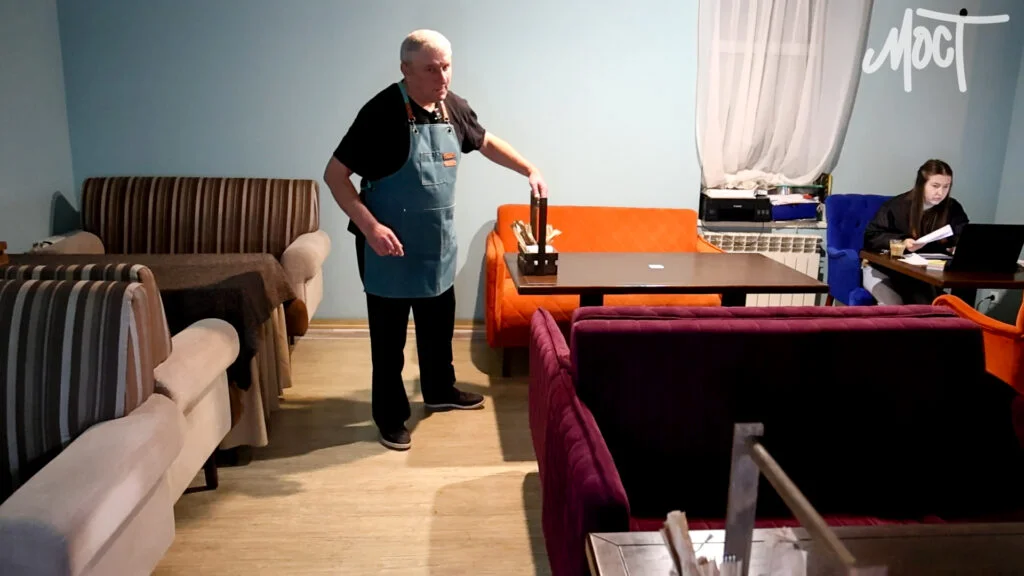
«Here you go, not for getting drunk but for health’s sake», – he says, placing a glass in front of a female guest, in a joking tone. To another guest he jokes: «As always? Two bottles of vodka and Dorblu cheese?» The patrons pick up the tone: «Give us two chebureks…». «We’ll do it».
Behind the bar Vlad pours beer – droplets of condensation on the cold glass, perfect foam. Dmytro moves between tables with an ease that is the result of tens of thousands of kilometers walked in his professional career. A normal day at the restaurant «Liman». Kherson accent.
There are few people in the morning, while in the afternoon Dmytro has a pile of work – many come here for lunch.
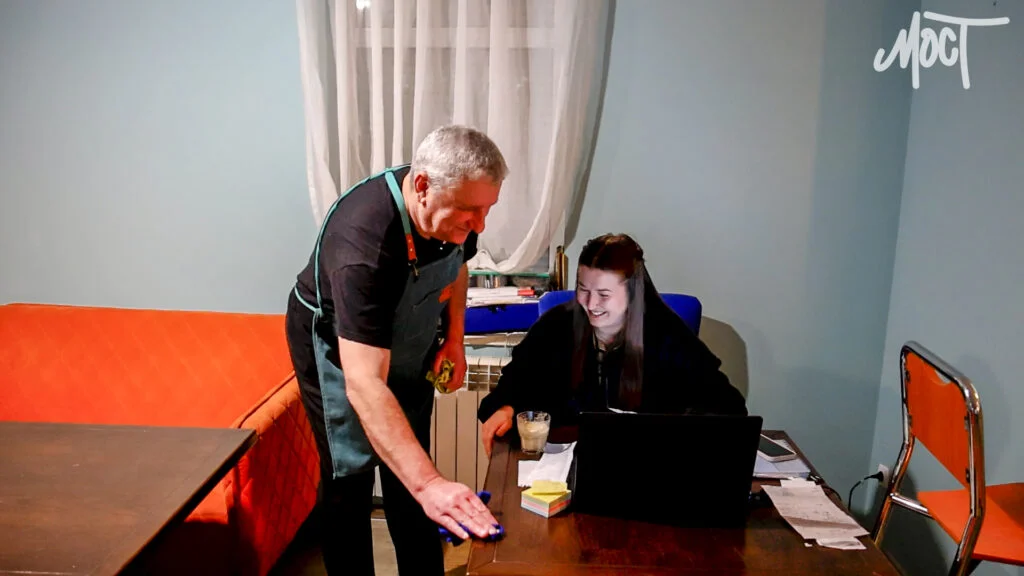
After lunch he can rest a little, and Dmytro sits on a high stool by the door. It’s the highest point in the hall, and he surveys his domain. The tables are in perfect order – the man contentedly awaits the evening.
In the evening people order alcohol and snacks. Dmytro jokes, greets regular customers and is glad to see new guests.
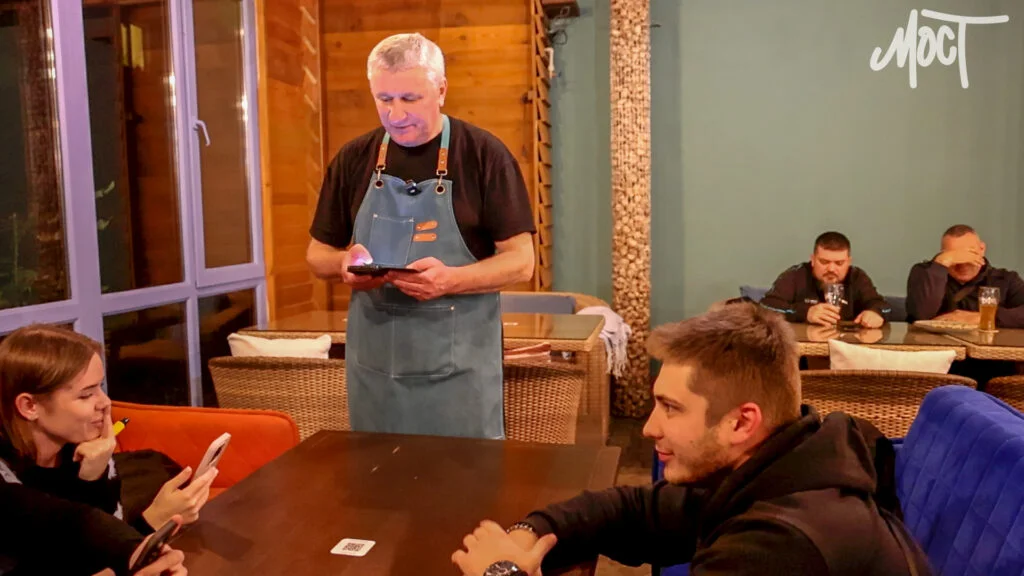
“A beer?”, – he asks the next guest. The guest doesn’t mind, and Dmytro runs for a glass.
Later the end of the shift comes – the moment he waited for all day.
«I love the way home. My legs feel like cotton», – Dmytro says, leaving the restaurant. Fatigue shows in his walk, in the slope of his shoulders. He recalls: «I worked in one restaurant where from the bar counter to the last table it was 70 meters. So by the time you walk 70 meters there and back… That’s where we ran». Seventy meters one way, dozens of times per shift – if you add up the mileage per day, per month, over thirty years, it would be a distance you could probably walk to the capital.
Shumensky is completely dark. The city has had no street lighting since November 2022. Dmytro confidently walks, illuminating his way with a flashlight.
«Now here’s the best moment… On the bench, a cold beer – and life is a success», – he says with genuine joy, and it becomes clear: happiness is not in big achievements, but in these small moments of rest. He sits on the bench in his yard, opens a can of “Yantar” and drinks with pleasure.
He says this ritual is unchanging. In any weather he sits for a while on the bench, watches TikTok, reads something. From the window his wife watches him, clearly worried.
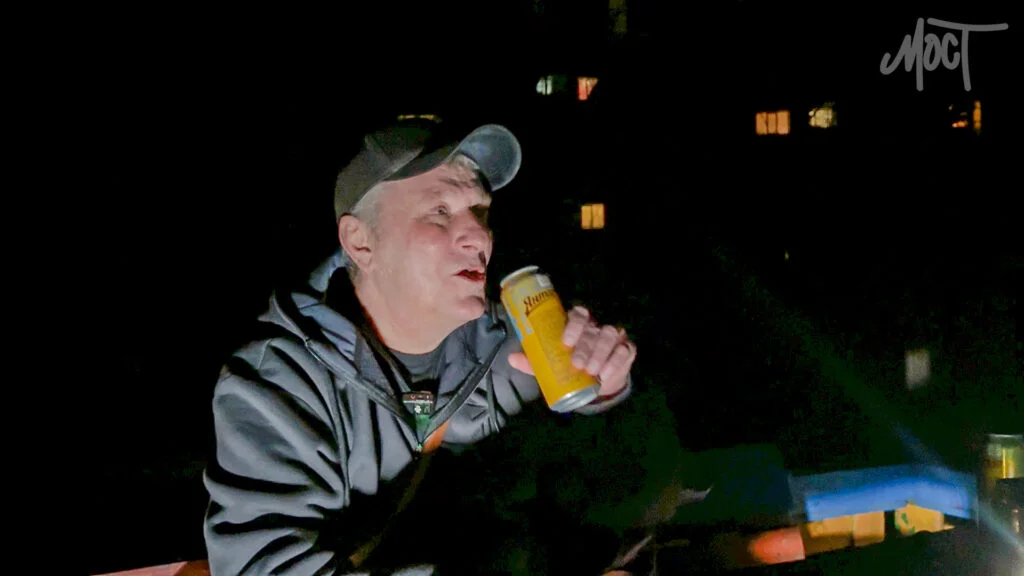
People quickly run down the street, lighting their way with phone flashlights, but Dmytro pays them no mind. He will get home later. For now – just sit and rest.
Thirty years in the profession. Two children, a wife, two small dogs. A city shelled daily by Russians. He loves his job – he says it without pretension, as a biographical fact. Even when drunk women are rude or when guests may leave in the middle of the evening because of explosions. Even when the city lives in a reality that cannot be adequately described to those who do not live it every day.
…He gets up at six, shaves daily, buys coffee, sweet water, beer and ryazhenka, goes to work, serves guests, and then sits on the bench with a beer and feels that life, damn it, has worked out.