

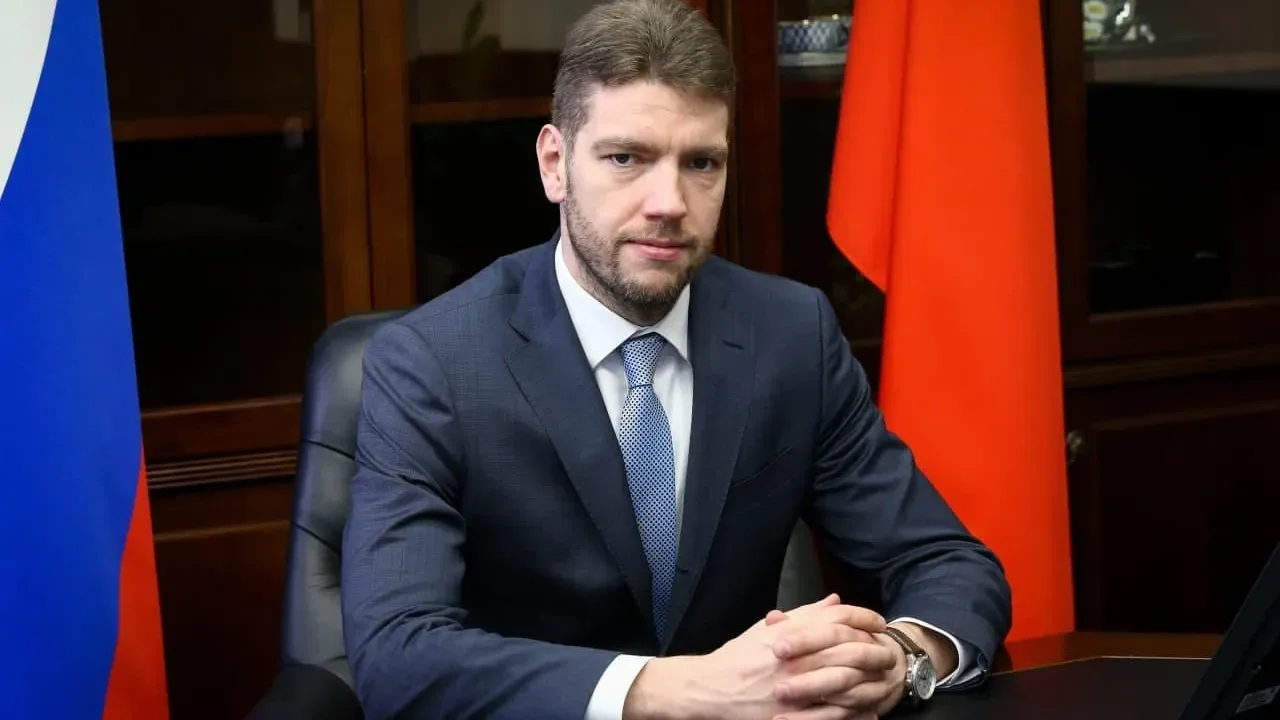
Ukrainian law enforcement officials have reported suspicion against the Deputy Minister of Agriculture of the Russian Federation, Andriy Razin. He is accused of violating the laws and customs of war, committed by prior conspiracy of a group of persons (part 2 of Art. 28, part 1 of Art. 438 of the Criminal Code of Ukraine).
This is stated on the website of the Office of the Prosecutor General of Ukraine.
According to the investigation, Razin acted together with Russia’s Minister of Agriculture Dmitry Patrushev, the heads of the occupation administrations in Zaporizhzhia, Kherson, Donetsk and Luhansk regions — Євгеном Балицьким, Володимиром Сальдо, Денисом Пушиліним та Леонідом Пасічником, as well as other officials of the ministry.
From 2022 to 2023 Razin coordinated the forced seizure of property of Ukrainian agricultural enterprises in the temporarily occupied territories. Under the guise of “nationalization” the Russian side seized agricultural land, grain elevators, equipment and harvests, including assets of the companies “НІБУЛОН”, ДПЗКУ and TESSLAGROUP.
The stolen grain was transported to Crimea, Krasnodar Krai and Rostov Oblast, from where it was exported by sea as Russian produce — in particular to Syria, Egypt, Turkey and Lebanon.
According to the investigation, the occupiers under Razin’s leadership removed more than 4.1 million tonnes of grain from the Kherson and Zaporizhzhia regions alone, worth over 23 billion hryvnias.
The investigation believes that these actions were not driven by military necessity and therefore qualify as a war crime under the Rome Statute of the International Criminal Court.
Earlier we wrote that the occupiers announced the launch of rail transportation of grain in the Kherson region.
Agricultural products from the temporarily occupied territories of Kherson and Zaporizhzhia regions are being exported by the Russians to Belarus, Kazakhstan, Uzbekistan, as well as to Vietnam, India and China.
In addition, last year the occupation authorities said that seven “countries friendly to Russia”, had shown interest in purchasing food wheat from the Kherson region. It was also reported that flour from the left bank of Kherson was intended to be exported to countries in Asia, Africa and the Arab world.