

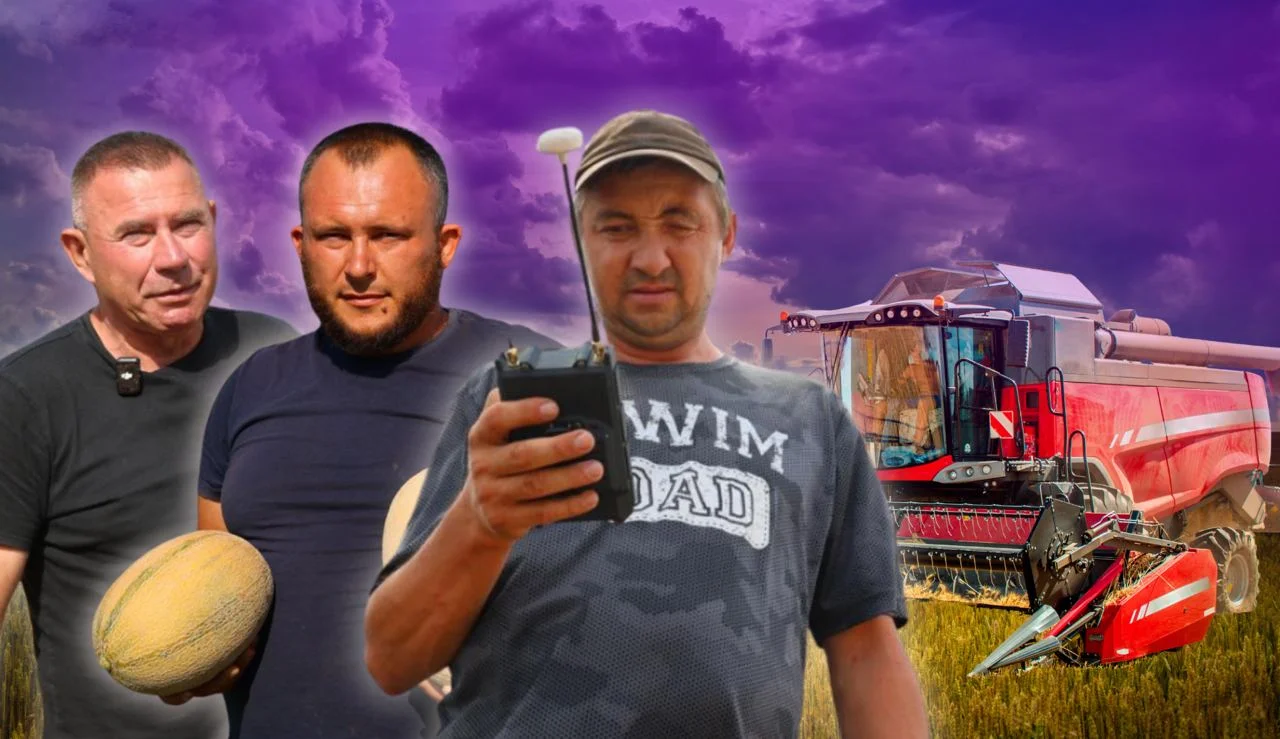
Each new agricultural season in Kherson region is harder than the previous one. This year the right-bank area for the first time began recording a new sad statistic – attacks by Russian drones on farmers and agricultural machinery. Last month the Russians killed a Kherson farmer, the head of the Association of Farmers and Private Landowners of Kherson Oblast Oleksandr Hordiyenko. A few months before that – a worker from his farm was killed by a drop from a drone.
Weather conditions did not help the harvest this year either. The destruction of the Kakhovka reservoir, abnormal heat, and spring frosts led to new challenges for Kherson farmers.
MOST spoke with the director of the regional department of agricultural development and irrigation Dmytro Yunusov about these challenges, and about how right-bank farmers are adapting to new, even more extreme conditions.
Harvest under enemy drones
Since the de-occupation, 14 people have died and more than 40 have been injured by mines in Kherson’s fields. During the humanitarian and operational demining programs in the de-occupied part of Kherson region, it was possible to clear almost 90% of the fields: 446 thousand hectares out of 508 potentially dangerous. A portion of the fields located within 10-20 kilometers of the contact line will remain uncleared until the end of martial law.
Demining the fields made it possible to significantly increase sowing areas in 2025 — to 250 thousand hectares (100 thousand hectares more than in 2024).
As of October 1, harvest was gathered from an area of 85.8 thousand hectares. Of that, wheat — 72.4 thousand tonnes, barley — 27 thousand tonnes, peas — 4.79 thousand tonnes.
17.6 thousand tonnes of industrial crops — rapeseed and sunflower — were harvested. Also, more than 76 thousand tonnes of vegetable products were collected.
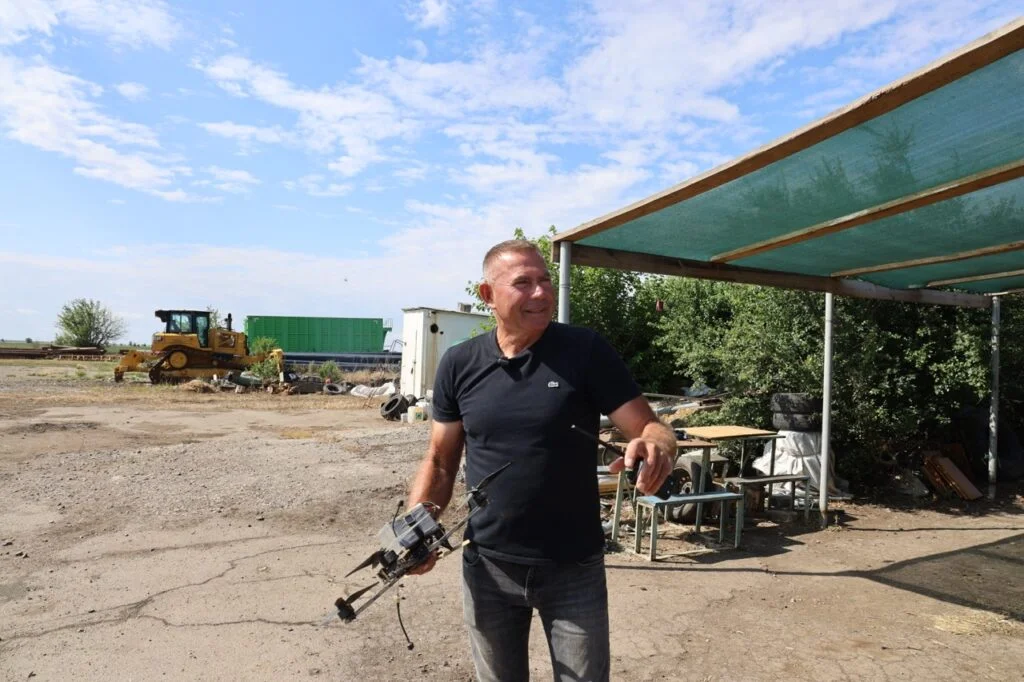
However, this year the mine danger is not the only and not the worst. The Russians have begun hunting farmers — attacking them with drones during fieldwork. Two people were killed and two were wounded as a result of UAV attacks.
According to Dmytro Yunusov, such attacks also damage equipment — both cars, and tractors, and combines.
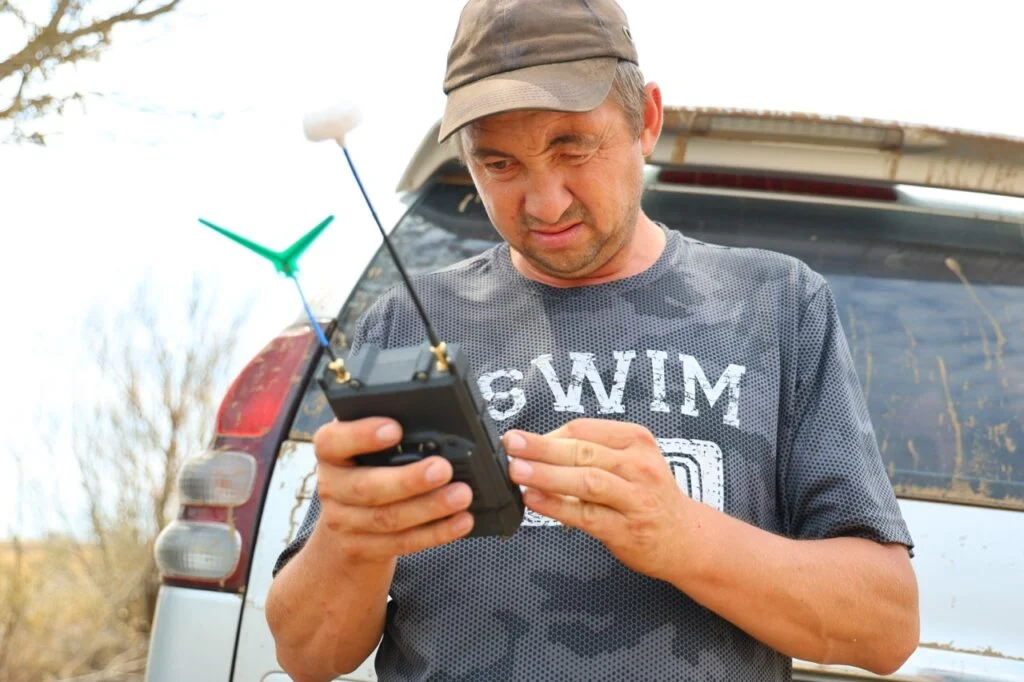
“Harvesting in Kherson region is currently taking place in very extreme conditions. Farmers buy detectors, analyzers in order to detect enemy drones. They work in pairs. One sits in a shelter and spots drones. If there is a UAV nearby, he transmits by radio to the one working in the field — the partner must jump out of the machinery as fast as possible and run away”.
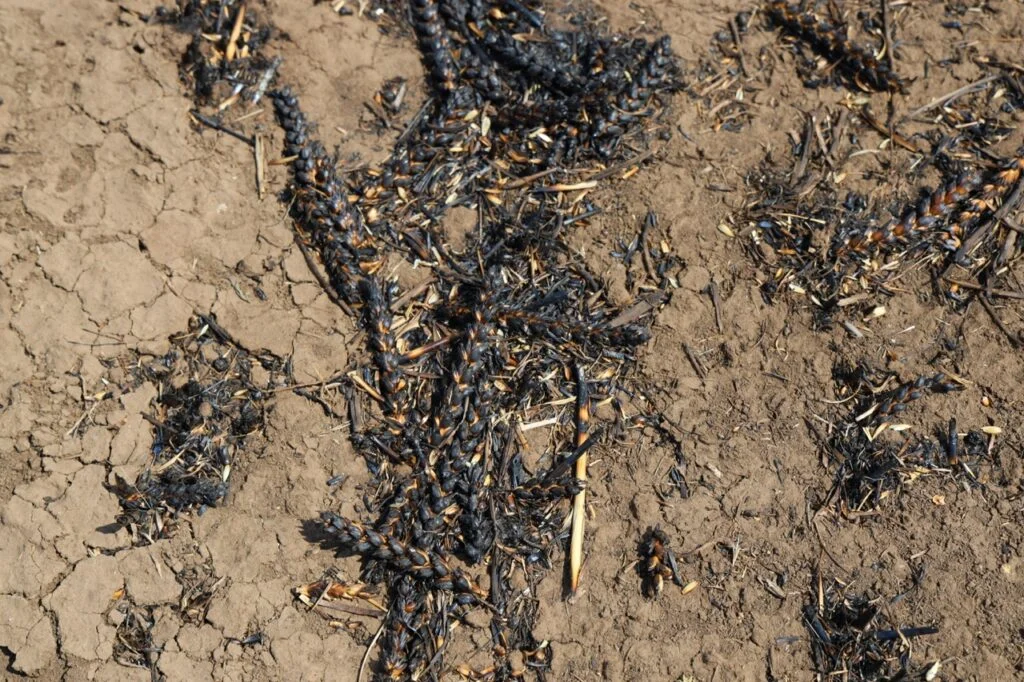
Yunusov notes that up to 5 thousand hectares cannot be harvested by farmers due to combat operations. These were already sown fields, and the farmers simply resigned themselves to losing them. Also, 5 thousand hectares of burned fields have been recorded.
Climate challenges
Unexpected frosts, air and soil drought caused the death or damage of crops on an area of over 50 thousand hectares. According to preliminary estimates, direct losses of farmers exceed 1 billion hryvnias.
“Overall we understand that if the war ended, our farmers could overcome any weather-related challenges. However, of course, there are also problems related to climate change. They are caused in part by the destruction of the Kakhovka reservoir. We record an increase in temperature by several degrees. As a consequence – a new record for abnormal heat. This year there were also abnormal frosts at the end of March–beginning of April. Plus the lack of rain – we had less than 50% of the minimally required precipitation. This also greatly affected the harvest”, – says Dmytro Yunusov.
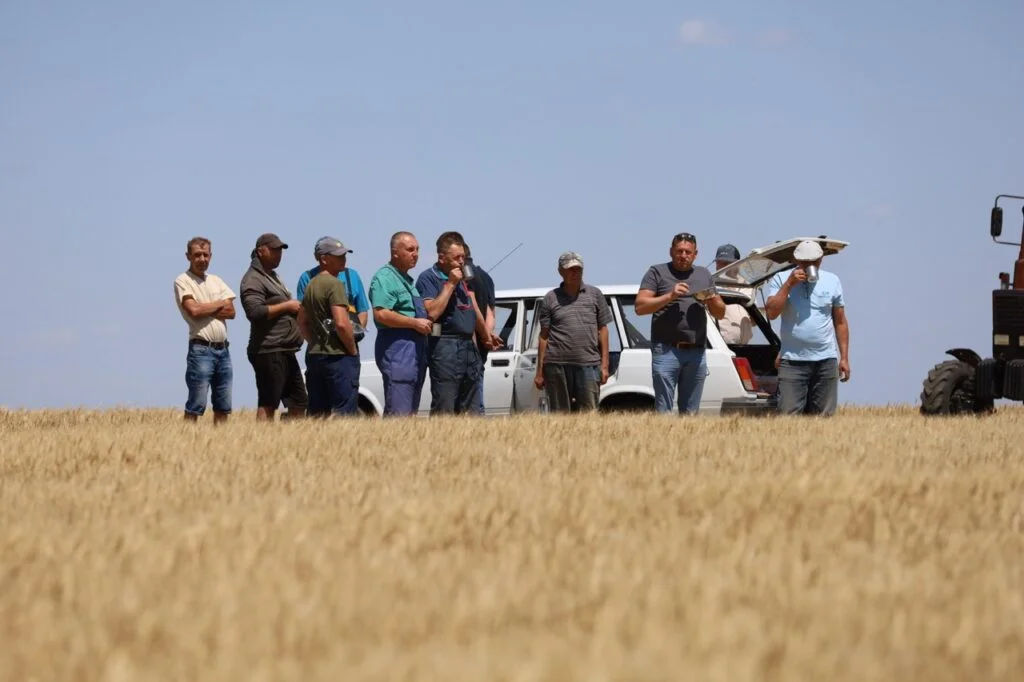
Mostly the Beryslav district, which borders the Kakhovka reservoir, suffered – of 500 affected farms 466 fall on this territory.
Farmers have begun looking for ways to overcome these challenges, including trying new soil cultivation technologies. Among them – switching to No-Till technology — a modern model of soil treatment in which the soil is not tilled in the traditional way but is covered with chopped residues of plant crops, which helps retain moisture and restore its fertility.
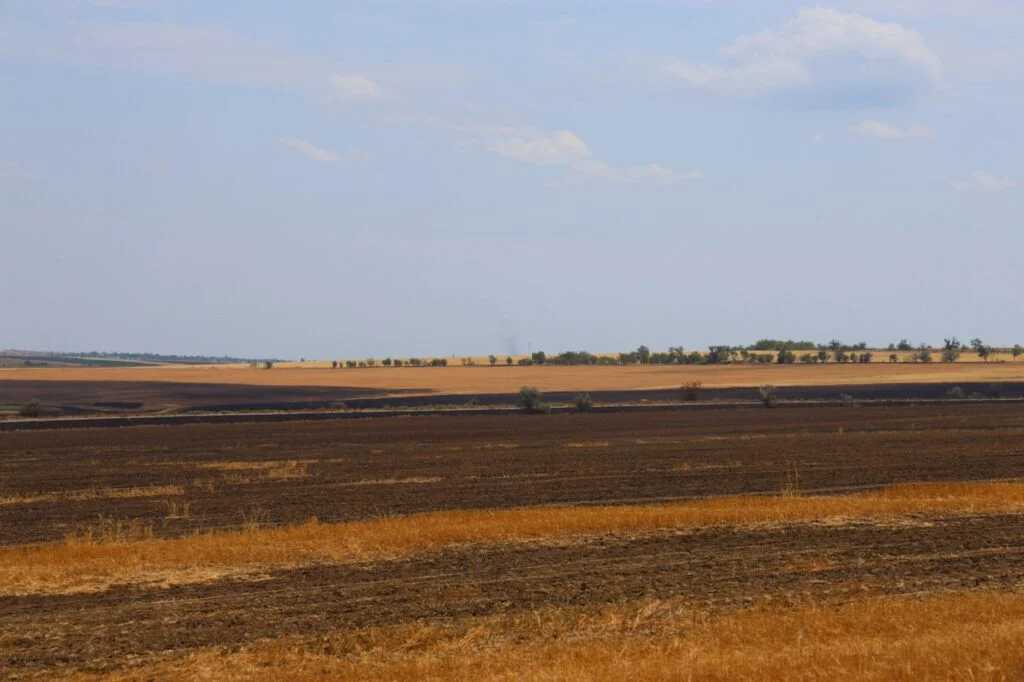
Farmers are also reorienting to new crops. According to Dmytro Yunusov, there is an increasing refusal of sunflower, whose yield in Kherson has fallen, while farms are switching to growing flax.
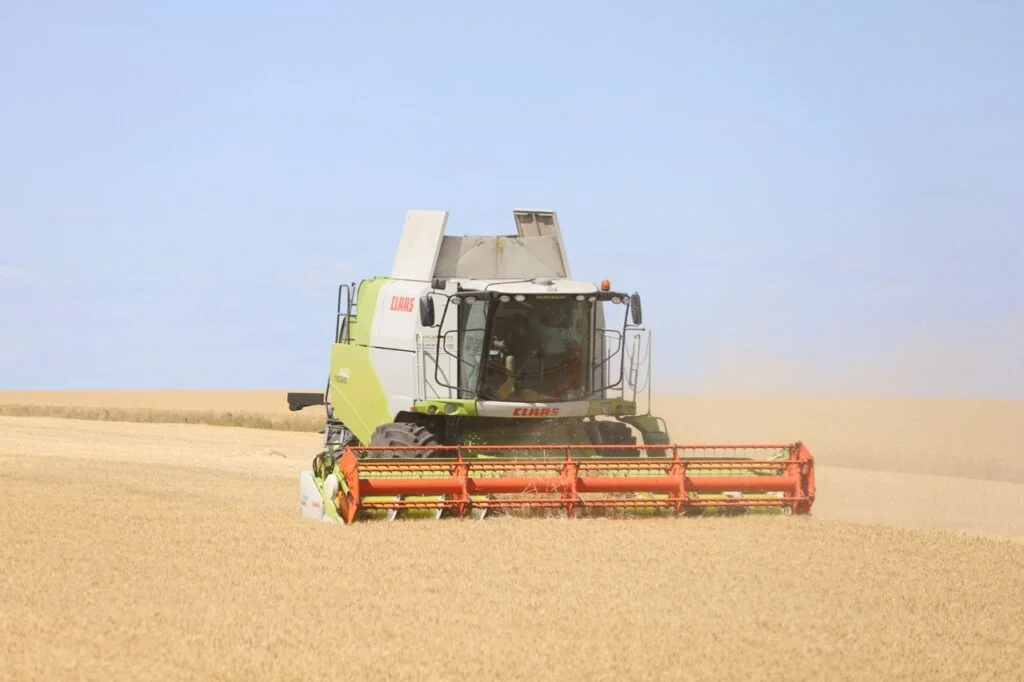
“This has also created a need for processing enterprises. Farmers are interested not only in collecting and selling flax, but also in processing it themselves. But now implementing processing projects, even small factories, is very dangerous. There are state grants — up to 8 mln UAH can be obtained for processing production. Co-financing is required, and given the lack of personnel, farmers are not in a hurry to invest their money in such projects”, – says the official.
Farmers are also turning to temporary types of grain storage – sleeves, modular grain storages. Up to 200 tonnes of grain can be placed in such sleeves. This allows farmers not to repair damaged warehouses and build new hangars, but to lay modular grain storages right in the field. Many farmers prefer vegetables instead of cereals – mainly in the Bilozerka, Chornobaivka and Muzykivka communities.
“Easy to abandon — hard to restore”
Security and climate challenges have put the possibility of continuing economic activity at risk for many farmers. Despite this, Dmytro Yunusov is confident that most entrepreneurs currently working in the region will not abandon their life’s work.
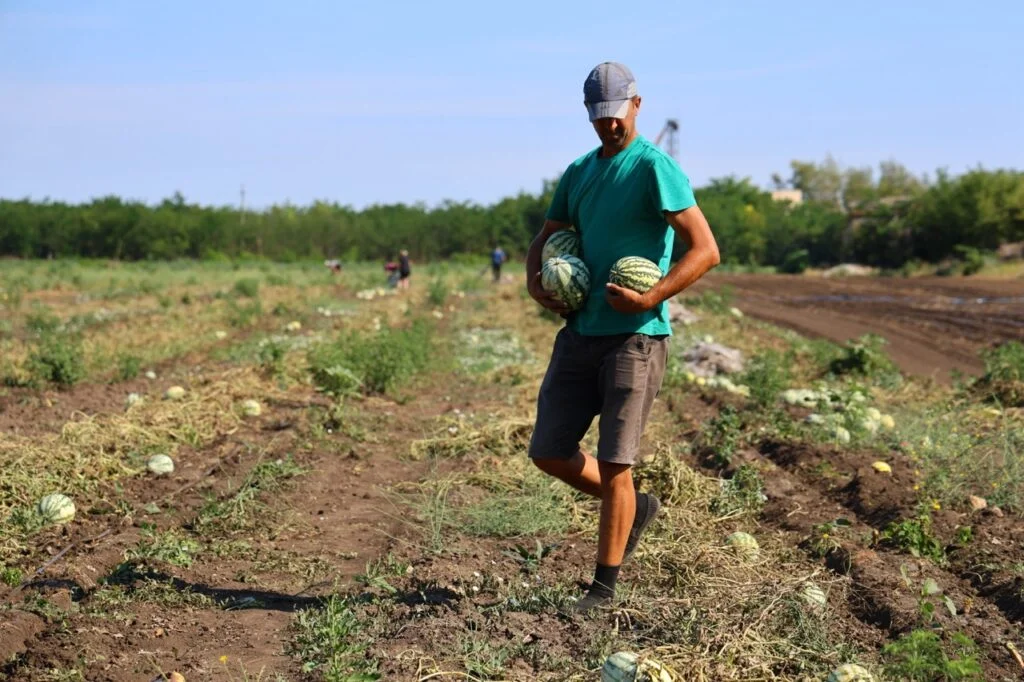
“Each season is harder than the previous one. Every time I hear from farmers the phrase ‘That’s it, this is the last year I sow, enough’. But I know these are people sincerely devoted to their work, and they will not leave their homes. You know, as they say, it’s easy to abandon — to disperse people, to close everything. But to restore… With great enthusiasm our farmers returned after de-occupation, and this inspiration keeps them to this day. Our task is to ensure that this faith remains in them, to support them. Sometimes not only financially, but also with communication and attention”, – emphasizes Dmytro Yunusov.
About how the authorities and international funds help Kherson farmers stay afloat and how the farmers themselves cope with the extremely difficult conditions we will tell in the next article.