

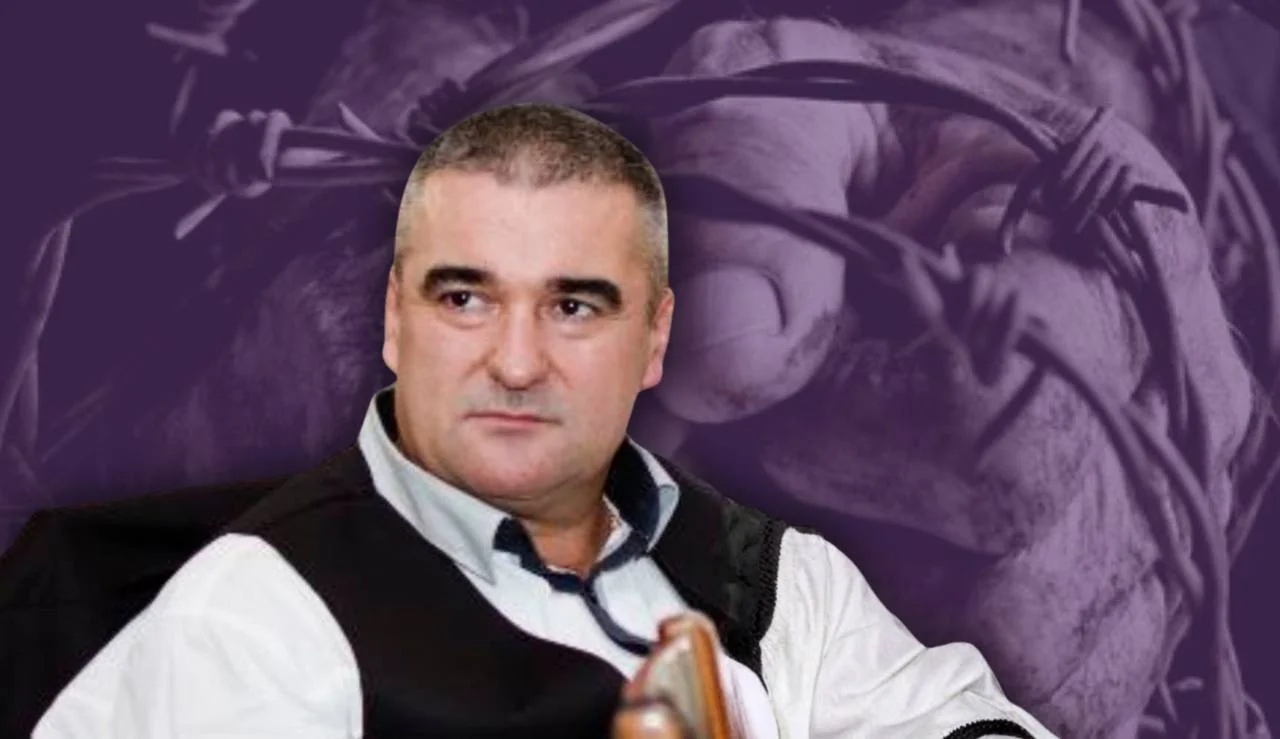
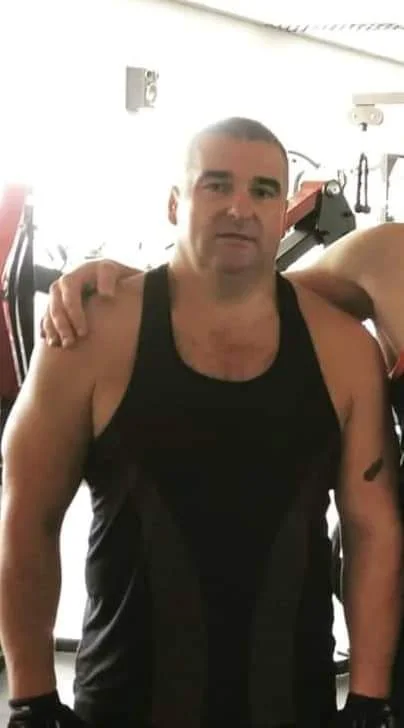
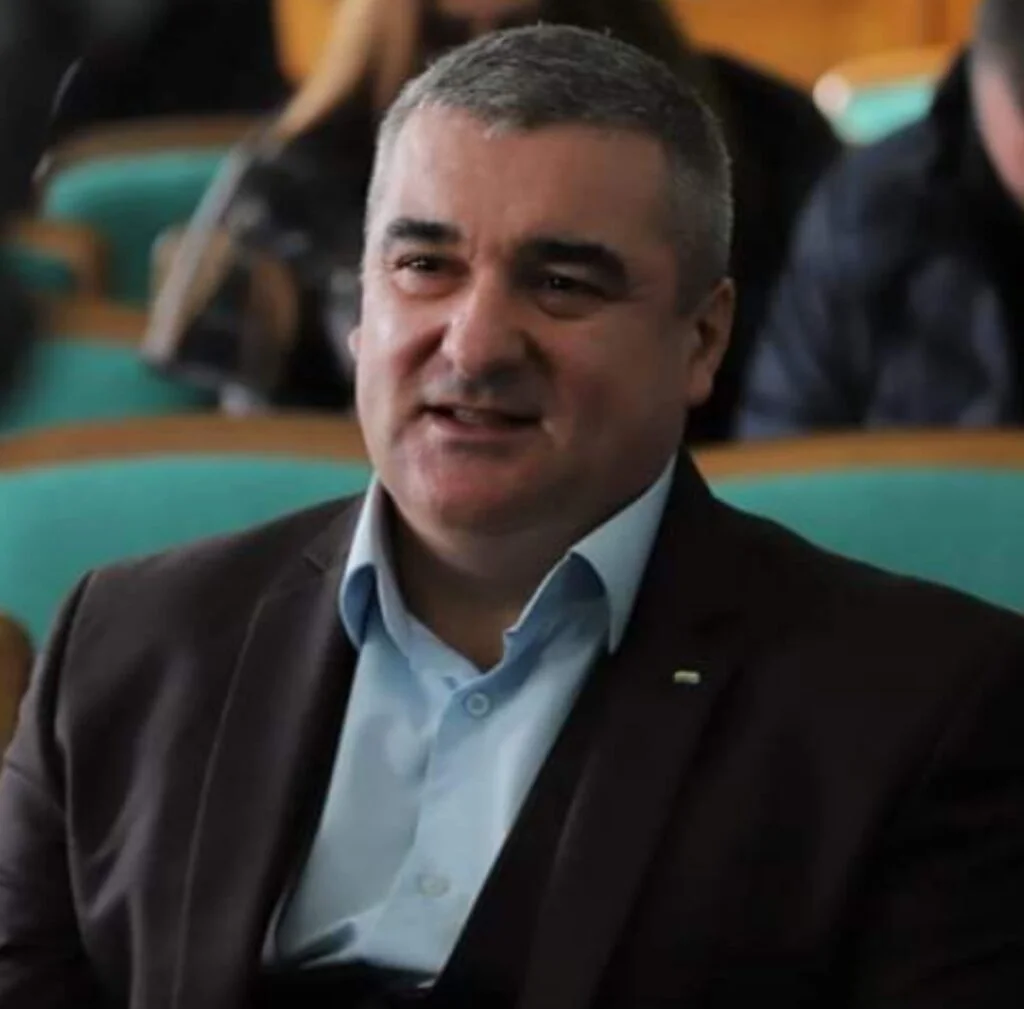
May 2022. Occupied Kherson. From the water on the embankment of the River Port they pull out a chilling find: the body of a man with signs of torture. A weight was tied to his feet. A few weeks later the identity of the deceased was established. It turned out to be 47-year-old retired police lieutenant colonel, commander of the Kherson company of the Territorial Defense (TrO) Vitaliy Lapchuk. Russian occupiers captured him prisoner already at the end of March. Since then almost 4 years have passed — much has already been written and filmed about this war crime. But MOST learned new details of the case of Vitaliy Lapchuk and events related to it.
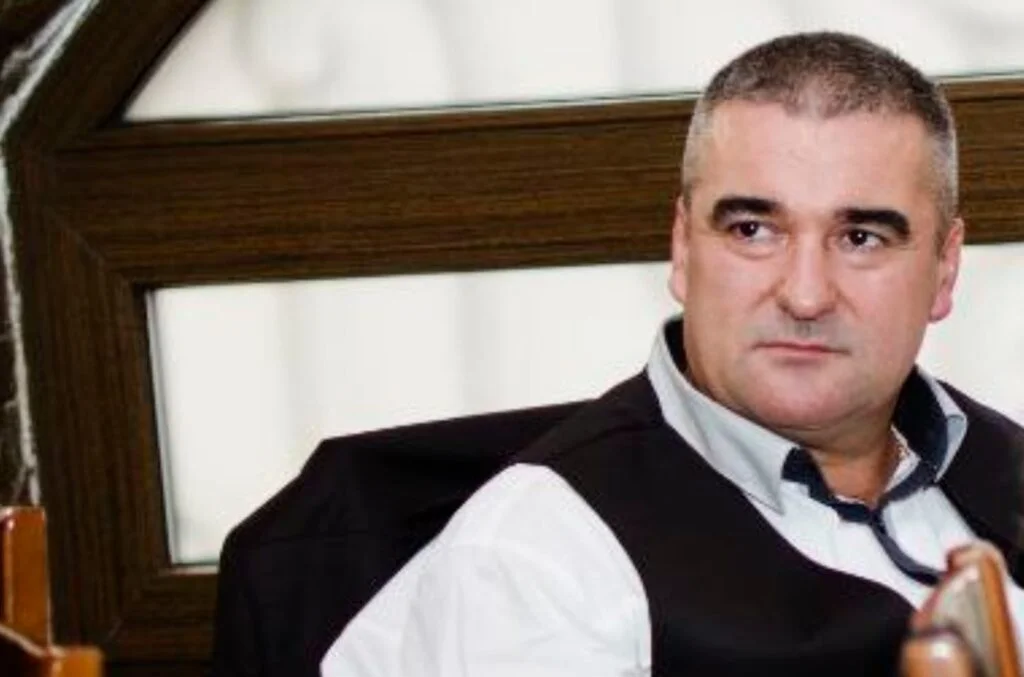
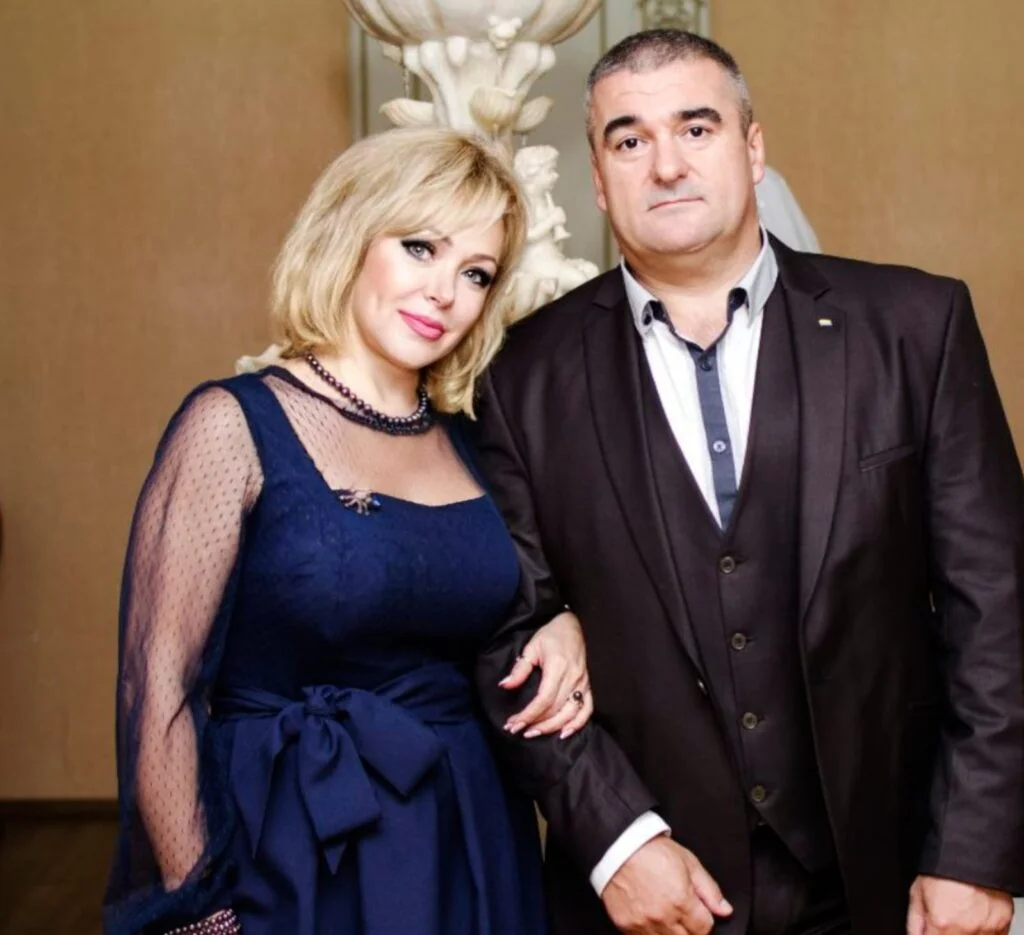
Alona Lapchuk is the widow of the tortured lieutenant colonel. In the criminal proceedings on the fact of committing war crimes (Part 1,2 Art. 438 of the Criminal Code of Ukraine) she has the status of a victim. The pre-trial investigation into the murder of Vitaliy Lapchuk has not yet been commented on by law enforcement. But some of its details were revealed thanks to a court ruling in the administrative lawsuit of Alona Lapchuk. Since 2023 the woman has been trying in court to prove that her husband Vitaliy Lapchuk was mobilized into the Kherson military unit immediately after the full-scale invasion by the Russian Federation. She sees a causal connection between Vitaliy’s activities as a representative of the Kherson TrO brigade and the brutal crime of which he became a victim.
“For our family it is principled, a matter of honor — to prove that Vitaliy was not just running around the city with a rifle when the enemy advanced. He was carrying out tasks assigned by the command of several units of the Armed Forces of Ukraine. He did everything to, together with his comrades-in-arms, stop the movement of Russian troops and not let them into Kherson. And when the city was nevertheless captured by the occupiers, because the forces were unequal, Vitaliy began to monitor enemy troops. He cooperated with Ukrainian intelligence forces. And it was precisely because of this that the Russians killed him,” says Alona Lapchuk.
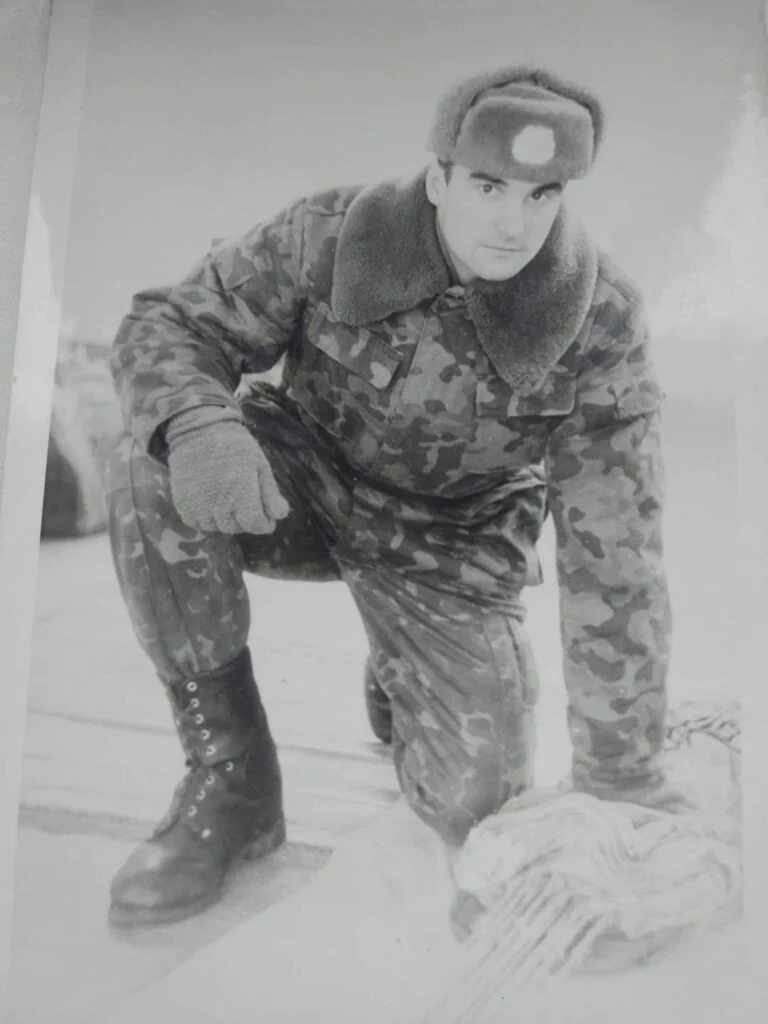
Vitaliy Lapchuk met the full-scale invasion 600 kilometers from Kherson. On the morning of February 24, 2022 the retired police lieutenant colonel, former deputy head of the Kherson faculty of the Odesa University of Internal Affairs, was already driving to Okhtyrka. In the Sumy region he was to take a managerial position in the State Reserve Committee. Then there was a call from home. His wife, alarmed by explosions in the area of Kherson airport, asked what to do and where to run. The husband calmed her — “don’t panic, everything will be fine” — and hurried to where his Kherson region was suffering in smoke and fire. Vitaliy spent his childhood and youth on the left bank, in the village of Mala Lepetykha (the settlement has been under occupation for almost 4 years, — MOST). His family had once moved there from the Lviv region. Alona Lapchuk says that as a career officer (Vitaliy Lapchuk graduated from a military institute and at one time served in the ranks of the Ukrainian army, — MOST) her husband felt an obligation to the Motherland at its most difficult hour. And so he went to Kherson, which by that time had already been abandoned by Ukrainian security forces.
The woman recalls that Vitaliy was home already after lunch on February 24. Hardly waiting for the morning, he went to the area of the Antonivskyi Bridge, where bloody battles had already taken place.
“You know, Vitaliy was always measured, but when he was driven wild, he needed to go somewhere, to the very epicenter of events. I couldn’t find a place for myself, from time to time I called him: watch out there, be careful! He sent me photos that made it even more terrifying. Torn bodies. Two guns and a tank with a dead young guy, it was a Ukrainian serviceman. From the Antonivskyi Bridge Vitaliy returned somewhat withdrawn, tears were in his eyes,” recounts Alona Lapchuk.
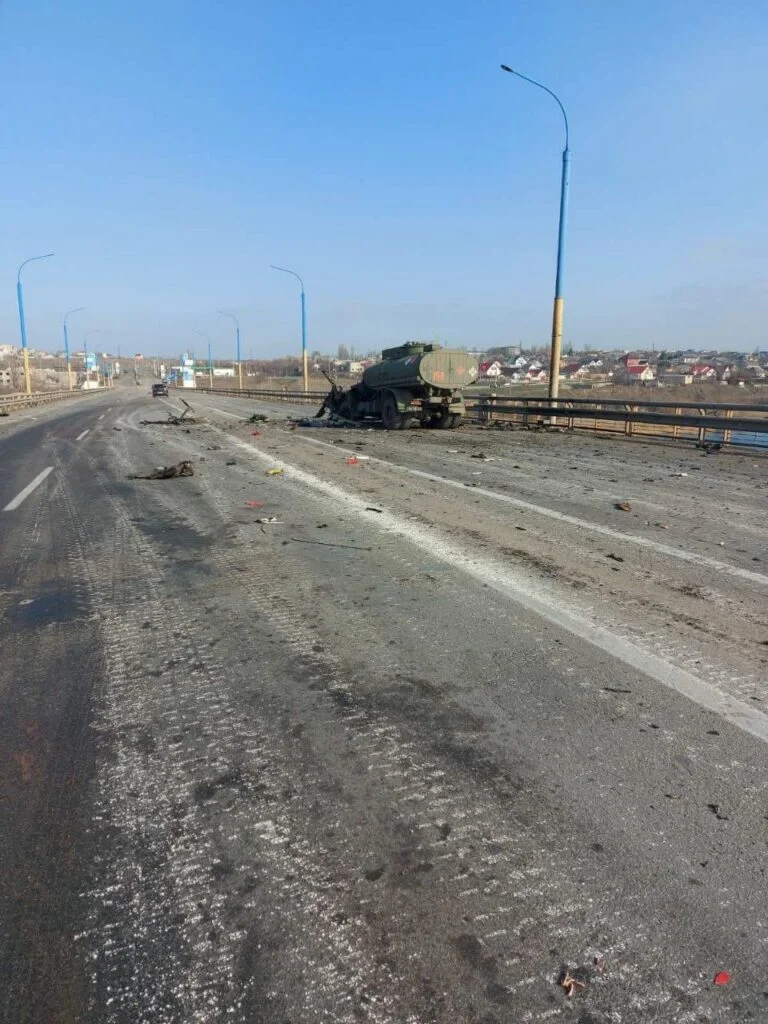
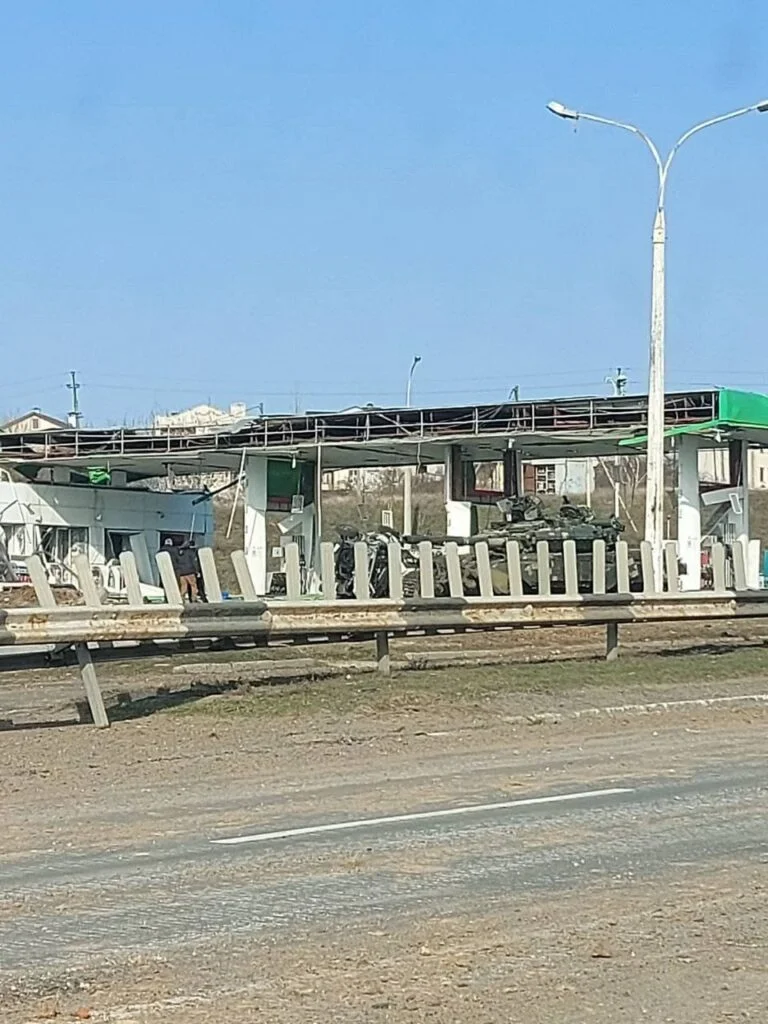
Photos taken by Vitaliy Lapchuk on 25.02.2022 on the Antonivskyi Bridge
Also, according to the woman, Vitaliy Lapchuk tried to convince the Kherson authorities that it was necessary to urgently blow up part of the Antonivskyi Bridge in order to stop the advance of enemy troops into Kherson. But he failed to get through.
“He said that one span of the Antonivskyi Bridge should be blown up; that would be enough so that Russian armored vehicles could not pass over it. With this idea he tried to call the then head of the Kherson Regional State Administration Hennadiy Lahuta, whom he had known for a long time (according to the official version of the investigation, in September 2023 the former head of Kherson region Hennadiy Lahuta committed suicide, — MOST). Then Vitaliy went to the ‘white house’ (the Kherson RSA building, — MOST), but there, apart from the guard, there was no one left. He also called someone in Kyiv, and he was told: ‘Don’t get involved. Take your family and go to Kropyvnytskyi, Russian troops won’t reach there.’ I begged my husband — let’s leave the city. And he said to me: ‘No, we will still fight,’” recalls Alona Lapchuk.
According to the woman, in the first days of the full-scale invasion Vitaliy went to the Kherson military enlistment office. There he met Denys Myronov — a career military man from Dnipro. Then Myronov called Lapchuk saying: “Get ready, I found the TrO.” Vitaliy took the backpack he had prepared earlier and left. And that evening, as Alona assures, he contacted her via video call. He was dressed in pixel camouflage and said he was on the grounds of the regional boarding school.
As is known, on February 24 the city enlistment office in Kherson, where volunteers were actively coming, turned out to be closed. So there was no mobilization from there. Instead, from a comment in the media by the former commander of the 124th Kherson TrO brigade Dmytro Ishchenko to Ukrainska Pravda in March 2023 it follows that on the day of the full-scale invasion his unit consisted of six battalions of up to forty people each. Orders came from above to begin completing the ranks. The mobilization order itself was signed around 14:00; until that time officers of the TrO units were calling up reservists to come for mobilization. They were received in Nadnipryanskyi, where literally in January 2022 premises were allocated for the basing of the Kherson Territorial Defense. This place is by the bypass road. It is known that on February 24, about 500 volunteers were mobilized into the ranks of the Kherson TrO brigade in Nadnipryanskyi. That same day at least 130 territorial defenders left for the area of the Antonivskyi Bridge. They were tasked with covering the 59th brigade during its crossing from the left bank to the right bank. TrO fighters held positions near the bridge at least until 20:00, enabling a combat brigade column to escape encirclement, evacuate the wounded and the dead, and also allowing civilian cars to cross to the right bank. It is also known that from February 26 the boarding school territory (Puhachova St., 101) became the base of the Kherson TrO. This is confirmed by Alona Lapchuk’s earlier words. The woman also has in her hands an act of official inspection that the military unit conducted after outrage from relatives of the dead in Buzkovyi Park and the regional lyceum among the brigade’s fighters. The document states that on February 26 in Kherson, among others, Vitaliy Lapchuk and Denys Myronov were mobilized. In particular, the 194th TrO battalion was formed and weapons were issued to the fighters. One of the officers of the military unit to which the TrO brigade was subordinate confirmed in writing for the court that on February 27, 2022 at the general formation of the 194th battalion of the 124th TrO brigade the personnel were informed that the commander of the 3rd company of that battalion was appointed Vitaliy Lapchuk.
The boarding school was not the TrO base for long. On March 1 the fighters set out to defend the city, to which Russian troops were already approaching. According to materials included in the decision of the Odesa District Administrative Court dated May 23, 2024 (the lawsuit of Alona Lapchuk, — MOST), the 1st and 2nd companies received orders from the then commander of the military unit Dmytro Kuzmenko to go to positions near the regional lyceum and to Buzovyi Park in the Shumenka neighborhood. The 3rd company under the command of Vitaliy Lapchuk, according to Kuzmenko’s testimony in court, was left on the boarding school grounds in a state of combat readiness.
Events unfolded rapidly. The enemy entered from the Komyshany side with armored vehicles. Spotting two men who ran at the first BMP with Molotov cocktails, the occupiers covered the TrO fighters with crossfire from two automatic guns. The fight did not last long — the advantage was with the armored vehicles. According to official information, 24 territorial defenders died in Buzkovyi Park and near the regional lyceum. They are called Kherson’s “Heroes of Kruty.” In 2024, after numerous complaints from relatives of the fallen and thanks to the intervention of the Kherson Regional State Administration, most of the dead were recognized as participants in combat operations.
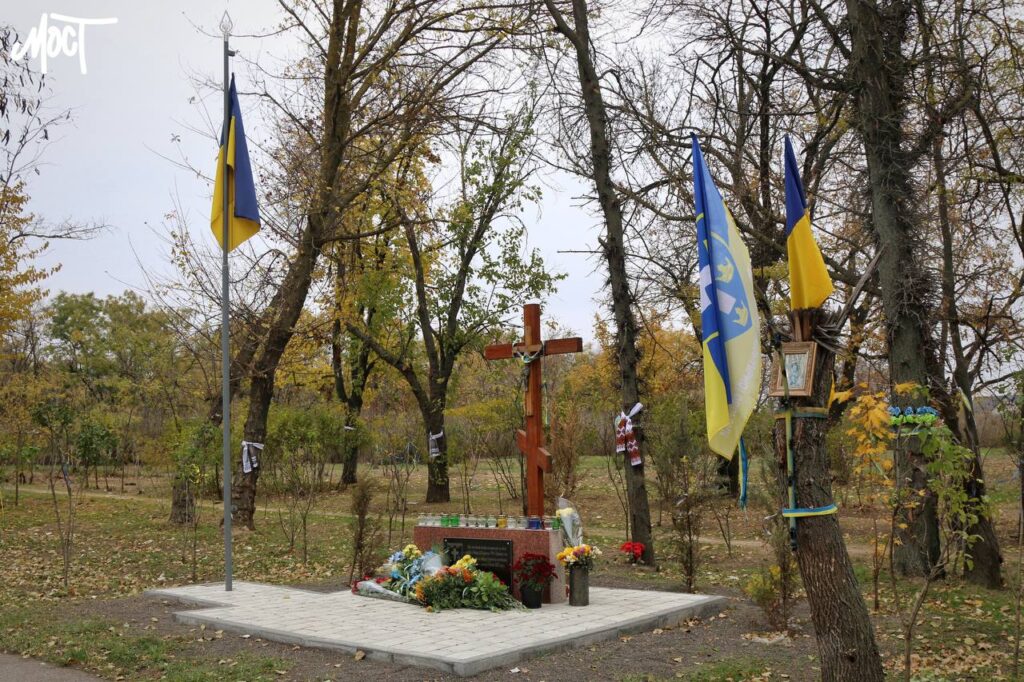
Some of the TrO fighters managed to leave occupied Kherson on their own. The rest stayed in the city, but it was not possible to hide for long. Many defenders ended up “in the basement” and were subjected to torture. Some of the torture sites never returned. Among them were the commander of the 3rd company Vitaliy Lapchuk and his deputy Denys Myronov.
According to testimony by the former commander of the Kherson military unit Dmytro Kuzmenko in court, after March 1 Vitaliy Lapchuk “went underground.” From that moment he, together with Denys Myronov, collected and passed on information about the movements of personnel and equipment of the Russian occupation forces. They also collected weapons and ammunition. As fighters of the Kherson TrO reported multiple times in the media, weapons of defenders who died in street battles could remain in Buzkovyi Park. Vitaliy and Denys transported those, and also rifles with grenades from the boarding school, in Vitaliy’s “Jeep Patriot.”
“Every morning Vitaliy would get into the car and rush somewhere. I said: it’s dangerous, the occupiers are already in the city, there are checkpoints everywhere, they will ‘turn you in’ and they will kill you. And he told me: ‘If they kill me — you will bury me.’ They bought bread, hid weapons under it and gradually took them away. My husband said he was responsible for that arsenal, and I didn’t even know then that he was a company commander. And all that weaponry Vitaliy brought to my mother’s basement, at that time we were living with her. I remember there was a ‘Mukha’ (handheld anti-tank rocket launcher (RPG-18), — MOST) in a state of combat readiness, with the safety on. Then for the last 10 days Vitaliy stopped bringing weapons — the petrol ran out. My business, a gas station near Kherson, was looted by the occupiers,” recalls Alona Lapchuk.
On the morning of Sunday, March 27 Denys Myronov arrived at the house where the Lapchuk family lived. At half past seven Vitaliy with his friend left; where to — Alona did not know. And already an hour later she began to feel unwell: headache and back pain, her legs buckled. The woman says she sensed something was wrong. She then began to call her husband continuously — the phone rang but he did not answer. Later the number became out of reach. In the afternoon three UAZs drove up to the house, each marked with the letter “Z” painted on them. Vitaliy’s phone turned on and he called. On the line the woman heard: “Alona, open the door, they will only take the weapons.” The woman remembers that Vitaliy’s appearance shocked her.
“A busted face, a split eyebrow taped with a plaster, and blood was running from under it. His jacket was soaked with it. His hands were scratched, you could see he tried to defend himself. I think Vitaliy agreed to hand over the weapons so that they wouldn’t touch me and the son. And he kept repeating to one of the occupiers: ‘You gave your word of honor that the family would not be harmed.’ There were nine of them — youngsters, no older than 30. Only two of them did not take off their balaclavas. They were well equipped, wearing knee pads. Most of them had patches with the Russian tricolor on their uniforms, and on three — instead of the white stripe there was black. As it turned out — that was the flag of the so-called ‘DPR.’ These were short in stature, the rest were tall and burly, as if handpicked. And interestingly, they had a camera, every step was recorded. Where that video went is unknown. I think at first they planned to make a show out of detaining Vitaliy, like he was a ‘terrorist,’ but something went wrong,” the woman recounts.
“The ‘guests’ quickly turned the house upside down. The declared ‘search’ looked more like a robbery. According to Alona Lapchuk, the ‘polite people’ grabbed everything they liked — from money, jewelry and perfume to clothes and even socks. They took equipment: two spare mobile phones and even old phones that didn’t turn on, a netbook of the couple’s younger son who lives in Poland, laptops — of Alona’s elder son, the home and her work laptop. But all this was incidental; the occupiers were looking for weapons.
“Five grenades and three rifles lay on the second floor. Another four dozen rifles, three boxes with grenades, ammunition and the ‘Mukha’ were stored in the basement. When they were taking all this out, I was sure they were going to shoot us all on the spot. At home besides me were my elder son and my mother. There, in the basement, the occupiers smashed Vitaliy’s head. There were even bloody streaks on the floorboard, and I thought — it must be from the butt. I heard Vitaliy scream. They led him out under the arms, because he couldn’t walk on his own. When they put him in the car, he was moaning,” the woman recounts.
The occupiers also wanted to take Alona’s elderly mother, who was in a nightgown. At that time she was sick with COVID and coughing badly. She was holding a Bible in her hands. They were stopped only by the daughter’s words: “She won’t survive the road and she will be dead in your car. Do you want that?” Besides Vitaliy, the Russians took his wife and her elder son Andriy. The men were put into a ‘zetka’, their hands tied with plastic cable ties. Alona was put into the family’s white SUV. All three had bags put over their heads. But the occupiers did not have a black bag for the woman; they gave her a kitchen bag with a white Eiffel Tower pattern that was somewhat see-through. Thanks to that Alona could see somewhat, including that they had been brought to the building of the former regional police administration — 4 Lyuteranska St. At the signal the gates opened and the cars drove into the courtyard on the cobblestones. Alona says that when she was taken out of the car, through the transparent part of the bag she saw about five men standing in the yard, also with bags on their heads. Among them was likely Denys Myronov. Thus, the occupiers that day staged a roundup of people they needed. Then Vitaliy and Andriy were taken out of the car.
The woman remembers that she was led into one of the offices. She constantly had the bag on her head, which was removed only for a minute to take fingerprints. At that moment Alona could better examine the office and the faces of those present. She is convinced that she was saved by the fact that she could not unlock her own phone. Due to stress her hands were wet and the fingerprint option did not work. Later Alona’s son was brought into the office. An occupier in green camouflage with a ‘Polite People’ patch on his sleeve came in. He acted like the boss. It was already deep night, but he decided to drive the woman out: ‘Why is she sitting here? Go home!’ But without her husband Alona refused to leave. Then they told her: ‘Tomorrow the military police will come here, and it will be even worse for you.’ To which the woman replied: ‘It cannot get worse than this.’
“Vitaliy was in another office. It seemed to me I heard from there: ‘We must establish the whole chain.’ To which Vitaliy replied: ‘If you must — then establish it.’ Then I heard — ‘Let’s go downstairs.’ Then I thought someone handed a rubber baton to someone. I heard: ‘Make him soil himself.’ Then two people came to our office, took my son by the arms: ‘This one will speak.’ And in my head immediately flashed: ‘So Vitaliy will say nothing more, did they do something to him?…’. I clung to my son and said: ‘He is not going anywhere.’ I began to cry again. From stress I began to feel sick. And then suddenly I screamed: ‘You have killed my husband! And now you are after my son. I will not leave, kill us all already! You will answer for this in The Hague.’ This hysterical outburst threw them off balance a bit and they decided to take us away. When they were taking me and my son to the car, I asked the occupier with the ‘Polite People’ patch about Vitaliy. He answered: ‘He is a terrorist, he will be tried under Russian law.’ I asked: ‘What is the price of the matter?’ The answer was: ‘Is that your market? You can only exchange him,’” the woman recalls.
Then the woman and her son were driven under the bridge that leads to the Tavriiskyi neighborhood. They were told: “Count to one hundred, then go where you want.” Alona recalls they walked home cautiously, along narrow streets so as not to draw attention. Seeing enemy equipment they hid behind bushes so as not to be shot. At half past four they reached — not her mother’s house but their own. And they saw that there had been a strike. A shell hit the house. It pierced the roof, the second floor, the stairs and fell into the basement, but did not detonate. A fire had already started in the home — the carpet was smoldering.
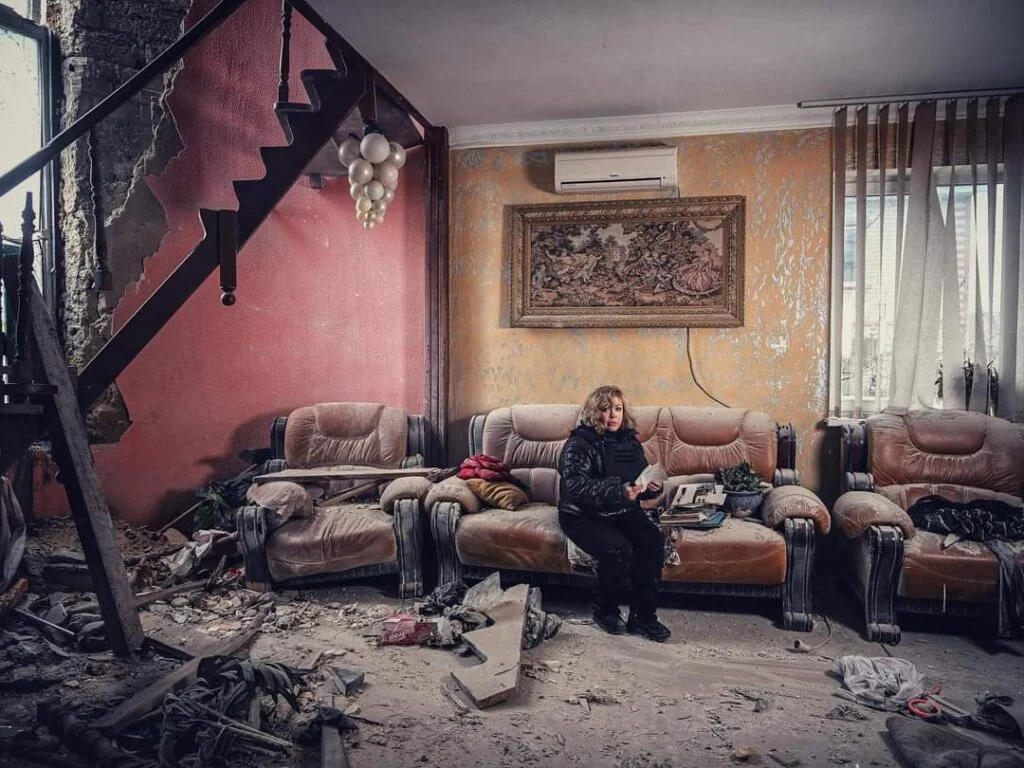
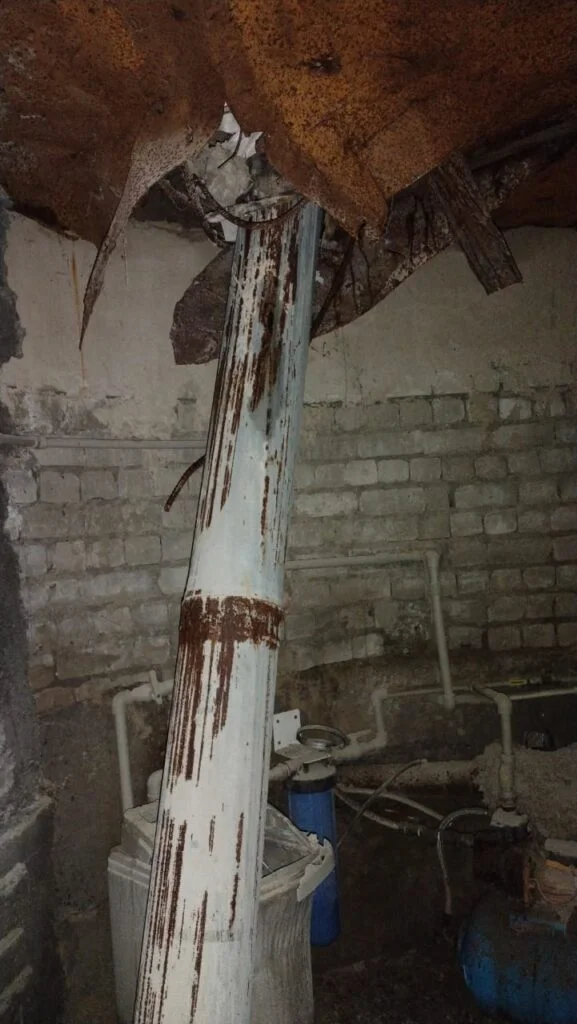
“I am sure — they shot intentionally, knowing where. On our street it was the only house hit. At that time rescue workers still operated in Kherson. I called them the next day and they removed the explosive. And already after the liberation of Kherson we accidentally found the fuel compartment from that rocket. At the commission that came to record the damage to the house I asked: ‘And what is that pipe?’ I said — I don’t know. It turned out to be part of the rocket. That same night, March 28, my mother’s house across the street from ours was shelled with a mortar. All the gates were full of holes like a sieve. The windows on the first floor were broken. Luckily my mother was in the basement,” Alona said.
The next day the Lapchuk family contacted Ukrainian law enforcement. The statement that Vitaliy had been taken prisoner by Russian occupiers was written by his son Dmytro, who was studying abroad. Indeed, the wife of the kidnapped man under occupation could not turn to the police and the Security Service of Ukraine. After everything that had happened, the mother and son were afraid to remain at addresses known to the occupiers. Alona was also disturbed that her phone was not returned. If they unlocked it and found something pro-Ukrainian, connected to the Armed Forces, the occupiers “could repeat.” The woman asked friends to buy her a new phone and immediately changed passwords for her social networks. On March 29 she posted on Facebook that Vitaliy had been taken by the occupiers. A friend saw it and called. She said that a few days earlier she had received a strange message from Vitaliy’s number: ‘I will call you later, there are problems with Alona.’
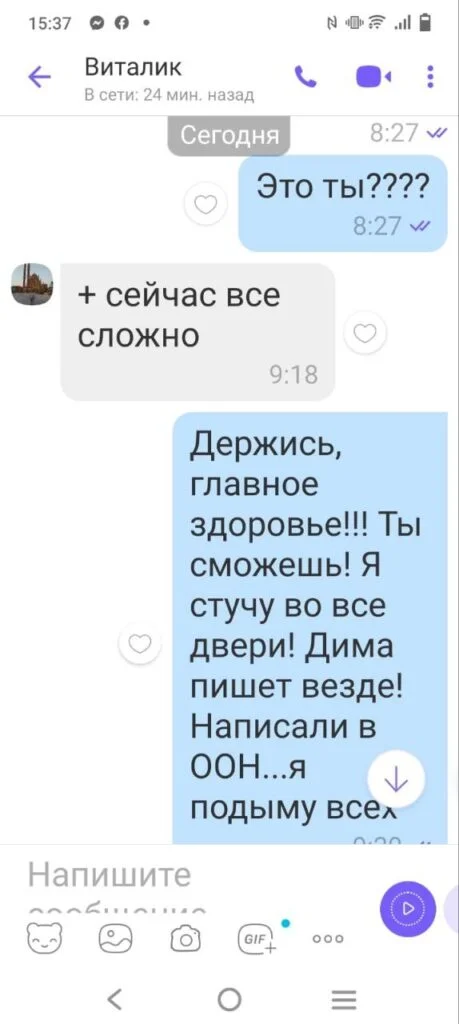
“I opened the chat history with Vitaliy, I see — the subscriber is online. I write to him: ‘Is that you?’ And the reply was: ‘+Everything is complicated.’ I understood that it was not Vitaliy. Because a plus sign for us meant ‘all is well’, not ‘all is complicated’. Realizing it was an FSB agent, I deliberately wrote: ‘Vityk, hang on, health is the main thing. I am knocking on all doors. We have written to international organizations, you are already in an exchange.’ After that that number never turned on again,” the woman recounts.
On April 7 the woman with her son and mother managed to break out of occupied Kherson in the family’s second car (the white SUV had been taken by the occupiers). The road to Mykolaiv was long and hard. Traffic jams, detours along dirt roads. They traveled for more than 10 hours. Alona remembers how from afar she saw a soldier with painfully familiar insignia. On his sleeve were yellow and blue stripes. At the checkpoint children were given sweets. People could not hold back tears. Then there was a Russian attack and they had to flee. Andriy’s car was shredded by shrapnel.
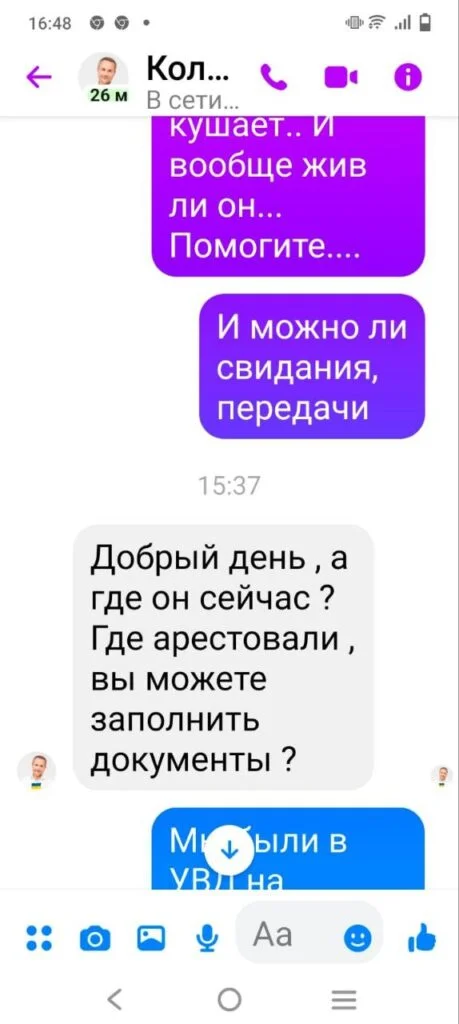
On free territory Alona Lapchuk traveled with anxious thoughts — first and foremost about the unknown fate of her husband. While still under occupation, the woman looked for Vitaliy as best she could. She wrote to the mayor Ihor Kolykhaiev, who remained in Kherson. He asked where and how her husband had been taken and advised to “fill out the documents.” There was no further response. And when Vitaliy’s younger son in a chat with the mayor asked where one could turn besides filling out a form about a detained person, his profile was blocked.
Alona Lapchuk also sent a message in Facebook Messenger to the occupation governor Volodymyr Saldo, but it remained unread. The woman also says that her friends appealed to the now-deceased deputy occupation governor Kyrylo Stremousov. He said: “She will never find him.” After posts about Vitaliy’s detention by the Russians, scammers began to bother the woman. They wrote that her husband was in pre-trial detention in Sevastopol. They demanded $10,000. No money was transferred to anyone.
“Meanwhile Vitaliy appeared to me in dreams: ‘Alona, I’m in the water. I’m wet. I’m cold.’ My mother and I couldn’t understand: what does the water mean? And, as it turned out, he was in the river,” recalls Alona.
On May 22 a dead man with bound hands and a weight on his legs was pulled from the Dnipro in Kherson. Local Telegram channels, relying on witnesses, wrote that the body bore signs of torture, including a fractured skull. Alona says she read that information but decided it was not her husband, because in the comments someone wrote that they recognized their relative in the deceased. On June 9 a pathologist from Kherson messaged Alona asking her to get in touch. The woman immediately understood why. Later she learned: it was confirmed that the body found in the water was that of Vitaliy Lapchuk — the deceased’s driver’s license was in the pocket. In two days the woman managed to organize her husband’s burial in occupied Kherson. It was carried out by relatives and family friends. The certificate with the forensic examination conclusion from the occupied city was delivered to Alona by bus. It stated that Vitaliy Lapchuk’s death occurred on 20.04.2022, and the cause was unknown. “How can it be ‘unknown’ if there were signs of torture on the body, as could be seen in photographs from the morgue? And where could Vitaliy have been for more than three weeks before that?” Alona asked the pathologist in Messenger.
“The forensic specialist replied to me: ‘I am in occupied Kherson, I have two children and I value my life,’” says Alona Lapchuk.
Authorities also doubted the date and cause of Vitaliy Lapchuk’s death. After the de-occupation of Kherson, in August 2023 an investigator in the criminal proceedings ordered an exhumation of Vitaliy’s body. Alona does not hide that she was against disturbing her husband’s final resting place, who had already suffered so much. At the same time she bought a new coffin for reburial after the forensic examination. The results of the exhumation are unknown to her, because due to her severe emotional state she herself asked the investigator not to torment her with horrifying details of the case. The court decision of May 23, 2024 in the matter of the widow’s lawsuit repeats the same data: died on 20.04.2022, cause of death unknown. From time to time investigators send Alona Lapchuk photographs of Russian military personnel who during the occupation of Kherson were stationed in the building of the Main Directorate of the National Police in Kherson region. As is known, it was seized on March 2, 2022. On those photos the woman has not recognized anyone yet. Whether there are specific suspects in the criminal case regarding the detention and murder of her husband is unknown to Alona Lapchuk. The pre-trial investigation is being conducted by a unit whose activities are classified.
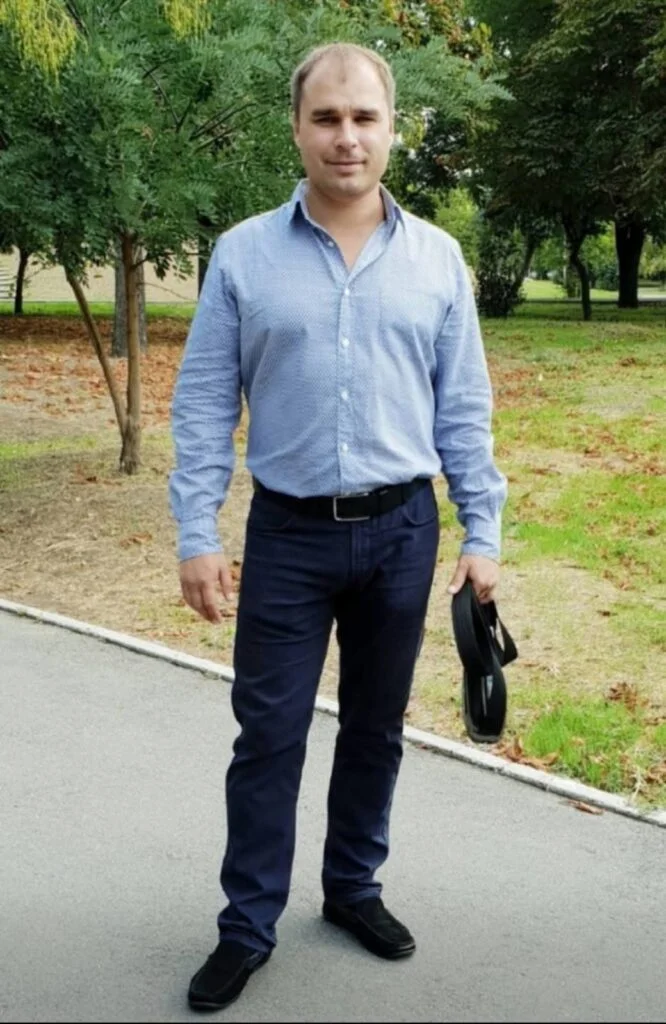
According to data contained in the court materials of the woman’s administrative lawsuit, the commander of the 3rd TrO company Vitaliy Lapchuk and his deputy Denys Myronov disappeared on March 27, after they went to the boat station in Kherson where boats were moored. As later became clear, both fell victim to a war crime. The captured Denys Myronov was also tortured by the occupiers. He was transferred from Kherson to occupied Crimea. There he was in a severe condition — with broken ribs. When medical assistance was finally provided, it was too late. On May 23, 2022 he died. Denys was 42. On June 6 of the same year his wife Ksenia Myronova was recognized as a victim in the criminal proceedings on the fact of committing a war crime.
Currently Alona Lapchuk continues to sue the Kherson military unit. She seeks to prove that her husband was mobilized and that he served in the battalion which at that time was subordinate to the 124th TrO brigade. In her claim she asks the court to oblige the military unit to provide all documents confirming the mobilization of Vitaliy Lapchuk and his service in that unit. She lost the case at first instance. The Odesa District Administrative Court denied her claim. However, exactly one year later, on May 25, 2025, the Fifth Administrative Court of Appeal composed of a panel of judges ruled that two military units are obliged to provide that court with a range of documents related to Vitaliy Lapchuk’s service.
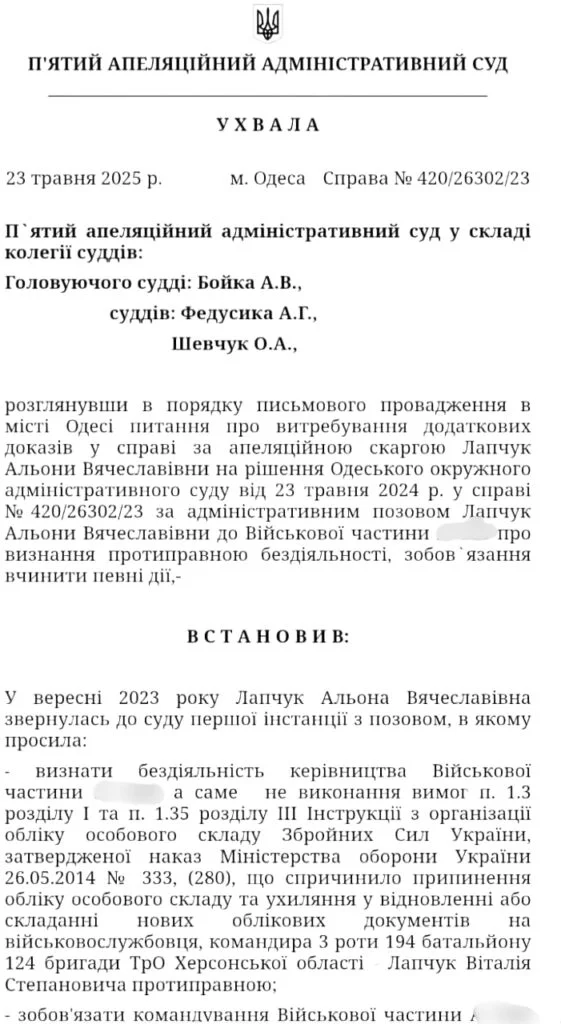
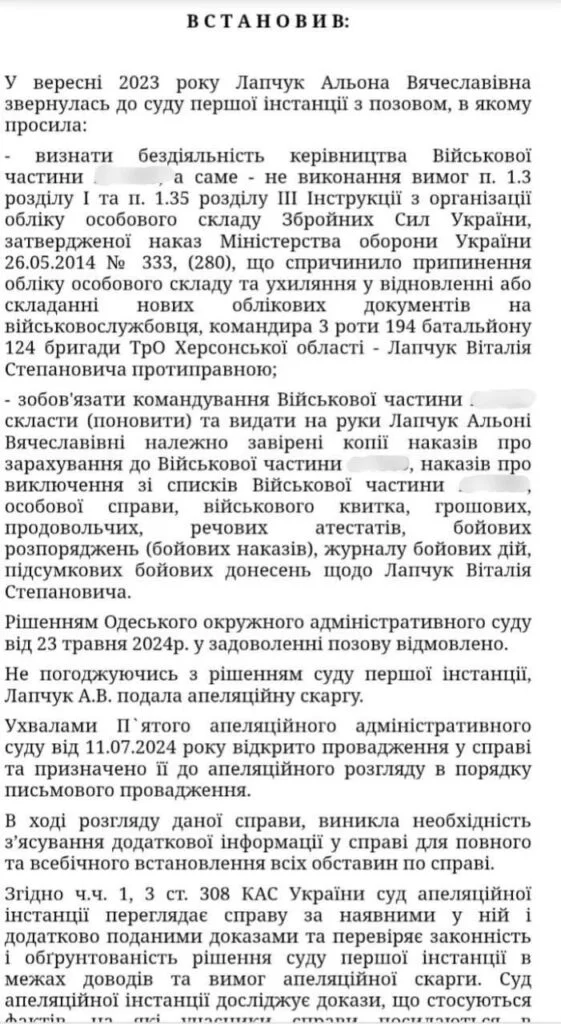
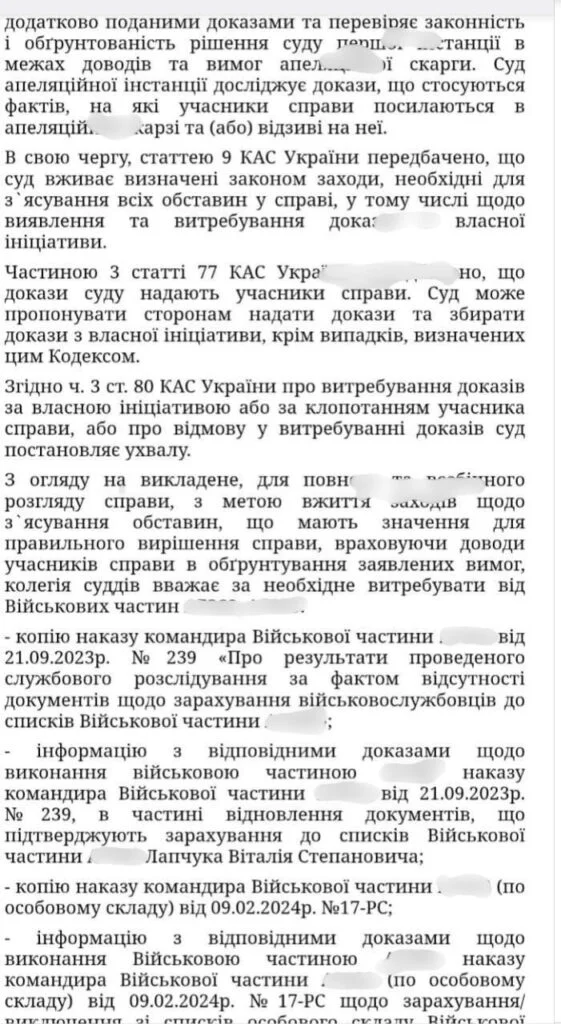
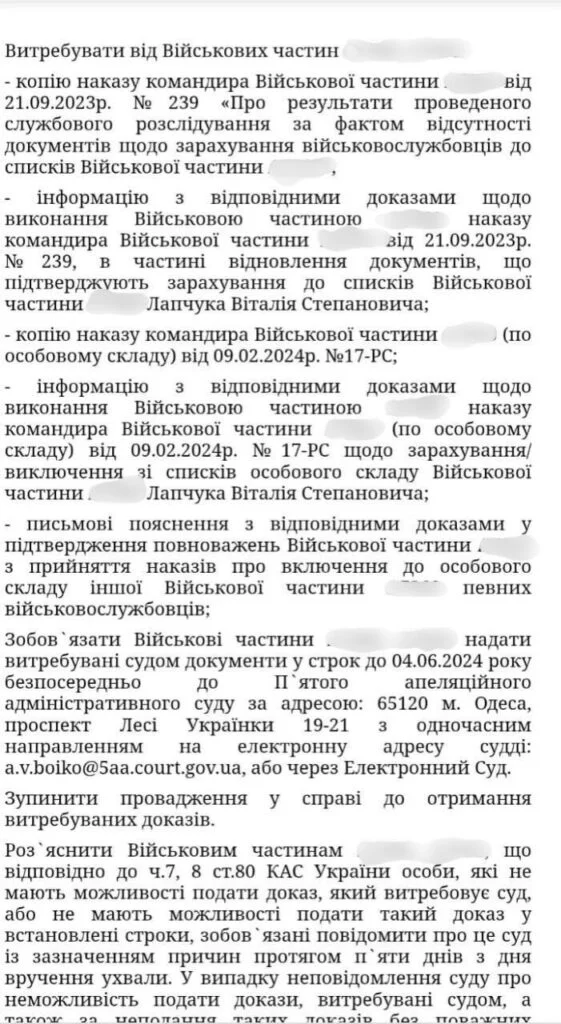
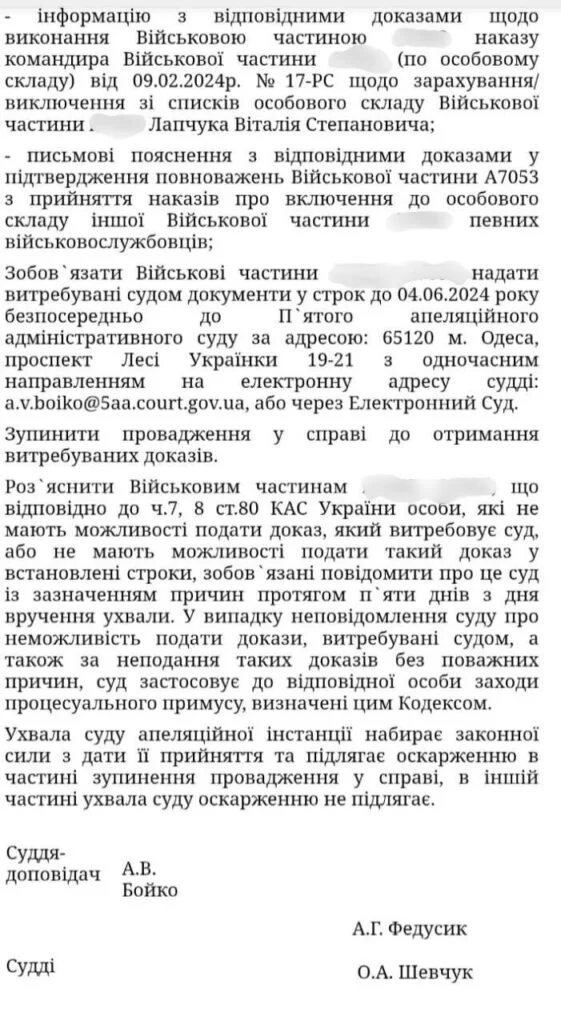
The court ruling has already come into force and is not subject to appeal. The woman considers this decision a small victory and is ready to go the difficult road to prove her truth.