

“Your pancreas is fine, but the liver is a bit enlarged, treatment is needed”, – says the ultrasound diagnostic doctor to the patient he is examining.
“Is that because of excess weight?”, – asks the woman.
“No. It could be a latent hepatitis, – replies the doctor. – Don’t worry. We will conduct additional tests now. Serhiy Romanovych will prescribe your treatment, and everything will be fine”.
At the medical center “EuroTest” it is a normal working day. Visitors come to give tests, have an ultrasound, and consult with doctors. There is a Christmas tree in the hall, New Year decorations in the offices. The medical center accepts patients. Tests are done, examinations and consultations are held. And what reminds you that this institution is Kherson-based is the damage to one of the windows and a hole in the blind.

“This, – says the medical center administrator Kateryna Osaulenko, – is a “gift” from the Russians for Independence Day: on August 24 there was shelling, and a fragment pierced the window and the wall. It happened on a day off, so no one was hurt. It’s frightening to think what could have happened if staff or patients had been inside”.
They keep that fragment as a memory of the trials and challenges associated with life in today’s Kherson, about the conditions in which Kherson residents try to live fully and richly.
“They understand you. They treat you like a human”
Kherson resident Halyna Bondar came to “EuroTest” to have doctor-prescribed tests done. The woman has used the center’s services more than once. She says she likes its location close to her home.
“Now, – she says, – living in Kherson it’s very important to plan your route when you need to go somewhere, because of shelling, drones… You must keep yourself as safe as possible. So when I need to have tests done, I choose the nearest laboratory, and it’s good that there is one. They understand you. They treat you like a human”.
According to Halyna Bondar, when her husband was seriously ill, a laboratory staff member came to the couple’s home to take tests.
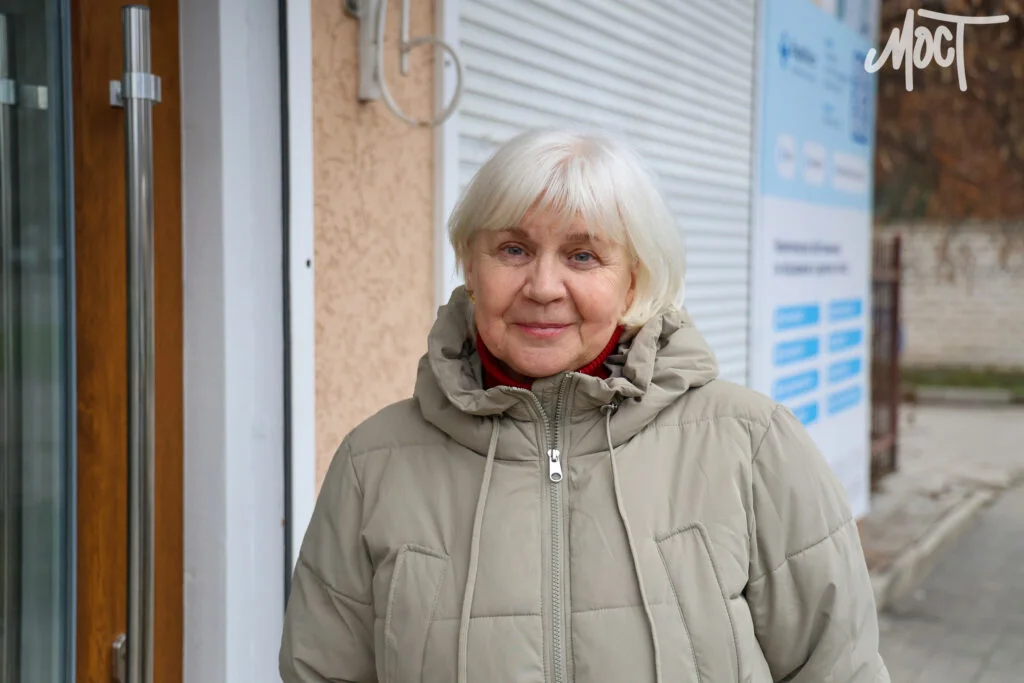
“There is, – says Halyna, – another important point. Sometimes urgent diagnostics are needed, and in municipal hospitals there are long queues and appointments for tests are in a week or even longer. In such a situation small private laboratories are very helpful, where everything can be done within a maximum of three days”.
The woman says that her husband is currently receiving inpatient treatment, so she is well informed about the situation in Kherson healthcare. According to her, Kherson residents have major health problems. In particular, many people suffer from heart disease. Stress is taking its toll.
The staff of “EuroTest” understand well how life in a frontline city affects people’s health. That is why on one of the shelves there is a first-aid kit with sets of medicines arranged in small compartments. The compartments are labeled: “Hypertensive crisis”, “Cardiac arrest”, “Shock”, “Seizures”…
Kateryna’s Jackpot
Kateryna Osaulenko has worked as the administrator of this medical center since May 2025. In 2022 she left abroad with her son, but later decided to return.
“We couldn’t, – the woman says, – adapt to their rhythm of life abroad, although we lived in a very good country, but we wanted to return to our native places. And my son didn’t want to live abroad. After returning I looked for a job for a long time. It is very difficult to find employment in Kherson now”.
According to Kateryna, the job at “EuroTest” for her is a jackpot: “The team here is very good, good salary, good clients”.
Kateryna is the first person patients see when entering the medical center. She schedules tests, examinations, consultations. She says she really likes the job.
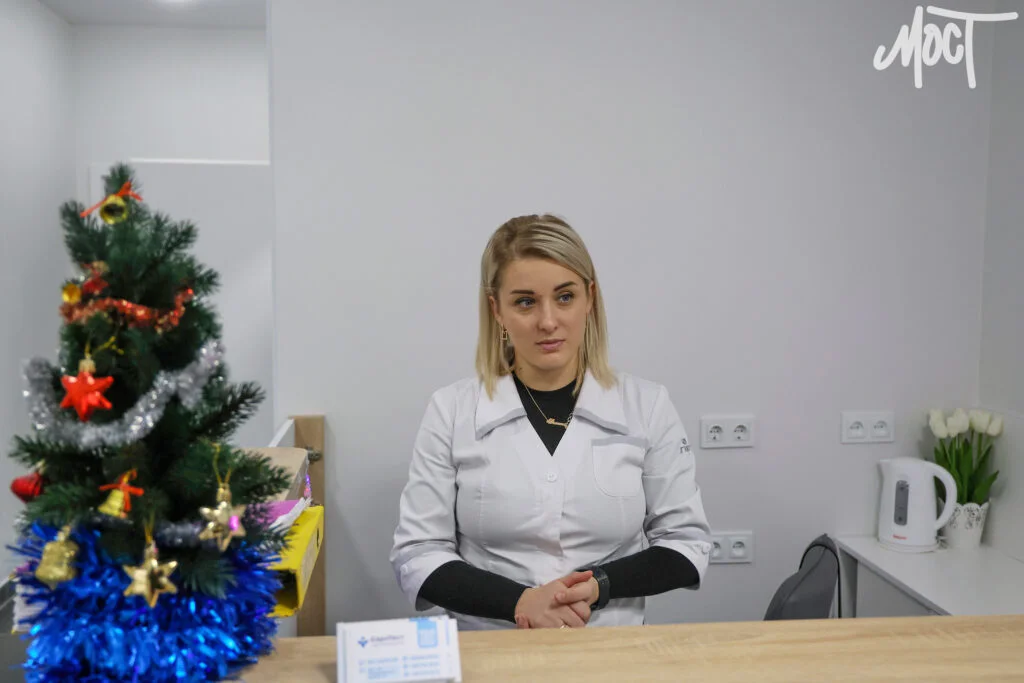
About life in Kherson the woman says that, on the one hand, the city seems to have everything you need, but on the other hand the security situation is such that only people strong in spirit can endure even a week here.
Kateryna is satisfied with the medical center’s location – the relatively safe Tavriyskyi microdistrict.
“You can, – she says, – get here more or less normally, and it is not as dangerous here as in many other parts of Kherson. Still, in the city you need to take care of safety, wherever you are”.
“Many patients with oncological conditions”
Of the 30 years Oleksandr Olkin has devoted to medicine, he has worked 8 years at the EuroTest medical center. Oleksandr is an ultrasound diagnostic doctor. He has the highest category. At first he worked at the medical center part-time, and over time became a full-time employee.
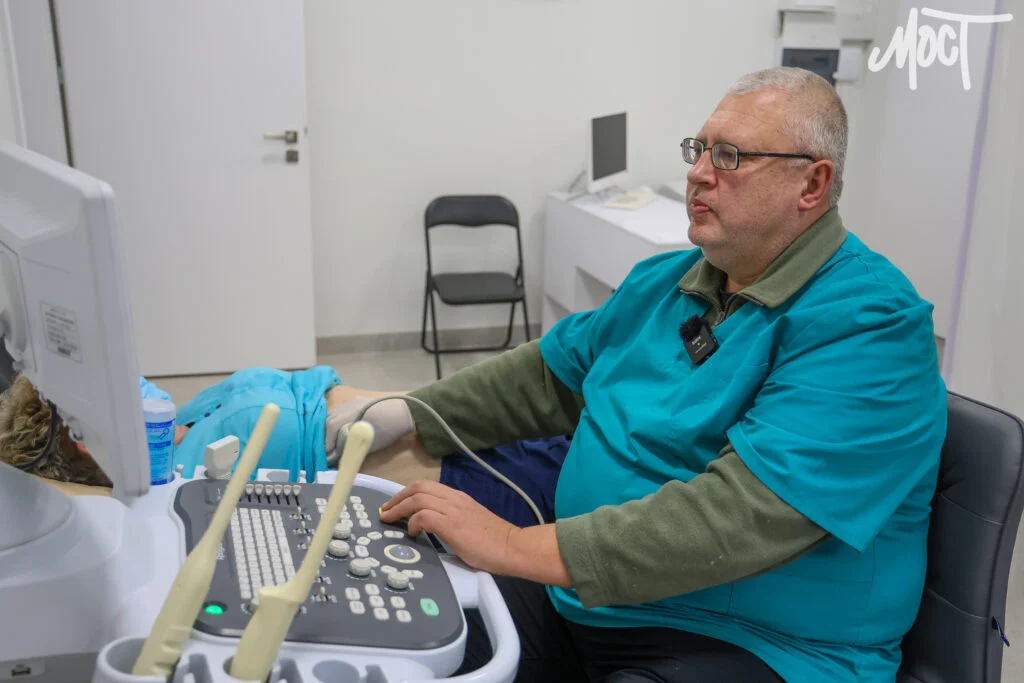
“Now, – Oleksandr tells about life in Kherson, – you leave your home and don’t know if you will return. We are constantly under fire”.
The doctor recalls that in the first weeks after the start of the full-scale Russian invasion there was total confusion in Kherson, which is why there were very few patients.
“But later, – says Oleksandr, – patients began to slowly come, seeking help. Especially those who needed specialized examinations and consultations of narrow-profile specialists. And there are few such specialists left in the city, as well as medical staff in general. Therefore, for the doctors who are in the city, there is enough work even though the population has significantly decreased”.
Speaking about the specifics of working in Kherson, the doctor notes that the vast majority of patients are elderly people: “Those people are actually the majority of the city’s population. Unfortunately there are very few young people here”.
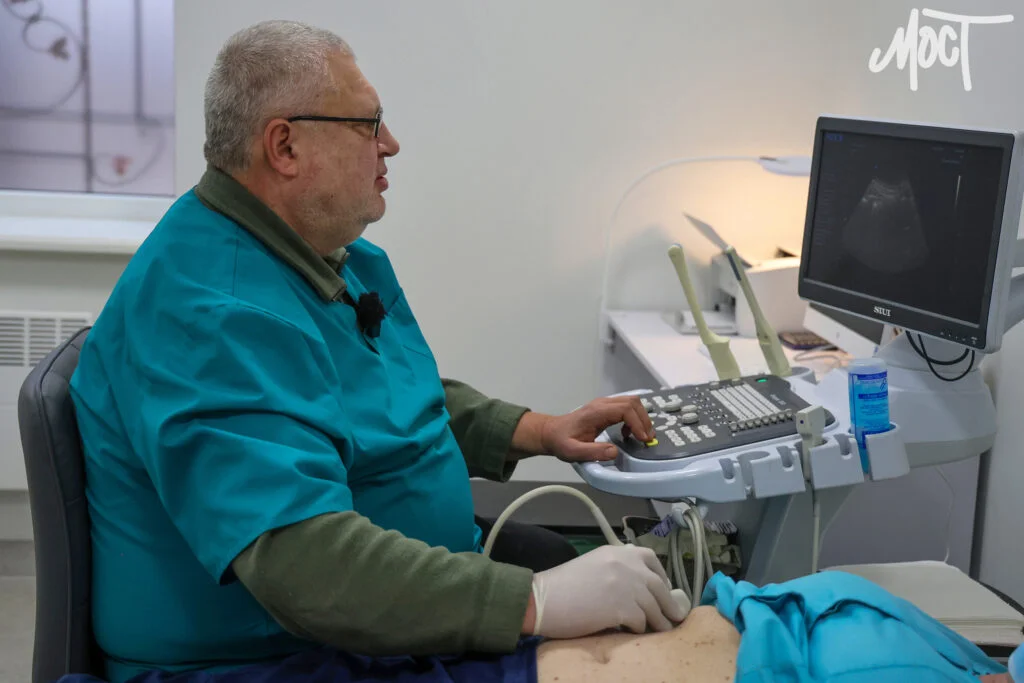
Oleksandr Olkin also mentions another specificity of Kherson: an increase among his patients of people with oncological diseases: “There have been quite a lot of such complex patients recently. Oncological pathologies are very difficult to diagnose and treat”.
In response to a question about how small private medical facilities operate in Kherson, he says that such institutions are very important for residents. He adds that to get certain types of examinations in a municipal hospital you sometimes have to wait a month, and sometimes two or even three. Those are the queues now. In private institutions examinations can be conducted much faster, albeit for a fee. But sometimes, the doctor says, a lot depends on how quickly a diagnosis is made and treatment started.
“Closer to the patients”
The founder and head of the medical center “EuroTest” Oksana Zelinska recalls that in 2010, when she (then an immunologist at the Kherson Regional Children’s Hospital) decided to go into the private sector and opened a diagnostic laboratory, it was a very small establishment.
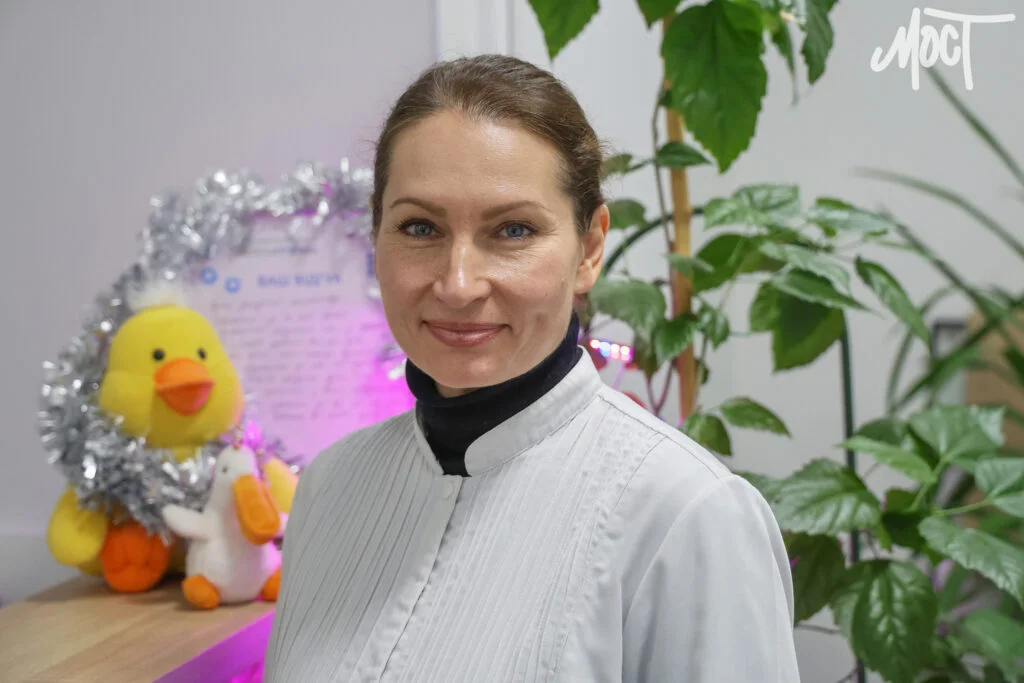
“We opened the laboratory, – Oksana says, – investing all our family savings. The staff then was very small: me, nurses, a lab technician. We started with PCR testing (polymerase chain reaction – a laboratory diagnostic method, – MOST) and enzyme-linked immunosorbent assays. We bought additional equipment, expanded. Over time we began to do biochemical and microbiological tests, involved doctors to consult patients. We focused on the needs of Kherson medicine. As of early 2022 we had more than 40 people working”.
The medical center worked during the occupation of Kherson, although, as its head says, it was incredibly difficult and problematic: “Work began to ‘fall apart’. Employees left. We had to replace those people, somehow redistribute the work. It is a period one does not even want to recall”.
After the city was liberated, when Kherson became a frontline city with all the inconveniences and challenges of that status, it was necessary to radically rebuild the institution’s work. Full operations were restored very quickly: already at the beginning of 2023.
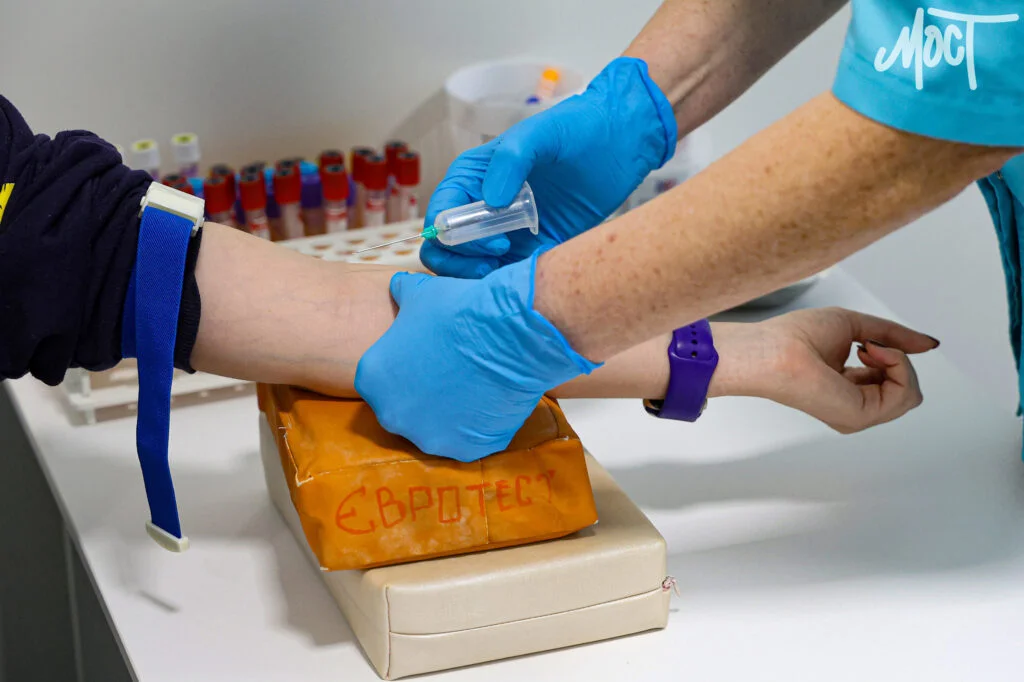
Oksana Zelinska says that over the past three years huge changes have occurred in the city and in the consciousness of its residents. In particular, people have adapted to living under shelling and drone attacks. Medical institutions have adapted to conditions imposed by the war as well.
“Now, – says the head of “EuroTest”, – there are very few narrow-profile specialists in Kherson. Some of our staff remained in the city. Reorganizing work was difficult, but we did it”.
They organized doctor receptions at specific locations, with prior appointments. They arranged things so that a person would not waste time waiting: come, give tests, receive a consultation and leave quickly. If necessary, patients are called, informed about the situation, and sometimes a new appointment date is agreed.
Oksana Zelinska notes that now in Kherson a good symbiosis of communal and private medicine has formed.
“Communal medicine, or as people usually call it, state medicine, – explains Oksana Zelinska, – does a lot. The function of private medicine is to be adaptive, flexible, to be closer to patients. This is very important in the current unpredictable situation”.
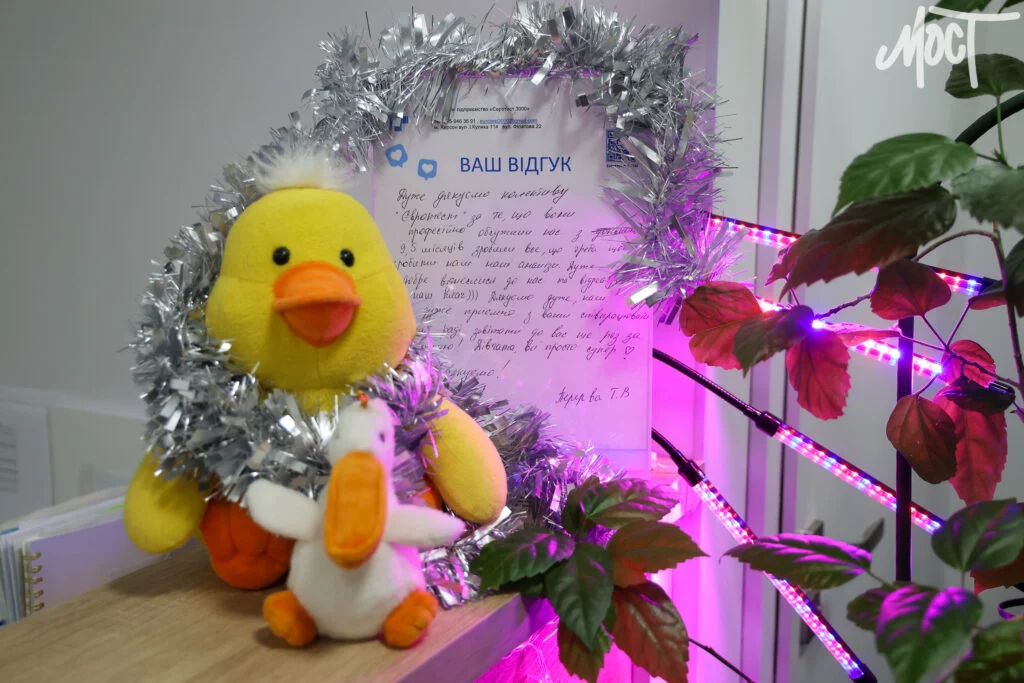
Currently the medical center “EuroTest” operates in Kherson at three locations, one of which is in a very dangerous part of the city. Yet the management does not plan to close it. People live there who need medical services within walking distance, because it is a matter of safety and survival.