

The smell of freshly made borscht spreads for dozens of meters. This aroma comes from a small kitchen where a man in uniform skillfully chops Kherson vegetables. Today’s menu, besides borscht, includes boiled chicken legs, bulgur, and a cucumber and cabbage salad. In the next room work continues in a 24/7 mode.
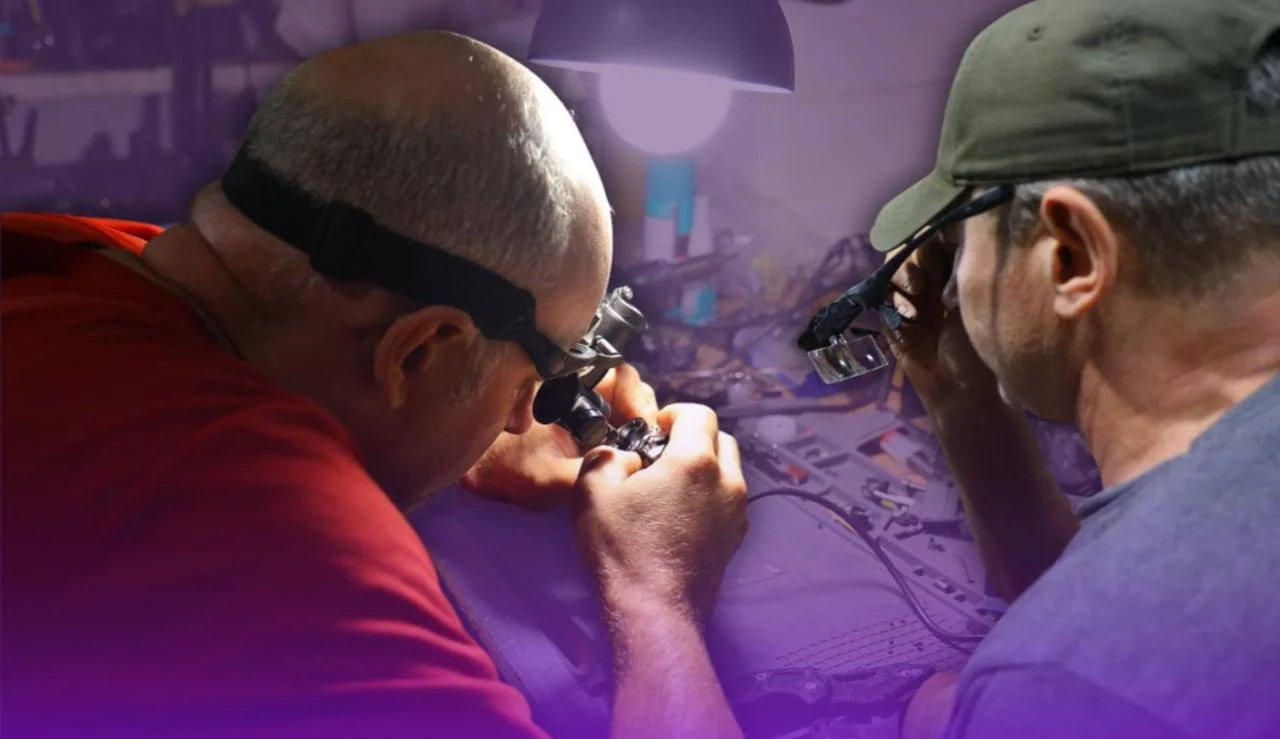
In fact, the main room can also be considered a kitchen to some extent. «Drone kitchen», where very important work is done out of sight of outsiders.
The drone laboratory of the 153rd Separate Mechanized Brigade is a place where those who previously worked in service centers serve: repairing televisions, phones, and other electronics. And now they are part of a system that is very important both for the defense of the Kherson region and, in general, for the success of the Armed Forces of Ukraine in defending the country against the Russian aggressor.
This war has long been called the war of drones, noting that the large-scale use of unmanned aerial vehicles makes the Russian-Ukrainian confrontation unlike probably any of the previous conflicts and any of those currently ongoing. Therefore, units responsible for preparing and repairing drones are among the most important within military formations.
«We do everything possible»
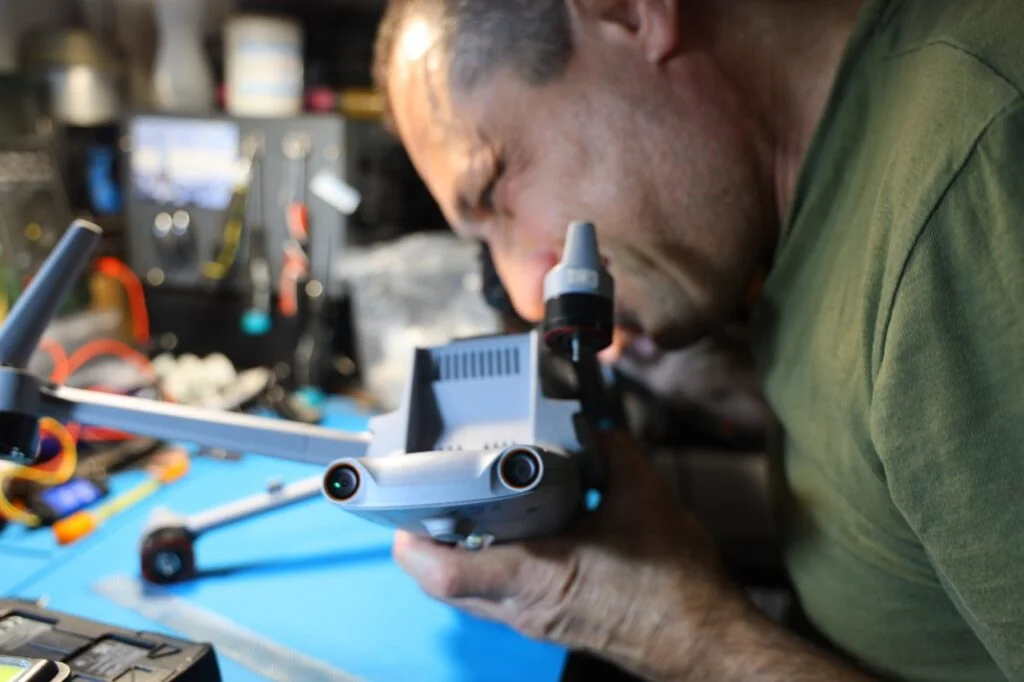
Oleksandr’s specialization is repairing reconnaissance drones.
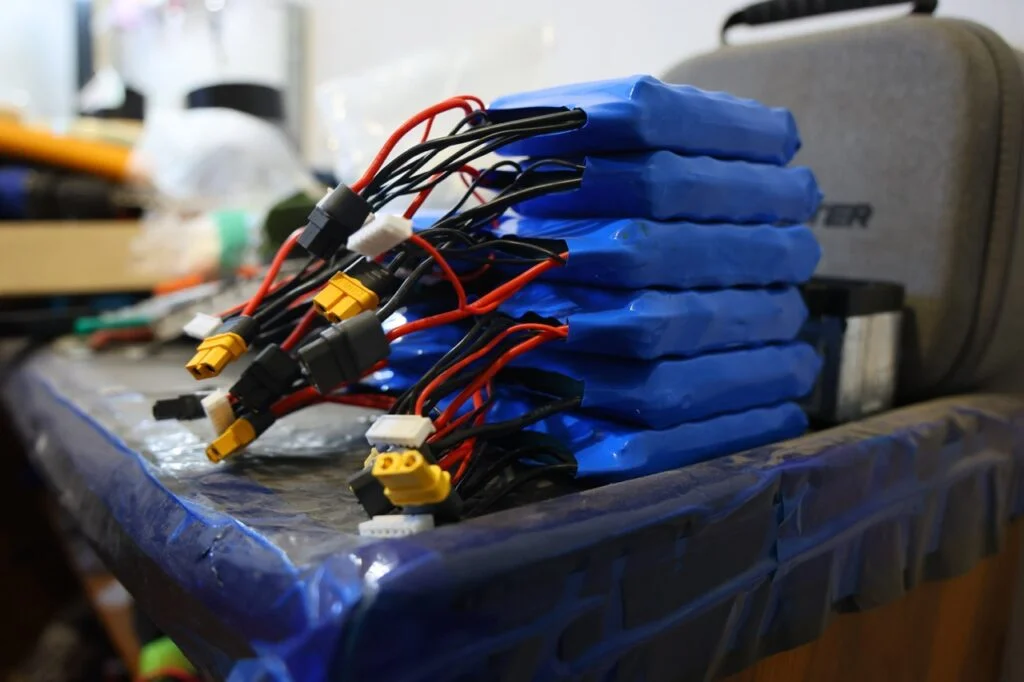
«Different problems arise, – says the serviceman. – Cameras often break: the optics are damaged, the zoom (the function that allows you to change the image scale by zooming in or out on objects, – MOST) fails. Sometimes the flex cables that connect the camera to the power unit tear. We also repair motors, replace batteries… We do a lot of things».
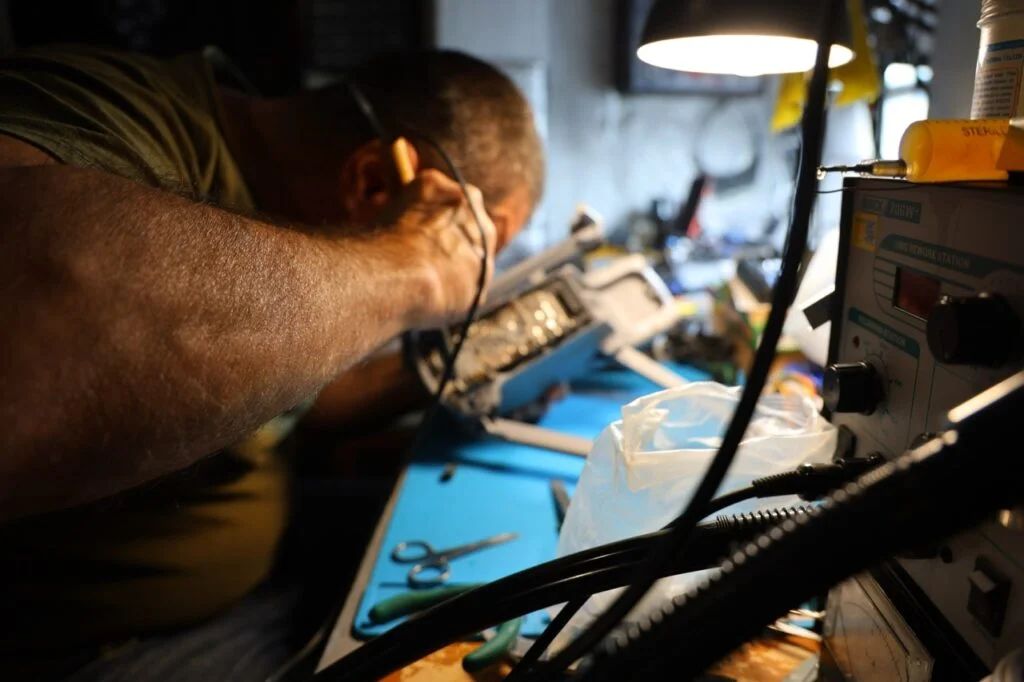
When asked what percentage of drones they manage to repair, Oleksandr says he doesn’t keep statistics, but notes that only drones with critical damage cannot be restored.
«Those that cannot be repaired, – says Oleksandr, – are drones with severe damage to the motherboard, or with some other serious component-level problems. But we do everything so that the percentage of restored drones is as high as possible».
Everything you always wanted to know about drones but were afraid to ask
The drone laboratory is run by a serviceman with the call sign Tatko. He speaks softly but with obvious expertise. According to him, the core team formed early on. But now, if a recruit who can repair and tune electronic devices joins the unit, he is sent to the Laboratory to determine whether he can be useful in this structural unit.
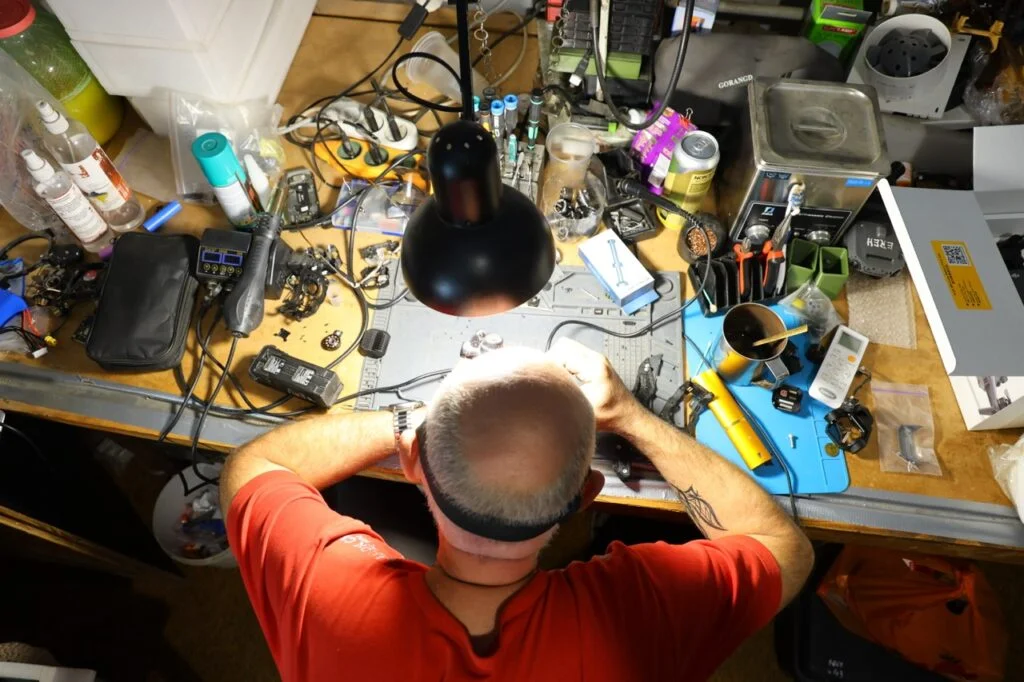
«We, – says Tatko, – both repair drones and prepare new “birds” for combat work. Yes, we prepare them. No drone is used immediately after the unit receives it. The drone arrives “raw”. Sometimes it needs a new firmware, changing the frequencies on which the drone operates, installing a higher-quality video camera. In other words, the drone must be configured for specific tasks, flight-tested. We do not hand drones over to units until we are convinced that they can at least take to the air».
The Laboratory works with all types of drones: Mavic, Matrice, etc. Specialists have very good feedback about the Ukrainian drones «Vyrij».
«They are very good drones, – says the head of the Laboratory. – To prepare them for combat use requires minimal work».
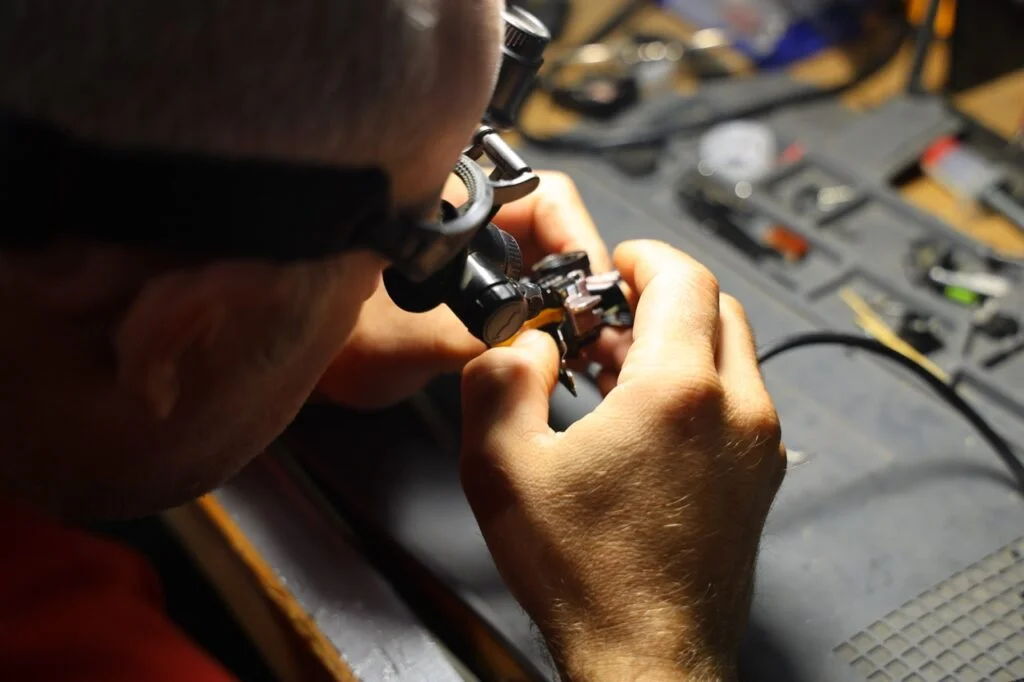
The Laboratory also has its own developments, but they don’t talk about them..
Another topic not for discussion is the workload. However, one can assume that it is considerable, given that the Laboratory operates without days off. Working hours are around the clock, seven days a week.
«In our unit, – says Tatko, – only those who are interested and who understand our importance serve. There are no days off. At most, we can slightly reduce working hours on some holidays. There is a duty group that works all night. If a drone is brought in for repair at night, we start working on it immediately, and do not postpone it until morning».
Drone repair specialists constantly communicate with the operators who use the «birds» in combat operations, and are also constantly in contact with similar services in other units.
«If, – says the head of the Laboratory, – operators have comments, they communicate either with the head of the workshop responsible for a certain direction or with a specific specialist. And we exchange experience both within the brigade and with others; we send specialists there. We look at what others managed to do, what the results are. We adopt some things ourselves, we share our experience. The exchange of experience is also an opportunity to establish contacts so that in case of some abnormal situations we can turn to someone for advice».
When asked about the difference between Russian drones and those used by the Armed Forces of Ukraine, Tatko says that such differences do indeed exist: «We study captured drones that come to us for analysis. They have several interesting technical solutions. The Russians, and this is no secret, have a more powerful material base, so they have the ability to create developments that we cannot yet reproduce».
If not for volunteers…
Volodymyr Shugaiev, deputy battalion commander, does not hide that the assistance the military receive from volunteers and the foundations they created is invaluable: «From them we receive assistance of two kinds: either they inform us of what is available and we say what we need from that, or (this is how we work with foundations) we draw up a list of needs and receive what is on that list. We have been cooperating on an ongoing basis for a long time with several volunteers and foundations».
Volodymyr says that there are supplies from the state as well, but situations arise when volunteer assistance is the most useful: «I’ll give an example. A set of propellers for reconnaissance drones costs 500–600 hryvnias. But to purchase it, you have to spend several days on paperwork and trips. And during the trips you’ll spend fuel costing more than the price of that set. Therefore, through the public procurement system we try to buy something very significant and expensive. And regarding “small things” (of course, figuratively speaking, because there are no small things on the front), volunteers help a lot».
Specifics of the Kherson region for drone operators
The Kherson region is an area where it is very difficult for drone operators to work. According to Volodymyr Shugaiev, a major problem is the steppe landscape, which complicates logistics and also limits drone operators’ calculations when choosing deployment locations.
«In Kherson, – says the deputy battalion commander, – there is little vegetation where you can hide and move stealthily. Another distinguishing feature of the region is large distances, as well as the presence of very powerful stationary electronic warfare means on the enemy side. The Russians are firmly entrenched on the left bank of the Dnipro; they have equipped a serious defense system there, including anti-drone protection. In other sectors of the front, for example in Donetsk region, this is not the case, because the front line is constantly moving, and the Russians do not have the opportunity to install stationary EW means somewhere».
However, the serviceman notes that the Russians’ strong defense in Kherson is a challenge for our drone operators, who do everything possible to destroy the occupiers.