
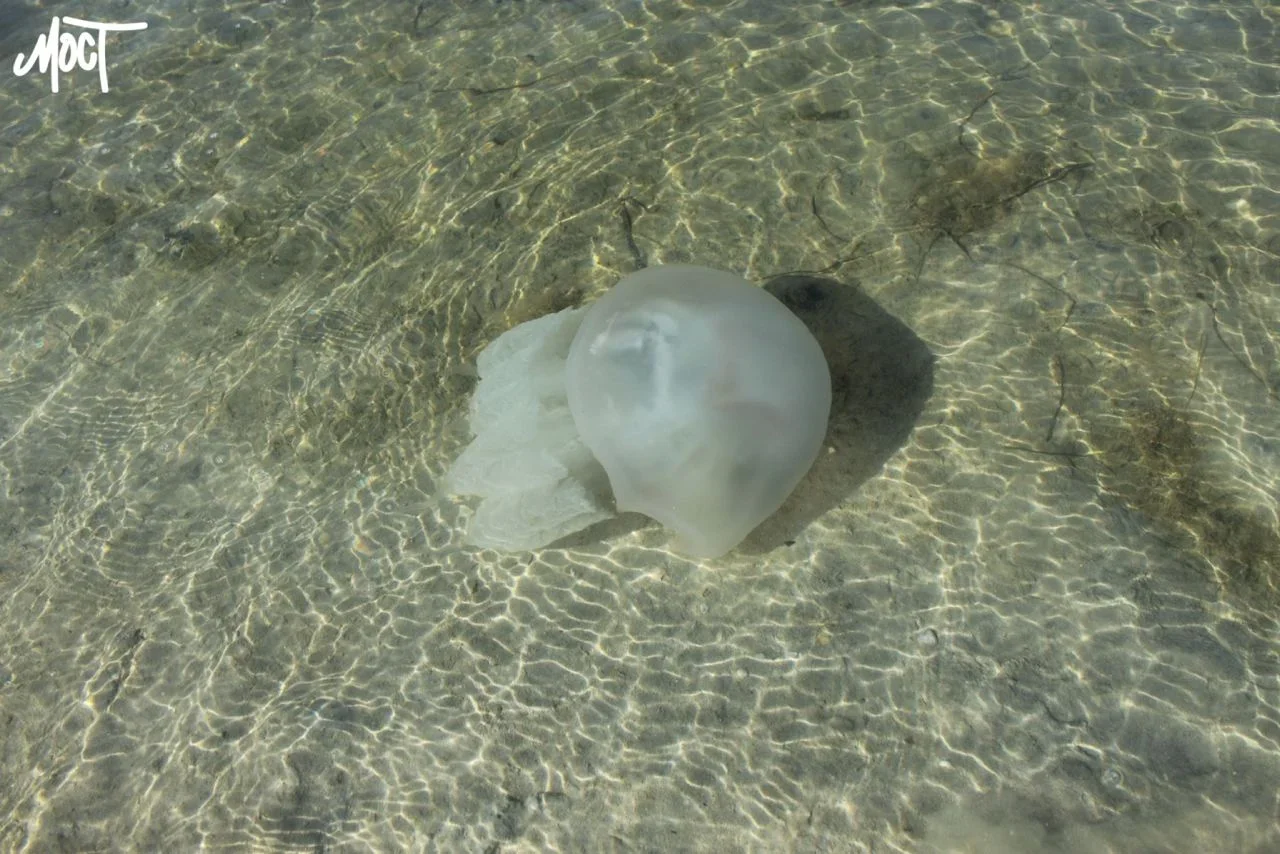
Russians stated that the increase in jellyfish numbers in the Sea of Azov has negatively affected fishing activity, particularly in the coastal areas of the Kherson region.
This was reported by the All-Russian Scientific Research Institute of Fisheries and Oceanography.
According to the institute’s research, in 2025 the abundance and biomass of the jellyfish kornerot in the Sea of Azov increased, and its period of active growth in autumn was extended.
VNIRO says that from the end of August to the beginning of December industrial fishermen were forced to suspend fishing in much of the coastal waters due to low target catches and significant bycatch of jellyfish in their gear.
In May 2024 the occupation authorities acknowledged that the Sea of Azov is unsuitable for swimming due to an increase in plankton and jellyfish.
About the threat of the Sea of Azov’s extinction the Ukrainian authorities reported as early as May 2022. One of the reasons for this is the bombing of “Azovstal” by the Russians.
In February 2025 the occupiers stated that they had allegedly developed a project to protect the beaches of the Sea of Azov from jellyfish.