

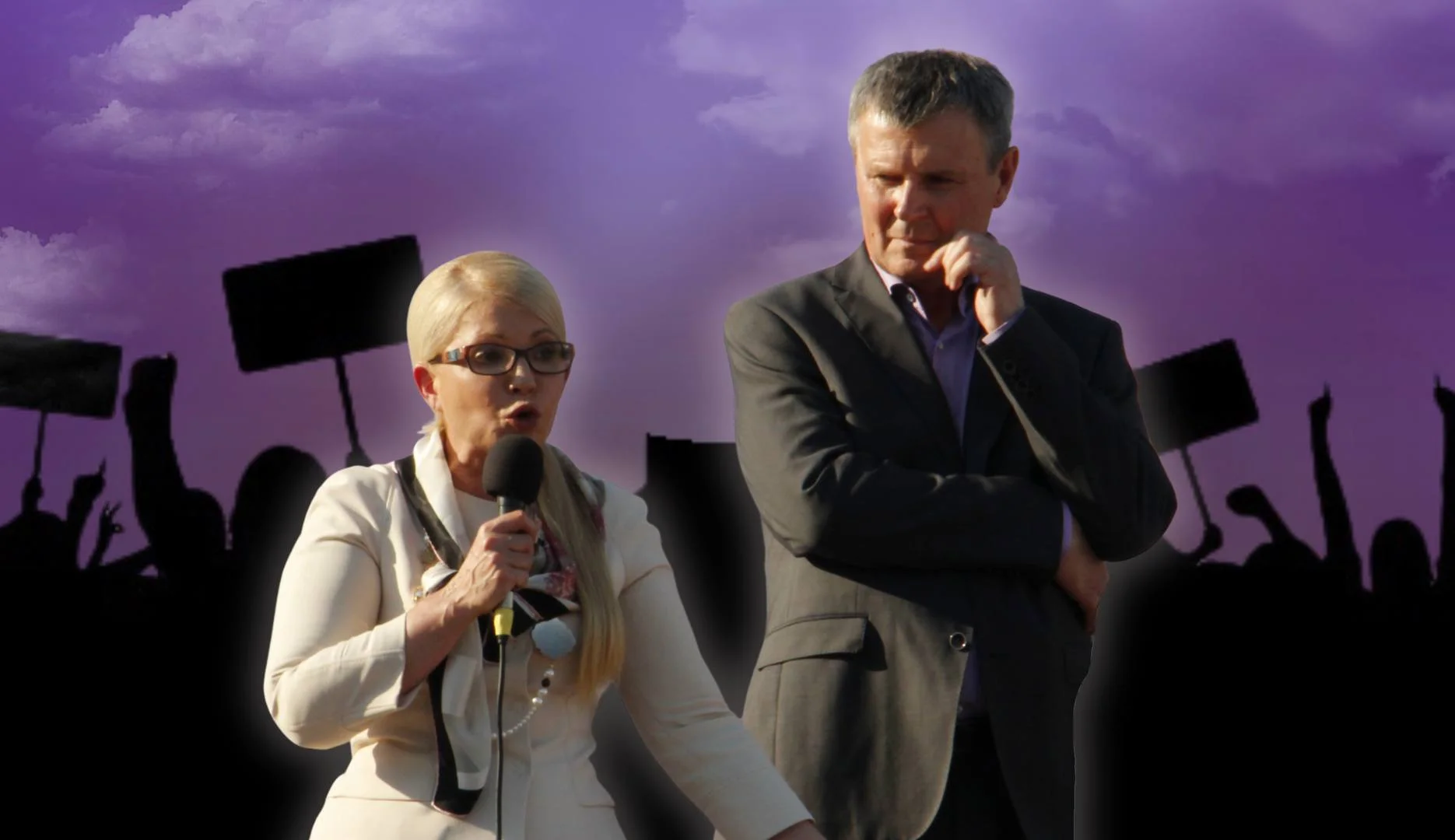
The news about exposing Yuliya Tymoshenko for corruption and handing her a suspicion — it has become almost everyday news. Obviously, after NABU announced suspicions against deputies from Servant of the People and the President’s closest circle, the detectives’ visit to the grandmother of Ukrainian political corruption was only a matter of time.
Unfortunately, law enforcement will no longer be able to detain any of the Kherson party members for political corruption, because the party is dying, and in Kherson it finally ended in spring 2025, when Yuliya Tymoshenko, true to her old habit, sold the party organization and, as they say, threw the old activists out into the cold.
I think readers will be interested to learn how one of the region’s most powerful political organizations appeared and disappeared. Of course, we do not know the entire history of Kherson’s Batkivshchyna, but the author was lucky enough, without joining the party, to observe its rise and fall.
Beginning
Few people know, but in February 2000 the Kherson city party organization of the nationwide association Batkivshchyna was created and headed by… Volodymyr Saldo.
Back then he was an unknown little drunk-builder who, by a twist of fate that, it must be said, favored him all his life, headed one of the city’s construction companies and planned a political career.
Saldo himself, like later the party organization leaders and rank-and-file members, denied that he had any relation to the party.
But you can’t fool the state register.
Interestingly, the register preserved the names of the first leaders of the regional party organization. It was registered on Valentine’s Day — February 14, 2000. The first head of the party organization was the future rector of the Kherson Academy of Continuing Education, Anatolii Zubko. But that was a small and little-known party.
Its modern history begins in 2006, when Yurii Odarchenko took the helm for almost 20 years.
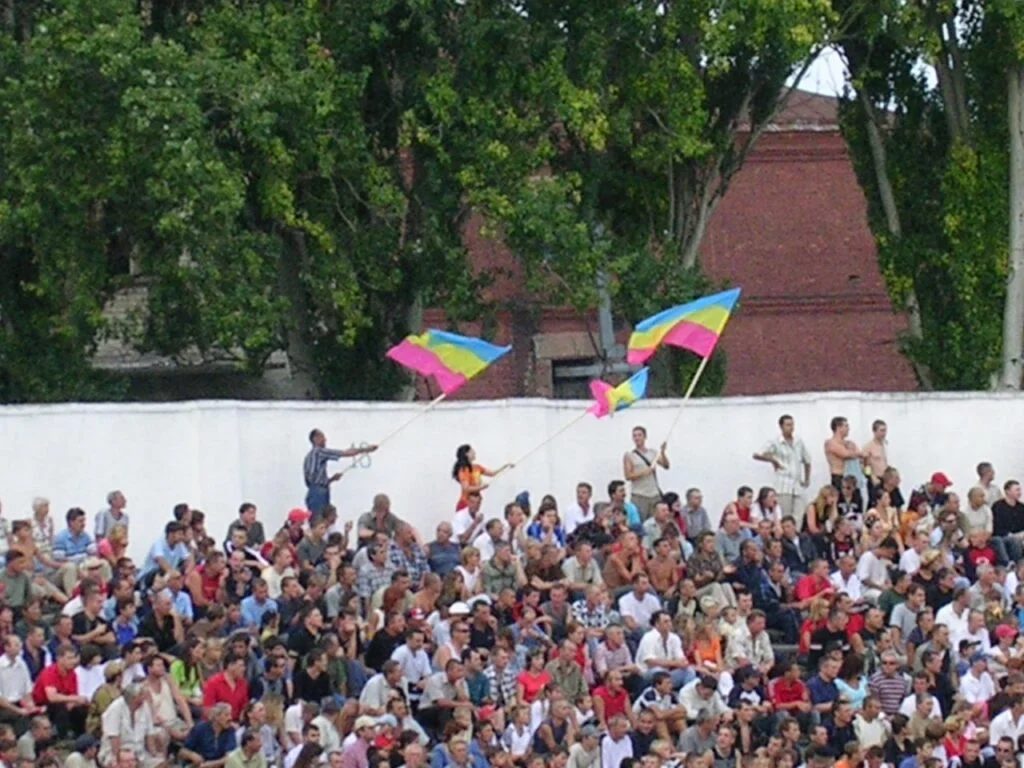
But we clearly remember that before Odarchenko the party was led by a pleasant old man with the surname either Lunyaka or Lunyako.
It was he who, in the spring of 2005, on the wave of post-Maidan euphoria, held a presentation of the party in the hall of the Kherson Regional Art Museum. There were many people at that presentation, including many young people. Some of them later even became deputies. But it is already impossible to recall all the participants exactly, as well as the circumstances under which the author got into that gathering.
There was some party activity in Kherson even before that. Someone organized visits of Yuliya Tymoshenko to Kherson, who in 2001–2002, on the wave of “Ukraine without Kuchma,” filled almost full halls at the Yuvileiny.
In the spring of 2002, Petro Makushev ran for mayor of Kherson, and at registration he indicated that he was the head of the regional party organization of VO Batkivshchyna. He was a retired police colonel. For some time he served as dean of the law faculty at the private Interregional Institute of Business. At that time city council members were elected by 100% majoritarian system, and none of the elected city council deputies indicated that they were members of this party.
Although the future notable party figures Yurii Odarchenko and Olga Marenchuk became deputies. The first as non-partisan, the second as a member of the then little-known Party of Regions.
In 2005, after the victory of the Maidan, Yuliya Tymoshenko became a top politician and was preparing to become Prime Minister. And Yurii Odarchenko, who actively took part in the Orange Revolution events, expected that he would receive something decent when positions were distributed.
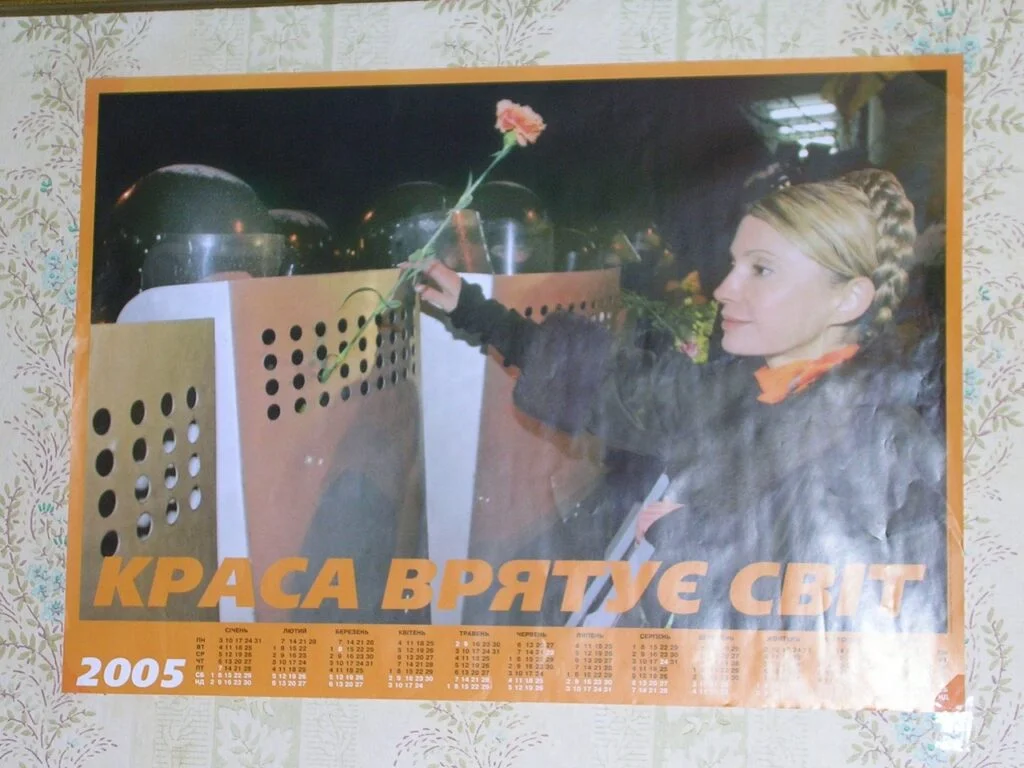
But instead of a position he received a firm handshake and a medal “Participant of the Orange Revolution.”
Offended Odarchenko, who at that time had a serious construction business in Kherson and therefore resources, was gladly accepted into Batkivshchyna.
The Golden Decade
For the next 19 years, the history of Kherson’s Batkivshchyna would be inextricably linked with the name of Yurii Odarchenko. Not very charismatic, but a cunning and unprincipled politician. A “political animal,” as Kateryna Handziuk called him, who worked with Yurii Vitaliyovych for a long time and learned him well.
The first large sums of money appeared in the local Batkivshchyna in 2006. Local and parliamentary elections were looming, taking place on the same day. Yuliya Tymoshenko was no longer prime minister and hungered for revenge. The party received generous funding. Kherson “Batkivshchyna” members inundated local newspaper editorial offices with money to print paid content. Apartment building entrances were filled with campaign materials.
All this required money. Big money. And local party organizations, including Kherson’s, began to sell spots on party lists. Demand was crazy, especially since on September 8, 2005 the Verkhovna Rada adopted amendments to the law “On the Status of Local Council Deputies,” granting local council deputies immunity.
Lines of bandits and potential defendants in criminal cases queued up at all headquarters. Batkivshchyna also actively recruited such a contingent. Many of these people became deputies.
For example, Arkadii Hambaryan, who is still wanted for embezzlement at HBC, and Oleksii Tyshkevych, whose reputation was already beyond saving, were elected as deputies to the Kherson regional council from the party.
They quickly lost interest in politics, because nine months after the decision on immunity was adopted, deputies revoked it.
But, evidently, no one returned the money to them.
Yurii Vitaliyovych himself moved under the dome of the Verkhovna Rada for many years. He was elected an MP four times. He even managed in the early 2010s to head the Kyiv city organization of the party, but he controlled the Kherson organization.
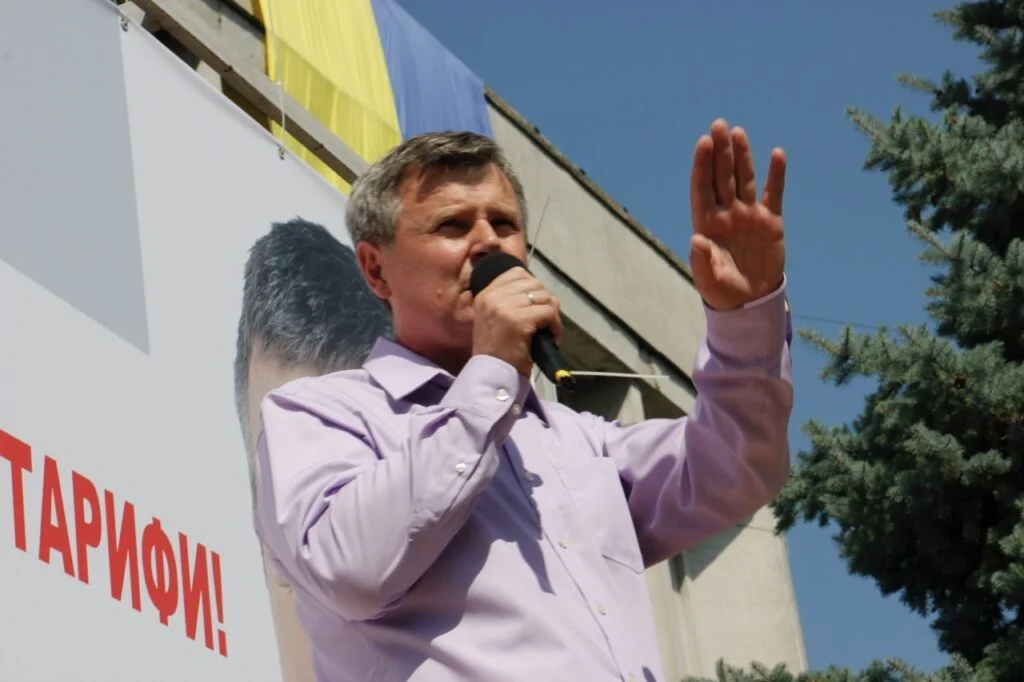
Over the next 10 years a variety of people passed through Batkivshchyna’s party organizations. The faction in the Kherson city council was headed by Vitalii Bohdanov, convicted of fraud, and deputies included developers Safronenko and nationalist Andrii Shcherbyna, prosecutor’s wife Olga Marenchuk and respected doctor Yevhen Karabelesh, tailor Oleh Akimchenkov and professor Ihor Maronchuk, petty-theft convict Oleh Chernenko and the rector of KhDAU Valerii Bazalii. A party of contrasts.
Besides selling list places, party leaders from Kyiv managed to sell entire party organizations. As early as 2010, the entire Kakhovka Batkivshchyna was bought by Swedish businessman Karl Sturen, who owned it for over 10 years.
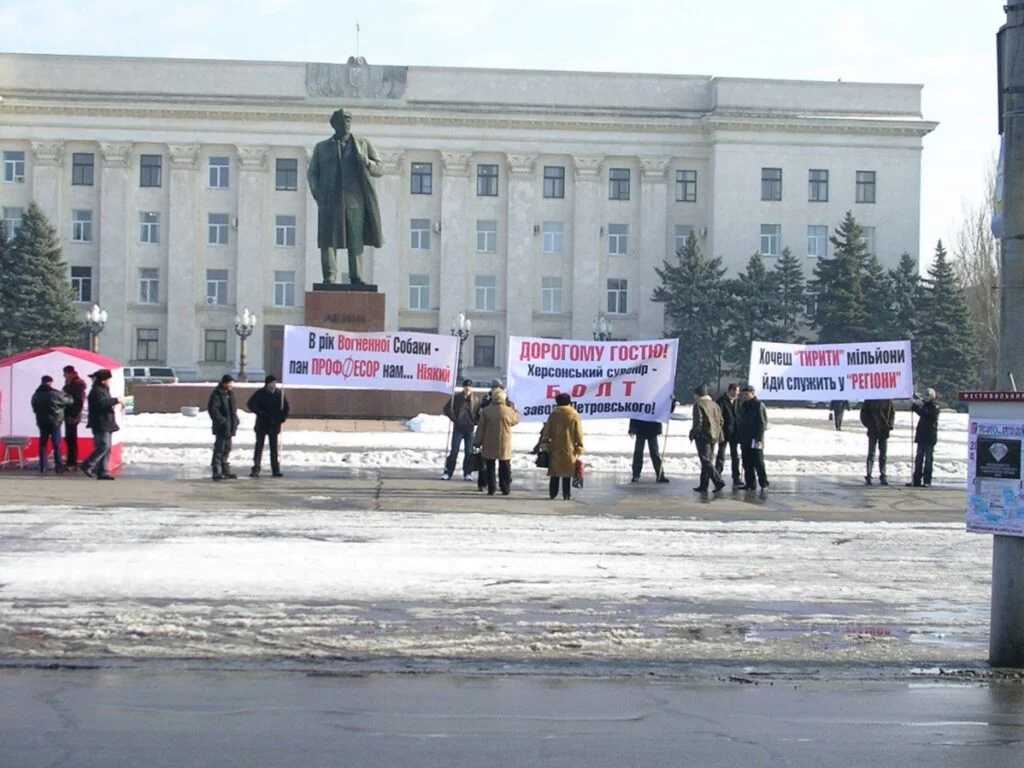
Batkivshchyna’s party events could be creative or cringeworthy. But always well attended. Party members knew how to work with people and, using phone outreach, gathered hundreds of activists and just gawkers.
Thousands of people traditionally gathered for Yuliya Tymoshenko’s visits.
Political struggle here was waged not only with opponents, but also within the party.
Ingenious alliances, intrigues and betrayals were commonplace here.
And the party leadership calmly sold places of loyal party members on the lists to those who could pay. Gradually people left the party, but new ones came.
Just think of the sale of an entire city party organization in 2015.
Beginning of the End
In March 2014, acting President Oleksandr Turchynov appointed his fellow party member Yurii Odarchenko head of the Kherson Regional State Administration. And already in May 2014 Volodymyr Mykolayenko became mayor of Kherson. For the party, especially against the backdrop of Yuliya Tymoshenko’s resounding loss in the presidential elections, it was a sensation. Although the party itself did not help Volodymyr Mykolayenko much.
In the mayoral campaign the future mayor was actively supported by up to a dozen Batkivshchyna members. Deputies Marina Voytenko, Stas Troshin and former deputy Kateryna Handziuk volunteered in the headquarters. Party members were partly brought in to participate in campaign events. But already for money.
The uniqueness of Batkivshchyna’s party structure was having their people everywhere. Even in the most remote villages there was a person or a whole “sleeping cell” that activated as soon as money appeared. And then everything began to work.
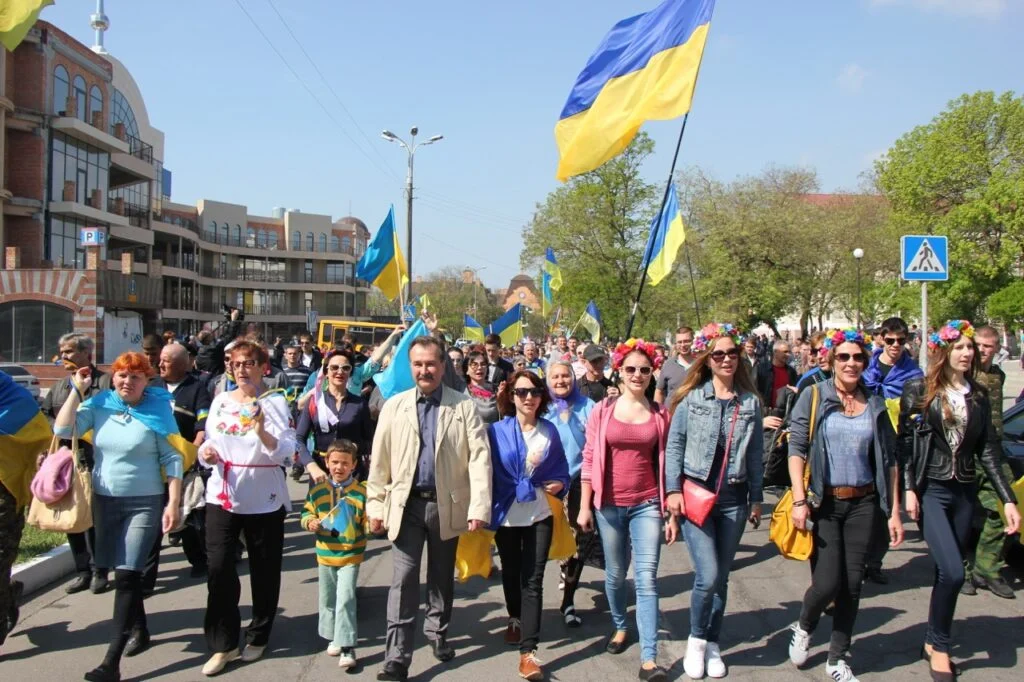
In any case, Mykolayenko triumphed in the elections, and Yurii Odarchenko spectacularly lost the parliamentary elections held in October of the same year. Or rather, he most likely won, but could not defend the results of those elections. Although he tried very hard.
He ran in a single-member district for the first time because Yuliya Tymoshenko had sold too many places in the passing portion of the list, and her faithful Kherson ally had to try his luck.
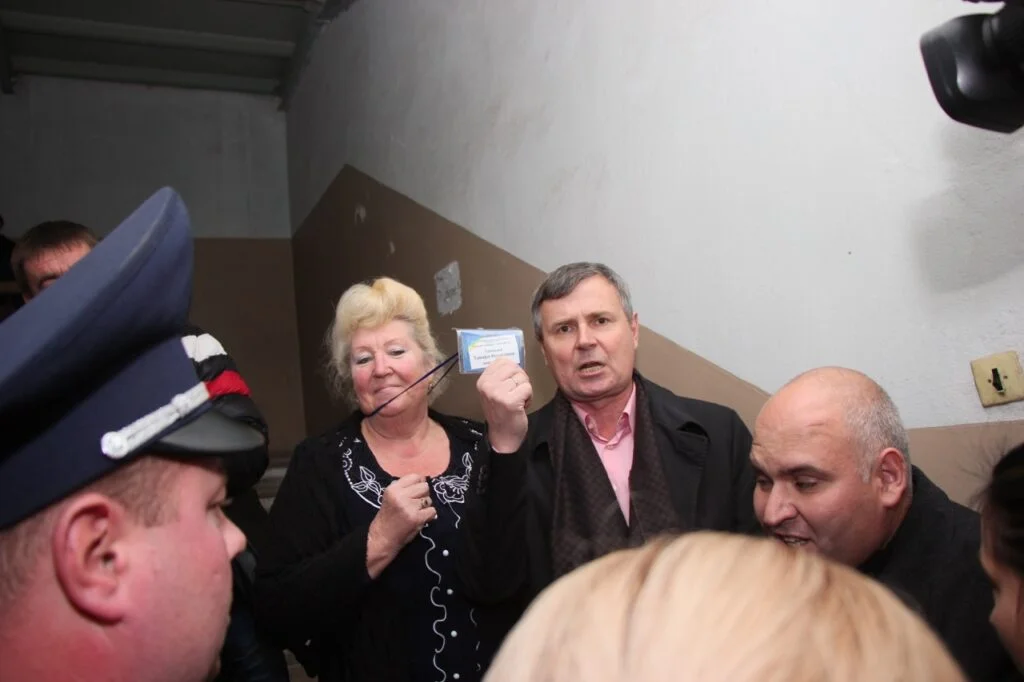
Fate did not smile on him, and for a while Yurii Odarchenko disappeared from the horizon.
Until spring 2015, when it became known that Batkivshchyna would not nominate Mykolayenko for the upcoming elections.
In August the party activists were introduced to their new fellow party member Vladyslav Manger. A man with a criminal background and a similar appearance. At that meeting Manger was asked about Oleksii Zhuravko and about his criminal past. He became nervous, mumbled something and began to hate those who asked. Among those who asked the most actively was Kateryna Handziuk. By that time Katia had already become a deputy, because Volodymyr Mykolayenko, having been elected mayor, resigned his mandate and the party list moved up to the next candidate, who was Katia.
At the end of August 2015 Odarchenko finally announced the decision to expel Mykolayenko from the party.
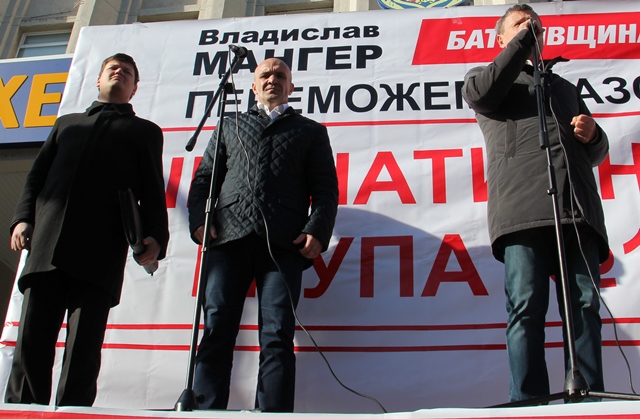
But they did not manage to expel him. A week before the city council meeting Volodymyr Mykolayenko announced his withdrawal from the party. He was supported by colleagues Kateryna Handziuk, Maryna Voytenko and Yevhen Nazaryan. Later deputy of the regional council Larysa Olenkovska also left the party.
Rumor at that time had it that Karl Sturen personally negotiated a spot in Batkivshchyna for Manger with Yuliya Tymoshenko. How Yuliya Volodymyrivna works and resolves issues the whole country saw a few days ago thanks to NABU. Manger denied those rumors, but Karl in private conversations did not particularly hide it.
Soon Batkivshchyna predictably nominated Vladyslav Manger for mayor. Volodymyr Mykolayenko ran as an independent. Mykolayenko’s team simply crushed, with a campaign bulldozer, both Volodymyr Saldo, who decided to return to politics, and Vladyslav Manger.
The latter ran such a pitiful campaign, making his slogan “Free tests,” that he did not even become a deputy as a result. Not even of a district council. People simply did not vote for him.
But Yurii Odarchenko managed to remove several regional council deputies who honestly won the elections, and Manger did get into the regional council. With laughable percentages, but with fierce hatred toward those who had turned him into a laughingstock.
Nor did the fairs selling cheap vegetables help him. The political crowd long savored a photo of fashionable party activist Tetiana Marchenko and deputy Stanislav Troshin in dirty gloves loading rotten potatoes into voters’ bags “potato, potato, give votes, just a little”.

Before that, Stas Troshin betrayed Volodymyr Mykolayenko and the whole team. At that time he worked as the press secretary of the mayor of Kherson, but he took a vacation and ran to work in Vladyslav Manger’s headquarters, where they were paying well at the time. Exactly ten years later he would betray Yurii Odarchenko in the same way. The latter would tell the author about it on the phone with noticeable pain in his voice.
Kherson Batkivshchyna took some laughable percentage in the elections to the Kherson city council, bringing in accidental and just strange people. The party went into opposition to Volodymyr Mykolayenko and drifted on the margins for five years.
Yurii Odarchenko in the meantime did not give up hope of returning to big politics from the cramped hall of the Kherson regional council, where he was forced to sit next to the non-intellectual Manger and fight for free tests.
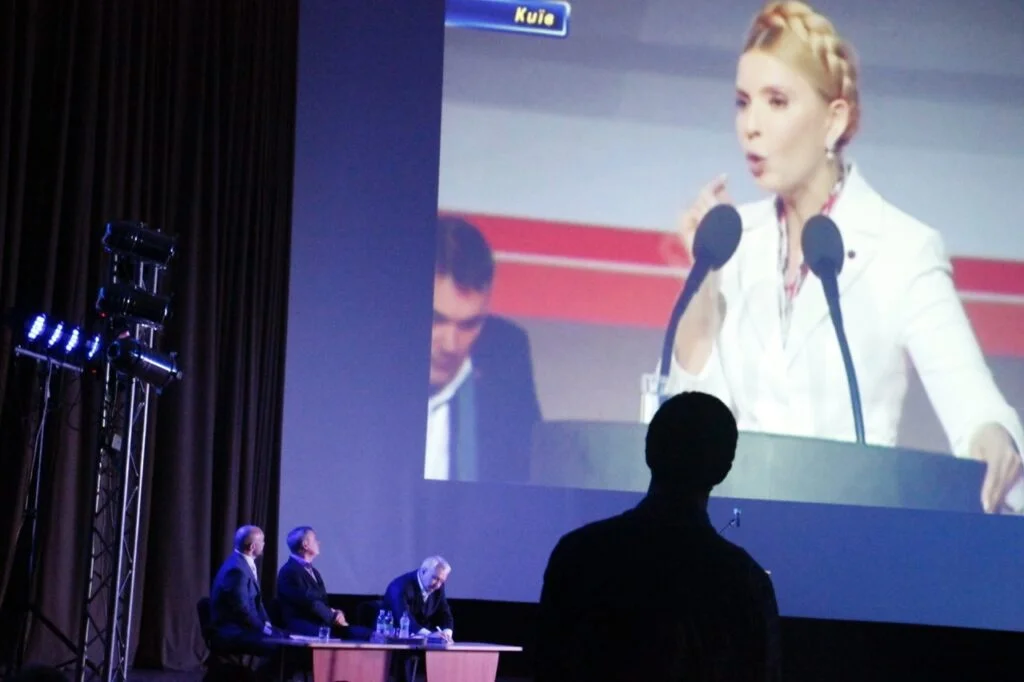
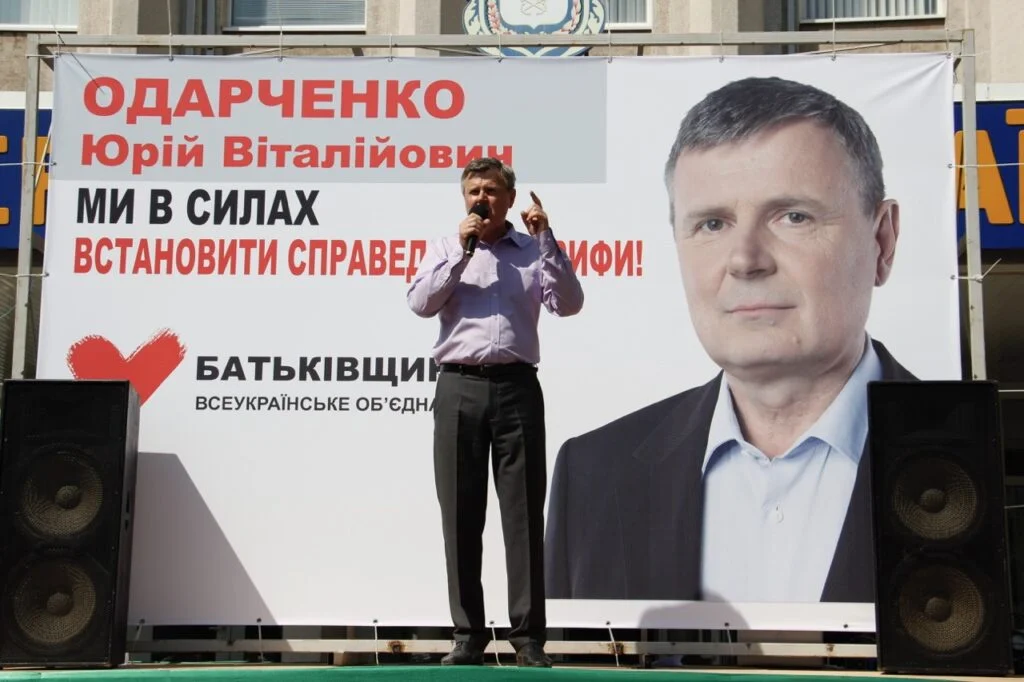
In the summer of 2016 he brilliantly won the by-election in district 183 against the current head of the regional council Andrii Putilov. He ran in the elections with ultra-populist statements about genocide — tariffs, villages and everything that could win votes.
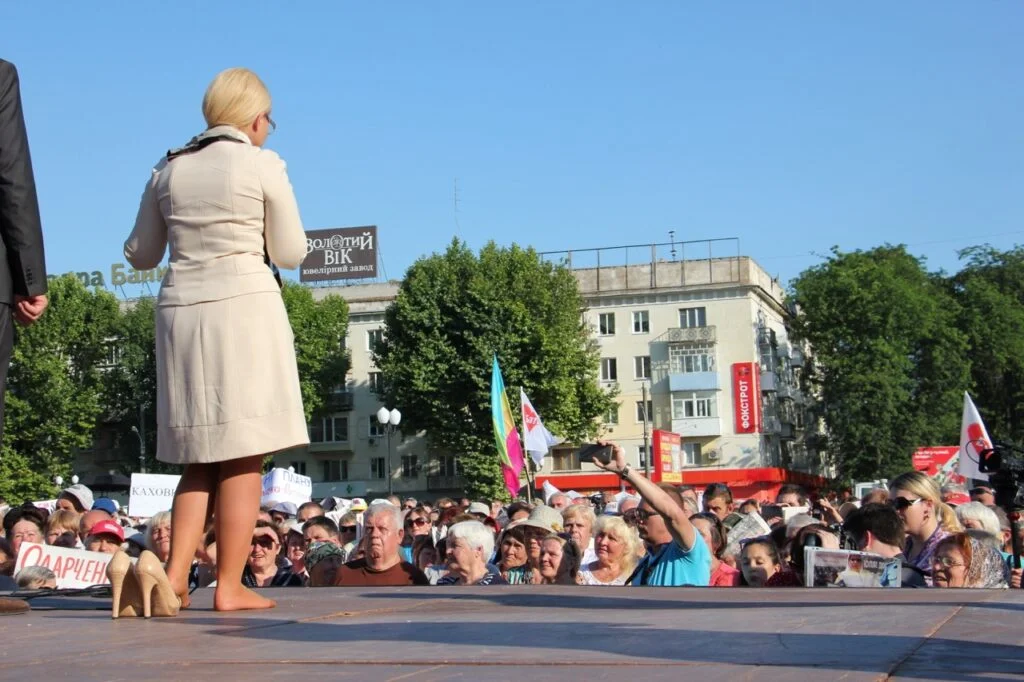
The apex of that campaign was Yuliya Tymoshenko’s visit to Kherson. Before a crowd of thousands Tymoshenko spoke barefoot, and expensive shoes stood nearby. But no one cared. The crowd was ecstatic about her. Such enthusiasm could not be faked.
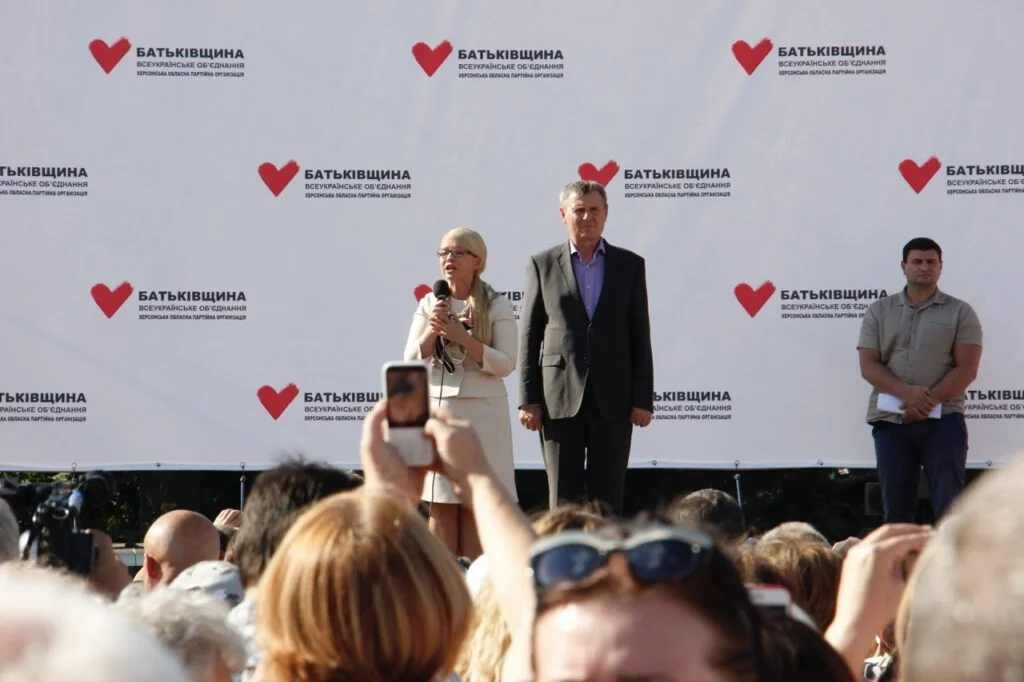
And already in the autumn, having bought deputies in packs and retail, Vladyslav Manger became head of the regional council.
Yurii Vitaliyovych helped him epicly kick down the doors of the regional council to bring in the bought deputies.
After two years Odarchenko’s affection for Manger began to wane. He seemed to start suspecting something and spoke out against the attempt to transfer Kherson airport into concession to the “well-known Moldovan company,” from which Russian interests were poking through.
Later Odarchenko even tried to stop Manger through the courts, but only pretrial detention stopped him two years after he ordered the murder of Katia Handziuk.
Also in 2018 Odarchenko suddenly remembered that he was against transferring Kherson Vodokanal into concession. Although everyone remembered that he had always been for it.
Yurii Odarchenko’s press conference took place three days before the fatal attack on his former fellow party member and comrade. The killers hired by Vladyslav Manger were already following Kateryna.
A month after the attack, when Kateryna was dying in terrible agony in the hospital, Yurii Odarchenko cried right at a rally for Yuliya Tymoshenko in central Kherson while listening to my account of her condition. I could not tell whether those tears were genuine. And I could no longer ask Katia, who knew him inside out and would have given a definite answer.
Fifty meters from us stood a frightened Manger surrounded by dozens of bodyguards.
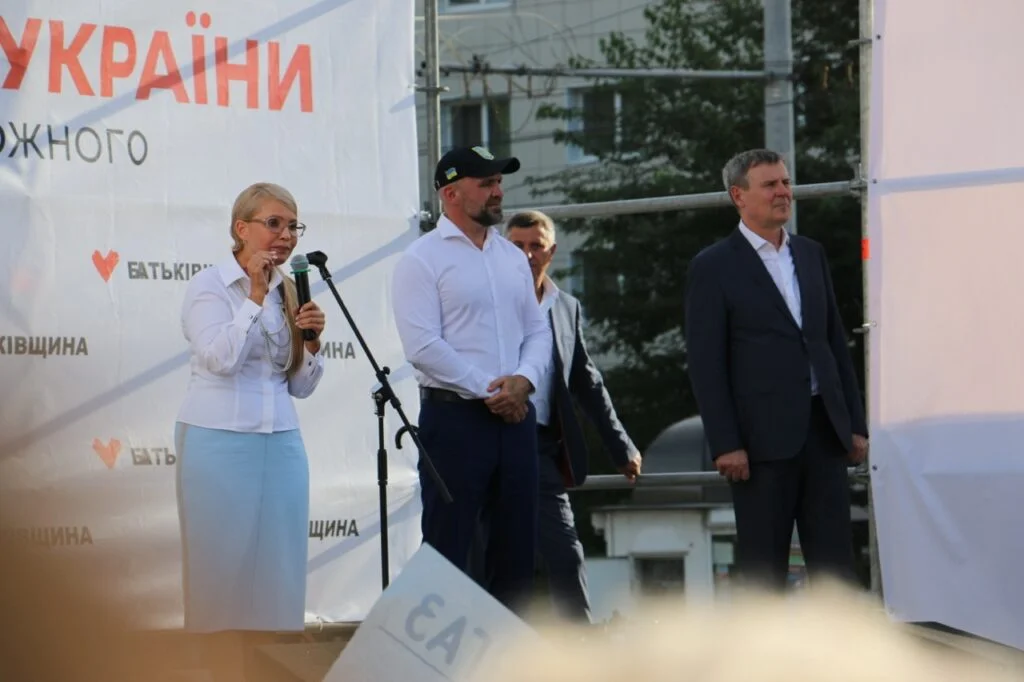
In that idiotic “Manger show” he looked petty, and the bodyguards, who would not let me approach him during the entire rally to ask a question, only reinforced my suspicion that he was the organizer of the attack. Yurii Vitaliyovych did not answer my question about whether he suspected Manger.
Collapse
In the summer of 2019 Yurii Odarchenko lost the elections. According to our sources in the party, he was not taken into the list at all.
In 2020 Batkivshchyna for the first time in 15 years did not pass into the Kherson city council. The faction in the regional council still existed, but could no longer influence processes. Servants, “Kolychaiev supporters” and OPZZh made deals without Batkivshchyna.
In business, which could no longer rely on the votes of its deputies, problems began. He could no longer even bring people out to a rally.
In the 2021 by-elections in district 184 Yurii Odarchenko did not test his luck. His daughter Kateryna ran there from her own no-name party.
For the next five years Yurii Odarchenko and his party were forgotten. War, occupation and all the derivative problems contributed to this.
And then, suddenly, in April 2025 it turned out that Yurii Odarchenko no longer heads the regional party organization. Since April 8 the organization has been headed by Mykola Yakymenko, who until 2023 was the deputy head of the Kherson Regional Military Administration.
Later the Presidium of Batkivshchyna’s political council removed from the bureau of the Kherson regional organization not only Yurii Odarchenko, but also a number of old party members.
In a phone conversation he first said that he had almost left by himself, but then said that it was “hard to comment on this matter.”
Asked whether all his associates left the party, Yurii Odarchenko replied no. For example, Stanislav Troshin remained in the party. As we remember, ten years ago he likewise betrayed Mykolayenko. As did old party members Olena Yancheva, Mariia Levkivska, Iryna Arkhipova.
Some of these people later even defended Manger, claiming that he could not have been the organizer of Kateryna Handziuk’s murder.
One of Manger’s most active defenders was Olena Yancheva. Her husband Yurii Odarchenko never once spoke out in support of the former fellow party member now sentenced to 10 years.
***
It is obvious that there is no political future for either Yuliya Tymoshenko or her party. Buyers of regional franchises, including the Kherson one, will be left at an empty trough. And the party will remain only in memories like these. And maybe in Yurii Odarchenko’s memoirs. I think that would be a bestseller.