In the postwar novella by Galician writer Osyp Makovey “The Dead City” the main character, a sotnyk, walked through an empty city broken by war in the Carpathians, met Satan and a war correspondent who photographed that devil against the ruins, but in the end the hero did wake up. Over the past year, looking through photo and video materials from Kherson city center that our correspondent shoots before publication, I constantly recall that sotnyk who managed to wake up.
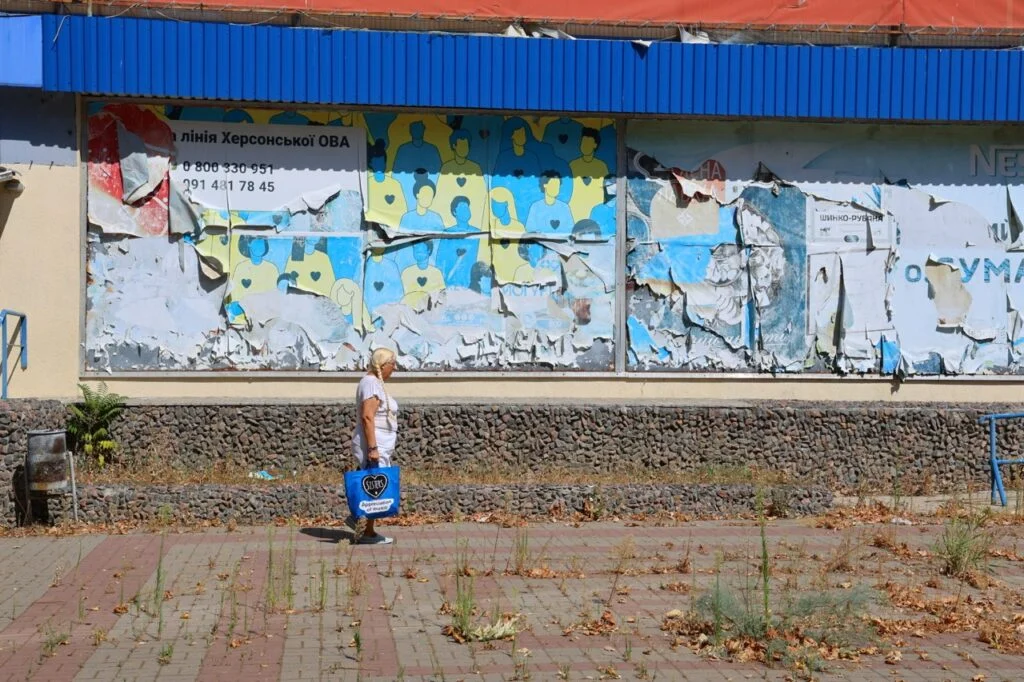
We still live in a ghostly, stupid dream. Periodically walking the dead city.
When I first wrote on Facebook that Kherson is dying, I received furious hate from local residents who took this fact as a personal offense. Then, as now, I attribute it to the trauma we live in, which sometimes prevents us from objectively assessing reality.
And the reality is that just a little over a year ago my wife and I were filming at Odesa Square, in the river port area. In the summer of 2024 we had a story about how the old town lives, where at that time a few shops were open and people walked the streets. Now going down below Soborna Street is an extremely reckless decision. Artillery, drones, and even mortars cut off most of the old town.
The city is slowly dying, no matter how much those who live here permanently and desperately want to believe the city is alive may deny it.
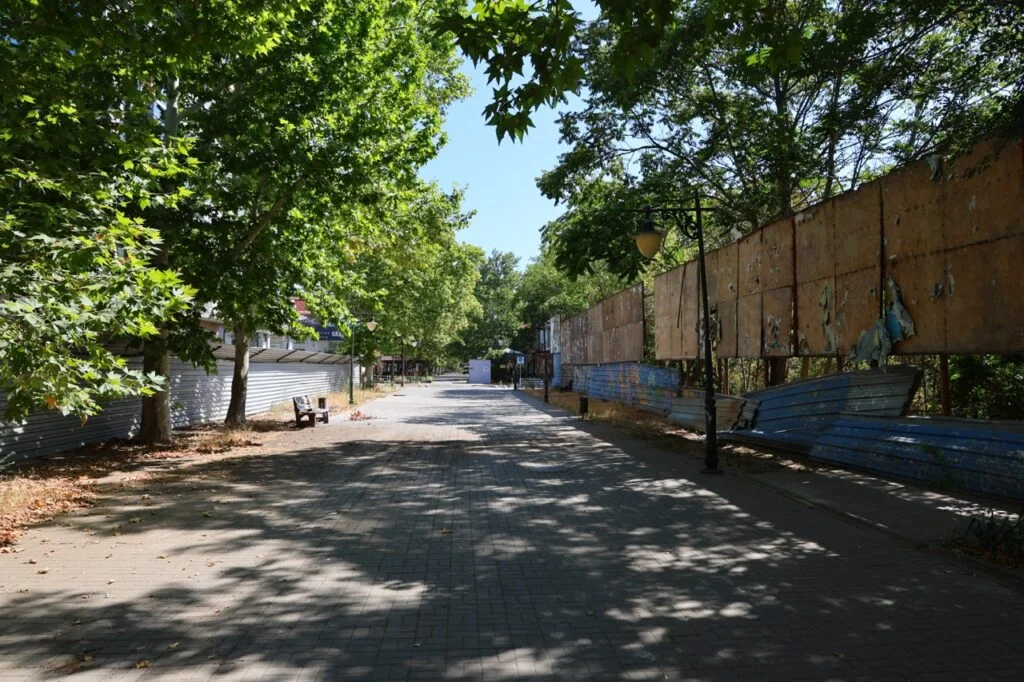
With these thoughts I walk to Myrny Boulevard, where my colleague Oleksandr set a meeting with me for nine in the morning. Of course we both have mobile phones, but I deliberately want to come to the boulevard and find an old acquaintance the way we did in the early 2000s. A kind of quest.
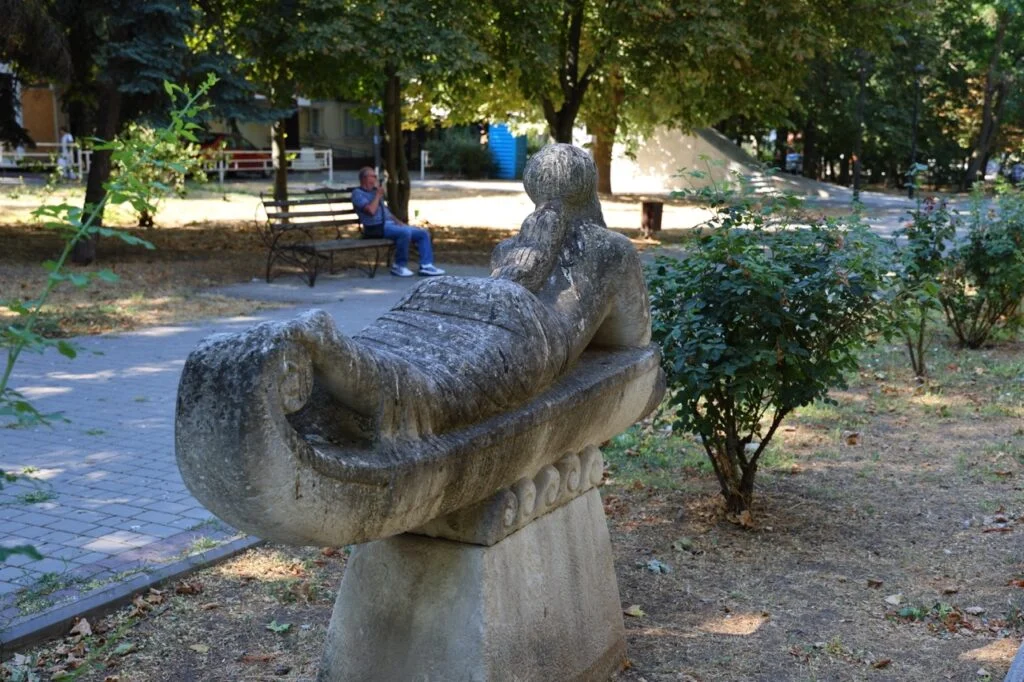
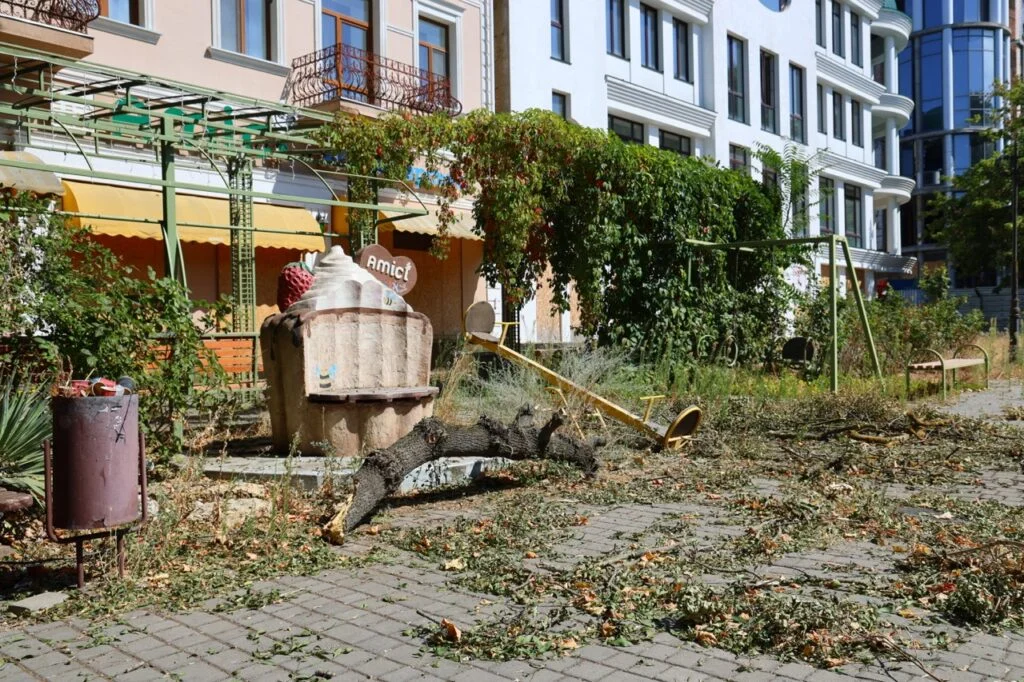
Sasha leads me through the streets of our native Kherson, familiar down to the smallest detail, like a guide. He shows where shops still operate, introduces me to people who are still holding on there. It looks even more surreal than searching for him among the Stepanian sculptures and others unknown to me, which have aged considerably and blackened over the last ten years.
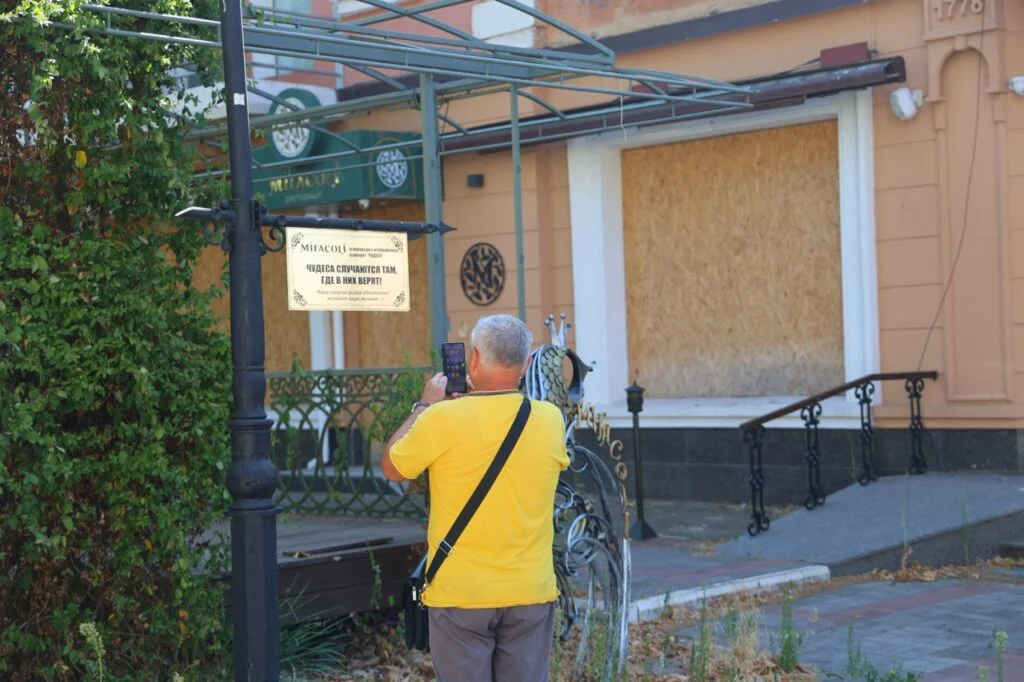
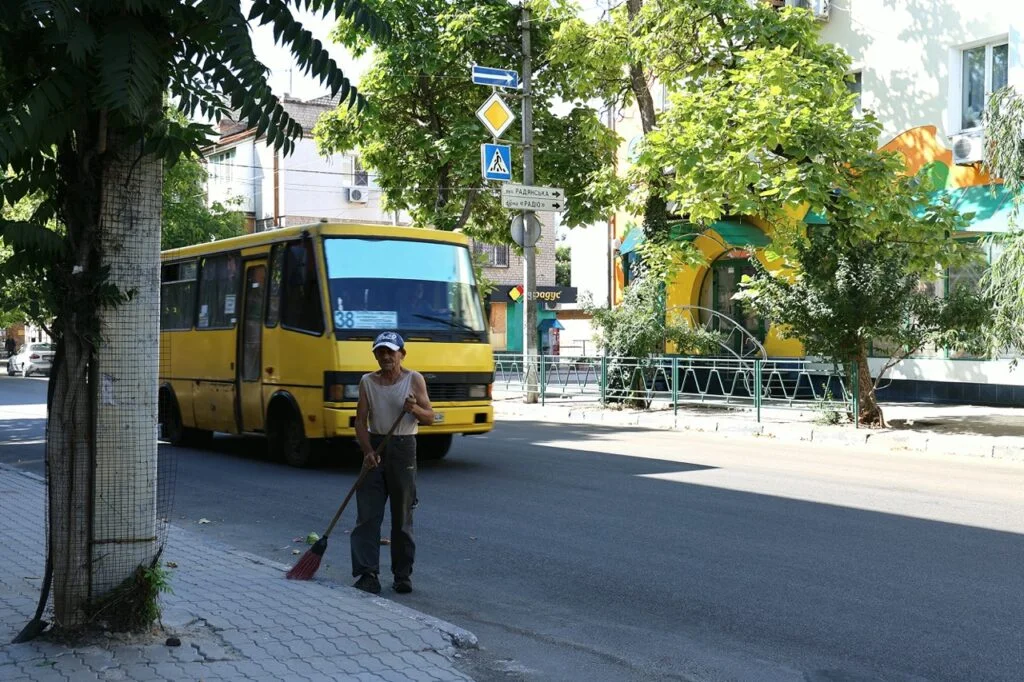
We go down Hrushevsky Street, which has been renamed three times in the last 15 years. The shops that are still open gradually come to an end. We see boarded-up windows and broken glass underfoot more and more often. Although a street sweeper is sweeping the street, and the 38th marshrutka is driving along. I can’t imagine what its route is now.
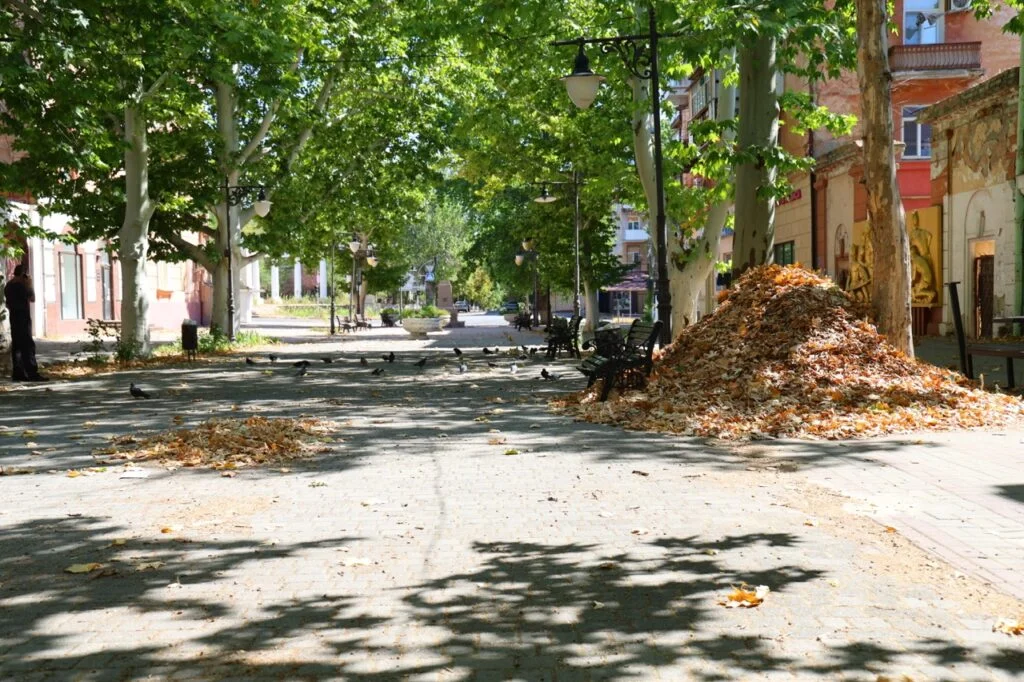
The former Potemkin Park, now Hrushevsky Square, greets with a Ukrainian flag and a ringing silence. The square that Ihor Kolyhaiev so wanted to turn into a village park looks fairly well kept. It’s evident everywhere that municipal workers are working here constantly. And this is another example of surrealism, because hardly many people come to stroll in this square.
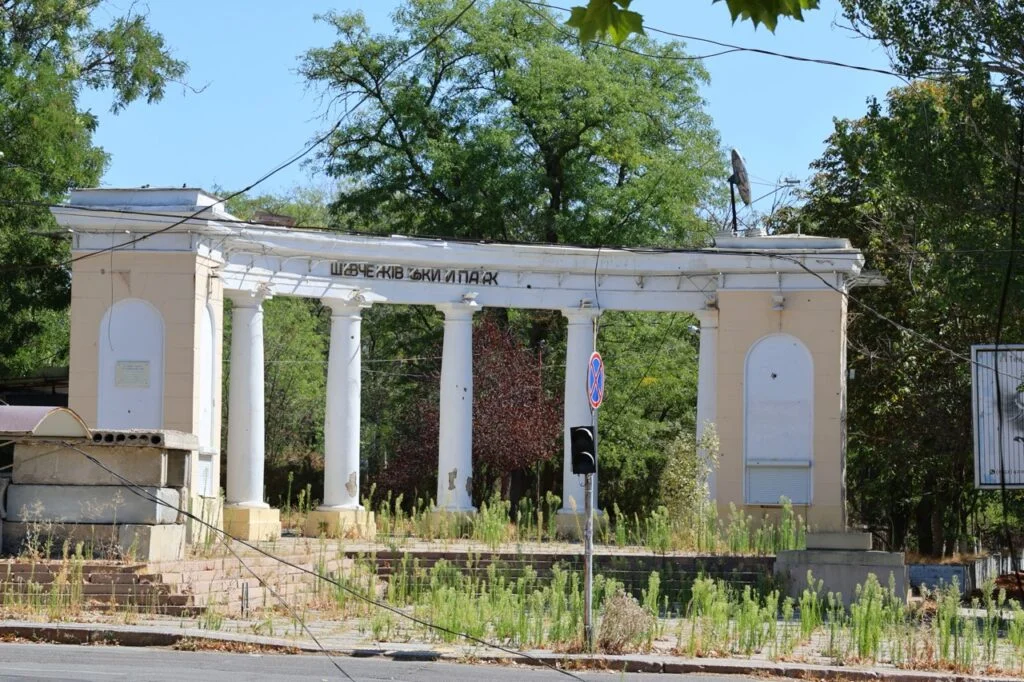
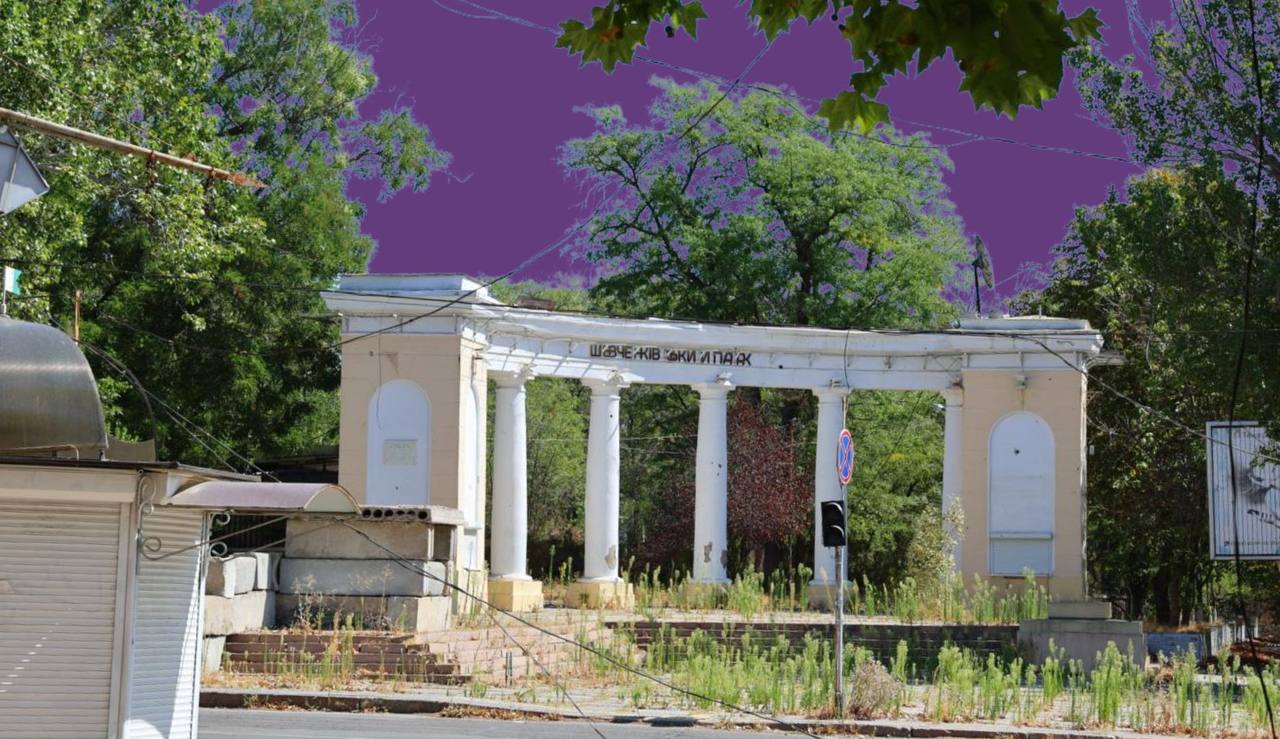
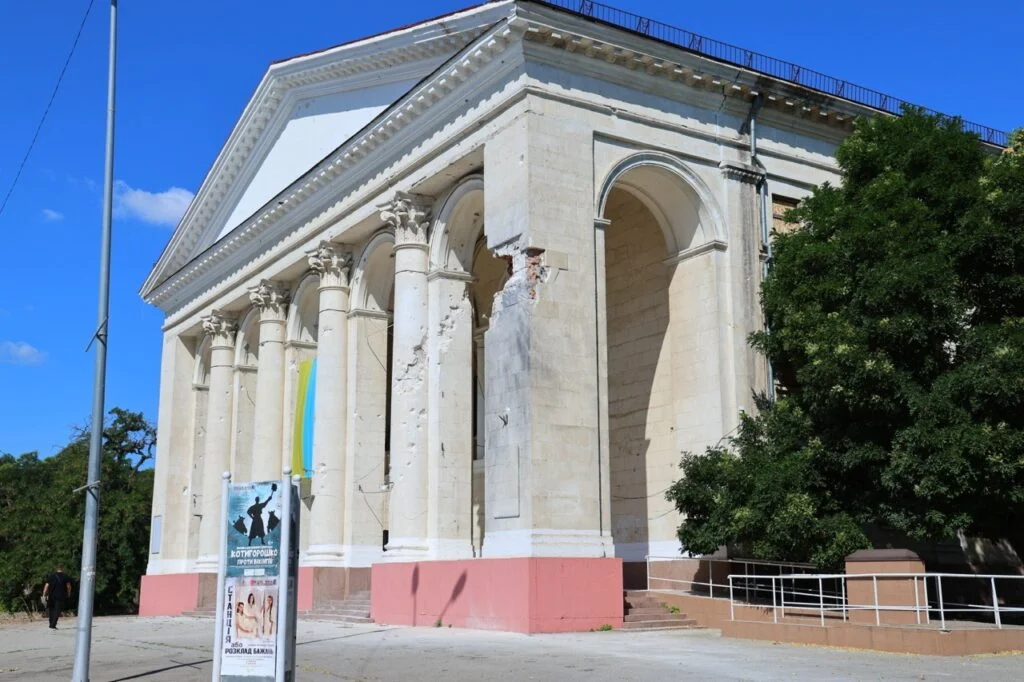
There are more holes in the theater portico columns. Several times artillery shells have already struck here. Inside the white columns of artificial marble the red brick is visible. The strength of the structure is probably ensured by the fact that this portico already fell in the early 1960s and was rebuilt again — in a way that it definitely would not fall, even from Russian 152-mm shells. Although builders probably did not foresee such a development of events.
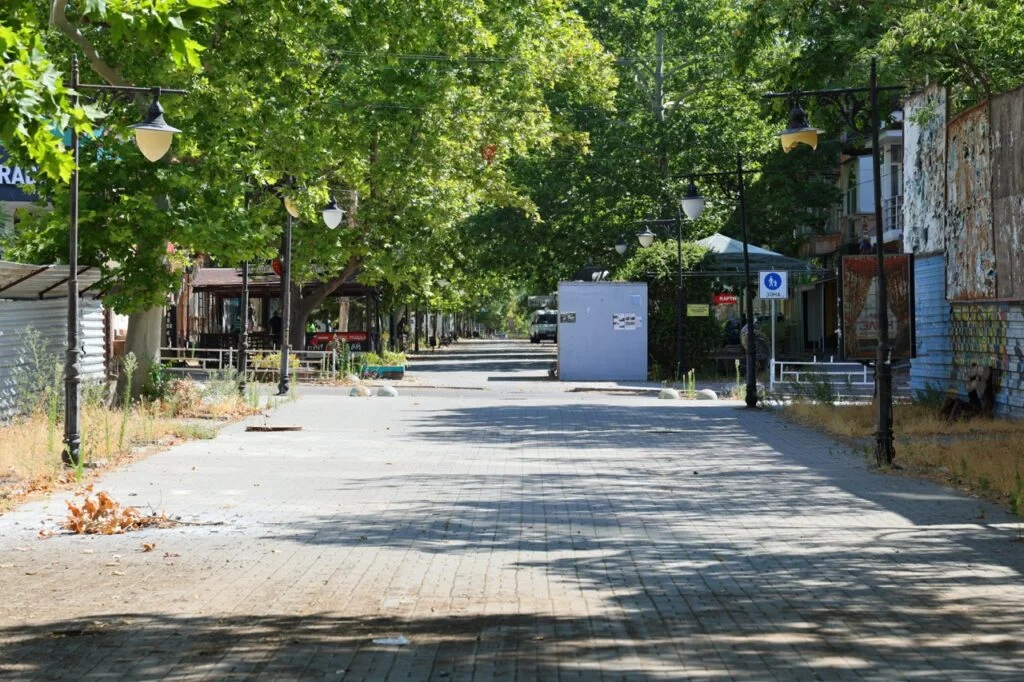
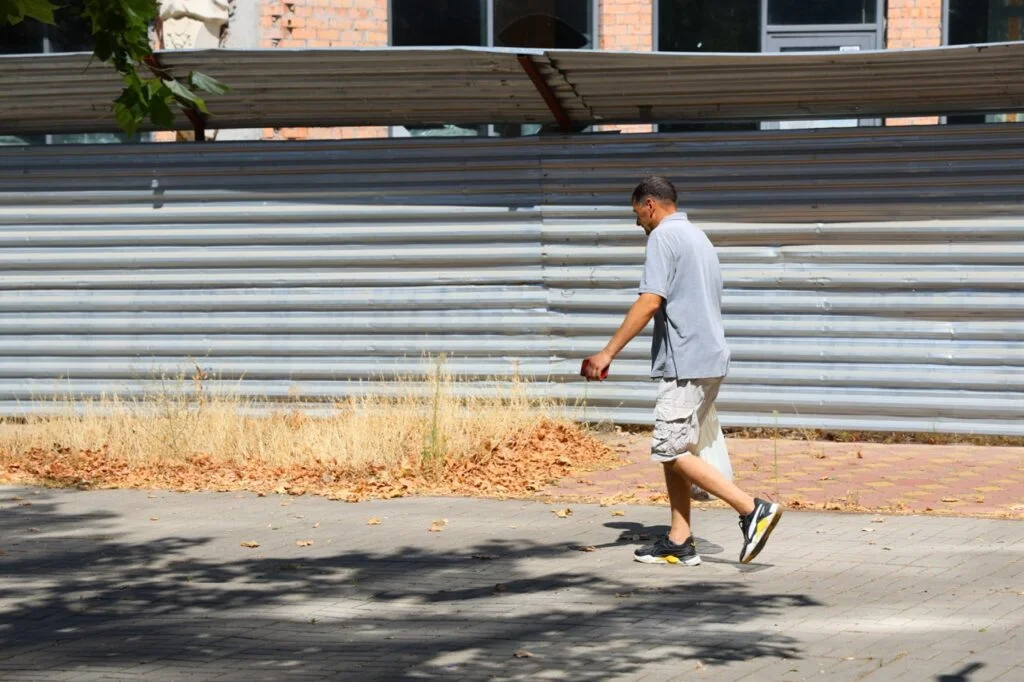
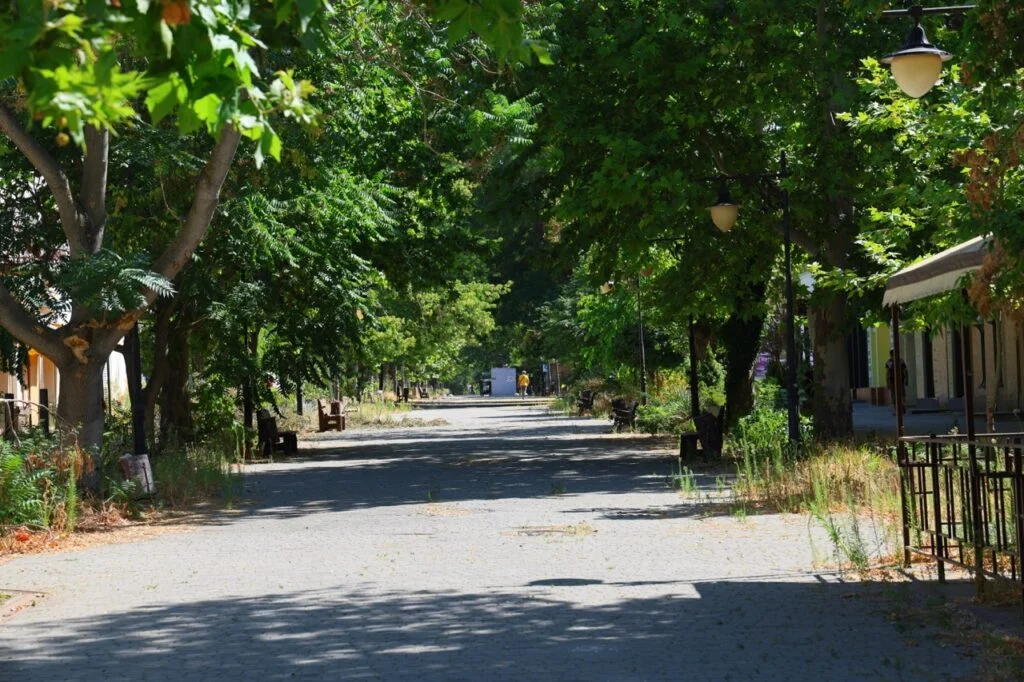
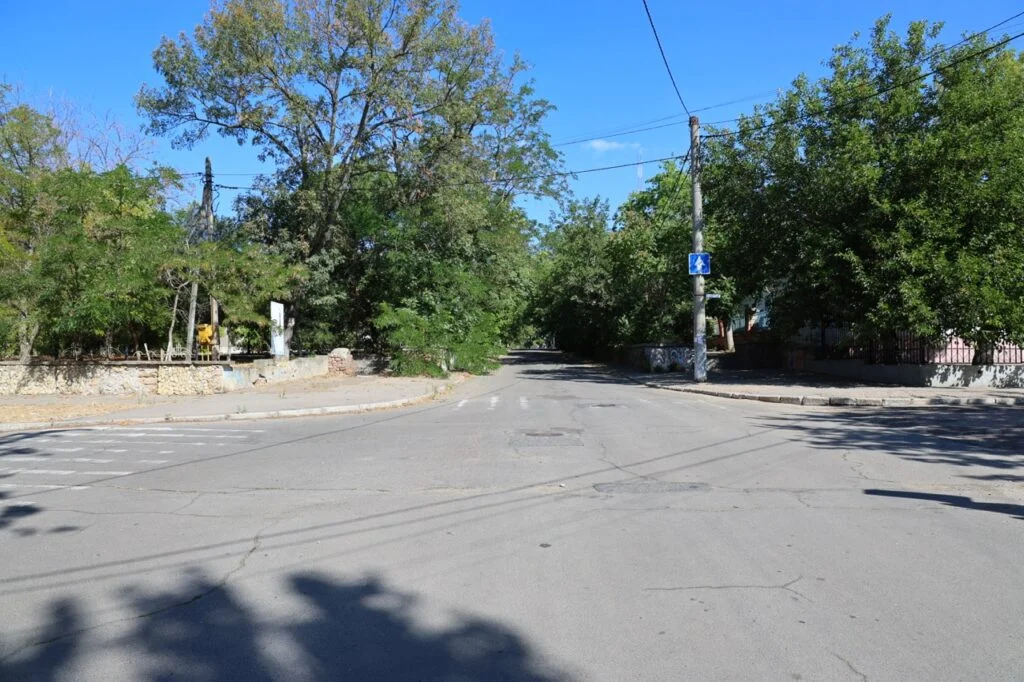
The whole way from the theater to Yevropeiska we also walk in complete silence along empty streets. The silence is broken only by the rustle of fallen leaves, which hints at the coming autumn.
On Yevropeiska, surprisingly, there are people; a few shops are open.
“Some call us ‘a point of resilience’, others — ‘a decision-making center’, as you prefer. We are open, come,” — laughs the seller from Pyvovar, the beer bar that was once iconic.
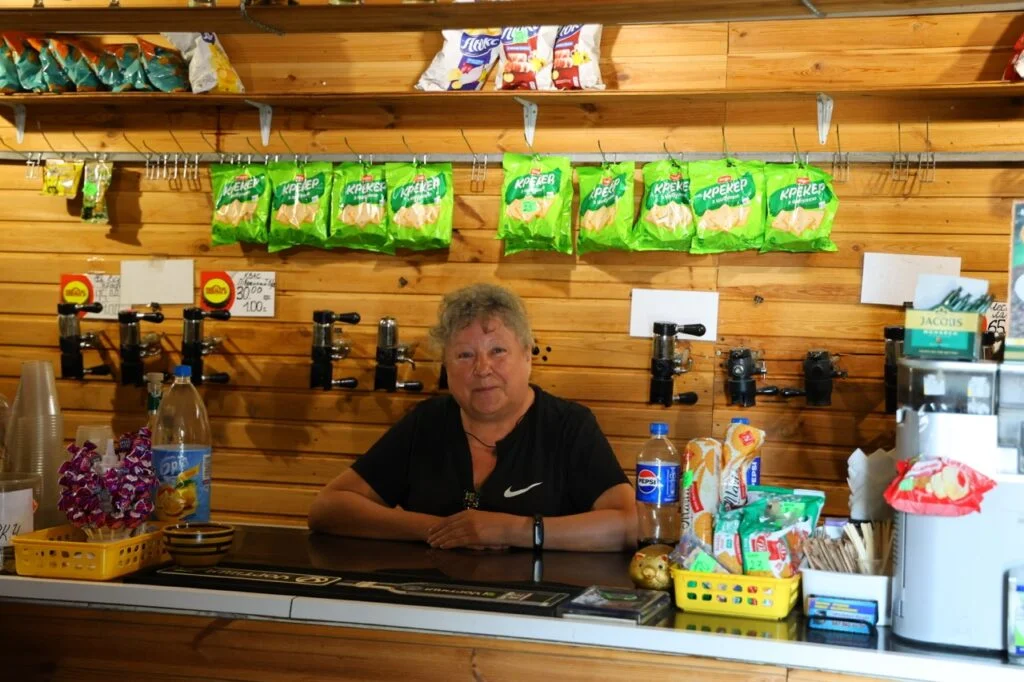
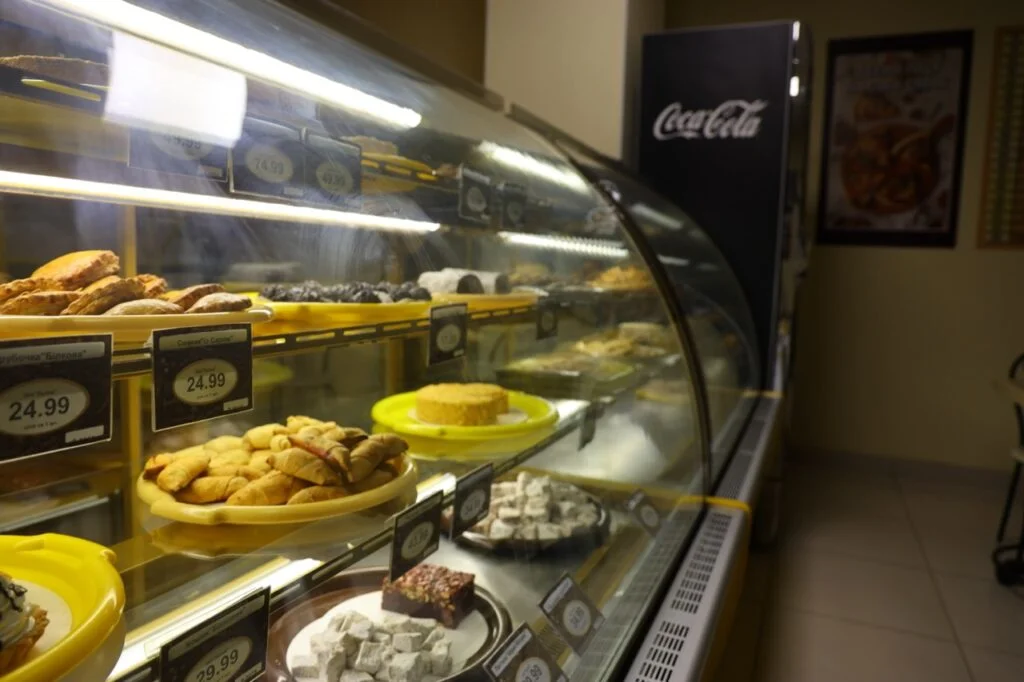
The assortment here is much more modest than it was before the war, but the vibe of the casual spot still remains.
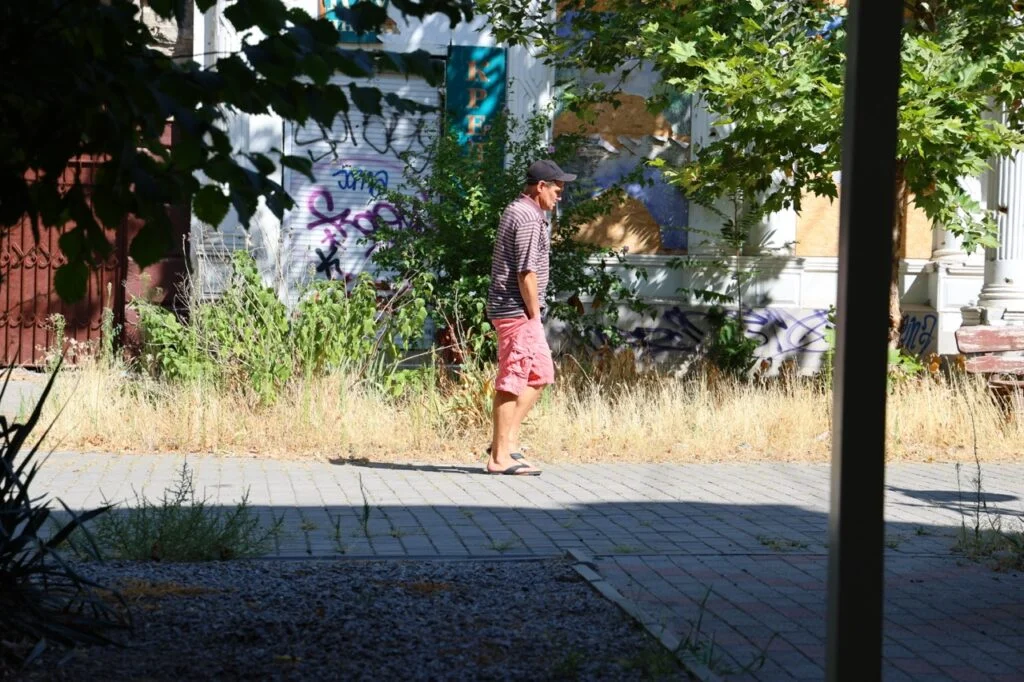
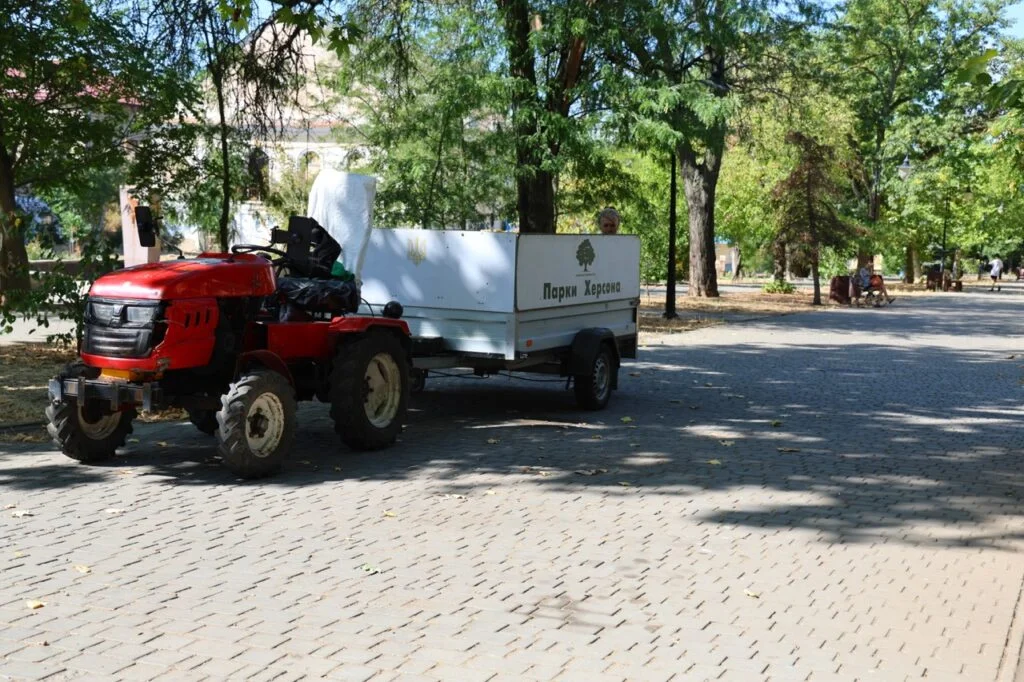
Occasionally solitary passersby walk along the street, and the ” indestructible tractor ” rumbles along.
Nearby a coffee shop operates where in the morning local men from all adjacent streets stream in. It’s a sort of club. The men drink coffee and leisurely discuss the latest news of this neighborhood and international politics. Gradually they move on to discussing old acquaintances, neighbors and barely known people who left for Europe. They briskly rattle off the names of European cities where former Kherson residents live, and savor facts from their new biographies. Occasional passersby periodically walk past the summer terrace, seemingly not at all interested in who went where and how they settled.
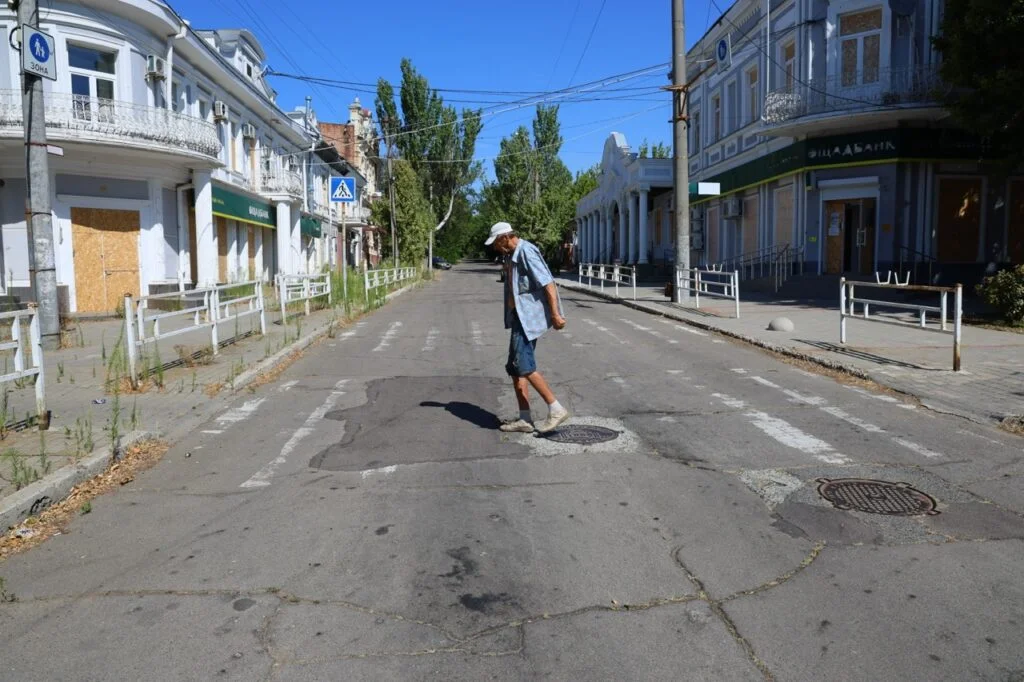
Soon we set off too — we want to walk along the former Ushakov. Along the way we record new holes in the TRC “Suvorovskyi”, breaches in buildings and in the roadway.
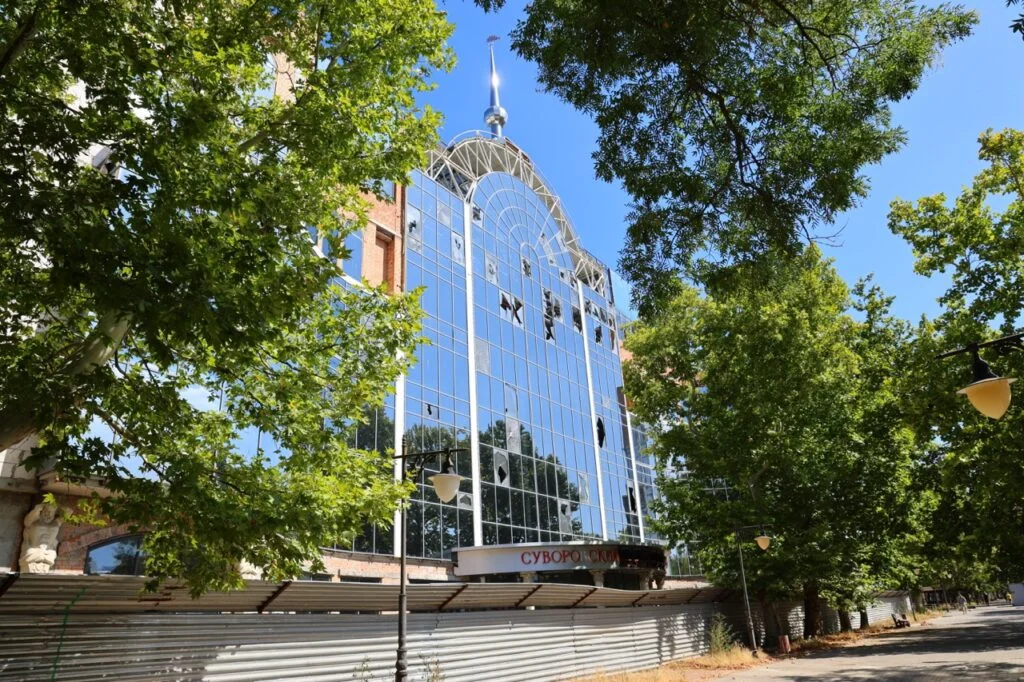
Near the Parus shopping center we take a few shots and try to recall whether this ATB was operating after de-occupation. Now we can say for sure that this is the last photo, even if only partially, of the whole mall.
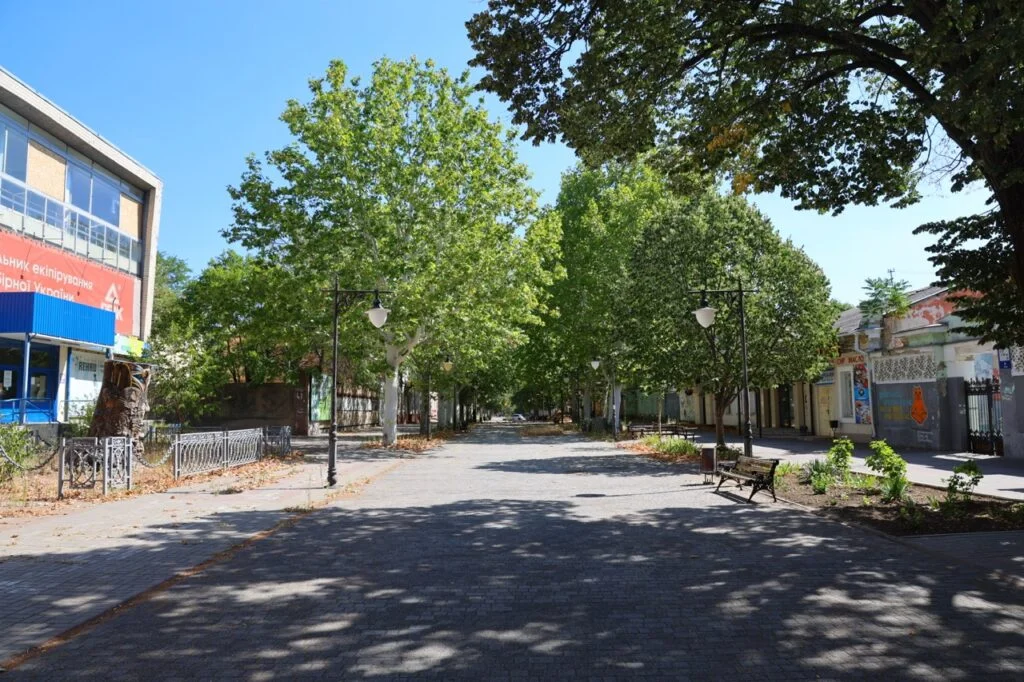
Having walked literally a few hundred steps, we heard a distant launch, a whistle and a powerful explosion nearby. While we were moving up the avenue, a few more explosions sounded. In an hour we will see photos of the destroyed ATB, the former Marchenko Gymnasium and several other buildings significant to the city.
The shelling continues. Shells fall ever closer, and people disappear from the streets. Someone jumped into the concrete shelter on the corner, and someone simply went into the nearest store — as if that could save them from anything. Hiding under the “Ukrtelecom” building on Honchara, we hear how large pieces of shell fragments rain down right onto the roofs of the surrounding houses.
The city is being killed every day, and we still cannot wake up like the hero of the novella.