

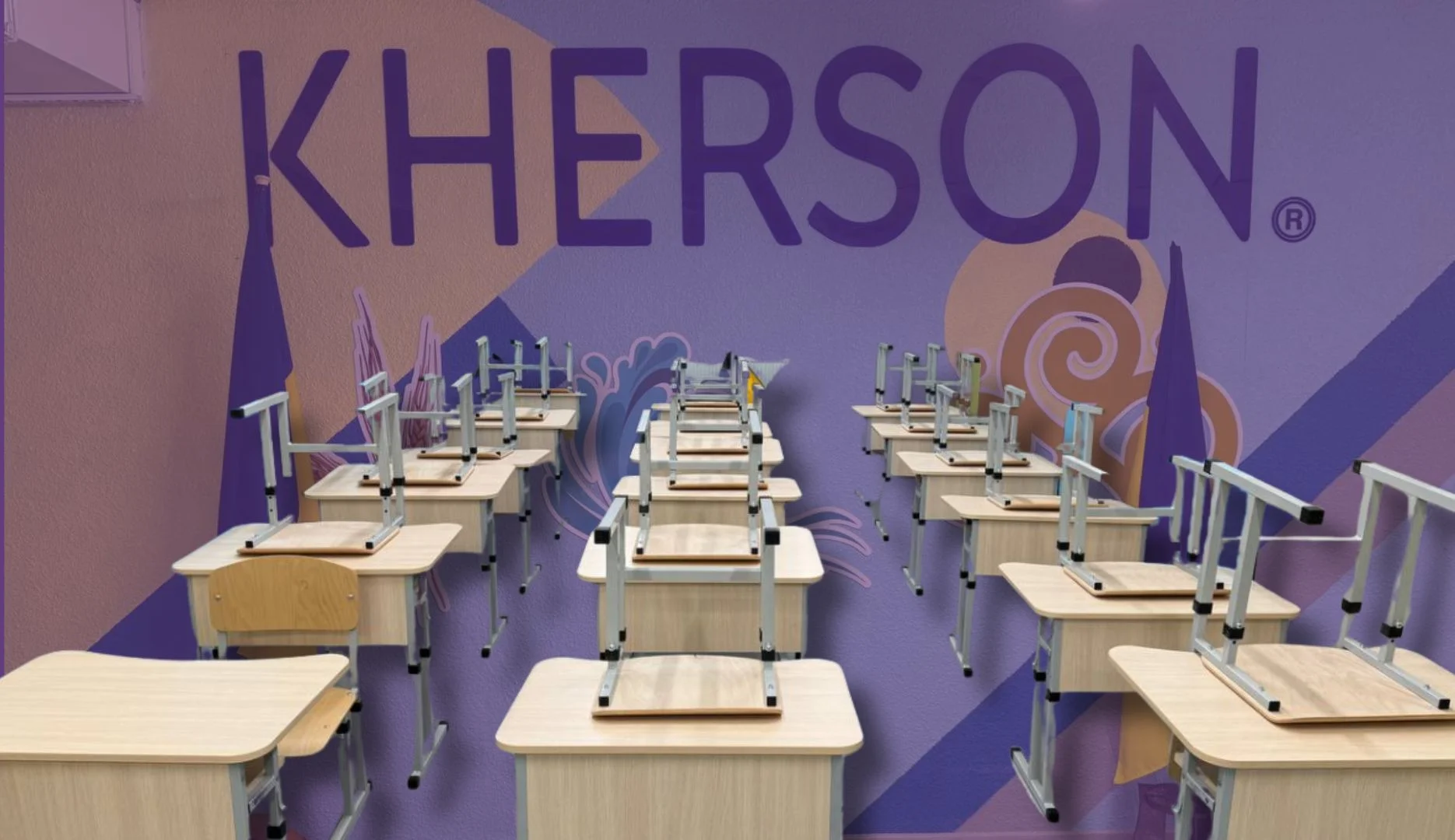
After the start of the full-scale war, education in the Kherson region came under considerable pressure. Hostilities and shelling damaged or destroyed about 373 educational institutions in the deoccupied right-bank part of the region.
In addition to the destruction of infrastructure, the problem of children’s socialization and making up for educational losses has become acute. Many students became internally displaced within the region, lost friends and the opportunity to study offline, and the prolonged psychological strain from shelling and occupation increases the need for specialized support. Together with the Donetsk media outlet “Skhidnyi Variant” we investigated how communities and schools in front-line regions organize safe spaces, programs of additional lessons and social support so that children can not only study and make up gaps in knowledge, but also restore social ties and a sense of security in difficult conditions.
What is the problem?
The shattered “education” of Donetsk
After the start of the war in 2014, education in Donetsk suffered negative changes. If in 2013 there were 1,115 general secondary education institutions operating in the region, by 2021 the number had decreased to 491. Now there are 256 schools, lyceums and gymnasiums registered in Donetsk region.
In 2013, more than 337 thousand students studied in Donetsk region; in 2021 — already 168 thousand; and now — 74.5 thousand people.
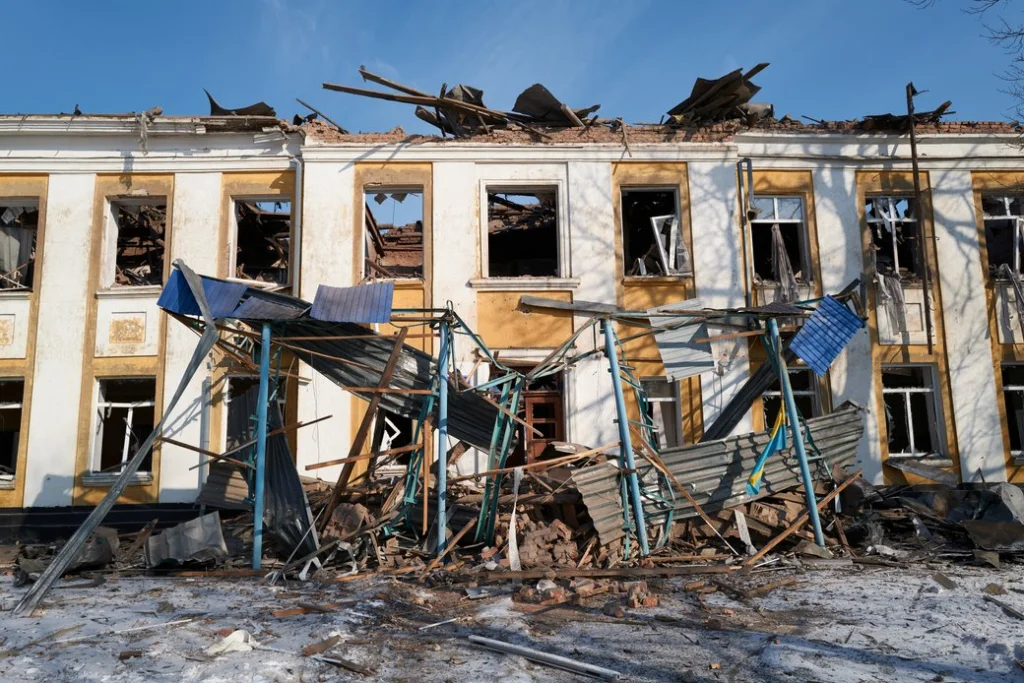
Since the start of the full-scale invasion, 791 preschool and secondary education institutions in the region have been damaged or destroyed. Of these, 388 are preschool education institutions and 403 are general secondary education institutions. This was reported to Skhidnyi Variant in a comment by the acting director of the Department of Education and Science of the Donetsk Regional Military Administration, Yuliia Burtseva.
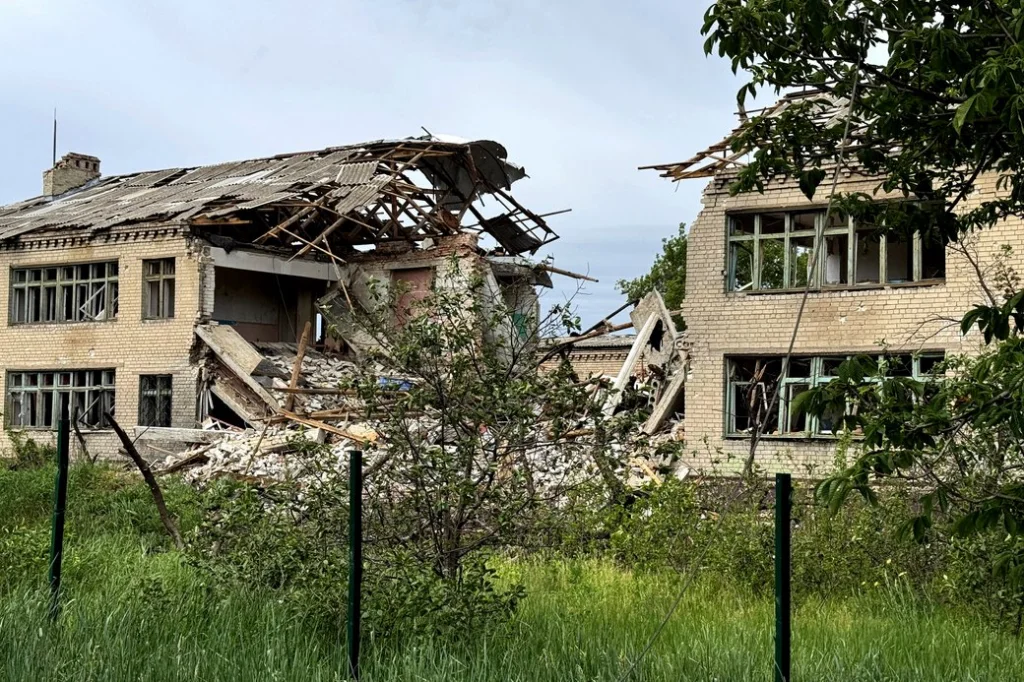
The difficult and practically critical situation in the region inevitably affected the education sector, forcing educational institutions to massively switch to remote learning. In frontline communities, which suffer daily from shelling, it is currently simply impossible to restore school operations in the usual format because there are no safe conditions for children and teachers. This leads to a significant decline in the quality of the educational process. Students who remain in Donetsk region especially feel the need for additional support.
Recently, the Kramatorsk-based NGO “Fishing Club of Ukraine” conducted research on the quality of education among students in the region. It found that there are 9–10-year-old children who cannot read and write well, and, moreover, almost have no motivation to study. This is reported by the project coordinator of the organization, Anastasiia Ponomariova.
“Some confuse printed and cursive letters. And this is the first grade program. The authorities assure that every child has access to education, hinting at the internet. But this is not entirely true. In frontline communities there are constant interruptions in communication and internet, power outages, and some families simply cannot afford gadgets. As a result, children can end up without any education at all, although it is very important at their age,” says Anastasiia.
There are some solutions for students from Donetsk region aimed at compensating for educational losses. These are available both for those who remain in the region and for those who evacuated.
Restoring schools and the challenge of socialization in Kherson region
After the start of the full-scale war in 2022, education in Kherson region was also seriously hit. If in 2021 more than 112 thousand children studied in general education institutions, by 2025 the number had decreased to about 50.7 thousand students.
Due to shelling and hostilities in the deoccupied territories of Kherson region, 73 educational institutions were destroyed and 300 damaged. 88% of all affected institutions are on the right bank. This has seriously complicated children’s access to education and requires large-scale infrastructure restoration.
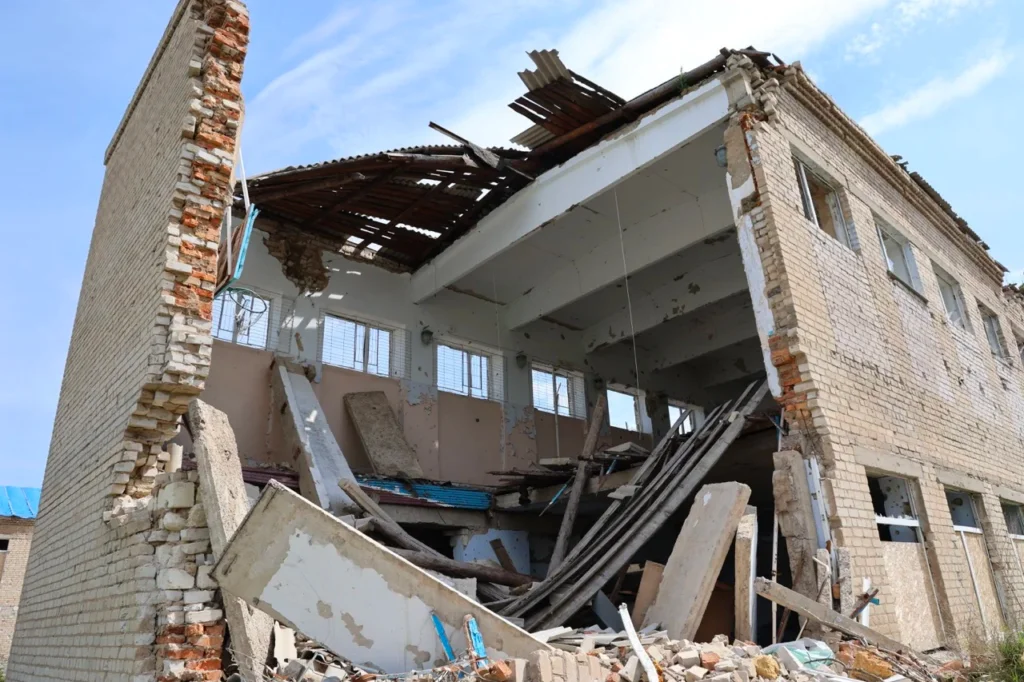
Today, 165 schools on the right bank of the region are operating online, and only 5 in a mixed format.
“After the invasion we resumed the educational process already in April. Of course, online. That is, one and a half months were completely without education. When the leaders left for a safe place (they left the occupation — MOST) and many teachers returned, we were able to restore distance learning and finish the 2021–2022 school year. Kindergartens resumed work in the 2024–2025 school year, meaning we transitioned them to a remote format. And they did not operate for a year,” said Viktoriia Rohova, head of the Education Department of the Vysokopillia settlement council.
In addition, the problem of socialization and making up for educational losses is acute. In 2020, children first plunged into the world of online learning due to COVID-19 quarantine restrictions — a new format that was then unclear and difficult for everyone. In 2022 the situation worsened even more: nine months of occupation of the right bank of the region forced parents to hide their children, protect them from danger and limit any social contacts.
“When we began work to restore the community after its deoccupation, we faced the fact that our children did not know how to interact with each other at all. They had a deficit of communication skills, lagged behind in learning, and had psychological difficulties. Their circle of communication is parents and relatives within the home,” says Anatolii Didur, head of the Darivska community, during one of conversations with MOST correspondents.
Today, more than three years after the start of the full-scale invasion, children in Kherson region live under constant threat of shelling. Some of them, especially those living near the Dnipro, were forced to move to remote communities of the region. They became internally displaced, losing friends.
The psychological and social consequences for children are obvious. The loss of a stable environment and friends increases levels of anxiety and stress.
What is the solution?
Consultation centers, shelter outfitting, school relocation, mobile educational brigades — solutions for Donetsk
After the start of the full-scale invasion of Russia, due to security concerns it was not possible to organize the educational process even in shelter complexes in Donetsk region. Therefore, education fully switched to a distance mode. In 2022 the number of schools and students was halved. Despite this, educators in the region managed to adapt to new challenges, as they already had experience with remote work since 2016, says Yuliia Burtseva.
For Donetsk, part of which is occupied and another part is in the combat zone, it is difficult to find solutions for children to make up for educational losses. In recent years local administrations and public figures have proposed solutions such as educational-consultation centers, outfitting shelters in educational institutions to resume learning, relocation of educational institutions, and mobile educational brigades. But not all of them stood the test of time.
Educational hubs, day centers and underground schools — solutions for Kherson
In the deoccupied part of Kherson region it was decided that it is important to create safe spaces for children’s learning and socialization: children’s centers, educational hubs and classes in shelters. There children can communicate, restore social ties and feel the support of adults who are ready to help overcome fear and insecurity.
Such initiatives are already yielding results: even in difficult conditions, children in Kherson region get a chance not only to study, but also to feel part of the community again, build friendships and restore inner confidence.
In addition, in rear communities a state project for the construction of underground schools is being implemented.
How does it work?
They cover children both in Donetsk region and beyond
In 2023–2024 there were educational consultation points operating in Donetsk. Up to 37 such locations operated in the region. These were equipped classrooms where students could get help with learning. Children and their parents sought consultations in practical subjects such as chemistry, physics, mathematics, etc. Psychologists and speech therapists also worked additionally.
For example, consultation points were launched in the deoccupied Sviatohirsk and Lyman. They held classes and meetings with local schoolchildren to make up for lost educational knowledge.
However, in 2024 due to the enemy’s advance the work of educational consultation points was stopped. Meetings again fully moved to an online format.
Shelters in educational institutions were repaired in hopes that this would make it possible to resume the educational process there. Since the start of the full-scale invasion in Donetsk region 8 protective facilities and 56 simple shelters have been built. Over UAH 136 million were spent on this. However, it was not possible to restore the educational process. And shelters are now more used by local residents.
In order not to lose contact with students who evacuated from Donetsk region with their parents, educational locations were organized in other, safer communities of Ukraine.
“In other regions of Ukraine there are 71 educational locations operating, as well as the ‘Donetsk’ educational hub in Kyiv. Most of them operate in-person and are located in Dnipro and Kyiv. They hold classes to prepare for school, speech development for preschool children, make up educational losses, prepare for the national multi-subject test, and provide psychological support,” says Yuliia Burtseva.
To fully resume the educational regime, 7 secondary education institutions from Donetsk region were relocated and resumed work. Among them:
— Donetsk Regional Specialized College of Sports Profile named after S. Bubka in Poltava;
— Health and rehabilitation center for social rehabilitation “Smarahdove Nebo” in the village of Orynyn, Khmelnytskyi region, which has a general secondary education unit;
— First Kramatorsk Lyceum in Perechyn, Zakarpattia region;
— Educational complex No. 1 of Pokrovsk and its preschool unit in Dnipro;
— Mariupol Specialized School No. 66 and Lyceum-School No. 48 in Kyiv based at Mariupol State University;
— Mariupol City Lyceum in Pushcha-Vodytsia in Kyiv.
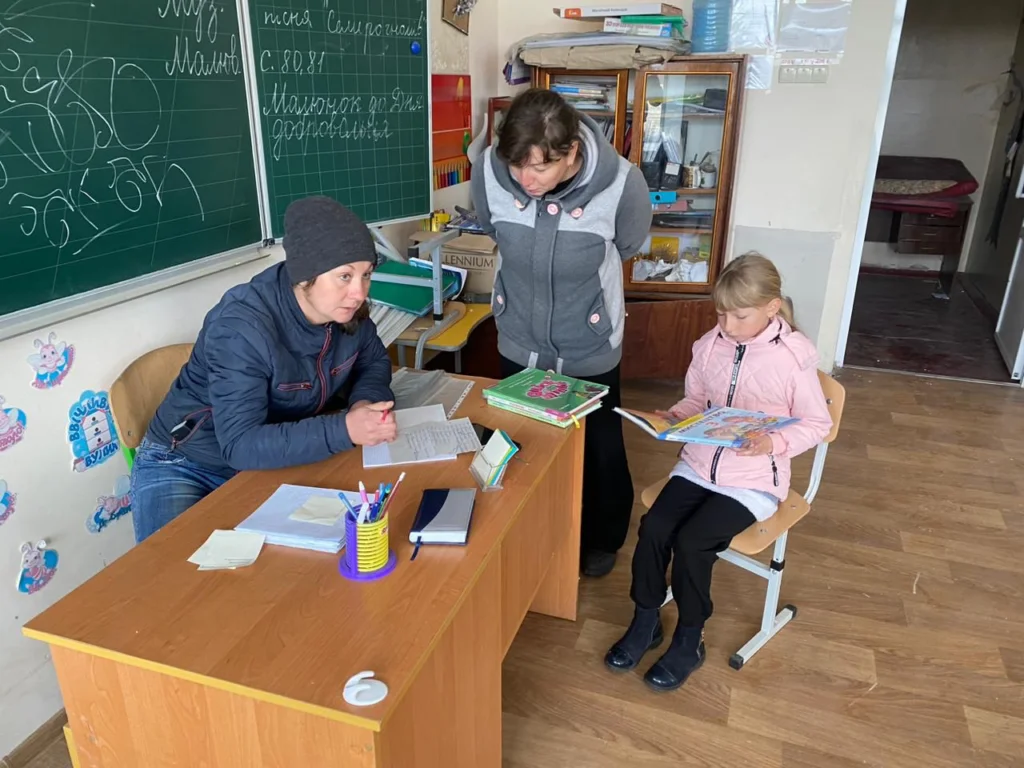
This year the Kramatorsk NGO “Fishing Club of Ukraine” organized mobile educational brigades in Donetsk region. A group of teachers travel to communities and conduct additional lessons for students in grades 1–11 in mathematics, Ukrainian and English.
Classes are held online and offline. In addition to group lessons, teachers of the educational brigades can conduct individual lessons — in such cases they come directly to the child’s home. Group lessons are arranged in shelters. Children are informed about the time and place shortly before the start. Several lessons can be held in one meeting.
“We are convinced that it is important to teach children not only school subjects, but also to help them master independent learning skills. That is, to give tools that will allow them to independently acquire new knowledge in the future. Our specialists explain how memory works and how to train it, how to properly organize one’s activities and daily routine. After all, often the reason for gaps in learning is precisely the lack of ability to structure one’s time. Therefore, during visits specialists analyze the situation of each child individually and provide personalized advice or knowledge,” notes project coordinator Anastasiia Ponomariova.
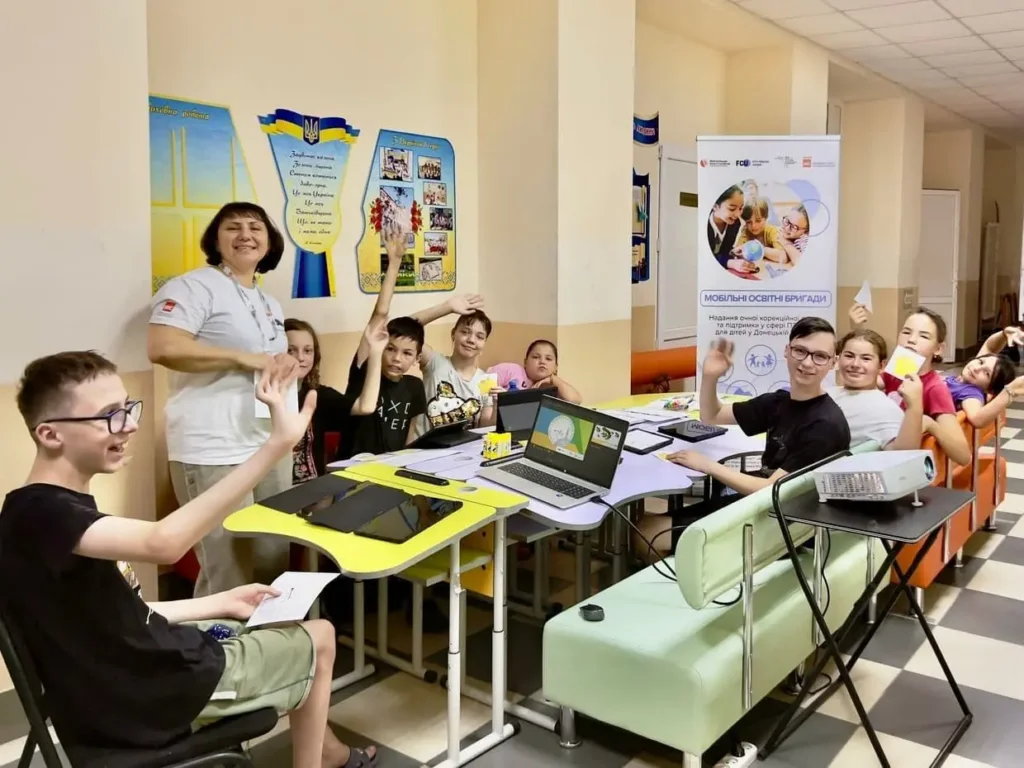
The mobile brigade includes a teacher with a general profile, as well as teachers of mathematics, English and Ukrainian. The general profile teacher, also called a pedagogical case manager, communicates with each child and creates a “roadmap” for developing learning skills for them. The case manager conducts soft skills classes aimed at improving memory, logic, concentration, time management and motivation to learn.
When meeting, the team conducts testing to identify individual features of information perception, strengths and areas for development for each child. Mobile educational brigades work in remote settlements of Donetsk region. Mostly these are villages and small towns. The security situation is taken into account during trips.
One course lasts 2 months. Subjects in it change depending on the needs of the children.
Educational hubs, day centers and underground schools of Kherson region
The first thing needed to work with children from deoccupied communities of Kherson region in an offline format is a safe space. That is why NGOs with educational programs implement their projects in shelters.
Thus, in the Darivska community an educational hub was implemented in a shelter on the territory of one of the settlements. The NGO “Successful Woman” reported that the head of the community was interested in comprehensive work with children. That is why he actively promoted the project and sought donors to outfit the shelter. Gradually, 700 square meters became a safe, bright and fully equipped space for children to stay.
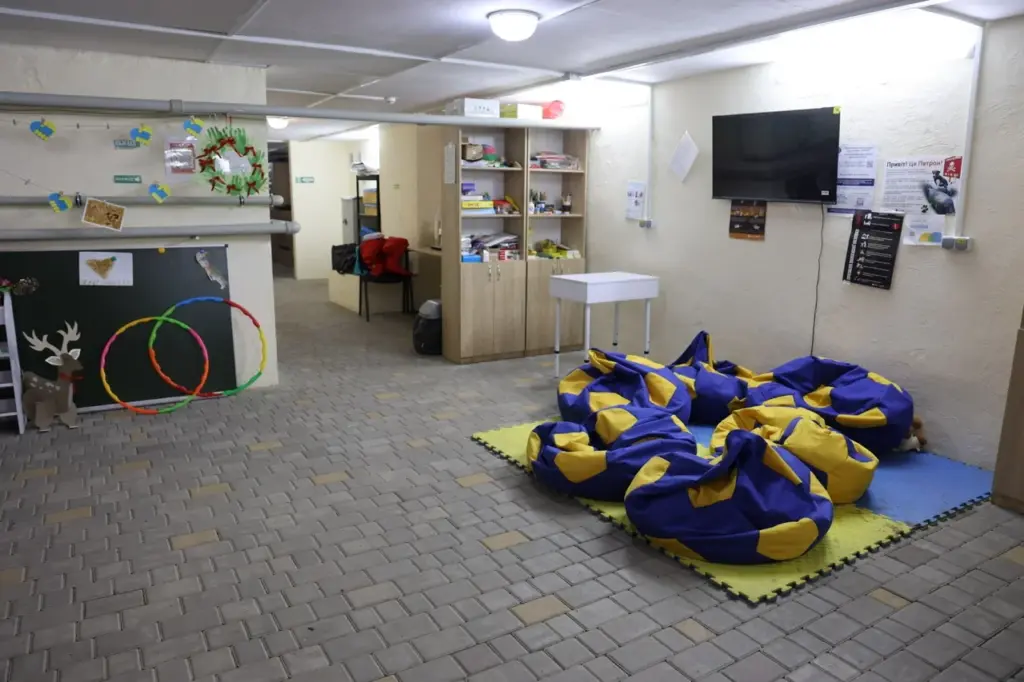
Two psychologists, a speech therapist, and two social workers — case managers — work there.
“At the beginning very few children came. We had to do many interaction exercises so that they learned to be with each other. Team-building games, classes where everyone does one thing together. And indeed the children began to open up, trust us, even tell some secrets, and at home parents began to notice changes,” said the hub psychologist Lyudmyla to MOST correspondents.
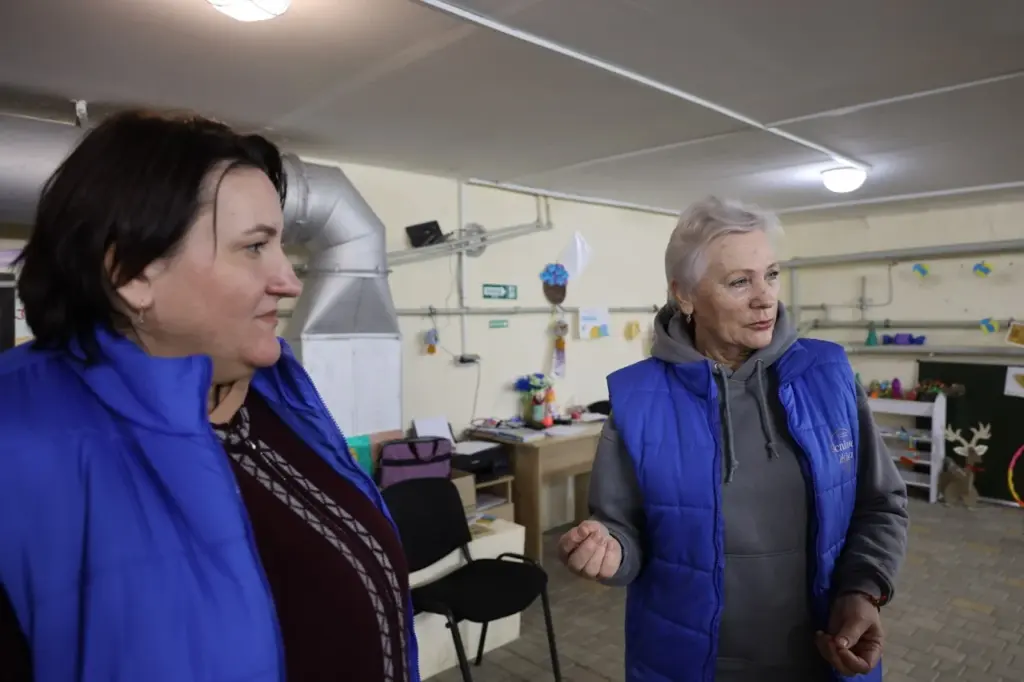
The key task of this hub is to socialize children and prepare them for the educational process, which was launched in a mixed format.
In frontline Kherson, school-age children are worked with in a day center. The NGO “Center for Family and Parenthood Development ‘My Home'” implements its projects with children there. The “Institute of Leadership, Management and Coaching” and the Save Ukraine Charitable Foundation helped arrange the space. The day center operates every weekday from morning until 3:00 pm in an equipped shelter.
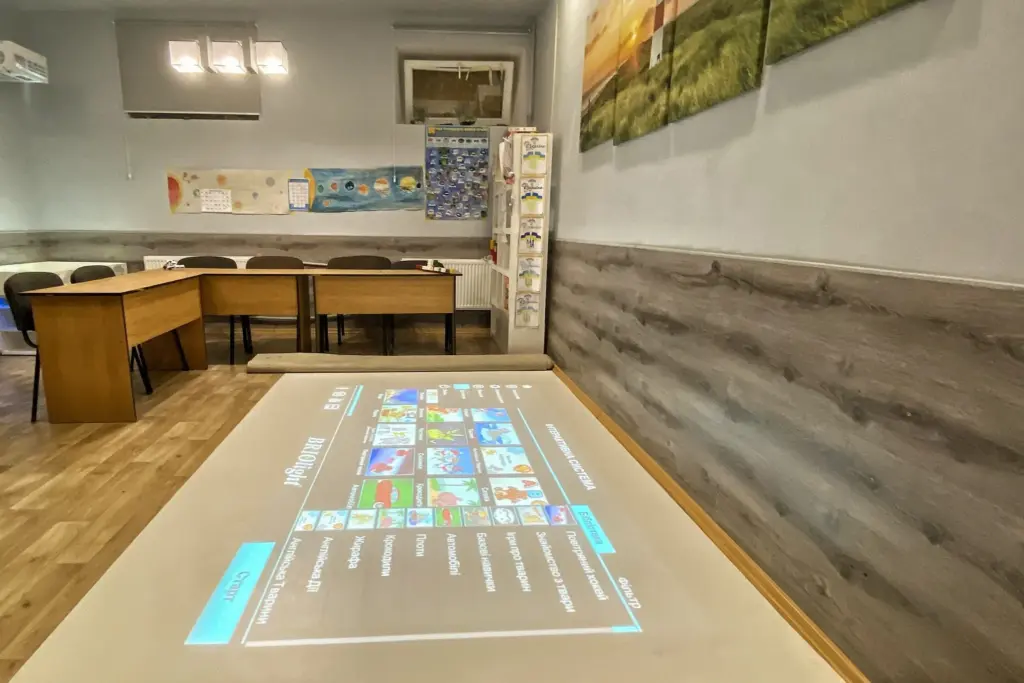
“We have three social work specialists and one psychologist. Additionally, our specialists include someone with a medical education and someone with a teaching background — there is even a speech therapist who works individually with small children,” says psychologist Svitlana.
The center is attended daily by up to 30 children. Svitlana says that children have a light breakfast and a full lunch. Center staff work on the comprehensive development of children: from making up educational losses to psycho-emotional support.
To create a safe environment for in-person learning, modern underground schools were built in Vysokopillia and Orlove. They accommodate 938 students, as well as preschoolers and after-school center attendees, providing an opportunity to study and restore social ties even in difficult conditions.
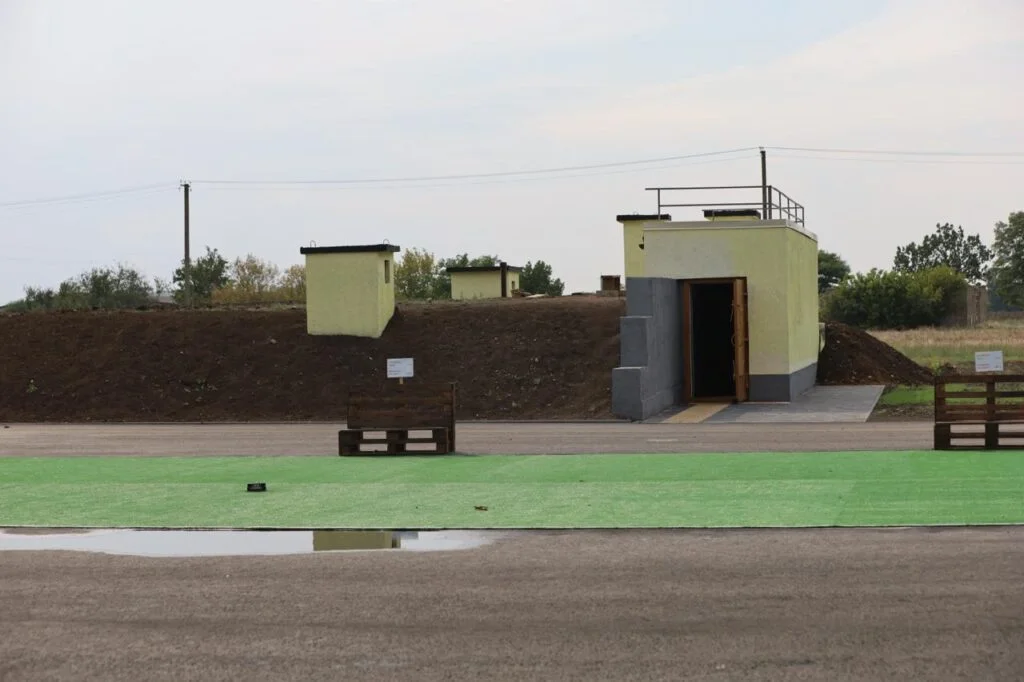
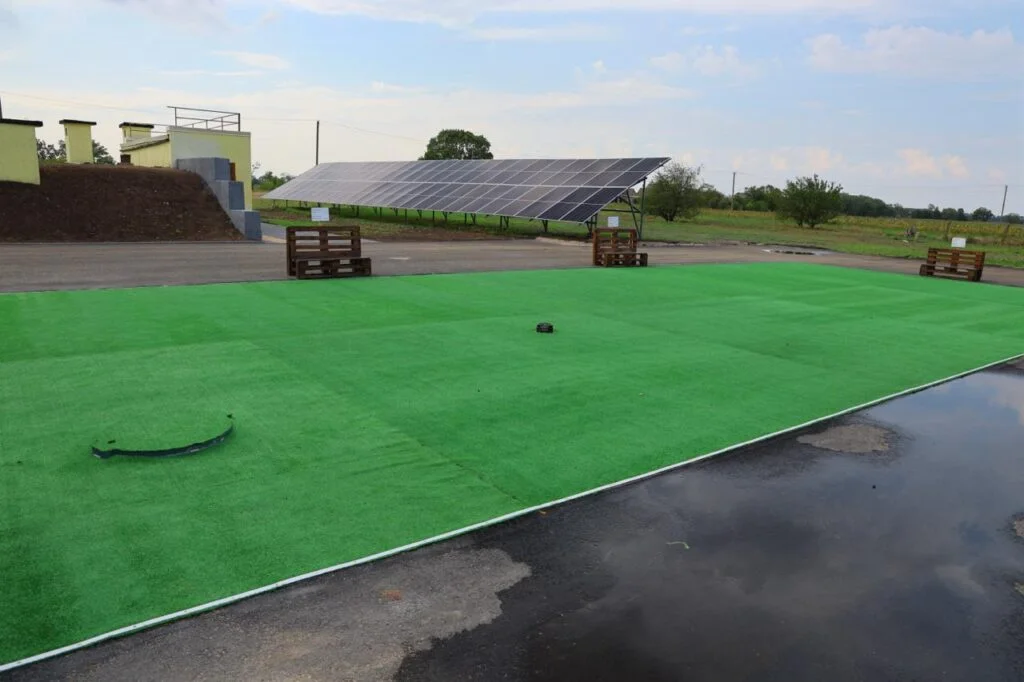
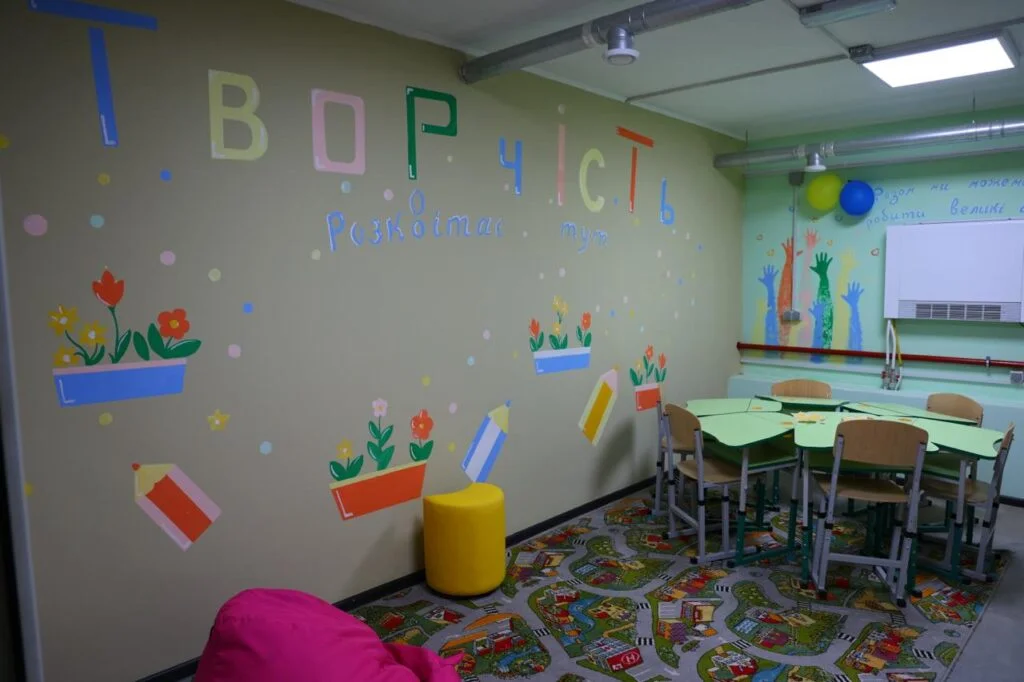
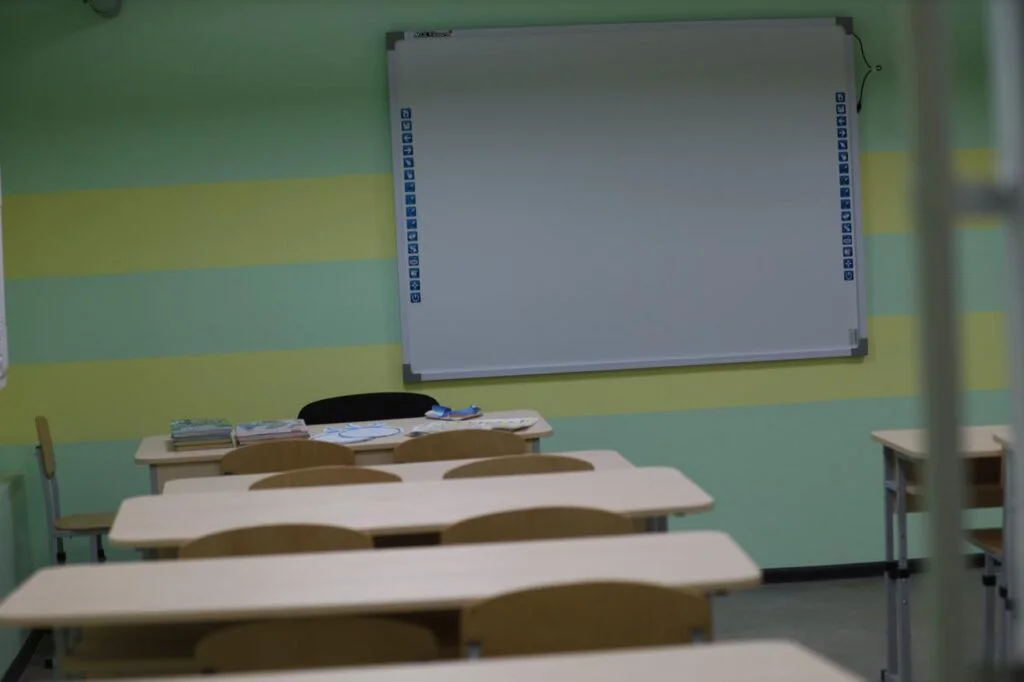
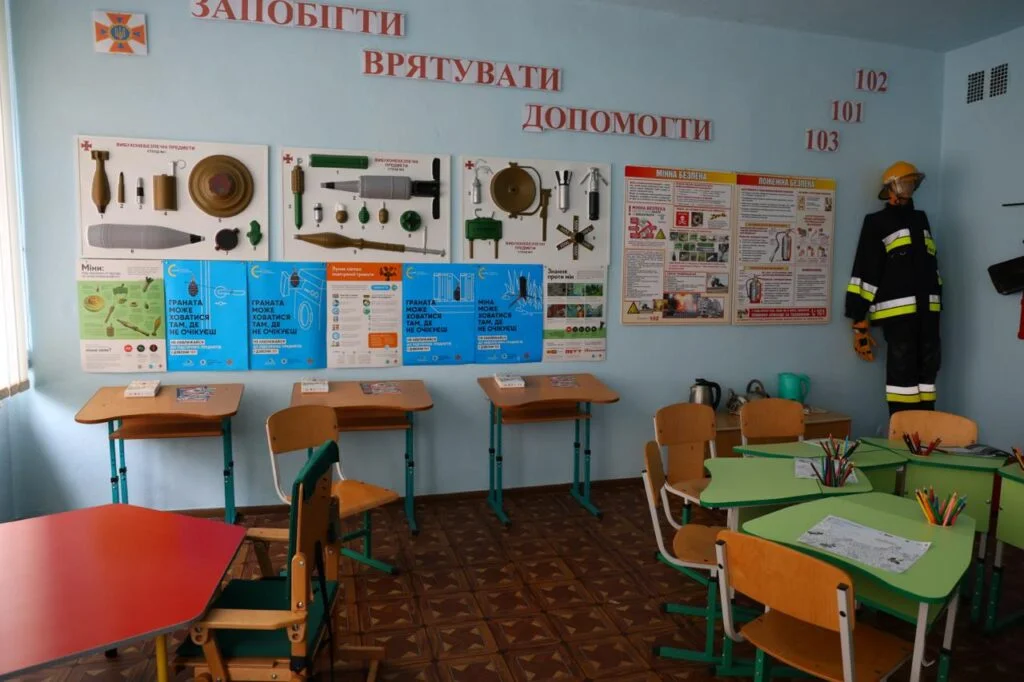
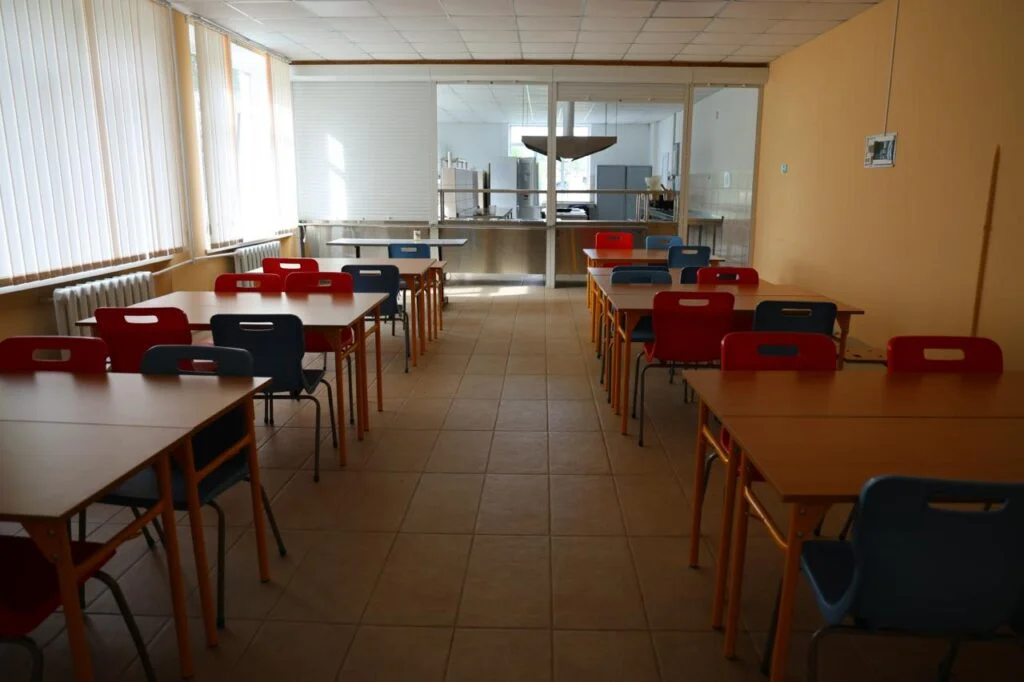
The new schools are equipped with everything necessary for comfortable learning and development: spacious classrooms with modern furniture, multimedia equipment for interactive learning, medical rooms, zones for rest and communication, cafeterias and fully equipped sanitary facilities.
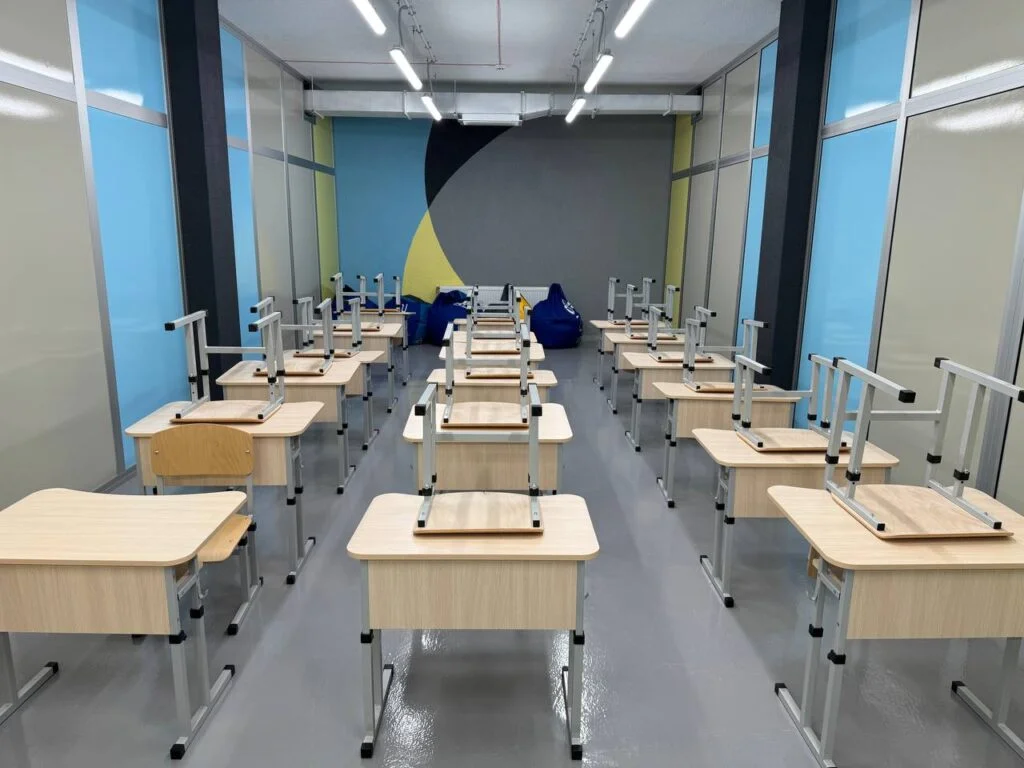
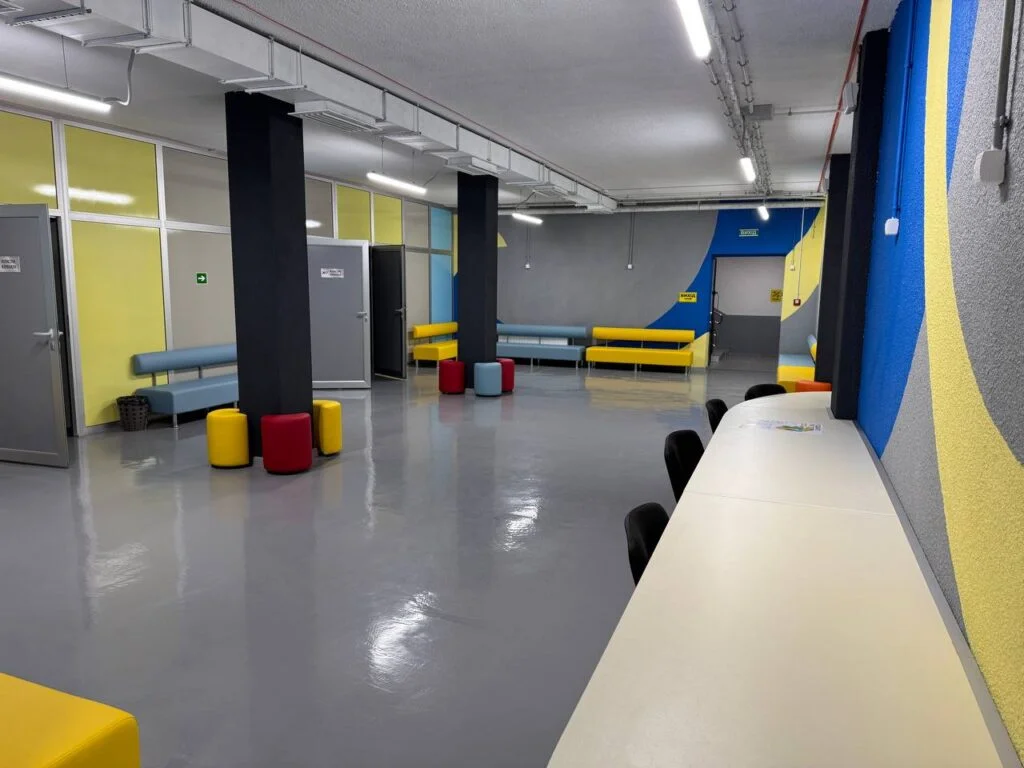
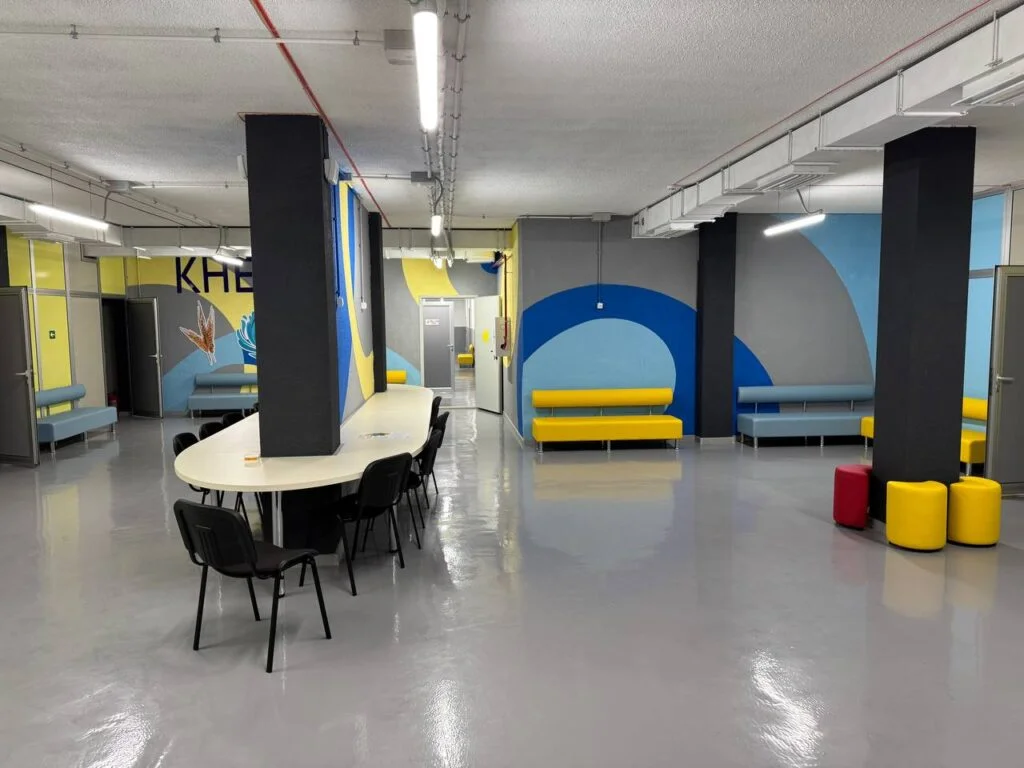
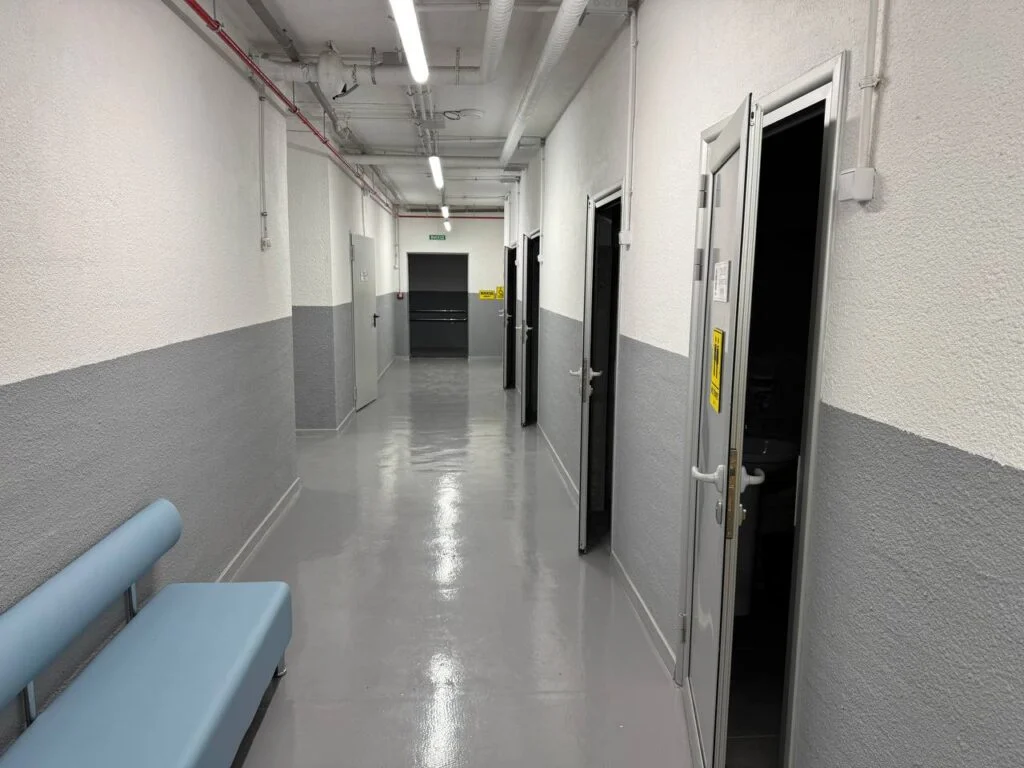
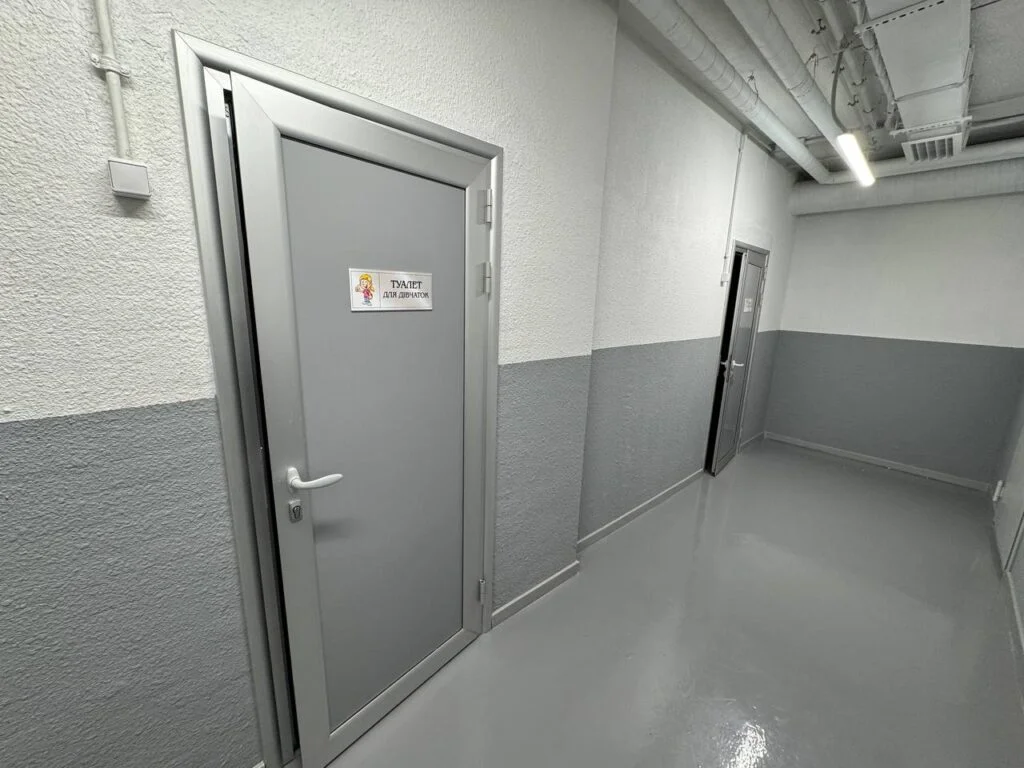
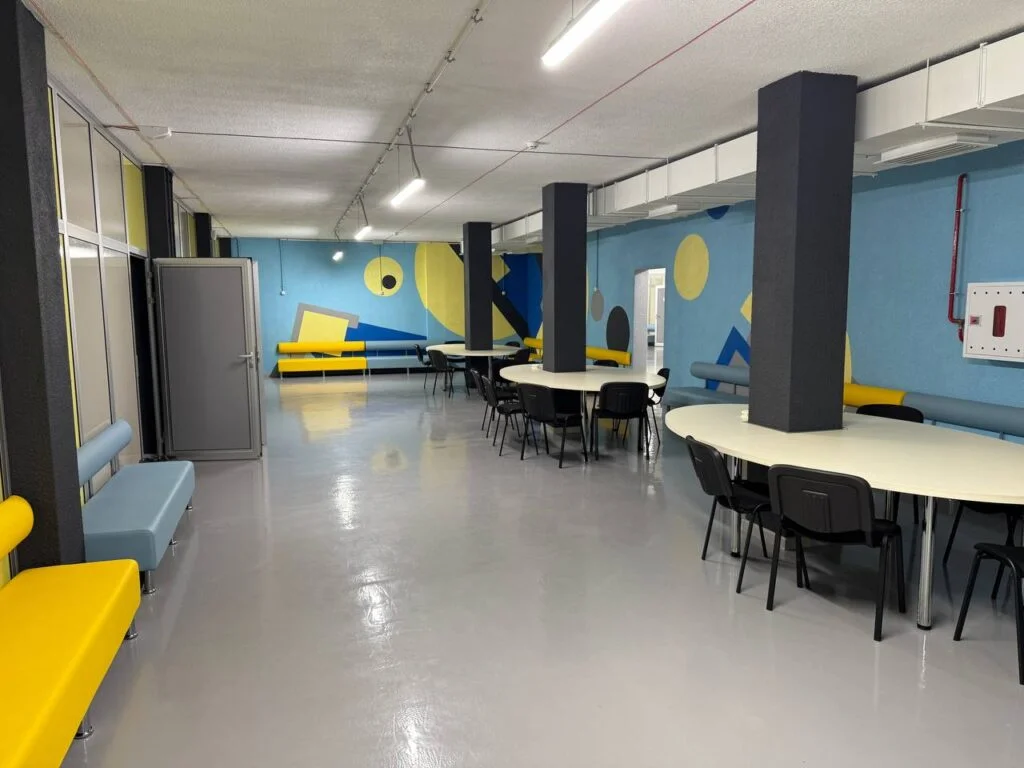
This solution was implemented within the framework of the state program for restoring the educational infrastructure of Kherson region.
“This is a radiation-protection shelter, a fire alarm system is installed, alert systems, a fully equipped ventilation system, there is internet connection. Classrooms are divided into primary, middle, and high school. There is a cafeteria area. Sanitary rooms (toilets), lifts for persons with disabilities,” said the head of the Vysokopillia Regional Military Administration, Kostantyn Starodumov, about the underground school.
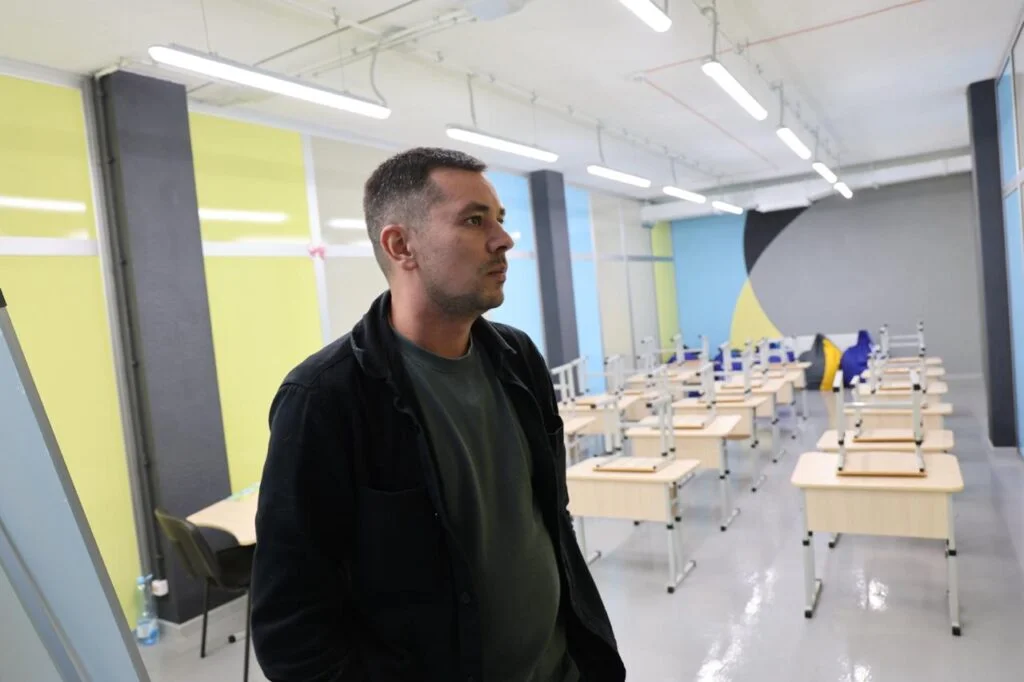
1,400 children live in the territory of the Vysokopillia community. 474 study in the support institution, which now has a modern shelter.
“There was an optimization of the school network — out of 9 educational institutions, 4 ceased their work. And this concerns the provision of quality services, and we also had Novovoznesenivka Gymnasium. It was completely destroyed. And children need to be taught. In the village of Nezlamne there was a primary school and a kindergarten — it was also destroyed. Therefore, given the optimization, it is necessary to build shelters for a larger number of children, and transportation is provided from those settlements where schools were closed,” said Viktoriia Rohova, head of the Education Department of the Vysokopillia settlement council.
In one of the villages of the community specialists from UNICEF worked with children. Their task was to make up for educational losses.
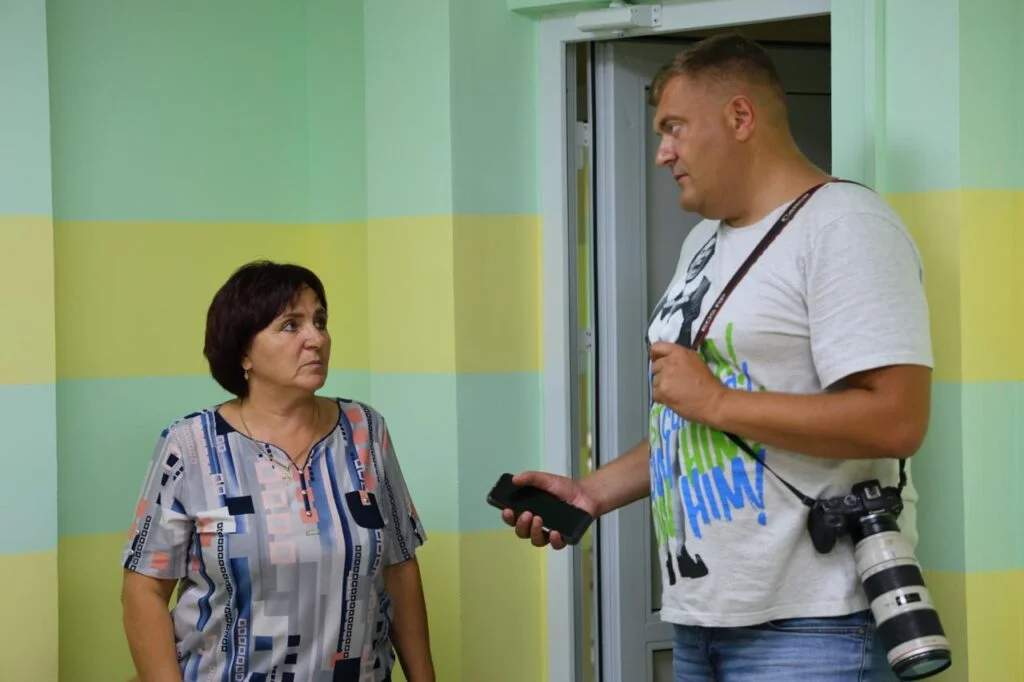
“We started construction in November 2024 and finished in August 2025. Children will be able to study in a mixed form. We have 5 classes, we will cover 185 children, everything is new and modern, there will be hot meals,” said Lyudmyla Yatsura, teacher and director of the Orliveskyi educational complex “School — kindergarten”.
And is there a result?
It is difficult to research specific results for the relocated institutions from Donetsk region.
However, Anastasiia Ponomariova, reporting on the mobile educational brigades, notes that more than 80% of their students have improved their academic results. Over more than three months of work, classes were attended by more than 350 children and this number is growing.
In conditions of constant danger in Donetsk it is extremely difficult to organize the educational process. And where the state falls short, public figures try to cope. However, the situation at the front is becoming increasingly tense, so it is possible that mobile educational brigades may cease their work in the future.
Regarding results in Kherson region — it is possible to trace qualitative indicators.
The results of implemented solutions in the Darivska community in Kherson region — children returning to in-person learning. The successful functioning of the educational hub became an important step for children to return to the desks.
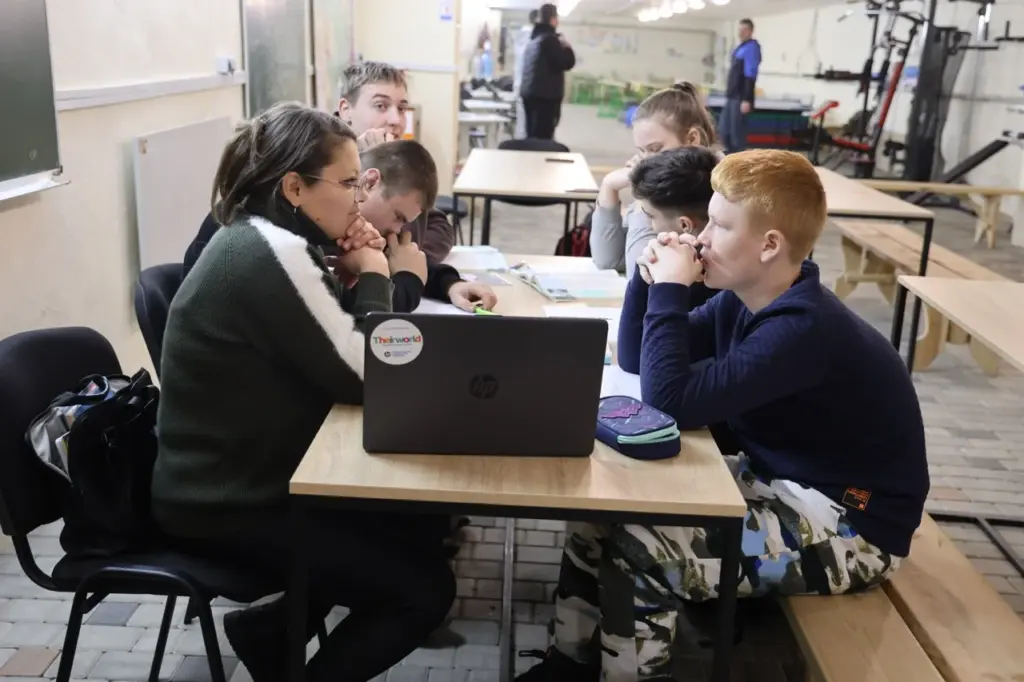
The head of the community, Anatolii Didur, noted that implementation of this project laid the foundation for the gradual restoration of a full educational process and created a stable environment for children’s learning and development in the community.
The educational hub became a key mechanism for safe learning and socialization of children. Thanks to its work, the community was able to expand the area of the existing shelter to 700 square meters, equipping it with everything necessary for a school and the safe stay of children.
“300 square meters was not enough for 186 children, so now we have 700 and it is fully equipped as a school,” explains community head Anatolii Didur.
The hub provides primary psychosocial support and helps children gradually return to offline learning without stress. According to the school’s assessment, students’ knowledge doubled compared to the initial stage of the hub’s work. In addition, many children come to the hub on their own even on days without lessons, wanting to be among peers and participate in classes and activities.
The day center in Kherson helps children return to live communication and learning after a long period of distance learning, occupation and daily shelling. According to the center psychologist Svitlana, communication is now the most important thing for children: “Children have almost forgotten how to communicate… In our center they return to live communication with peers, games, exercises and learning.”
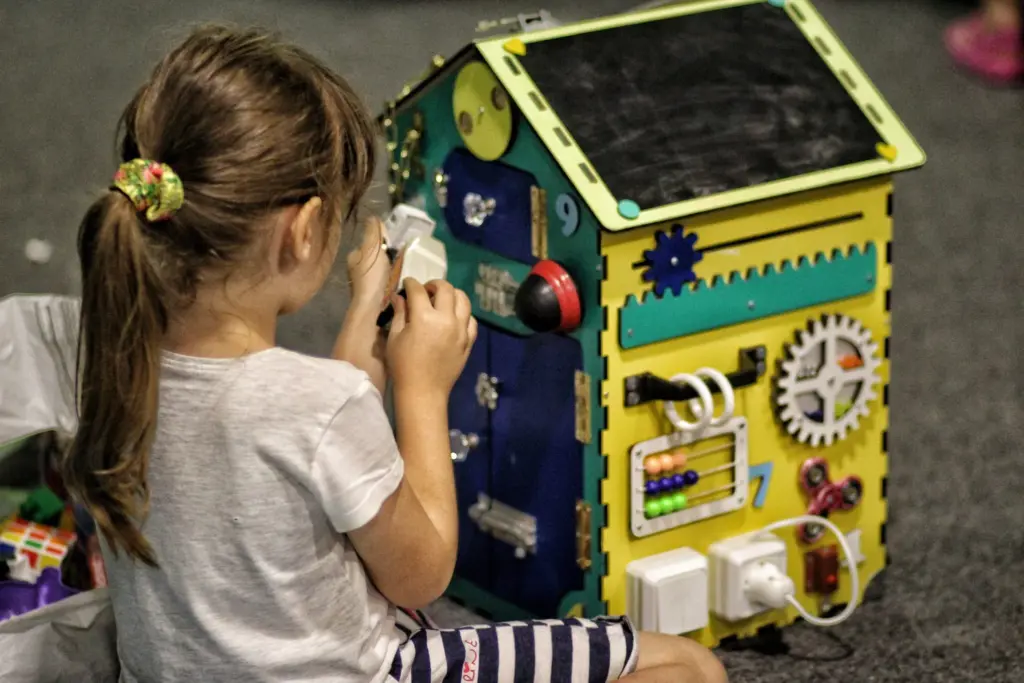
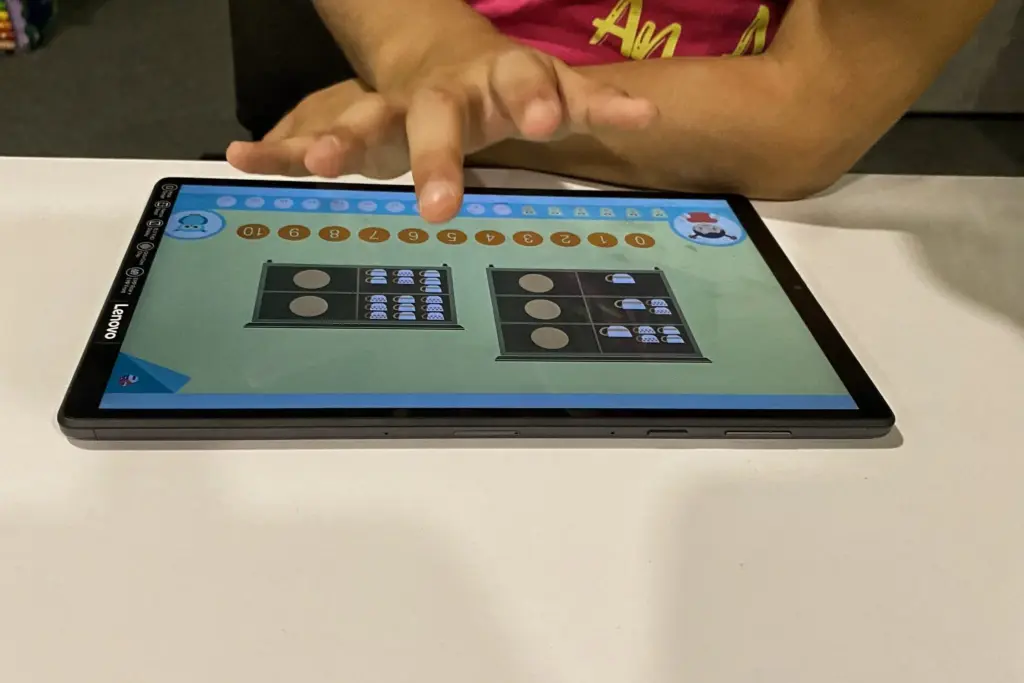
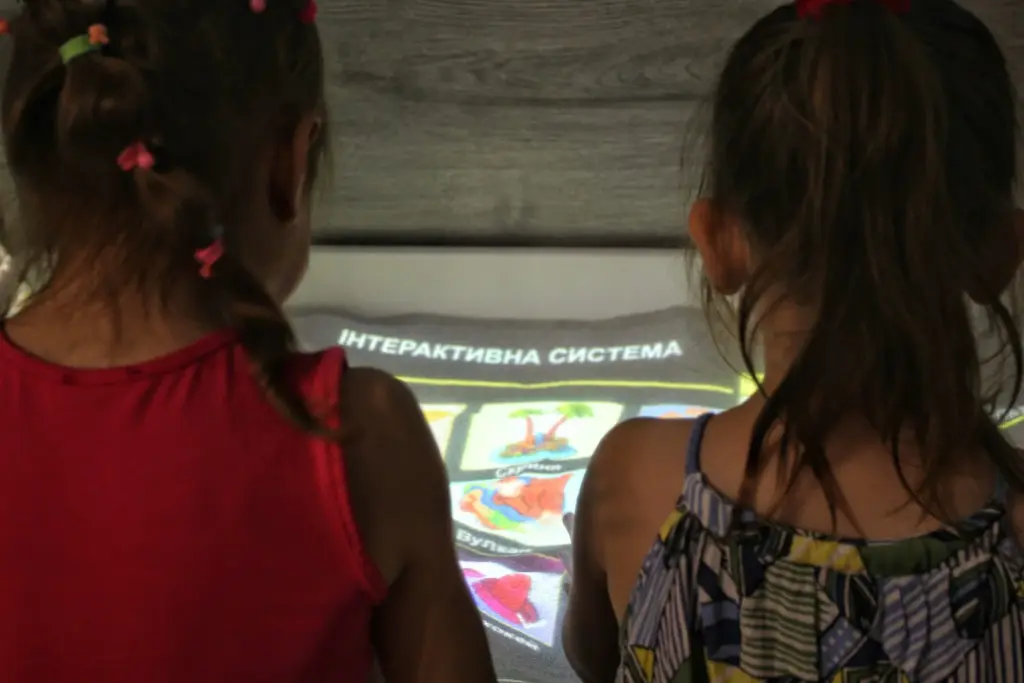
In addition to socialization, the center works on making up educational gaps. Children learn basic writing and counting skills, restore knowledge lost due to the online learning format, and do so in a playful, safe form. Art therapy, theatrical productions and drawing help children relieve stress and restore emotional balance. More than 80% of children increase their academic performance and improve their psycho-emotional state.
Parents note noticeable changes in children’s behavior. For example, the daughter of Kherson resident Natalia, Alina, became calmer, more obedient and interacts more confidently with peers: “Communication with other children gives a point of support and helps to understand what can be done and what cannot.”
As for the underground schools in Vysokopillia and Orlove — the educational process has only just started. Children and parents were waiting for this start. As both institutions noted — this format was long awaited and for many it is an opportunity to return at least a bit of pre-war life. However, they also point out challenges. First and foremost — security issues.
“In a mixed format of schooling, the main problem is transporting children. Because the settlements served by the Vysokopillia support institution are Novovoznesenivka, Nezlamne, Knyazivka, Olzhyne — they need to be transported. This will be the main problem due to the security situation, because parents may refuse consent for transportation. And the second issue is the drivers of school buses. They need the appropriate category and permit documents. This issue is acute,” said Viktoriia Rohova, head of the Education Department of the Vysokopillia settlement council.
The material was created jointly with the online publication “Skhidnyi Variant”. Authors: Inha Pavlii, Natalia Maistrenko, Serhii Nikitenko