

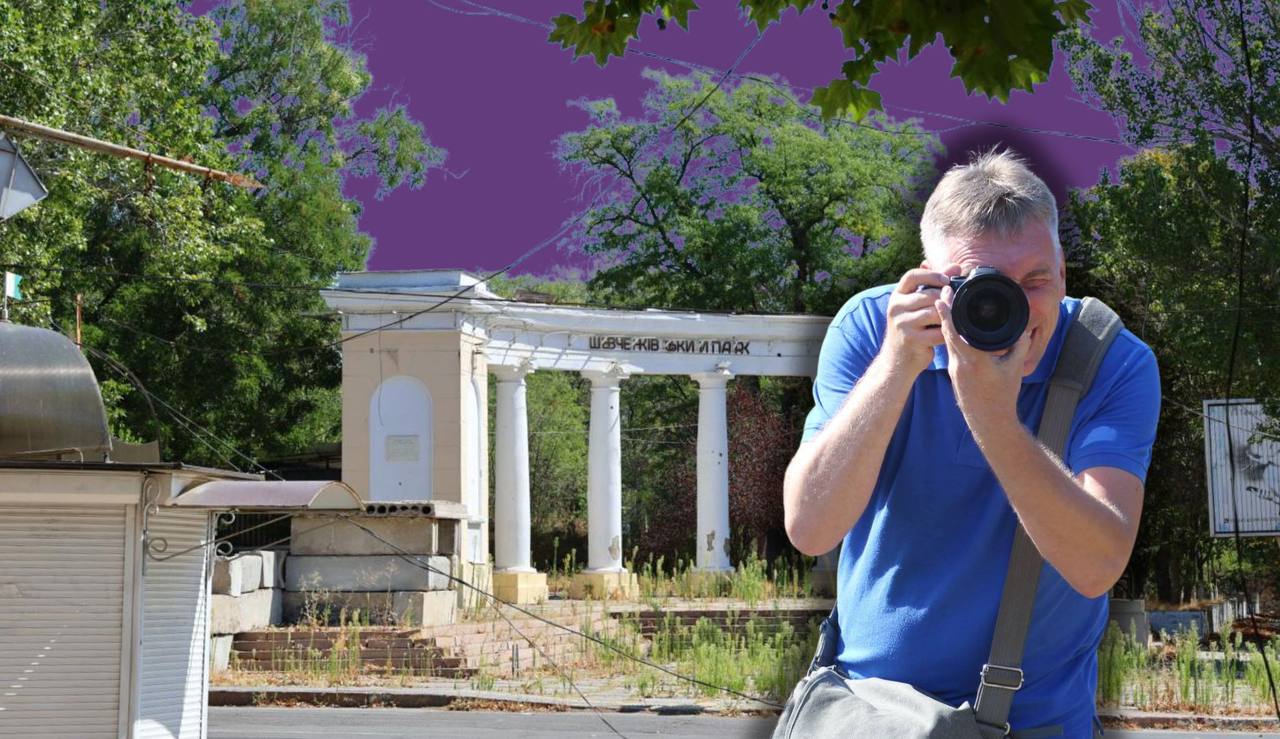
Oleksandr Kornyakov, a Kherson photojournalist who works for “Suspilne”, photographed rallies in occupied Kherson in 2022, hid from the Russians, and now writes the photographic chronicle of the frontline regional center. He considers himself an ordinary person and modestly says he does nothing extraordinary. Although in his work there are real heroic acts.
We walked with Oleksandr through downtown Kherson and watched how he works in the field.
“I don’t go anywhere right now, because if you go, say, to Odesa, you relax, the tension subsides and you feel very tired. Your back hurts for a day or two, your legs, everything hurts. Then you return to Kherson, it takes a full two or three weeks to get back into this reality, get into the flow and start working. You quickly get out of the habit of the bad, so it’s better for me to stay in the city constantly and move in one direction,” – says Oleksandr as he walks down a sparsely populated street.
That’s how he goes out every day to photograph his native city. Occasional passersby greet Kornyakov warmly. It feels like he’s a local rock star or the city mayor, not a photographer for the Kherson branch of Suspilne.
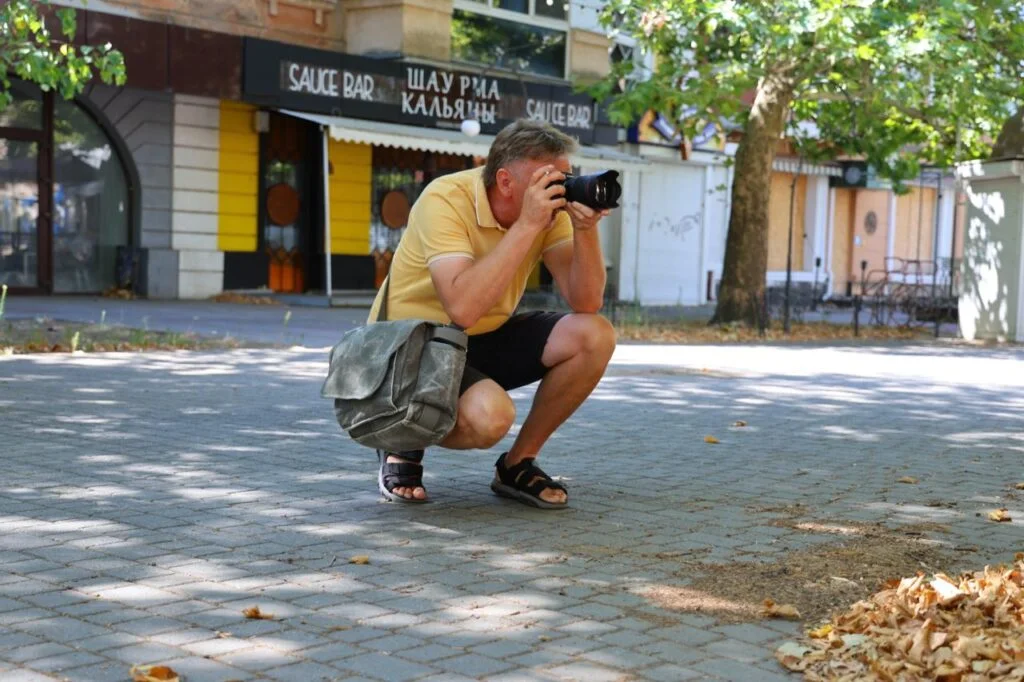
Periodically he stops to take the next shot and studies the street briefly. As a rule, Oleksandr photographs the city center in the morning or during the day, when there are still relatively many people.
“It’s very hard because there are few residents, there are no bright events in the city. I film the impacts, but that’s not it. Sometimes you don’t know what to shoot today, so you just walk the street and look. There are often editorial assignments,” – the photographer says as we head to one of the few cafés still open in the city center.
The café is closed because its only employee, Oleksii, is undergoing VLK.
“Many people ask not to be photographed for some reasons. And there are people who are happy that you are photographing them and begin to smile. Sometimes even that spoils the shot. Because I want to shoot realistic scenes,” – Oleksandr says. He adds that he believes the townspeople’s attitude toward him is good because of the results of the work people see on Suspilne.
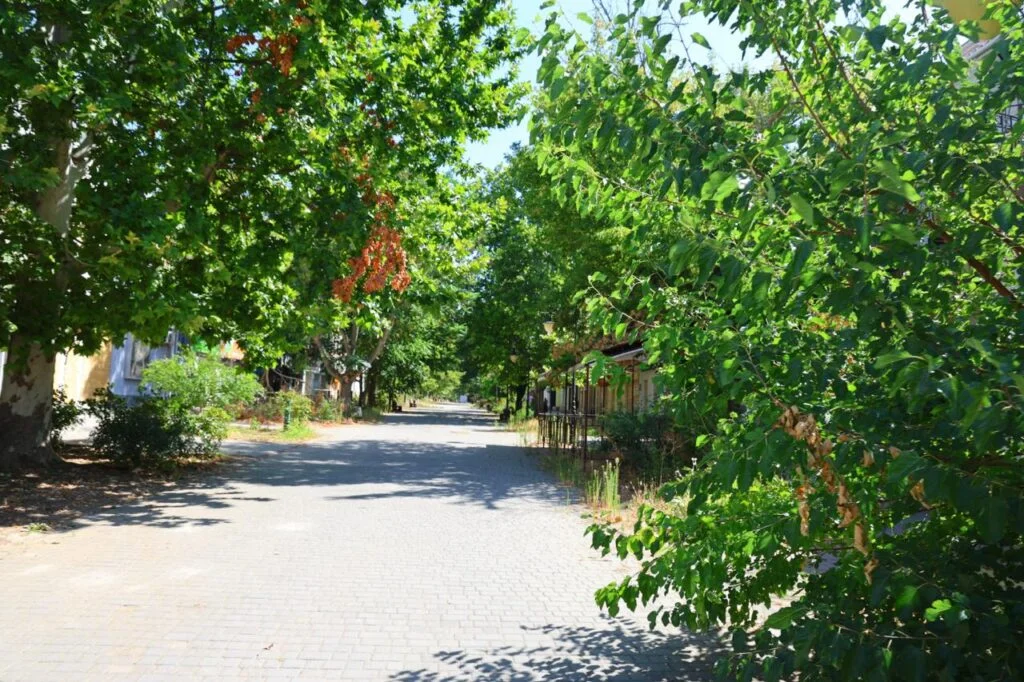
The lower we go toward the Dnipro, the fewer people are on the streets. At some point the silence is broken only by the rustle of the first fallen leaves and the shutters of cameras. On Yevropeiska Street, practically the last before the “red zone,” while we film the results of another impact, I ask about fear.
“Of course, it’s scary. Especially when you go out and hear things from the left bank, you don’t understand where it will hit. But I somehow learned to calm and control the fear. You wait a bit and then go to work,” – Oleksandr says.
A feature of life, and accordingly work, in Kherson is the constant adjustment of one’s plans and actions with an eye to drones. People, Oleksandr says, divide neighborhoods and even streets into safe and dangerous. It is precisely because of drones, which have been hunting Kherson civilians for over a year, that journalists, including Kornyakov, stopped marking themselves with PRESS stickers.
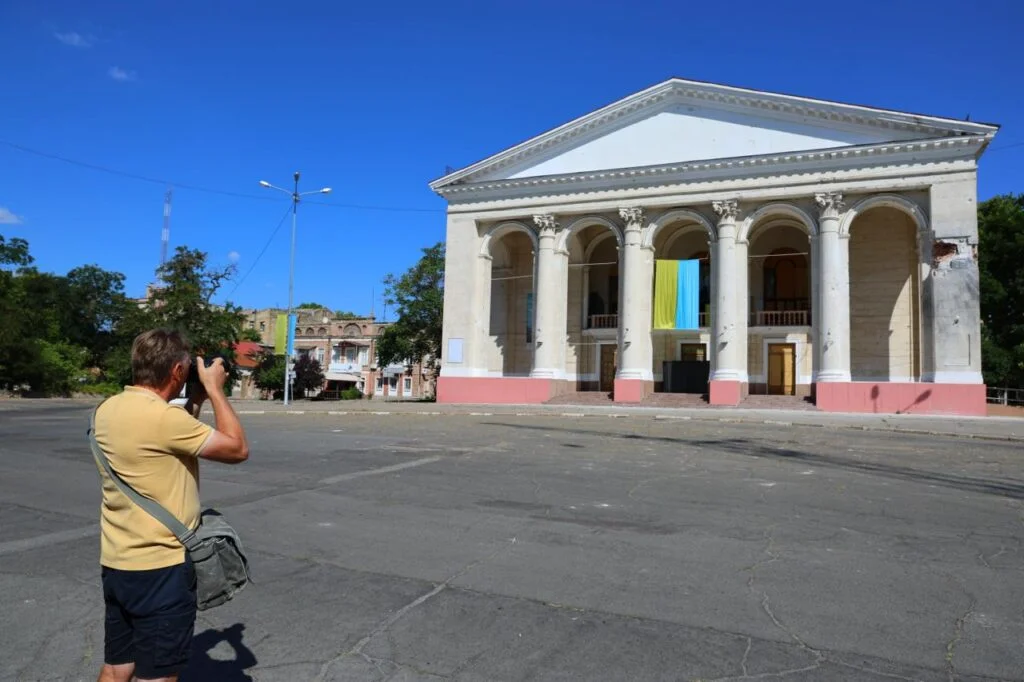
“In Kherson, breaking the rules, you can’t mark yourself as press, because I myself repeatedly ended up in situations when drones that were supposed to fly past you start searching because they saw a sign or photo equipment. I’ve hidden under trees more than once. Once I even started to pray because it hovered over me so long. I realized it was trying to take aim, but I was standing under a very large tree, the drone circled over it for a couple of minutes, but probably didn’t risk its munitions, flew on and dropped a POG (fragmentation grenade launcher shot, – MOST) right onto the sidewalk,” – he says.
According to the journalist, when he hears a drone he immediately tries to hide either under a tree or inside a building, ideally in the entrance of an apartment block. However, most of them are locked.
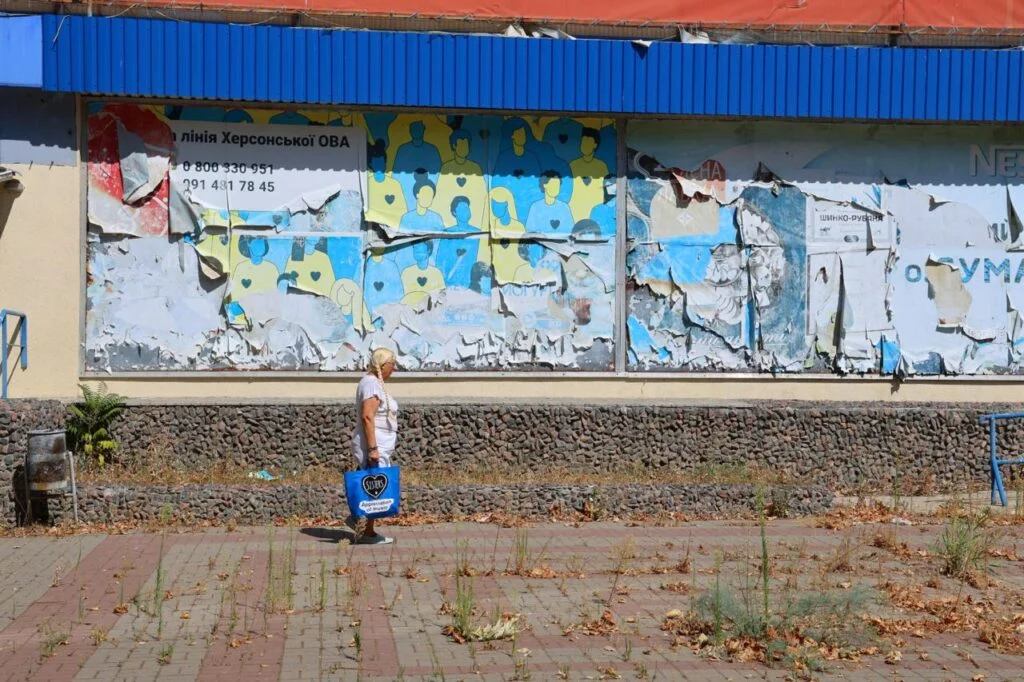
Discussing tactics for moving under drones, we finish filming the pedestrian Yevropeiska Street and climb Independence Avenue closer to the center. At that moment we hear a distant “exit” and a second later the whistle of a shell and a powerful explosion somewhere on the streets below. Listening for likely “exits,” we quickly move upward, when we again hear an “exit,” a nasty whistle and a powerful explosion.
“Usually there are two or three impacts. Sometimes ten,” – Oleksandr says as we again hear the sequence from “exit” to “impact.”
He adds that several times shells landed right next to him.
“Then it seemed to me that the air was pressing on you. You feel it in your chest. I will probably never forget that feeling in my life,” – he says as we hear a powerful impact and hot, heavy metal fragments begin to rain down on the roofs of nearby houses.
They fall on a ballistic trajectory and are almost harmless, but we, just in case, hide in a well-known discount store. Most visitors — like us — wait out the shelling, speaking quietly and very matter-of-factly about the intensity and directions of the “impacts.”
Oleksandr teaches me from his experience — in Kherson you must constantly listen to the sky and “that bank,” you can’t walk with headphones on.
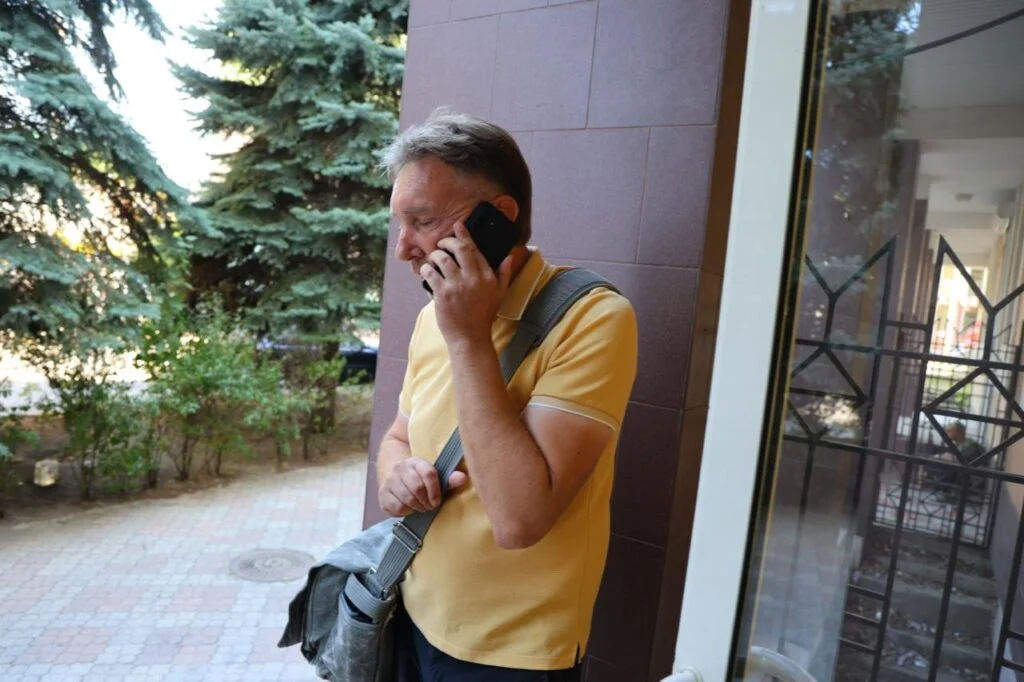
“In Kherson they won’t look at you like an idiot if you fall to the ground or suddenly start running or hiding. It’s normal. Even if the threat isn’t that terrible, it’s better for your safety to react somehow, to hide,” – he says.
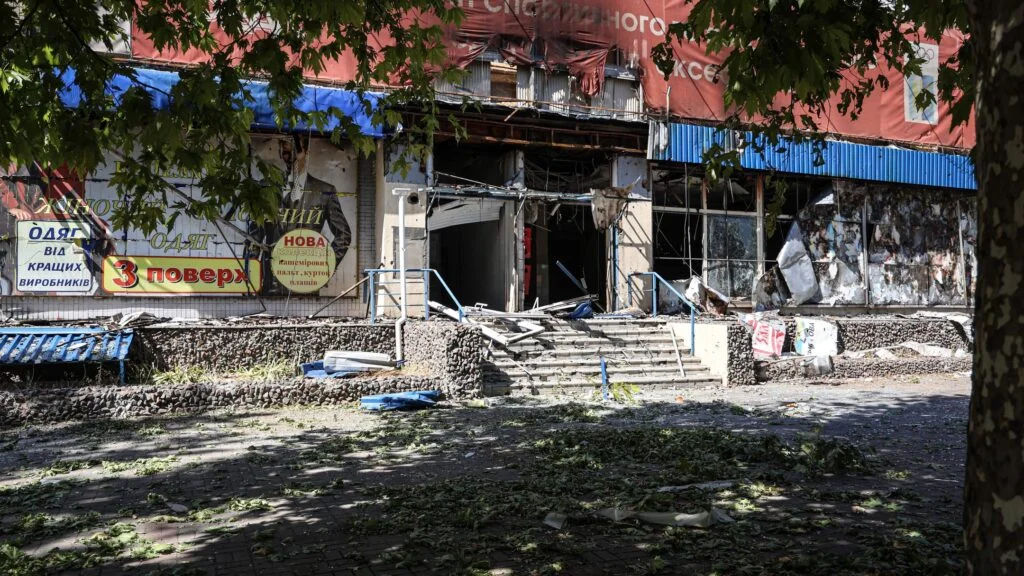
In the evening, opening the news feed, I see photos with the Suspilne logo. A few hours after the artillery shelling, Oleksandr Kornyakov photographed the damaged shopping center on Yevropeiska, next to which we stood in the morning and couldn’t remember whether the grocery store had been open after the city’s de-occupation. Tomorrow he will go out again to the center of Kherson and will photograph the next moments of its frontline life.
Serhii Nikitenko, regional representative Institute of Mass Information in Kherson region