


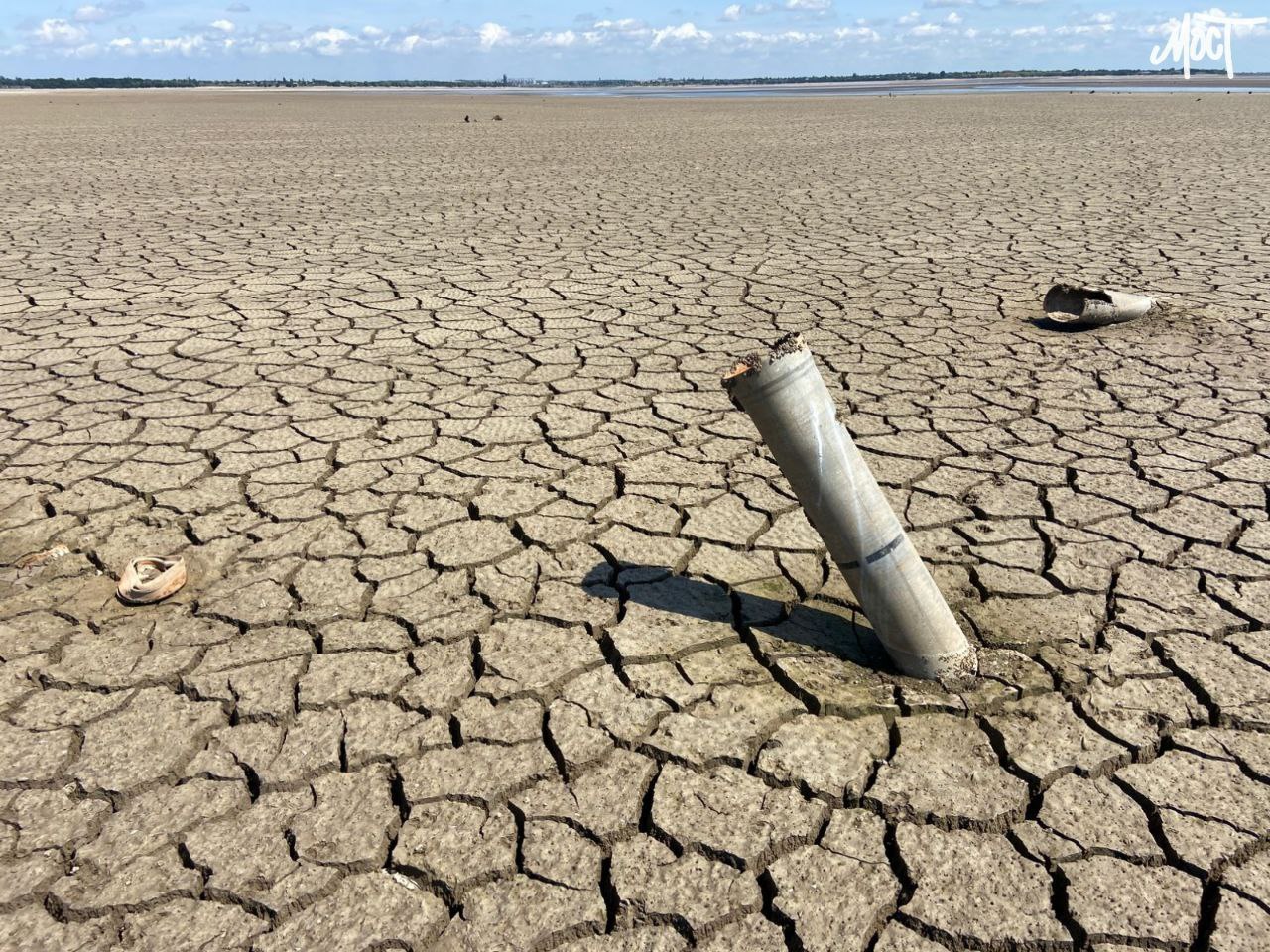
The original Great Meadow will not return to the site of the Kakhovka Hydroelectric Power Plant.
This was said in an interview with RBC-Ukraine by Yakiv Didukh, head of the Department of Geobotany and Ecology at the M. G. Kholodny Institute of Botany, and academician of the National Academy of Sciences of Ukraine.
According to the scientist, who has been studying the area since the first weeks of the disaster, fertile silt deposits on the chernozem soils of the steppe zone have given a powerful boost to plant growth. In place of the former “Martian” landscapes, a poplar-willow forest has formed over three years, with trees now averaging around five meters in height. The willow actively absorbs harmful substances, stabilizes processes in the floodplain, and takes up carbon dioxide. If these ecosystems become fully established, they could become some of the largest floodplain forests in Europe.
However, the original appearance of the Great Meadow is lost forever due to changes in topography, new soils, and layers of shells. On the former bottom they predict the formation of a complex floodplain “mosaic,” where forests, marshes, open sands, and areas with dry shells will combine, into which steppe species will move in. It will take about 20 years to form a stable system, and in the long term floodplain oak groves may even appear there.
At the same time the academician emphasizes the need for balanced human intervention. Due to ecosystem disruption and climate change, aggressive alien plant species are actively invading the open areas, such as American maple, shrubby amorpha, and narrowleaf Russian olive. These “foreigners” are displacing the local flora, so scientists call for controlling and regulating the processes to allow a natural Ukrainian ecosystem to develop.