

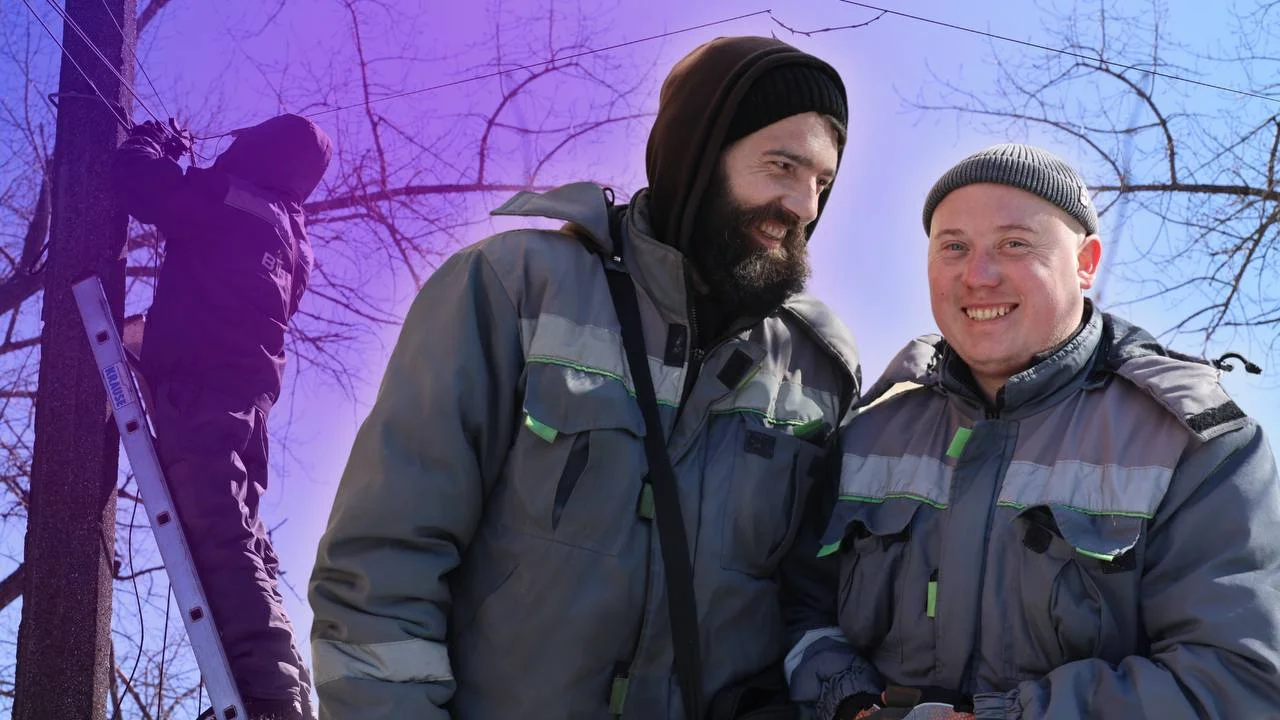
“He says, she thought you had been killed – so she took the ladder”, – laughing Bogdan tells the story – a technician from one of Kherson’s internet companies. Although, truly, there’s not much funny in it – or none at all.
Every day – in the cold, like today, and in the heat, – the employees of this company repair lines after Russian shelling or bad weather, connect and reconnect people – in general they make sure that Kherson residents and the region’s inhabitants have the ability to communicate with the outside world.
We spent one of those days with them.
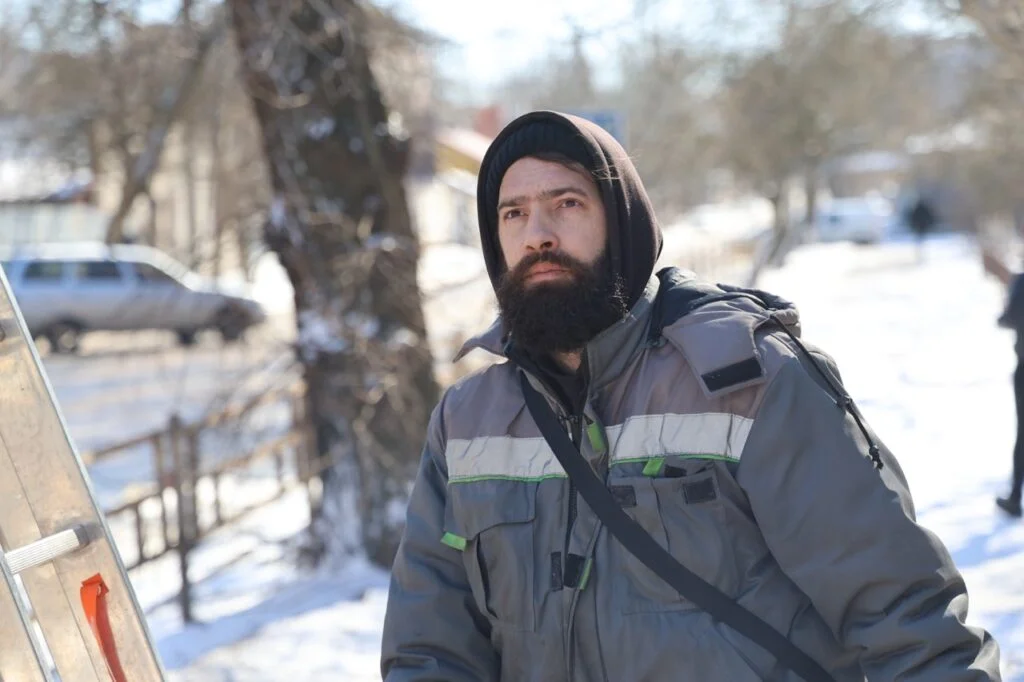
Oleg and Bohdan – installers. Today they will show and tell about their usual day – they will lift the veil on the magic of the internet.
“Imagine – the signal goes through wire-lines and then – hop! – a person opens YouTube!”, – says Oleg with enthusiasm, turning the wheel to the right and to the left.
“So you are Kherson magicians?”, – I ask.
“Seems so”, – my interlocutor answers modestly.
He adds that he managed to work at Nova Poshta, an auto repair shop and at the Kulish Theater – as a stage installer.
The first address – switching a subscriber from “twisted pair” to “fiber”. This is a popular option these days, because the person gets faster internet that will work even if there is no electricity.
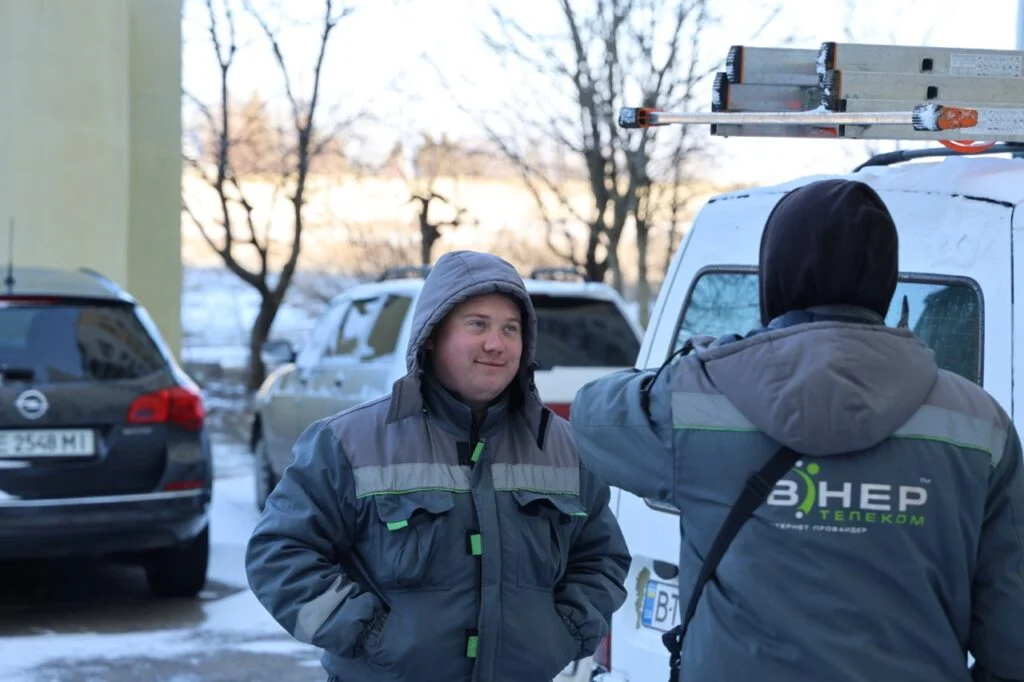
“The worst part of our job – is waiting”, – says Bohdan, while we do a little dance in the unusual Kherson frost. In the morning the thermometer showed -6, the iPhone says it feels like -12.
The guys trade tall tales and study their tasks for the day. Hearing that in the center of Kherson wires were cut as a result of a strike or simply a fallen tree, I start persuading them to go work at that location. Because action.
Oleg gladly arranges this with the manager, because, he says, he also prefers working outside to pulling cables through apartment entrances. But before that they need to do two orders where people are already waiting.
Finally the client arrives and the guys take out the yellow toolbox, a roll of cable and go up to the floor of a typical residential block.
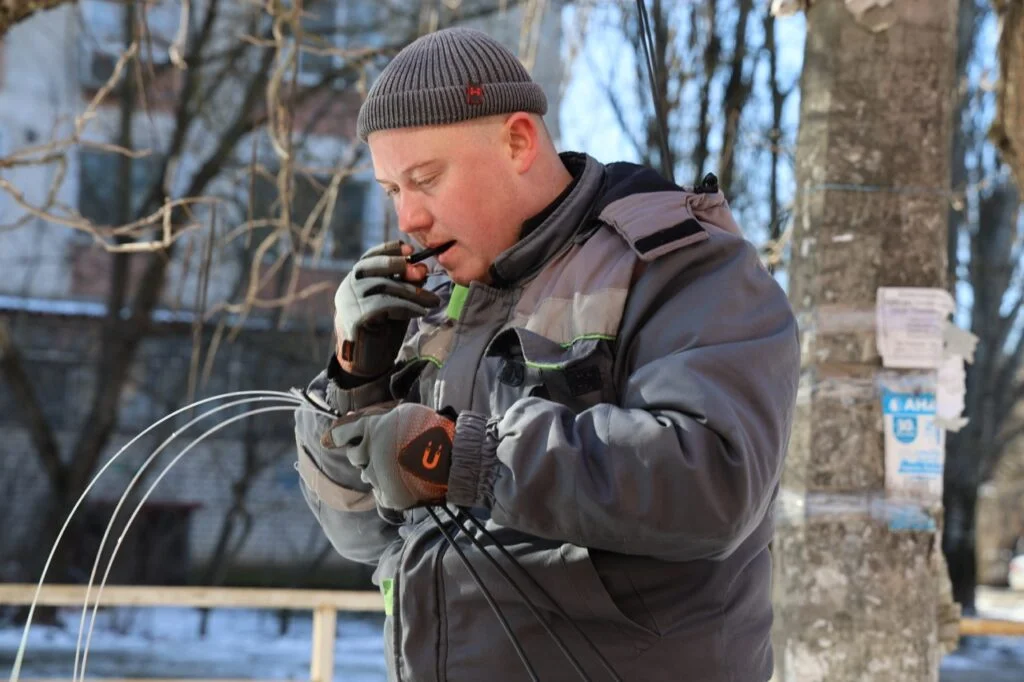
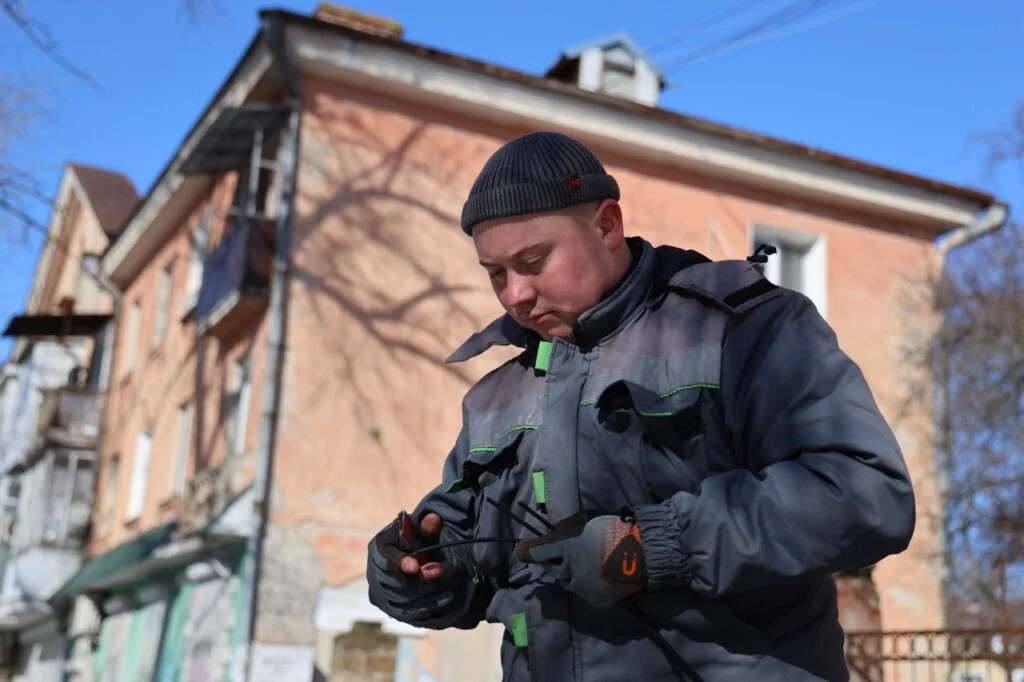
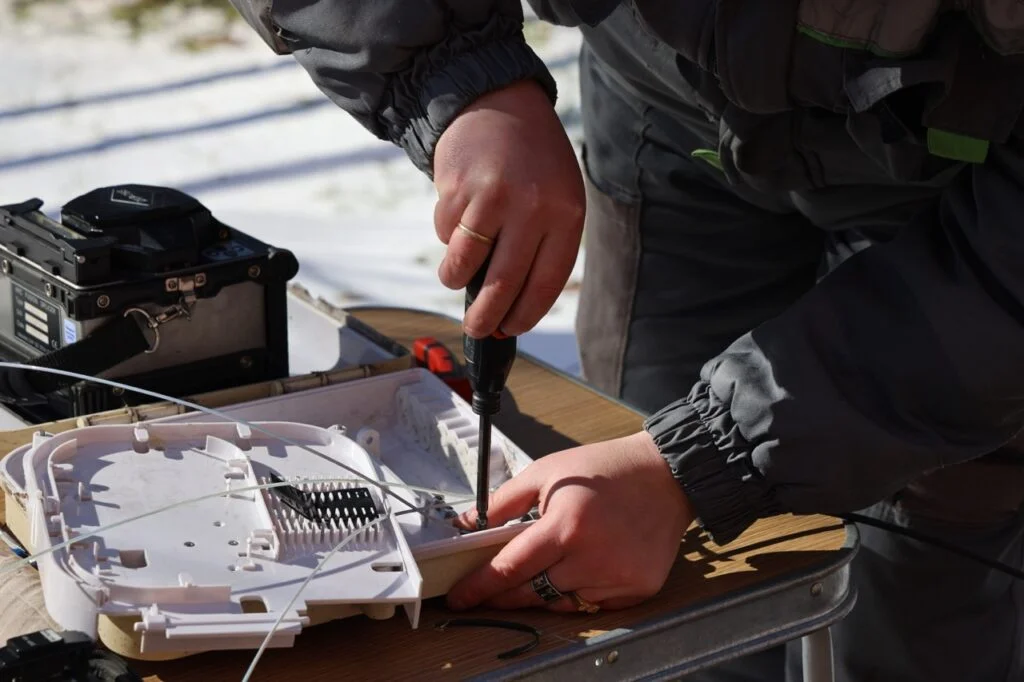
Step by step they replace the wires – measure the required length, deftly nip them with pliers, show me the actual fiber optic – the thing that brings us here now. Fiber optic, I note to myself, looks like fishing line.
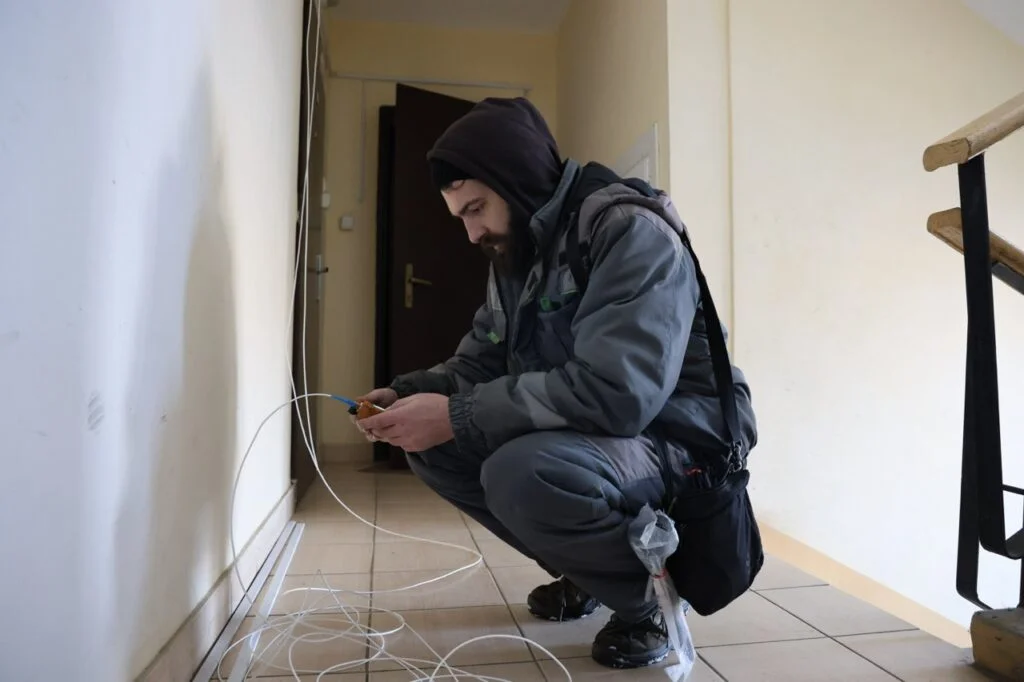
Bohdan fuses it with a special device, rejoicing like a child at my admiration.
Almost everything is done in the entrance – we go down and head out into the street. The guys still need to work in the private sector.
Here a female subscriber is changing providers. We look for a small house on snowy Sukharka. The sun is already shining fully, but a cool breeze blows from Koshova.

While Oleg drags the ladder to the pole, Bohdan tells the very story we started with: “The guys were once working below Perekopska, somewhere on Ofitserska – and a strike hit near them; they ran to hide and left the ladder. The shelling quieted down, they come out – the ladder is gone. In short, they found that ladder at an old woman’s house – they came to take it, and she says ‘I thought you were killed, so I decided at least to take the ladder’.”
Asked how it is for installers to work in the “red” zone they say “hard”. They don’t always manage to leave in time, and so they have to wait out the shelling and hide from Russian drones.
“It’s cold – the insulating tape barely peels off”, – the installer says, pointing at the cable.
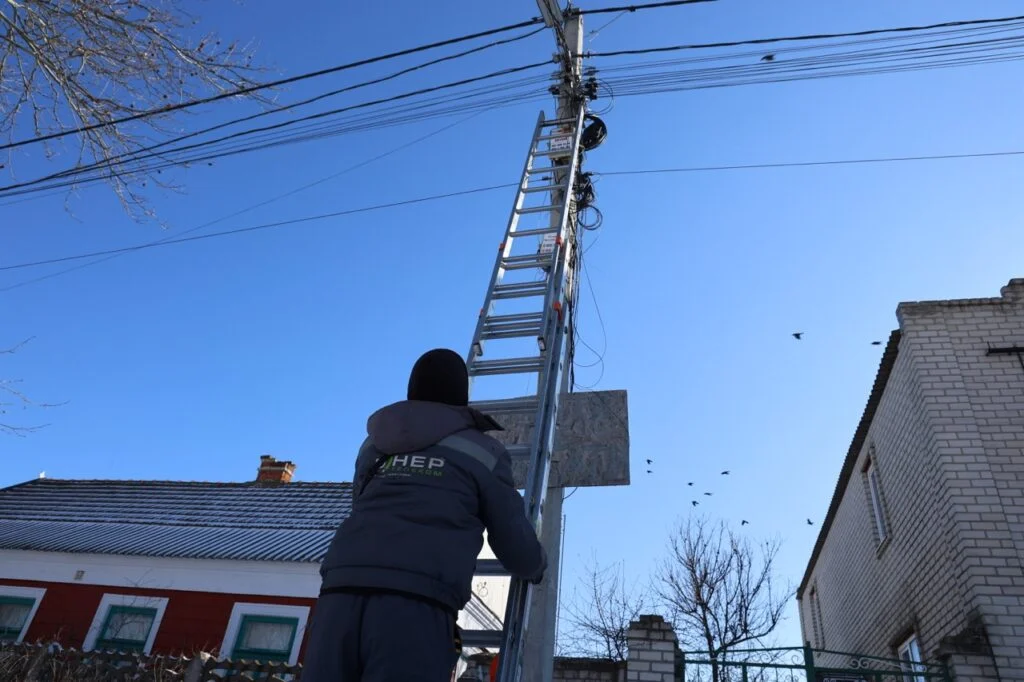
By the private house Bohdan melancholically unwinds the cable – in the background a distant explosion can be heard, dogs bark somewhere. The cannonade of the artillery duel gradually grows, but the departures are heard far away, as are the “incoming strikes”.
The homeowner where they’re connecting the internet brings the guys coffee. They say this happens quite often – out of five clients someone will definitely offer.
“And during shelling they ask us to hide. We really appreciate it, honestly”, – Oleg smiles.
Bohdan remembers working on this street in the autumn when an FPV drone hit a car. Fortunately, the couple who were heading to work in the morning survived.
“It twisted the car like that, we started dragging it away”, – he says, showing a video of the event on his phone.
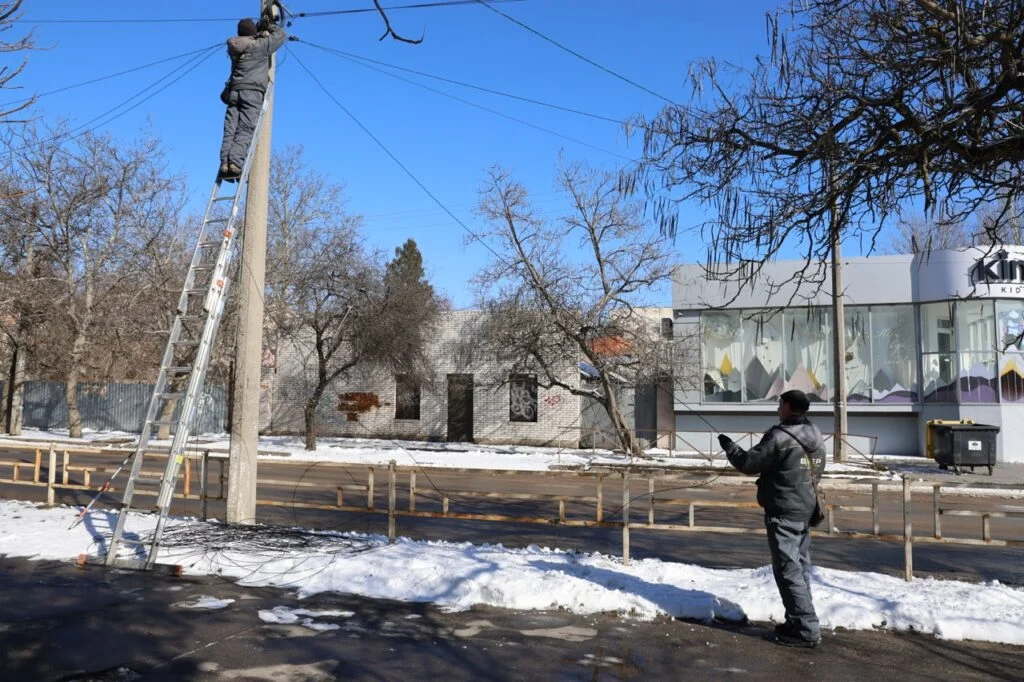
After listening to a few more stories that I won’t retell here, we go to the car. We drive to the area of the former Hannibal Square, now Nezlamiannist. Unlike the square, the tree nearby broke at night. And it fell right onto the wires.
On the way we see a vehicle similar to our branded one.
“Oh, dad is already coming”, – Oleg says to Bohdan.
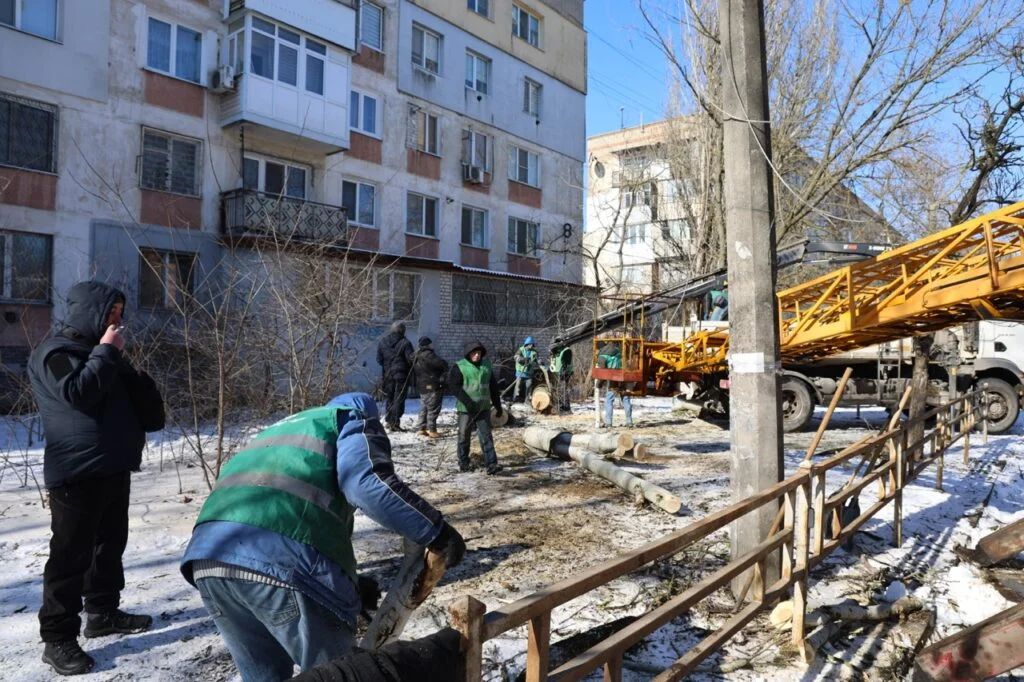
When we arrive, the “Parks of Kherson” crew is already working here. And “dad” walks around businesslike. He recognizes me, because he has seen me more than once at impact sites. In conversation it turns out that he is indeed a father, but not Oleg’s, Bohdan’s. They often work on sites together.
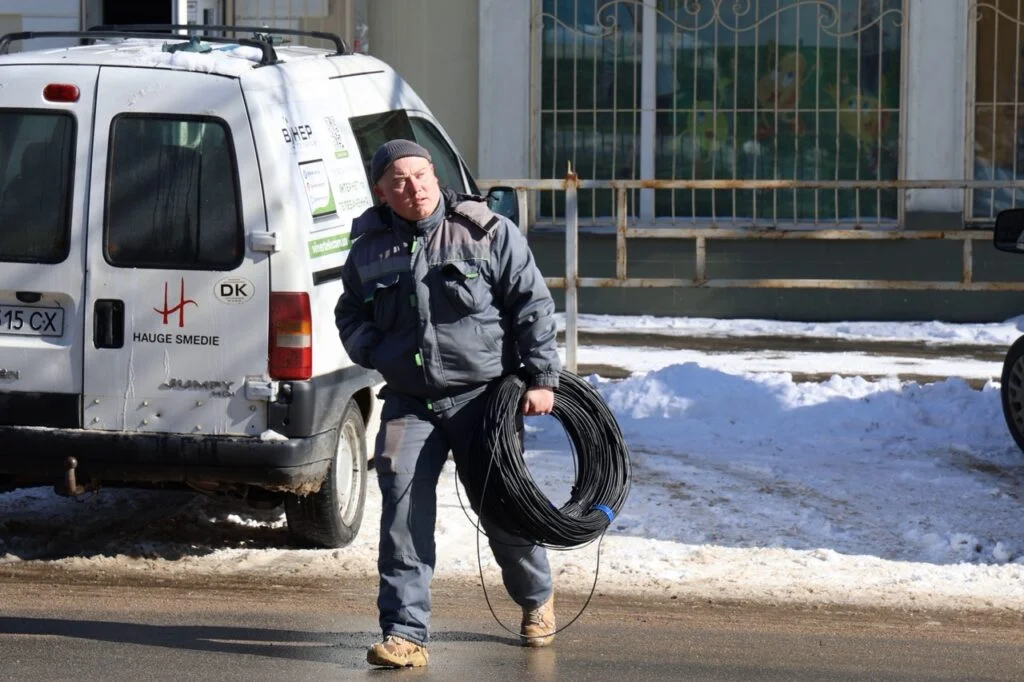
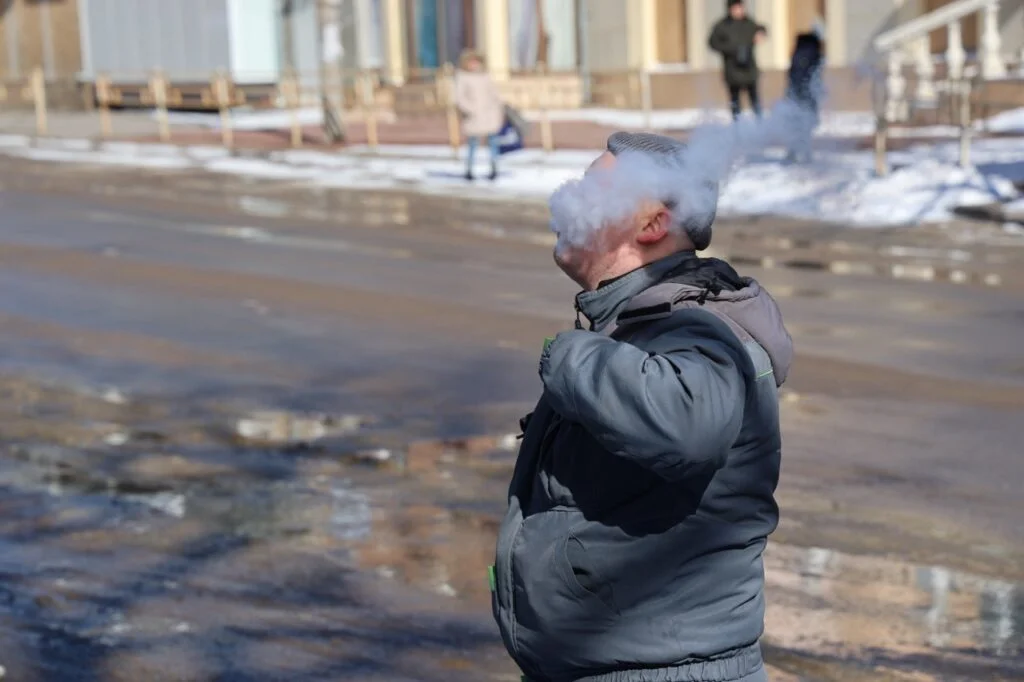
“Yeah, it made a mess… ” – says Oleg, lighting a cigarette. – “We go out for these repairs often – almost every day. In general, during the night we have 2-3 accidents due to strikes. That’s our neighbors.”
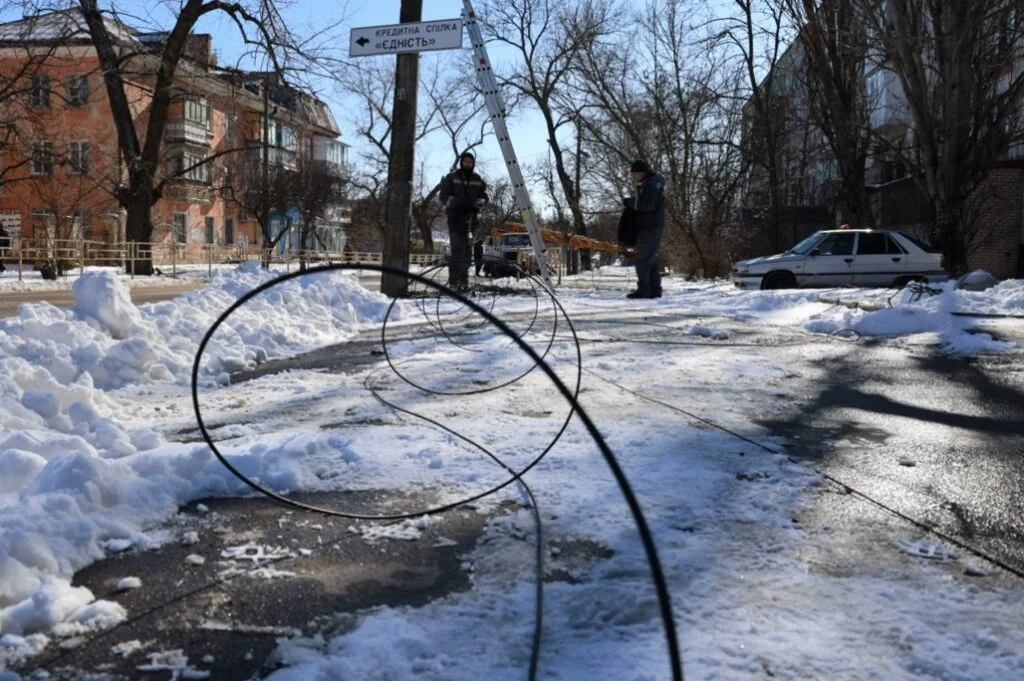
The Parks workers efficiently load the poplar tree, cut into pieces, into the truck bed and go, and the guys begin twisting the damaged wires and laying out new ones into coils. Dad directs, climbs the ladder himself and tensions the wires. They need to replace a good couple of hundred meters here.
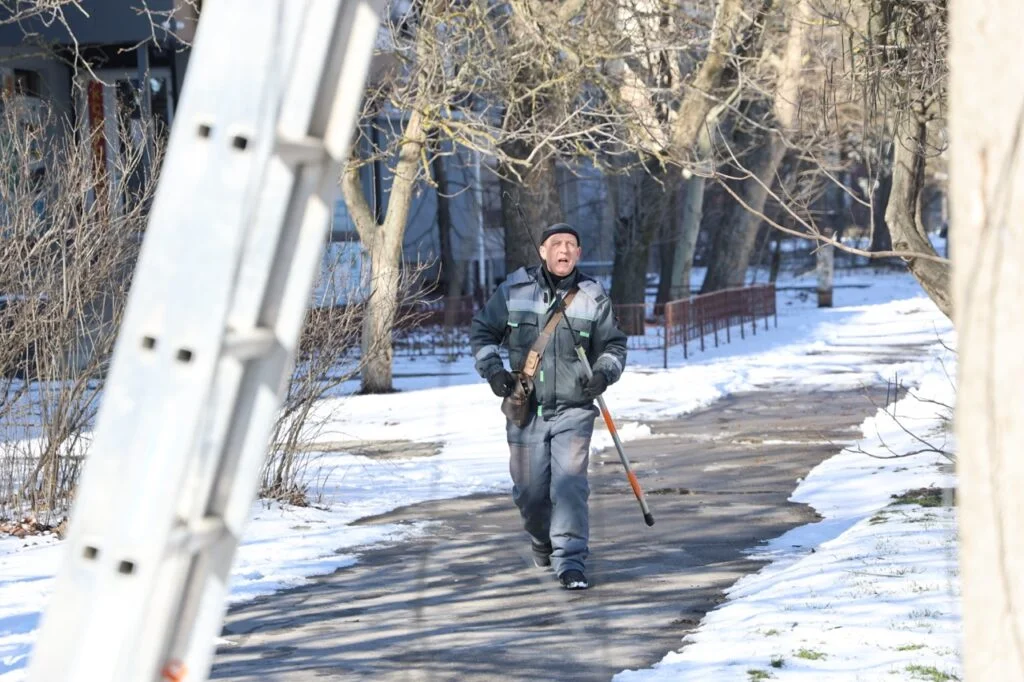
A woman passing by stops and watches the installers. After standing for a couple of minutes she goes on her way.
At this time Bohdan, with the help of his magical device, solders the fiber. A minute and the magic returns to the apartments of Kherson residents who had been without internet since the night.
Time to return – the workday ends.
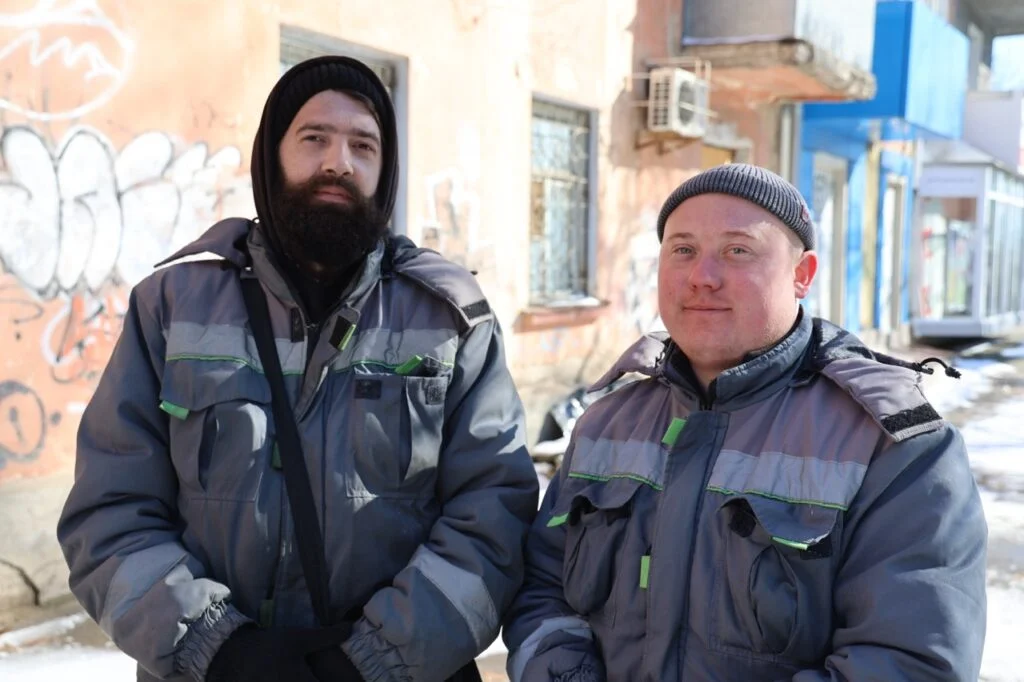
At the internet company’s office they tell us that they now have 10 crews – there are those who work across the region, and those who work strictly in Kherson. Each such crew is responsible for up to a thousand subscribers.
Before the war each of them was assigned to a certain district in the city – now they are all interchangeable.
We say goodbye. Tomorrow the guys have another workday and I hope their shifts go without strikes and, if possible, with coffee. Because while they pull their lines, the city stays connected. And isn’t that magic?