

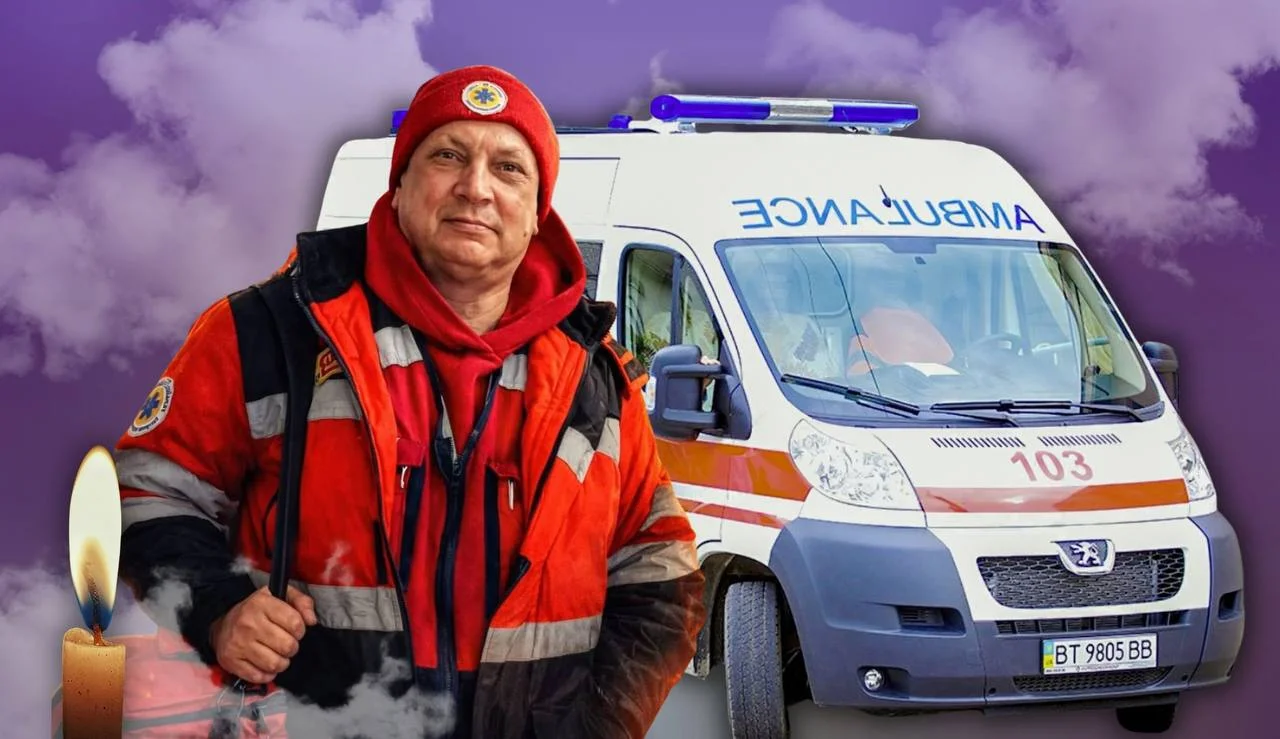
“I won’t work with the Russians”, — replied the senior paramedic of the Kakhovka ambulance station Serhiy Smolyak, when he heard: “Who are you with? Choose”.
This conversation took place in late October 2022, when the director of the Regional Territorial Center for Emergency Medical Care and Disaster Medicine Yurii Bovkun came to Kakhovka, who by then no longer hid his cooperation with the occupiers.
Bovkun left Kherson during the evacuation announced by the Russian invaders and personally checked his subordinates for loyalty in the left-bank part of the Kherson region.
“You have two weeks to leave the city”, — Bovkun told Smolyak.
And in November 2022 a new chapter began in the life of the medic from Kherson region, Serhiy Smolyak. He became a paramedic of the ambulance service, worked in the Darnytskyi district of Kyiv. And on January 9, 2026 he died at the age of 56 while providing assistance to victims of a Russian shelling.
The Russians, understanding that medics and emergency service specialists were working at the impact site, struck a second time. This is their hallmark, their style of waging war. Serhiy Smolyak was 50 meters from the explosion. He died from shrapnel wounds.
She named her son after him
Serhiy Smolyak, according to his son Oleksii, worked on the ambulance since 1988, after graduating from Beryslav Medical College.
“Dad, — Oleksii says, — wanted to get a higher education at Zaporizhia Medical Institute, but he didn’t get in due to a conflict that arose with a lecturer during the entrance exams. The lecturer behaved improperly, in my opinion: he didn’t smooth over but aggravated essentially a minor conflict. Father did not make further attempts to enter a university”.
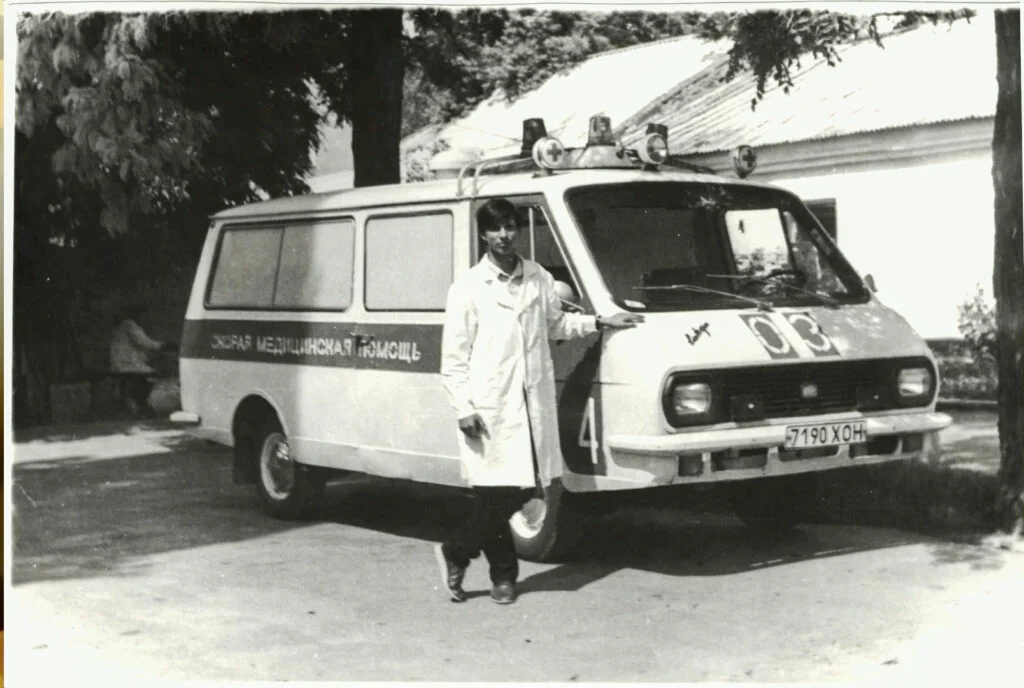
Soon after starting work the young paramedic met Tetiana, a future nurse. She also studied at Beryslav Medical College. The girl was doing her practicum at the hospital located near the ambulance station.
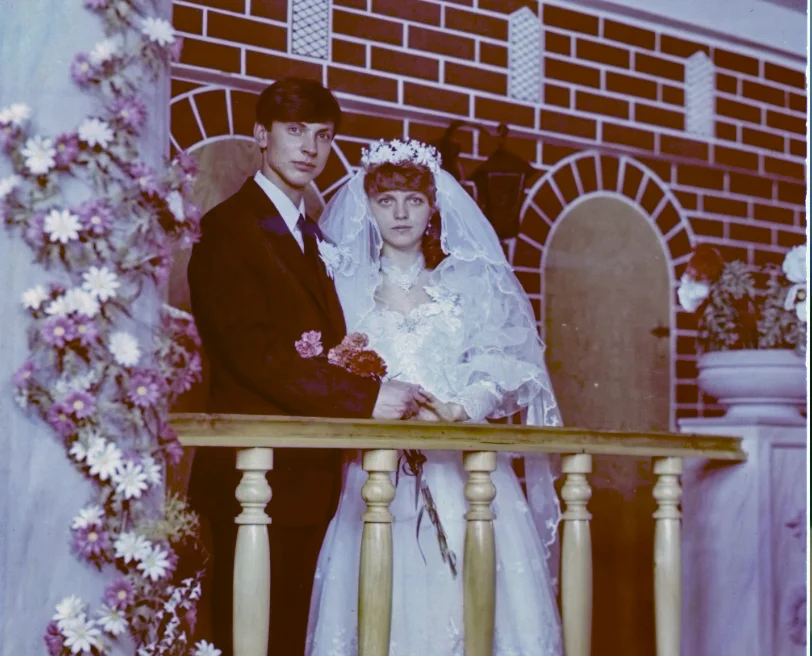
In November 2025 the Smolyak couple, Serhiy and Tetiana, received congratulations on their coral wedding — their 35th wedding anniversary.
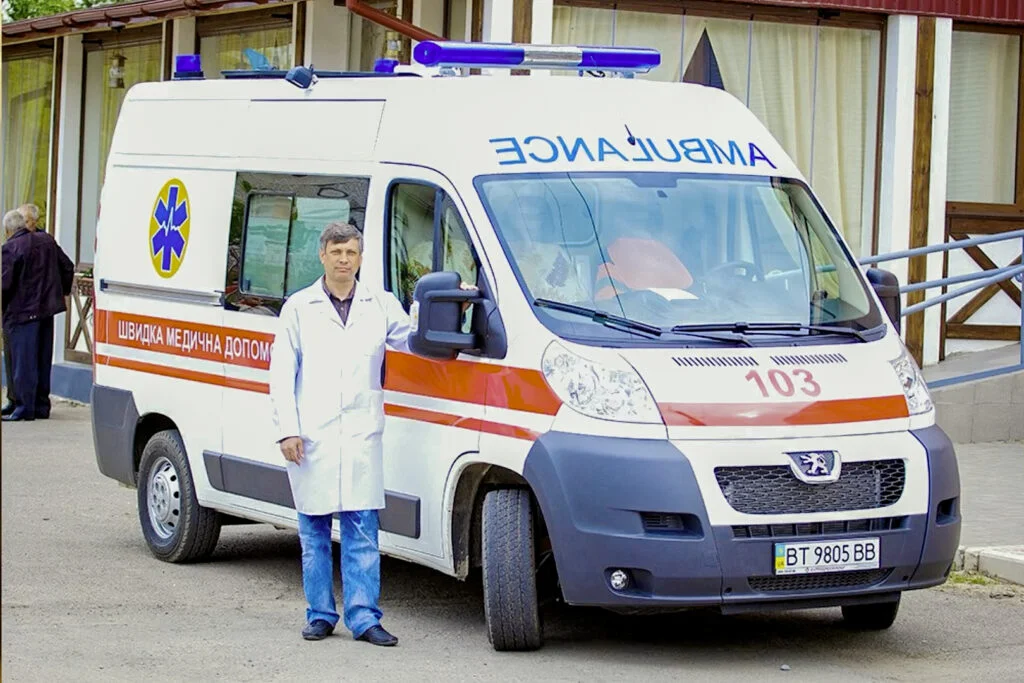
In 2000 Serhiy Smolyak became a senior paramedic. This position is administrative, office-based. The senior paramedic is responsible for supplying ambulance crews with medications, for planning work and other organizational matters.
“But, — Oleksii Smolyak says, — my father did not stop also working “in the field”, that is, on calls. Five days a week he worked as a senior paramedic, and every Saturday — simply as a paramedic as part of a crew”.
As Oleksii says, his dad did this for several reasons. First, so as not to lose touch with reality, to constantly have an idea of how employees are doing. Second, so as not to lose skills, because he understood that being in a managerial position could end at any time. Third, the calls were additional income, which is also important.
“For all sorts of cases, — Oleksii says, — my father had to go out. He told that 18 or 19 times he delivered babies in the car when they didn’t manage to get the woman to the hospital, when they were bringing her from some village located tens of kilometers from Kakhovka. Once under such circumstances a boy was born to a woman who was already the mother of five girls. The couple really wanted a boy. And — here — the dream came true. After the birth the woman asked my father: “Doctor, what’s your name?”. And she said that she would name her son Serhiy in his honor, because my father became a participant in a very important event for that family”.
One of fifteen
During the Russian occupation Serhiy Smolyak left Kakhovka only in early November 2022, when it was already impossible for a pro-Ukrainian person to remain in the city.
“I, — Oleksii Smolyak says, — talked with my father several times about leaving. He replied that he would work as long as there was a salary from Ukraine. I think he understood that the situation in Kakhovka was very difficult: at the ambulance station out of over 40 employees only 15 remained, the others left”.
The station’s employees were lucky: the institution was subordinated to the Regional Territorial Center for Emergency Medical Care and Disaster Medicine, so neither the local occupation authorities nor the Russians present in Kakhovka were interested in its work.
“There were assumptions, — recalls Oleksii Smolyak, — about the regional center’s cooperation with the occupiers. Once a representative of the leadership came there to Kakhovka and brought Russian salaries — rubles. He ordered my father to distribute them. Father said that his colleagues at first did not want to take those rubles, but he persuaded them, because personal safety is most important. It was obvious: whoever refused on principle could end up “in the basement”. Later people exchanged the rubles for hryvnias with local dealers”.
According to Oleksii Smolyak, the director of the regional center Yurii Bovkun at first did not advertise his sympathies for the occupiers: “As a volunteer I brought medicines to the regional center. Bovkun said that he would not leave Kherson and the people of Kherson, that his seriously ill mother lives in the city. Father monthly submitted documents to the regional center for the accrual of Ukrainian salaries to his employees, and they were calculated. And in October 2022 Bovkun together with his mother moved to the left bank and no longer hid that he was a collaborator”.
Oleksii with his family left Kherson in September 2022.
“Then, — he says, — the occupiers held a pseudo-referendum in Kherson region, and volunteers who delivered humanitarian cargoes from Ukraine and distributed them in the region (I was also involved in these matters) were warned about possible tightening of repressions in the near future. And our family decided to leave for Kyiv. At that time it was already very difficult to cross the demarcation line, but we were lucky. And in November we met parents there who were also lucky to break out of the occupation”.
Soon after moving to Kyiv, Serhiy Smolyak took a job as the on-duty paramedic of the emergency medical brigade at substation No. 17. Working there at one and a half positions, he found time to teach online in courses for improving medical workers’ qualifications. By the way, he also did this in Kherson region: he shared experience with colleagues, and also lectured to students of Beryslav Medical College — the institution where he once received his own education.
According to Oleksii, Serhiy Smolyak, already being in Kyiv, learned that in Kakhovka the Russians stole all modern vehicles from the ambulance station, leaving there one — a “GAZelle” in very poor technical condition.
Oleksii says that his father did not want to make a medical dynasty out of the family: “When I finished school, I said to my parents: “You are both medics. Maybe I should choose this profession too so that there would be a dynasty?”. My father reacted very emotionally: “Absolutely not!”. He was categorically against it, because he knew this field from the inside, he understood how hard it is to work there. In the end, I chose a different specialty”.
Asked about his father’s main character traits, Oleksii Smolyak says: “He was an optimist, a cheerful person, he never despaired”.
He said that when in the chat of the building where his parents and grandmother rent an apartment they were informed about Serhiy’s death, someone from the residents wrote: “How did he die?! He came to us two days ago to do an ECG. He told such jokes that it actually made things lighter”.
Oleksii says that his parents worked a lot, but at the same time were not people who lived only by work. He says that there remain many memories of family vacations, summer trips to the sea, winter ones — to the Carpathians and to Kyiv, about holidays. According to the son, his father was a person capable of creating a cheerful and friendly atmosphere around him.
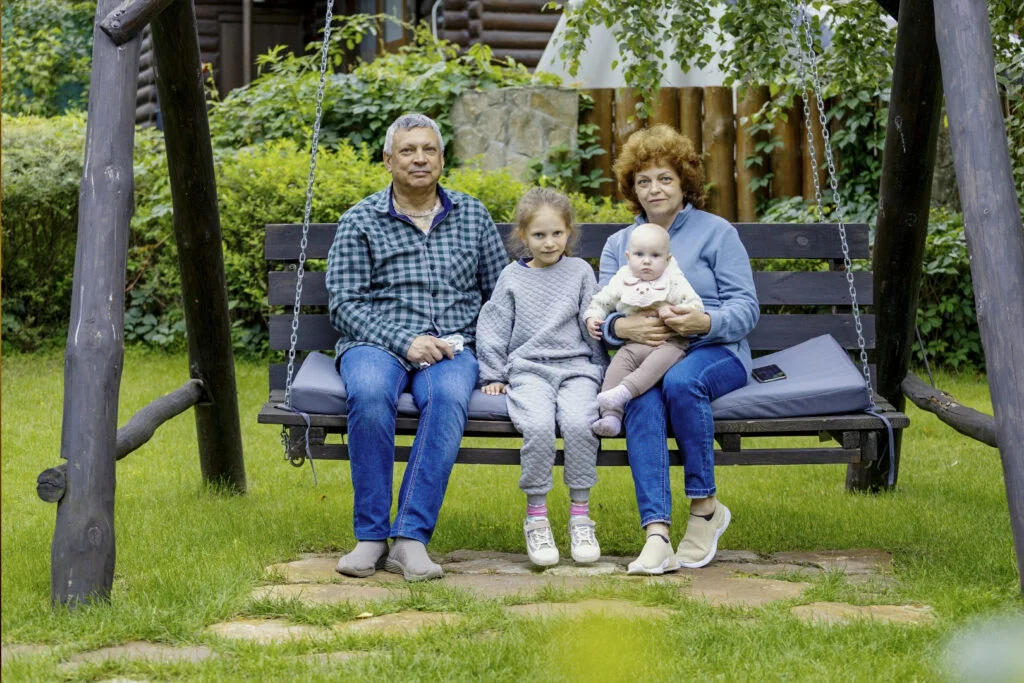
Positive thinking and optimism greatly helped in the work, because they often had to respond to sites of enemy missile and strike drone hits, which was not only physically difficult but accompanied by enormous emotional tension. And in such a situation the ability to “unwind” oneself and help colleagues do the same was incredibly valuable.
However, there were times when it was no time for fun.
“My father, — Oleksii Smolyak says, — ordered and wore a military dog tag on his body with engraved information about himself. He said: “After strikes I saw some of the dead in such a condition that it would be difficult to identify them, and I thought about how they would identify me if needed. I have neither scars nor tattoos”.
In Kyiv danger constantly lurked for ambulance workers. In autumn 2025, recalls Oleksii, his father’s crew was called to one of the enterprises that had been attacked by Russian drones: “Medics were providing assistance to people who were pulled from under the rubble, and at that time in a neighboring workshop, about 150 meters away, four “Shaheds” flew in”.
In December a Russian ballistic missile landed near the service vehicle in which Serhiy Smolyak was riding. They were lucky then: the vehicle was shaken considerably, but that was all.
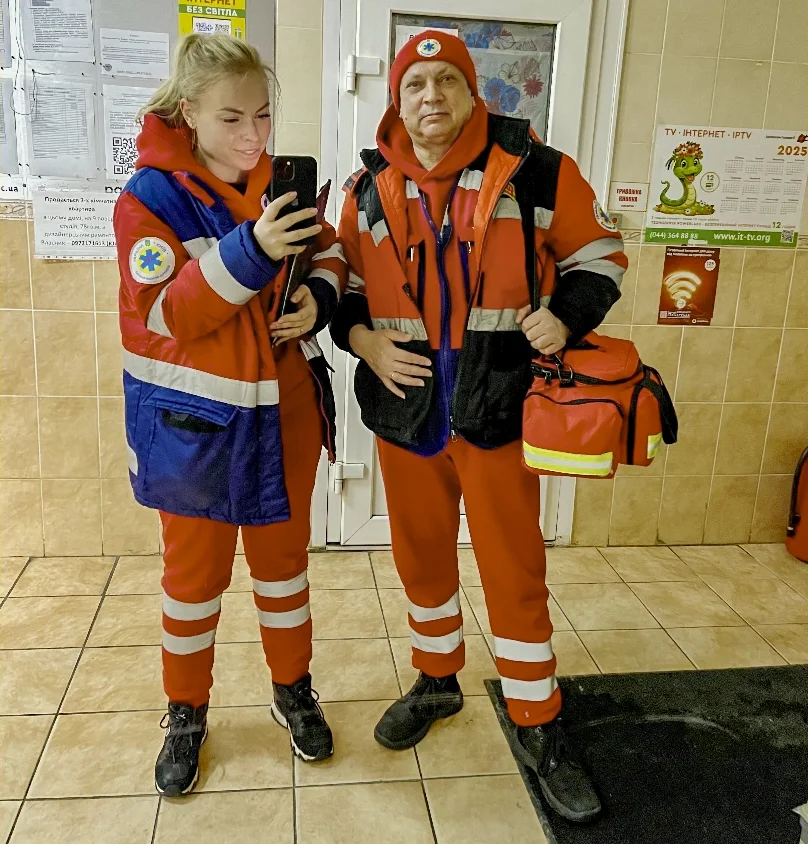
And the terrible news of the medic’s death was received first by his mother-in-law.
“About my father’s death, — says Oleksii Smolyak, — my grandmother informed me. It was in the morning of January 9. The tragedy occurred at 2:30 a.m. The ambulance crew was called to provide assistance to those wounded as a result of the shelling. And shortly after the medics arrived a second strike occurred. My father was closest to the explosion site, so he died from shrapnel. A few other DSNS workers were seriously injured”.
The head of the substation where Serhiy Smolyak worked was called to the scene of the tragedy. He recognized him. He wanted to find in the deceased’s phone contacts of relatives to inform them about the misfortune, but could not unlock the phone. The head knew Serhiy’s address and drove there.
“It was, — the son recalls, — around seven in the morning. Mother had already gone to work, she works in a private clinic. Only grandmother was at home, who also left Kakhovka together with my parents. Unfortunately, she had to be the first to learn about father’s death. Then she called me”.
“I want there to be a monument to medics in Kyiv”
According to Oleksii, the memory of his father will be honored on the Alley of Memory of Fallen Medics, opened in July 2025 on the grounds of Kyiv City Clinical Hospital No. 1. This alley has memorial panels dedicated to more than 60 medics.
Oleksii Smolyak says he wants to initiate the installation of a monument near the place of his father’s death, but not only to him, to all Ukrainian ambulance service employees who died performing their duties during the Russo-Ukrainian War.
“There, — he says, — is a plot where, in my opinion, a monument can be installed without problems. People will see it, and it will not interfere with either vehicle or pedestrian traffic. I will talk about this with the administration of the Darnytskyi district of Kyiv. I want a sculptural depiction of my father to become an embodiment of memory of medics who gave their lives performing their professional duty”.