

Sponsored content
After the end of the war, every sector of the Kherson region’s economy will need rebuilding. This includes the fishing industry. According to the Ministry of Agrarian Policy of Ukraine, the total losses of the sector as a result of Russian aggression amount to more than 50 million dollars.
How much of that falls on Kherson region is unknown, but it can be said for sure that specialists face enormous work, and its success will largely depend on the scientists of the Kherson State Agrarian and Economic University (ХДАЕУ).
In the post-war recovery of the fishing industry, the developments within the scientific project “Incubator for Sustainable Aquaculture in the Black Sea Basin (AQUABATOR)”, the implementation of which has begun at the university, will be very useful.

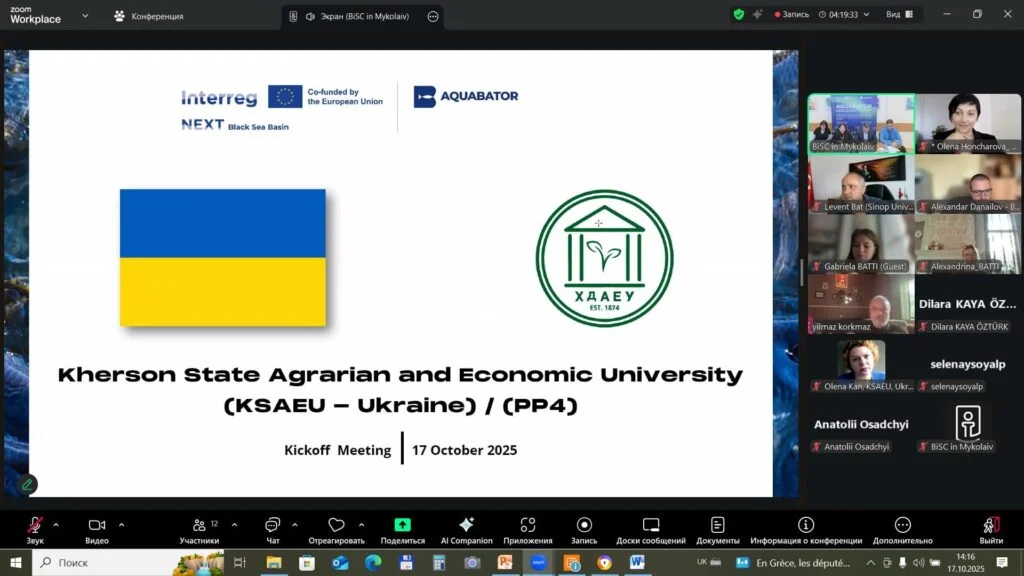
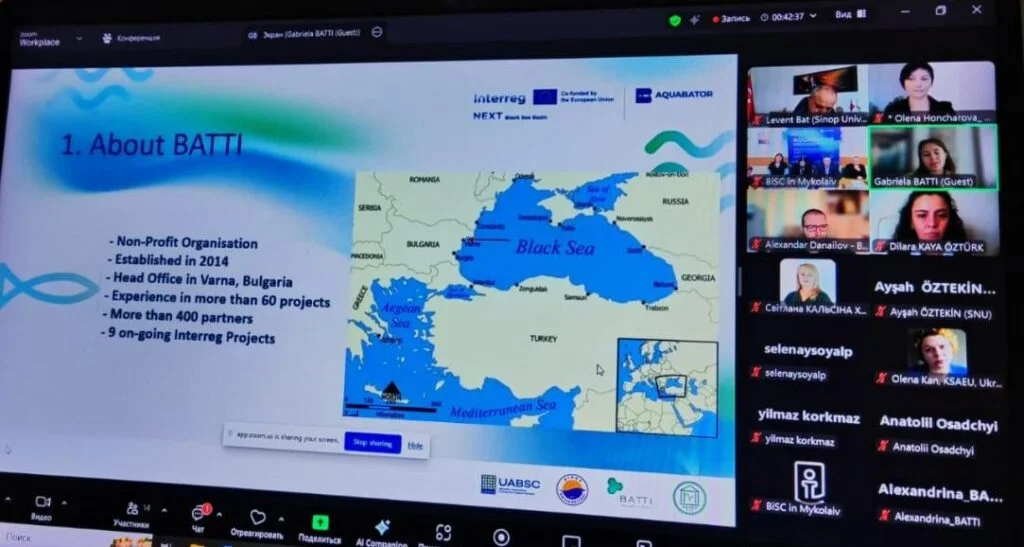
According to Olena Honcharova, head of the Department of Aquatic Bioresources and Aquaculture of the Faculty of Fisheries and Environmental Management at Kherson State Agrarian and Economic University (ХДАЕУ), the initiative is financed by the European Union within a grant program with a total budget of 1.4 million euros. The project partners are the Ukrainian organization UABSC (Ukrainian Association of Business Support Centers), Sinop University (Сінопський університет) and BATTI (Bulgarian Association for Technology Transfer and Innovations).
“The goal of the project, – says Olena Honcharova, – is to create a model of interaction between the scientific sector and production for the innovative and sustainable development of aquaculture in the Black Sea Basin. Working meetings of the partners have already taken place. For Ukraine, participation in the project is one of the post-war recovery cases for the fishing industry, bringing the sector to a new level with innovative solutions for digitalization and accessibility on international platforms.”
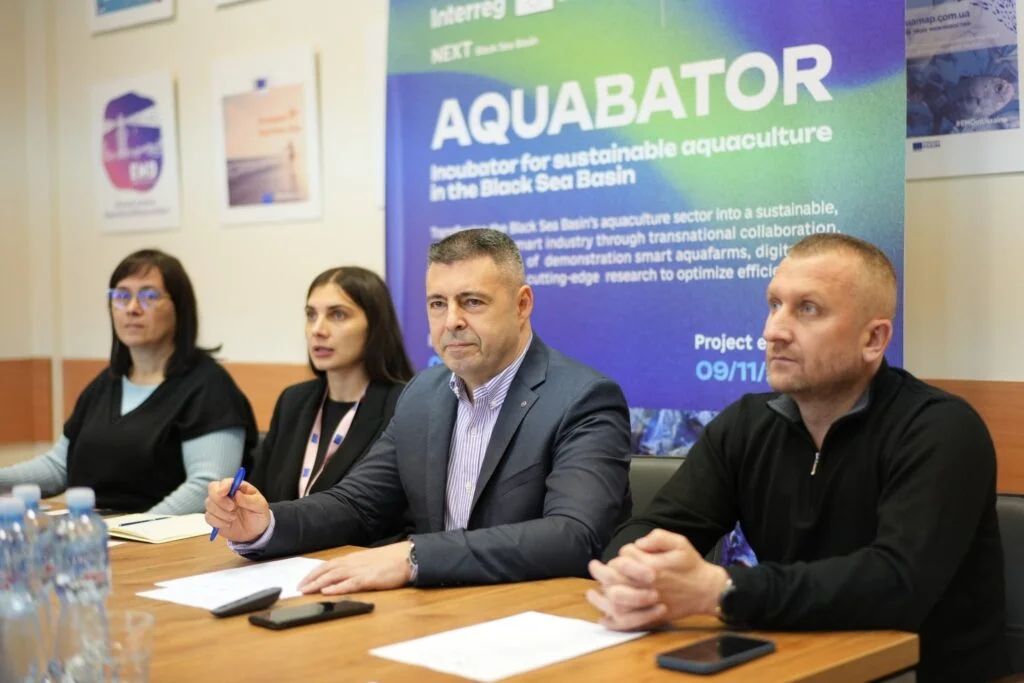
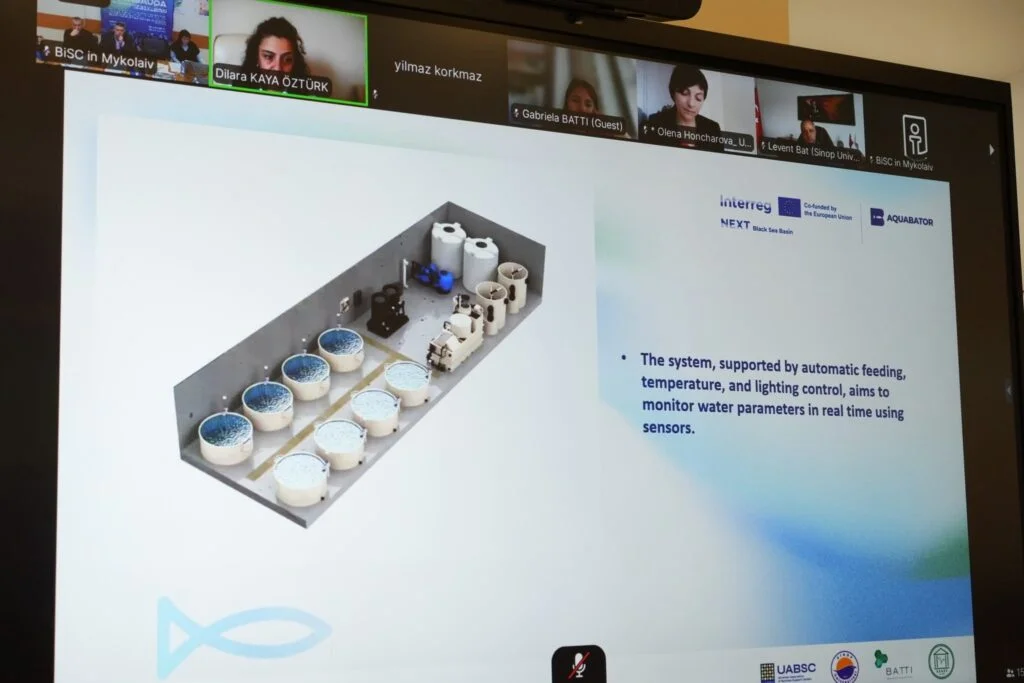
The project will be implemented during 2025-2027. An international online platform for exchanging experience in aquaculture for experts and beginners will be created. Specialists will also map the region, taking into account the potential for sustainable aquaculture development. Two smart aquafarms will be established in Ukraine and Turkey, which will function as modern training centers demonstrating the latest technologies.
“The online platform, – explains Olena Honcharova, – will significantly expand and strengthen the potential and rational use of resources. The combination of the scientific and production sectors with the involvement of a multimedia component makes the project multifunctional for the aquaculture sector. Digital twins of aquafarms will be created, on the basis of which virtual tours and master classes will be conducted. The emphasis will be on scientific justification, practical competencies and exchange of experience.”
According to the head of the Department of Aquatic Bioresources and Aquaculture, the project will be very useful for university students studying in the specialty “Aquatic Bioresources and Aquaculture”: “They will gain opportunities to significantly expand academic mobility and acquire professional competencies. Elements of some project results are planned to be implemented, with respect for copyrights, into the educational and scientific components at ХДАЕУ.”
Also, according to Olena Honcharova, Ukrainian science will receive intellectual and material investments thanks to international partnership.
“The project corresponds to the UN Sustainable Development Goals for 2030, adapted to Ukrainian conditions. The main emphasis is on reducing environmental harm and using alternative energy sources”, she notes.
The project “Incubator for Sustainable Aquaculture in the Black Sea Basin (AQUABATOR)” is also useful in that technological solutions in aquafarming aimed at environmentally safe aquaculture production will be developed during its implementation.
“An important component, – emphasizes Olena Honcharova, – is the organization within the project of demonstration days, showrooms, forums, workshops, training programs for experts, young specialists, beginners, and experienced representatives of interested organizations. International partners will be involved in the process, and this platform should become a powerful global-level platform for the sustainable development of aquaculture”.