

As of today, 15 stores of the “Fajno” chain operate in Kherson, four of which are located in the city’s “red zone”. These are areas where public transport either does not run at all or appears only occasionally.
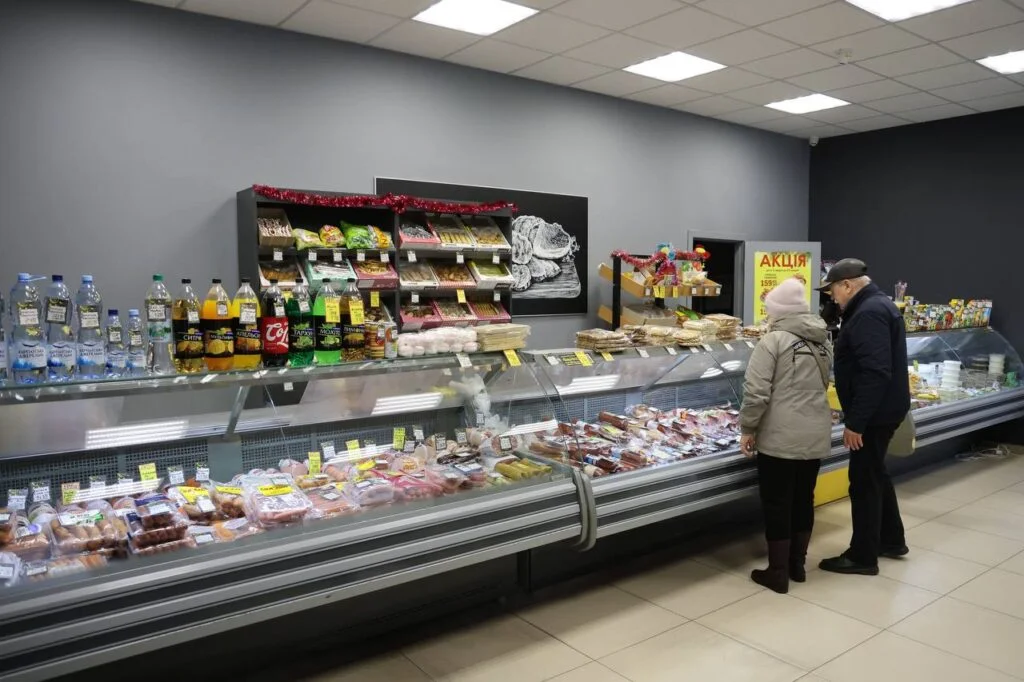
The chain was opened almost immediately after the de-occupation of the city. According to the manager of the “Fajno” chain in Kherson, Lyudmyla Kirsanova, at that time no one knew whether it would work at all: whether people would go for groceries under shelling, or whether there would be those willing to work in such conditions. They started with three stores, later expanded the chain to twenty-five, but had to close some due to constant shelling — in Bilozerka and in Tekstylne.
For residents of the “red zone” these stores are often the only opportunity to buy groceries near their homes. Employees are selected specifically from those who live nearby so they do not have to make a dangerous trip across half the city every day.
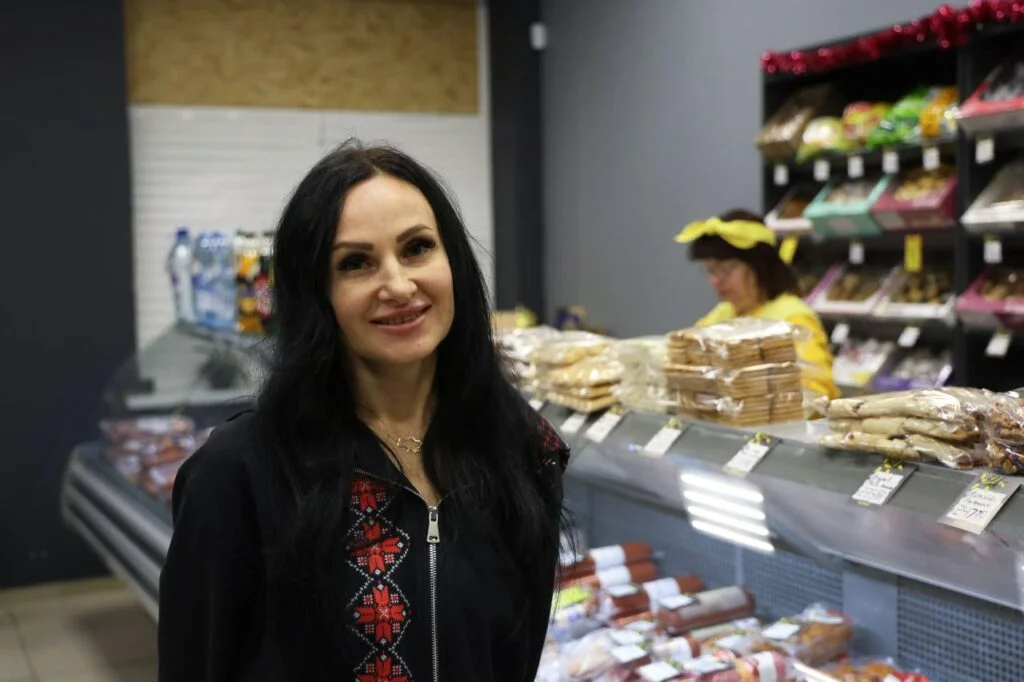
“On Universytetska there is no public transport, minibuses run in limited numbers. But people walk there, come, and we do not plan to close. It’s very dangerous there, but we tried to select the women so that they lived as close as possible to the workplace,” explains Lyudmyla Kirsanova.
Store shelves are replenished with goods daily. Orders are formed in the evening, and in the morning drivers set off with fresh goods. There are no logistics problems because the chain has its own fleet. But each such trip is a risk.
“In Bilozerka a drone hit a car, but, thank God, the driver was in the store and was not injured,” recalls Lyudmyla.
Another driver received minor injuries. Although everyone travels with drone detectors, this does not always save them.
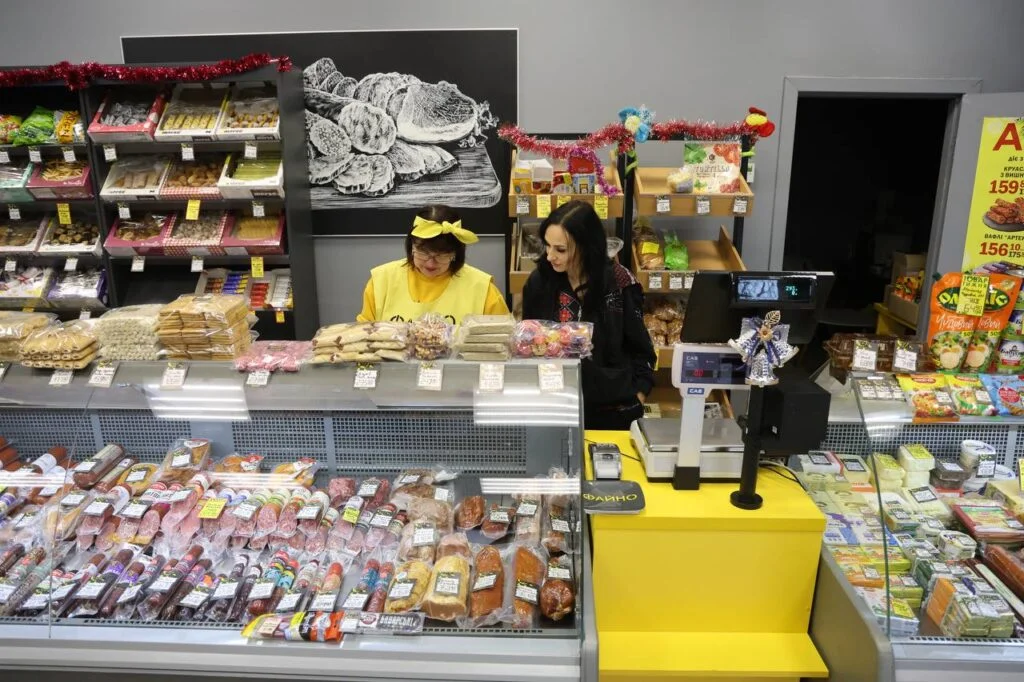
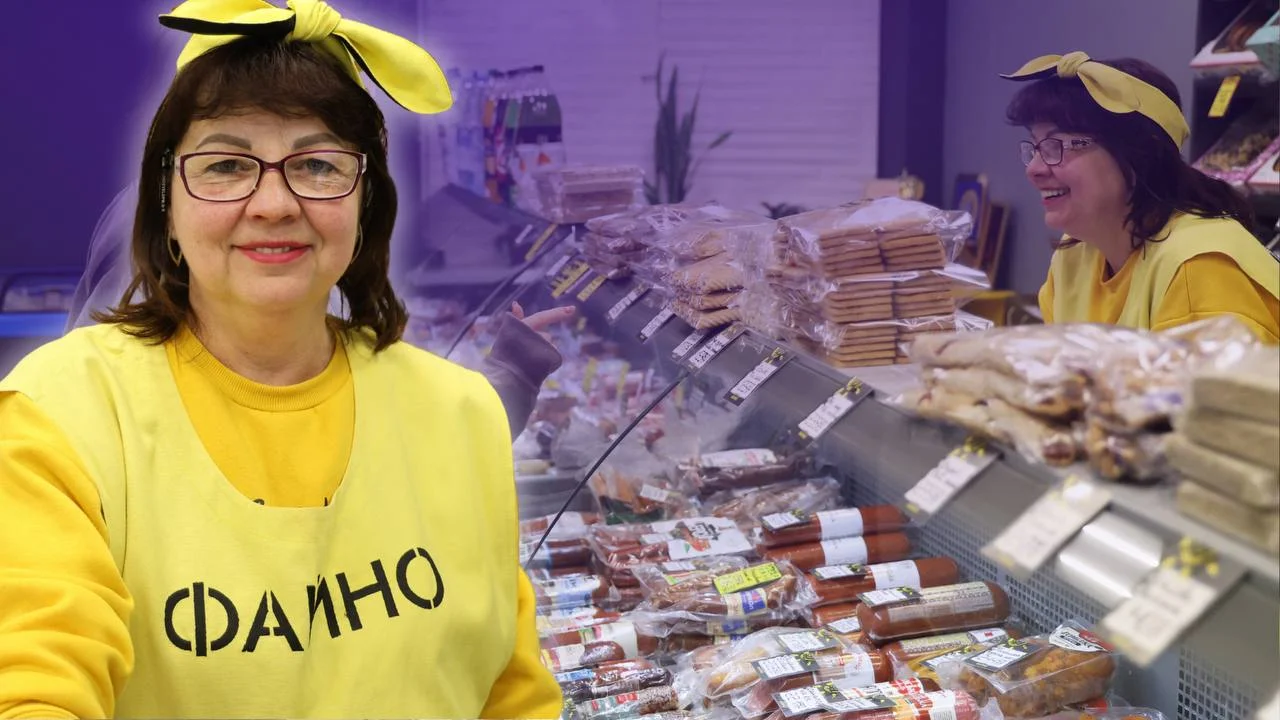
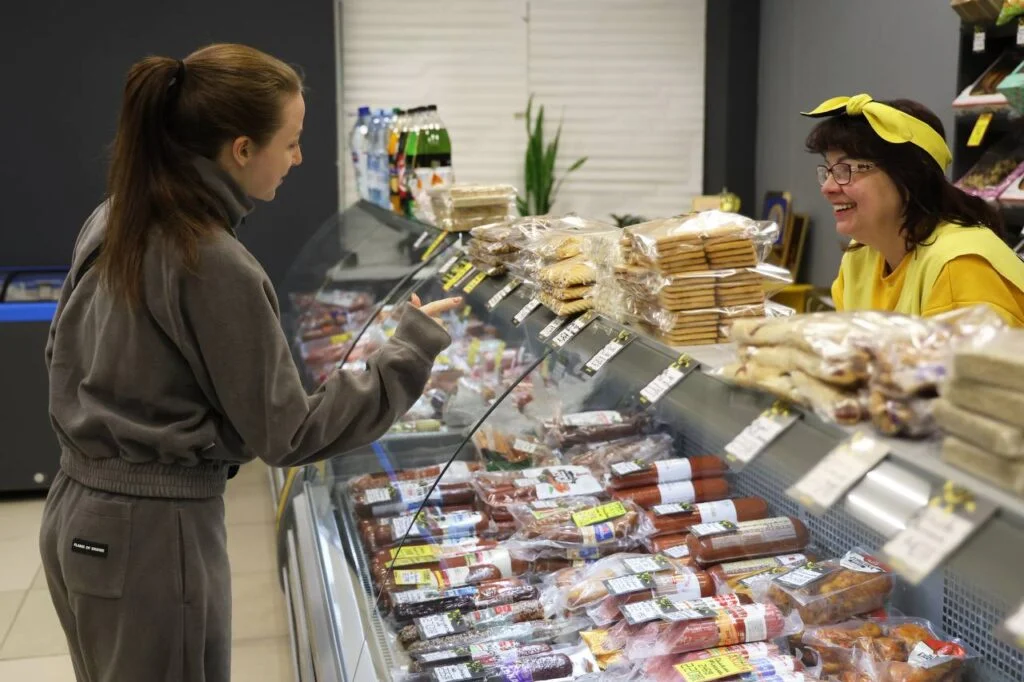
Natalia Komarenko has worked as a saleswoman for forty years. She has been at “Fajno” for over two. She says this is the best place for her. Her workday starts early and always with cleaning, then follows the established routine: packing cookies, receiving deliveries, stocking the shelves. She buzzes around like a little bee. The yellow uniform with the black logo emphasizes that.
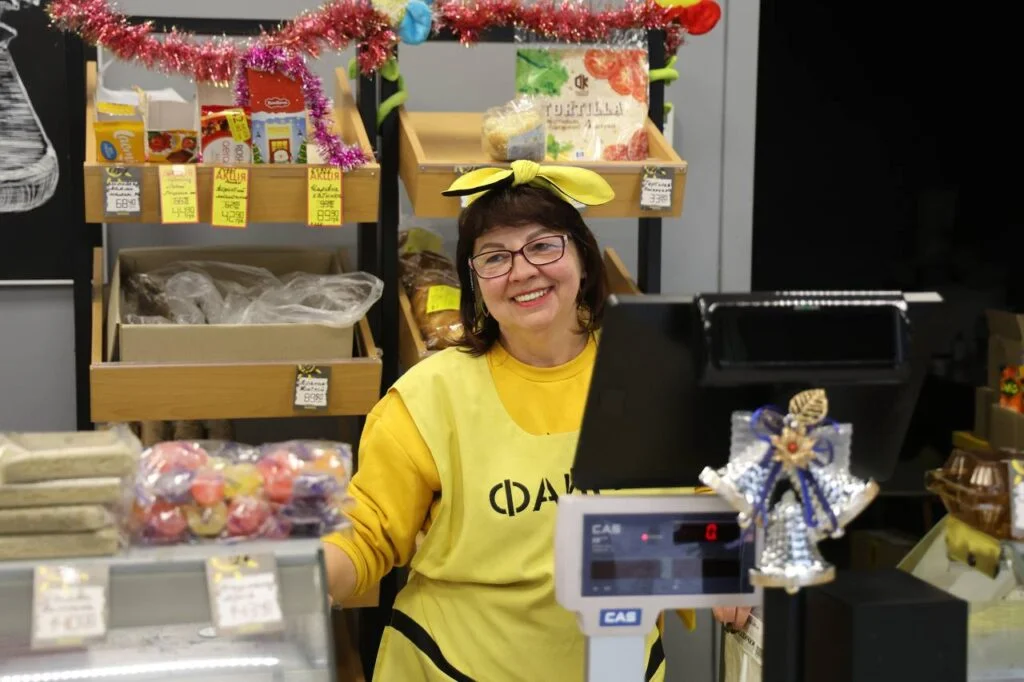
She has become used to the explosions, but the fear does not go away.
“It’s very frightening both to get there and to work. If you walk past the school, where it exploded, you just watch out so that drones don’t fly. Otherwise, what can you do? They explode there, but here within four walls it’s not as scary. And getting there — yes, and it’s scary to go home,” admits the saleswoman.
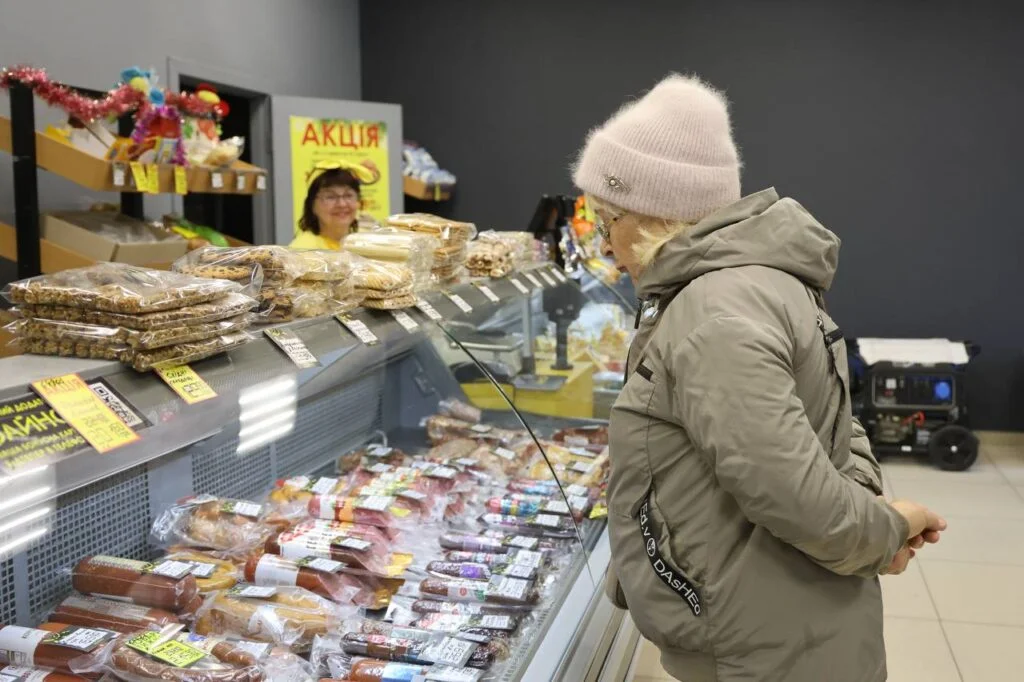
Hanna and Valentina are friends who like to go shopping together. Especially after the next pension payment.
“Everything you want can be bought. As long as you have what? Money. Thank God, pensions are paid, people get salaries,” say the women.
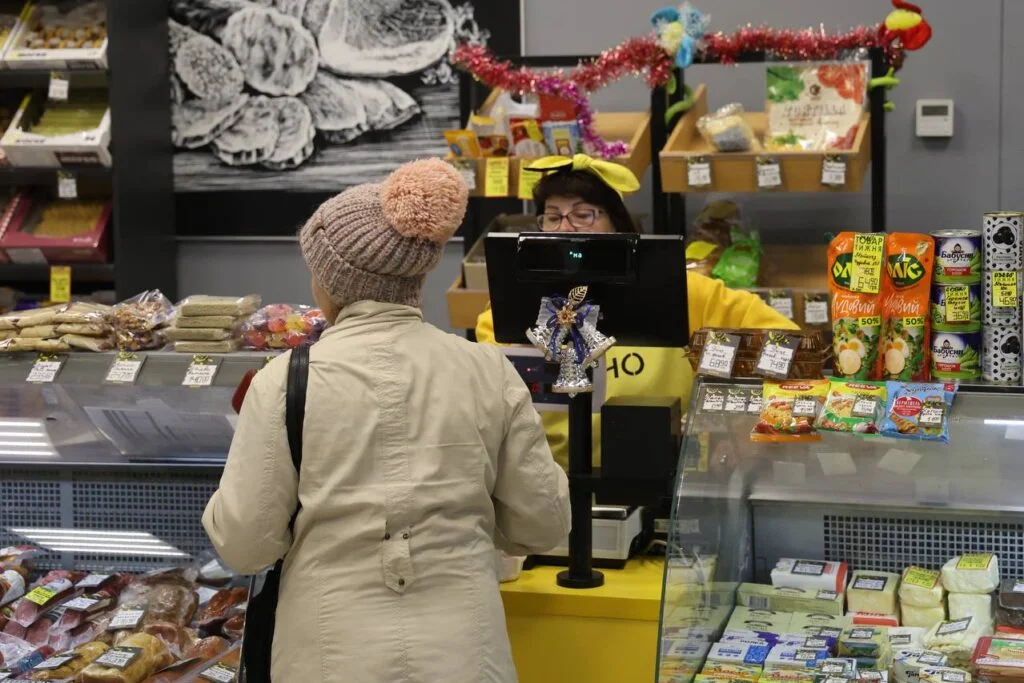
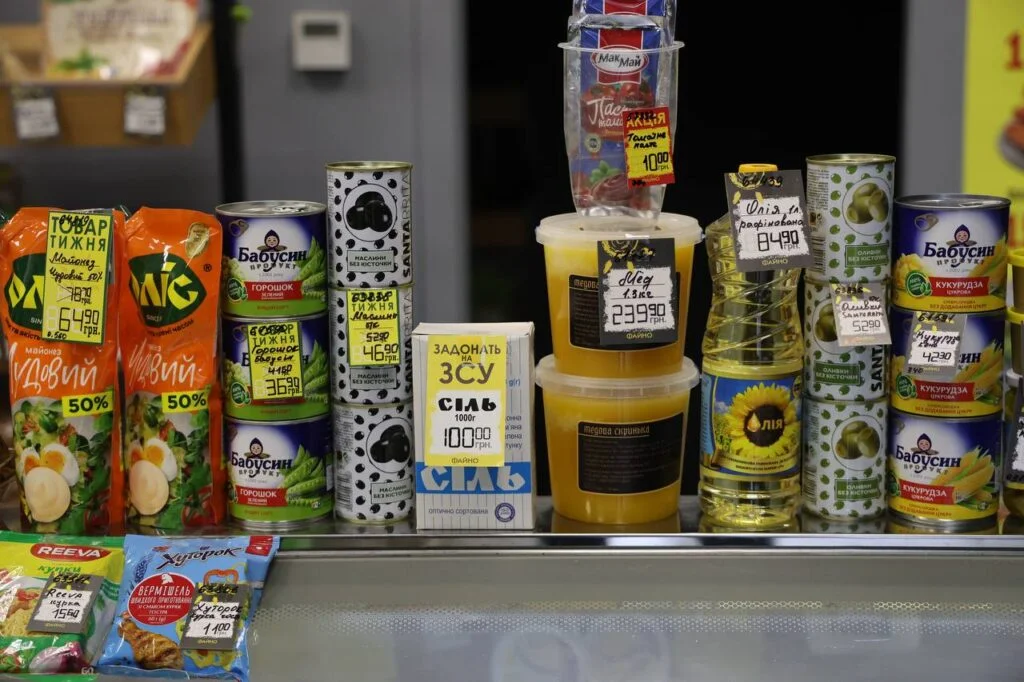
Women appreciate “Fajno” for regular promotions and affordable prices. And also for the fact that the store is nearby and you don’t have to go anywhere. In frontline Kherson, that already means a lot.
“We have monthly promotions, people know about them. We inform by posters, we inform on social networks. We are loved in Kherson,” says manager Lyudmyla Kirsanova.
Recently the Kherson network was recognized at the national level. The company “Znak Yakosti” awarded “Fajno” a winner’s diploma — for high product quality, stable operation, fair pricing and care for the borderland customer.
Lyudmyla Kirsanova recalls how she accidentally saw information about the contest on the internet. And she understood: coincidences are not accidental.
“I accidentally saw the all-Ukrainian campaign ‘Znak Yakosti’ on the internet. I submitted an application, we were accepted, they replied to me. Then there were rounds of competition. They wrote to me that experts would be sent for inspection in seven days, and we won this contest,” the manager recounts.
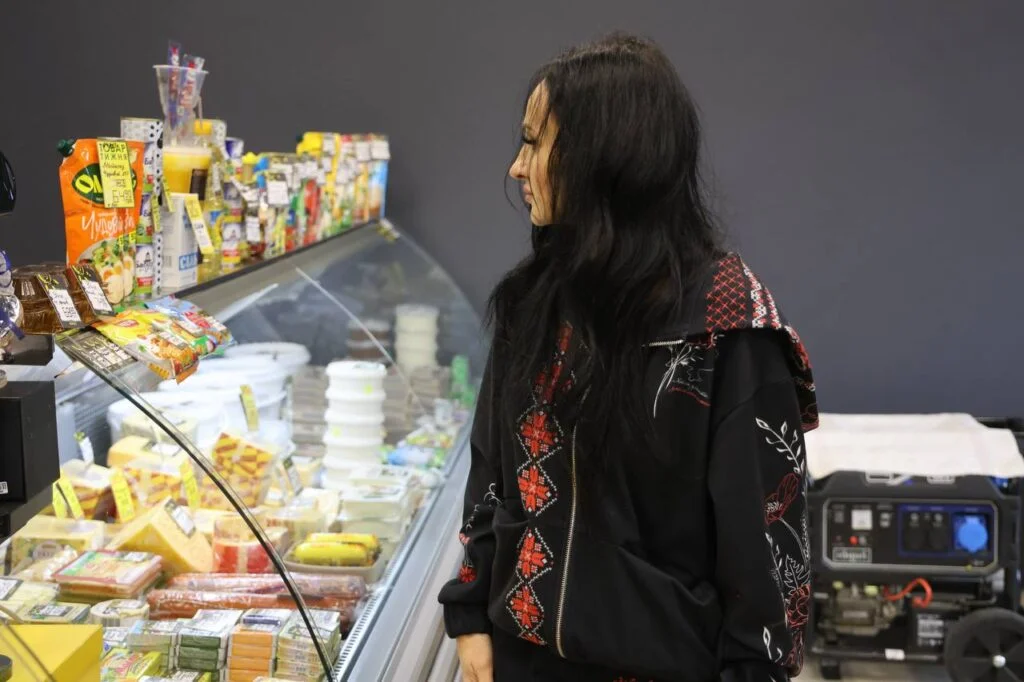
Three years ago, when the network was only being opened, no one knew whether the idea of operating in a frontline city would succeed. Now the answer is obvious.
“In Kherson every business is important to people. These are jobs, these are food products. Everyone who works here is important,” says Lyudmyla Kirsanova.
She is right. Because this story is not about business and not about heroism. It is about ordinary people on whom the everyday life of the city continues to rely. Because life is measured not by loud words but by whether you can buy bread near your home today.