

At the end of the year, as always, we no longer have the energy to write year-end summaries. And although the whole MOST team is busy “tying up loose ends”, we decided to ask each team member to choose one piece that seemed significant or simply interesting.
This will be our summary of this difficult, but interesting year.
Margarita Dotsenko – journalist
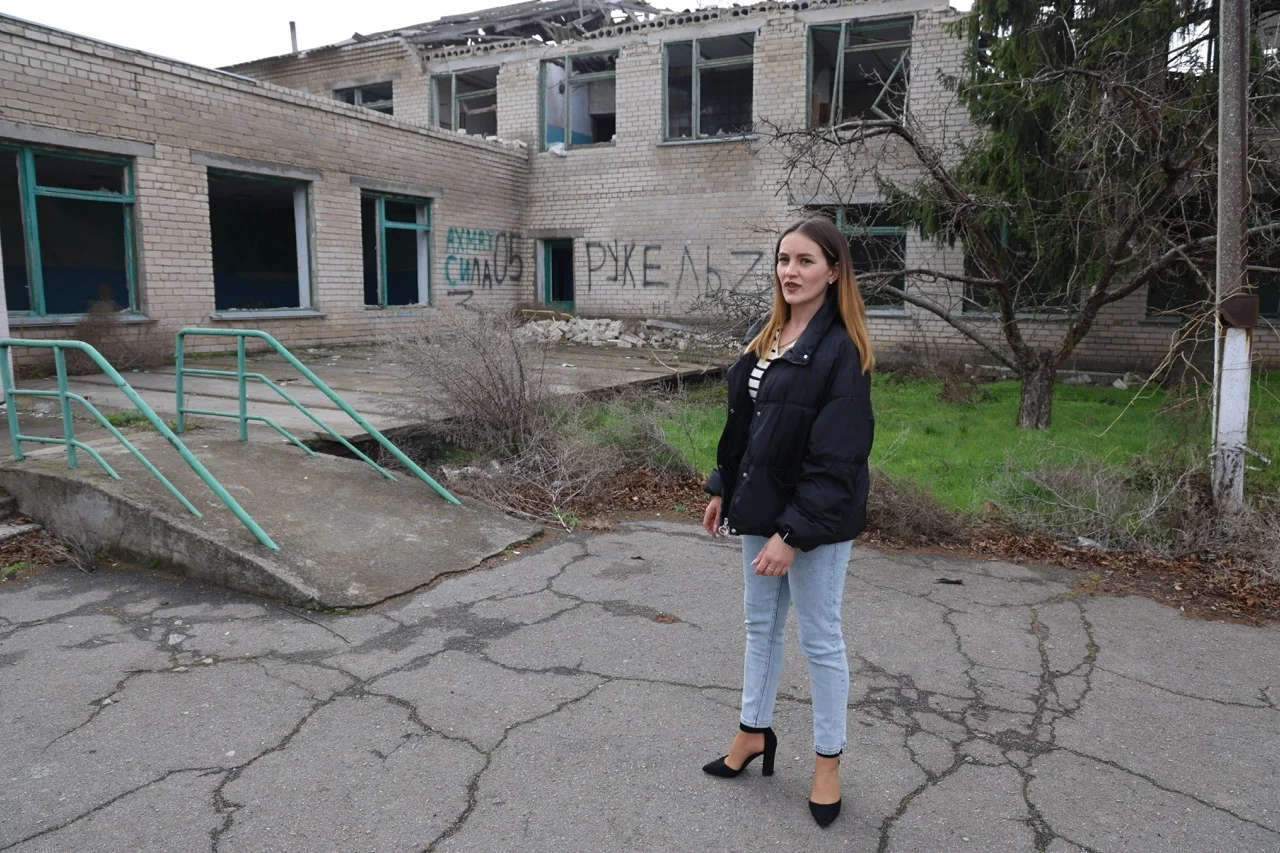
I chose the piece “High Heels Among the Ruins”.
This is a report about the village of Nova Kamianka in the Mylivska community, which is practically on the front line.
But personally I see in this piece not only a description of the consequences of a terrible war, but a documented proof of the incredible strength of the women of the Kherson region.
It may often seem that mostly men work in the frontline zone. But this is not the case. In the Kherson region hundreds of strong women work and live every day. They help, support, guard, protect, treat, teach – and this list can go on for a very long time.
This piece – about a woman among the ruins who did not break. About the presence of life where the war tries to leave only emptiness. About dignity, stubbornness and inner strength that neither shelling nor fear destroyed.
That is why for me “High Heels Among the Ruins” – piece of the year. Because it shows the Kherson region not only from the side of pain, but also from the side of strength. The strength of women.
Eva Vasylevska – deputy editor-in-chief
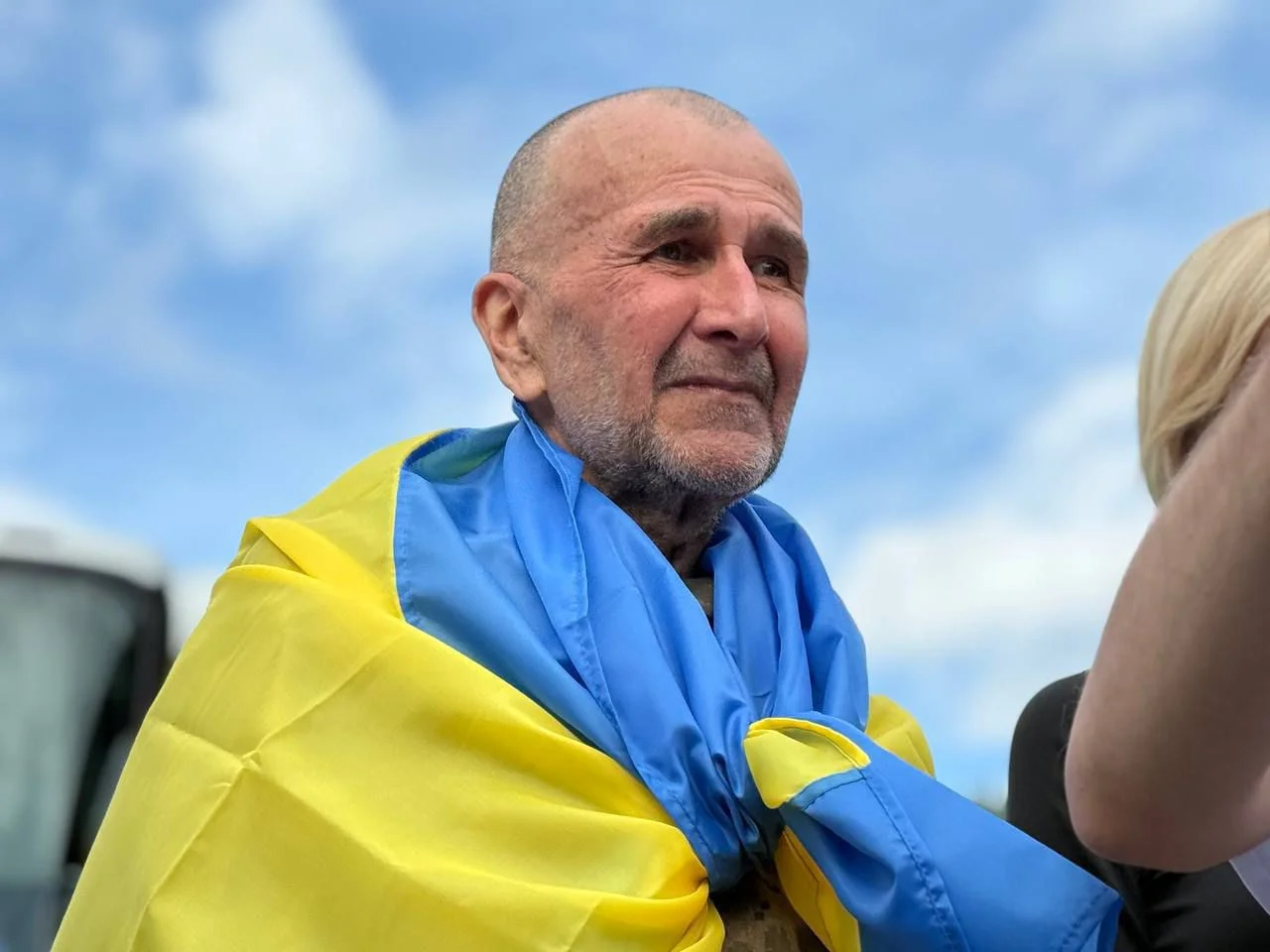
24 August 2025 became a significant day – ex-mayor of Kherson Volodymyr Mykolayenko, who had been there since April 2022, was released from Russian captivity.
MOST was the first outlet to which Volodymyr Mykolayenko gave an interview, so for me, obviously, it is the piece of the year.
This is a difficult interview, and working with it was hard for understandable reasons, however it affirms extraordinary strength of spirit and humanity.
In times of a large-scale war, stories about people who not only did not give up but endured, returned and continue to fight – are something that makes you pull yourself together, grit your teeth and get on with your work.

Yulia Zarudnytska – journalist
“Miss Kherson region” and her family: how a new elite is forming in the occupied territories
I have not been on the team for long, so among the materials I have already had time to get acquainted with, this one stayed with me the most.
At the start of the work the hardest thing for me was constantly working with pro-Russian resources in search of information. It is very hard morally. And irritating. Watching how the occupiers create the illusion of a “normal life” in our territories.
This material required detailed and careful analysis of the collaborator’s life. Which multiplies all the negative emotions. Because one thing is to observe those who literally “broke in”, and another — those who betrayed. And who promote their “successful success”.
Such texts are unpleasant to work on, but very necessary in order to unmask such people.
And the fact that the piece provoked a reaction from this “miss” — only confirms that the text is great 🙂
Yulia Tereshchuk – SMM specialist
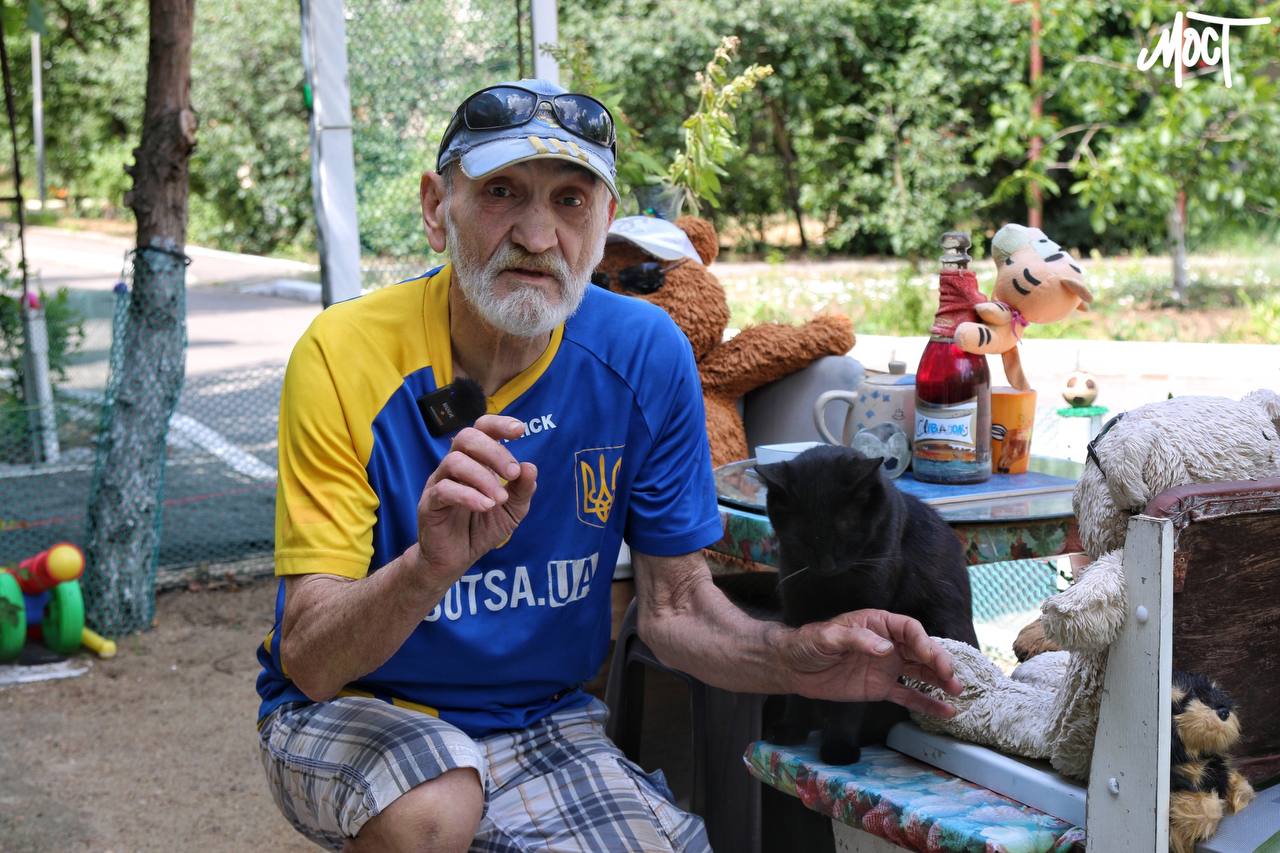
The piece about Kherson resident Oleksii Borshchenko, who during the war created an art space in his yard, is significant for me because it conveys well how Kherson residents live during the war. When the city is constantly under shelling, one person takes it upon himself and makes in the yard a space where you can just be, distract yourself, breathe a little. Oleksii does nothing super loud, he does a small thing where he lives, and this really helps the people nearby.
In this yard for me is all of Kherson: damaged houses, traces of attacks and next to them toys, flowers, sports awards, light. It looks a bit absurd, but very Kherson-like, to find life and beauty among the ruins. It is also important that this story was appreciated not only by me; it resonated with people. The piece was well received on social networks. That means that such stories are truly needed now.
Vyacheslav Husakov – journalist
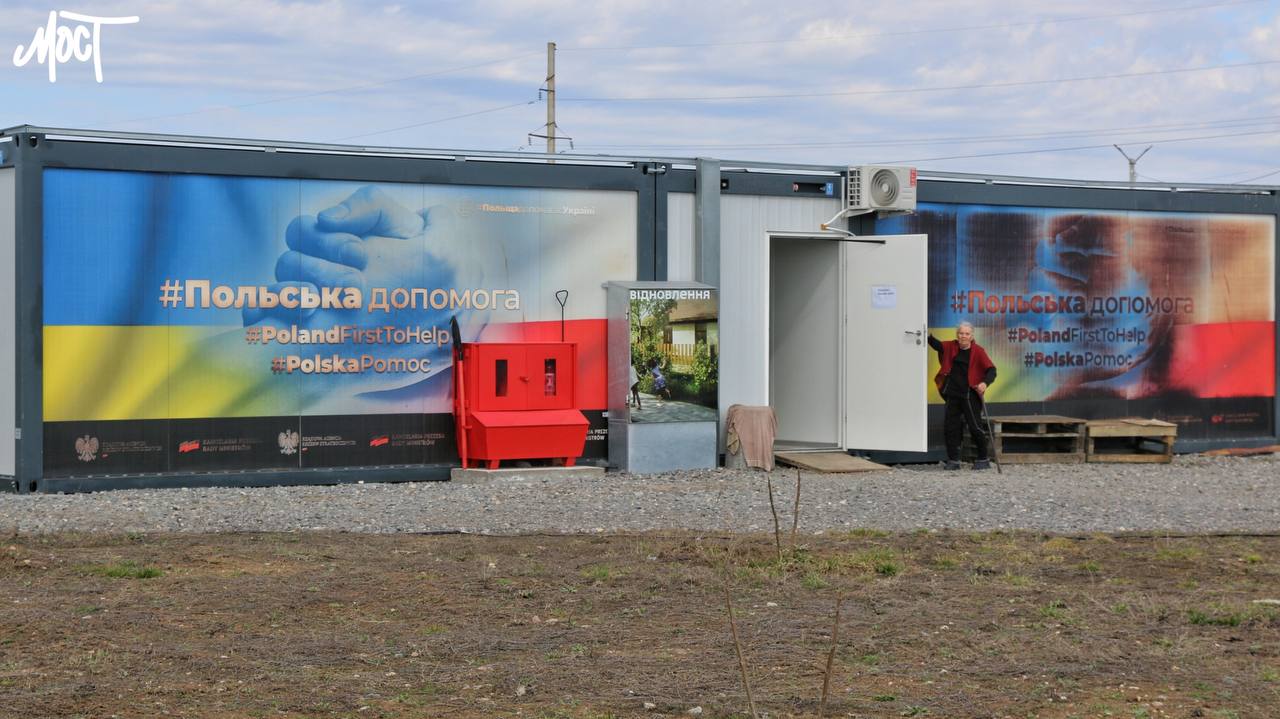
I would highlight this piece, because it is about a very serious and painful problem for the Kherson region and for Ukraine in general – internally displaced persons. As of the end of 2025, Ukraine has over 4.6 million officially registered internally displaced persons (IDPs), although the actual number may be different. In Kherson Oblast over 45 thousand IDPs are registered. Over 50% of Ukrainian IDPs are women, children and pensioners. Only about 25% of IDPs receive state assistance.
But despite the great social significance of the problem, in my opinion it is very insufficiently covered in the media. And this article – is one of, unfortunately, the few attempts to honestly, without embellishment and unnecessary pathos, tell about the lives of internally displaced persons.
Solomiia Stepova – SMM specialist
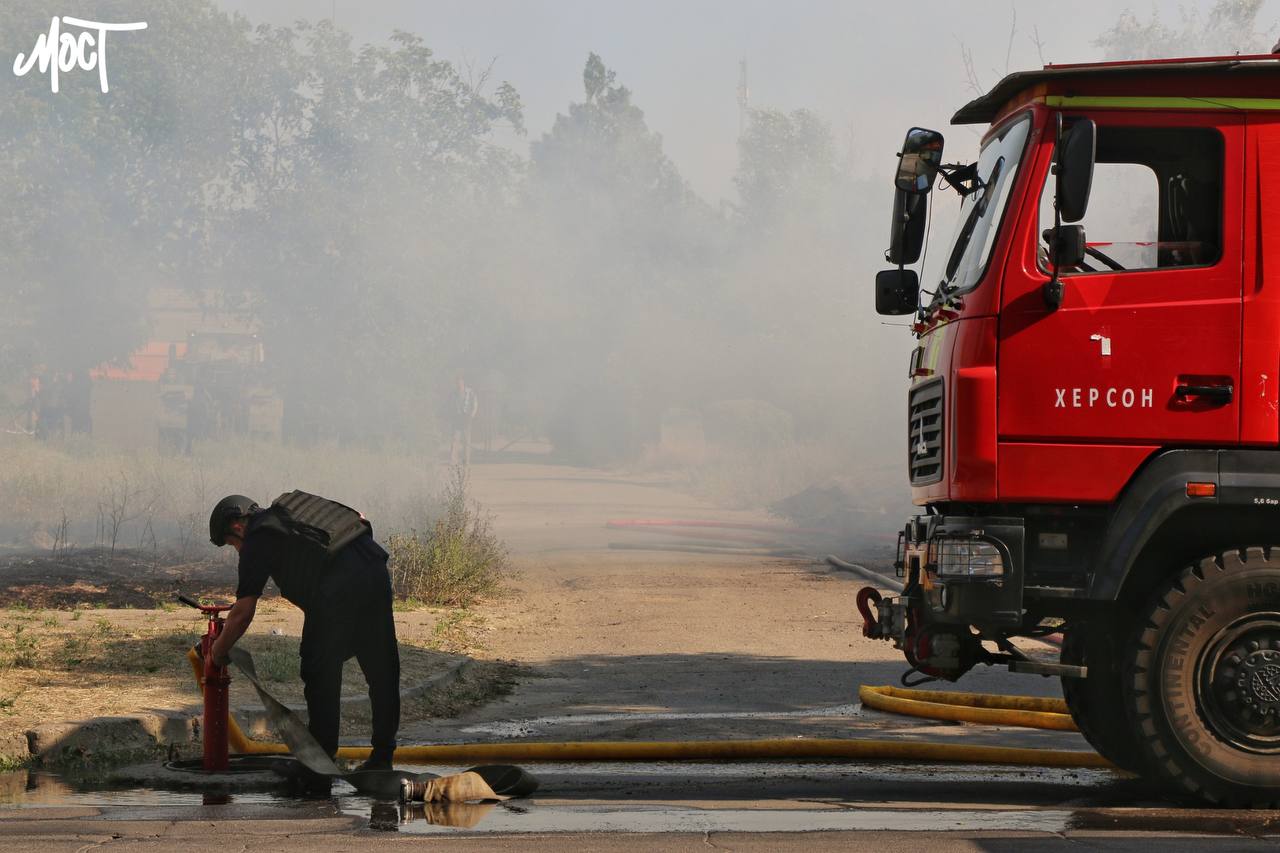
Kherson firefighters under shelling. Who holds the line of fire?
I chose this piece among others because it is about the heroism of living people in a living city.
The story honestly shows that the work of rescuers in Kherson is not “service by the book”, but a daily choice to stay under shelling and go where others run away. This is reality and that is why it resonates.
This piece also shows Kherson not only as a city under fire, but as a city that lives and holds on thanks to those who did not leave. Most rescuers are local. They save their own. And this gives each response special weight.

Alina Koskovetska – SMM specialist
Embroidered memory of the Kherson region: a displaced woman recreated a unique vyshyvanka
This story touched me because the vyshyvanka here is not just a pattern on cloth, but living memory. It is so important to preserve and nurture the heritage of each region, especially the wounded Kherson region.
I am also impressed by the human strength and ethics of the author: a displaced woman who, with her art, retells the pains and hopes of the land, does it not for profit, but out of respect and reverence. It is a simple but deep way to preserve and pass on the story of human lives in difficult times.
Natalia Maistrenko – journalist
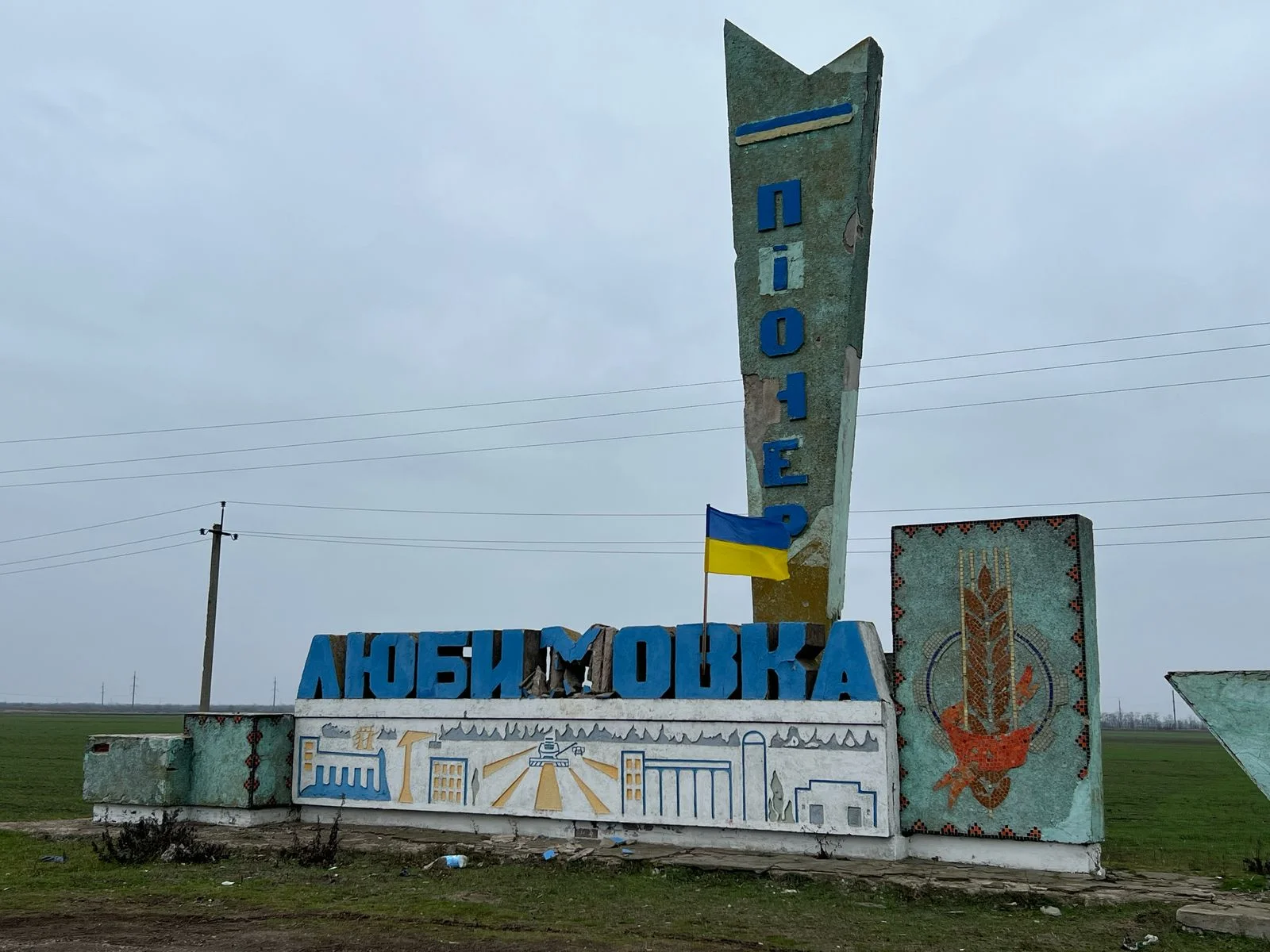
In the footsteps of Kolyhaiev: who took control of thousands of hectares of state land?
I really like the level of analysis and investigation in this material. It is truly strong work where you can see deep immersion in the topic and careful work with facts, not just a recording of events. For MOST this is an example of quality journalism that explains rather than only informs.
It is important that this is not a “hot” news item of one day. The story unfolds over time, has a backstory and consequences. In wartime such topics are easily lost — the flow of shellings, briefs and urgent news often washes away complex but fundamentally important processes. That is why such materials have special value.
This piece helps to keep a finger on the pulse of what is actually happening in the region: how control, influence and the rules of the game are changing in the Kherson region during the war. And this, in my opinion, is one of MOST’s strengths — the ability to stop, gather facts and show the reader a complete picture, even when there is chaos all around.
Karolina Kotliarenko – journalist
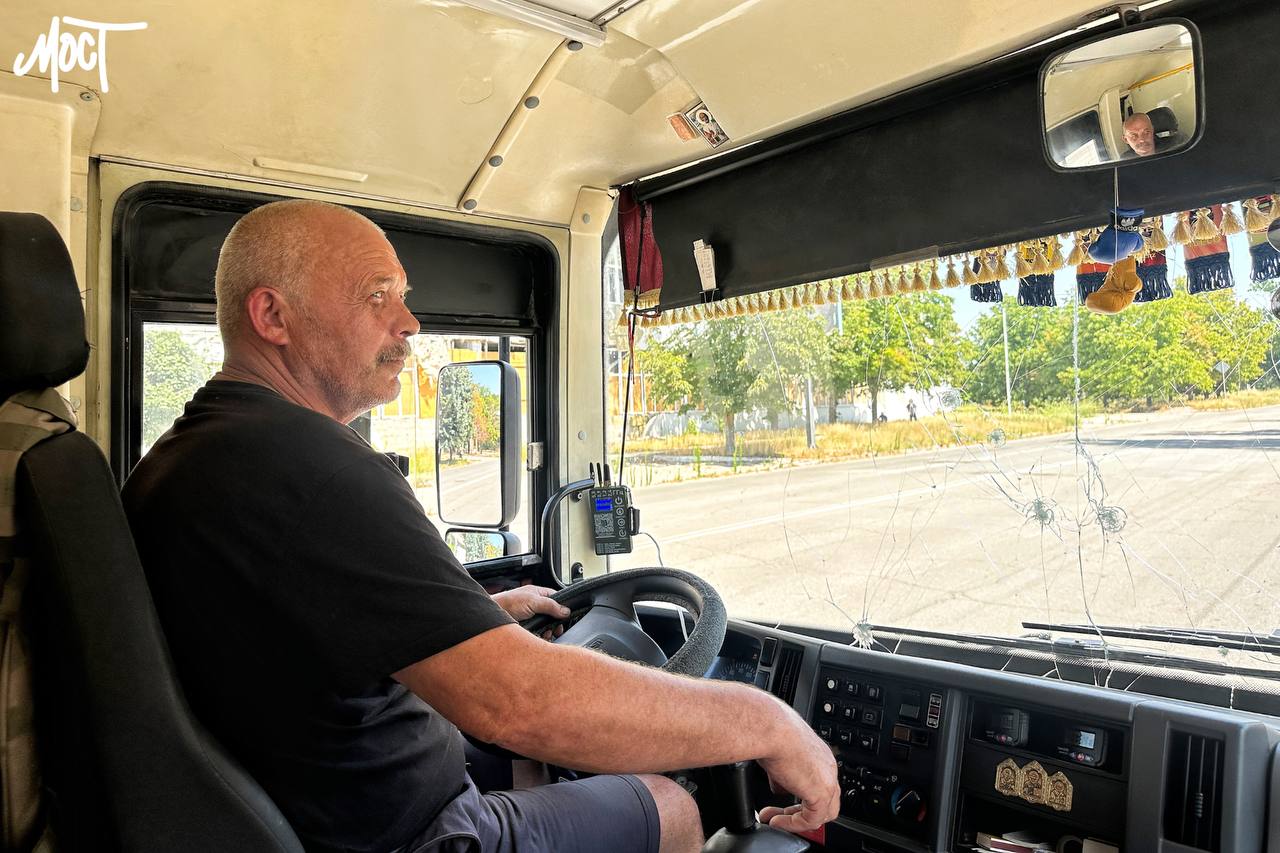
I chose this piece, because it very simply and accurately shows daily life in Kherson without generalizations and loud words. Through one minibus ride you can see what an ordinary day in the city looks like: empty stops, closed houses, the alarming signals of drone detectors and the constant presence of danger that has become the backdrop for everything.
This piece is important in that it focuses on people who continue to work in such conditions. The minibus driver is not a soldier, but his work is connected daily with a real risk to life. Public transport here is not just a service, but a way to keep the city alive and give people the ability to move and stay at home.
For the editorial team this piece is valuable because it records Kherson here and now. Not as an abstract frontline city, but as a space where people go to work, pay the fare, listen to “tsukorok” and get used to danger. It is these stories that show at what cost the everyday life of the city is kept going.
Serhii Nikitenko – editor-in-chief
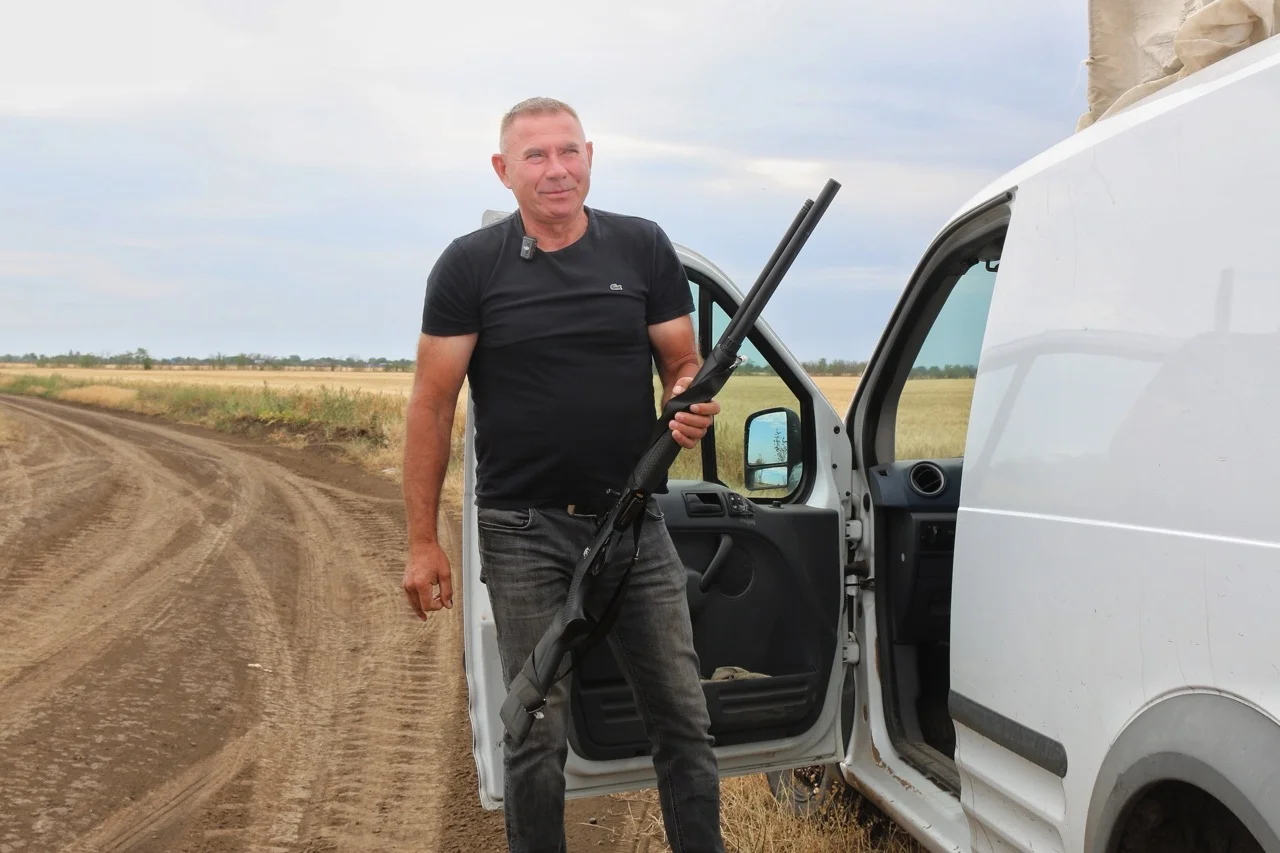
It seemed to me that Oleksandr Hordiienko was testing us “to see if we’d back down” when we asked to film a report at his place. Until June 2025 I hardly knew him. The phone number of the farmer who works not far from the front line was given by the OVA.
“Well, come to me,” – he replied to me somewhat dryly when I explained that I wanted to film.
We sped to Hordiienko’s farm along the broken Velyka Oleksandrivka – Beryslav road and at one point, when even the policeman at the checkpoint did not come out to look at us, I realized that the chances of not returning from this trip were quite high.
Hordiienko met us with a broad smile, although we certainly did not feel like laughing. We passed the test. And we filmed a story about a unique person.
I confess, this report is significant to me. And over the past six months since Oleksandr’s death, I have more than once recalled that test and him.