

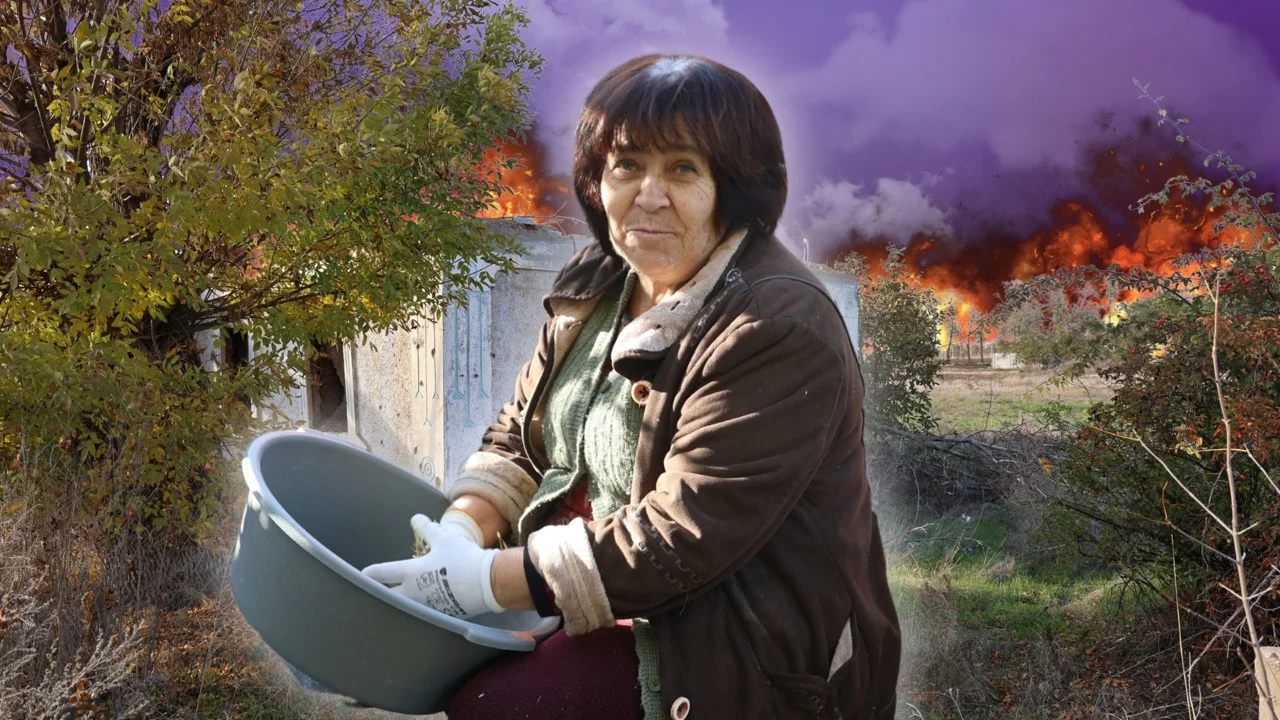
Only memories remain of the village council building, the club and the school in the village of Novovoznesenske. There is no figurative meaning in this sentence. Everything should be understood literally. The remains of public buildings, completely destroyed during the battles to liberate the village, long reminded the village residents of the horrors they had endured.
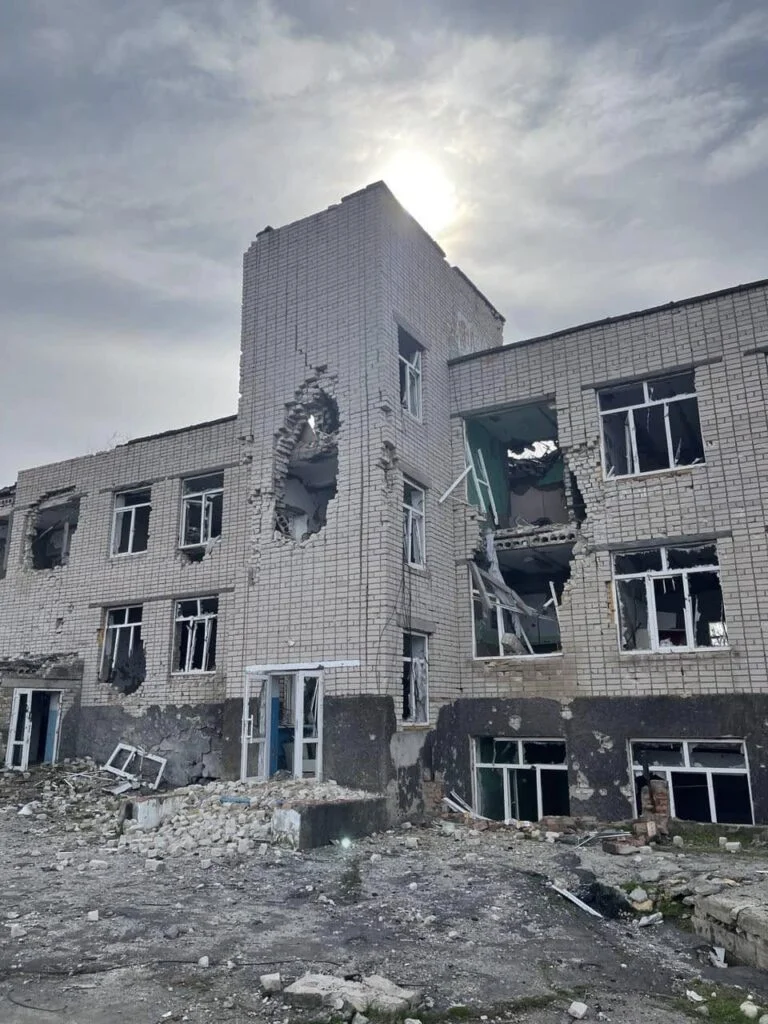
A photo of the local school, destroyed by tank shells during the Kherson counteroffensive, was published in 2024 by journalist Vadym Lubchak.
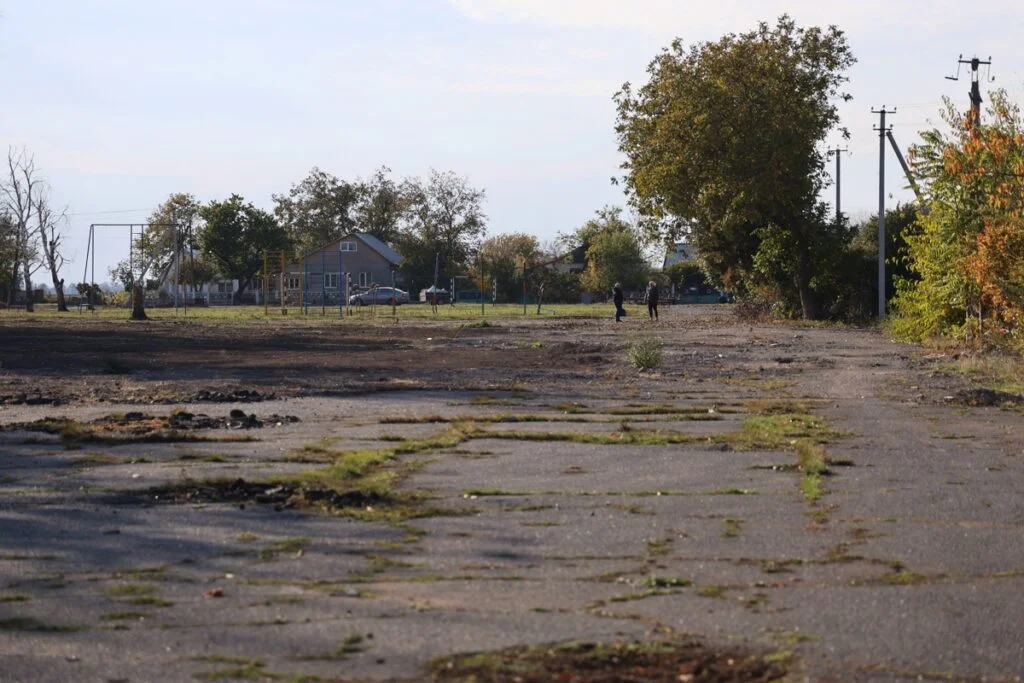
Now there is a perfectly level square on this spot, so at first it is hard to believe that a building stood here recently.
Nearby is a small trailer that serves as both a medical post and the elder’s office. Beside the trailer, skillfully sweeping with a broom, a woman is clearing the autumn fallen leaves. As it turns out – this is the elder of Novovoznesenske, Valentyna Chernenko. We had planned to go with her and finally film a report from the former Potomkyne, which has now become Nezlamne. These villages belong to the same eldership.
But we decide that we should tell MOST’s readers about this small village, which is located a bit farther from the road and not many people know about.
The elder says that the buildings were completely dismantled and their locations leveled.
“There used to be a two-story school on this site. It was very beautiful, very cozy. In fact, there was an educational complex here – the school and a kindergarten. There was a good playground in the yard. It is hard and painful to speak about it now,” – says the elder, when we arrive at the vacant lot where now, without explanation, one would not understand that the village’s future was once being formed here.
Valentyna Chernenko says that during the occupation the school was taken over by Russian soldiers and turned into their strong point: “There were snipers and drone operators on the roof. The latter, as I understand it, gave coordinates to the Grad crews for shelling. The occupiers lived in the building, and they turned the basement into a torture chamber. People living on the side where the school entrance is said that people with bags over their heads were brought there more than once. It was terrifying.”
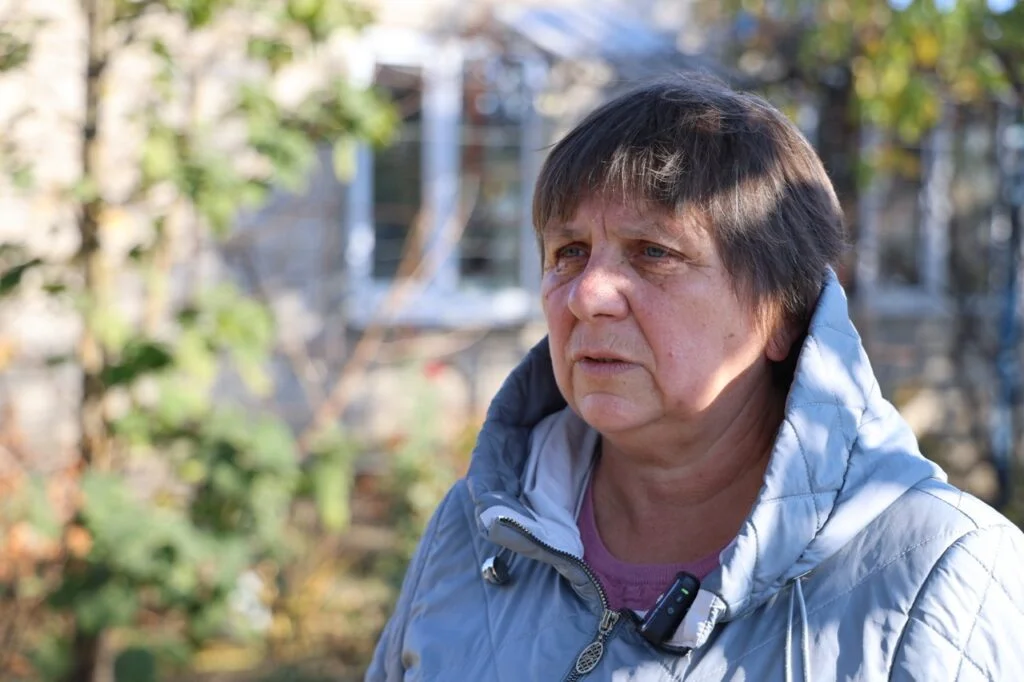
She herself lived nearby, but on the other side and did not see who and how the Russians brought people to the torture chamber.
As early as May 2022 foreign journalists wrote about the shooting of five Ukrainians in this school, but we have not been able to confirm this so far.
They do not plan to restore the school in Novovoznesenske. The areas where it stood will, the elder says, be arranged as a square and an Alley of Remembrance.
“Every house in the village was damaged”
The Novovoznesenske eldership consists of the villages: Novovoznesenske, Dobryanka, Veremiyivka, Kostyrka and Nezlamne (formerly Potomkyne).
“In Veremiyivka, – says Valentyna Chernenko, – for a long time now – since before 2022 – there have been no residents. The settlement exists purely formally.”
We talk in a room that now serves as the elder’s working office. Nearby is a couch with a stand for securing containers with infusion solutions for IV drips, other medical equipment, cabinets with medical supplies.
“Here, – says the elder, – our paramedic works and I work here. The room was equipped thanks to ‘Doctors Without Borders’.
The Russian occupation and the fighting had a very strong impact on Novovoznesenske. The village council and the school were destroyed beyond repair. In an irrecoverable condition are also 45 villagers’ houses, including Valentyna Chernenko’s house.
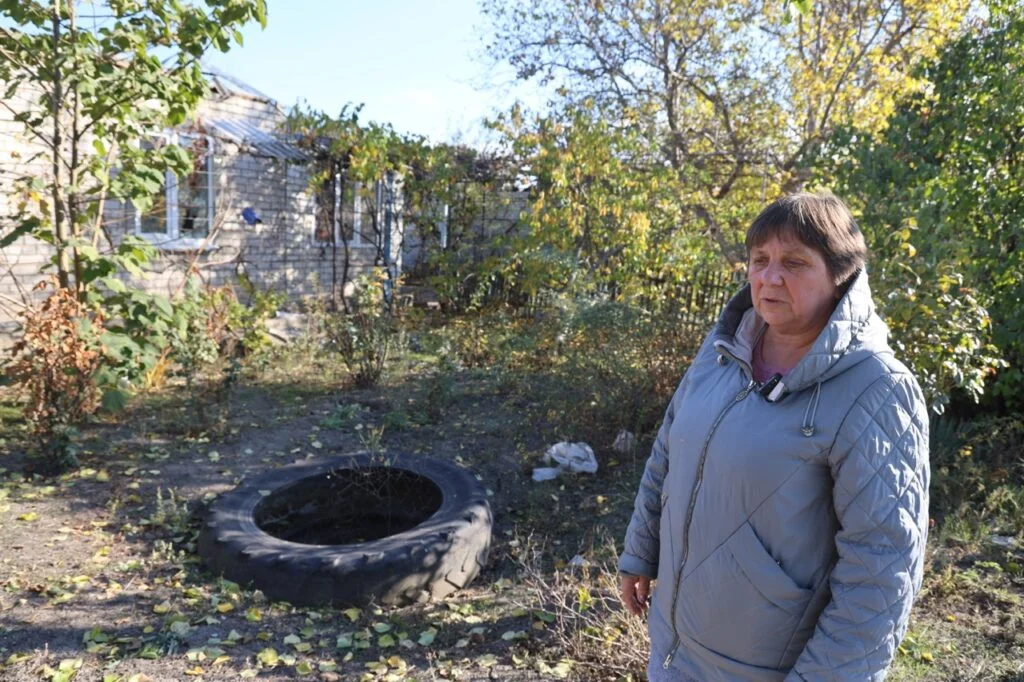
“This, – she says, – happened on 20 April 2022, when the village was occupied. That day I saw from the window that a vehicle of Russian soldiers had pulled up to the house. It stopped. I did not go out of the house. I thought: ‘Lord, what do you want from me?!’. After a while the vehicle left. I went to my son, who with his family lives on the neighboring street. I had just entered his house when my house was hit. I think the occupier in that vehicle was passing coordinates to someone.”
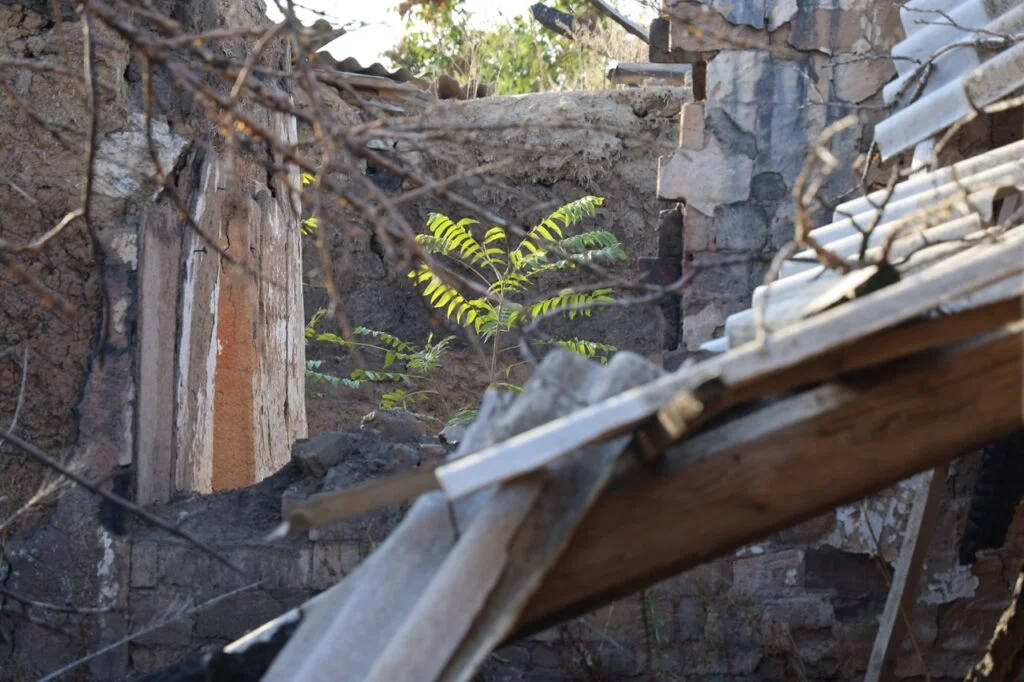
She shows her own house, which cannot be restored. She examines the holes in the ceiling and the broken windows. The grapevine, which for some reason no one harvests, weaves through the ruins. It seems to be “Lidiya”, which is usually harvested before the first frosts.
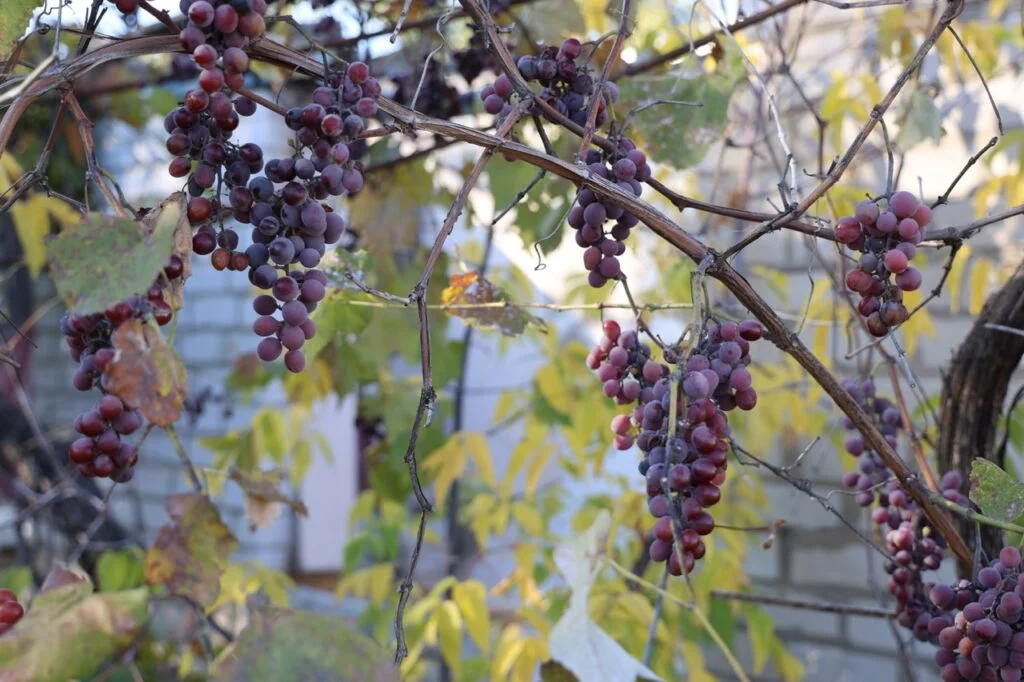
Valentyna Chernenko says that overall there were six impacts on her house during the occupation and fighting – shells, mines.
According to the elder, most of the villagers whose houses were completely destroyed received housing certificates and moved to other regions: “People bought housing in Kryvyi Rih, Zelenodolsk, in Ivano-Frankivsk and Ternopil regions, in other regions. These residents will not return. Although they miss the village. We communicate by phone, and often such conversations are through tears.”
However, some residents whose houses had to be rebuilt from scratch decided to stay in Novovoznesenske.
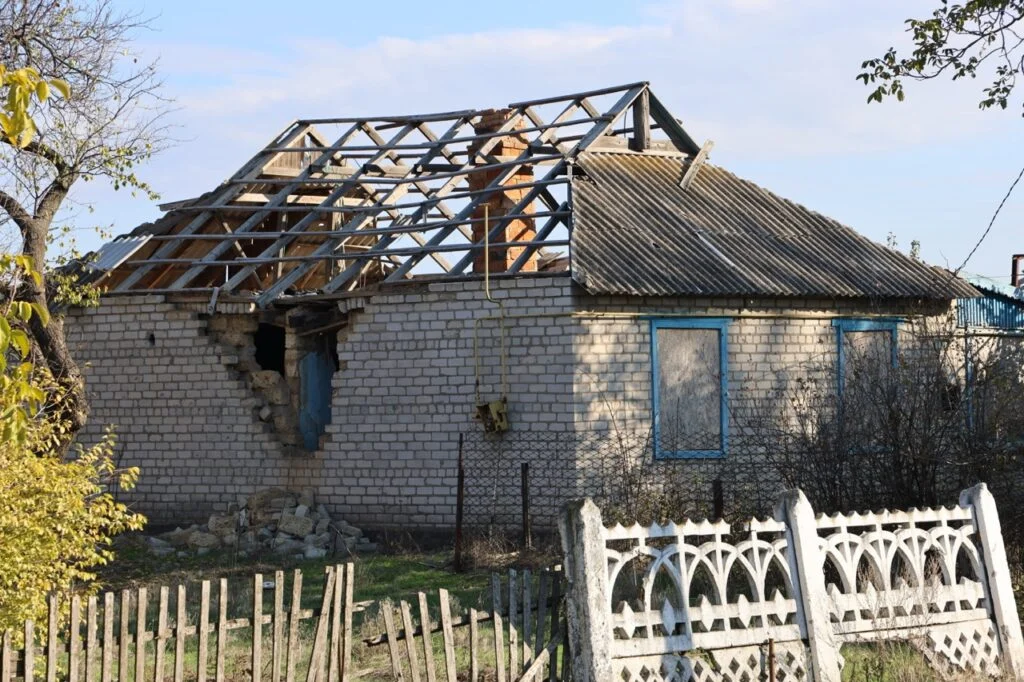
The elder says that the recovery process, which, by the way, continues to this day, is very difficult. It was especially hard soon after liberation: “The occupation lasted from March to September 2022. Every house in the village was damaged. People did not have the means to repair and restore housing on their own. We received the first aid in December 2022. The Red Cross provided 350 sheets of slate roofing. When they were distributed, people were in despair. Each damaged house needed, among other things, roof repairs. The slate was somehow distributed across the eldership, but it was not even a half-measure.”
More substantial assistance, as Valentyna Chernenko says, began to arrive in 2023: “Then the Office of the United Nations High Commissioner for Refugees allocated materials for roof repairs: slate, timber, nails and everything else that was necessary. Even then, the roof repair problem was not solved one hundred percent, but it was no longer as acute.”
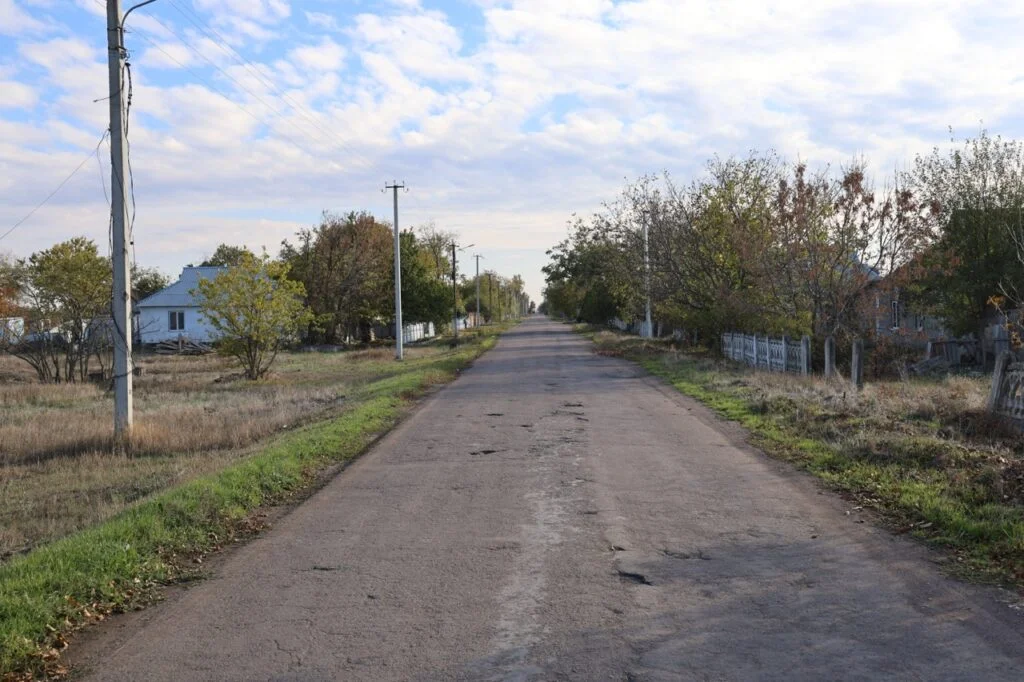
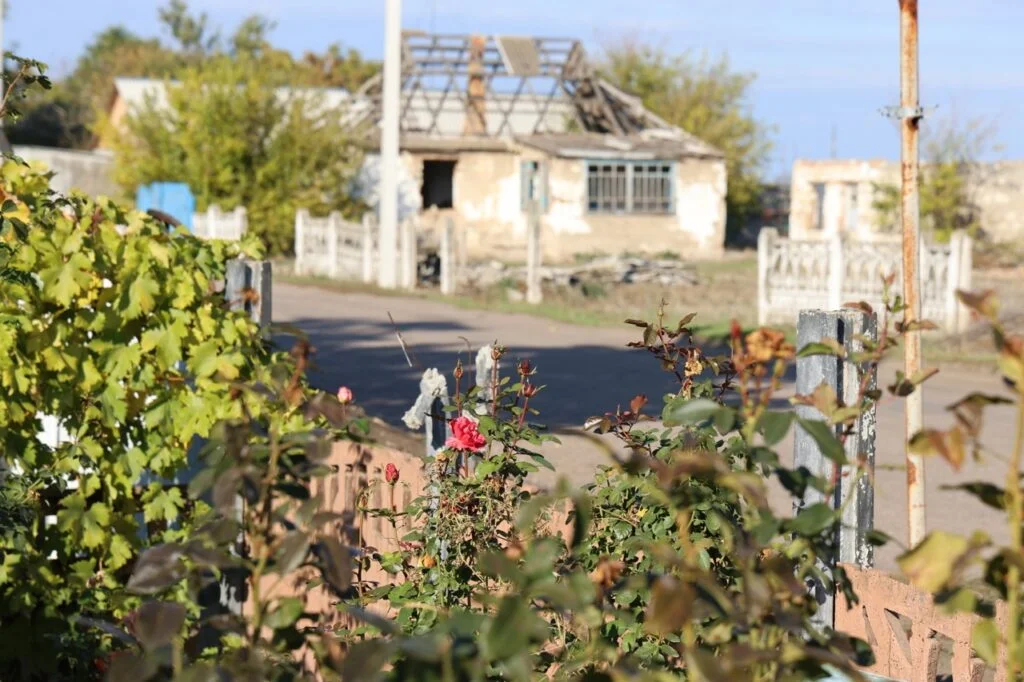
Now on every street of Novovoznesenske one can see many reminders of how difficult and tragic those six months of 2022 were for the village, during which the Russian occupation and the battles for liberation took place. Many destroyed houses have not yet been dismantled and many damaged ones are not being repaired. The owners of these houses most likely left in 2022 and have not returned since
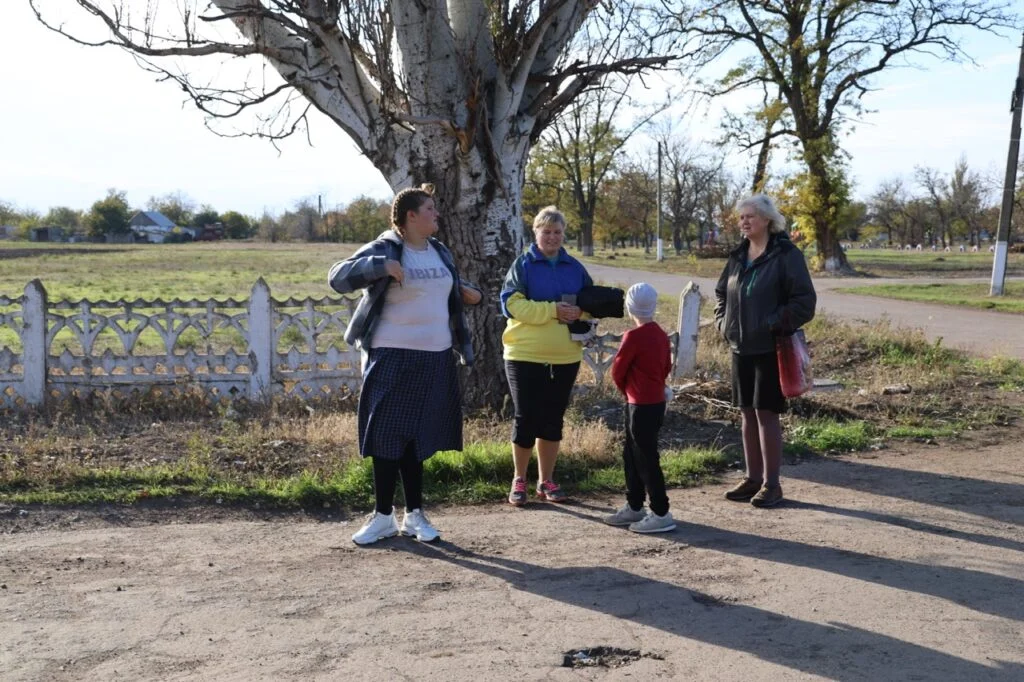
But one can also find renovated or seriously repaired houses. These are home to the 240 residents of the village (as of February 2022 there were about 400 residents) who remained in Novovoznesenske.
“I don’t even know, – says the village elder, – how people would have coped with restoring houses if it weren’t for the help of charities: the International Organization for Migration, Caritas, ‘Angels of Salvation’, ZOA in Ukraine, ACTED. It was they who provided materials to meet the urgent need – closing the thermal envelope of buildings: replacing windows, doors, repairing roofs. People also actively used the state eRecovery program, thanks to which many repair works have been done and are still being done.”
Charities also provided assistance in restoring means of production. But there are not so many jobs in the village.
“We have, – says Valentyna Chernenko, – people working in agriculture, mostly small private farmers. During the Russian occupation and the fighting a lot of agricultural machinery was stolen, destroyed and damaged. Storage facilities suffered heavily. Now people are restoring machinery and storage. Poland provides great help in this through the international Mercy Corps program. They help both in restoring agricultural machinery and in repairing warehouses, and in restoring other equipment depending on what activities a person is engaged in.”
“Some lost up to 30 kilos during the occupation”
The Russian occupation in Novovoznesenske lasted from 26 March to 2 September 2022.
“We, – says the elder, – learned that the Russians were already in all the settlements around us, but they had not entered the village. We even thought they wouldn’t enter, that it would pass. Unfortunately, it did not pass. During the occupation it was very hard and frightening.”
Valentyna Chernenko tells about her forced communication with the invaders, when a Russian officer came to her: “He asked: ‘Which authority do you serve?’. I answered: ‘Isn’t it obvious?’. He questioned me about empty houses to settle the occupiers. When he heard from me that all the houses were inhabited, he said: ‘I didn’t only talk to you’. I said to him: ‘You have already gone through our region, next is Dnipropetrovsk region. Who are you freeing us from?’ He said: ‘What’s there – small villages! All the trouble is in big cities!’. I asked: ‘And what’s in the cities?’. He: ‘Nazis’. I said: ‘Who do you mean by that? It was you who came to us with weapons, you shoot, kill, and our people defend our land. So you call them Nazis?’ And he said: ‘Let’s not do this, that’s politics.’”
During the occupation two residents of Novovoznesenske died and two went missing. The latter: a teacher from the local school and a resident of Kostyrka who had taken part in combat in Donbas.
“The teacher, – the elder recounts, – on March 28 went by bicycle to a neighboring village where his daughter and her family lived. He took them food. And he disappeared. He probably passed by Russians (their military equipment was in the woods), and something happened. People say that someone saw him in the Russians’ basement in Vysokopillia. They say his legs were shot. There is no other information. Also a resident of Kostyrka, an ATO participant, disappeared. He was kidnapped twice. After the first kidnapping he was released. And then… Now nothing is known about the fate of these two residents. We hope they are alive, being held captive and will return.”
During the occupation the residents of Novovoznesenske suffered greatly from a lack of food.
“The shop that used to operate here, – the elder says, – closed. People’s supplies are not endless. The most common was buckwheat. Those who survived the entire occupation say they ate so much buckwheat that they probably will not eat it for the rest of their lives.”
One villager was helped with food by relatives living in neighboring Myrolyubivka. The woman shared that aid with other residents. Once, when she decided to deliver products to elderly people, a shell hit her house. She survived by a miracle. Valentyna Chernenko supposes that the Russian military saw that many villagers came to the woman for food and expected that a strike would happen at the time of distribution when many people were in the house. After that the woman had to ask her relatives not to bring anything more.
The opportunity to leave the village, the elder says, appeared in the 20s of April 2022, when the occupiers began to let cars leave Novovoznesenske in the directions of Novovorontsovka or Kostyrka.
Valentyna also had to leave. She says that after returning she saw a dreadful picture: “On the day of de-occupation there were 59 people living in the village. During the occupation some of them lost up to 30 kilos of weight. What they went through badly affected both people’s psychological state and their physical health. I remember a young man had a heart attack, his condition was very serious, and we were afraid that the ambulance would not make it to the hospital in time. Fortunately, the person was saved.”
Liliya Ivanivna and the chrysanthemums
Walking through the village with Valentyna Chernenko, we approach one of the renovated houses. The house shows signs of fresh repairs. A woman is tending to the household in the yard. The garden plot is planted with flowers.
Liliya Ivanivna – a resident of this house – does not want to talk about the recent hard times. She only says she does not want to aggravate the emotional wounds that have begun to slowly heal.
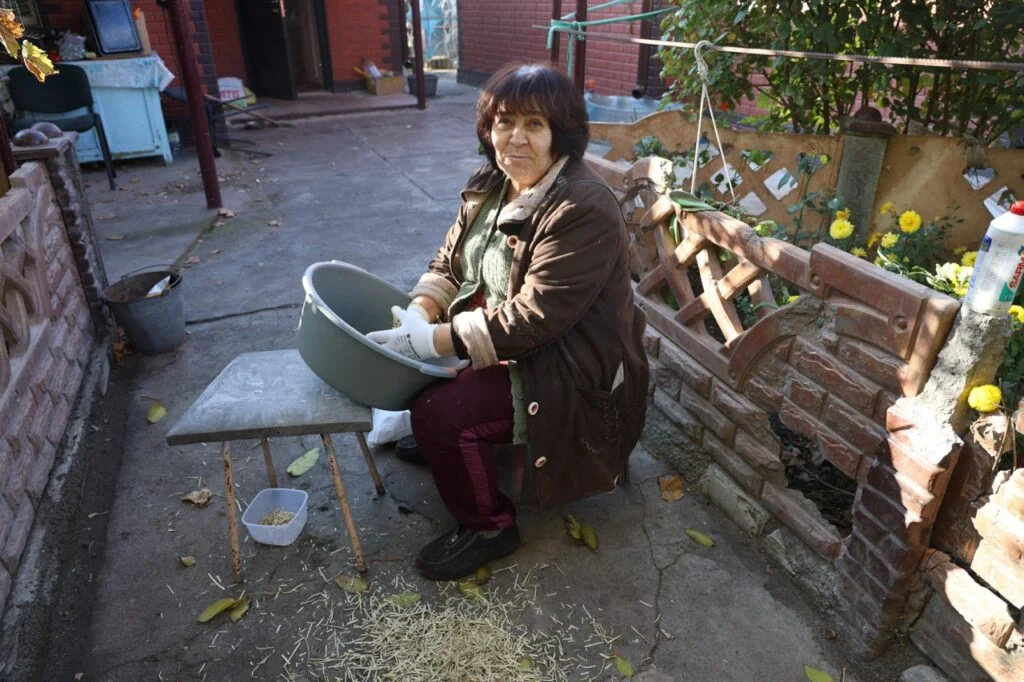
She sits on a stool and is threshing some seeds from unusual ears. She says these are flower seeds that she will sow in the flower bed in spring.
The autumn flower bed looks impressive. Especially against the background of the ruins of neighboring houses.
“I, – the woman says, – am already retired, so I spend most of my time at home. And flowers improve the mood, which is not very good because of what is happening now. You go out in the morning, admire the flowers, and your soul feels lighter. The mood improves. At least for a while you forget what is happening.”
Liliya Ivanivna says she buys flowers at the market in Vysokopillia: “Recently planting flowers have appeared for sale there. I go there every Wednesday, and each time I buy some flower. In spring there were petunias, daisies, other seasonal flowers. Now mostly chrysanthemums. I try to have multicolored flowers so it looks beautiful.”
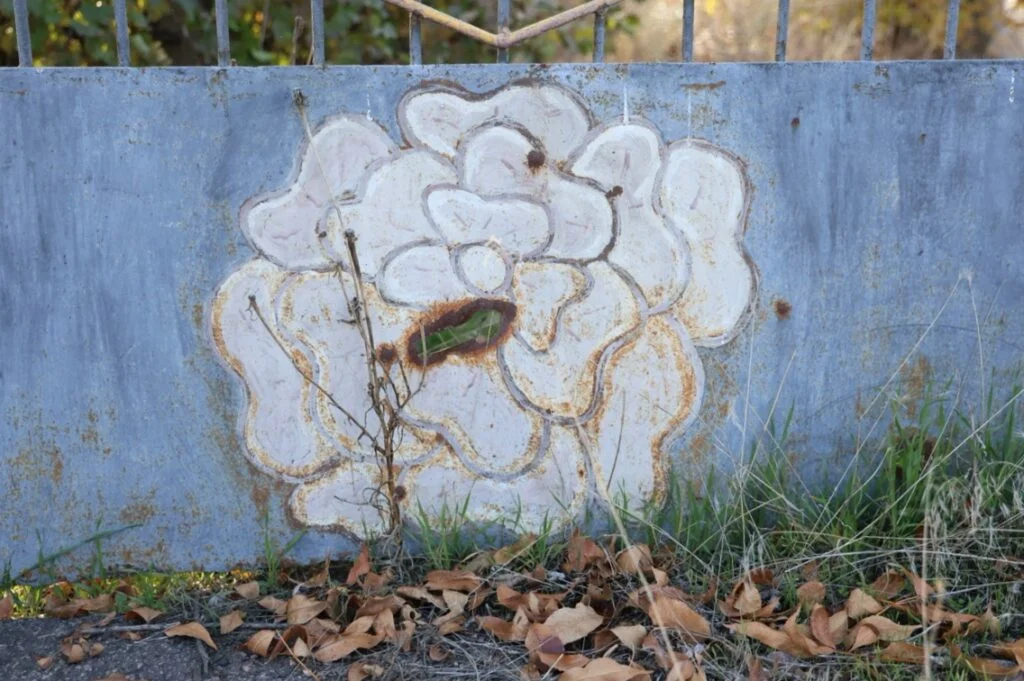
The village lacks beauty. At the exit from the village someone’s gate, decorated with a metal flower, is pierced by a fragment. The house behind the fence is broken and burned; they clearly will not restore it, nor will they repair the metal flower.