

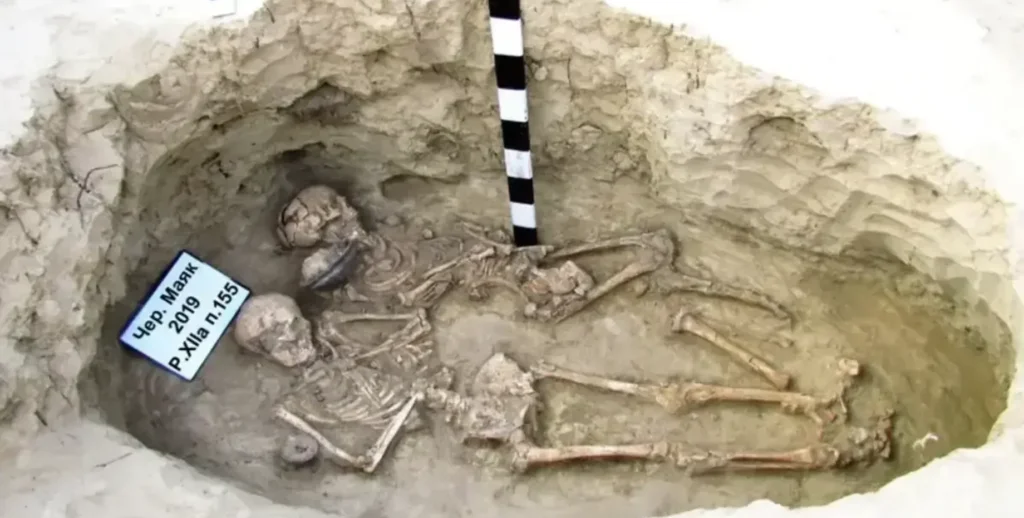
Archaeologists discovered in a Late Scythian burial ground near Chervonyi Mayak in the Kherson region a unique double burial about 1,900 years old that contained lumps of the toxic red mineral — cinnabar.
The scientific publication Live Science published the research results, citing a paper in the journal Antiquity.
The study confirmed that this is the first case of scientific identification of mercury compounds in the burial rituals of this culture in southern Ukraine.
In the vault on the banks of the Dnipro, remains of two women were found: one died at the age of 35–45, and the other, considerably younger, was interred with her later. Alongside them, traditional grave goods were discovered, including a necklace and pottery.
Researchers suggest that the use of the bright red pigment had not only ritual but also practical significance. On one hand, cinnabar could have symbolized blood and given the deceased a lifelike appearance.
On the other hand, because Scythian vaults were used for up to 50 years and were regularly reopened for new burials, the toxic properties of the mercury mineral could have been used to slow the decomposition of bodies.
Although the burial ground itself has been known to researchers since the 1970s, confirming the use of this particular rare mineral has only been possible now.