

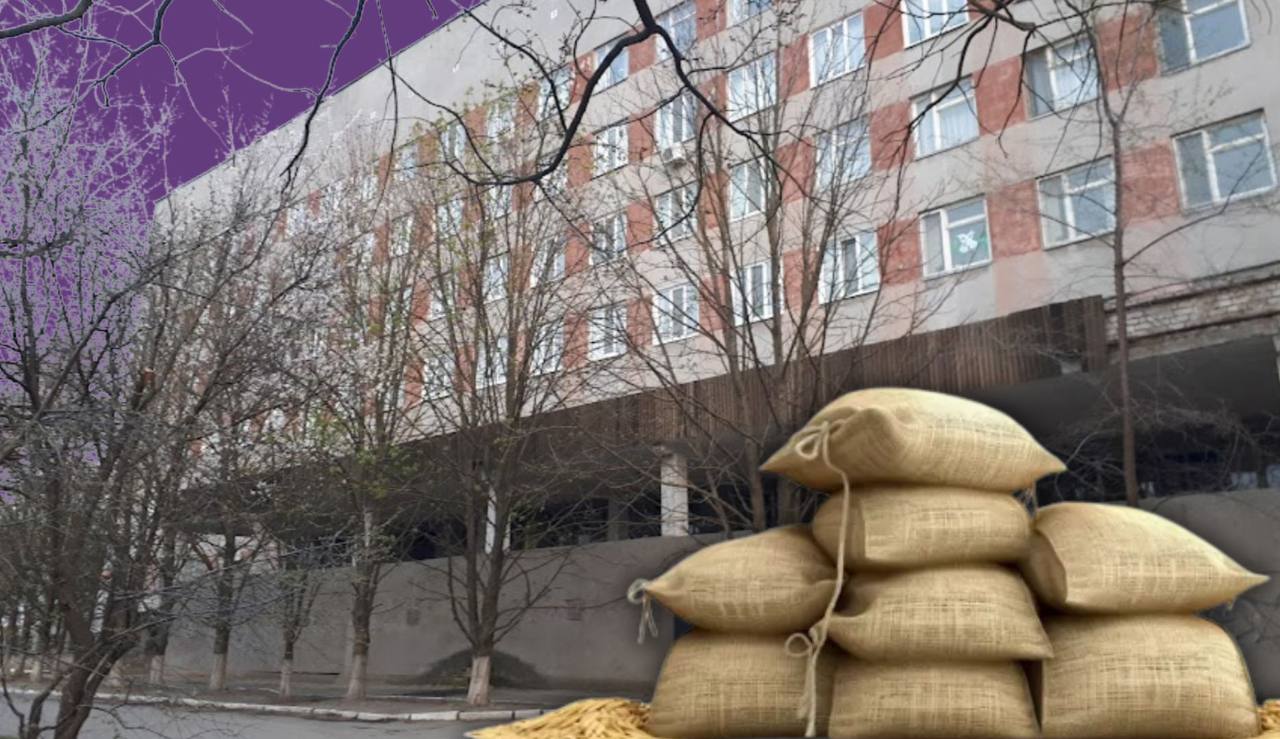
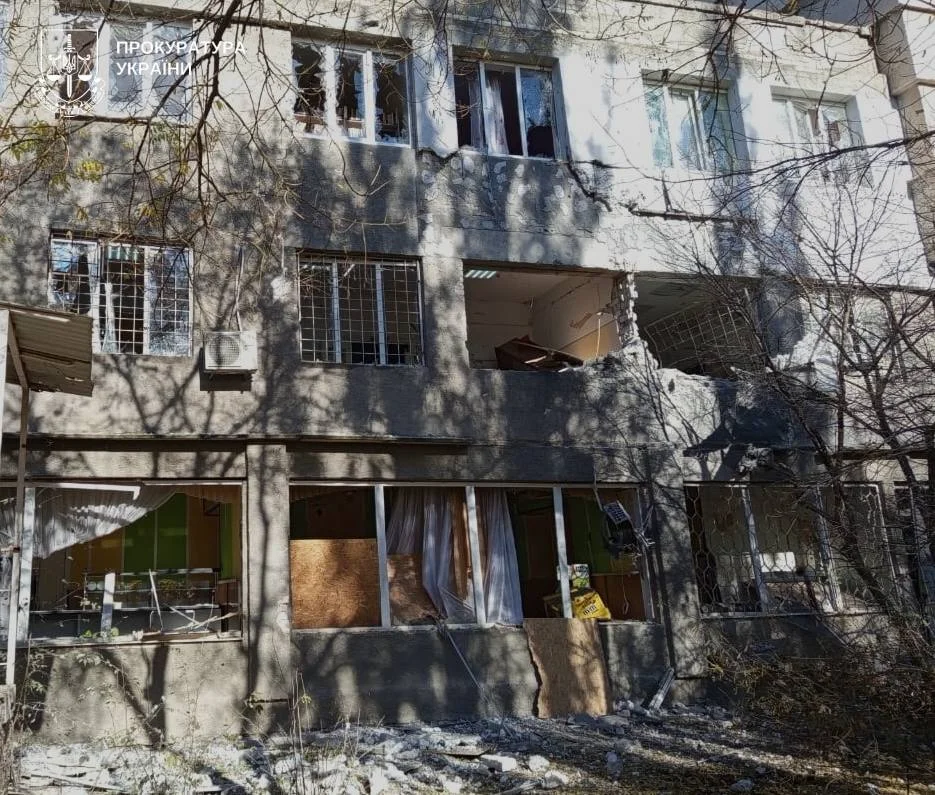
A few weeks ago, Russians shelled the building of the regional children’s hospital in the Dnipro district of Kherson. Children were in the hospital at the time of the attack. Despite all the safety measures taken by the medical staff, casualties could not be avoided: one of the doctors was left in serious condition, two others were in moderate condition. Young patients also suffered injuries of varying degrees.
Constant shelling, difficulties getting to and from de-occupied communities, the outflow of specialists, the need for regular repairs of medical facilities — these are only some of the problems the healthcare system, in particular pediatric medicine, faces today.
“Children living in Kherson and the de-occupied communities are the responsibility of pediatric doctors. We continue to work, taking into account all the challenges that confront us today. Sandbags, gabions… Children who are receiving inpatient care are brought down to the shelter at night. It’s difficult, but all the doctors are on site, everyone is working,” — says the director of the Kherson Regional Children’s Hospital, Inna Kholodniak.
The children’s hospital has been shelled repeatedly, however, according to Kholodniak, the facility is a priority for regional and national authorities in dealing with the consequences of Russian attacks.
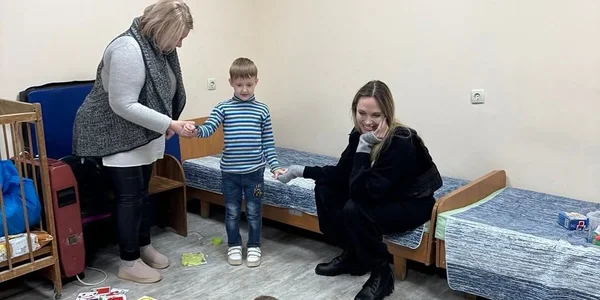
“Immediately everyone gets involved in the work — the military administration and the relevant department. Representatives of HOKARS and energy specialists always come to us as a priority. As a result of the last shelling, the ultrasound machine we used to examine children with heart conditions was irreparably damaged. And the Ministry of Health immediately responded to address this issue”, – says Inna Kholodniak.
It is somewhat more difficult for private clinics in this regard. According to the head of the private clinic “Taurt”, Oleksii Herman, the facility deals with all the consequences of the “impacts” on its own.
“Our clinic in Kherson is currently subsidized. We allocate funds there every month, and month by month this becomes increasingly difficult. On February 20 there was an ‘impact’ on the neighboring building — we were left without a single intact window. We repaired everything at our own expense. I admit: when I arrived on the morning of February 21 and saw the scale of the destruction, the thought of closing crossed my mind. Windows and glass structures were blown out, debris everywhere. It seemed pointless to repair it. We are not provided with assistance — we even have to buy and install sheets of plywood ourselves. We are supposedly a private facility, so we have to deal with the consequences ourselves. But then people came — our employees — with brooms, bags, they started cleaning up the glass and debris themselves. We closed off, with our own efforts, the floors that it now makes no sense to repair. And, of course, when you look at this, you realize that you cannot abandon either the medical staff or the patients”, – he said.
According to Oleksii, the facility also faces high costs for utilities, refueling the generator, paying salaries, and purchasing medicines and consumable materials.
“Refueling the generator for one working day costs 8,000 hryvnias. For approximately half the month we operate on the generator. Expensive utilities, repairs after shelling, and salaries are added. Part of the medications for primary care is provided by the state, including vaccines. From time to time we receive assistance from international funds — consumables, some medicines. But we provide for ourselves 99% of the time”, – adds Herman.
During the last three “impacts”, when business premises were damaged, they cooperated with neighboring businesses and jointly paid for repairs — hiring private contractors. Once it cost 30,000 hryvnias, the second time — 70,000. But this is still cheaper than refueling the generator every day.
Oleksii Herman emphasizes: it is difficult for private medicine to operate in a frontline city, and today it is more of a volunteer activity.
The issue of personnel is also acute. A Kherson resident, Natalia, who is raising a two-year-old child, says that it can be difficult to find the right doctor in the city.
“I was looking for an ENT for my child. And we were lucky — we found a very good, professional doctor. In the summer we went to her for a consultation, and already in the autumn she resigned and left. This is just one example. Of course, the security situation in the city is gradually deteriorating. And this does not motivate young progressive specialists to go and work in Kherson. In various ‘mom’ groups you can often see people looking for this or that doctor. It is also important to understand that in Kherson it is difficult to organize work and communication between medical institutions and patients. It would be much more convenient if they had social media pages or websites where you could see which specialists remain and when they are seeing patients”, she says.
The personnel shortage is also confirmed by Oleksii Herman. According to him, medical workers leave primarily because of the security situation. At the same time, pediatricians and narrow-profile specialists who can perform ultrasound diagnostics, X-rays, CT scans, etc., still work at “Taurt”.
According to Inna Kholodniak, the regional children’s hospital addresses the shortage of narrow-profile specialists by cooperating with other institutions or doctors.
“If we need a consultation from a narrow-profile specialist, for example a pediatric gastroenterologist, we contact our colleague who previously worked at the hospital but temporarily suspended employment. In her free time she consults our children and helps them, and we follow her recommendations. If it concerns children with severe mine-explosion injuries who require prosthetics, after stabilizing their condition we send them to ‘Okhmatdyt’. For the number of children currently living in the de-occupied part of the Kherson region — which is about 12,000 children — we manage to resolve these issues more or less painlessly”, – she notes.
According to Kholodniak, there is another problem — the difficulty of patients getting to appointments due to the lack of public transport: “For this we operate mobile teams. From the first days of de-occupation we go to settlements in the Kherson region, to hubs operating in various communities, as a group of specialists to conduct examinations”.