

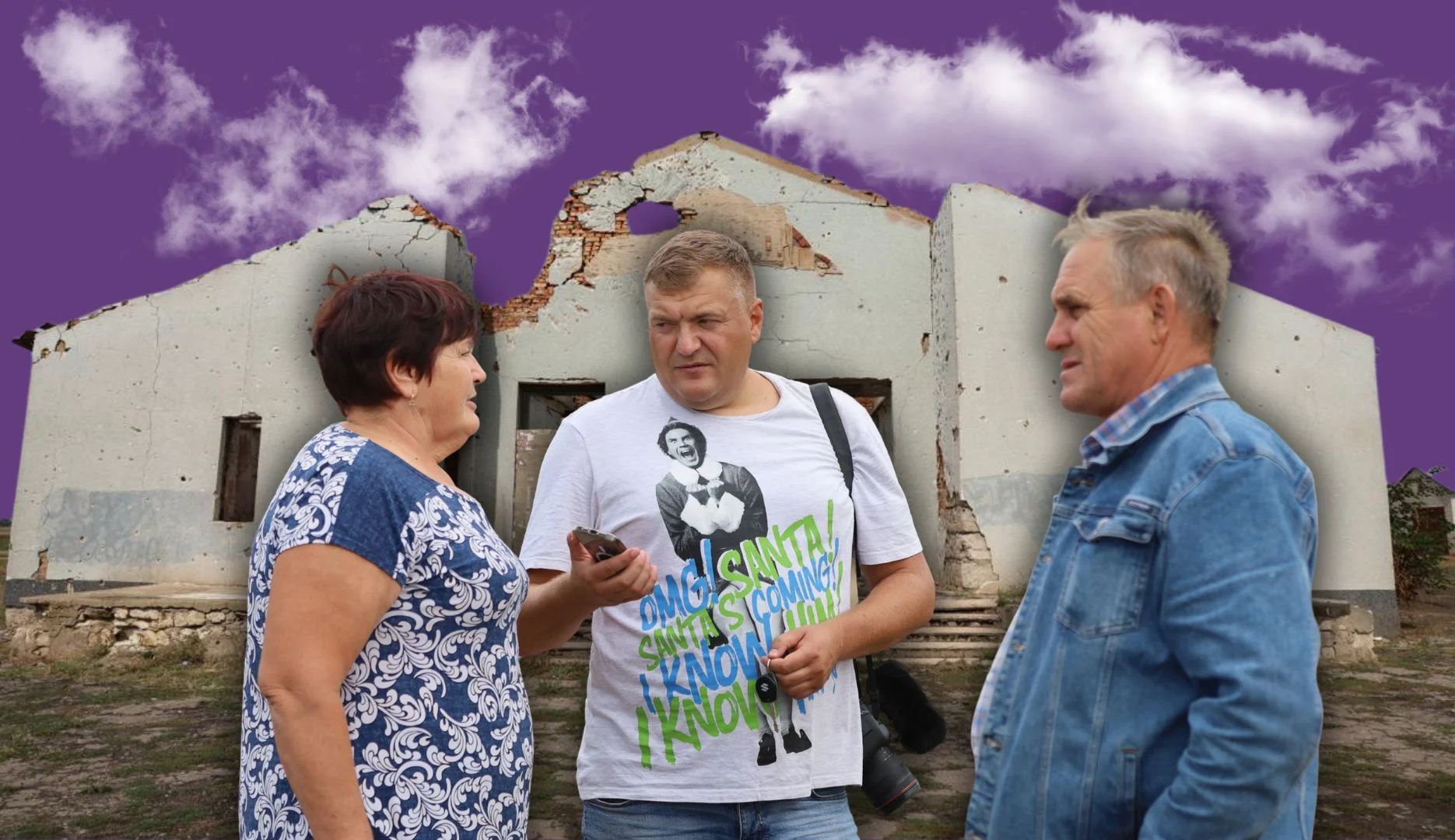
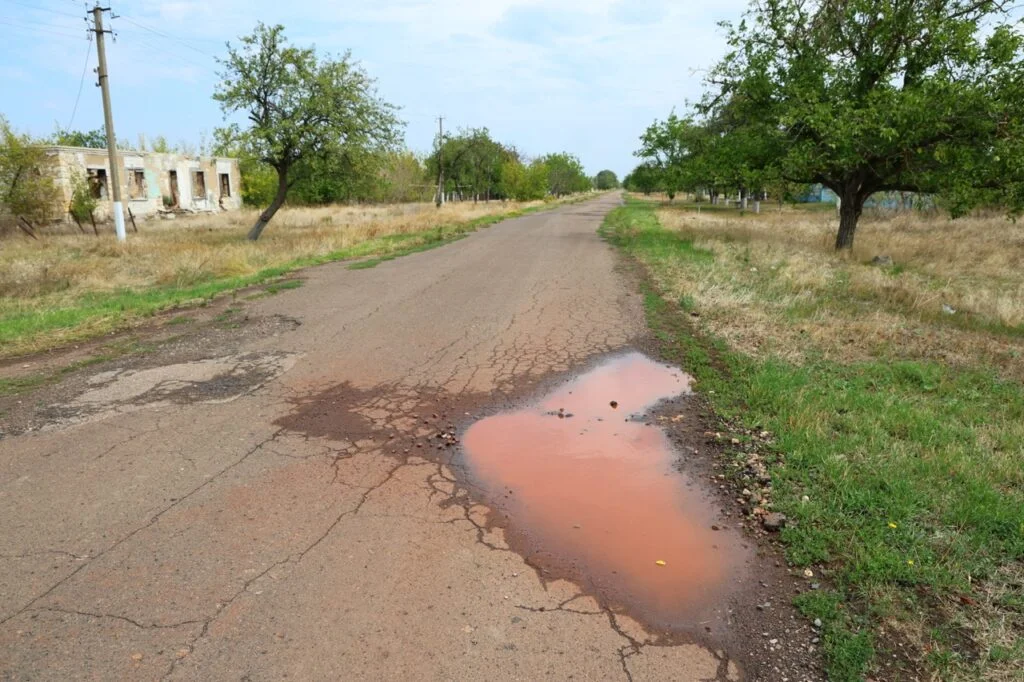
The village of Knyazivka, the former German colony Фюрстенфельд (Fürstenfeld), is located in the steppe, just beyond Vysokopillia. The road to it is so broken that our car bounces and the driver swears loudly. The fate of the village is both tragic and heroic.
Knyazivka and neighboring Topolyne became the epicenter of fighting in spring–autumn 2022. The village was not occupied for long – on March 10 the Russians entered here, and on March 31 the Ukrainian Armed Forces drove them out and liberated Knyazivka.
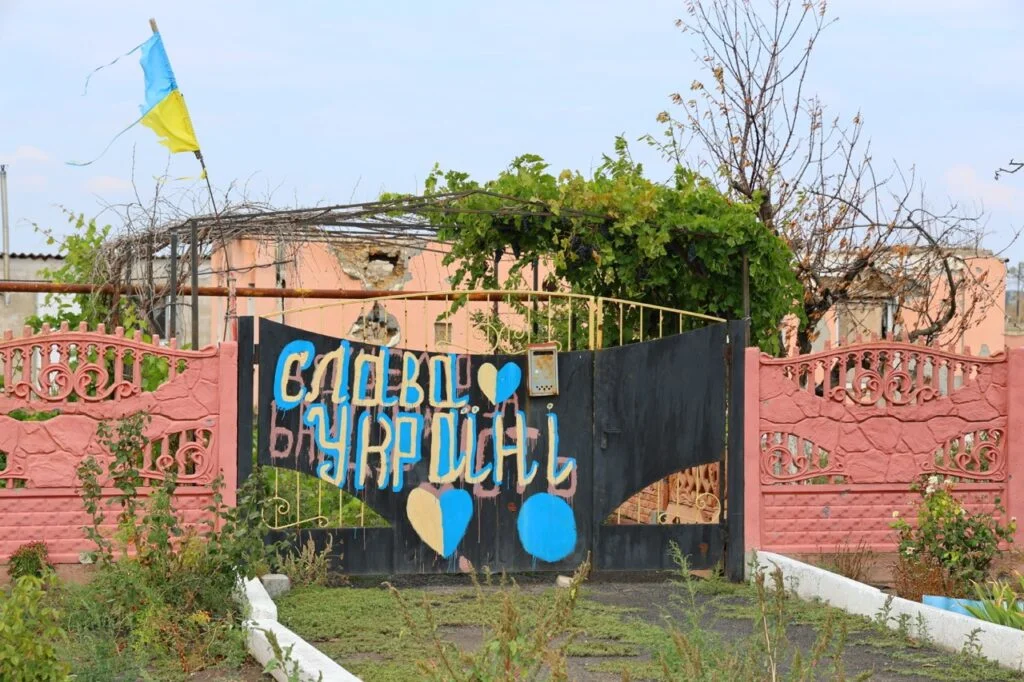
From that moment, locals say, and until the beginning of September the village was on the frontline. Visually it is within arm’s reach of neighboring Vysokopillia. Measuring on the map – exactly 1 kilometer. That is, a 15-minute walk from the village to the town.
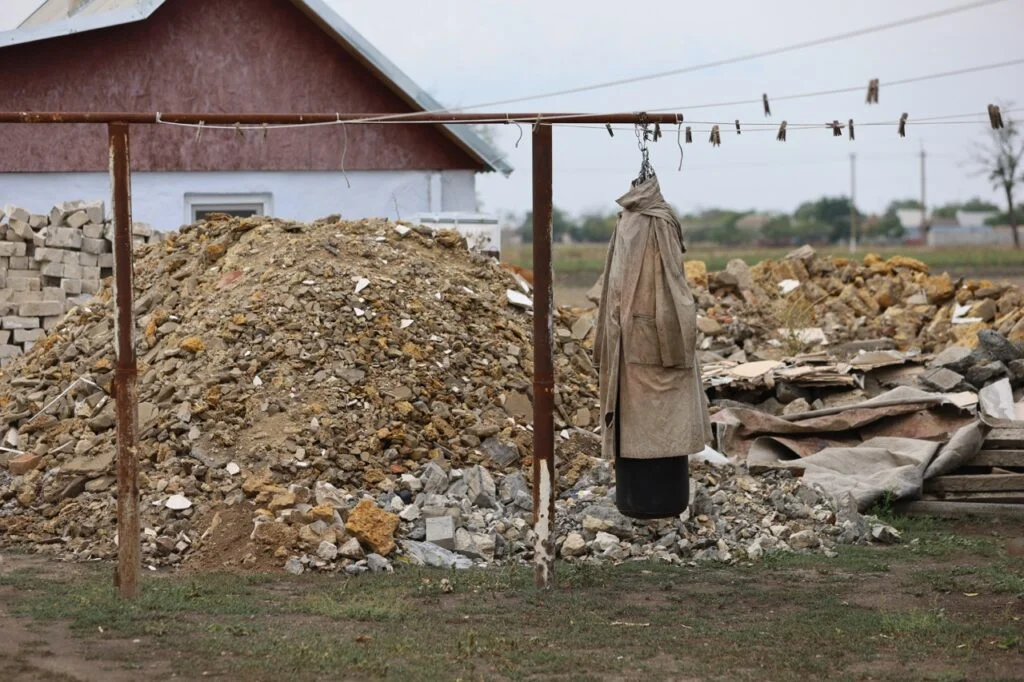
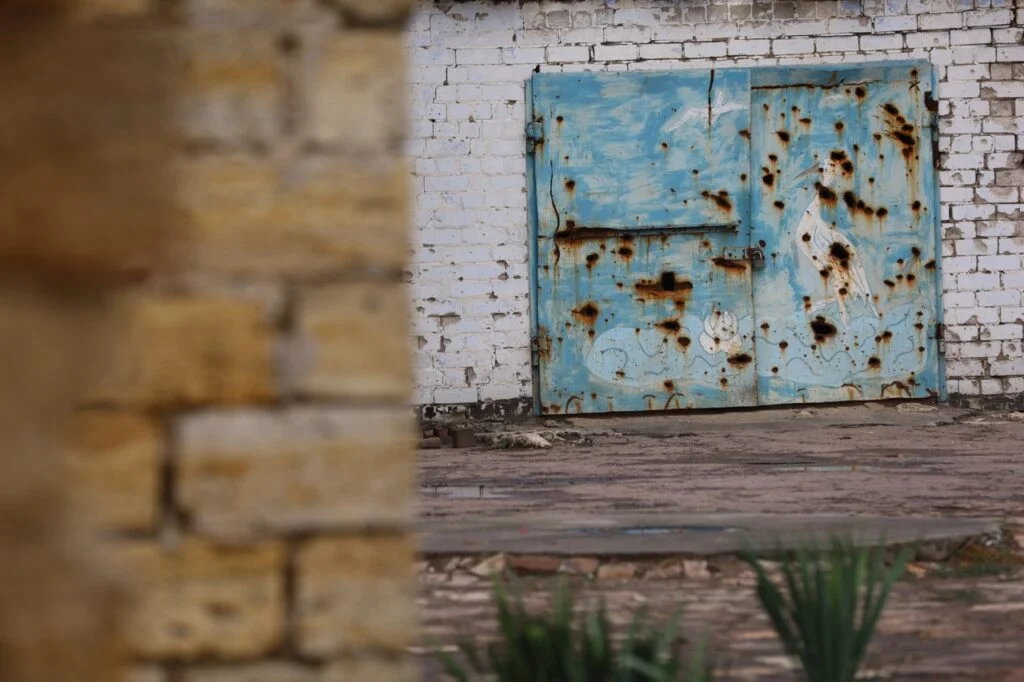
Such proximity and intensity of fire led to the village being almost completely destroyed.
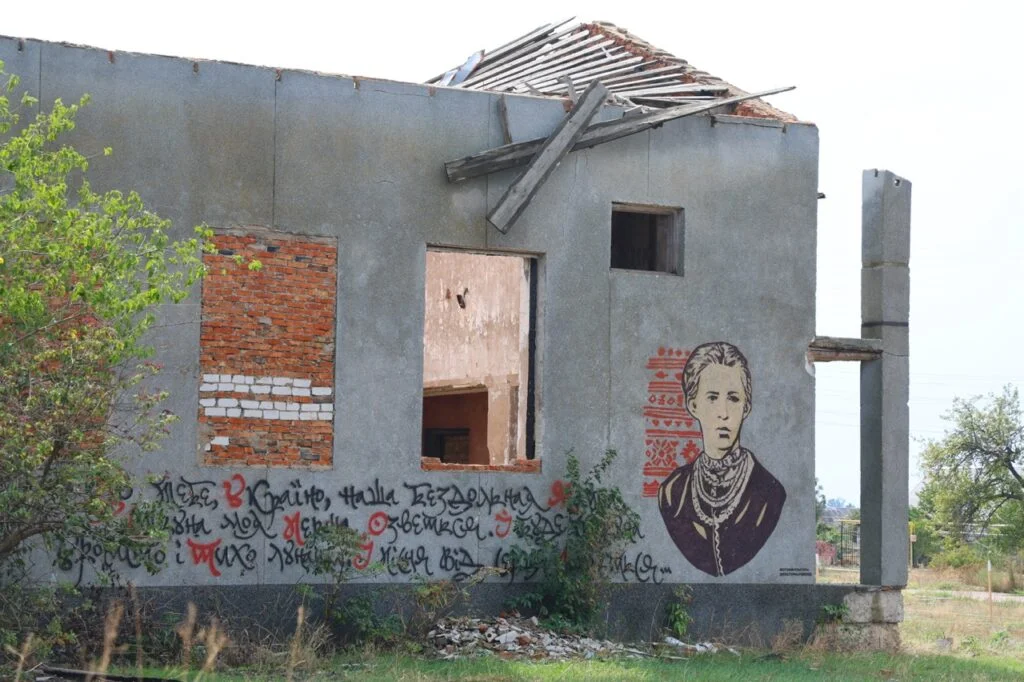
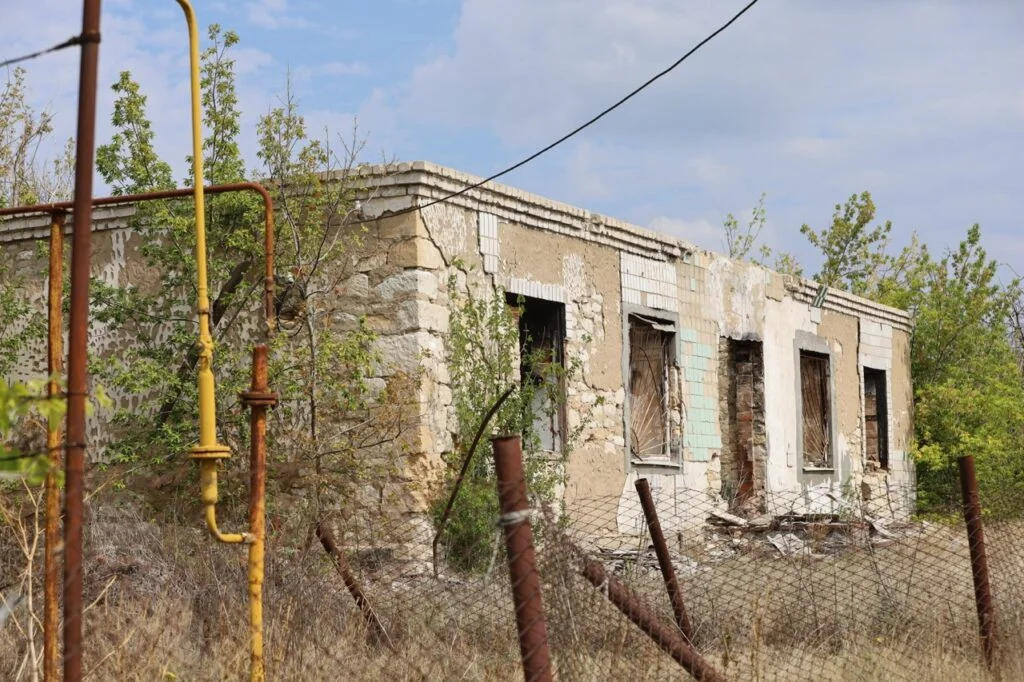
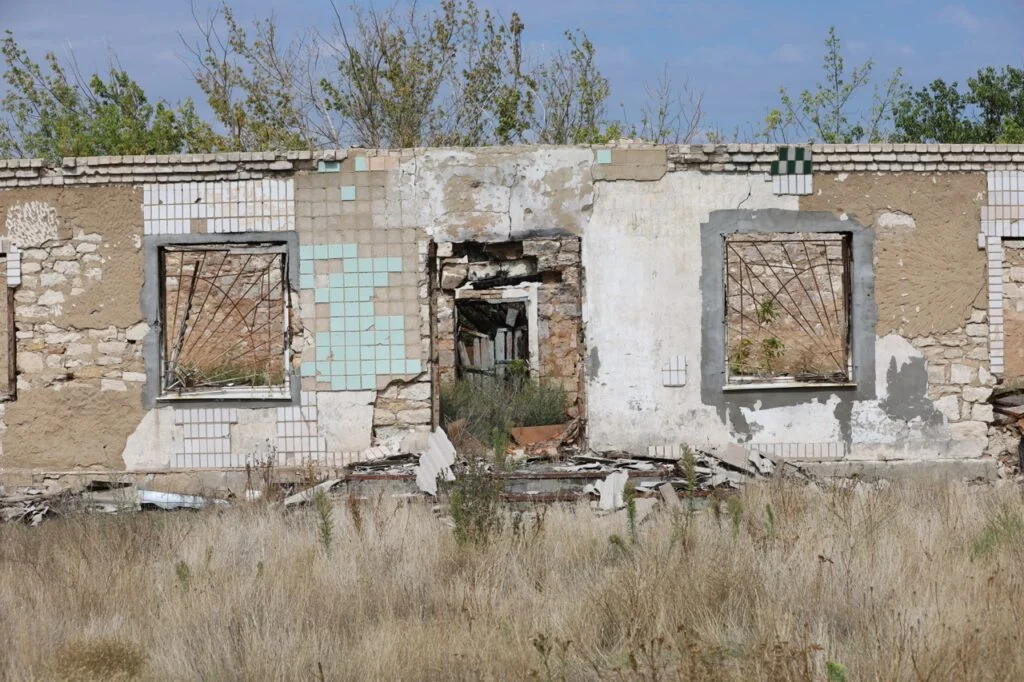
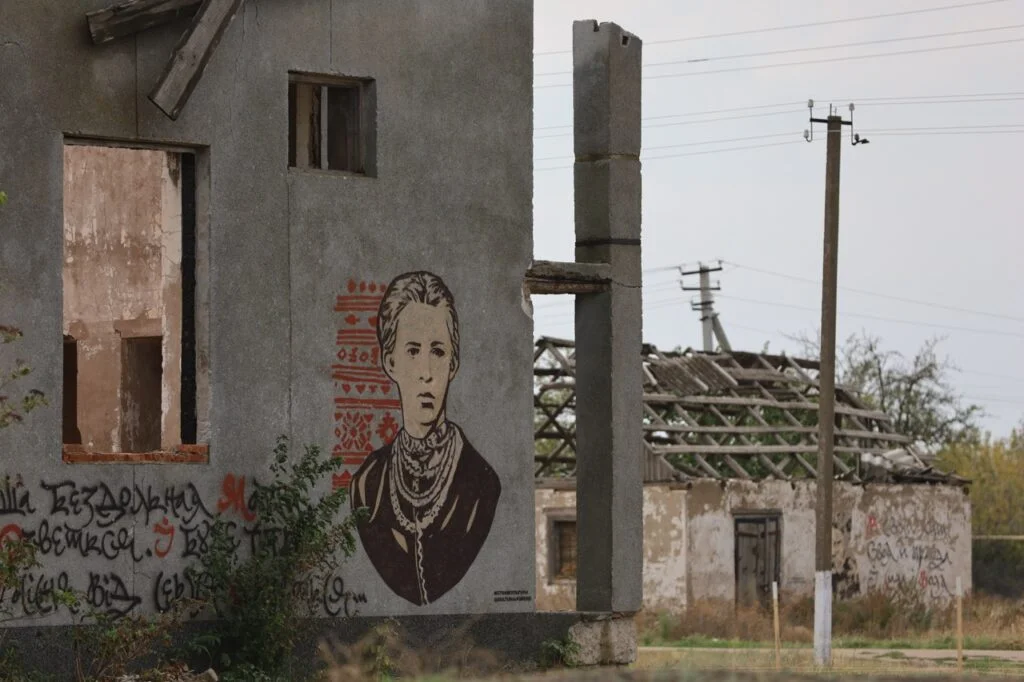
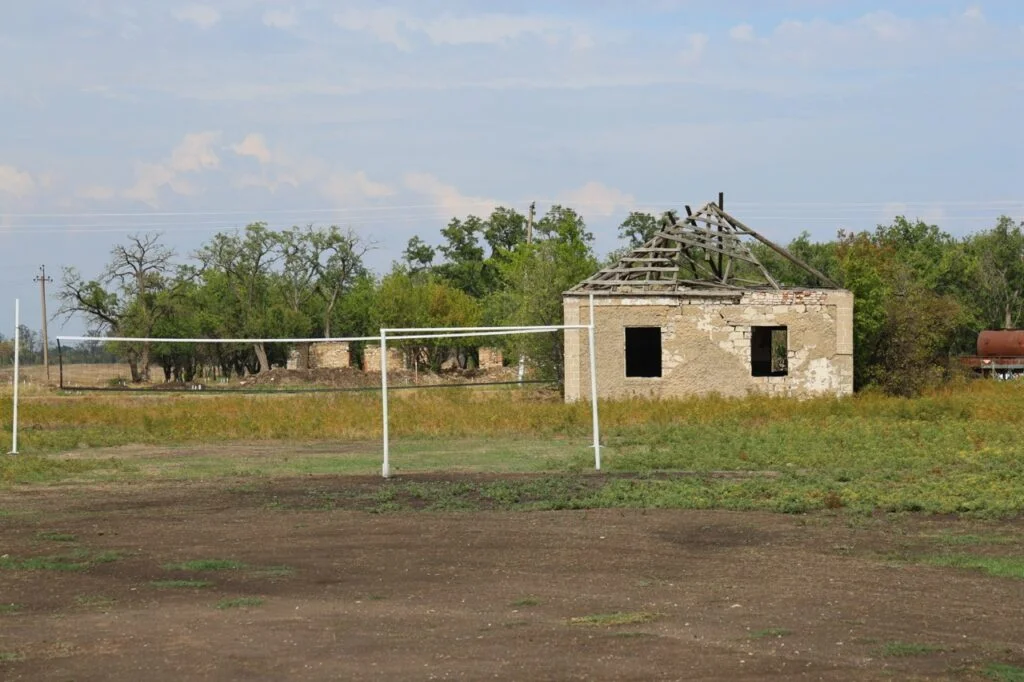
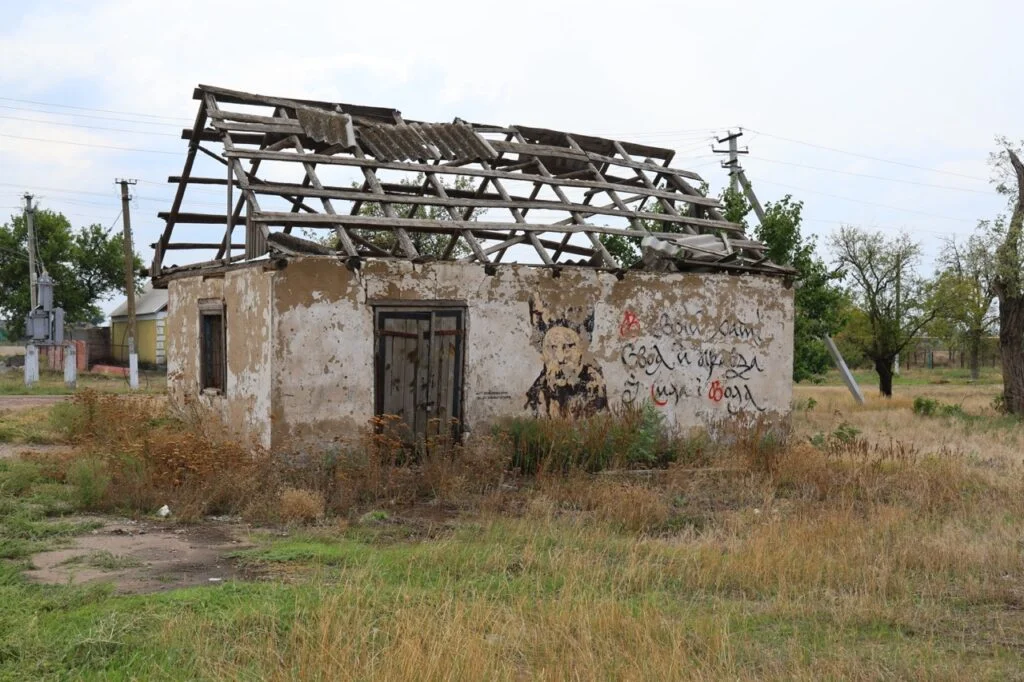
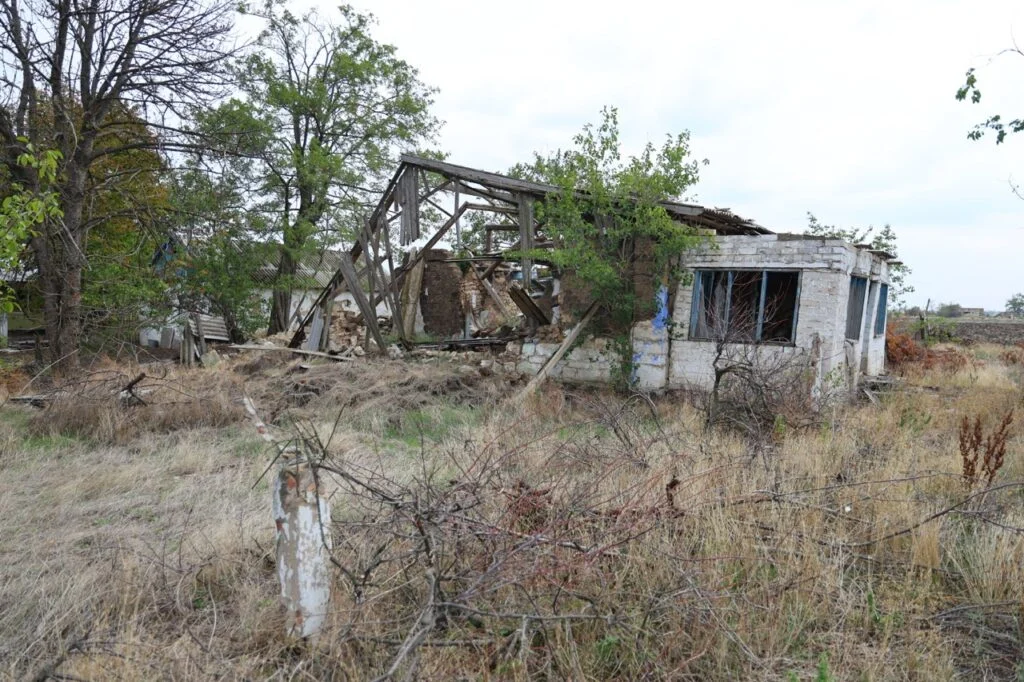
Before the war more than 400 people lived in Knyazivka; now there are a little under 200.
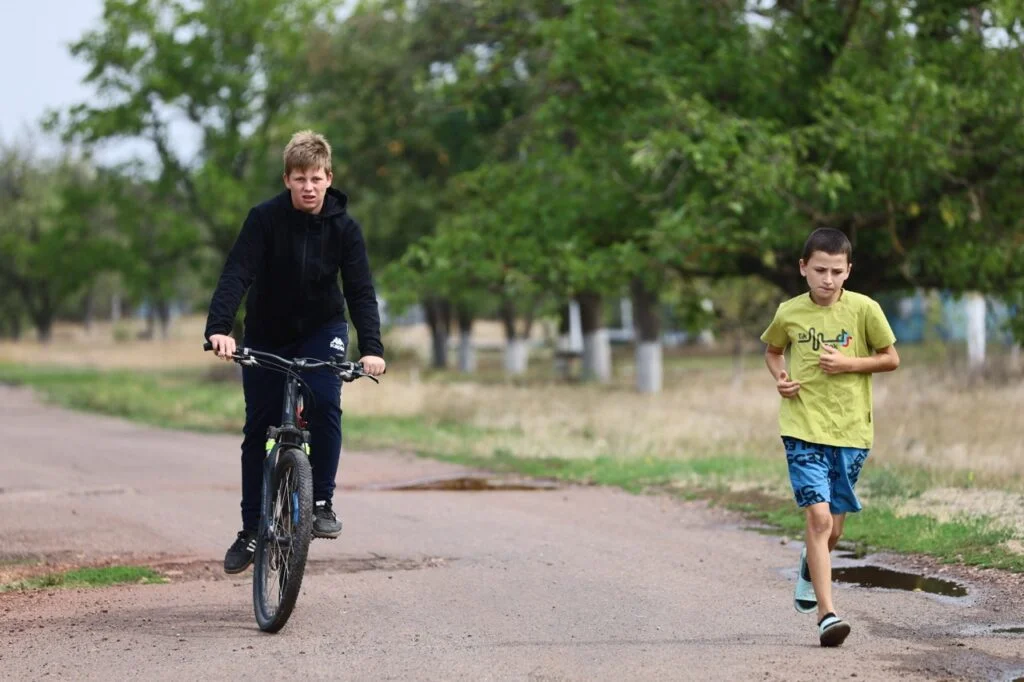
While we wait for the starosta, we walk around the village. The community center is ruined, houses are mangled. Almost the same everywhere the war passed.
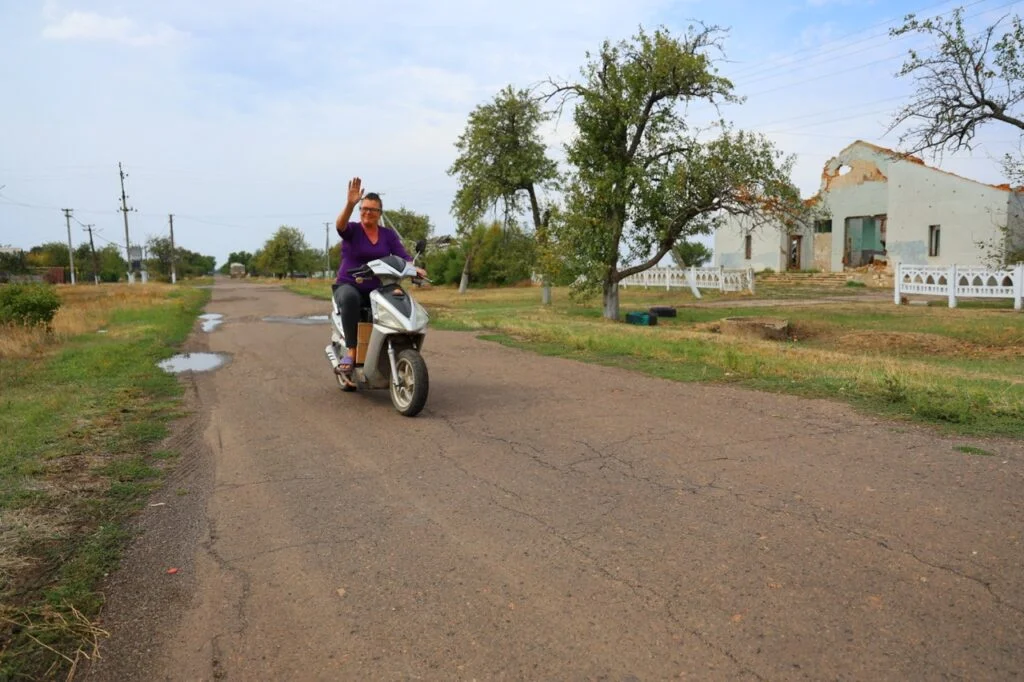
“What are you filming?”, – asks a woman with a distinct Galician accent.
Anastasiia has lived in Kherson region for about 20 years. Originally from the village Karpatske in Lviv region, she moved here when her children scattered: her son-in-law works as a priest in Vysokopillia, and her husband retired.
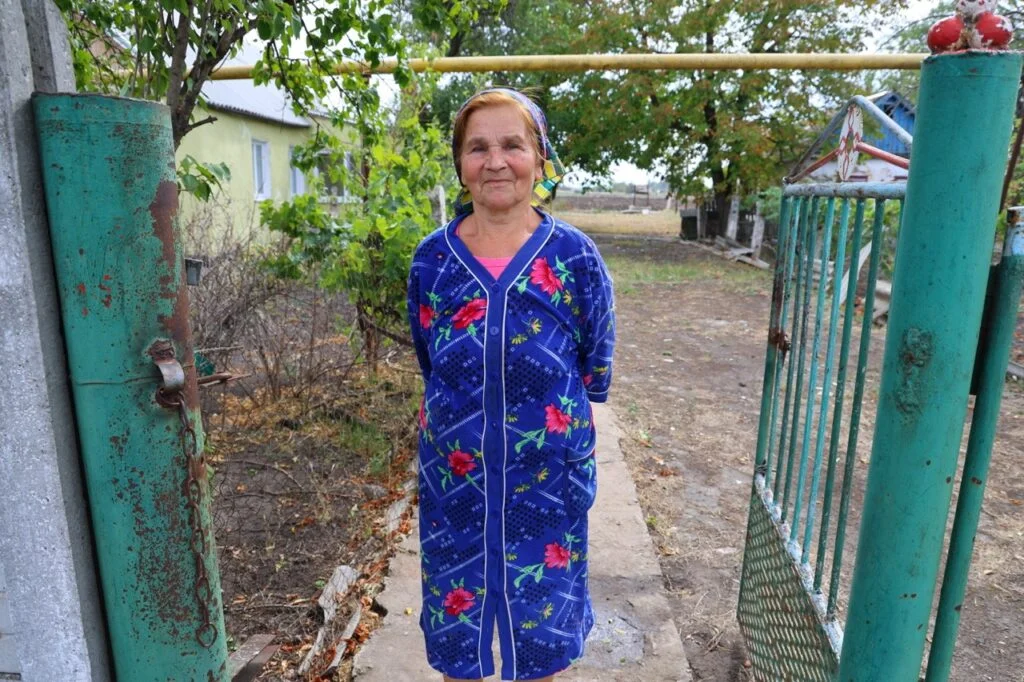
Before the war she had a large household, but had to abandon everything and flee. She left a 40-sotka garden to neighbors, along with livestock and equipment. Now she does not want to keep animals because she says she is “not fit”.
“The Russians were here for two weeks, I left on April 14, and already in April ours came back. When I left – everything was intact,” – the woman recalls, though she confuses the months.
Returning, she found a broken roof and a destroyed home. Religious organizations and charity donors helped – they covered the roof, but the repairs had to be paid for out of her own pocket.
The commission that inspected destroyed property allocated 92 thousand hryvnias after the work was completed, but those funds only covered part of the costs. Still, Anastasiia is glad she returned – “At least I’m home”.
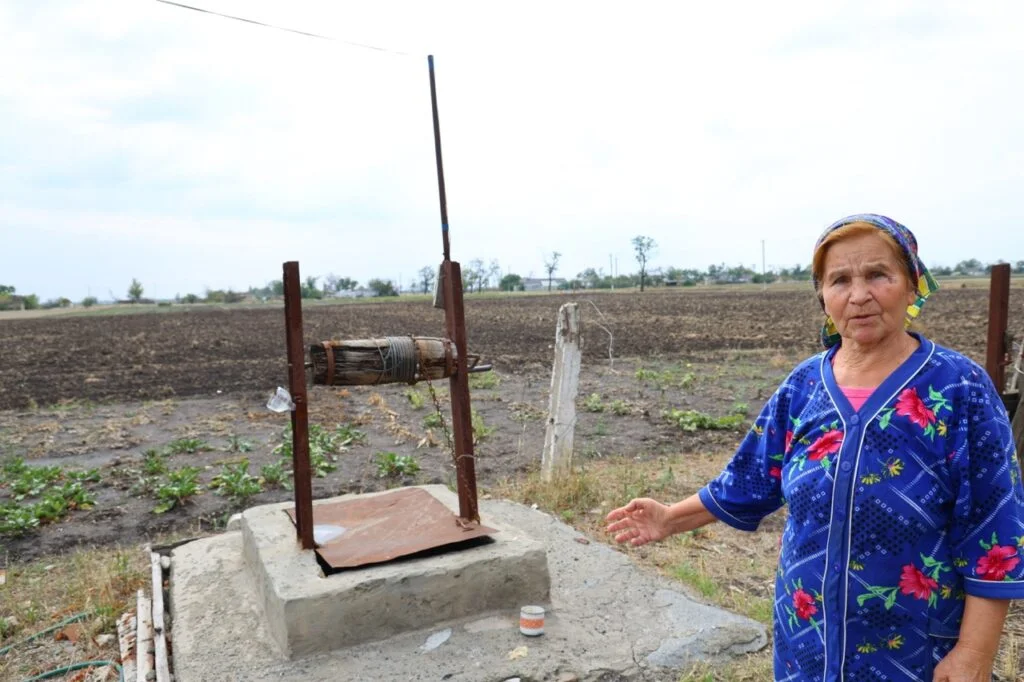
She came back in April 2023 and has now been living in her own house for a year and a half, together with neighbors who are also slowly returning.
While the photographer and I film the village, an old foreign car pulls up to the local resilience hub and the driver, kneeling, begins inspecting the plastic engine guard of our car, broken by Kherson roads.
“Kolya and Olya!”, – the man and woman cheerfully introduce themselves as they happily approach us.
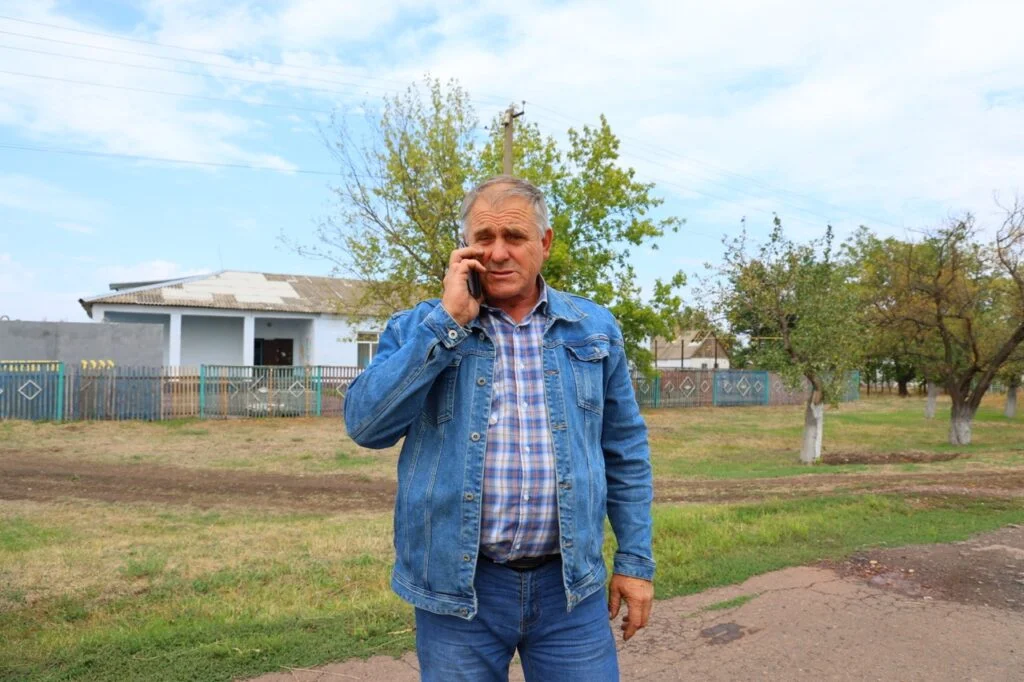
Kolya is Mykola Zatvornyuk – the starosta of this and neighboring villages, and Olya is his wife and a local councilor.
They call him Trokhymovych here.
They take turns telling us about the village and its wonderful people. It is clear both are pained by their small world, in which great people live.
“More than 20 houses were completely destroyed, and dozens more were damaged”, – says councilor Olya.
According to her, charities are still helping to restore homes: covering roofs, providing building materials. The first to come to help were those same religious volunteers mentioned above, who began rebuilding using their own efforts.
Now people have already filed paperwork to restore more than 40 houses.
Mykola adds that some residents have received modular houses.
“They are very good – people are happy”, – he says and offers to show us.
We follow the starosta’s car along the outermost street of the village, which had been the frontline. To the right beyond the field is Vysokopillia.
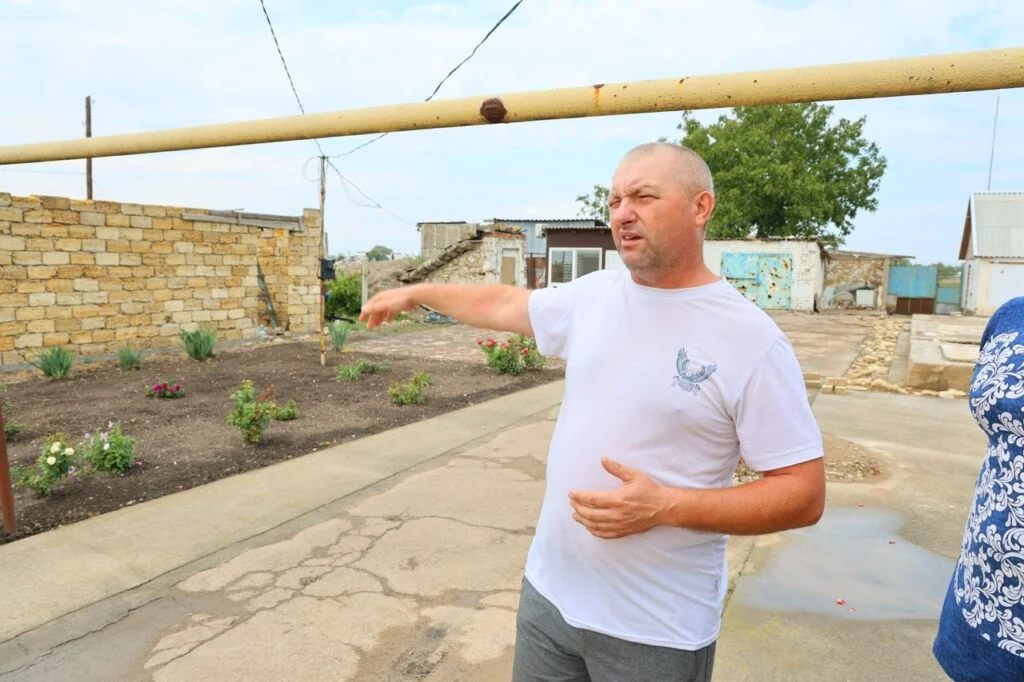
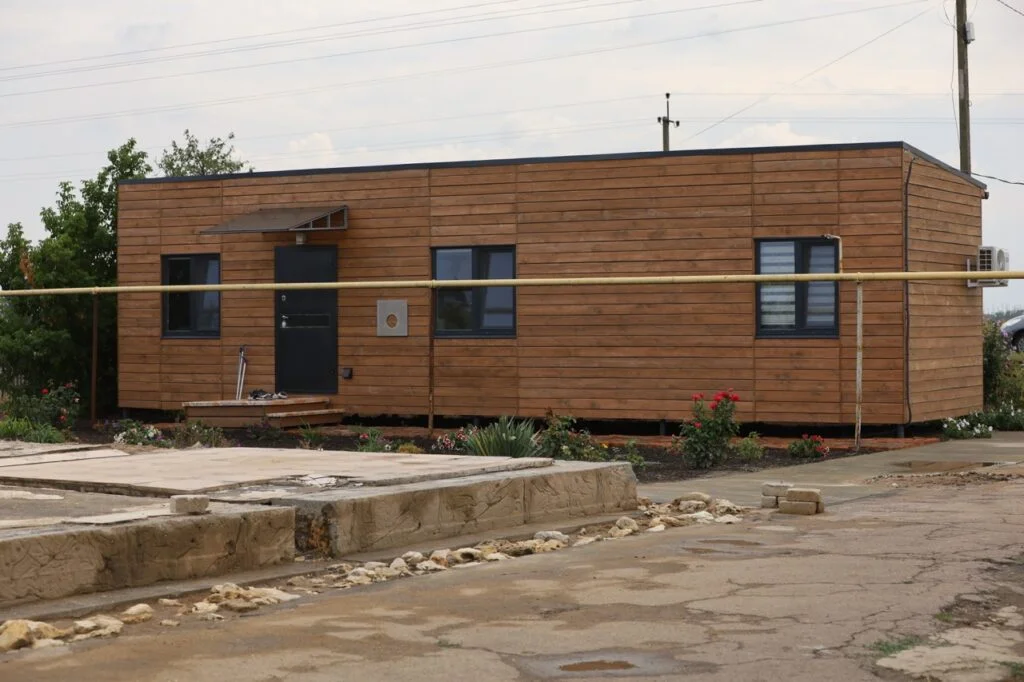
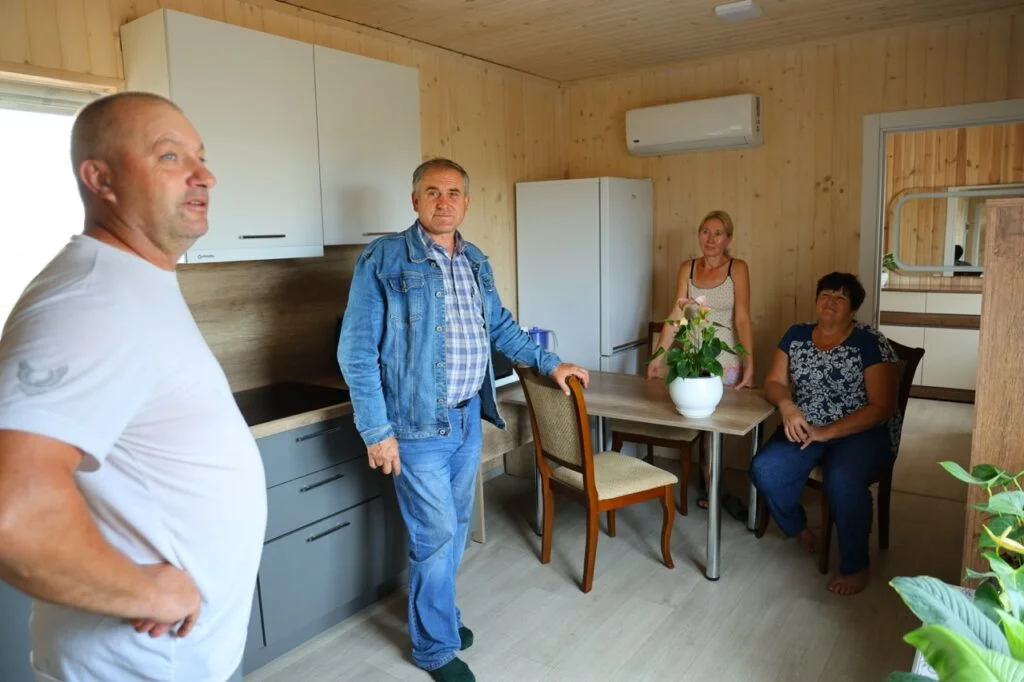
Local resident Andrii received a modular house after losing his own home: “We lived in a neighboring village, now we have a roof over our heads. The house is under warranty, we plan to spend the winter here. There is electricity, well water, even an air conditioner”.
Russian shells completely destroyed the couple’s house.
“You should have seen that house”, – councilor Olha says sadly, – “they finished the renovation just before the war. Everything inside was white, new furniture. We used to come here to admire it”.
Andrii sadly recounts how he, his family, and neighbors hid in the cellar, and then left under Russian mortar fire.
He invites us into their new, temporary home. From the outside it looks like a medium-sized rectangular wooden building, somewhat reminiscent of a “Stolypin” railway carriage with a hint of hipster café. Inside it resembles a smart apartment somewhere in Odesa’s Tairovo – a small kitchen-studio, a bathroom and two bedrooms.
It smells of fresh renovations and new furniture.
Such modular homes give people a chance to remain in their community while reconstruction continues.
The family says they will restore their main house at any cost.
The head of the military administration, Kostiantyn Starodumov, later explained to us that these are not temporary tents provided by charities at the start of reconstruction, but fully equipped houses with appliances and furniture, designed for at least 50 years of use.
“They remain the property of the person. The first to receive the houses are those who decided not to wait for certificates but to rebuild life here”, – he says.
And in Vysokopillia they are already planning an entire modular town with such houses for young specialists who expressed a desire to work in the community.
Despite mines in the fields, power supply problems and bureaucracy, residents are returning home.
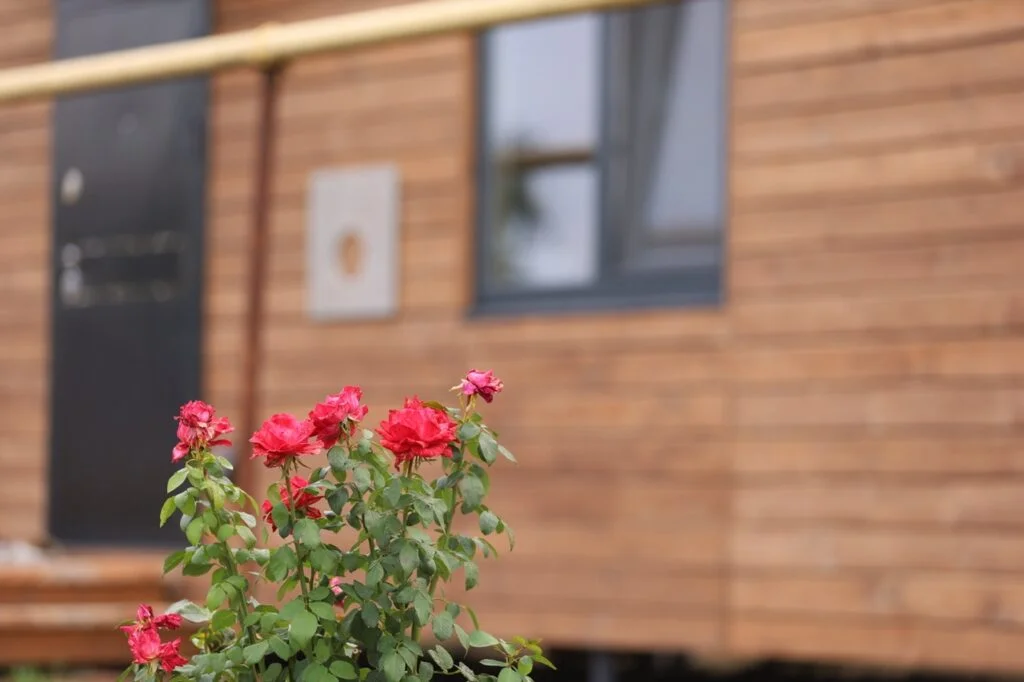
They tidy yards, plant flowers and vegetables, and restore their farms.
“We are people of the land. We need our own yard, our own garden”, – locals say, explaining why they did not take a certificate to rebuild a house somewhere in the city.
According to Starodumov, of 256 households 122 have already applied for cash assistance from international partners, and almost half have received certificates to restore housing.
“We are not apartment people. You step out into the stairwell – and then what? You need a yard. On September 4 [2022] it was liberated, and on the 6th my husband was already back. Mines were still sticking out here then, but we were tidying up anyway”, – Andrii’s wife sums up.
The community is coming back to life. People return, repair homes, create new centers of life. Despite all the challenges, the main thing for them is to stay at home, because they, by their own words, are people of the land.
Photo: Максим Кирпенко
The publication was created within the project of the Institute for War and Peace Reporting (IWPR) «Посилення громадського контролю» with financial support from Norway.