

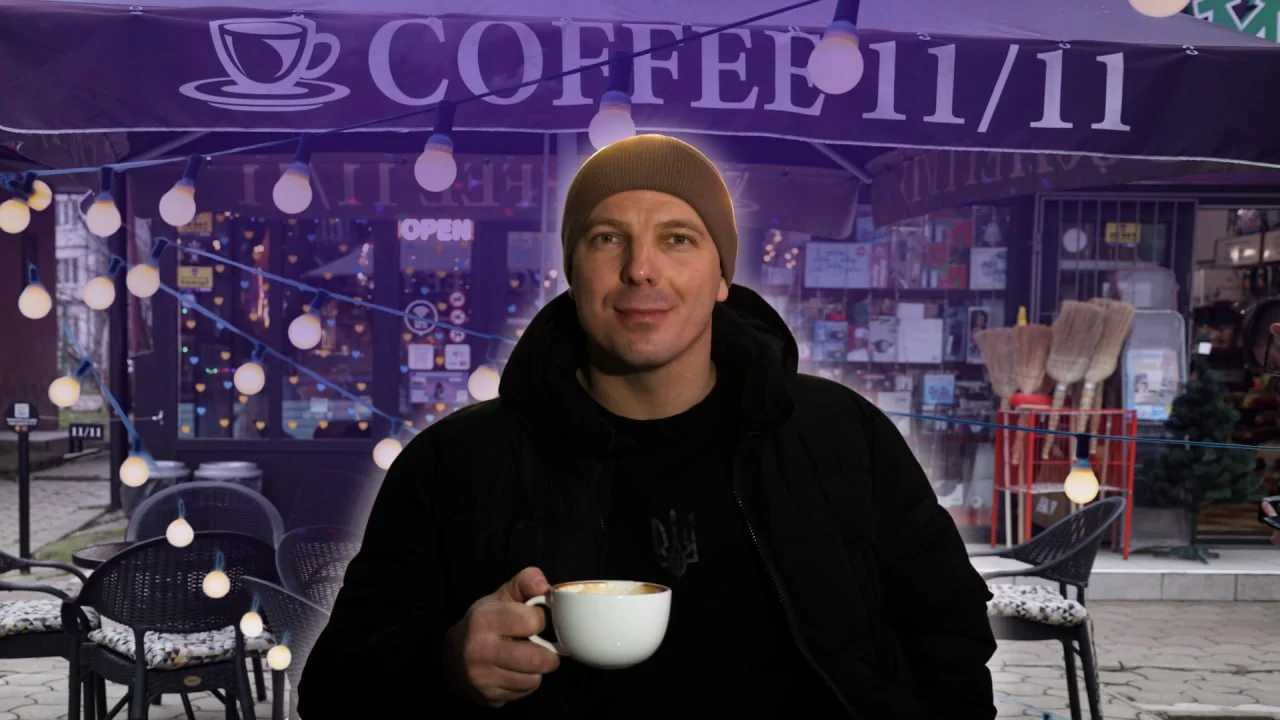
At the entrance to the café “11/11” — a symbolic inscription: “The best coffee for free people”. For Kherson residents, these are not just words but a reminder of the freedom they defended during the occupation. Almost every Kherson resident knows the establishment. People pop in here for coffee to go, meet, socialize, and wait out blackouts.
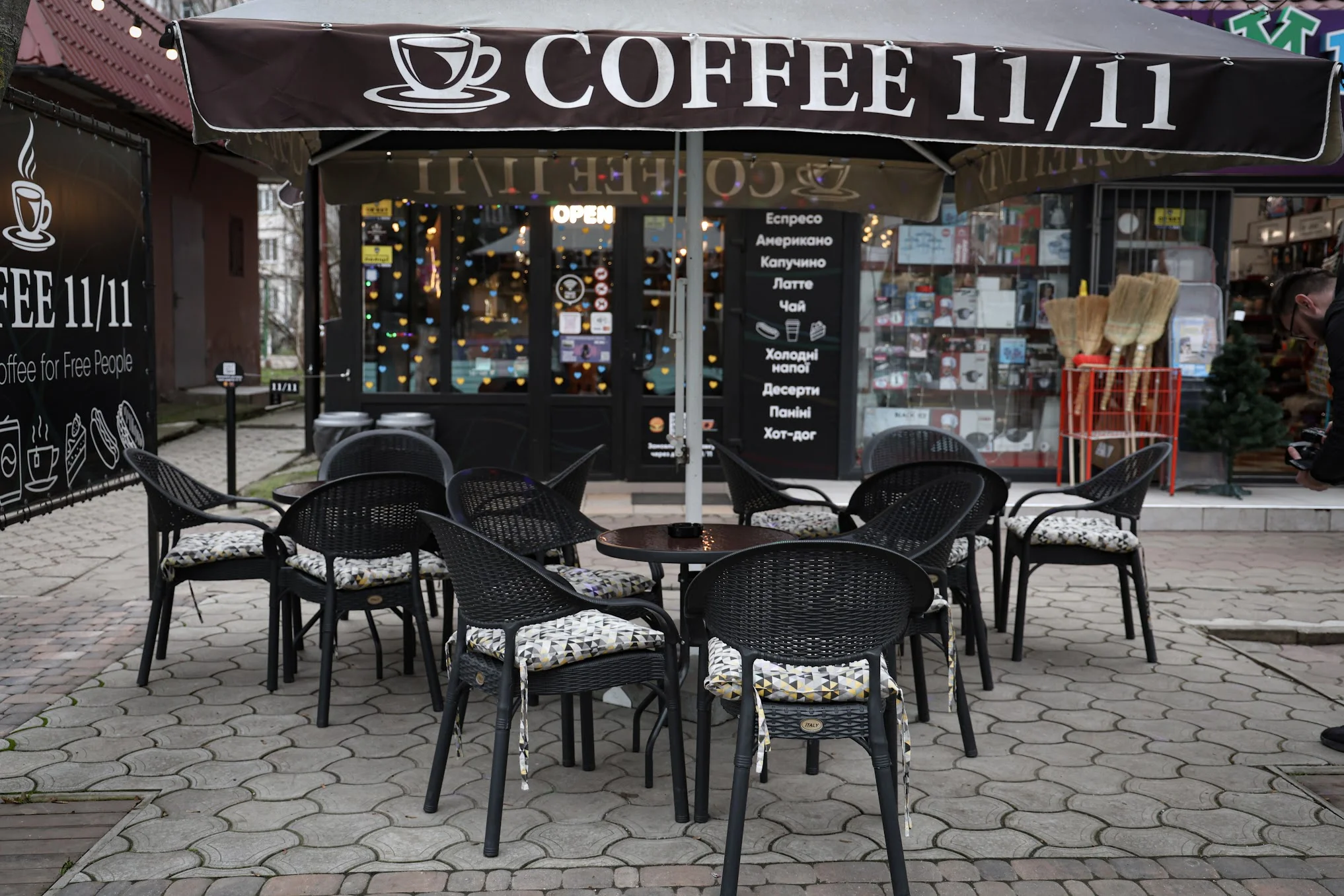
The café owner, Oleksii, admits — it’s hard to work. For the third year “11/11” has been operating almost on the front line, and that adds new challenges every day. However, the team stays optimistic and believes the war will end soon and life will return to Kherson.
“When Kherson was liberated on November 11, 2022, I wanted to somehow thank the city and its residents for enduring this ordeal and not giving up,” — Oleksii says.
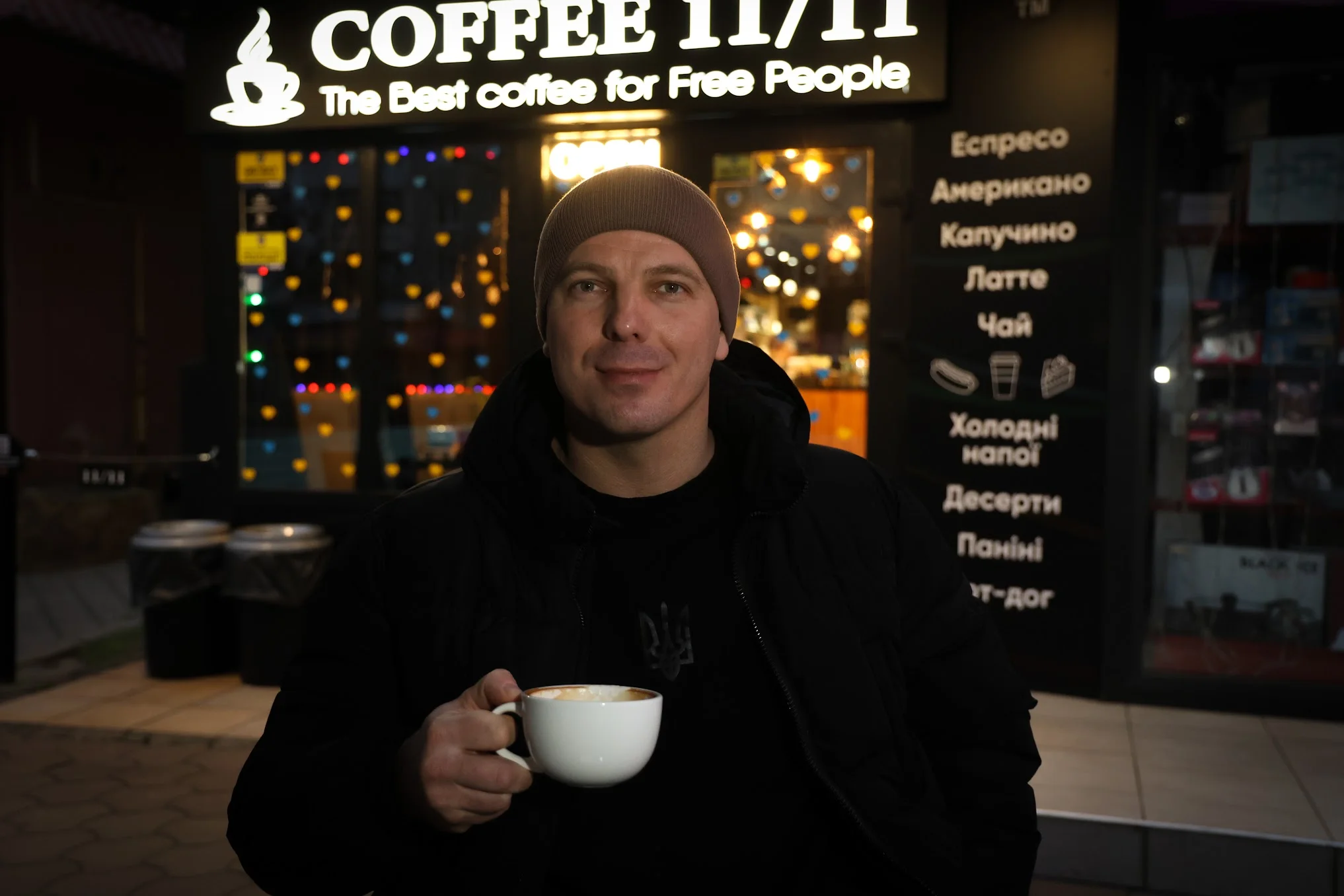
According to the man, he wanted to preserve the day of his hometown’s liberation in something special, so the name came by itself – “11/11” – November 11.
When the café opened, Oleksii hoped the war would end soon and the situation would improve. So the team had to adapt to new conditions.
“There are many difficulties. For example, often our business, like others, faces logistics problems. Products do not always arrive at the café on time; I buy a lot of things myself. There are also problems with fresh products. Suppliers of milk and meat do not always deliver goods on time because sometimes the Mykolaiv-Kherson highway is under drone attack and the truck did not come to Kherson,” — Oleksii says.
Of course, the shelling of Kherson also takes its toll. Oleksii says that every day he worries about the employees, their lives and health, and their moral and psychological state. The shelling also causes staff shortages.
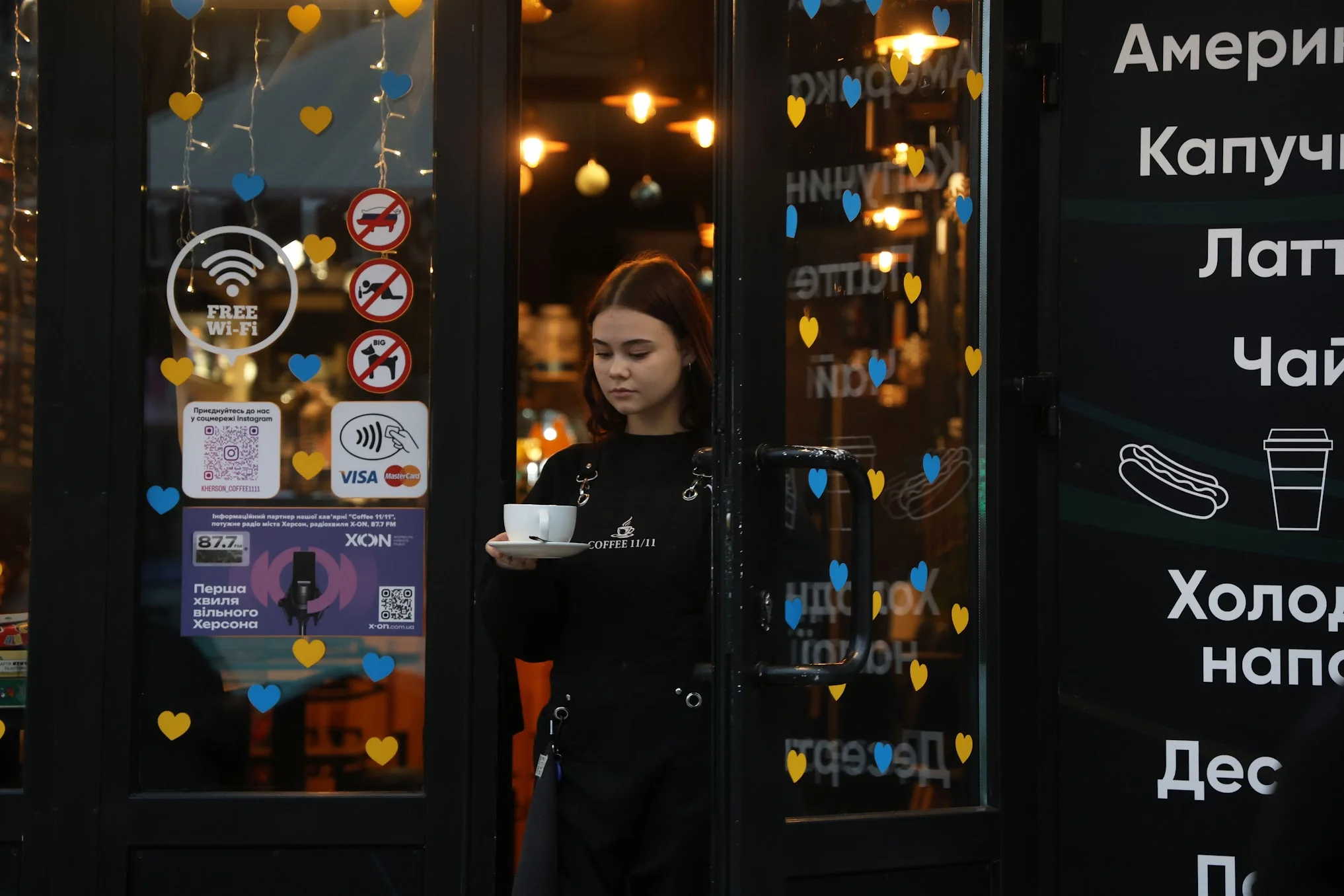
“Over these almost three years, three girls left Kherson because they could not cope psychologically. Just recently another girl who had worked here for a year left with her family. But there are other stories — one of the girls who previously worked with us and moved to Mykolaiv returned. We operate as an individual entrepreneur (FOP), pay taxes, and I am truly proud that I can provide the girls with jobs, that they work and can earn,” – he notes.
Maria, who works at “11/11” as a barista’s assistant, switched from an establishment in another district because of Russian shelling. The young woman notes that it’s difficult to find a job because few establishments are open, and commuting is very difficult if you don’t live near your workplace.
“It’s easier for me now because I live nearby. But for girls who live far from work it’s hard. Public transport runs poorly, and it’s sometimes difficult to get a taxi, especially in the evening. So I’m very happy to work here. A good team, we help each other and keep our little traditions,” — Maria says.
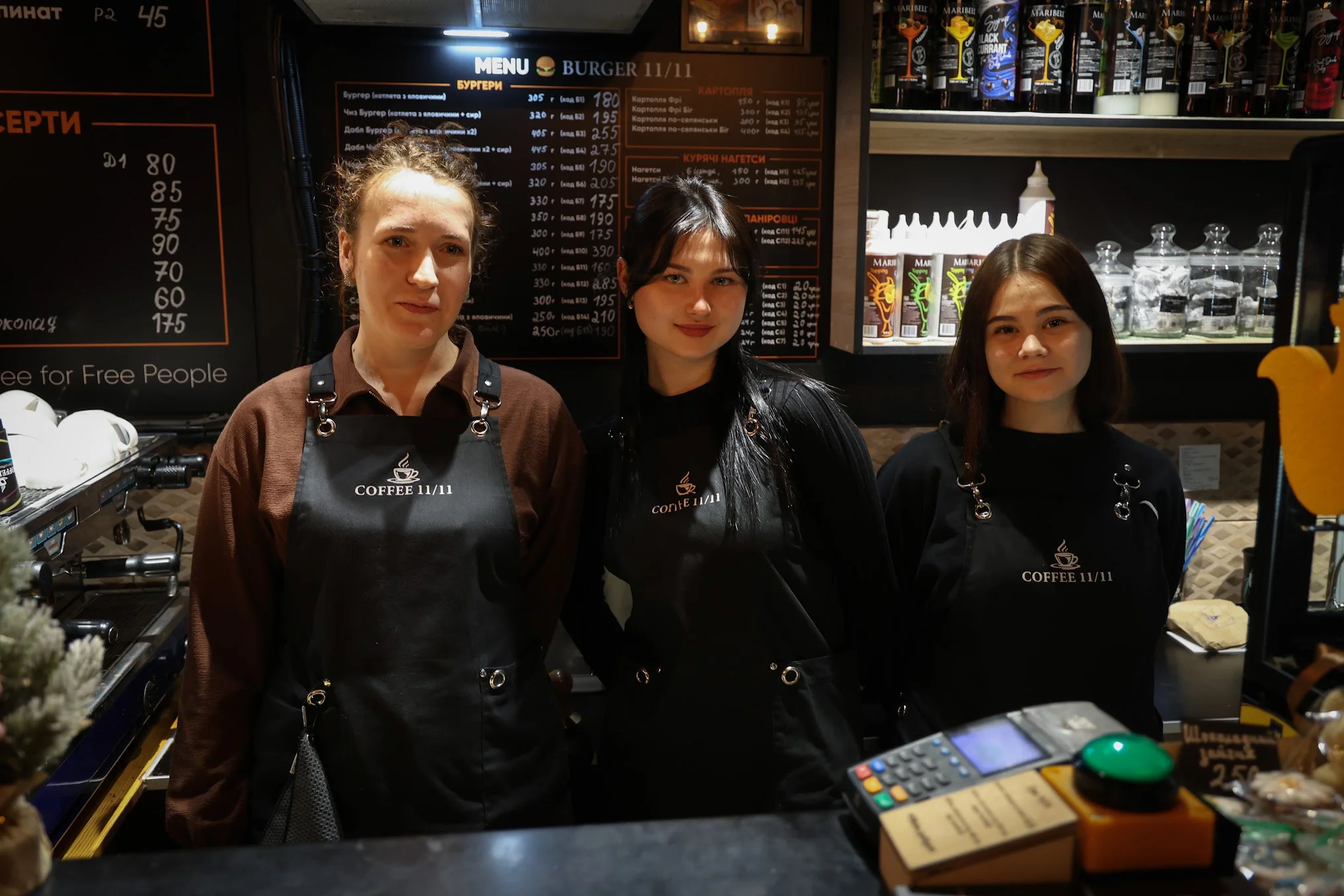
Oleksii admits — after Kherson’s liberation he hoped that in a few months the war would end and people would start returning to Kherson. Instead, the city found itself in a very difficult situation due to constant Russian attacks. Despite this, the “11/11” establishment continues to operate and even expand. In particular, they opened a burger place which the owner calls an alternative to “McDonald’s”, which previously operated in the “Fabrika” mall. Thus burgers, french fries and other dishes appeared on the menu. The owner admits: it was not easy to take such a step. But the support of the team and guests added confidence.
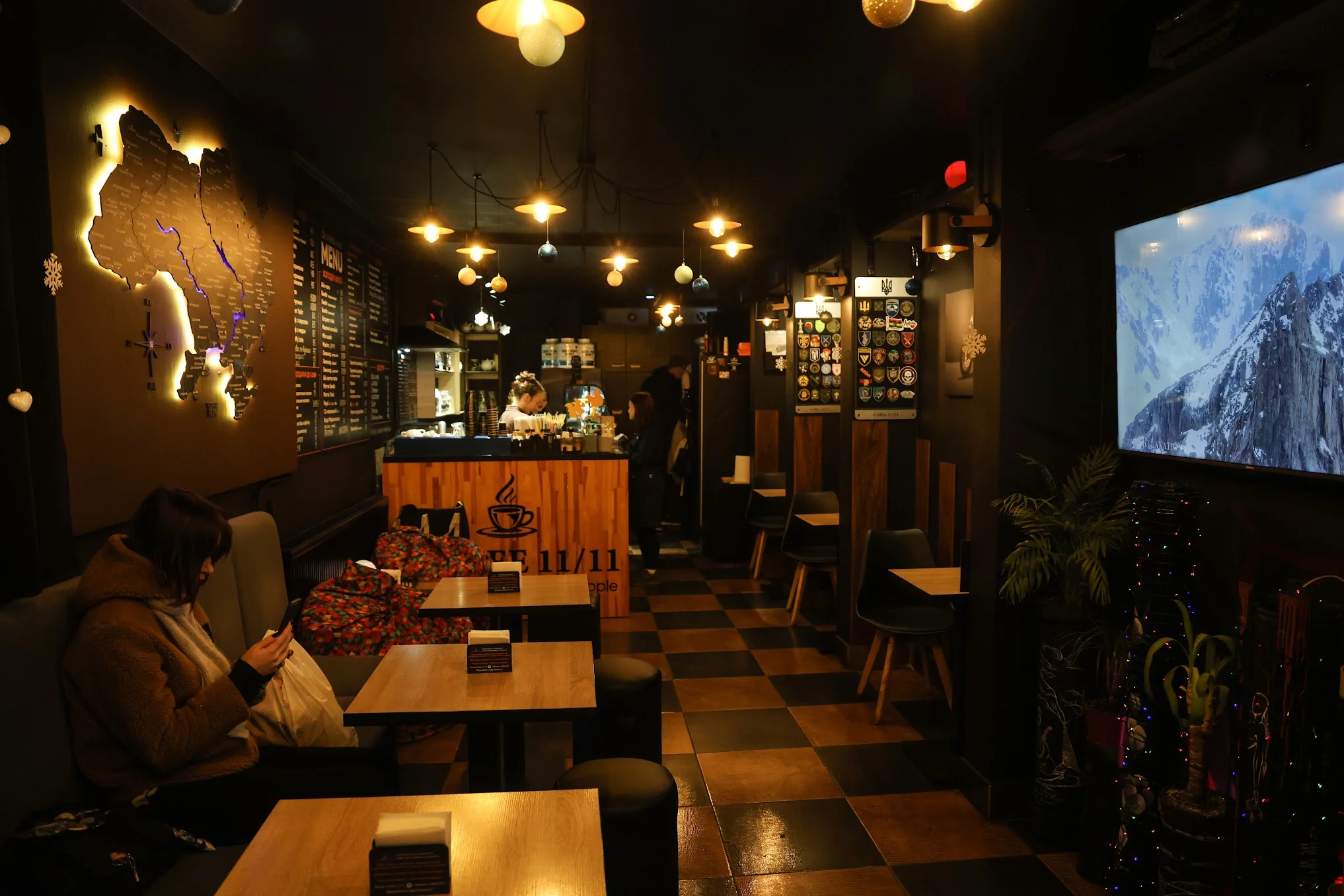
Sometimes “11/11” turns into a kind of “Point of Invincibility” — during prolonged blackouts you can charge devices, warm up, drink hot coffee, eat, and work here.
“We come here almost every other day. Once there was no power, and here it was cozy, lots of people, light, internet. For that you want to thank Kherson businessmen,” — says visitor Oleksandr.
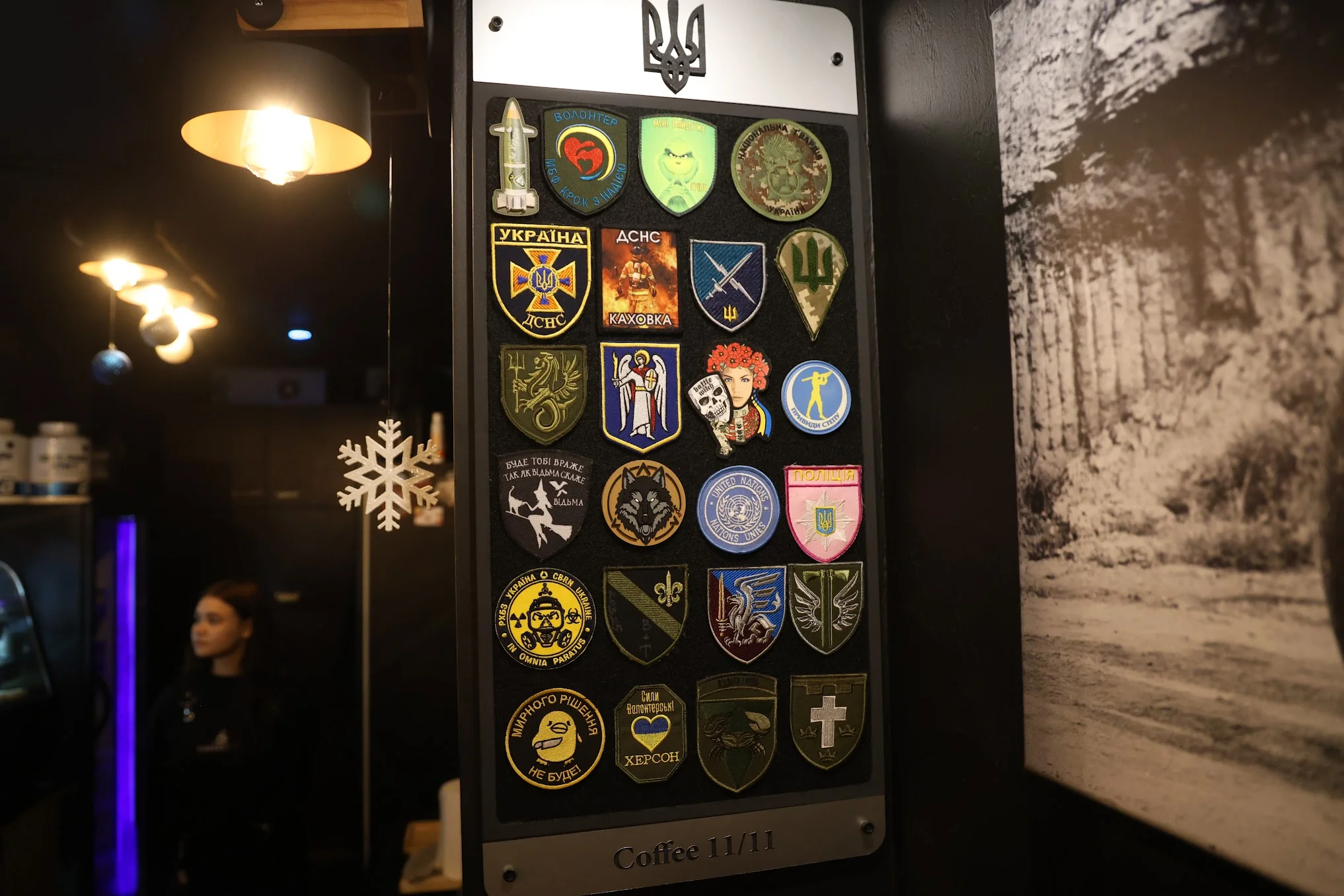
A special place in the “11/11” café is dedicated to patches. There is a special board here on which there are patches and insignia of various brigades whose fighters were visitors to the establishment. According to Oleksii, the first patches were left by the guys who liberated the city. And now, when coming in for coffee, servicemen continue this tradition.
“It’s pleasant for soldiers when they return and see the patch they left last time. And it’s important for us: when the war ends, we will be able to see who defended our city. And this is a memory for life,” — Oleksii notes.
The “11/11” team does not plan to stop at what they’ve achieved and has ambitious plans. After the war ends they want to open another café, spacious and cozy, with a large summer terrace. For now, Oleksii is convinced that business in Kherson must endure, because it is a sign that life in the city continues.
“We are like motivators for those who come here from other cities, and even for those who lived in Kherson and have now left and are wondering whether to return. People come to collect their things, see us and are surprised, saying they didn’t know anything was still open here. It motivates them, and someone even thinks about possibly returning to Kherson,” — Oleksii summarizes.