

Kherson entrepreneur and city council deputy Illia Karamalikov is accused of collaborating with Russian occupiers. His case is one of the most high-profile in Kherson, yet at the same time one of the least understood by the public.
After almost four years in pre-trial detention the court changed Karamalikov’s preventive measure: the deputy was released on bail. This prompted discussions not only about the course of his case but also about the events of the first month of the Russian occupation of Kherson, of which he was a witness and participant.
– I’m sure you were prepared for this question. You probably thought it would be at the end. But I’ll ask it at the beginning. Is Kolyhaev a hero or a traitor?
In my opinion, Kolyhaev is a hero. But not the kind of hero who throws himself under a tank with grenades. His heroism manifested in a different way. The authorities, and this must be acknowledged, abandoned Kherson [at the start of the full-scale Russian invasion], abandoned the city, the people, left them without means to live, without food supplies, without medicine supplies.
– And what should those authorities have done?
Now we already know what they should have done.
– I don’t know.
Both Zelensky and Budanov said in interviews that they knew about the invasion six months before [it], a month before, three days before… If they knew, then in my view they should have warned people. Because personally I took out loans for half a million dollars.
– Well, Biden warned you — the president of the most powerful country in the world.
Yes, but…
– I literally watched that video yesterday where he was asked whether Putin would attack, and he said: “Yes.”
Yes, but I would like to believe our government, not the governments of other countries. I consider Ukraine a sovereign state, that our president…
– So if you had been warned six months in advance, you would have packed and left?
No, I wouldn’t have left. And my whole life in the city proves that I would not have left.
– What should the authorities have done? Warn five days in advance that there would be a war? And then what?
Those who thought they needed to leave could have done so not in a hurry, not with one suitcase, but somewhat prepared, perhaps settle their affairs. Because, I repeat, personally I took out loans six months before the war to upgrade and renovate my entire business. If I had known about the invasion… I wouldn’t have done that. I wouldn’t have taken loans. I would have calculated that the business needed to be mothballed. But it happened as it happened.
– Okay, let’s assume we didn’t know a big war was coming. What should the authorities have done? They say the authorities fled. If the entire authority had stayed in the city, what would have changed?
No, the entire authority should not have stayed in the city.
– Who should have stayed?
Security forces, the SBU, perhaps the army. If the Antonivskyi Bridge and the crossing at the Kakhovska HPP had been blown up, if the minefields that Zelensky personally checked two months before the war had not been cleared, then the Russian army would have been on the left bank of the Dnipro.
– It’s noticeable that you spent four years in pre-trial detention and didn’t take part in those debates about “how Kherson was surrendered”.
Maybe.
– I’m not saying that’s bad. Maybe it’s actually good. What is Kolyhaev’s heroism?
In that he stayed. I saw the bewilderment of Kherson residents at the beginning of the occupation. People openly said they were abandoned. People were clearly worried whether there was anyone from the Ukrainian authorities left in the city. Anybody. Because they understood they had been left to fend for themselves. People asked: “Where is the mayor?”, “Where is the governor?”. Although I think it was correct that the governor (head of the Kherson Regional State Administration, – MOST) left. I even commented on that in the first days of the war. I said and wrote on Facebook: it’s right that the governor is not here.
If he had been in the city and had been captured, he would have been a legitimate person who could have signed some documents about capitulation. About the capitulation of Kherson Oblast, about joining the Russian Federation (heads of regional state administrations in Ukraine did not have and do not have the authority to make decisions and sign documents on separation of territories and their accession to another country, – MOST), about creating some sort of “republic” and so on. So the absence of the governor from the first days of the war was the right step.
But given how events unfolded, the city was, if you remember, surrounded for a whole week. And it was during that week that the question of what to do arose. People were confused. Looting began, robberies, attacks on people. I personally saw it, my employees were affected. In those conditions people simply cried out: “Where is the mayor?”.
– The mayor stayed in the city. What then happened? He started talking about organizing community cleanups, buying equipment to treat lawns.
Kolyhaev is not the best orator, that’s one thing. Secondly, he’s not the wisest mayor. You remember his careless words said six months before the big war. I openly said then that the mayor had been “bitten by Medvedchuk.” I didn’t like some of the people the mayor interacted with.
– You mean the statements about selling water to Crimea?
I commented on that too. Such statements are not from great wisdom. As a businessman he’s done well, he has achieved much; I won’t comment on how, because I don’t know, people say different things, but I only see the result.
– Our second magazine issue will come out soon, and there will be a big article, a major investigation into Kolyhaev’s business and how he made his money, effectively parasitizing on the state.
Maybe. I know nothing about it.
– So what heroic thing did Kolyhaev do? He stayed in the city. Then what?
Only that he stayed and was with the Ukrainian flag, saying: I’m here, Ukraine did not abandon you, everything will be – Ukraine. That’s enough.
– And at the same time FSB agents were already sitting in his meetings.
I don’t know that because I wasn’t at those meetings.
– Roman Holovnia told about this in an interview with MOST Roman Holovnia.
I heard that too; people said such things.
– Deputies told me this — those who were then in Kolyhaev’s reception and office.
I personally wasn’t there, but from the words of my fellow deputies I know it happened. It’s true.
– So what is the heroism? That Ukraine is in his heart while FSB agents sit in the reception? Some deputies even greeted them by the hand: Andrii Tkachenko and Dmytro Piddubnyi, for example.
Everyone greeted them. Who didn’t greet?
– So what’s heroic about that?
The heroic thing is not to accept the conditions. When they impose them on you and you resist…
– Well, Kolyhaev probably accepted some conditions, because he sat in his office from March 1 to mid-April 2022. Then they kicked him out.
If you remember, he published the conditions on his Facebook page, and then on the city council website. And it was clearly stated what the Russians demanded of Kherson residents.
– That’s of the residents. What did they demand from him?
I don’t know. What directly from him, I don’t know, I can’t say. But you know, in this case I’m on the same level with you in terms of information. Because I was not personally present during his (Kolyhaev’s, – MOST) negotiations with the Russians. So I can assess the situation only from what I saw…
– Did Anatolii Khomenko tell you about this?
No.
– Although he was present.
Many people were present there.
– No, my sources say only Khomenko and Kolyhaev were at those negotiations.
I don’t know. I can’t confirm that. In fact, the Russians spoke with everyone — ordinary people stopped at checkpoints for document checks and those who once held positions under Ukraine.
– This is in the materials of your case.
They spoke [the Russians] politely, without any hint of violence.
– There are evenrecordings of such conversations in your case materials. In particular, conversations of the Russian known as Sabir — likely an FSB agent. There were conversations with various people. With MVS pensioners, with the head of the temporary detention center. And none of them betrayed, which is interesting. All those he spoke with, none of them betrayed.
Now let’s ask ourselves: what is betrayal in this case?
– Switched to the Russians’ side. Went to work for the Russians.
Yes. But who switched? Did Kolyhaev switch? Is there a documented fact? No. As far as I saw. I can’t speak about everything. I have access only to part of the information. But from what I saw, Kolyhaev did not switch to the enemy’s side. And — most importantly. I’ll tell you about two facts. Although… If the Russians see this interview, I might harm him (Kolyhaev, – MOST). Although… I don’t know…
– I think he already told them everything there. If he’s really in captivity.
Kolyhaev knew that I was hiding a GUR sabotage group. Kolyhaev knew about this. Because I, foolishly, blurted it out to him in the first days of the war, believing him to be official Ukrainian authority. I told him about it. And until my departure from the occupied territory, let’s say until March 16, when this sabotage group was still staying at my establishment “Amigo,” Kolyhaev, whether you call him a hero or a traitor, did not leak this information to the Russians.
Moreover, he did not leak it before his arrest. If he had, there would have been further searches at some sites that do not appear in the criminal case or elsewhere. So I can state clearly and confidently: from the information available to me, Kolyhaev is not a traitor.
Maybe he’s not the kind of hero everyone expects. But, first, he is not a traitor. Second, he did everything he could to nonviolently show Kherson residents that Ukrainian authority in the form of local government representatives was in the city, supporting residents, doing everything possible to sustain their morale and to meet their needs: food, medicine and so on. Therefore he is not a traitor.
– People close to Kolyhaev called officials who left the city at the start of the full-scale Russian invasion traitors. These narratives appeared in posts and comments on social networks. Kolyhaev himself didn’t say that. But did people from his close circle spread these narratives about traitors on his initiative or with his knowledge?
Well, that happened.
– How did you perceive that then?
Deputies had their own chat, if you know about that.
– I know.
At the start of the full-scale Russian invasion Kolyhaev wrote in that chat something like: “Who’s with me? Who stays and supports? Who leaves, I will understand everyone. I won’t make claims. But we must support people.” Well, in my manner I wrote a rather heated message there that I’m staying. At that moment I already had those guys from the 80th Separate Air Assault Brigade (— MOS) who I was hiding at my house.
– How did they find you?
Through Serhii Panasiuk — head of the Kherson Regional Military Commissariat (he headed it from August 2023 to November 2025, – MOST). At that time he was deputy military commissar. They (the soldiers from the 80th Air Assault Brigade, – MOST) first turned to him. Because what relation do I have to the army? Those military, by the way, gave testimony in court.
– Let’s go back a bit. How did the war start for you?
I’ll start with the fact that on November 23 I had a conversation with Serhii Tsyhankov, who at that time was deputy Kherson mayor for humanitarian and legal issues. We agreed that a war could not happen, that it was most likely a bluff. Because in my understanding, and from what I know of history, you cannot attack a country with a population of 40 million that already knows how to fight. Even if that country is weaker militarily. You can’t attack when you only have 170 thousand fighters. I thought it was stupidity. Call it what you want, but — you shouldn’t. But on the morning of the 24th it happened.
I wake up late. The specifics of my business are that most work happens at night. You know my business. Night clubs, shops. That’s what I liked. I did little with shops. But night clubs — with great pleasure. It’s about music. It’s close to my heart. So I have a nocturnal lifestyle.
And on February 24, 2022 I woke at 11 a.m. I turned on the TV and realized the war had begun. I had a pre-packed emergency bag. I had packed it as psychological self-support, to cope with what was happening. But I didn’t believe a war would happen. When it did, I rushed to pack… and realized I couldn’t. Because I have five children. Plus, you could say I had a sixth: my godson, a child from the family of the well-known Kherson underground members Yarmolenkos. We were hiding Kherson territorial defense fighters at their place. When they had problems I helped take that boy out. But that’s a long story. That’s how the beginning was for me.
– So you weren’t at the morning deputies’ meeting? On the morning of February 24, 2022 deputies gathered at the city council. They waited a long time for Kolyhaev. He didn’t want to go there. And his Luhova (Halyna Luhova — then secretary of the Kherson city council, – MOST), according to her, forced him to go to the deputies. And he couldn’t really say anything there.
I don’t even remember that.
– Okay. How did you get to the city council? When?
The first time after the start of the full-scale war I was at the city council was on February 27. On the evening of the 26th I announced on Facebook the creation of a volunteer squad when I saw the looting and marauding. On the morning of the 27th I scheduled a 9 a.m. meeting of the squad on the square in front of the city council. I was there at 9 a.m. I didn’t expect so many people, that they would come early. And when I arrived at the square there were about 500–600 people. Kolyhaev and Skyba were very surprised. Because they didn’t know about it yet.
– Skyba is Kolyhaev’s head of security, and also a person who collected money from entrepreneurs. He handled these illegal, corrupt funds of the city council.
I can’t confirm that. But questions arose about his role with the mayor. This person (Viktor Skyba, – MOST) had no official position in the city government.
However, about a year or half a year before the war there was talk that I might be expelled by imperative mandate from the party “We Live Here”. So that information about Skyba wasn’t available to me, unfortunately. Therefore I can’t confirm what was or wasn’t as you say.
– Well, that’s from the entrepreneurs who say he was “fencing” them off.
I don’t know. I know there were rumors.
– Okay. You came. Kolyhaev saw the crowd from the window; what did he tell you?
He confirmed: “You did the right thing, let it be” and appointed Chornozub (Illia Chornozub — then director of the municipal enterprise “Municipal Guard”, – MOST) as the squad’s curator. Although let me tell everything in order.
At first, as soon as we met those people, I told them about the situation. They knew what they were getting into, so it was more of a formality to confirm the meeting’s purpose. Meanwhile, in the small hall of the city council a meeting of all the security structures that remained in the city was already taking place. There was Mykola Tsap — deputy head of the regional National Police. He was still in office then, and was dismissed a few days later. There was the military commissar with deputies, heads of all security firms in Kherson. There was Chornozub as director of the communal enterprise with security and legal protection functions. The latter is important because it later played a role. There were other deputies, Khomenko, Kolyhaev and so on.
At that meeting they discussed what we could do while surrounded, having only 30 volunteer policemen and some people from security companies and the Kherson territorial defense. But the Kherson territorial defense was busy guarding critically important facilities. It certainly wasn’t about public order in the city, not about looters and so on.
While the meeting was going on I created this squad. The meeting wasn’t even finished and I entered the hall with ten representatives of the squad who volunteered to lead units in the districts. At that time the squad was integrated into the city council’s law-and-order structure under the Ukrainian flag. Chornozub was appointed leader. Chornozub reported to Anatolii Khomenko, because Khomenko was appointed curator of the security block at that meeting.
Shortly afterward, literally an hour after that meeting, Chornozub and I went up by Kolyhaev’s direction to his office, discussed details: how we would differ from territorial defense, technical matters. After that we went down to Chornozub and began issuing Municipal Guard IDs to everyone who signed up for the squad. We printed them right there. The printer worked nonstop.
– And then Kolyhaev announced that you were appointed leader of that squad. It’s an unofficial structure, just a volunteer civic formation with no legal status, nothing.
In my student years, when I studied at the music college, we used to go out with the militia, patrol the city, catch offenders. From those times I had such an association, and in the heat of the moment I announced the creation of a squad. Not a guard or anything else, but precisely squads. That’s how it happened.
– How did it work for you? How effective was it?
Effective. It was very effective.
– I know a story when one group of squad members captured another group.
That happened too. They even captured policemen. They sat in cars. As it later turned out, they had tasks to react only to serious crimes because there were few of them in the city. Policemen were in plain clothes, in civilian cars and did not respond to petty crimes. So when some guys sit in a car for a long time watching something…
– Yes, at that time many different things happened. The whole country was erasing markings, searching for saboteurs and so on.
Yes. We also captured policemen, and as soon as we realized they were ours we released them. And regarding markings you understood correctly. There was madness when phones rang at me 400 times a day. We published our contacts openly. People called saying something was flashing in the bushes and demanded we come urgently. At first we went out, and then…
– This was not only Kherson. The whole country lived in such hysteria. It’s obvious. Probably the Russians deliberately stirred that up.
There was even a post about it. I don’t know how to comment. Once more someone wrote to me that “some people are placing markings on roofs”. I wrote this to Kolyhaev, and he emotionally replied: “Then throw them off!”.
– Obviously this whole story had a somewhat romantic aura at the start. And on March 1 the Russians entered Kherson. What happened to your squad?
That’s not a secret. The first thing I did after learning that the Kherson territorial defense had been shot was to disband the squad. And I told people why. I explained I didn’t want the same to happen to them.
There are many factors. Also consider that I’m a convinced pacifist. And when we walked around the city with shotguns it was rather for psychological effect. I also carried a weapon, but the bullets were rubber. Remind me, where did we start?
– That you disbanded the squad.
Ah, I disbanded the squad. So that a tragedy wouldn’t happen.
– The Russians entered on March 1. You watched it from home, probably like everyone else, right?
I sat like a mouse. On March 1 I didn’t even leave the house. I didn’t understand what to do. Honestly, it was very scary. But then I pulled myself together and on March 2 I went out by bicycle. I was afraid to drive because I didn’t know where they were spread out in the city, what they were doing, how they would react to citizens. People behaved that way then.
– Moreover, there were vehicle shootings. Several cars were shot on Perekopska.
Yes, yes. For the first two or three days people didn’t go out at all.
– We have unique video of a Russian BMD-4 (infantry fighting vehicle-4, – MOST) driving with riflemen, and next to it a man just walking from the store with a plastic bag. But clearly not everyone behaved like that.
Well, I was frozen too, I was an idiot and took that bicycle and rode around the city. I turned on the camera. By the way, that video is on my Facebook.
– You deleted many videos from there.
Not very many. Before I left Kherson I only deleted some live streams because there were statements about the Russians in them that could have gotten me shot at a checkpoint.
– Did you ride all over the city?
No. I was in the park area near the drama theater. I remember riding the bicycle and jokingly commenting on my video: look, like the film “Servant of the People”, I’m riding through an empty city. But at that time there really was almost nobody on the streets. Only frozen people like me. Walking some side streets. And I came to the city council by such streets.
On March 2, when I rode there by bicycle, Tsyhankov and Kolyhaev were already there. Kolyhaev, by the way, seemed to have even slept in his office for several days. He explained to me that he didn’t even go home. And on March 2 the Russians came there.
– Did you see them?
I saw them.
– Were they in balaclavas?
No.
– That was that “Alpha” (Rosgvardia serviceman Oleksandr Naumov, – MOST), right?
I know him as Oleksandr. Later, when he began to be identified in the criminal case, the SBU presented him as Alpha.
Although there’s also the question of how the SBU works and how evidence is collected. In my case there are two witnesses — Kherson policemen left in the city to carry out diversionary reconnaissance work. The Russians caught them right near Pestel, where a base was seized. They were arrested for espionage. They were held for a week. The guys say they weren’t beaten. They were treated quite normally. One was released first and was allowed to look after the parrot that lived at the other’s home.
These policemen were interrogated about who Alpha is, because the SBU’s task is to confirm that I allegedly communicated directly with the Russians. Although I don’t deny it, procedurally they need proof. One witness describes Alpha as Oleksandr in a balaclava in military uniform. Another witness describes the same person as Dmytro in civilian clothes without a balaclava. That’s how they describe this person.
– He could be one day in civilian clothes without a balaclava, and then — in uniform, one day — Oleksandr, another day — Dmytro. Did you only have contact with Alpha or with Sabir as well?
With Sabir as well.
– Maybe they’re the same person?
No, different people.
– Sabir is fat.
Yes. He appeared in communications after the search at “Shade,” when the Russians filmed that they had found a Right Sector base there — Ukrainian Nazis, nationalists…
– We’ll return to that. On March 2, 2022 the Russians came to the city council, arrived in a jeep, parked it on display in the parking lot and entered the building without masks. What then?
They entered very politely. They entered the mayor’s reception. I was there then, waiting for Kolyhaev. There were about ten people in total. I don’t even remember who personally. They went into Kolyhaev’s reception. Khomenko was there. They said: “We are the new authority.” They shook hands. We sat and watched. They closed the office door but not completely. Something could be heard. Then what I already mentioned happened. Conditions were presented…
– They came in, Kolyhaev then somewhere went with them. They did not communicate in the office.
I don’t remember.
– He wrote about this on Facebook. And two people who were there told me they went somewhere. Probably to the small hall.
I don’t remember. I don’t recall. Maybe it happened. I didn’t sit there with them all day.
– You saw them speaking? And Kolyhaev was in the office…
…And Khomenko.
– Right, right.
Where they went, I either didn’t see or don’t remember. Or it didn’t happen. I just don’t have that info in my head. I’m trying now to recall that day. But I don’t remember…
– Okay. The Russians left. What next? How did Kolyhaev explain what happened?
He didn’t explain. What was there to explain? Kolyhaev said one thing: we are waiting for explanations from the Ukrainian authorities on what to do. But there were no explanations. He repeatedly called some members of parliament while I was there. He called others. He was very bewildered the whole time. All this time Kolyhaev was very confused, to understand. And his actions were appropriate. For example, he ordered the legal department to draft our actions so we wouldn’t be classified as collaborators. Some unclear document came out. I studied it and understood nothing. Have you seen it?
– I saw it. That document was in the deputies’ chat.
What could be understood there? I understood nothing. For myself I decided one thing. It was a mistaken decision. Because we all then lived with the hope that this whole situation was temporary. No one thought this conflict would drag on so long. Call it what you will. War, conflict — it doesn’t matter. For me it’s action where people are being killed on both sides.
– I consider it a war.
A war. For me it’s a war, whatever it’s called.
– Okay. Kolyhaev left and said nothing. What did you do next?
Everyone did what they thought necessary. You know how it’s written in the Bible: at that time there was no king in Israel, everyone did what they considered just. I did what I considered just.
– How did you get Alpha’s number?
It was handed out immediately.
– By whom?
Khomenko distributed it to the deputies.
– How did he explain that?
He explained that the Russians demanded we leave our numbers. Then the man who turned out to be Oleksandr, supposedly Alpha, came out to us and confirmed: yes, give Anatolii Semenovych your numbers and don’t change them under any circumstances. If you change them we will consider it an attempt to flee. They told us to call Alpha so he would obtain our numbers that way. I called from the number I usually used. On another phone at home I had the number I’d had for 20 years. I understood that if I didn’t give it, and it’s easily traceable, it would be bad. Maybe I shouldn’t have at that stage.
– So everyone not only received the Russian’s phone number but also had to call him. And everyone there did. Who, for example?
I don’t remember.
– Tsyhankov, for instance?
I didn’t see Tsyhankov then. There was some Kostyk who delivered fish. A lot of people, whom I don’t even remember. You don’t understand what it was like there.
– I understand there was some chaos.
It was unclear what was happening. Some people I’d never seen before came with their proposals. Kolyhaev told each of them some story. He was bewildered. He defended himself that way. He bought time. Didn’t know what to do. Waiting for an answer.
– Didn’t he get an answer?
I don’t know.
– Laguta, the deceased (Hennadii Lahuta — head of Kherson RSA in 2022, – MOST), said he sent answers to Kolyhaev several times, saying they should leave. That was his only option.
Lahuta didn’t tell me that. I had a good relationship with Lahuta, though I can’t say we were friends. He used to be deputy head of the State Security Administration that protected my shops. I signed contracts with him for such services. Our relations were not friendly but normal, as with many in the city.
During wartime we communicated about this topic. He didn’t tell me that Kolyhaev had been advised to leave Kherson.
– Was he hysterical?
Lahuta?
– Yes.
Lahuta was a peculiar man. You know that.
– I spoke with him on March 5. He was very hysterical.
I just didn’t want to say that out loud.
– That’s why I asked. I was curious whether he spoke like that to everyone or just to me.
He had that trait. But let’s speak of the deceased — either good or nothing but the truth.
– I’m more about the situation. This is needed to understand context.
Why did everything happen like that? I don’t have a link to the President. I can’t say whether he really told them (Kolyhaev and Lahuta, – MOST) nothing, didn’t advise them.
– I don’t know if you read the Ukrainian Pravda article about the first day of the war. There is a second-by-second breakdown. It says that on February 24 at a big meeting they couldn’t get through to Kherson. Danylov (Oleksii Danylov — then Secretary of the National Security and Defense Council, – MOST) shouted: “Where’s Kherson?! Where’s Kherson?!”. It was very symbolic. So let’s leave Lahuta for now. On March 2 you left the city council, out of that chaos, and what then?
I was doing my own things.
– Which things?
This is important. By that time in my club “Amigo” soldiers from the 80th brigade were already being hidden, and there was also weapons.
– The soldiers retreated from Shylova Balka and reached Kherson?
Yes. They described it in testimony given in court. I have a letter of thanks from the command of the 80th brigade.
At the end of February the military brought damaged APCs into Kherson. They placed them at the furniture factory on Peremohy Square. They removed weapons from those vehicles so they wouldn’t fall into Russian hands. My close friend Ihor Koteniov (he’s now in the Armed Forces) moved that weapon to his yard. We buried it in his yard and poured concrete over it so metal detectors used by Russians during searches wouldn’t trigger. After the deoccupation Ihor handed that weapon, a lot of weaponry, to our military. He was even awarded for that.
– Okay. Weapons, GUR officers, the eightieth brigade, what else?
There was another group of five soldiers. We don’t even know their names. They came to the building of Gymnasium No. 3 on Ostriv, where the squad was based. They came very cautiously, very frightened, because they didn’t know how we’d receive them, who we were. Who knows who’s among us? They had nowhere else to go, so they risked it and approached us; the guys accepted them. There was a lieutenant with an Ilizarov apparatus on his arm. We began hiding them in various apartments, dachas and so on.
There was also a group from Kherson territorial defense. We hid guys from March 1. This includes chaplain Maksym Bervinov, Ihor Kravets, the head of counter-terrorism of Kherson territorial defense — a lieutenant colonel whose name I don’t recall. And a whole lot of documents of the Kherson territorial defense brigade. They were placed with my godparents — the Yarmolenkos. They helped our soldiers return to their units.
– Let’s return to contacts with the Russian, Alpha — Oleksandr. The criminal case says you called him, and…?
Yes. Context is needed. I didn’t just sit at home and decide to call Oleksandr to ask how things were. Everything happened when on March 15 we were transporting soldiers to territory under Ukrainian control. Oh… there were so many events then! Each day was worth a separate book.
– That day there was an almost detective story with a shootout. Tell about it.
I got a call from Iryna — an employee of hotel owner Ivan Bebko (a Kherson entrepreneur, ex-deputy of the Kherson city council from Ihor Kolyhaev’s party “We Live Here”, – MOST) — asking to help evacuate Ukrainian soldiers hiding there. I called Ivan to make sure it wasn’t a setup. He didn’t answer clearly, said something incoherent. I decided to act on my own. I asked Oleh Konovalenko for help — my friend, one of the founders of “Drofa” (a Kherson beer producer, – MOST). He, by the way, also hid Ukrainian soldiers at his home: three fighters from the 59th Separate Mechanized Brigade.
– Did all who hid Ukrainian soldiers communicate among themselves?
Yes. By the way, we evacuated the wounded from hospitals because from the start of the occupation the Russians searched hospitals for fighters. Those three fighters were taken from a hospital too. They had to be taken to Naftohavan, bypassing Russian checkpoints. I agreed to do it with Maksym. He was part of the squad, later took part in the partisan movement.
Back to March 15. I was teaching my 12-year-old son to use a traumatic pistol just in case. Together with my son we walked to meet Maksym. We approached the railway bridge and I saw three people in military uniform with rifles. It was evening so I didn’t see clearly who they were. I thought maybe territorial defenders. They hid in various places and were rotated. I called out to the three. In response came a burst of automatic fire. I fired back with the shotgun I had with me, my son fired his pistol. Fortunately we escaped. One of the three fell into the water. Thinking back I realize how foolish I was then.
Some time later Vlad — head of the Ostriv squad, a former policeman — called me. The court forbade me to communicate with him. Don’t know why. He said they had pulled a Russian soldier from the water: wet, dirty, shell-shocked. I thought it might be the one who fell from the bridge. That night was crazy.
It turned out he was one of the soldiers who had scattered from Chornobaivka after another Ukrainian strike there. He got lost.
– Was he caught somewhere on the island?
Right in the marshes, somewhere near the School of Higher Sports Mastery. He wandered for a long time. He saw a group of armed people and thought: if they have weapons in occupied territory they must be Russians. But they were squad members. The guys disarmed him and took him to Gymnasium No. 3.
– You mean the squad you had disbanded? I don’t get that.
When I disbanded the squad, the Kherson “Municipal Guard” continued to operate: about 10–15 people. When I asked Kolyhaev what to do about law-and-order protection, he brought the question to the executive committee. And by the executive committee’s decision the Municipal Guard’s staff was increased to 150 people at the expense of other positions in the city council that were no longer functioning. They recruited these people from the squad.
– How did the Russians react to that?
No reaction.
– So? In the city alongside the occupation army there operates a group of 150 armed men of conscription age. And the occupiers reacted in no way?
I can only tell you what Illia Chornozub said. He heard a conversation when the Russians talked with Khomenko and Kolyhaev at the start of the occupation about what to do with the guard. They said they could send some men from Donetsk to guard public order on a self-sustaining basis. That is, they “would earn for themselves” — to rob.
And either Khomenko or Kolyhaev… I think it was Khomenko who said: no-no, we will take this upon ourselves.
– Was that an arrangement? They agreed that apart from the occupying army there would be a group of armed people in the city?
Maybe. I learned about this conversation in 2023 while reviewing materials of my own case.
– You weren’t curious then?
I had Kolyhaev and Khomenko. There’s an executive committee decision.
– Still unclear on what basis immediately 150 people were formalized. Didn’t you have questions for Kolyhaev and Khomenko?
May I answer a question with a question like a Jew? Why didn’t I have questions about the operation of Ukrainian banks during the occupation? Why did I not have questions about the prisons and the Kherson pre-trial detention center operating during occupation? Yes, they were seized by Russians in the first days of the war. But Ukrainian employees continued working there for another four months.
– They all later received suspicions.
No, not all.
– Almost all.
Not all. I sat with some of them. I also sent an inquiry to the Ministry of Justice and received an answer that Ukrainian employees legitimately worked in the colonies and pre-trial detention centers in Kherson region until May 1, 2022. Only on April 1, several months after the war began, they were ordered to go on standby. Some of them, I’d say about 90 percent, later wrote applications to join the Russian penitentiary service. And then what happened, happened.
When the city was deoccupied, the SBU came in, took everyone and said: guys, 50% will be witnesses, 50% accused. Whoever runs first to the “witness camp”…
– Are you serious?
I tell it like it is. You can believe me because the source is the criminal case against those who didn’t run first, where witnesses are people who worked for the Russians in the same way. I have many questions.
– Didn’t you have questions for Kolyhaev about on what basis we would carry this out, what security guarantees for you and those 150 people?
Look, no one intended to fight anymore.
– Listen, this is already mid-March. Two weeks have passed since the start of the occupation. People were already being kidnapped, searches were being carried out. By then well-known Kherson figures had already been abducted.
Yes, but mass detentions started in April. And then…
– And you didn’t have questions about security guarantees?
Look, I don’t know how to explain. Kolyhaev was awarded an order (in March 2022 Kherson mayor Ihor Kolyhaev was awarded the Order of Courage, – MOST). We did everything under Kolyhaev’s leadership, and he was given the order for that. What should make me suspicious? Whether his decisions were legitimate?
– So you trust anyone who received the order, you believe everyone?
I trust official authority. The squad wasn’t some conspiratorial underground.
– When the Russians abducted Chornozub and some others, it turned out there was an underground.
The entire squad wasn’t underground. What is the squad? People who came in response to announcements. They didn’t know each other. The squad wasn’t a law-enforcement body.
– But all this still looked very strange. People who were in the squad told me about its work. Everything looked maximally strange. Maybe that’s why the SBU became interested in you then?
No. We’ll get to that.
– I’m also interested in whether our law enforcers or security officers approached you and proposed cooperation?
No one approached me.
– So they approached others. They approached me — a person who left — but not you.
I find it curious too why not. Because I wasn’t just someone who sat and waited, even with deputy status. I was very active on Facebook. I was certain I was being wiretapped. But it turned out I wasn’t. They started listening to me only three days before I left for Ukrainian-controlled territory. I was 300% sure the SBU was listening to me. But…
– All SBU officers in the city knew you. Why didn’t they approach you?
I don’t know. Ask them.
– One might assume they already understood you were an unreliable person, I’d say.
To make such an assumption you need facts.
– It’s similar to the search situation. When Kherson was liberated I met a familiar SBU officer and he asked whether the Russians had searched my home. I said they hadn’t even come to me. “That’s very suspicious,” he replied. I keep thinking about this. Because there are testimonies of Volodymyr Mykolaienko that the Russians asked about me. There’s testimony from another person who said they asked about me in the first days of the occupation. So from my experience it’s suspicious that they came to everyone but you. Why?
Remember how haters before Kolyhaev’s abduction wrote: “Why haven’t they arrested him? Something suspicious”? In the end they arrested him and the person is still in captivity.
The Russians for a long time, about the first three months of Kherson’s occupation, fought only obvious pro-Ukrainian activists, those they had no doubts about. They tried to win over everyone else. Especially former or current officials who did not leave Kherson.
– I’ll explain a bit for context: in Illia’s case there are audio recordings of an FSB officer who came to Kherson and provided contacts with all former and current law-enforcement officers. Lists of these people were handed to Sabir, whom we already mentioned, by General Valerii Lytvyn — a traitor. There were even very elderly people, even 75-year-olds. There are very interesting conversations of Mykola Khalupenko with farmers. We might do a big piece on this at MOST. I’m just giving context. There are recordings of these conversations. But we don’t know how they ended because by phone they only arranged meetings. Then there was a meeting near the Regional State Administration building, or near the Glory Park, or somewhere on the embankment. No specifics.
And I’ll immediately explain why those conversations ended up in my case. Because they were listening to Sabir. The conversations of those people have nothing to do with my case. But since the SBU was listening to Sabir and he had many conversations, including with me regarding the raid on the “Amigo” club.
– How did you get his number?
He gave it to me during the search at the restaurant “Shade”. It was simple really. There was a search at “Shade” and my guys were beaten when Ukrainian flags, grenades and an automatic rifle were found at my place.
– You met the then-head of the Kherson city National Police department Oleksandr Hovorun, who turned out to be a traitor. Didn’t you have questions about how the head of the city police walks around the city? People sent me his photos from gas stations, from the market where he walks freely.
I spoke with him as a representative of Ukrainian law enforcement. I called him when Slobodchikov was killed (Pavlo Slobodchikov — assistant to Volodymyr Saldo, shot on March 20, 2022 in his car near Saldo’s house, – MOST). I didn’t know it was Slobodchikov and didn’t understand what was happening. I thought it was some criminal matter. I told Hovorun: “We have a murder in our district. What to do?”. I called when squad members captured a Russian soldier.
– Let’s go back to that case. I read that the soldier stayed at your place for almost a day. Didn’t you talk to him?
Not a whole day. What day?!
– Well, not a whole day — a night.
A night. From 11 p.m. to 4 a.m. He was brought to Gymnasium No. 3 and we didn’t know what to do. I called Hovorun. He said he couldn’t help me in that situation in Kherson then. He advised contacting city authorities. I called another person — a GUR officer, a colonel. He didn’t answer. I thought he had betrayed me. Three years later I learned he had died near Kyiv that day.
– And you called Kolyhaev?
– I called Khomenko. He’s the first deputy mayor…
– And his son is now the occupation head of Oleshky. By the way Khomenko-senior died in March 2022 of a heart attack.
– Yes, on March 16. I heard different things. Some even say he was poisoned. In fact it was a heart attack.
– Why Khomenko?
– When Khomenko became first deputy (in January 2022, – MOST) he told the deputies that now all matters go through him because the mayor is very busy.
– This was the story when we wrote an article that Kolyhaev was tired and wanted to rest. He chose his first deputy to do all the work, even stopped signing incoming mail, that is, doing what’s sacred for a bureaucrat. Since then Kolyhaev didn’t know what was happening in the city. This lasted more than two months.
That’s one reason. The second is that Khomenko was appointed on February 27 curator of security structures.
– And he was the one who later spoke with the Russians.
We’ll get to that. Third reason, as we discussed, I had lost contact with Kolyhaev. Our relation had deteriorated and I clearly understood that if there hadn’t been a war he would have expelled me from the party by imperative mandate. Those are the reasons why — Khomenko, not Kolyhaev. And Khomenko…
– You knew he was communicating with the Russians?
They all communicated with the Russians while in the city council. But I turned to him not as someone communicating with Russians but as the deputy of the Ukrainian mayor. I asked what to do. I told him that a week earlier the Russians had detained two of our guys — Oleh Korotkyi and Zhenia Babichuk — who had gathered a lot of weapons on the outskirts and hid them at their auto service. By the way, we even planned an attack on the Russians from the rear when our forces would try to retake the city. We were idiots. No other word.
Oleh and Zhenia were captured at a checkpoint because someone found photos of that weapon in a phone. They were held long in a basement and beaten. One was released after four months, the other after five.
By the way, when the Russian was brought to Gymnasium No. 3 the guys wanted to kill him because they feared the occupiers could see the capture as hostility and take measures against those who captured him. But how could they do that with about 40 witnesses in the building who would have known? I understood killing was impossible — for my religious convictions, human reasons, Geneva Convention knowledge. I could give a million reasons why you can’t kill prisoners.
– What did you decide? You called Khomenko, what did he say?
We discussed the same. After the call Khomenko said: “Give me a pause.” A few minutes later he called and said: the soldier must be returned because we cannot hold him. He mentioned the Geneva Convention. He said call Oleksandr (the Rosgvardia Alpha, – MOST) who then dictated his number, and hand him over. I told him about our prisoners. Khomenko said let’s try to get our guys released for that soldier.
We agreed on the time and place to meet. I waited for Khomenko’s call. Then I had a “brilliant” idea. I mean a stupid one. To not hand over the prisoner but to stage something. Because Khomenko didn’t call about my guys. I wanted them released. I decided to stage a performance in front of the Russians: that the prisoner escaped. He’s tall, strong. And me — I had lost weight but weighed about 110 kilos then and was out of breath. I called Khomenko and told him the plan. He said: “I don’t approve. If you want to do it, do it at your own risk.” Then I called Valerii Kuleshov (a pro-Russian Kherson activist and blogger, killed April 20, 2022, – MOST).
– Why Kuleshov?
There was no one else. Kuleshov was then one of the few who hadn’t been exposed in this story. He wasn’t a squad member. That was important, to have someone who…
– But he was an associate of Stremousov (Kyrylo Stremousov — the Kherson pro-Russian activist who in October 2023 posthumously received a life sentence for treason and collaboration, – MOST) — someone who by then already called himself part of the occupation administration. And you called the closest ally of Stremousov. I can’t understand that.
It doesn’t make sense to me either, just like the situation with the former head of the Crimean SBU (Oleh Kulinich, accused of treason, – MOST), whom everyone considered a hero.
– Kulinich was not considered a hero.
I mean there are many people who were considered heroes or almost heroes, and then…
– Still, to call Kuleshov… Everyone understood he was pro-Russian.
That’s not true. I categorically deny it.
– That was later confirmed. Kuleshov was liquidated by undergrounds on April 20, 2022. Afterwards Stremousov and the Russians began saying he “died for Russia”.
After he was killed they made an ideological martyr out of him. Just as Kherson SBU officers wanted to make a martyr out of me…
– So Valera Kuleshov, who for a long time, certainly in the last three or four years, worked with the Russian agent Stremousov… You knew before the full-scale war that Stremousov was a Russian agent?
I didn’t know he was specifically a Russian agent.
– You said MOST was read. We wrote about this repeatedly, calling things by their names.
Recently I’ve seen a lot about such accusations, how they are confirmed and by what means…
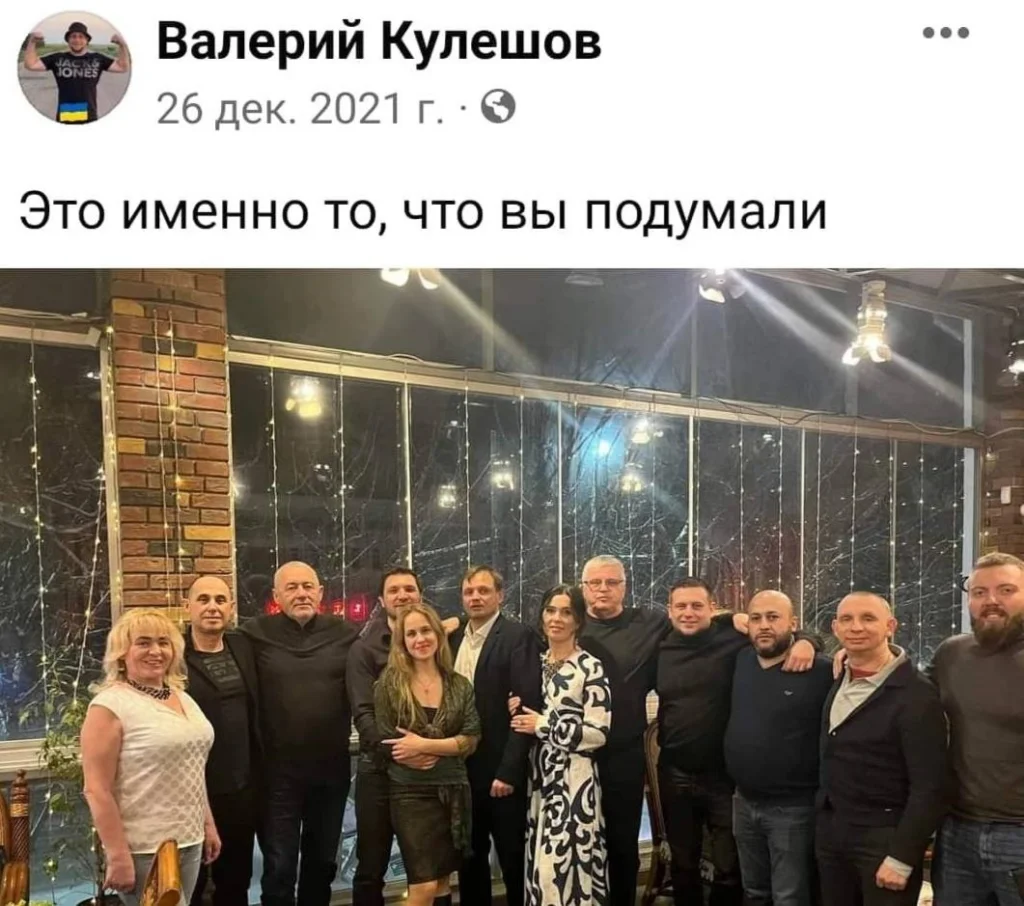
– For Stremousov it was confirmed. For your friends — the Shelestenko couple (pro-Russian propagandists Hennadii and Olena Shelestenko, who were sentenced in absentia to 10 and 12 years respectively — MOST) — that was also confirmed.
Let’s say what I observed about Kuleshov. I met with him, I met Kuleshov. Two days after these events I met with him. He arrived with another city council deputy — a deputy from OPZZh who now lives abroad. We discussed the situation. There were a number of other events, but we’ll skip them for now to understand who Kuleshov is.
Kuleshov told me he was an SBU agent. That he communicated with an officer Oleksii Kharkov. You can check if such an officer exists. I don’t know.
– I don’t know.
I’m relaying Kuleshov’s words. Why did this conversation happen? Because after Khomenko’s death I panicked. I didn’t know what to do. Kolyhaev himself was bewildered. Given our strained relations I understood we wouldn’t communicate.
I asked Kuleshov to arrange a meeting with SBU officers. He told me about Oleksii Kharkov.
– But he didn’t introduce you.
He didn’t, but he didn’t betray me either. What’s funny is if he was a Russian agent. The Russians had no claims against me over that situation. After that Kuleshov appears in the Kolyhaev office…
– Not after. He appeared there much earlier. For context: in the first days of the invasion, even before the Russians entered Kherson, Valerii Kuleshov and his team, in which Stremousov then perhaps wasn’t present but there was a moderate wing of Stremousov’s supporters, including Pavlo Tkachenko, a former SBU employee, and others, occupy the former office of the party “We Live Here” and open a humanitarian headquarters. It was a strange story. There are witness statements that Pavlo Tkachenko offered people for money or other favors an “indulgence” from the Russians that a person wouldn’t be touched. Tkachenko was detained by the SBU in Ivano-Frankivsk and later released in court. That’s another mysterious story of this war. One of millions, but very interesting. And you meet in that office?
No, not in the office. I met Kuleshov not in the office. He came to my house.
But I want to answer about Kuleshov. Were you personally acquainted with Stremousov?
– No.
Never met in the city?
– We met. There’s even video of our small fight.
I met him too. Many others met him. For me Stremousov was a person I knew from a friend who traveled the world on his motorcycle. Only later did it turn out he was associated with the Tavriia News agency. He disappeared from my orbit. I last saw him when I became a deputy and he came to city council sessions. That’s it. Can I say I knew him personally?
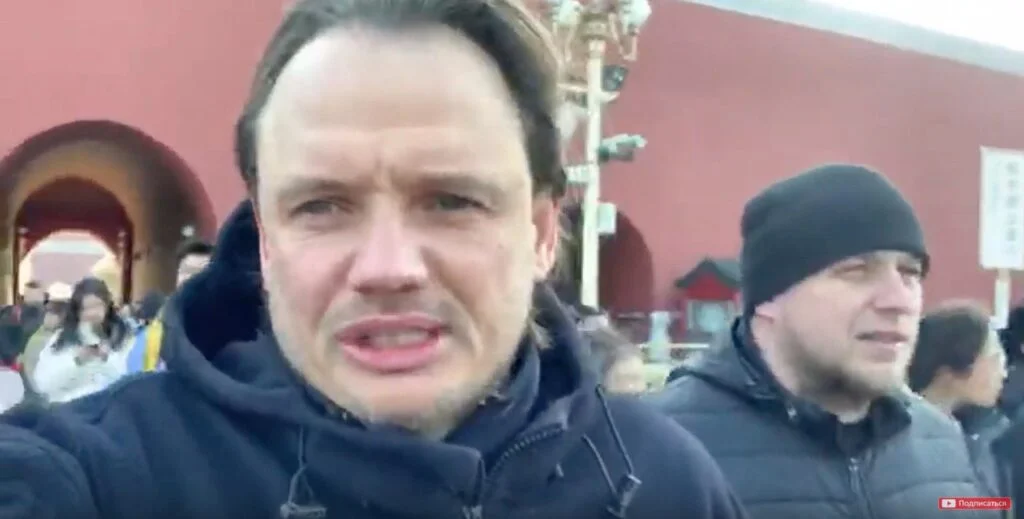
– Do you know that Kuleshov and Stremousov flew to China to some “bloggers’ congress”? Can you imagine that? In 2020 a person flies to China to a “bloggers’ congress”. Obviously they went there to meet Russian handlers.
Maybe.
– Stremousov took Kuleshov to meet handlers. That’s obvious.
Let’s put a full stop.
– Ellipsis.
Ellipsis. Kuleshov is a person who perhaps wanted to sit on two chairs. He didn’t earn much money. Like many with little social responsibility, he looked for ways to earn by any means. But…
I later began to monitor the internet. Only Anton Herashchenko, former adviser to the Interior Minister, said without confirmation that Kuleshov allegedly planned to work for the Russians, even to head the security block in Kherson region. That was the only such information. Then another event occurred. My case attracted the attention of the “Media Initiative for Human Rights”. That’s Olha Reshetilova, who is now the President’s Commissioner for the Protection of the Rights of Servicemen and Their Families. They conducted a thorough investigation. They studied everything possible. In their conclusion on Kuleshov: he never publicly expressed pro-Russian preferences or intentions.
– Okay. Isn’t that China trip suspicious to you? Two unemployed people with no financial means buy tickets and fly to China to a “congress”.
I didn’t even know they’d been to China. I hear this from you for the first time. It’s not important to me…
– Now it might be important?
Now maybe, for a complete picture.
– I don’t believe you didn’t see in 2020–2021 that these were not just two men looking for work abroad but quite a solid pro-Russian network.
According to my info, they had a falling out.
– That was one of the legends.
I’m telling you, I needed any person I could at least somewhat trust to shift attention from the squad members, because squad members couldn’t be left with that prisoner.
– Or maybe you’re telling this because everything rests on two key witnesses who will never tell anything — I mean Khomenko and Kuleshov.
That’s not true. The thing is I was never alone. For that period, a month and a half, I probably wasn’t alone a single minute. Not a single minute.
– Except March 2, when you rode the bicycle.
Well, yes. Except then. But not on the night I’ve been telling you about. Witnesses to events we are discussing, besides me, Kuleshov, Khomenko and Kolyhaev, were many others who later gave testimony in court.
– Fine. There are witnesses. You called Kuleshov, he came. What happened next?
In short, the plan was simple. I proposed to Kuleshov: take the soldier, and tomorrow I’ll tell the Russians he escaped. If they believe that, everything will be fine. If they start “shaking” me, I won’t endure… I wasn’t planning to die heroically. I understood that if Russians began interrogating me they wouldn’t stop. So I would simply say: sorry, I tried to be brave, your guy is with Valera, everything’s fine.
– Okay, if it had worked, what was Valera to do?
I don’t know. We would have seen. There were no plans, honestly, no plans.
– So Kuleshov took him, where did he take him?
Probably to his place. I don’t know. I’ll say more: you can later read the testimonies of our squad members. We deliberately didn’t ask each other such questions. In case the Russians captured someone…
– Okay, Valera took him.
I sat two hours waiting for Khomenko’s call. He never spoke about exchanging our guys. I understood there would be no exchange. I went as agreed to meet the Russians and told them that teary story: I brought him home, wanted to lock him in the barn, he kicked me in the stomach and ran. One of the Russians lightly hit me in the stomach, another stopped him and said: “Do you understand what will happen to you if you lie? Do you understand?” I said I understood. What could I do? That’s how it was. They said: “That’s it. Goodbye.”
It was 6 a.m. At 8 a.m. searches began at all our sites known to the Russians. At my home too — but rather formally, without fanaticism. At “Shade” — harshly. There they found in those guys, our squad members, Molotov cocktails, Ukrainian flags they used at rallies. The Russians showed all this on their media. Grenades, automatics were found.
I understand that we couldn’t have had those things at “Shade.” Everything brought there was immediately taken away.
By the way, about Kuleshov, whether he’s an agent, we mentioned Hennadii Shelestenko. I don’t know when he became a traitor, because on the day the Kherson territorial defense was shot Shelestenko was collecting weapons left there and burying them. He told me about it as a squad member. Do you understand?
– But he always was pro-Russian.
And he didn’t betray me. He didn’t tell the occupiers that Karamalikov knew about the weapons. Shelestenko didn’t betray me. How to interpret that?
– But two weeks after the occupation he already talked about the “heroism of the Soviet soldier” and “Russians are brothers”.
Maybe. I’m telling you about my relations with those people. Shelestenko personally collected weapons from the massacre site in Buzkovyi Park. He found in one of the dead a list of his unit. He gave it to me and I handed it to investigator Yulia Skyba. That’s why I know her.
– She is the wife of Kolyhaev’s head of security.
That’s exactly why I know her.
– And then she was deputy head of the investigative department of the regional National Police administration.
I handed those lists to her. Shelestenko knew. Moreover, as far as I understand (I don’t know exactly, but I think so), he knew Skyba was still in Kherson. Because Yulia Skyba, if you know, interrogated me as a witness on April 1, 2022. After all these events she met and interrogated me — an official, an investigator working against Russia. I gave testimony.
So I don’t betray Skyba. Shelestenko didn’t betray Skyba. He knew I transferred the lists to her. I said those lists we found were ours and we must give them to our people so they know who was killed in the park. It was the only information to understand whom they shot in the park.
– Returning to the Russian who was with Kuleshov. What happened next?
They released him — that’s it. A few days after the search at “Shade” such events occurred. Two or three days later I met Kuleshov and Mkrtchian (Tigran Mkrtchian — Kherson city council deputy from OPZZh, – MOST). I reminded him of his promise to organize a meeting with an SBU officer. He promised to connect me with Kharkov but nothing happened.
– You asked about the Russian?
I asked. He said: “You don’t need it.” Honestly, I was fine with that. Thank God that’s not my problem anymore. Because at that time the main thing was resolved: the guys who captured that soldier were safe.
One who captured him, Skvortsov, testified in court. By the way, I am also forbidden to communicate with him.
Skvortsov said in court that regardless of what happens to that prisoner, we were involved in a very dangerous story. We essentially exposed ourselves to the Russians and confirmed we had weapons. The Russians didn’t allow weapons. We carried them on our own initiative. The Russians agreed only to patrols near entrances and yards.
– Okay. After dealing with Kuleshov, did the Russians ask you anything more about this story?
Not of me. Maybe they continued looking for that soldier. Because on March 24 at “Amigo” at night the Russians burst in. They smashed everything. Their only question to the security… There was a minor, a 17-year-old guard who testified in court. They asked him: “Where is the soldier? What do you know about the soldier?” He was not in the know, but this boy knew about Ukrainian soldiers because he brought them food on my orders.
He got many kicks from the Russians, seriously, he cried. The Russians found photos with the Ukrainian flag in his phone. He was severely beaten.
And at that moment I called Sabir. I learned about the “Amigo” search on Facebook, people started calling me. I watched the cameras, saw those Russian soldiers, and they hadn’t even managed to break the cameras, only looking for the recorder.
I called Sabir and said: “Why are you beating the guys? He’s a young man.” He answered he would find out. That short conversation prosecutors interpret as collaboration with the Russians.
The next day I, an idiot, filmed everything that happened and sent it to “Marathon of United News” with my voice. The segment was broadcast nationwide, titled “What the Russian world brings us”. And I realized that was the last straw and I had to flee. I started searching for ways to leave.
I spoke with carriers. It didn’t work out. I looked for someone to take my family out without me. But my wife said she wouldn’t move a step without me.
We drove. On April 14 we left in a convoy for Mykolaiv where in Bashtanka… Well, you don’t know the rest.
– You arrived at a checkpoint, and…
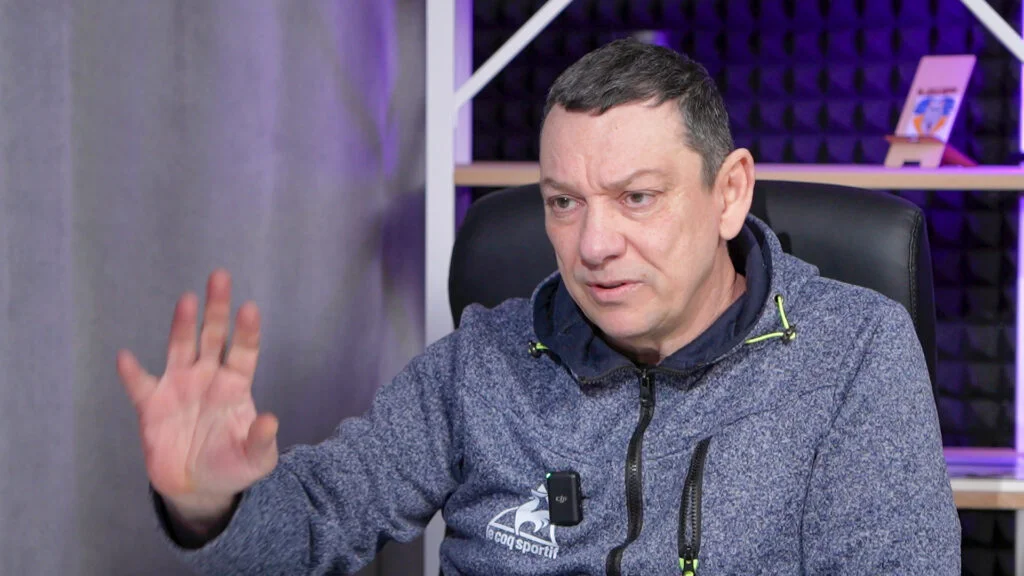
I was traveling with an Israeli passport. I was afraid I was on some Russian lists. At the checkpoint (the third or fourth we passed on Ukrainian-controlled territory) in Bashtanka first Ihor Lemeshchynskyi approached me, who later turned out to be an SBU officer. He asked for documents and I gave him my Israeli papers. He said: “Oh! Israeli documents!” I asked: “Who are you? Identify yourself.” He removed a balaclava and said: “I’m Ihor Lemeshchynskyi.”
He called someone and began scolding them for not warning him that Karamalikov was passing through. They were waiting for me because they had been wiretapping me for three days, and before leaving I called Tsyhankov and offered to take his family out. I said I’d send mine to Bulgaria, I could take his too to the border and return. I planned to return. They recorded that call and understood the departure date because I named it. They had been waiting at that checkpoint.
Then two others approached and they began searching cars: mine, then my wife’s. They searched for an iPhone. I never had an iPhone. Why were they looking for an iPhone? They searched rather gently, without violence. They were satisfied with the phones I provided. I immediately handed over both Israeli and Ukrainian passports. I hear: “Pack him up.”
They put me in a car. My wife shouted: “Where are you taking him?!” They said they would return me in two hours. I already understood no one would return anyone. For two hours you can’t interrogate a person, it’s an hour for the round trip.
I thought they would release me. I didn’t see any crime I had committed. Online I had been accused of betrayal, not only me but others. They accused without grounds. At first I found it funny, then I realized it was a planned campaign.
– So you understood leaving that you could…
Of course. I clearly understood. They started telling me I was a traitor. I said: “Who’s a traitor? I’ll come to Odesa and we’ll sort who’s a traitor.” They thought I was joking. I was traveling confident everything was fine. What is my guilt? From what I’ve told you, I don’t see any betrayal, aside from saving people. Both civilians and soldiers. And fulfilling the Geneva Conventions regarding prisoners if that was the issue.
– You were detained and taken. Where?
To Kryvyi Rih. By the way, they detained me on April 14, not the 20th as the SBU claims.
There is a summons in the case supposedly served to me on April 16. It was issued by Oleksandr Prokopishyn, Lemeshchynskyi’s boss. According to their version, on April 16 they found me somewhere unknown though my phone had been off since the 14th. That’s official operator data.
– Where were you from the 14th to the 20th of April?
According to their version — somewhere unknown.
– No, according to your version.
I was in a basement in Kryvyi Rih. But I don’t know, unfortunately, what kind of premises. I can recognize it. They put a bag over my head made from my T-shirt with adhesive tape. For a whole week they kept me in the cold. They tortured me, injected me, beat me, and forced me to record a video apologizing to Kherson residents, and saying I didn’t kill the prisoner.
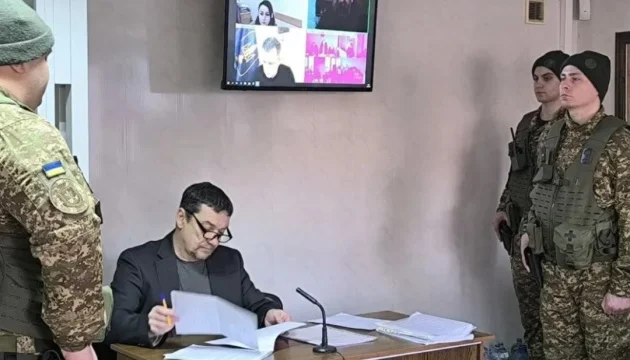
– How did it happen that you were released? First some charges were dropped against you.
Yes.
– Remind me what the charges were? That you were agitating for Russia, right?
That I agitated for the Russians, housed them in “Shade”, in “Amigo”, fed them.
– And did they live in “Amigo” or in “Shade” after you left?
No, they were there twice. No, of course not. Those were the charges.
Allegedly I hosted, entertained, fed Russians. Provided them with medicines, food, SIM cards. Repaired their equipment, which is especially strange for me. I allegedly urged Kherson residents to accept “Russian peace”. I made reports about the “Russian world” and how good it is. I called deputies of all levels to cooperate with the Russians.
– Did the court examine all the evidence?
In the criminal case there are, conditionally, two moments. First: the Russian soldier we talked about. Second: why the Russians didn’t detain me.
– Yes, and that’s a very strange story. It’s odd the Russians calmly accepted the news about their soldier’s escape.
They pretended. They went along to develop me. I later understood.
– They took people to the “basement” for less, judging by what I know now. And they released you.
And I, fool that I am, thought at first I got lucky.
– But they still let you leave. And the Russians searched for their soldier for a month, didn’t find him, and everything seemed fine.
I’ll explain why. I thought about it a long time. I have a hypothesis that maybe Kuleshov handed that soldier to the Russians. Otherwise it wouldn’t have gone so smoothly. That’s why later Kuleshov was accused of collaborating with the Russians.
– So the SBU agent, as Kuleshov called himself to you, handed that soldier to the Russians?
I don’t know. It’s my assumption. Because I can’t explain it otherwise.
– Recently you filed a declaration. You declared $100,000 of repayable financial assistance from Hennadii Hirin. What is that money? And why didn’t you list it in your 2020 declaration? Because allegedly you were given the money in 2019.
In banking it’s called a credit line. First you arrange the documents, and you take the money later when needed.
– So you agreed in 2019 and took it in 2020?
Yes. We initially agreed and processed the paperwork.
– Is that business money?
Yes, business. Honestly, I don’t understand interest in it against millions stolen from the budget…
– No, no. I’m curious. It appeared strangely, you understand?
Nothing strange. The money went for renovating “Shade”, “Amigo”.
– Did you take it with interest?
Well, these were our private, Jewish arrangements.
– Do you know the story of the Hirin family (in January 2025 Kherson businessmen Vladlen and Hennadii Hirin and family members were detained by Cypriot police, – MOST), right?
Yes. I listened while in prison. There was official and unofficial communication. I also watched your program in prison on an unofficial phone and even commented on YouTube.
– I saw it.
For that I later spent 10 days in solitary for interest in your program and they took the phone from me.
– By the way, how is prison now different from the 90s? You were jailed in the 90s.
Basically, not much. Even the menu is the same. Same porridge on animal fat. Fewer people “pack” into one cell now because modern Ukrainian prisons comply with international norms. They removed some bunks.
If in the 90s 11 people would be in a four-person cell with hardly any space, now where there were four places there are two or three maximum. Everything else is the same.
– Was your 90s experience useful?
No. In the 90s I sat with criminal convicts because I had an article… It was called then “bank fraud.” This time I sat with “political” ones. They called us political — “kolobky”, collaborators. Collaborators were kept separate because prisoners don’t respect that article. Like, betraying the homeland is bad. Stealing from the homeland is fine. But betraying homeland is bad. I won’t argue here.
– A return to Stalinist times? Treated like “enemies of the people”?
Yes, that exists. And I’ll tell you they always took us separately, kept us in separate cells so we wouldn’t mix. When we did mix, we had to prove our rights with fists. Not always victorious. Sometimes differed. We were among the first. I was arrested almost at the start of the war. There was very harsh treatment from guards. They beat me daily. And with prisoners likewise.
But after a couple of years things changed. Earlier they could enter our cell and beat us for no reason. I even wrote to the DBR. DBR, of course, found no traces: everything’s fine, nothing happened. Well, that’s on their conscience.
Now the situation changed. Both prisoners and guards have a slightly different attitude. You’re not such an enemy that must be beaten.
– And the people you were jailed with — were they innocent?
No. That’s an interesting question. How does the state approach those issues? I’d divide those imprisoned into three categories. First, 30% are really pro-Russian people who believe that Ukraine’s development with Russia is the right path. Usually they’re quite educated: former media figures, officials, law enforcement, even some from GUR. I sat with such people. That’s the first 30%.
The next 30% are idiots who for $100 set cars on fire, photographed TCC buildings… Normal guys, victims really. They’re idiots. At 20–25 they don’t fully understand…
– They were lucky to survive. Russians use such people as living bombs.
Yes. That’s that category. Plus drug addicts who for $100 go commit crimes. That’s why those 30% are simply idiots.
And another 30% — the category I and maybe others are in. It’s questionable whether the actions of these people are crimes. With my case we figured it out.
– Not fully resolved, but a little clarified.
We established there’s no definite answer. There’s no definite answer in other cases among that 30% either. For example, Anatolii Voronov — a minibus driver who for 30 years drove people from Beryslav — is accused of collaborating with the Russians.
– And you were once like Voronov.
When I was a Voronov in the first half of my life, when I was imprisoned, I was very close with Viktor Pelykh. He later became a deputy of Boryslav district council. That Pelykh and Voronov lay on the same bunk in a cell. Thirty years later in another cell sat Tolya Voronov and another Pelykh from Dnipro. Life goes in cycles.