

Since the full-scale invasion, the organization “Humanity”, founded by volunteers from Nova Kakhovka, has been helping Ukrainians leave temporarily occupied territories. During this time, more than 7 thousand people have been able to leave with their help.
Co-founder of the organization Stefan Vorontsov emphasizes: “Humanity” does not carry out evacuations, their activity is focused specifically on assistance with free departures from TOT, and includes accompaniment at all stages — from preparation, finding a driver and routes to departure to meeting already on the territory of Ukraine.
We speak with Stefan about how the procedure for leaving the TOT has changed since the start of the occupation, difficult cases, problems, and also why some Ukrainians do not want to leave or return to territories seized by the enemy.
– Tell us about the beginning of your activities. Why did you decide to help people leave the occupation?
I was born and raised in Nova Kakhovka, I also met the full-scale invasion there, I spent 40 days under occupation. I left when they started looking for us.
Actually, from the first week of the full-scale invasion we already called ourselves “Humanity”, but our priority was humanitarian aid. We collected money, mostly through Twitter, accumulated it and wanted to stock up the locals with as much humanitarian aid as possible, thinking it would be for a few weeks. At that time there was a big shortage of specific medicines like L-thyroxine, medicines for diabetics, etc. We collected requests, brought what we could – medicines, food, hygiene products, etc. – from government-controlled territory. And so until the end of March 2022 the priority was humanitarian aid. Already in April, when I left myself, requests to leave began to come. Because at first people were able to somehow leave across mined fields to Kherson, and further through Snihurivka. The further it went — the harder it became. Locals began to signal volunteers, requests increased – some had no money to leave, someone simply had no information or was afraid to go alone, wanted to find company.

So we met the Kherson volunteer Andriy Kyselyov, who at one time, when Vasylivka had not yet been closed (meaning the exit through Vasylivka in Zaporizhzhia region in 2022, – MOST), organized one of the largest evacuations from Kherson region. And we began to place people with him. But at some point the requests became extremely numerous – Kyselyov had a queue of 30 thousand people. We understood that if we added ours, it would only complicate the process. So we began to help them by paying for fuel, drivers, bus repairs, so that this queue would move faster. Then, perhaps, we evacuated the largest number of people, because there was the opportunity to send buses several times a week through Vasylivka.
Before the dam explosion we still did some humanitarian aid, and now the main focus is on departures. After the dam explosion our potential quick liberation became even more remote. And we focused on departures.
– Mostly you helped to leave through Vasylivka?
Yes. Somewhere at the end of summer 2022 the route through Vasylivka was cut off. Only Kolotylivka remained (the humanitarian corridor “Kolotylivka-Pokrovka” in Sumy region, which was closed in 2024 due to Russian shelling, – ed.). And exit through Crimea. Since Vasylivka closed we began to constantly receive complications in the form of border closures, passing checkpoints and so on. It is worth noting that exit was very difficult even before. We had buses standing for two weeks. People died, the Russians said to bury them right there in the field. Those were terrifying times.
Now essentially only one route remains — through Belarus. And I want to emphasize: this is not a humanitarian corridor. But the demand is somewhat smaller, so there are fewer tragic cases.
– Who most often turns to you?
We help people of all walks of life to leave the occupation, people of all age categories. These are children, young people, as well as adults and elderly people. We evacuate animals – we have had horses and parrots — everyone.
We do not have many coordinators, but they have constant access to all updates – how to pass checkpoints, what new conditions the Russians introduce, and thanks to this we are able to take on even the most difficult cases that other volunteers and organizations do not take.
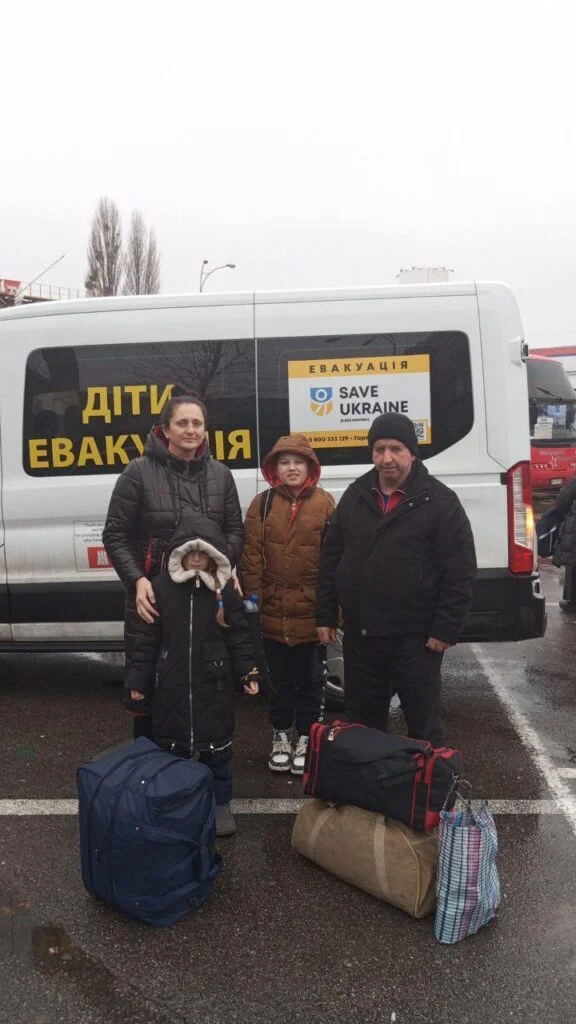
For example, there are cases when people are coming after captivity or those who escaped from captivity. We have many cases with relatives of servicemen. That is, people who sat in occupation for a long time and were afraid even to go outside because they thought they could not leave. But when they contact us, we consult them, prepare social networks, prepare the phone and take them. We also evacuate children without parents.
We do not call this evacuation, because it is impossible, we cannot guarantee anything to people, we cannot provide physical accompaniment, etc. We help to leave. For free. We emphasize this everywhere.
– Do you work only in Kherson region?
No, we evacuate the entire occupied area — Donetsk, Zaporizhzhia, Kherson regions.
– How do people in the TOT, who are constantly limited in access to information, learn about you?
Word of mouth plays the biggest role. People find us, we accept their request, connect them with coordinators who prepare them for departure, taking into account incoming data. We reserve places with carriers and evacuate people. In Ukraine, if necessary, we meet them.

– So a person leaves the occupation and can be sure that they will be met in Ukraine, they will not be alone?
Of course. For us it is very important to provide people with a destination. After all, very often people do not leave precisely because there is nowhere to go.
– And where do you usually house people?
Families with children and young people up to 23 years old are helped by “Save Ukraine” or “Ukrainian Network for Children’s Rights”. Those 23+ — it is already harder. In Ukraine there is still no program for returning people from TOT, our system of providing free housing is overloaded, because many people from frontline territories move out, and they need to be housed somewhere. But we have public organizations, charitable foundations to which we pass on some difficult cases, if these are sick, low-mobility people, people who need surgery, or people who have nowhere to live.
People have a great fear that they will arrive and have nowhere to live. So I want to emphasize — initial conditions are provided.
— One often hears the opinion, even among officials, that those who wanted to leave the TOT have already left. Is it true that the demand to leave is smaller now?
No, I would call such theses disinformation. For us, as volunteers who organize free departures, the work does not decrease. Yes, maybe these are no longer such huge groups of people as at the beginning of the occupation. But consistently every week there are several departures. And another dozen people are preparing.
There are waves of requests — cyclically once every 3 months due to some powerful reason. For example, the dam, passportization, forced mobilization. In September there was a wave when the occupiers warned that it would be impossible to leave without a Russian passport.
— You previously said that 98% of a successful departure is careful preparation. Can you tell us what it should be like?
The first thing you need to do is write to volunteers. There are many departure chats, lots of information. Volunteers, hearing from people where they are from, how old they are, what problems they have, will quickly provide the most necessary information and help organize everything step by step.
There are easy cases, when a mother leaves with a child, a grandmother with a dog — it will be easier to pass the filtration, and preparation will be minimal. And there are more difficult ones. For example, there is currently a wave of requests from men of conscription age. A lot of young people 17-18 years old. This is already more difficult, but volunteers are able to get these people through. Even with a summons you can leave.

Regarding preparation, the most important thing is your phone. Everything you do not say yourself, it can tell about you. Because during filtration you give it to the Russians, and they search everything. It is necessary to delete all pro-Ukrainian content — likes, subscriptions, banned messengers, browser history, correspondence, etc. Many people posted a Ukrainian flag at the beginning of the occupation, for example, and forgot about it. Sometimes people think “who are we, we are not some partisans, we did nothing”. But even some small thing can arouse suspicion. Especially now, when the flow of people is smaller and the Russians have more time for checks.
It is important to delete all unknown contacts, because you never know who among them went to the Armed Forces or was spotted somewhere. Of course, the phone should be filled with neutral information so as not to arouse suspicion.
All these tips can actually be found in public Telegram channels about departures “How did they get there?”, “Leaving the occupation” – there are collected stories of people who have just left, you can find out how long the queue lasts, what to take with you, how long they hold you at checkpoints.
I want to emphasize once again: there is no evacuation. We do not do evacuations — we help to leave. But the main thing is in the hands of the person — they must be independent and responsible.
– Do you advise finding a coordinator even for those who plan to leave with paid carriers?
Of course. Even if you decide to go with a paid carrier, it is still better to contact volunteers so that they coordinate your preparation. Drivers do not prepare, they just drive and are not responsible for you. So finding a coordinator will not be superfluous.
— What should people in occupation do who want to leave but do not want to take a Russian passport?
If it is necessary to save your life, health, to leave, then you will have to take it. It is simply so that the Russians have no extra questions. Of course, if a person will leave without a Russian passport, there will be a lot of questions. And they can be “turned off” by getting this so-called document.
— Will they have problems if they enter Ukraine having received a Russian passport?
No, they will not. The position for Ukrainians in the TOT has long been defined: if you need to obtain a Russian passport to save your life — take it. People in occupied territories, especially in villages, are not given water without a Russian passport, for example. Or it is impossible to leave the village, get into a hospital, receive insurance, etc. There are many people who for religious reasons cannot take a Russian passport, because the Russians have a prayer when receiving it and there are words like “devotion to Russia and fidelity to Kirill”. They cannot take it and betray their faith. And they cannot leave.
Some cannot appear in their system, in the passport office, because they risk being found through databases. There are thousands of such people, for example, across the left-bank Kherson region.
At the same time there are many requests from occupied villages where supplies have run out, they are not properly supplied with water, there is a huge problem with alcoholism plus the isolation psychologically pressures them. But people have no money. They find a paid carrier with a minimum price of $300 per person. For a family of 5 people — that is $1,500 in cash. And then they turn to us, and we help. Therefore we want more people to know about this possibility.
— You wrote that there are cases when people ask not to be evacuated from TOT, but to be taken back into occupation.
Rarely, but it happens. Mostly people know that we do not return to occupation. It is impossible: returning is harder than leaving. If there is no Russian passport, you have to fly through Sheremetyevo, go through checks. Well, there are different stories — someone needs to go in to pick up relatives, arrange housing, they have nowhere to live here, on government-controlled territory.
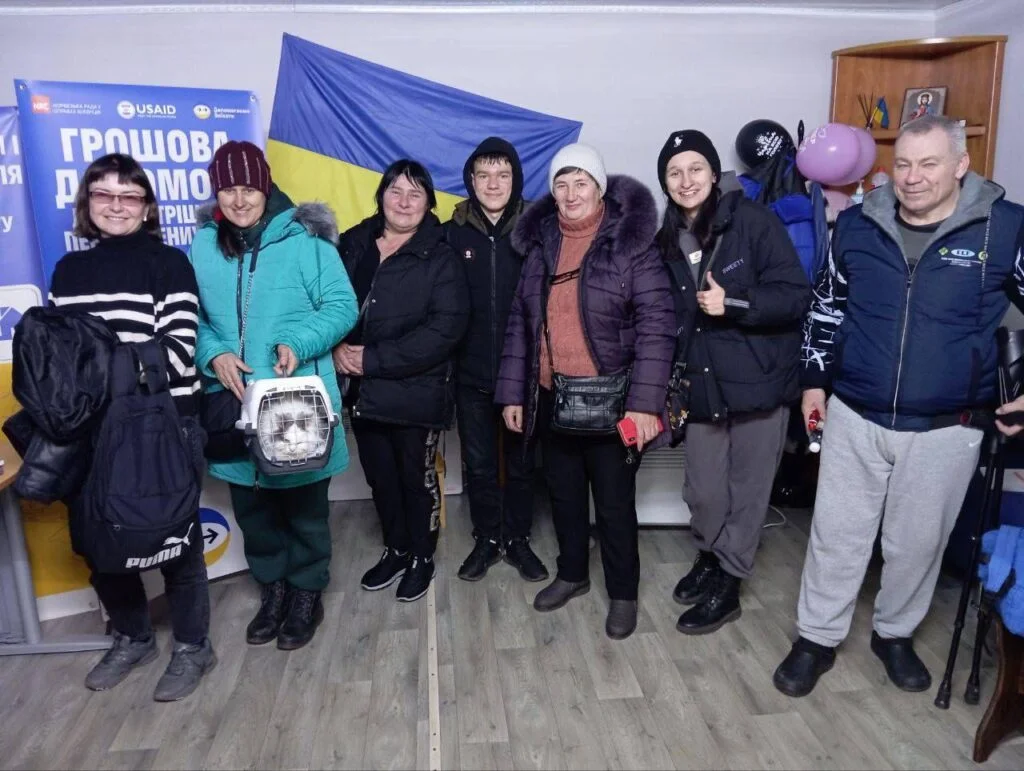
Many of those who left in the first wave and thought it would be temporary were disappointed, got tired and return, because they have housing there. There are those who have elderly parents left there and they worry about them. These are not people who become collaborators and decide to live with Russia — people also have their own reasons for that.
Many of those who remained in occupation made a conscious choice not to leave. Their mindset is: “Why should I leave if I am at home?” They should not be judged for that.
Some find it scary to leave because it is difficult to start life “from scratch” – to look for a job, housing, register children in kindergarten or school. Here it is worth noting that if the state helped IDPs more, maybe they would have made a different choice.
Many wait to sell their property and then leave.
Again, there is an opinion that has the right to exist: if all Ukrainians leave Ukrainian territories — it will no longer be Ukraine. They wait for Ukraine, they believe in the Armed Forces, they help as much as they can. There are many of them, they are Ukrainians who had their reasons to stay at home.
Photos provided by Stefan Vorontsov