

Two years ago Roman Holovnia gave an interview to MOST as the former deputy mayor of Kherson and coordinator of the humanitarian hub. Now we are talking with Roman again.
– Roman, we haven’t seen you for about two years. During that time you became a serviceman and fought in Donbas. Can we talk about that?
Yes, of course.
– Please tell us, how did you go from being a civilian to becoming a serviceman?
I planned to mobilize as soon as I left Kherson during the city’s occupation. I wanted to join the Special Operations Forces (SOF). To the 43rd center, if I’m not mistaken, in Mykolaiv. But various formalities took a very long time. And I got involved in evacuating people via Zaporizhzhia, and I kind of got “stuck” in that process. When the formalities were agreed and I could already go to the unit, there was a lot of humanitarian work to be done. We set out to solve many serious problems. A great deal was done and much still needed doing.
By the way, I should note, I could have avoided mobilization because I have three minor children.
And in 2023, when we had done a lot, had already established the process, and the charity foundation and the hub in Kherson were fully functioning, I decided to mobilize. I was mobilized into the 46th Air Assault Brigade, and today I serve as deputy battalion commander with the rank of captain.
And now I’m on leave for treatment. In July 2025 I received a severe wound in Donbas.
– Last year I met a man from Kherson by chance in Kyiv who told a fantastic story about how he led you by the hand into Ihor Kolykhaiev’s office, and after that you became Kolykhaiev’s deputy. Is that story true or not?
It’s true to some degree. It just sounds like: led by the hand…
– That Kherson man said he knew Kolykhaiev, told him: there’s this great person, I’ll introduce you. And he did.
There was a somewhat different backstory. I was already in Kherson region, I had already fallen in love with the region and the city. I was engaged purely in business. I had promised myself no more politics, nothing to do with public administration.
– Was that after you worked somewhere in Sumy region?
Yes. Before that I had been a deputy of the Kyiv City Council. I gained simply enormous experience there. That was enough for me to understand the essence of politics. I had the opportunity to work in a convocation that had the largest number of “fixers” and opportunists. There every issue had a value of millions. If you are in such a council, there are three options. Either you take part in it directly, or you fight it, or you pretend you don’t notice anything.
– Did you become a millionaire then or not?
No, I didn’t become a millionaire. By the way, “Kvartal 95” in one of their programs mocked me as the poorest deputy of the Kyiv Council. My declaration was very modest at that time. I bought my first car when I went into business, and then I started living more or less normally. Before that it was “for all that is good and against all that is bad”.
I went through that school and understood that you can’t defeat that hydra with Don Quixote-like behavior and loud speeches. And I had an interesting idea: to make a project in the town of Hlukhiv in Sumy region, on the border with the Russian Federation, so everyone could see how a city should look.
I should note that by nature I’m not a bureaucrat. I don’t feel like an official. I’m more of, so to speak, a creator of local self-government.
I wanted to create a precedent so everyone could see what a city in Ukraine can be like. And Hlukhiv had good prerequisites. The mayor was Mishael Tereshchenko – a Ukrainian-French entrepreneur, a descendant of the Tereshchenko family of Ukrainian nobles, industrialists and philanthropists.
– A beautiful story.
The whole setup there was conducive to work. There was a majority in the city council. It resembles the current situation in Ukraine, only in microcosm.
However, that was Andrew Derkach’s stronghold – the infamous traitor who fled to the Russian Federation (Derkach had been elected an MP since 1998 in the single-mandate district No.159, which includes Hlukhiv; the politician had significant influence in Sumy region, – MOST). So there was a constant threat. Unfortunately, it didn’t work out for me there. I went into business and ended up in Kherson region.
There I worked on converting waste into building materials that I sold for wind turbine construction. I traveled all over Kherson region, visited all the villages. It was quite an interesting business.
I was delighted with Kherson region, with its color, with the opportunities. I saw how, let’s say, underloved Kherson region was and how much it was economically underdeveloped, so many opportunities unused.
I gradually settled in Kherson, moved my son here. I came to the city council with a proposal to make a skatepark in Kherson. I was ready to provide equipment and workers to build the skatepark. I only asked for materials. It was 2020, when Kolykhaiev had just become mayor. That’s how it all started. Somehow I ended up at some interview. I think it was conducted by Luhova and Rozhkov (Halyna Luhova – then secretary of the Kherson city council, Yurii Rozhkov – former deputy of the city council of the VIII convocation, then head of the faction of the political party “Ihor Kolykhaiev’s Party ‘WE LIVE HERE'”, – MOST). I looked, commented, got involved in the process, and they said: “Come to us, everything will be different”.
I didn’t go anywhere at that time. Then that friend you mentioned said: “Come on! We need to help Kherson!”. I said: “So someone will bring me into the city council? I didn’t want to be indebted to anyone”. And he said: “If you want, go to the mayor’s reception, talk to him”. I decided I’d go, we’d talk, and then I might consider that option.
– Rozhkov and Luhova were deputies of the city council at that time. In what capacity were they holding these interviews?
There was such chaos. They were selecting people for the position of head of the transport department, I think. They were thinking about roads and how they would repair them.
I listened. Then I said it could be done differently. I said that for the first year it would be enough if on Ostriv you removed the “humps”, repaired one crossing and conducted a full analysis. Otherwise you rushed to repair all the roads at once; you need to at least count how many kilometers there are. You need to understand how much money is in the budget and how far it will go. As of 2020, repairing all Kherson roads would require, it seems, at least 200 million dollars.
There are no precise calculations. Just on roads there’s so much work that you won’t finish it in one or two terms. Unconventional solutions are needed. Maybe you need your own asphalt plant. Or you need to cooperate with residents, carry out repairs on co-financing terms. I came to Kolykhaiev with a simple economic model. I showed him how to bring 400 million hryvnias into the city in 1–2 years.
He listened to me and said: “Come to us for some position, for example, as an advisor”. Before that conversation I wondered what kind of person he was. I looked at how he had arranged the street where his office is located. I thought the person understands something, does things, tries. I believed you could work with such a person: he’s a millionaire, so he won’t steal. That’s how it formed in my head.
Then I calculated simple things that were obvious. According to cell operator data, about 3 to 4 million people came to Kherson region for vacation each year. Many of them passed through and visited Kherson, yet the city got nothing from it. Well, maybe someone would buy a pastry at the station.
– In 2021 on Journalists’ Day friends came to visit us. While they were waiting for us, they examined the station square. Then they said: “It’s simply awful”.
Yes. But we’re talking about roughly 3 million tourists. I proposed that these people should be brought into Kherson for at least one day. Of course, it’s hard to do right after arrival, because people go to vacation, for example, to Zalizny Port. But people stay there for about three days and they want to go on an excursion. What was offered to them? Askania-Nova, the Oleshky Sands, locations in Henichesk district… Kherson was not on that list.
The task was to give people “bread and circuses”. You could start with something simple – a light-and-music fountain, which we began to make. During my studies at medical university I organized excursions to Vinnytsia, and such a fountain there was very popular.
– I saw a model of the fountain designed for Kherson. It was awful.
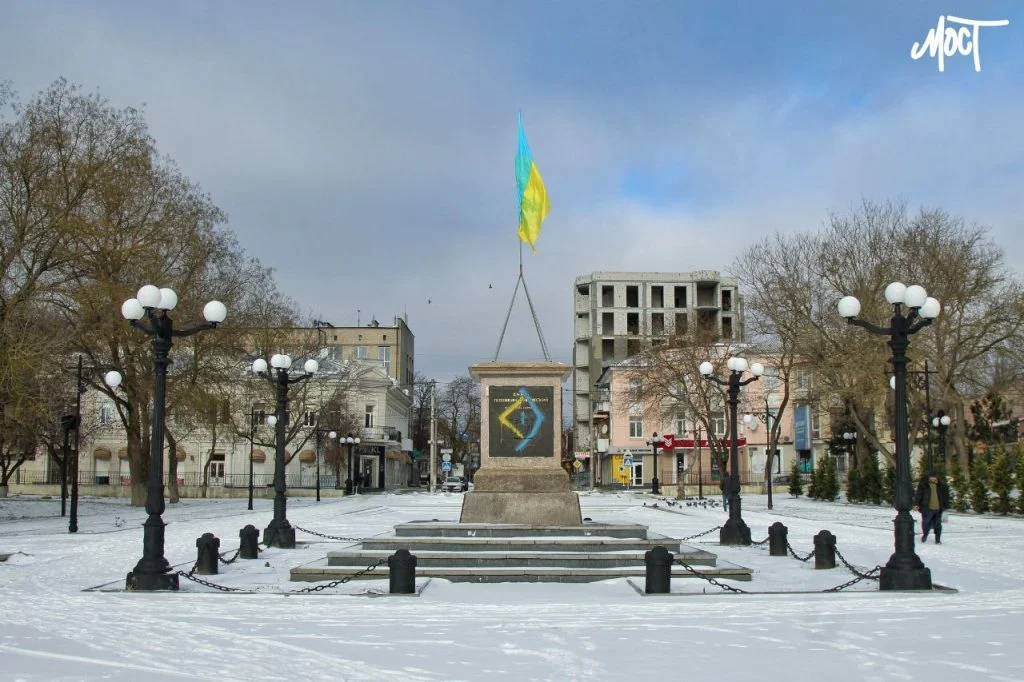
I’m talking now about Potemkin Square (now – Mykhailo Hrushevsky Square, – MOST). There we managed to do some things. There was an overall concept. The intention was to make, so to speak, a walking ring from the Slava Park embankment. Kolykhaiev was presented this concept. I showed him in numbers: if during the resort season we bring about 3 million tourists to Kherson for at least day trips, and each person spends about 200 hryvnias here, the city would receive an additional roughly 200 million hryvnias. And then you can talk to entrepreneurs about joint improvement projects. Then it will be a discussion with business, not unilateral demands from the city authorities to do something in the parks. Business needs to survive. The authorities must first do something themselves, provide opportunities for business development, and only then demand something.
– What did Kolykhaiev say?
He looked at the numbers, listened to me and said: “Yes, it’s a good idea. Everything seems right. Let’s work”.
– And he made you his deputy for parks and healthcare. For some reason.
It wasn’t exactly like that. At first I was appointed an advisor, but I set a condition. I wanted to deal with the economic block. I didn’t want to take on healthcare and social protection, because I had already worked a lot on those. In the Kyiv council I dealt with healthcare issues, and I did that in Hlukhiv.
But the deputy mayor who handled those areas left, and they “fell” onto me. In other words, they decided that if I was dealing with those issues, I would continue along that path. That’s how it was.
– And how did parks get into the story?
Well, since I had already come in with a parks concept, they said, go deal with parks. But I wasn’t working on parks as parks. I was working on an economic tourist model. It was a tourist route. The concept was: from Slava Park and the embankment through Kherson Fortress Park, Shevchenko Park, Potemkin and Pokrovsky. There needed to be space to hold various events and festivals.
Want a tulip festival in the spring? Kherson region is such a land where everything grows. Put in proper irrigation and it will be fine. In autumn, in summer.
– Tell us about the reconstruction of Potemkin Square. How did you run into harsh reality?
I had, let’s say, matured after the Kyiv Council and Hlukhiv, after business. I have a firmer organizational grip, and I came to work for results. There were issues about Potemkin Square, Shevchenko Park and Kherson Fortress. I started pushing this issue forward. And I ran into real bureaucracy that just slowed everything down.
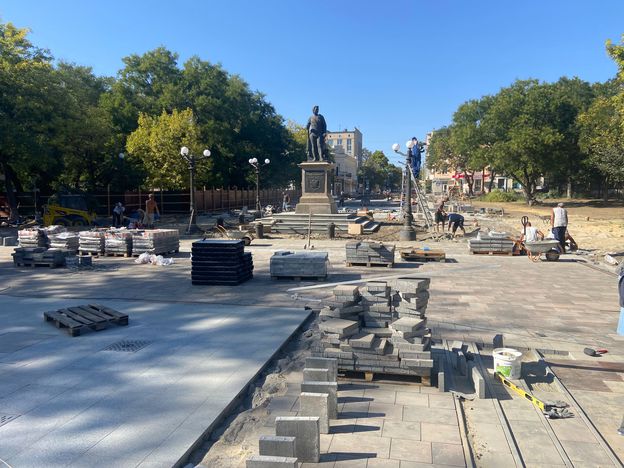
Moreover, it wasn’t so much the bureaucracy as the unwillingness to sort it out and move it forward. In the first year I thought I’d start Shevchenko Park and finish Potemkin and Pokrovsky squares. That’s elementary if the project exists. But what they managed to do even with Potemkin was from the realm of fantasy.
If I had run my business the way I handled the park reconstruction, I’d have been a dollar millionaire long ago. I had to sit for long periods in the office of, for example, the head of the housing and communal services department and go through points with him. He would say: “I won’t sign this document”. “Why not?” “There are legal issues”. “Bring the lawyer here”. If I hadn’t been doing these rewrites, if I had sat in my office and called executors, it would have dragged on for years, because it’s a long process.
I brought a lawyer from Kyiv with me, I had to.
I constantly encountered such situations. There was already a certain position on Potemkin Square. Luhova called me, there was the head of architectural control, Tsyhanok (Serhii Tsyhanok – then deputy Kherson mayor for humanitarian issues, – MOST). They “bombed” me: “What did you tell the mayor, that you’ll do Potemkin Square?! What did you come up with!?”.
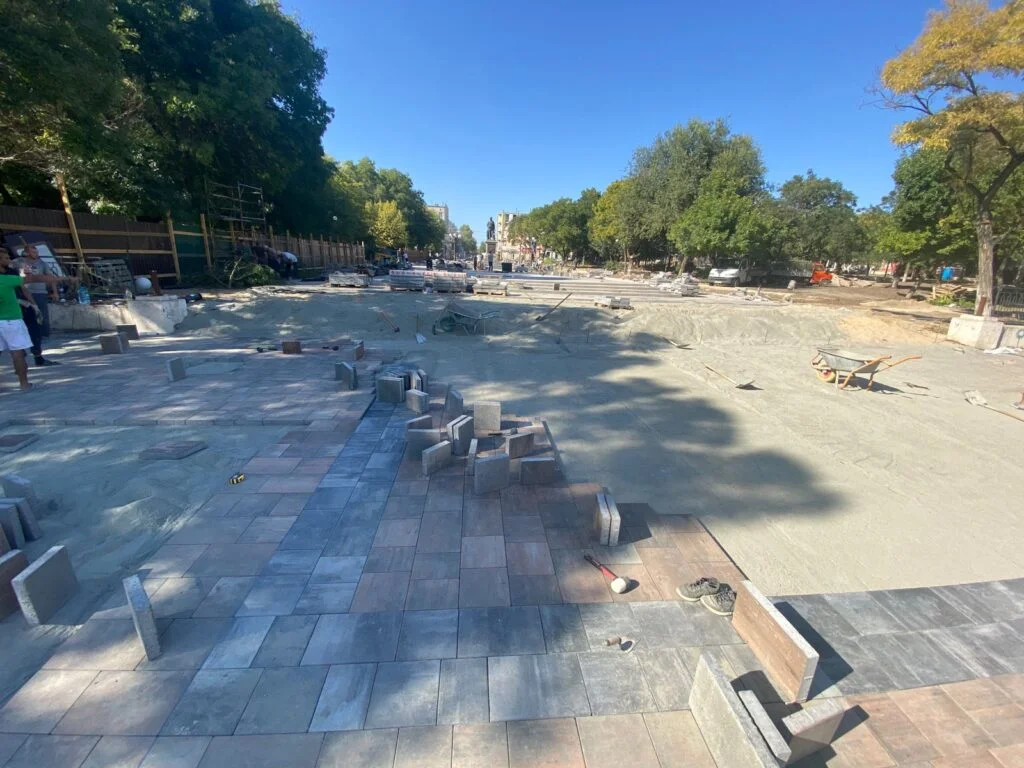
They thought it was some fantasy of mine, that it was impossible to do. They literally “bombed” me, and this to some extent influenced subordinates with skepticism that it couldn’t be done. Also, there was another factor: the “Saldo fountain” was there. They told me: “There, Saldо will block you, he installed that fountain”.
I should note that back then Saldo was perceived differently. He was a deputy. I met with him and said: “So, we’re going to reconstruct the park”. I asked where to move the fountain. Saldo said he was for a diplomatic solution, and we moved that fountain somewhere, I don’t know where. I solved that issue with one meeting, and we moved at a huge pace.
– How did it happen that the city ended up in debt because of that reconstruction?
I know a figure was mentioned — 13 million hryvnias. I wasn’t involved in financial matters or organizing the tender. That was more in Kolykhaiev’s competence. Yes, I handled the fountain because it was the most difficult task. The fountain developers didn’t believe we’d manage and do it properly, because they have their contractor and everything. And when pines were planted and benches installed, I didn’t get involved there. They changed the project. I wouldn’t have done it that way.
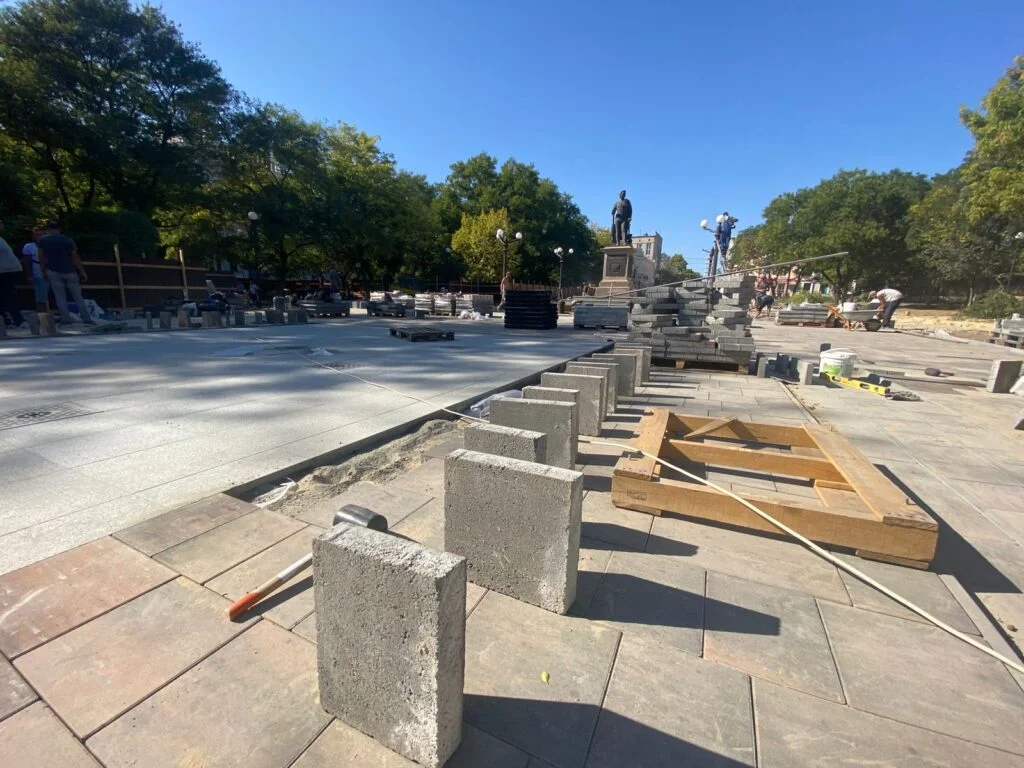
– The result looks awful.
Yes. But the fact that we did it is a plus; it’s essentially the only major thing done in the city on a large scale. There are some sports grounds, but those are cookie-cutter. Hands-on experience is already there.
– They effectively destroyed the English park there.
The project originally did not include work on the alleys. But Kolykhaiev has a trait: he made aesthetic decisions in manual mode. I didn’t interfere with that, I understood that no one could explain it to him.
– Let’s move on to healthcare. MOST has written a lot about the story with the maternity hospitals. Were you forced or did you want to give them away?
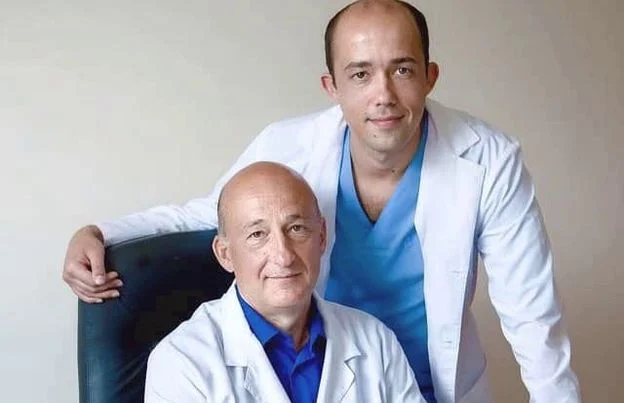
They didn’t force me, they wanted to force me. This was lobbied by Kherson medics – Yurii and Oleksii Herman – father and son. I was already called to a meeting. They said: “We will merge the three maternity hospitals into one based at the first maternity hospital”. They instructed me to handle it.
I began to study the issue. And at that time the first maternity hospital didn’t appeal to me in that way. Ostapchuk (Yurii Ostapchuk – former chief physician of the Klimenko Perinatal Center, – MOST), who became a collaborator, is, in principle, a not-bad specialist, everyone praised him. But as an organizer he is weak. I went in, and in that maternity hospital the operating rooms were still old, the tiles on the walls maybe still Soviet. The wards were rather poor. And this is a maternity hospital.
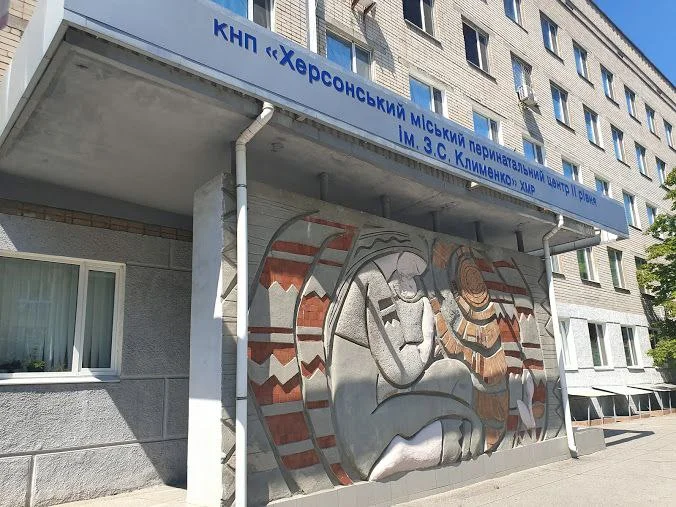
The first thing I realized then was: they (the city authorities and the lobbyists, – MOST) would still push to carry out this merger. I was against it. It wasn’t a rational decision. It was just a desire. I said that decisions are not made that way. I didn’t come here to engage in dilettantism or to fulfill someone’s whims.
– Was the merger itself perhaps obvious?
I agreed that a merger was needed. But I said doing it on the basis of the first maternity hospital was impractical because it’s in the city center, there are no parking lots, the building is old and needs renovation.
The maternity hospital at Luchanskyi hospital was half-empty, the building is newer, it is better adapted for a maternity hospital, it’s on the territory of a multi-profile hospital with an intensive care unit and everything needed. There’s plenty of space for parking, lots of greenery, it’s not in the city center. I said: “Let’s do it there”. I went to the Ministry of Regional Development to negotiate to include the project for reconstruction.
There was also the question: “Let’s merge and appoint Herman as chief doctor”. What kind of merger is that? For what purpose? To put someone in as chief doctor?
– You were against it?
Yes. And Herman junior behaved rather improperly, by the way (Oleksii Herman – co-founder of Medicgroup LLC, which owns the private Taurt Medical clinic, – MOST) – he was very self-confident and wanted to be a monopolist in primary healthcare. That’s a threat for the city. If there is a monopoly, we won’t be able to influence those processes. They will operate as they wish.
– That’s, of course, a corruption component.
There was an attempt to create a monopoly. And that provoked public resistance, an information campaign. And it was easier for me to resist. I said: “See! I told you so”. I said: “Let’s stop at the Luchanskyi hospital”. We agreed on that. And then – war. Still, I planned to resign from autumn 2022.
– When did you realize you had to go?
I was uncomfortable from the very beginning. I just ended up in a rather specific environment. The first meeting, and everyone toward me: “Hee-hee-ha-ha! Deputy for parks!”. And you know the crowd there: deputies, advisors… quite a specific contingent. They all laughed at me. Like, this is some simple fellow, who knows who he is, we will sort him out now.
– Who laughed?
Everyone, except Rukavishnikova and Pepel (then deputy Kherson city mayor, – MOST). They said: “Who are you? Who are you at all?! Came to swing a saber!”. Of course, I responded in kind. That’s how our relations developed and then parted. I got along with Pepel, but at first I had a bit of a run-in with his subordinates.
– And what can you say about the environment?
The point is it’s all old. The changes they declared weren’t happening. The city wasn’t developing. Why? Because the city was used in the interests of certain groups, who divided it into spheres of interest. And this stagnation suited them perfectly. And I hoped for change.
Others decided it was better to head that mess than to fight it. That was the most depressing thing. And frankly, I put up with it for a long time.
– But you didn’t resign?
I didn’t resign because the decision to work in city government was hard for me. I didn’t leave business to “hang out” in the city council for two months. I wanted to implement my developments. And I didn’t want to please people who expected me to leave quickly.
I wanted to finish the park so I would have at least some result to tell my children: “This park was built by your father”.
– Tell us how the war started for you.
As deputy mayor I was personally prepared for war. Shortly before that I was delegated to a meeting of the Association of Ukrainian Cities. Klitschko chaired it. Mayors from different cities gathered, and I was there representing Kherson. A representative of the American embassy spoke at that meeting. In her speech I clearly read “between the lines”: there will be a war. After that meeting I approached her and said: “I’m from Kherson, it’s a border city”. So, you must help us. She said: “Okay, contact USAID, we’ll consider the possibility of helping you”. The list was agreed while I was still in Kyiv. But we didn’t manage to bring help into the city in time.
I returned from Kherson and reported: “So, many indicators show a war is coming”. In response: “Hee-hee-ha-ha”. I said: “Please assign civil protection and mobilization work to me”.
And the war began like this. A lawyer called me at 6:00. By the way, we had already talked in the evening about how things were, where, passwords, rendezvous… The night before I filled two cars with fuel. My wife and children were in Kherson.
At six I was already at the city council. Everyone was already in shock. The first strikes. Chornobaivka. Everyone understood the war had begun. Kolykhaiev appeared around nine or ten in the morning. That really angered me, because it was wartime.
Deputies were gathering. Saldo ran in, someone else ran in.
At first Kolykhaiev did not want to go to the deputies. Luhova pulled him out, she later told me herself. I stood and listened to that line: “Look, the Russians are coming there, they’ll take Kherson now, then Mykolaiv, then Odesa”. I thought: “What kind of approach is this? Are we going to defend our city, our homeland?”.
I expected that our commander would order organization, distribute weapons, tell who where… But then — bam! I thought: “Wow, they’ve seen action somewhere else”.
– And how did the deputies react?
The majority there are obedient; they solve their own issues in the council. And then they went to resolve their issues. Mainly those who were combat-ready gathered.
A group of regionalists immediately gathered in the city council led by Yehor Ustinov, who came already with a pistol.
– You saw a pistol on Ustinov?
Yes.
You understand, for me the war — the first days, especially in Kherson from February 24 to mid-March — felt like living ten lives. I tried to count the number of phone calls per day. I reached almost 200. About 20 calls an hour.
About the regionalists. That group gathered: Ustinov, Stelmaschenko, Rotova, Mkrtchyan… The last kept more to the side. Olena Mazur was also hovering around.
I had a strong feeling that they were waiting for something. That’s my feeling. Maybe they expected the Russians to come and OPZZh would take their places. I mean, that was the Russians’ plan. Initially they didn’t intend to enter Kherson with the army. They planned to march on Kyiv, march down Khreshchatyk, stage a coup and leave their appointees here. And it seemed those deputies might be local appointees. I didn’t know that scenario then, but it looked a lot like it.
– If they were appointees, after Kherson’s occupation they would have been the first to work for the Russians, but none of them did, except Rotova.
One thing is to participate in a coup and remain Ukrainians, another is to be overt traitors. That’s a completely different thing. Besides, the plan didn’t go according to script, and they called it off.
– Okay, that group gathered. What happened next?
The atmosphere in the city council was such that by evening I didn’t understand who was on which side. There was such disarray… Someone ran into the reception while I was there and said: “There are tanks on the Antonivskyi Bridge, there’s no fuel”. And I asked: “Whose tanks? Ours?” Because I suspected everyone.
The next day of the war began for me with interviews with journalists from channel 1+1. Kolykhaiev hardly gave interviews then. I gave an interview to 1+1, and they posted my number on Viber. They simply displayed my number: I was speaking and my number was signed under it. And they started “bombing” me.
And calls came from a Russian number with curses: “That’s it, wait, we’re coming to your office now, f***, wait, we’ll sort you out now”. Russians were calling. I turned off my phone, went to Kolykhaiev, told him everything. I asked: “What will we do?” He said: “Wait”.
So I went downstairs; we had a secret service there for handling classified documents. I asked: “Do you have contact with the SBU, with counterintelligence?” I called them and said: “Guys, I’m so-and-so”, I said: “Something weird is happening here. Let’s fight”.
– Did you go to the city council again?
Not exactly. I set up a separate headquarters in the basement, and we began managing the city from there. We effectively started to run things manually.
– Who was part of it?
A few deputies and those who came to help. Vadym Danik helped – a deputy from “Servant of the People”. He was constantly involved. A lawyer was always there. There were several people from the economics side, a few entrepreneurs. Derkach – a regional council deputy – actively helped.
– Let’s return to the moment when authority moved from Kolykhaiev’s office to the basement. What were Kolykhaiev and the people sitting in the reception doing at that time?
They were simply sitting. And there were many issues. Foreign students demanded evacuation, embassies were calling. There were no fuel stocks… There was chaos overall.
Before the war I had read about Yugoslavia’s experience, which also went through war. There was interesting analysis about city blockades and life in blockade. The biggest problem is looting, when people start killing each other. When food, medicine and alcohol run out, looting begins to the point where neighbors start shooting each other. I set myself the main task of preventing that in the city. And that could be prevented if, for example, there were supplies.
It turned out that on the first day many owners of warehouses and stores closed everything and left. And every day I, if you remember, went on YouTube and said: “Warehouse owners, here’s a phone number, everyone get in touch. I give you two hours to open the warehouses. Otherwise they will become the property of the city council”. In other words, I took that responsibility on myself.
And that process occupied us all the time.
– Let’s move to the reception. A bunch of people sat in the reception and they did nothing?
I don’t know what they did in detail there. I know what I did. My task was to prevent looting, to keep shops open and ensure there were food supplies. We essentially achieved that.
We started opening warehouses. I personally went to shops and warehouses. The second task was to provide fuel. Queues immediately formed at gas stations. I knew how much fuel each station had and of what type. I analyzed when it would run out. If fuel ran out, emergency services wouldn’t work, everything would stop. So we ensured fueling.
– Why didn’t you urge people to leave Kherson in those first days? At least talk about it?
There were no discussions about that in general. I focused more on other issues: fighting looting and securing fuel.
– Did Illia Karamalikov contact you at any point in this story?
No, I hardly had contact with him, we crossed paths once or twice in the city council. Well, they were doing something there. Some deputies were very active. For example, Oksana Pohomii, Oksana Matusievich (continued in part 2).