

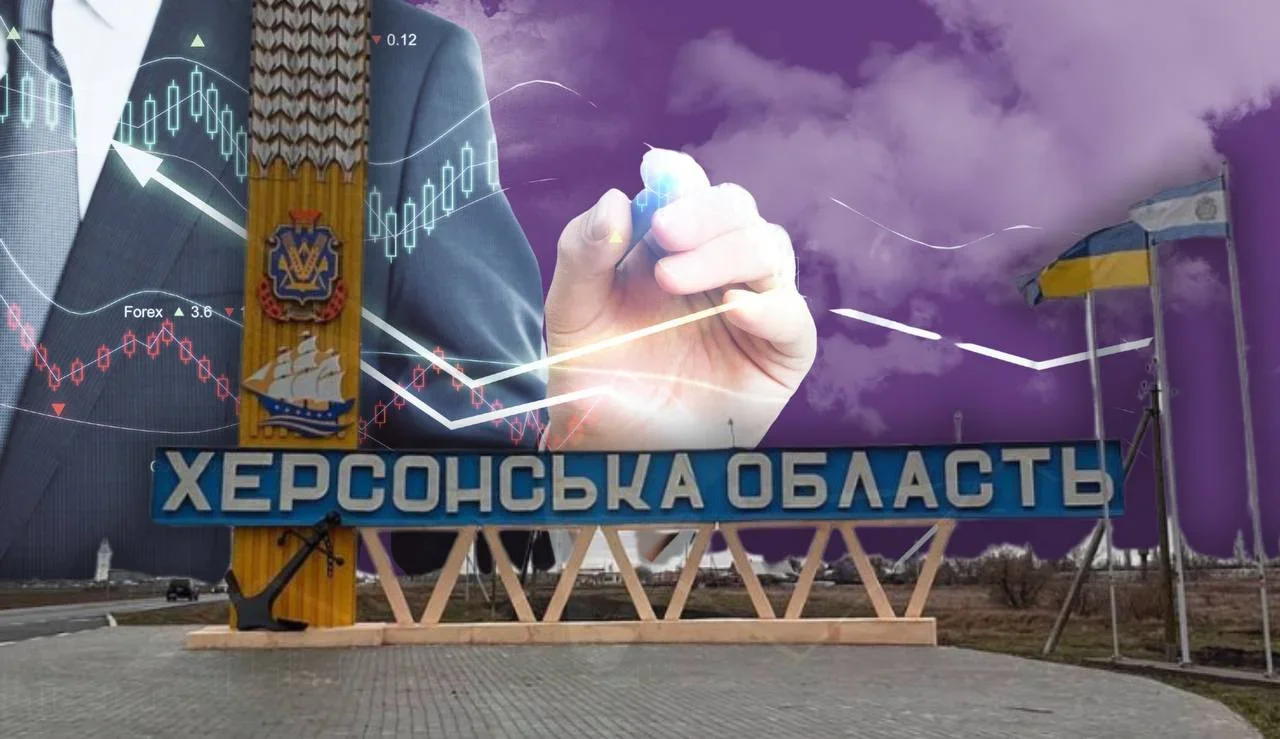
January in the Kherson region opened a new chapter of winter, in which energy vulnerability, personnel appointments and economic challenges intertwine with the reality of war and everyday survival. The region, which remains frontline, is trying to combine critical infrastructure stabilization with long-term development planning, while overcoming the consequences of prolonged shelling and economic decline.
1. Introduction
The main trend in the area became the awareness of energy vulnerability, which finally became a key factor of social tension after the massive shelling of the Kherson CHP. The region’s economy continued to contract amid the winding down of small businesses and problems in the agricultural sector, while maintaining a high budget concentration on defense needs. The social sphere is functioning in adaptation mode — through support for medical workers, distance education and special programs for children and veterans.
Figure of the month: 13 – that is how many youth councils are operating in the communities of the region at the start of the year.
2. Sociopolitical situation
The month was rich in personnel and political decisions.
- The head of the Kherson City Military Administration Yaroslav Shanko appointed former advisor Oleksandr Belyov as director of the Department of External Communications and Media Interaction of the Kherson City Council.
· Alla Holovata was officially made head of the Social Policy Department of the Kherson City Council, a position she had been performing since August 2024.
- The High Council of Justice satisfied the resignation request of judge Olga Kisilyova from the position of judge of the Kherson District Administrative Court.
· The High Council of Justice decided to dismiss Lyubov Nemchenko, a judge of the Commercial Court of Kherson region, who is in the temporarily occupied territory.
- State Enterprise “Kherson Oblavtodor” has a new head; he became Serhiy Zuev.
The Central Election Commission recognized Kherson native and blogger Roman Kravets as a people’s deputy from “Servant of the People”, but he refused the mandate.
3. Energy
In response to the destruction of the Kherson CHP by Russian forces, the city authorities approved the Heat Networks Modernization Program through 2028 for UAH 2.3 billion. The wear level of Kherson’s heat networks reaches 85%.
4. Economy
In 2025 something occurred in the Kherson region that was not even characteristic in the early months of the full-scale war: 3,757 individual entrepreneurs ceased operations. This indicates that the survival of entrepreneurship in the region depends not only on economic conditions but also on security, logistics and access to markets.
Moreover, in 2025 specialists from the State Audit Service found procurement violations totaling almost UAH 1.83 billion – an alarming signal about the efficiency of budget spending under severe conditions.
At the same time, the Government approved mechanisms to support farmers, which is an important step to preserve the agricultural potential of the frontline region. In 2025 agricultural producers of Kherson region lost nearly 60,000 hectares of crops.
5. Healthcare
January brought a number of positive initiatives in the social sphere, but with a large backdrop of challenges.
· Six healthcare institutions in the region joined the national program “Health Screening 40+”, aimed at early detection of diseases in people over 40 years old
- The region recorded one of the lowest numbers of active medical licenses in the country, which exacerbates staffing shortages and limits medical services.
The positive news was that Kherson region doctors were given the opportunity to receive service housing near their place of work – a step aimed at stabilizing staffing capacity at a critical moment. This decision is not just a social guarantee but an important mechanism for retaining medical personnel who often leave frontline regions due to lack of housing, social support and security.
6. Education
Among the important events worth noting:
- Lyceum No.3 of Nova Kakhovka entered the pilot list of institutions that will implement the senior school reform from September 1, 2026. The institution will receive 10 million UAH for its development.
- In six communities of the region there are underground educational institutions, which allows organizing face-to-face and blended learning.
- Kherson State University joined the list of 45 universities participating in the state experiment “Open Path to Higher Education”.
Important was the “Children of Kherson” Program for 2026–2028, approved by the head of the Kherson City Military Administration. It is intended to improve access to social, cultural and educational services for children in difficult wartime conditions.
7. Media
In one of the region’s oldest publications, the newspaper “Novyi Den” changed its editor-in-chief; he became Oleksiy Kovalchuk – head of the Dnipropetrovsk regional organization of the National Union of Journalists of Ukraine and editor of the newspaper “Visti Prydniprov’ia”.
8. Culture
The RMA approved a list of commemorative dates and anniversaries that will be celebrated in Kherson region in 2026 – 2027. In this regard, 2026 was declared in Kherson region the Year of the writer Dniprova Chaika.
9. Transport
The railway route “Kherson – Barvinkove” became one of the most popular within the “3000 km Across Ukraine” program. Barvinkove in Kharkiv region is the last point of rail access to Donetsk region.
Conclusions
In January, the Kherson region lives not only within the temporal bounds of a cold winter, but also in the reality of transformations: it is simultaneously a zone of high risks and a laboratory of adaptive solutions — from modernization of heat networks to social programs. The region is testing models of coexistence between the military and civilian dimensions of life, where every decision has not only administrative value but also security, social and symbolic weight.