

Continuation of the interview with the former deputy of the Kherson city mayor Roman Holovnya. The first part – here.
– Shortly after the start of the full-scale Russian invasion, there was a very interesting situation with the poultry farm, when they urgently slaughtered and sold chickens.
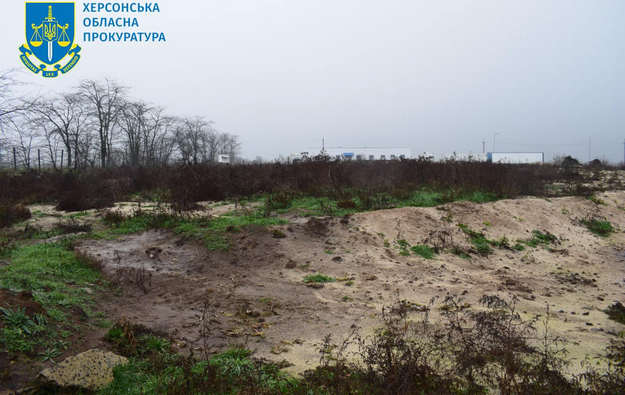
This is the Chornobaivka poultry farm. It housed three million heads of poultry. As a result of shelling, a power line was damaged. The poultry farm operated on diesel generators. There was fuel for two days. Then, due to the lack of ventilation, a mass death of chickens would have begun. Their total weight is about 6 tons. Do you understand the scale of the catastrophe?
We agreed with Yevhen Sobolev (the head of Kherson’s Northern Correctional Colony No. 90, – MOST), who later became a collaborator. He said he was ready to bring convicts to the poultry farm. They worked there, kept the farm running: refueled the generator, collected eggs. Part of the eggs went to the colony’s needs, part were distributed to low-income Kherson residents: about a hundred thousand pieces daily. Deputies participated in this. Oksana Matusyevich, for example.
Then the feed at the poultry farm ran out. There was no way to bring more. The only option was to slaughter the chickens. Convicts from Colony No. 90 helped with this as well. We distributed up to 20 thousand carcasses daily. Deputies took them and then distributed them to citizens, employees of the State Emergency Service…
Of course, the quality of these chickens was… Well, only good for broth. But in conditions of food shortages, even that was good.
– They say some of those chickens were sold alive at the market.
Maybe. I could not cover and check everything. It is clear that someone was “running” some kind of business there. The main task was to prevent the mass death of the chickens, an environmental catastrophe. And we helped people. Those who had nothing to eat at that time.
– And who delegated all these powers to you? Kolyhaiev?
No one. I just took it upon myself and did it. I exchanged messages with Kolyhaiev.
– And how did Homenko react to this, for example (Anatolii Homenko – deputy of the Kherson city mayor: from January 28 to March 17, 2022, when he suddenly died, – MOST)?
Homenko was not there at all. He appeared when the Russians were already in Kherson: around March eighth.
– So at the end of February he wasn’t there at all?
He wasn’t. I didn’t see him. I was corresponding with Kolyhaiev. He demanded planning and reporting. I simply didn’t have time for that. Because if I hadn’t done all this, no one would have. I could just come and talk about the situation. To dig into documents — no.
I also wanted to distribute weapons to people. There were two gun shops in Kherson. From one of them, as far as I know, all the goods were taken out at the beginning of the full-scale invasion. I communicated with the owner of the other. He said there were a lot of good weapons in the shop. I really wanted to do it. It didn’t work out. There was also the idea of building barricades.
Note that during all this time the Russians called me and wrote messages: “Roma, stop playing around, soon there will be GRU special forces here, they’ll deal with you”.
There was also the idea of making barricades from sandbags. The territorial defense took the bags from the enterprise “Amalthea”. Later the owner of the enterprise, Serhii Rybachok, who later became a collaborator (during the occupation of Kherson he was deputy head of the Russian-created city administration, hid under the pseudonym Semen Ushynskyi, – MOST), called me. He asked to pay for the bags. I told him exactly what I thought about that.
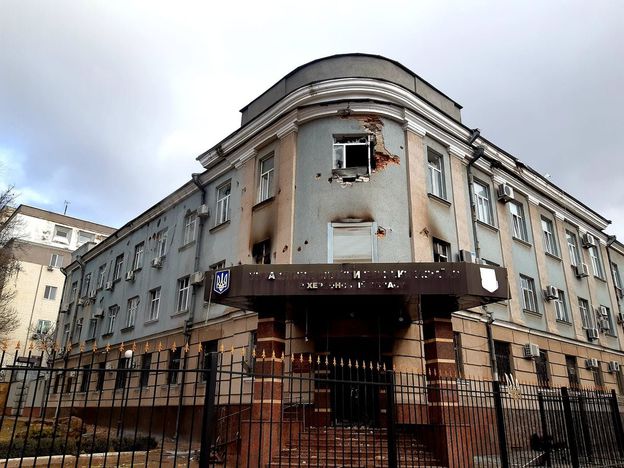
At the end of February we were preparing to meet the Russians. I had an automatic rifle and four magazines with rounds. We were romantics then, we didn’t understand the realities of war. And I faced them when the Russians entered the city and struck the SBU Administration.
– Was there a fight?
No. They just fired. I lived then on Luteranska Street. I slept in a room whose windows looked directly at the administration. When I heard the shots, I jumped out of bed. They fired from the gun of an airborne combat vehicle (BMD). My wife and children hid in the basement.
I planned to “lay low”, but they started to “bomb” me with questions about lists, fuel, and so on. Volodya Semenchenko — my lawyer — was constantly at the city council. He told what was happening at the beginning.
When the Russians first entered the city council, they took Kolyhaiev, and some conversation took place on the lower floors. The mayor was gone for about two hours. He returned with a frightened face. He gathered everyone who was there and said: “Okay, we work as we worked, we take care of the city, we take care of the people…” and so on. After that they began to bother me: “Where are the lists? What’s the situation with flour?”. They began to take an interest in all that.
Note, I don’t want to slander Kolyhaiev. I just don’t like hypocrisy. They tell me: “We are for the people.” But I don’t see it. I saw that when the Russians were already in Kherson, there was some coercion, some agreements.
They began to “bomb” me, demand contacts of people we helped: large families, foster families…
And I decided to “lay low”, turn off the phone. But it didn’t work out. I still had to go to the city council because many questions arose.
– They said some FSB agent with the callsign Alfa was constantly at the city council. Did you see him?
Of course. I saw him at meetings in Kolyhaiev’s office. I “froze out”, participated in very few meetings. I didn’t want to go there because the Russians were constantly sitting there: in the office, in the corridor.
All this is well known to deputies Piddubnyi, Tkachenko (Dmytro Piddubnyi and Andrii Tkachenko – deputies of Kherson City Council from Igor Kolyhaiev’s party “We Live Here”, – MOST). They were constantly in the reception room, even greeting the Russians by hand. I did not go there. And I would never shake the occupiers’ hands!
– Did this Alfa talk to you?
No. As I said, I “froze out” then. I remember one situation. There was a meeting in Kolyhaiev’s office, and the door opens… Kolyhaiev had a ritual: everyone who entered would knock. But here the doors simply opened and this man entered… I don’t know whether he was Alfa, Beta, or Gamma. I know he drove a RAV4 (Toyota RAV4, – MOST). He said: “I’ll sit down” and sat on the edge of the table.
– Was he wearing a balaclava?
No. When he entered, I was speaking. And I was the only Ukrainian-speaking person there. The attendees immediately switched to other matters. I don’t know why. Maybe they didn’t want me to “spoil the picture”. Maybe they were protecting me that way.
In general, the Russian was there regularly, asked a lot of questions. But I did not communicate with him. Inside me everything boiled at the very realization that the Russians were here.
– So they spoke with the city leadership one-on-one?
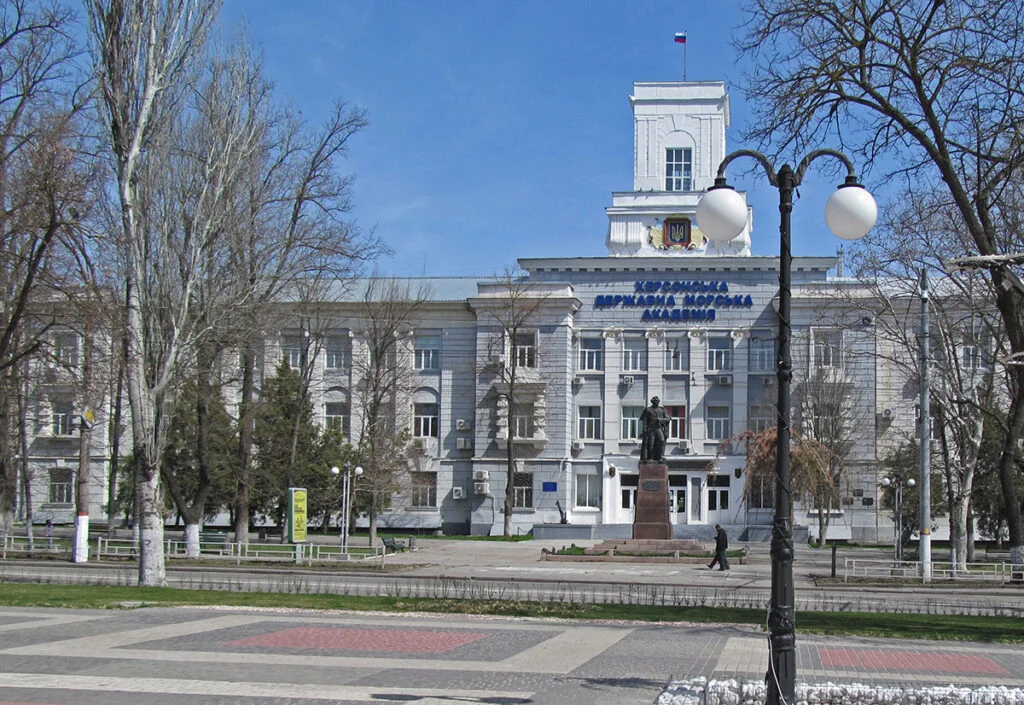
Well, that’s obvious. The city council had a Ukrainian flag, but on the opposite side of the street there was the Maritime Academy with a Russian flag hanging on it, and the occupiers had their headquarters there. I photographed it from the window of Oksana Rukavishnikova’s office.
– Was Anatolii Homenko already involved then?
He got involved in the process, started dealing with medical issues, supplying medicines to the city. Herman also appeared there, and Yurii Pohribnyi (former secretary of the Kherson City Council, – MOST). Everyone wanted to be involved in medicine. And the situation there was extremely difficult. Drugs were needed that people’s lives depended on. In particular, drugs for hemodialysis, painkillers, and antidiabetic medications.
By the way, in this respect I want to remember with kind words Alla Malytska (then – chief physician of the Kherson City Hospital named after Karabelesh, now – deputy Kherson city mayor, – MOST). She organized the delivery of both humanitarian aid and medicines. She had certain connections. She also helped organize the work of Luchanskyi Hospital…
There were many problems in medicine. For example, the morgue was overcrowded, there was no medical oxygen. We were very lucky that by the start of the full-scale Russian invasion the COVID story had almost ended. If it had continued, I fear we would have counted the dead in tens of thousands. Even so, we, you could say, miraculously saved Kherson in that situation.
Regarding medical oxygen, we were saved by a company from Mykolaiv. I even wrote an IOU then: if the regional administration did not pay the 600 thousand they owed, I would pay. The administration did not pay, but the company did not demand money from me.
During the occupation, while I was in Kherson, I worked most of the time, so to speak, underground. I resolved all issues by phone.
– Did your family remain in Kherson?
Yes. Getting them out of the occupation was a very difficult operation. Thank God, everything worked out. Many people called me in Kherson. Including Vereshchuk (then — Vice Prime Minister — Minister for the Reintegration of Temporarily Occupied Territories of Ukraine, MOST). We spoke with her about evacuating children.
– You worked with her in the Kyiv City Council, right?
No. We were deputies in different convocations. Someone gave her my phone number. It was about evacuating pupils of an orphanage who were hiding in a church. This is a very well-known story. And the story was very strange. Our people tried to negotiate with the Russians, developed some, in my opinion, idiotic route. And in the end it all fell on me. Vereshchuk calls me and says that the Russians will contact me. I categorically refused because I was not showing myself in Kherson at all then, I didn’t leave the apartment.
By the way, who really took care of those children was Liudmyla Afanasieva (head of the Kherson Regional Charitable Foundation “My Home”, – MOST). She did a lot for those and other children then.
I tried to gradually withdraw from all those processes. Then Yevhen Sobolev warned that someone had “ratted” on me to the FSB. By the way, he knew that I knew about his close communications with the Russians.
Sobolev said he saw some papers on me, my photos from the Maidan. He said that they were preparing a non-departure pledge for me. And then I finally went underground, started preparing to leave.
My wife and I were able to buy several passports. There were people in Kherson who did not value these documents and agreed to sell them. I made a fake document for another surname. I made copies of all my other documents for that surname: my diploma, for example.
– All this was done in Kherson?
Yes. How else? It was necessary to leave as soon as possible because the window of opportunities was closing very quickly. We left on June 1, 2022. It took five or six days to get out. It was quite an epic.
– And during the underground period – from April to June 2022 – did Kolyhaiev contact you?
He had questions for me mostly about children, he wrote me about that. I communicated more with other city council employees. In that period I met Kolyhaiev only once. It was in May, he was walking around the city with a bodyguard.
Kolyhaiev also contacted me when there was an idea to repair the water conduit to Mykolaiv (damaged by the Russians during the fighting, – MOST). But in reality no one did anything.
When I was leaving, I also took my grandmother with two orphans. Then many people in Kherson public groups asked for help leaving. I took a woman who was raising two grandchildren alone. And we went towards Zaporizhzhia with those “left” documents I mentioned earlier.
In Zaporizhzhia I saw how internally displaced people were received. I was simply shocked. People, including the elderly, sat right on the asphalt. There was no infrastructure. So I organized a hub for displaced people in Zaporizhzhia: we collected them, took them to a motel where they could rest. That is, we created infrastructure so that it was more or less comfortable for them.
As for the actual evacuation, everything was chaotic: someone was taking people out for money, someone on a volunteer basis.
– By the way, I’d like to understand this better.
As I said, everything was chaotic. And I did not immerse myself deeply in that process. I was interested in helping people evacuate. I will only say that there was definitely a corruption component in the whole story — one hundred percent.
When I first got to Zaporizhzhia, I realized I wouldn’t be allowed to do anything. So I appealed to Iryna Vereshchuk and proposed a meeting. We met, and during the conversation she told me that I was the first of the Kherson officials who contacted her on evacuation issues. By that time the heads of the regional administration were already on non-occupied territory.
I asked Vereshchuk to issue me some official document on the basis of which I would work with displaced people and which would allow me to work properly so I wouldn’t be hindered. She did it and ordered her deputies to assist me.
And I began to systematize the process because everything was chaotic. We organized a point where humanitarian aid was brought. And I insisted that at least three evacuation buses go to Kherson daily. Out of turn. Because in places people were trading spots in the queue — that’s true.
When I was leaving, I thought that since we were at war, we had no right to corruption and all that. I confess, my psyche was somewhat shaken. When I entered a supermarket in Kryvyi Rih, tears came to my eyes. I hadn’t seen a normal store for three months.
I managed to systematize the buses’ operation; they began to run regularly. We rented large premises. People were brought there, we organized a motel. We made an arrival zone, provided food, a psychologist worked with people, helped with recommendations on further routes. People could stay with us for up to three days, rest and decide where and how to move on.
I already had a concept written out of how to make such hubs for all regions with occupied territories. Because officials from those territories had left, sat all over Ukraine, received salaries and did nothing. They could deal with displaced people. USAID even preliminarily agreed to finance such a project.
At that time the Kherson Regional Military Administration was headed by Yaroslav Yanushevych. OVA representatives pompously came to the opening of our hub.
– And they called it a regional hub.
Which led to my conflict with the regional administration.
– They didn’t like such activity?
Not just didn’t like it, they were simply irritated by it, and conflicts ensued. They wanted to do something of their own from scratch. In some kindergarten building. They also planned to put a tent in Zaporizhzhia near the bus station. I said: “But here it is, I already made it”. I offered to develop this topic together. But they all, so to speak, were already lining up: Yanushevych, local Zaporizhzhia officials, Vereshchuk, Kozyr (Sergii Kozyr – one of the people’s deputies of Ukraine elected in Kherson region, – MOST), and the regional administration. And I was somewhere behind in this process. That’s how it went until passage through Zaporizhzhia, that is through Vasyliivka, stopped.
– Let’s return to the situation in Kherson. Igor Kolyhaiev, in your opinion, a hero or a traitor?
For me Igor Kolyhaiev is definitely not a hero; whether he is a traitor or not — I’m not a judge. The position “for the people” — I consider it hypocritical. I understand that Kolyhaiev took on obligations that, allegedly, we will hold the city, that everything will be calm — for the Russians it was a very good situation.
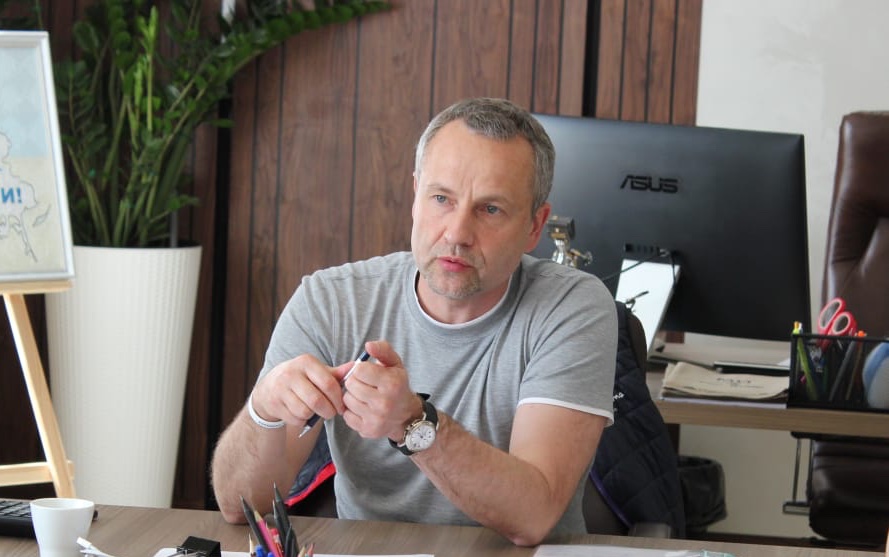
In my understanding a hero is someone who defended his Motherland. There is the Constitution of Ukraine, there is the legislative framework that obliges any man to defend his state in case of war, of attack.
As for the situation in Kherson at that time, it was ambiguous. Imagine what would have happened if the city had plunged into chaos: no electricity, no water… And the Russians had just arrived, they needed to show how good they were. They began to hand out things, look for some military pensioners, organize their “chorovody” on May 9.
– But, on the other hand, chaos in the city would have been a catastrophe for hundreds of thousands of people.
So I cannot say who is a traitor or not. I will only note that from the point of view of the Criminal Code there were many actions that raise questions. But let the law enforcement agencies and courts sort it out.
And it is unknown what the reasons were for Kolyhaiev not being detained until Borodai (Oleksandr Borodai – deputy of the State Duma of the Russian Federation) visited Kherson and made a statement that he was very unpleasantly surprised by the deals in Kherson. And after that — once or twice — everything quickly changed. Let the appropriate services investigate this. I tell what I saw and felt. I speak plainly and frankly, as it is. I do not want to harm anyone or take revenge for anything.
– When we spoke in 2023, you said you were definitely going to run for mayor of Kherson. Has anything changed since then?
Things changed. I really wanted to run for mayor of Kherson, and not to arrange something for myself. It was part of my life plan in terms of creation: to make Kherson a garden-city, a city where one wants to live. I really saw it. And I saw how it could be done. The possibilities here are simply unreal.
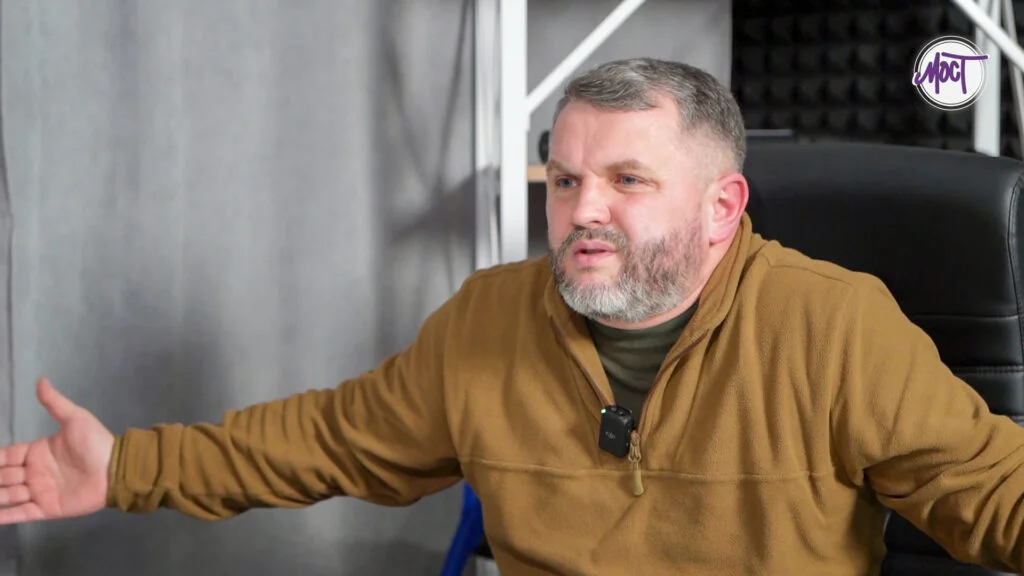
But now this concept of mine has already fallen apart.
– So Kherson will not become a garden-city?
It will. The city deserves it. There are many great people here who can do this, implement it even without me. Kherson has wonderful people. Only the elite is rotten. It sucked all the juices out of the city, didn’t let anything develop. They attached themselves like leeches and don’t allow anyone in. They grabbed land and everything else. You can’t get taxes from them, you can’t account for anything. They sit in the city council to keep others out. I dealt with this issue. I wanted to account for everything. Otherwise you can’t talk about investments.
– Did you talk about this with deputies, for example? With Dmytriiev (Andrii Dmytriiev – deputy of Kherson City Council from Igor Kolyhaiev’s party, – MOST), with Rozhkov (a deputy of Kherson City Council from Igor Kolyhaiev’s party, – MOST) ?
I talked. How can you bring investors to Kherson and offer them to honestly pay taxes and fees if half the city’s land has been grabbed, not properly accounted for, and no one pays for it? You need to launch normal economic processes so the city works, so there is a proper monetary valuation of land, so there is a transparent system of taxes and fees.
– Why don’t you want to do this now?
I didn’t say I don’t want to do it. The war changed me a lot. I revised many life values. I missed a lot in my family and my life while pursuing personal ambitions. So I want to devote some time to family. That’s the first thing.
Secondly, the war itself sets priorities in terms of self-realization. Now I feel internally that I have outgrown this process. You know this crowd. I don’t want to go and “butt heads” with them, prove the obvious to someone, get involved in that political limelight again.
But I will say, there are many decent people in Kherson. There are a lot of great people in business, especially in the middle class. There are many good scientists who are also great people. But none of them want to go into power. I survived there because I have resilience, some political experience, I understand the subject a bit and can take a hit. Many people refuse because they are afraid that the system will simply break them.
And for me — to take that distance again, to prove something to someone? What’s the point? I think Kherson residents will realize everything themselves, and among them there are many worthy people who will still revive the city. Don’t give up.
– But you gave up.
I didn’t give up. Don’t underestimate my self-esteem. I did not give up. I reviewed my priorities, I reviewed my goals.
– So you might change your mind again?
I have made a decision 99 percent, so one percent remains. That’s it.
I see that many processes in the city have not been systematized and properly organized for a long time – since the de-occupation. It got to the point of absurdity. I couldn’t install gabions in Kherson. I was ashamed in front of the Swiss embassy, they didn’t understand that such a thing happens at all. I agreed that they would finance the installation of protective structures in the city. Near hospitals, at bus stops, near various institutions, where people gathered. For example, near the National Police administration.
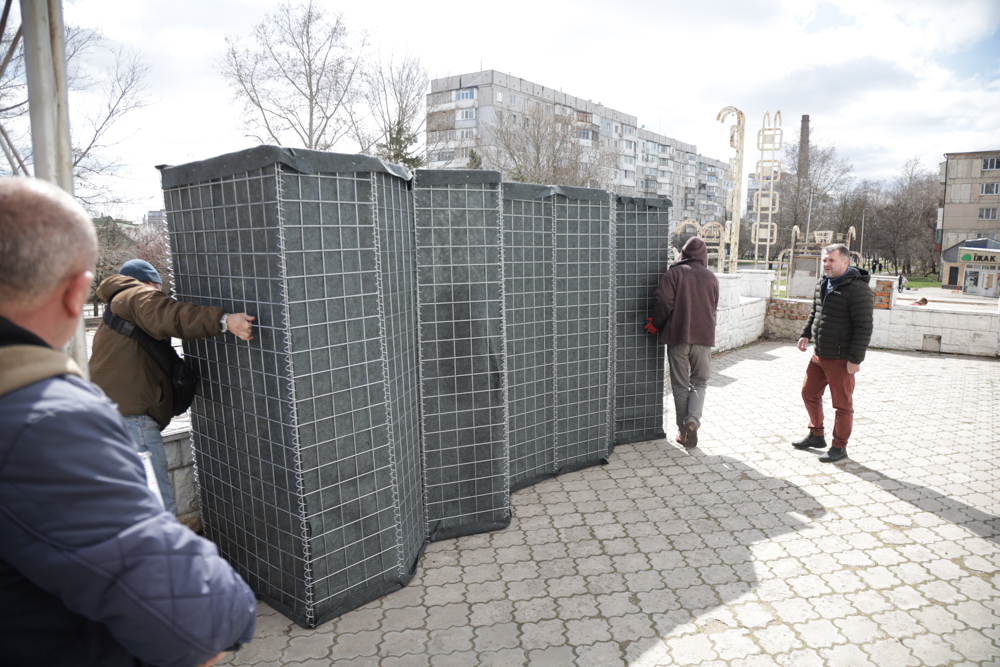
And I negotiated this list and the project with the city civil protection department for two or three months. I was reproached that I was pursuing some political goals. I said: “What does politics have to do with it? I just came because people need protection”.
The company Anserglob helped a lot then. It provided sand and took on delivery. Free of charge for the city budget.
I think anti-drone nets could have been hung with humanitarian money. You can do a lot of things like that. You need to take really non-standard solutions. And there are people for that. Many wonderful people.
– Many such people left Kherson. How to bring them back? I talk to everyone about this. Businessmen, other people. Many say they most likely will not return to Kherson. After three years in a new place, abroad or in Ukraine, they have already built social capital, new business. How to get them back to Kherson?
There is no one hundred percent correct recipe. Everyone has their own separate story. And everyone will decide for themselves. People will return only when there is a reason. An economic reason. It must be interesting, there must be an opportunity to live and to do something, to earn a living. And that should become a priority in the city.
I would do it like this. I would collect a list of economically active Kherson residents and ask each: “What do you need to move here?”.
– Who will do this?
Those who will govern the city should do it. This is one of the conditions for economic development. The city must become interesting. If money appears, people will appear. Where to start? Don’t forget about tourism.
After the war, places where battles with the Russians took place can become tourist locations. If all this is properly arranged, make some thematic installations, etc.
And many interesting things can be done in the city, but for this you need hotels, infrastructure. So that tourists stay, not come by bus, walk around, eat a kebab and go back to Odesa. If, for example, 10 thousand tourists come and each spends at least $100 here, the city will receive a million dollars.
Comprehensive solutions are needed. Perhaps some special economic zone with tax incentives is required. There are a number of interesting enterprises here that can develop. Again, there is a river and a seaport.
By the way, various investors came to Kherson region, and many said they were treated as unwanted competitors. For example, the Turks wanted to establish compound feed production, but they were not allowed.
– Because Buliuk had his own plant (Vitalii Buliuk – former first deputy head of the Kherson regional council, now a collaborator, deputy head of the occupation government of Kherson region, – MOST).
Such Buliuks sit everywhere and block everything. Remember what I said about the elite.
– The elite has been cleansed. Look how much filth has gone. So who will replace them if even you don’t want to return?
I have changed internally, you know? I made certain decisions, re-examined some things. I went through the war, a real war, not somewhere in a headquarters. I was wounded. I re-evaluated certain moments of my life. And today my decision is what I told you. I say, one percent remains.
And this interview of mine is not some PR. I simply told Kherson residents how it is and was, from my point of view. Yes, subjectively, as I saw it, as I did it.
By the way, it was very wrong, from my point of view, from the very beginning, after de-occupation, to raise the issue of working in Kherson. The city should immediately switch to survival mode, to a war mode, do everything for the war. Not build some schools, not think about development issues.
– It seems that’s what happened. Except maybe building underground schools.
No. There are many things that are being done only in the fourth year of the war that could have been done in the first six months. For example, arrange places to accommodate evacuees. I traveled to different regions. For example, Rivne region. In the city of Dubno there is a children’s sanatorium. Do repairs with international funds, make housing for people there. In Kuyalnyk there are premises where people can be accommodated.
They say: “Leave!”. Where to? I am in shock. Four years have passed and nothing has been done in this direction. Where and how should people go? How should they make decisions? How to live? These are a lot of questions. That’s what needed to be done. Think about people, about each person.
And we worry about how to bring them back? We didn’t fight for every person for four years, everyone was on their own. And then we call: “Return, because the city has no budget! Because someone has to earn money here. Because subsidies will be calculated per capita. Return!”.
But our people, I repeat, are wonderful. In today’s realities in Kherson there are hundreds of people who perform feats. Especially women. The heads and employees of medical institutions, employees of government bodies… These are simply holy women. They do not leave, they work under shelling.
I bow to such people. These are not the men who receive salaries of a hundred thousand and have a booking and they seem to run something somewhere.
– There are many good people, but the situation in Kherson seems cursed. Why?
Yes, it seems cursed. The thing is that the region was quite specific. At one time Crimea had a negative influence. I think it was because of this influence that Kherson had a hard time getting out of the ’90s. From Crimea swindlers moved here who did not let real business into the region.
I’ll give you one example. Once a colorful man came into my office and said he would not pay 900 thousand, although there was a corresponding court decision. I began to deal with him. Now, by the way, we are friends. This is Viktor Postilnikov — owner of a plant assembling Audis in Kherson (referring to the enterprise “Vipos”, – MOST). I was shocked by his story.
– Anatolii Homenko was somehow connected with this.
Homenko was, as people say, a “con man”. As far as I know, he has no properly completed business story. At least I haven’t heard of any. And he, together with Buliuk, killed it all, I think, I’m sure.
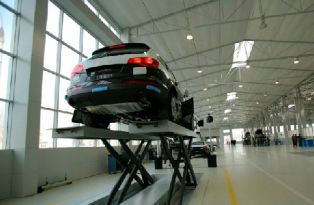
And imagine: they were assembling Audi cars in Kherson! And such an enterprise was killed at Buliuk’s instigation. Because the owner was a principled person. He said: “No kickbacks”.
The entrepreneur told me that he brought new equipment, bought at an exhibition. He brought people from the factory. They certified everything and assembled about 300 cars in Kherson. He even developed his own car. It’s called Ostcar. He showed me prototypes. He has two left. This car somewhat resembles a Lancer.
At that time it was a revolutionary car. They were going to make a production line for these cars in Kherson and supply them to Africa. But the elites interfered. And some Buliuk simply killed it. Because he wanted to be paid. And what was Homenko’s role there? Which side did he take? Why didn’t he resolve the issue? Homenko had a part of that business, later Postilnikov bought it from him. Homenko was satisfied and had nothing more to do with it, nor did he help. That’s how the economy is.
– Thank you for the interview. I hope you enjoyed it.
Yes, I enjoyed it. I have somewhat recovered from my wound, I am getting better. I wanted to get things off my chest. And I want to thank the people of Kherson, say that I treat them with great respect and love. I fell in love with the city. It will always remain in my heart, and I will always be a Kherson resident.
Kherson residents, I love you, I embrace you. And I am sure that everything will be fine.