

A bulletproof vest is the most important element of protection, as it is what protects fighters’ bodies from bullets and fragments. If you are interested in quality buy armor, it is better to choose armor plates from a well-known manufacturer of the appropriate protection class. The company Ukrarmor is a reliable domestic brand of protective equipment that offers a wide selection of bulletproof vests, plate carriers and ballistic plates.
How reliable is class 6 armor
Level 6 armor plates — the maximum level of protection. They are impenetrable to bullets fired from pistols, automatic weapons up to 7.62 mm caliber, fragments and blast waves. Almost any damaging projectile moving at speeds up to 860 m/s will be stopped by such armor.
It is worth noting that a vest of this class is quite heavy. Depending on the materials of the armor plates, its total weight can exceed 25 kg. A plate carrier equipped with steel plates will be especially heavy. At a thickness of 2–2.5 cm the total weight of the equipment will exceed 20 kg. Ceramic armor plates will weigh half as much.
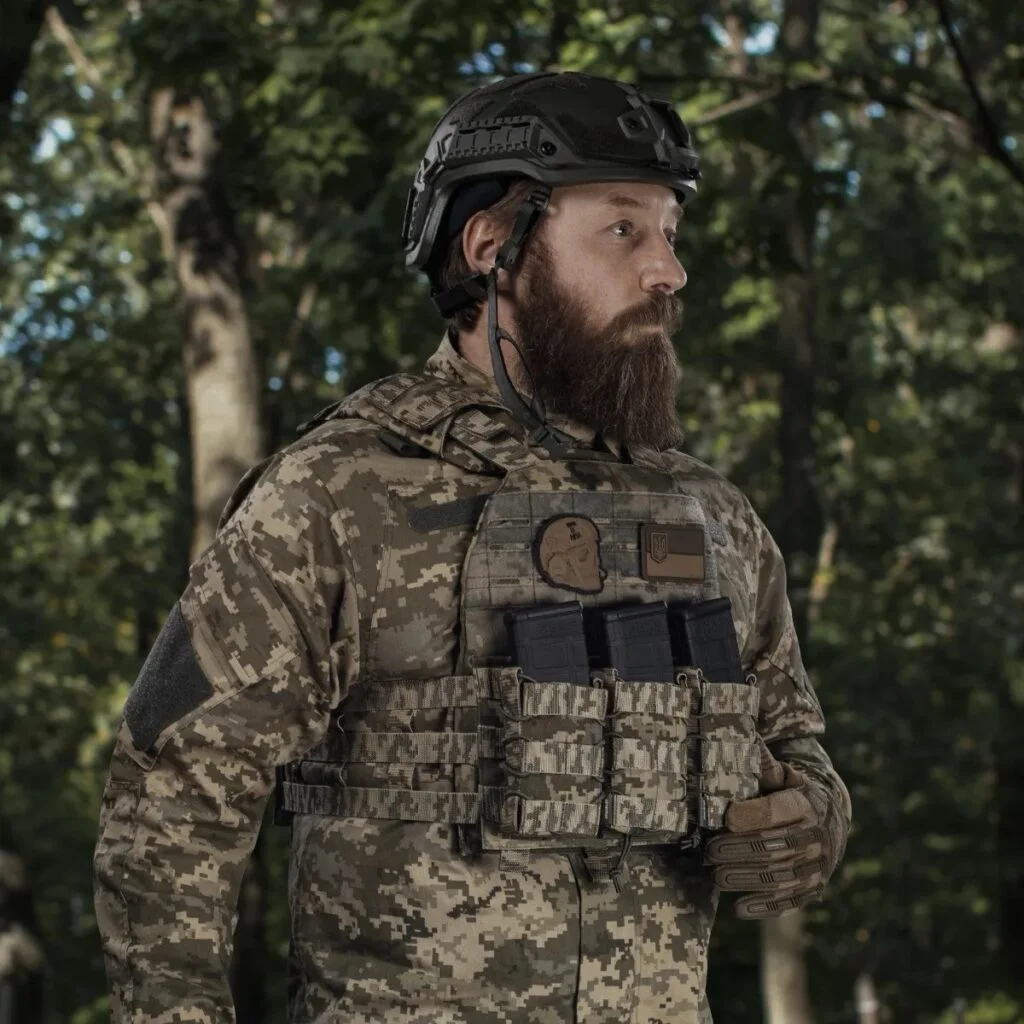
Materials used in class 6 bulletproof vests
Modern models of protective equipment are made from various materials. If previously there were no alternatives to steel plates, now plates made of high-molecular-weight polyethylene (HMWPE), titanium, ceramics, and combinations of materials are used. A ceramic ballistic plate made of silicon carbide has a multilayer structure:
- outer layer;
- foamed polyethylene;
- silicon carbide;
- ultra-high-molecular-weight polyethylene;
- another layer of foamed polyethylene.
Despite this structure, the overall weight is small. The primary protection against bullets and fragments is provided by silicon carbide and HMWPE. Foamed polyethylene acts as a damper — it absorbs the impact and distributes it evenly across the entire surface area.
However, it should not be assumed that steel plates are a thing of the past. Steel can withstand several hits and remains serviceable for 15–20 years. Ceramics and HMWPE withstand only a single shot and are unsuitable for further use, and their service life does not exceed 7–10 years (with proper storage conditions).