

Kittens are crying throughout the dugout – hoarsely and insistently. Oleksandr approaches them matter-of-factly and begins showing them one by one – the cats are mostly gray and ginger.
“Are these milk sergeants?”, – I ask.
“No, – Oleksandr says laughing – these are soldiers, sailors! – And he lists them by name. – Chupacabra, Mamka 2.0, Fifa, Milk Sergeant 2.0…”
He gave the first “Milk Sergeant”, the son of the same cat from the previous litter, to his parents; only seven kittens remained to be given away, which do not calm down and meow loudly – maybe they have some complaints. Who knows.
Junior Sergeant Oleksandr – the gun commander of the artillery division of the 34th brigade. He is from Kherson, and we’ve known each other since the distant pre-war times, when Sanya was a football fan and at the same time the director of the stadium “Crystal”. On March 1 he defended Kherson with a weapon in his hands as part of the Territorial Defense, he lived through the entire occupation in Kherson, and in 2023 he volunteered for the front.
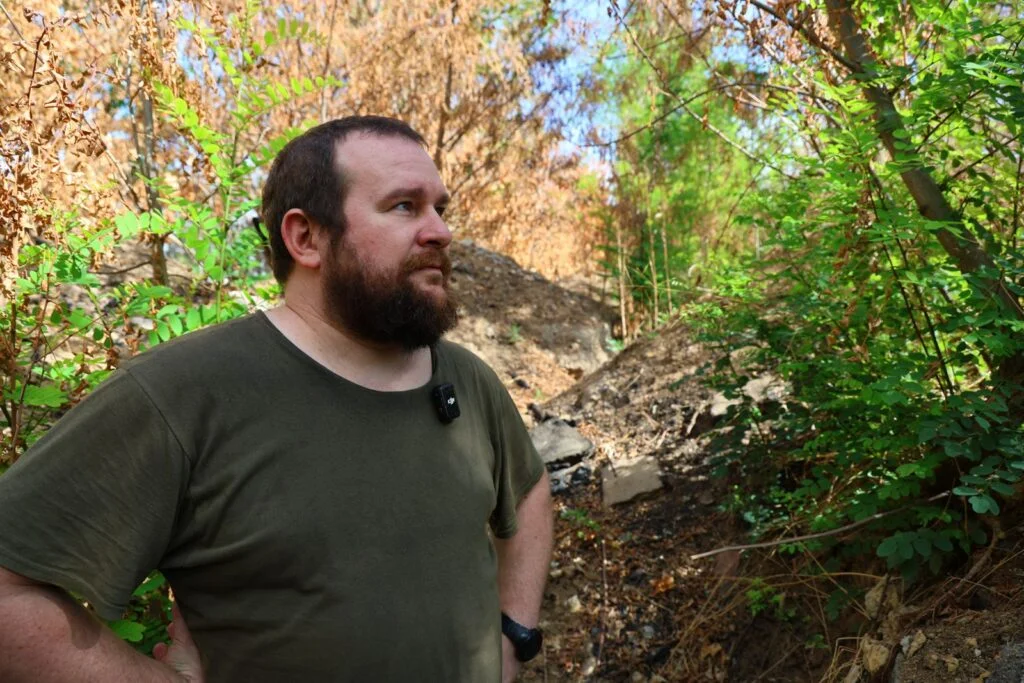
Today we’re talking about what he is doing right now. And right now Oleksandr, together with his comrades, is striking Russians on the left bank of Kherson region.
Before joining the 34th Separate Coastal Defense Brigade Oleksandr fought with the 22nd Mechanized Brigade in Donetsk, Sumy, Kharkiv and Kursk regions. He says he always wanted to go home.
At home, however, he does not get to be very often. Every day the military work on the enemy’s manpower, his equipment and positions. He does not complain – he says that for more than two years he dreamed of returning to defend Kherson.
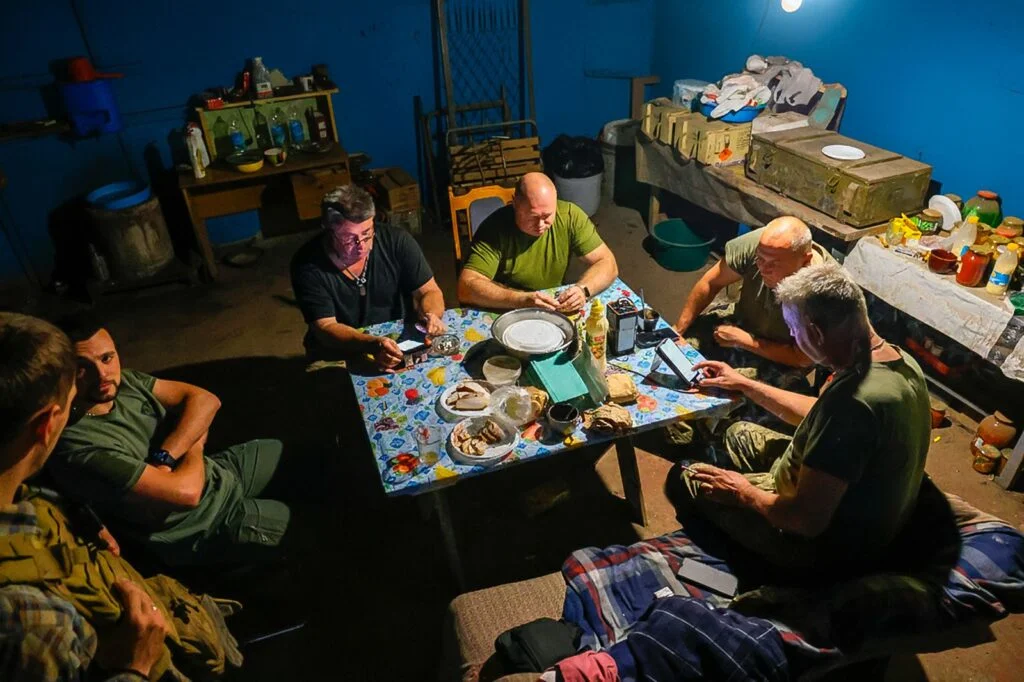
While there is no work, we spend a long time filming a video interview for the piece, and when finished we go to the big table where comrades are sitting. They are having an unhurried conversation with the battery commander who brought us to the position, smoking and drinking coffee.
“To battle!”, – Oleksandr suddenly shouts in time with a siren that is sounding from his phone.
Just now, as we later learned, reconnaissance detected a target – personnel of the Russian army in a shelter. From detection to the gunshot – up to 4 minutes. Sometimes preparation time shortens to 30 seconds.
The crew quickly puts on “armor” and heads to the gun. No one is paying much attention to me anymore.
The loader is already with the shell, on which earlier we had written a message to an occupation official from Saldo’s team.
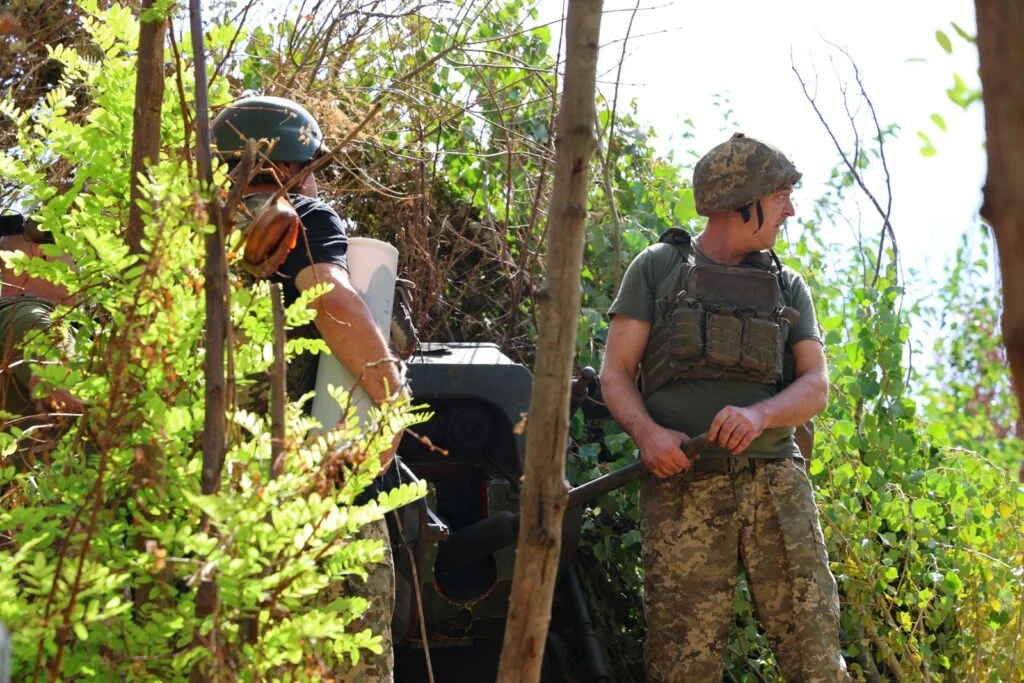
The fighters work in concert, as if they had spent their whole lives hauling shells and loading the gun, rather than working as combine drivers or executive chefs in restaurants. Sanya calculates something, and it’s not the number of points our “Crystal” needs to return to the First League. Now the accuracy of the shot depends on his calculations.
He gives his comrade some digital commands, understood only by them, then the command “Load!” and a pause hangs for a fraction of a second before the next command: “Gun – fire!”. The sharp shot shakes the sky, the reverberation spreads in all directions, and for a second we hear how the shell cuts through the autumn, still summer-warm air on its way to the left bank of the Dnipro.
Somewhere far away, in a place where we should now be fishing, and a little later gathering mushrooms and grilling shashlik, an explosion is heard – the shell reached its target.
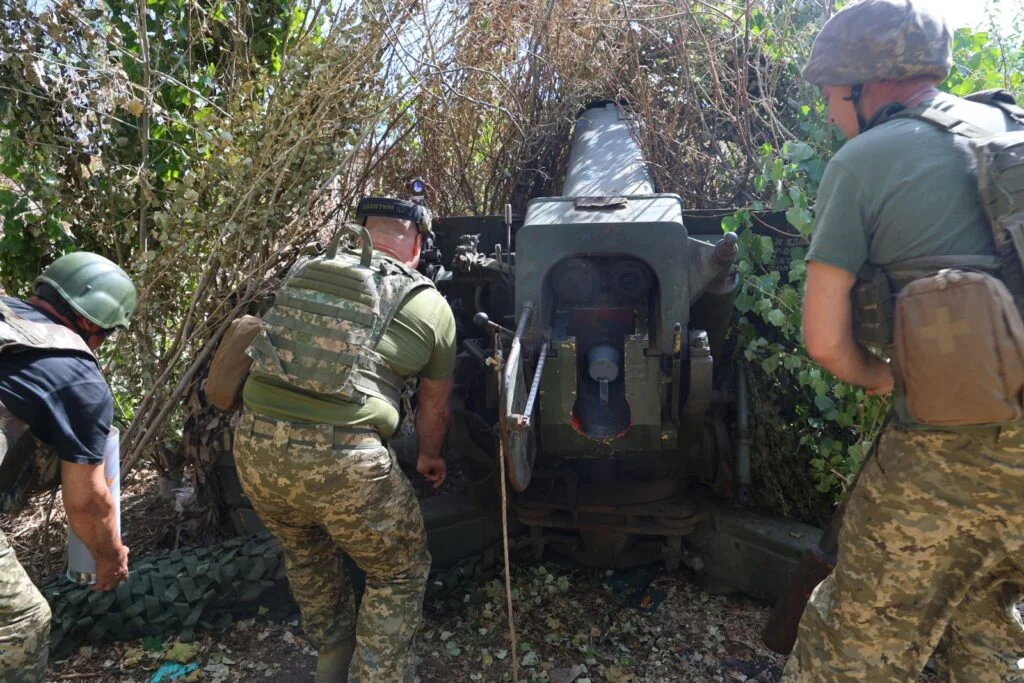
The crew waits to see if there will be a follow-up adjustment, but over the radio they report that the target is hit and the command to finish the work is given. The gun is quickly masked, and the soldiers descend into the shelter.
At the position we remain with Yevhen and Oleksandr. The guys discuss their affairs and the unit’s needs. A light autumn breeze sways the trees above the trench and it’s hard to believe that literally just now 21 kilograms of searing metal flew out of the barrel to kill those who came to kill all of us.
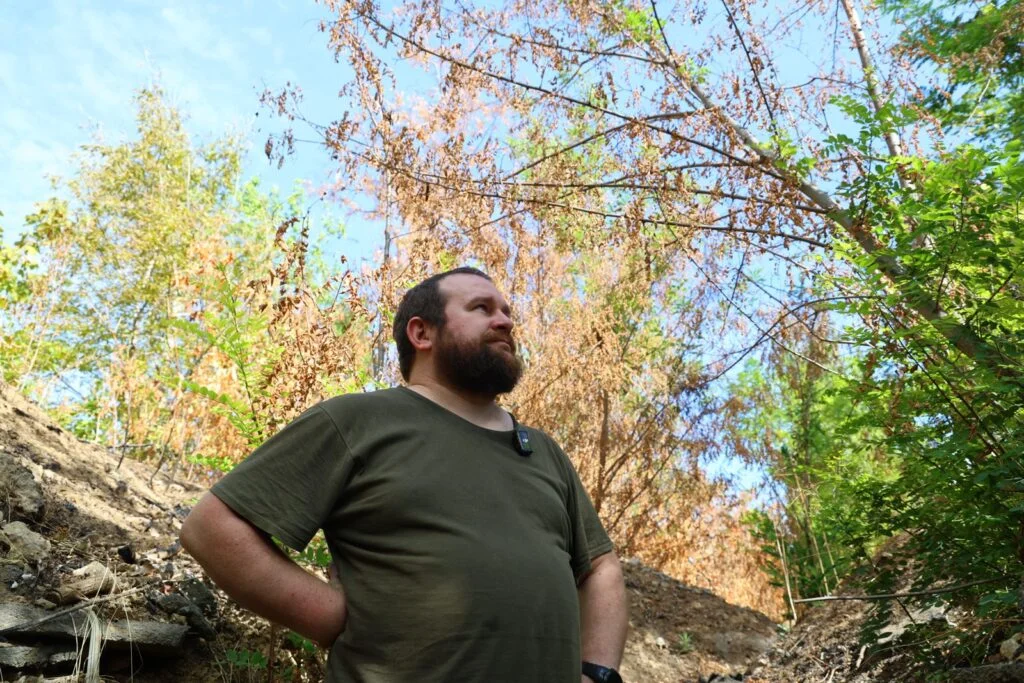

We go down into the shelter, where an unhurried conversation is taking place, someone has already sliced lard, the soldiers drink coffee.
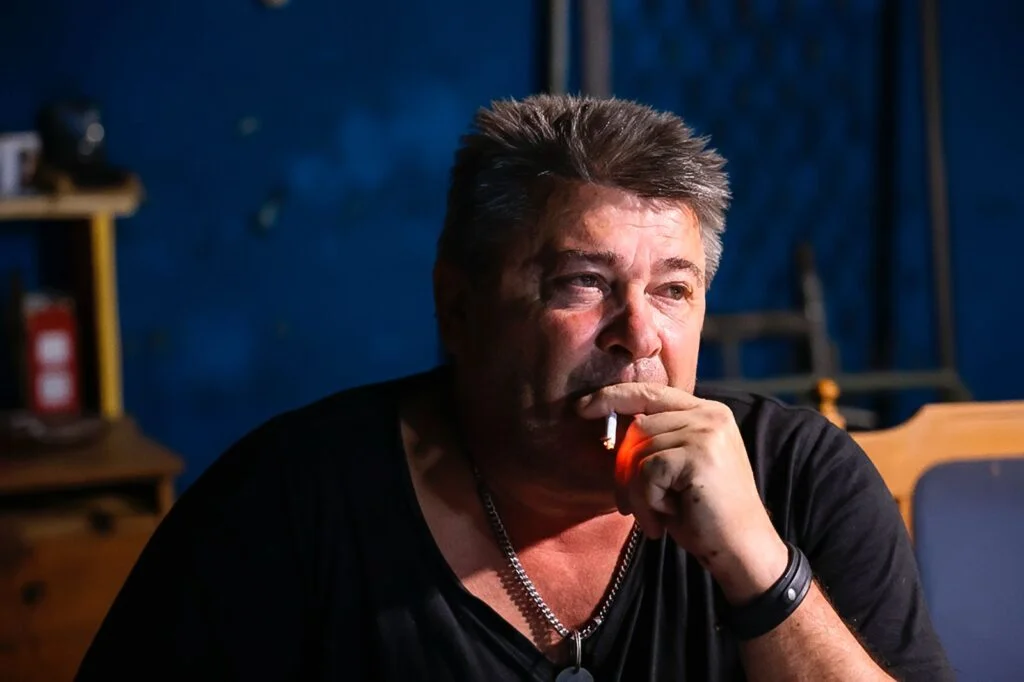
“Is it hard to be an artilleryman?”, – I ask the fighter who at that moment is just taking a deep drag on a cigarette.
“Unusual, – he replies somewhat melancholically, exhaling smoke slowly. – It’s easier for me to drive a combine.”
“Did you miss the combine?”, – I ask again.
“German combines are good combines. Of course, I missed them,” – the serviceman answers and takes another drag.
The commander of the artillery battery of the artillery division of the 34th brigade, Yevhen, says that his guys are real tigers.
Most of them came from civilian life with no connection to the army. They learned in practice and eventually became aces of their difficult trade. I’ve known Yevhen himself for about ten years, and until February 2022 he was also a civilian.
From everything it’s clear that he enjoys praising the guys. They listen to his story.
Oleksandr from Vinnytsia – a gunner-operator. He joined his unit precisely when they were rebuilding the 124th brigade after its fighters left Kherson in 2022. At the beginning there were only 23 people left in the brigade. Oleksandr took part in the liberation of Kherson, and before that he had been in the city only once.
He says it’s painful to see what the Russians are turning the city into.
“After the liberation Kherson looked very gray, those months of enemy rule pushed it back to the 90s. And what the Russians are doing to the city now – it’s also very frightening. It’s fading,” – the serviceman shares.
When we talk about the difficulties and nuances of the job, Oleksandr indulgently says that it’s not as hard as it may seem.
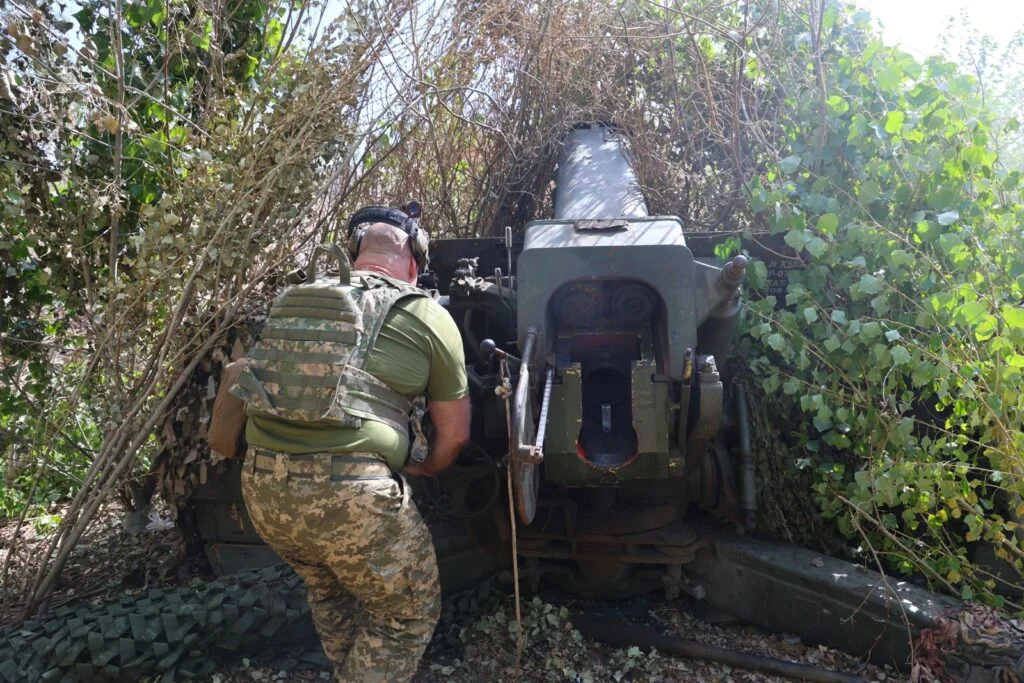
“There’s nothing difficult, you just have to be constantly attentive and focused”, – he adds.
Just that, yes, I agree.
The artillerymen agree that the greatest danger comes from enemy FPV drones. The Russians have them in large numbers.
Under the insistent mewing of the small cats I examine the walls of the dugout – they are all covered with flags and children’s drawings with wishes and thanks.
The gods of war sit at the table, the kittens fidget in a box, Oleksandr and Yevhen continue their work meeting – another day is coming to an end.
The guys remain, waiting for autumn, reducing the enemy’s population and watching the cats.