

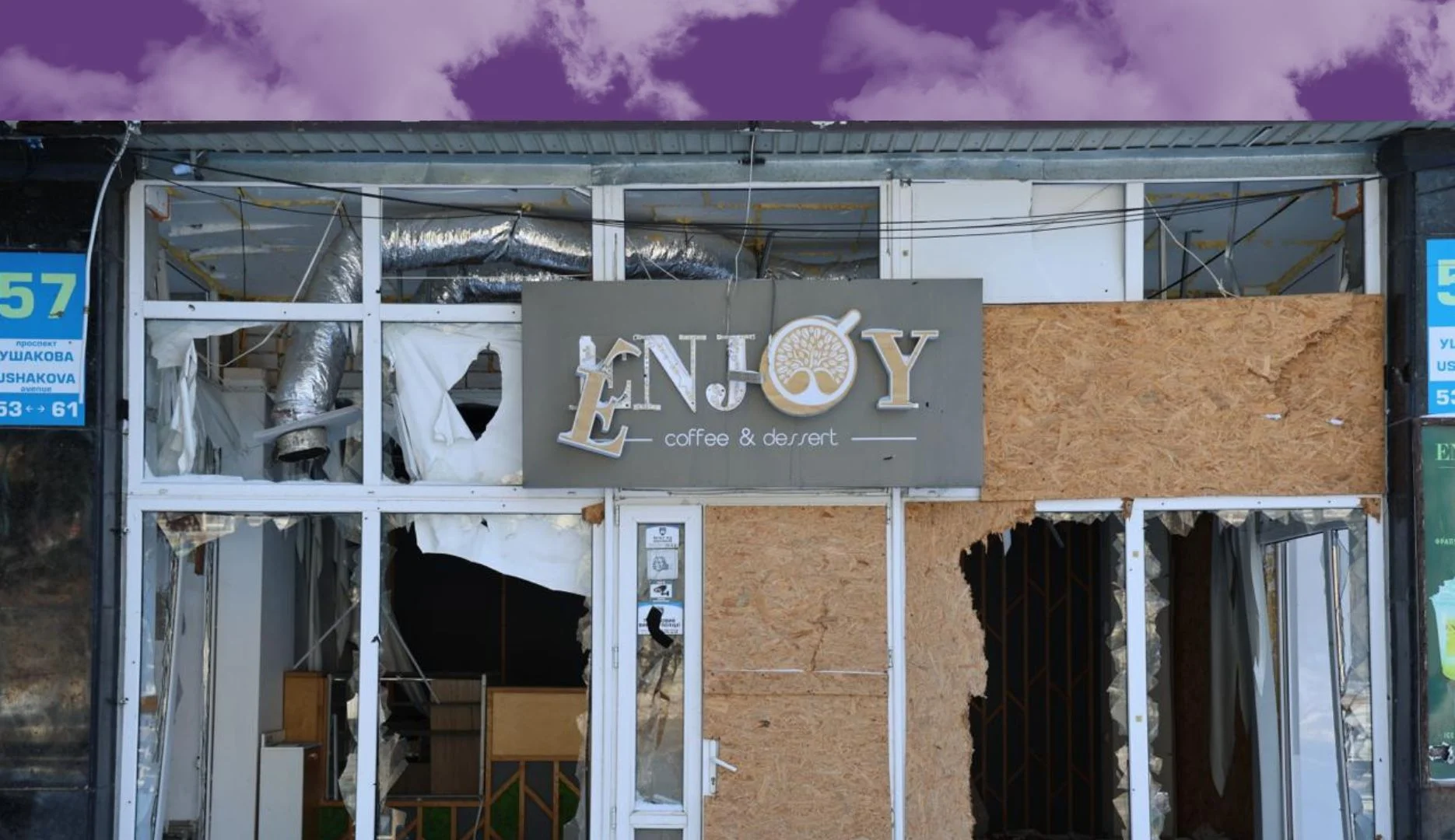
After the deoccupation of Kherson, local business became one of the main drivers of restoring life in the city: whenever possible entrepreneurs restart businesses amid shelling, seek grants, open production facilities and create jobs. But many of them say that they have to revive their businesses almost without support from local authorities. At the same time, the latter report consultations, support programs and the work of departments.
MOST journalists decided to check how this system works in practice.
What’s the problem?
Kherson remains a frontline city where businesses operate under constant shelling, with interruptions to electricity and water supply and damaged infrastructure. In such conditions, support for entrepreneurs from local authorities becomes critically important for the recovery of the city’s economy.
On paper, a support system for entrepreneurs in Kherson exists. But many businesses say that in practice it mostly amounts to informational mailings and general phrases like: “We cannot help businesses — we do not have funds for that.”
The stories of Kherson entrepreneurs show what this problem looks like in practice.
One of them is Oleksandr Vlasov — owner of the bakery chain “Persha Pekarnya”. After one of the Russian shellings at the end of January 2026, one of his bakeries on Universytetska Street in Kherson was significantly damaged. The establishment did not cease operating even during the occupation of the city, but after the latest shelling the bakery could not withstand it. Some of the equipment had to be urgently removed so that it would not remain in the ruined premises. According to the entrepreneur, this included an oven worth about 4,500 euros.
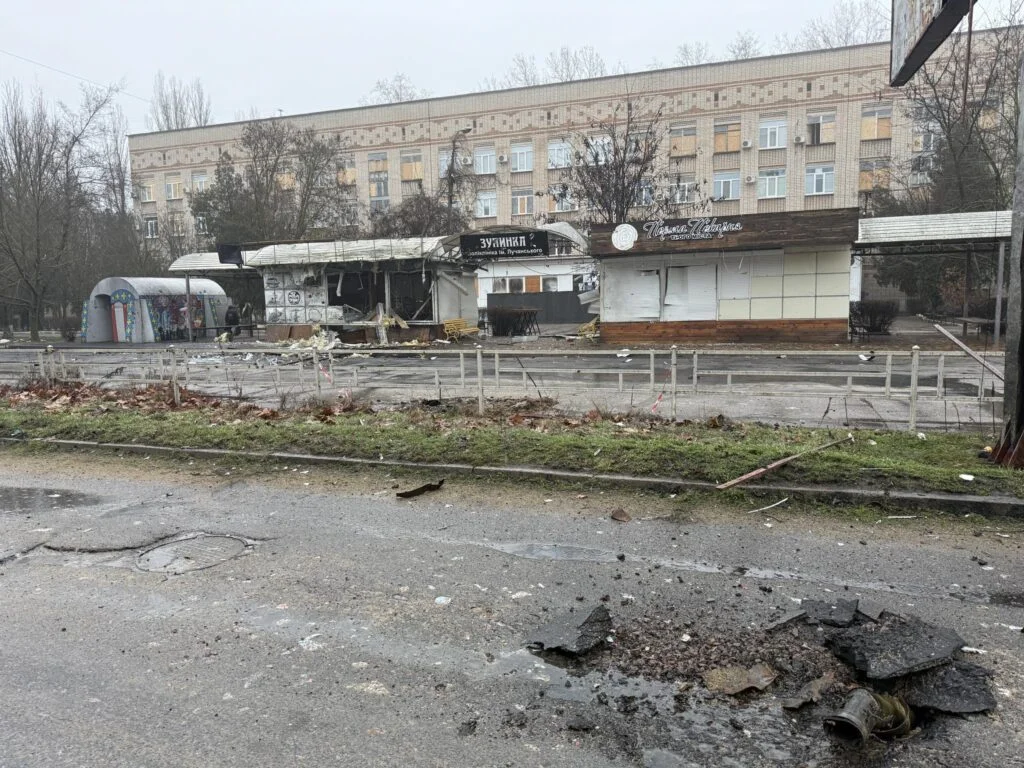
That same day Vlasov decided to seek help from the Kherson MVA. According to him, since the start of the full-scale invasion he had never asked for support for his business and usually solved problems himself. After calling the regional contact center hotline, the entrepreneur was advised to send an electronic appeal to the Department of Economy at the MVA. He wrote the letter that same day, but for more than two weeks no one contacted him.
The entrepreneur says that in the first hours after the shelling he needed basic assistance: transport to remove equipment, help with boarding up damaged windows and a container for construction debris. In the end, the only thing offered to him was the rental of a container from a municipal enterprise on a paid basis.
“This small matter is indicative in relation to entrepreneurs. They could have placed a container and said: you have three days, shovel everything in, and we will take it away later. Instead I was told a price of 500 UAH. Organizing cleaning, hiring a truck, boarding up windows, etc., Kherson entrepreneurs ultimately have to do themselves. Although this is effectively clearing the consequences of a shelling. In my case the situation is even stranger because the damaged object is part of a public transport stop. The stops are cleaned by the municipal enterprise ‘Parks of Kherson’, that is part of their duties. Moreover, there is a bus stop complex with a shelter — its installation was approved by the architecture department in peacetime,” explains Vlasov.
In the comments under the entrepreneur’s post on Facebook appeared a response from the head of the Kherson MVA, Yaroslav Shanko. He suggested bringing Oleksandr Vlasov’s case up at the next meeting with the business community.
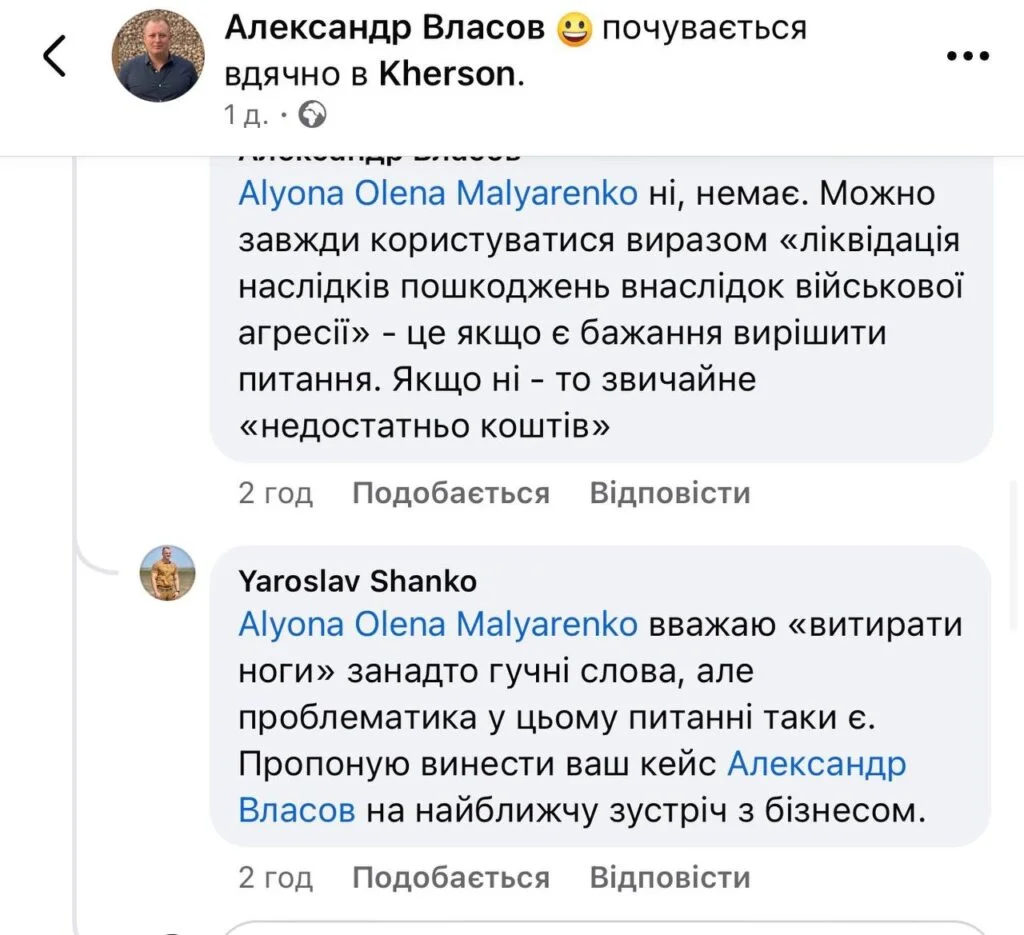
However, the entrepreneur himself perceived such a reaction as formal.
“In such a situation you expect not an invitation to another meeting, but concrete help. At least: someone will contact you now, call this number, help will be provided. Not an offer to discuss it at the next meeting, the date of which is still unknown,” says Vlasov.
A similar experience is told by another Kherson entrepreneur, Oksana Mostova, who had a women’s clothing shop at a public transport stop on 49th Guards Division Street. According to her, the shop was seriously damaged during shelling on Independence Day last year. The strike hit the rear part of the stop where the shop’s wall was located — it was effectively destroyed, and inside furniture, the cash register and part of the stock were damaged.
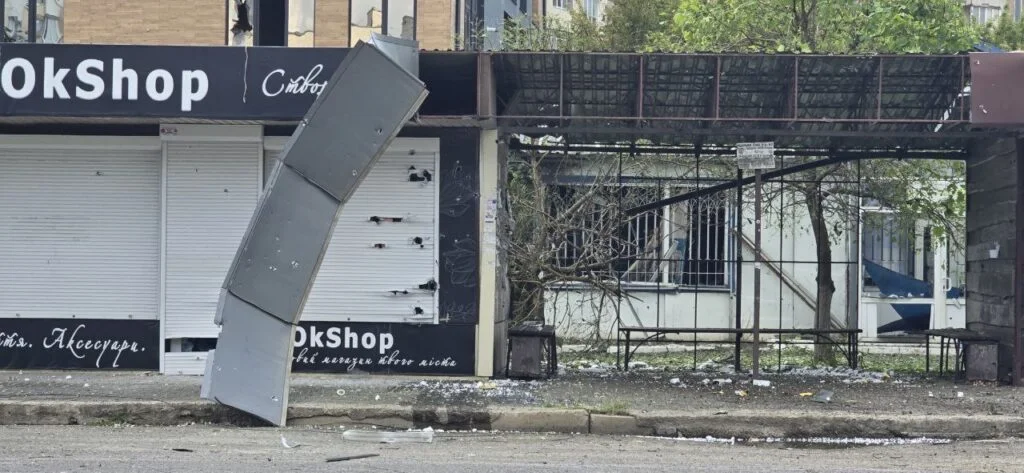

After the shelling, the entrepreneur contacted the city authorities with an extract from the police report to find out whether any compensation for the damaged business was possible. However, according to her, the city administration explained that the legislation currently does not provide payments for tenants of commercial premises.
“They told me that the premises are not mine, it was rented, so no compensation for the business is currently provided. They told me to wait — maybe something will change in the legislation,” the woman says.
On the day of the shelling she waited for the police for about seven hours so that law enforcement could record the destruction. During all that time it was forbidden to touch property or clean up around. Only after the damage was documented did the police allow removal of goods and remnants of equipment.
“We waited seven hours for the police because they told us not to touch anything until they arrived. They arrived very late, and only then said: ‘You can remove things.’ Work only started in the evening, because leaving everything overnight — by morning it would be looted. So we removed everything until eleven at night. Then the police came and started asking what we were doing here — there was a curfew. We had additional problems because of that,” Oksana recounts.
Cleaning and removal of debris from the stop complex had to be organized independently — using their own transport and with the help of concerned people. Regular customers and passersby who saw the consequences of the shelling helped collect some of the goods and furniture.
After the shop was damaged the entrepreneur tried to move the business to Mykolaiv, but due to flooding of the premises earlier this year she had to finally close that project. Today she works in Kherson in another field — veterinary services.
Similar situations for Kherson business are not isolated. Entrepreneurs are often forced to clear the consequences of shellings themselves, find specialists to board up windows, transport and materials, since systemic support for businesses after damage effectively does not exist.
At the same time, the city authorities’ response to business appeals can vary.
For example, dentist Mykhailo Kleshchytsky on July 10, 2025 reported on social media that after a meeting of entrepreneurs with the leadership of the Kherson MVA the road near his private clinic was promptly repaired.
“Thank you for the quick response and the result! Last week you had the honor to be present at a meeting of business representatives with the head of the Kherson MVA, Yaroslav Shanko, and deputy head of the MVA Vitaliy Bielobrov. We raised an issue that long worried us as residents and entrepreneurs — the condition of the road near our clinic. And today we already see the result — the repair is done, the road is renewed, and now we have not only a safe approach, but also aesthetic satisfaction from the order,” he wrote.
On July 16, 2025 Kleshchytsky was appointed as an advisor to the head of the Kherson MVA Yaroslav Shanko on medical issues on a voluntary basis.
A separate problem that entrepreneurs talk about is access to grant programs. The Department of Economy and Investments of the city council is responsible for supporting entrepreneurs in Kherson. Since August 1, 2025, the acting director of the Department of Economy of the Kherson City Council was appointed the son of the so-called Kherson political technologist (in his own words, – MOST) Yuriy Pohrebnyi, Denys. This unit is supposed to interact with businesses, inform them about support programs and help attract grants.
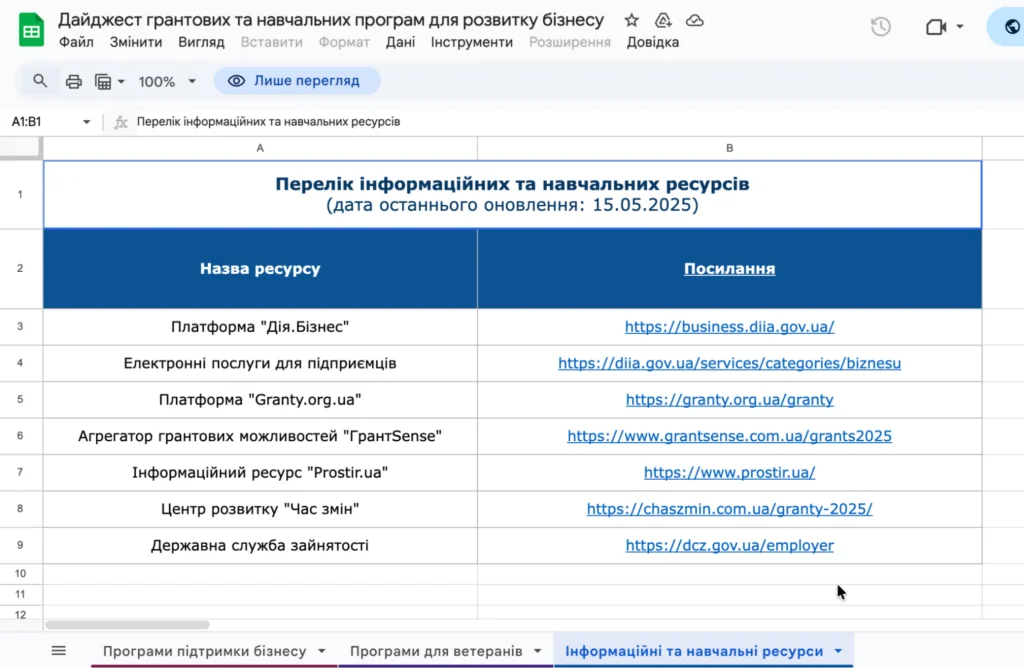
Business representatives receive electronic letters with lists of grants or notifications from official state program websites, but without explanations on how exactly to prepare an application or what the donors’ requirements are.
“They just copy news from the websites of the Ministry of Economy, Diia, the Employment Center. They send: here’s a grant for women entrepreneurs, here’s grant support from the Employment Center, here’s a survey for women entrepreneurs. And they send this to absolutely everyone. That is, they just notify about what is already publicly available,” says Oleksandr Vlasov.

He says that once an entrepreneur accidentally replied to such a mailing with a message to all recipients.
“She wrote: ‘How do you fill out these grants?’ And then it became clear that most entrepreneurs in Kherson simply do not know how to complete such applications. I even helped two women fill out grant documents. But the Department of Economy provides no accompanying assistance with its mailings. No one says: let’s gather entrepreneurs, hold a consultation, there will be a mentor to help prepare the application,” he says.
In the entrepreneur’s view, because of this many Kherson businesses effectively do not use international grant programs.
“As a result most entrepreneurs receive grants only from the Employment Center. Because there everything is clear. And with European grants it is harder — it is difficult to understand exactly what the grantor wants from you,” Vlasov adds.
At the same time, in response to MOST’s inquiry the Department of Economy stated that it provides entrepreneurs with consultative and methodological support during the preparation of funding applications.
“Consultative assistance was provided in written and oral forms, as well as during direct work meetings,” the response to the inquiry says.
However, as we see in practice, businesses that were actually harmed and need grant support do not even know whom to contact for help.
The editorial office received an answer only after a second appeal to the department. After the first request, the agency redirected the question to the Employment Center, noting that it is responsible for grant support for entrepreneurs.
We became interested in how many people in the Kherson MVA are paid to help Kherson business survive.
According to the response to the inquiry, the department’s staffing level is 30 people. In fact, in 2025 19 employees worked, of whom a separate unit of 3 people is engaged in business support. Overall, the wage fund of the Department of Economy and Investments in 2025 amounted to 9,797,626 UAH, which is more than 4 million more than in 2023. The payroll fund for those responsible for supporting entrepreneurs was 1,264,067 UAH in 2025.
The department noted that it does not keep statistics on the number of grant applications from entrepreneurs or the amounts of funds attracted. It pointed out that the structural unit does not act as a party to grant agreements, since they are concluded directly between international organizations and private law entities. Therefore, complete statistical information on the volumes of private funds attracted is not available at the agency if those resources do not pass through the local budget.
They also did not provide an exact answer as to how many entrepreneurs applied to the department for consultations or support in 2023–2025. The agency only stated that during this period entrepreneurs were provided with “informational individual support,” and consultations were conducted in an operational mode “taking into account the security situation and the specifics of the community’s functioning during martial law.”
The department also did not name the number of grant applications that were prepared or submitted with its assistance in 2023–2025, nor how many of them received funding.
It turns out that Kherson officials do not have any KPIs, and they do not report to their leadership about successes and failures, since they do not have any figures on hand.
That is, there is no monitoring and no understanding of what the local business needs and how successfully the officials who are paid from the taxes of that same local business are working.
At the same time, the response indicated that the main tasks in the field of entrepreneurship development are improving the business climate, creating favorable conditions for the stable and efficient operation of business entities, consolidating the efforts of the city council’s structural subdivisions and business to solve pressing issues of this sector of the economy, reducing state regulation and administrative interference in the activities of business entities, providing informational and consultative assistance to economic entities, and supporting entrepreneurial initiatives.
Thus it is impossible to assess the real scale of the department’s support for entrepreneurs over these years, since there is no aggregated public statistics either on the number of consultations or on the results of attracting grant funds.
Most of the entrepreneurs with whom MOST spoke say they do not expect direct financial assistance from the city. Instead they need basic things — coordination of municipal services after shellings, consultations on grants and help interacting with donors.
At the same time, the experience of other Ukrainian cities shows that even in difficult conditions local authorities can build more systematic support for entrepreneurs.
What are the solutions?
Service accessibility in Odesa
For comparison of service accessibility, MOST analyzed cases of business interaction with the Odesa City Council.
Even simply by visiting the Odesa City Council website, a local entrepreneur can immediately see the “Business” section and intuitively understand that the necessary information can be found there.

Here one can find detailed information about current grant and training programs for business development, loans, competitions, get useful links, access a chat-bot with instructions, phone numbers and addresses where you can request help.

So even a novice entrepreneur can find the necessary information, a phone number or receive instructions on further actions in a few minutes.
On Odesa’s resources the procedure for helping businesses affected by Russian armed aggression is presented as transparently as possible. An entrepreneur does not need to “knock on doors” or decipher complex legal formulations to understand their rights.
In particular, there is a City Target Program for increasing the competitiveness of Odesa’s economy, which states that the city takes on part of the financial burden that arises already at the stage of preparing documents.

This concerns partial reimbursement of costs for an independent damage assessment. The entrepreneur is informed of a specific amount: the community budget reimburses 50% of the actual costs for appraisal services, but not more than 100,000 UAH.
Such transparency also applies to selection criteria. In Odesa the circle of aid recipients is clearly defined — these are legal entities and sole proprietors (small and medium businesses) registered directly in the city.
When information is presented in this format, it removes unnecessary questions and corruption risks. A business owner does not search for “inroads” into offices to learn about their rights, but simply follows a clear instruction. This is real support for the economy, where help begins with quality information on the city council website.
On the Kherson City Council website there are no obvious links for business. Visiting the official resource it is impossible to understand how the city can help an entrepreneur — instead there is a separate page with portraits and regalia of the deputy heads of the Kherson MVA.

“Unbreakable Business” program from the Kherson MVA
One of the tools for supporting entrepreneurs that the Department of Economy and Investments at the Kherson City Council reports is the “Unbreakable Business” program.
Preparation of this program was first announced on the official resources of the Kherson MVA only in September 2025 — almost three years after the city’s deoccupation.
Later the document was approved by the order of the head of the Kherson City Military Administration dated December 18, 2025 No. 1095-r.
It foresees implementation of measures to support entrepreneurship in the Kherson city territorial community in 2026–2028.
The Department of Economy said that it collected proposals from entrepreneurs to take their needs into account in the program. However, the exact number of appeals was not named in the response to our request, advising to look for this information on their website.
The program is financed from the city budget. According to the document, it is planned to allocate 1.5 million UAH each year for its implementation. The total amount required for the program over three years is 4.5 million UAH.
The department’s plans are limited to consultations and training for businesses. The authorities promise to inform about grants, organize meetings with partners and promote local producers within the “Buy Khersonian” project. The document also provides for entrepreneurs’ participation in exhibitions and business forums, assistance in establishing contacts with foreign partners, development of investment infrastructure, as well as educational and consultative programs — on financial literacy, digital marketing, running a business and support for veteran entrepreneurship.
The program does not specify mechanisms of direct financial support for entrepreneurs who suffered damage from shelling or lost property as a result of hostilities.
For comparison, according to entrepreneurs themselves, one average business development grant they receive from international programs is about 180–200 thousand UAH. Thus, the annual budget of the municipal enterprise support program is roughly equivalent to 7–8 small grants for businesses.
In fact, the new program only duplicates the current work of the department — consultations and information. Only now more money is planned to be allocated for the same activities than before.
How to support business: proposals from the entrepreneurs themselves
In Oleksandr Vlasov’s opinion, the city could introduce a number of relatively simple business support mechanisms.
One of them is establishing communication between the authorities and entrepreneurs.
“The simplest thing is a hotline specifically for entrepreneurs. So that people could call and get help. Right now calls are possible only to the MVA hotline and they end with operators saying: you’re an entrepreneur — write a letter to the Department of Economy. I wrote a letter and received no reply,” he says.
In his view, even in the absence of significant budget funds the city could introduce simple mechanisms to support businesses after shellings.
Specifically, it could be about organizing basic assistance for entrepreneurs whose premises were damaged in attacks: placing containers for construction debris, help from municipal services with cleaning or boarding up damaged windows.
“Even if the city has no money, you can look for different options. For example, install waste containers for free if there is an extract from the Unified Register of Pre-Trial Investigations about damage after shelling. Or organize boarding up of windows at minimal cost — only for materials. And even only for those who are currently working and paying taxes,” he says.
The entrepreneur says the city could also apply deferral mechanisms for payments for businesses that are recovering after damage.
“It could be arranged so: a municipal enterprise helps with boarding windows and cleaning, and the entrepreneur signs a contract and pays for these services later — for example, after a year. There can be many options,” Vlasov says.
In his view, the main problem is not so much the lack of funds as the lack of systemic coordination.
“Today after a shelling an entrepreneur has to find people, a truck, materials, and arrange for craftsmen themselves. It is much harder than if the city simply organized this process through municipal services,” he explains.
Vlasov also believes that municipal enterprises could help businesses on security issues — for example, organizing protective nets or other protective elements for facilities.
“I currently need to cover three sites with nets to protect people. The city could simply provide contractors, and business could organize the work through contracts. Then the facilities and people would operate in safer conditions,” the entrepreneur says.
Another direction of support, in his opinion, could be systematic assistance in preparing grant applications.
“Entrepreneurs often do not understand how European grants work. The Department of Economy could gather entrepreneurs, hold consultations, explain program conditions, help prepare applications,” Vlasov says.
He also proposes to restore the advisory bodies of entrepreneurs at the city government so that business can form a common position and communicate it to the authorities.
“I had the idea to restore the work of the public council of entrepreneurs. I even wrote an appeal and began to look into the procedure for its formation. But it turned out that the council still lists people who are now on the territory of Russia and are collaborators. So effectively it does not work. I wanted to join it together with several entrepreneurs so that we could regularly meet, discuss business problems, attract specialists and find solutions. Because right now entrepreneurs simply have no platform where they can form a common position and convey it to the authorities,” Vlasov says.
At the time of publication of this material it became known that the Entrepreneur Council in Kherson was officially dissolved. The city military administration recognized the body as incapacitated: over the past four years it did not hold a single meeting, and most of the 23 members lost the ability to be part of it due to leaving the city, loss of contact or collaboration activities.
Another possible support mechanism the entrepreneur names is cooperation with twin cities and international partners.
“Kherson has established contacts, has sister cities. In many cities abroad equipment is written off — for example, bakery ovens or equipment for cafes. For them it’s already old equipment, but for entrepreneurs in Kherson it could be an opportunity to open or restore a business,” he says.
Vlasov is convinced that the city could act as an intermediary between entrepreneurs and municipalities of other countries. He explains it this way: “An entrepreneur could apply and say: I need a small oven or equipment for a workshop. The city forwards this request to sister cities, and there they can find equipment being written off. For us it would be much more valuable, because equipment that was serviced even for 10–15 years — that is not an obstacle. This equipment can still be much better than new but cheap equipment,”
And he adds: “Authorities could help businesses with equipment in exchange for a commitment to create 1–2 new jobs. That would be a win-win strategy for both sides.”
Do these solutions really work?
So far it is difficult to assess the effectiveness of most entrepreneurship support tools in Kherson. They are only beginning to be implemented, or do not have public statistics of results.
Entrepreneur Oleksandr Vlasov says that his business was able to develop primarily thanks to state programs and international grants.
In particular, after participating in a USAID training program in Mykolaiv he became one of seven entrepreneurs selected to receive a grant. According to the entrepreneur, about 15 participants studied in the course, but only some of them received financial support.
For the approximately 180 thousand UAH received Vlasov opened his own puff pastry production in Kherson.
“Previously we bought it in Dnipro, and now we produce it here. This allowed us to reduce the price of the product for Kherson residents by about 20%,” he says.
Later the entrepreneur received another grant — about 200 thousand UAH from Belgian partners. With these funds he purchased new ovens for bread production.

“We improved the quality of our products. Bread began to compete with large chains — such as Silpo. New jobs also appeared — we hired three people, although under the grant conditions we had to employ two,” Vlasov says.
In addition, the enterprise received assistance from partners in the Netherlands — two used dough mixers aged about 10–12 years, which were previously used in production but were in good technical condition.
The entrepreneur is also expecting another shipment of aid from a British fund — a generator and office equipment worth about 8,000 dollars.
Thanks to these programs the business was able to expand production. Currently 32 people work in the entrepreneur’s network, and the total amount of international support received exceeds one million UAH.
In addition to grants, the enterprise used the state lending program “5-7-9”.
“Nationwide programs work much more practically than local ones. If it weren’t for loans and grants, many businesses in Kherson simply would not have been able to survive,” Vlasov says.
The experience of Kherson entrepreneurs shows that even in the difficult conditions of a frontline city businesses are able to recover, open production and create jobs.
However, this largely happens thanks to state programs and international support.
Whether the local entrepreneurship support system can become a full-fledged tool for recovering Kherson’s economy will be shown by the implementation of programs that only began to be adopted at the end of 2025.
This material was prepared within the project “Pulse of Recovery: 1-0”, implemented by the NGO “Window of Recovery” with the support of International Media Support. The material represents the authors’ position and does not necessarily reflect the position of the NGO “Window of Recovery” and International Media Support.