


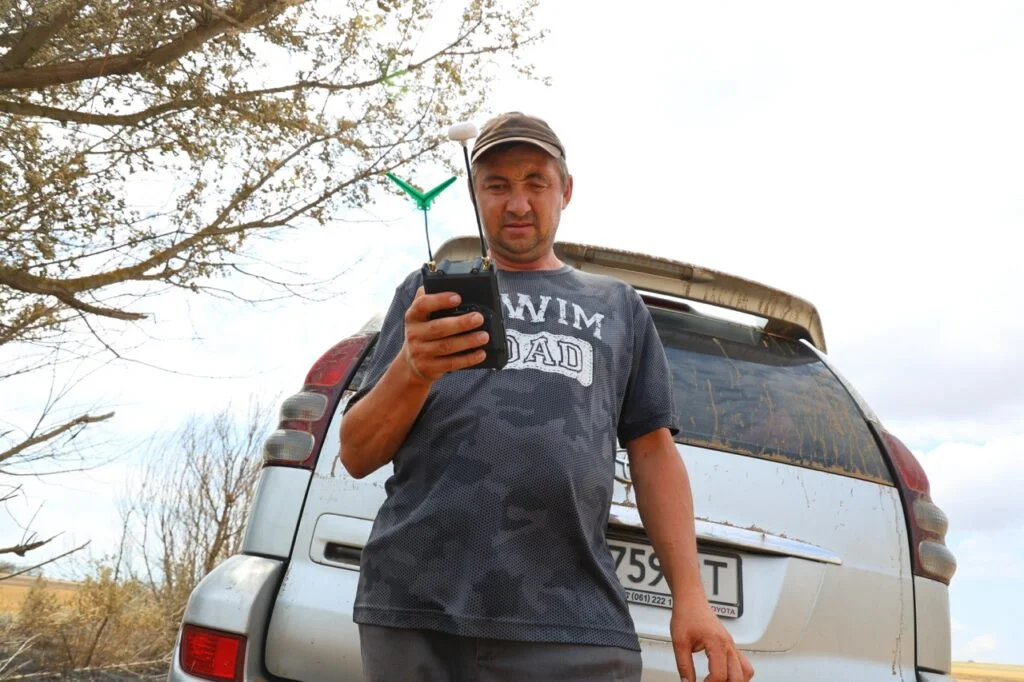
«- Mykolayovych, is nothing flying there? – No, for now, everything is fine. – Good, thank you», – under the «accompaniment» of such a conversation we drive onto the fields of the private enterprise «УКАН». One of the enterprise’s workers, when his colleagues harvest the crop, always monitors the situation with a drone detector – a device often vital in the Kherson region.
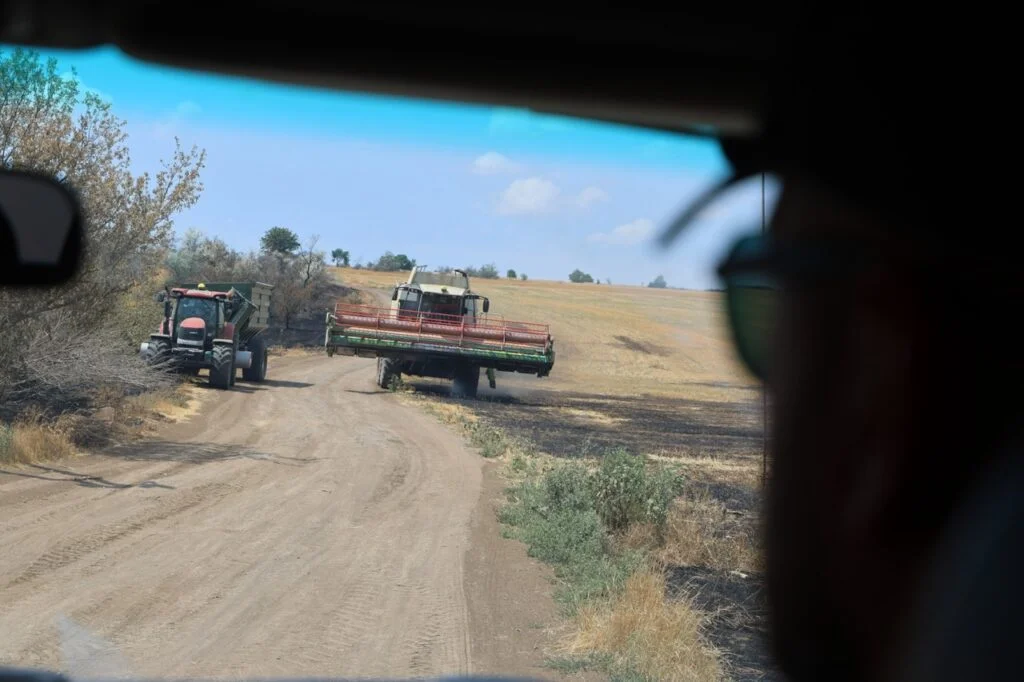
We are approximately 10 kilometers from the front line. In the conditions of the current war this is not a very large distance. Artillery shots and explosions can be heard far away. And here the farmers are harvesting oil flax.
«This, – says the director of the enterprise «УКАН», Andriy Povod, – is an unusual agricultural crop for the Kherson region. Flax is a very good crop to grow in southern Ukraine because it is quite drought-resistant. In our crop rotation it has almost completely replaced sunflower, because it requires less moisture. And in southern conditions that is a key problem. Moreover, flax is a very good predecessor for the next crop that will be sown on this plot».
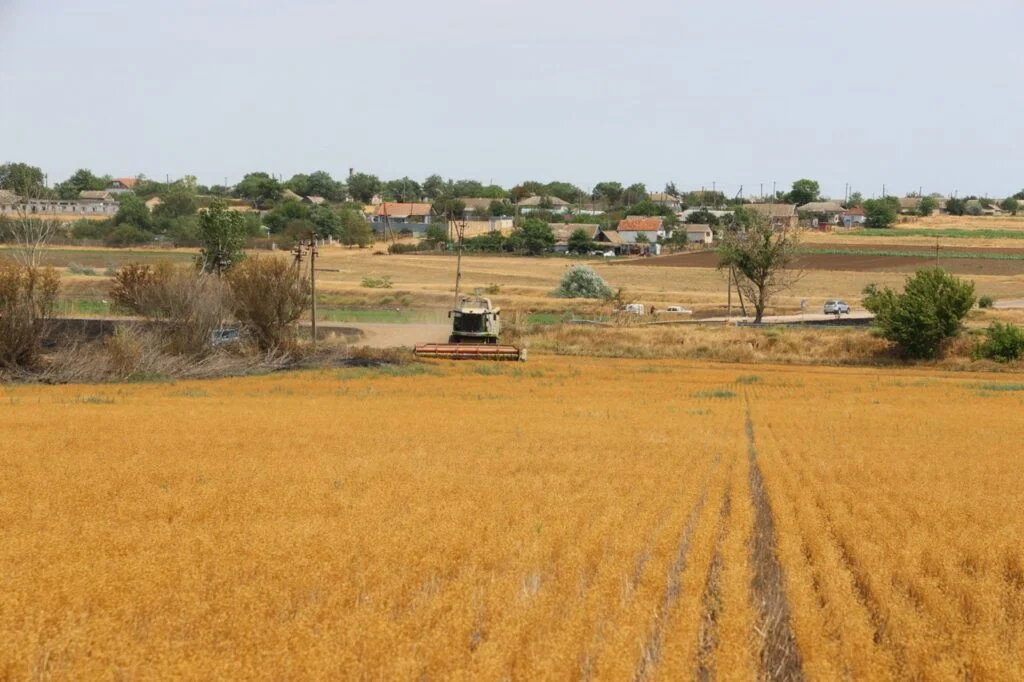
The farmers work in extreme conditions of constant danger from artillery fire and drone attacks. Recently, as a result of such an attack the enterprise lost the harvest on six hectares of land. And the total area of land with lost harvest for the enterprise is about 600 hectares.
“Bad weather is not the biggest problem”
Earlier MOST wrote about the difficult situation that the enterprise «УКАН» found itself in. It was looted during the Russian occupation of the right-bank part of the Kherson region, and later faced problems trying to obtain justice in the Kherson court.
Unlike other Kherson farmers, for example those in the Beryslav district, much of which is 20 or more kilometers from the front line, the lands of the enterprise «УКАН» are located in the Kherson district, on the territory of the former Bilozerka district.
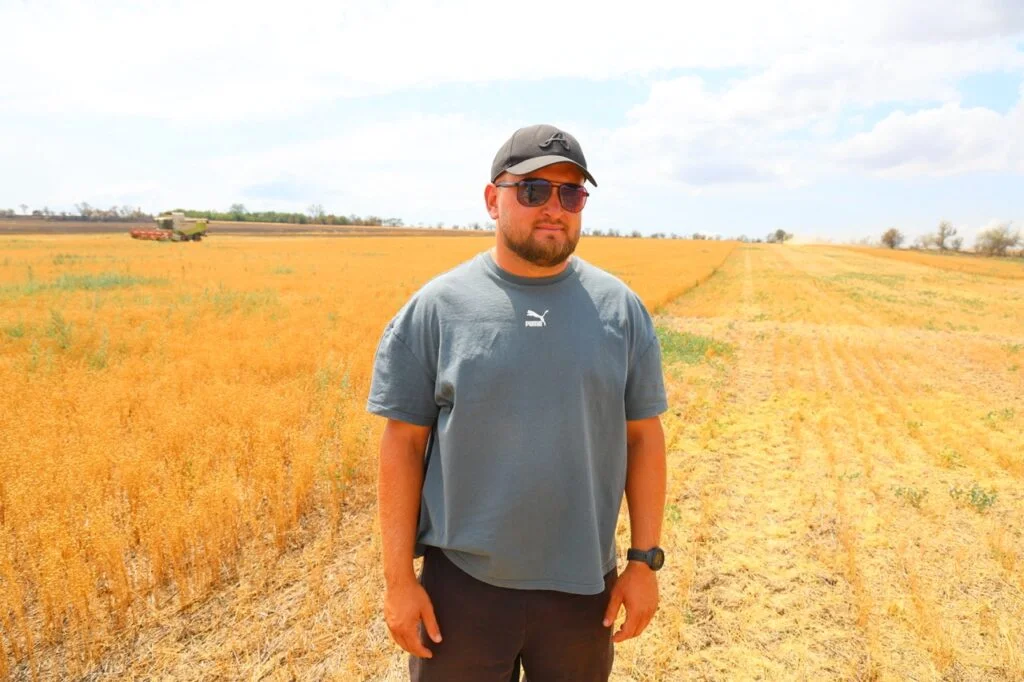
Talking about the situation at the enterprise, Andriy Povod noted that he sees Russian military forces, not the weather, as the source of the greatest problems, which many other Kherson farmers complain about.
«In this part of the region, – says the director of the agricultural enterprise, – proximity to the front line is the main problem. This year is rather unusual. Poor yields were caused by spring frosts and a total lack of moisture. But we don’t complain about that anymore. We only hope nothing falls on our heads: artillery, “Grads”, drones… So weather is not the biggest problem right now».
The enterprise suffered its greatest losses precisely because of Russian aggression. The harvest lost on 600 hectares of land includes what the Russians destroyed during shelling, and fields sown in autumn 2024 where the farmers will not harvest due to the deteriorating situation and the great danger to people and equipment.
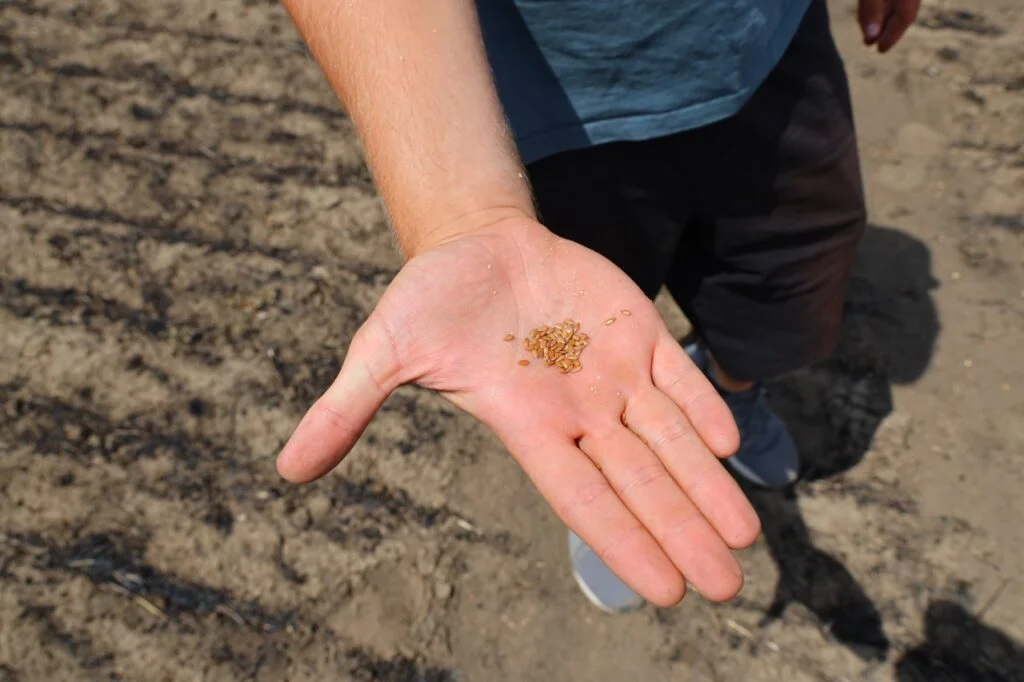
«In winter, – says Andriy Povod, – Russian drones began to reach there, and we decided not to harvest there because it is very dangerous now. Eventually, as a result of enemy shelling those fields all burned».
The director noted that this year, because of the security situation, they were unable to properly treat the fields for weeds, yet the fields still looked decent.
Harvesting under cannonade
It’s hot Kherson-style outside, the ground is very hot, but the air feels the breath of a cool wind from the sea, from the temporarily Russian-occupied left-bank part of the region. And from that direction the cannonade can be heard. It seems enemy shells are falling on some agricultural lands located near the front line.
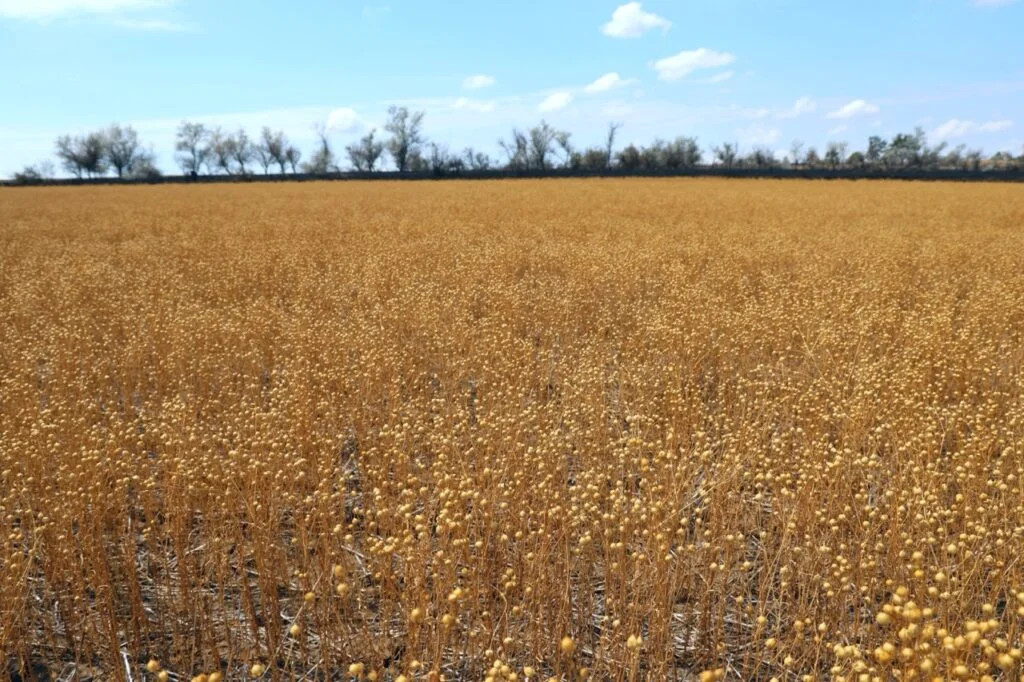
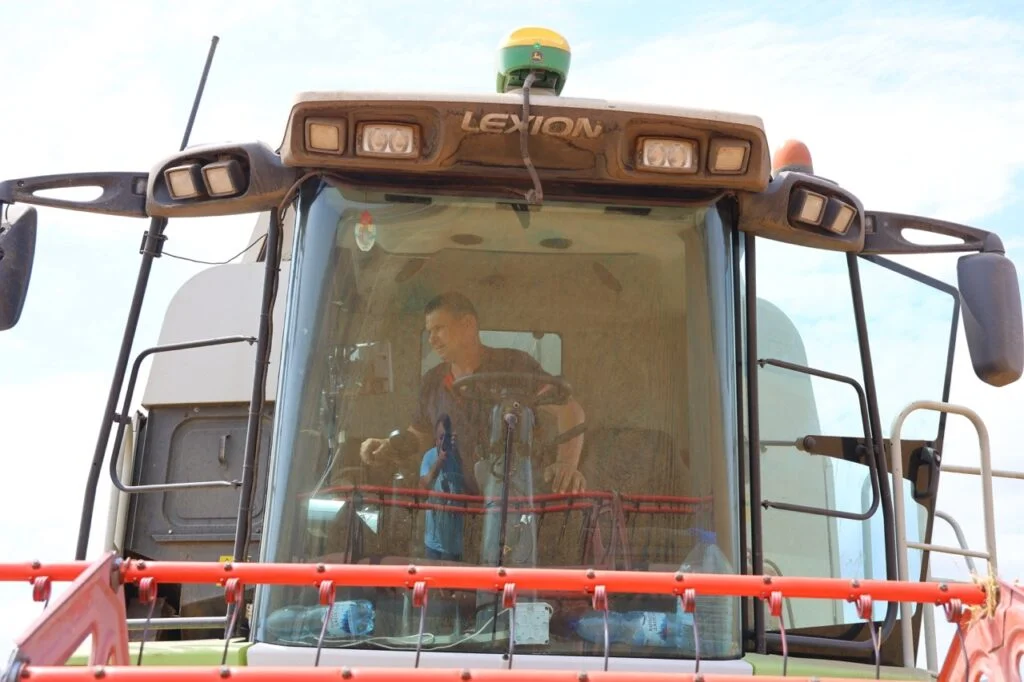
«I guess I have gotten used to it», – replies Anatoliy, a combine operator at the enterprise «УКАН», when asked about working under constant danger, and adds: «Although… Only a fool is never scared. We are less than 10 kilometers from the front line».
The man says he lives in Novodmytrivka – a village in the Bilozerka community, located 4 kilometers from another village in that community – the infamous Kizomys – almost destroyed by Russian forces. Novodmytrivka is also often subjected to artillery shelling and drone attacks.
«Drones, – says Anatoliy, – reach us almost every day. In the evening you walk home and see: another house damaged or burned».
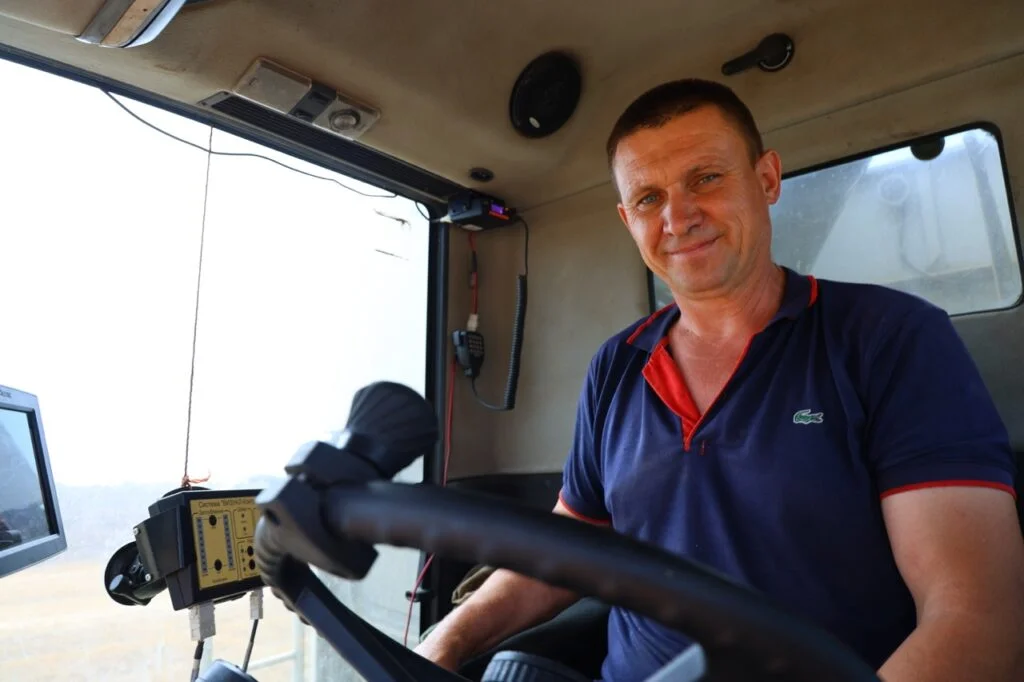
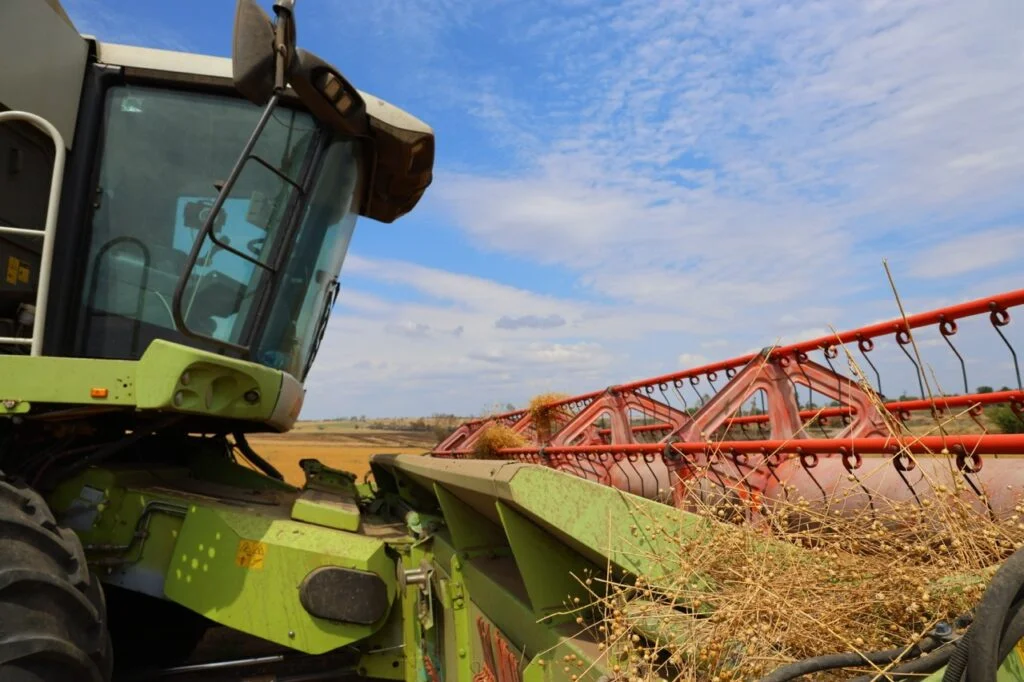
While operating the combine, the machine operator looks alternately at the field and at the monitor installed in the cabin, which displays various technical indicators, and what is visible through the windshield appears as computer graphics. If you only look at the monitor, it feels as if you are not in the cabin of a real combine but inside a very realistic simulator.
Now the flax harvest is being gathered not with equipment specially adapted for this crop, but using an ordinary harvester header. This option is not the most convenient, but it provides greater speed, which, given the short distance from the front line and the corresponding level of danger, is very important.
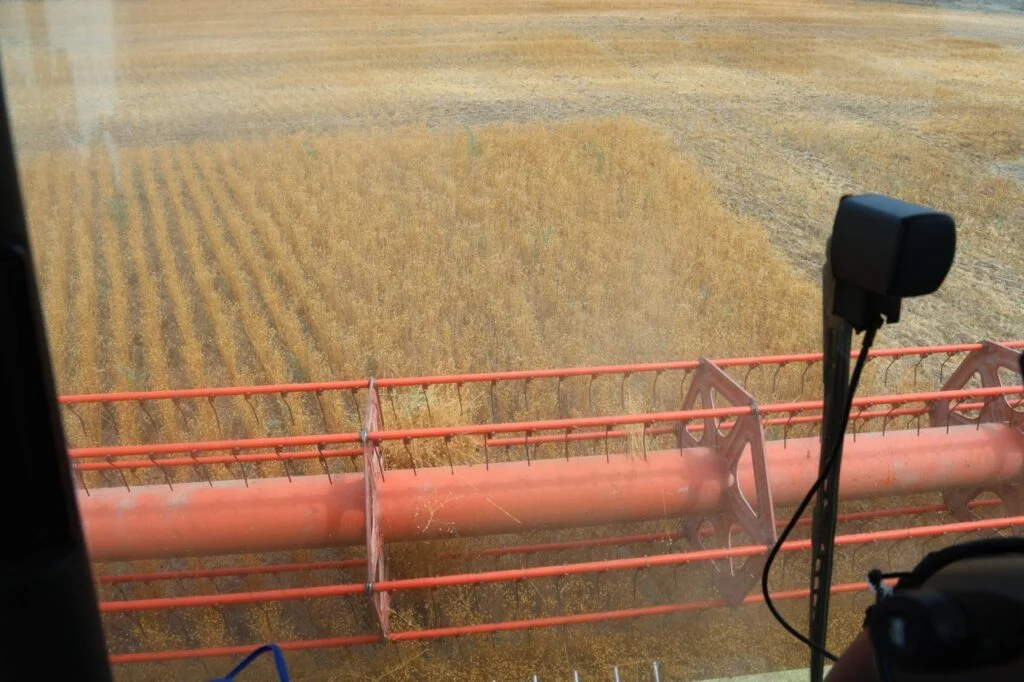
The combine operator also occasionally glances at the radio. It is silent, and that is very good. Because another radio is with the enterprise worker who is on duty with the drone detector and must warn in case of their approach.
Shortly before our arrival, a Russian strike drone “Molniya” was spotted near the fields of the enterprise «УКАН». It did not reach its target: a Ukrainian interceptor drone interfered.
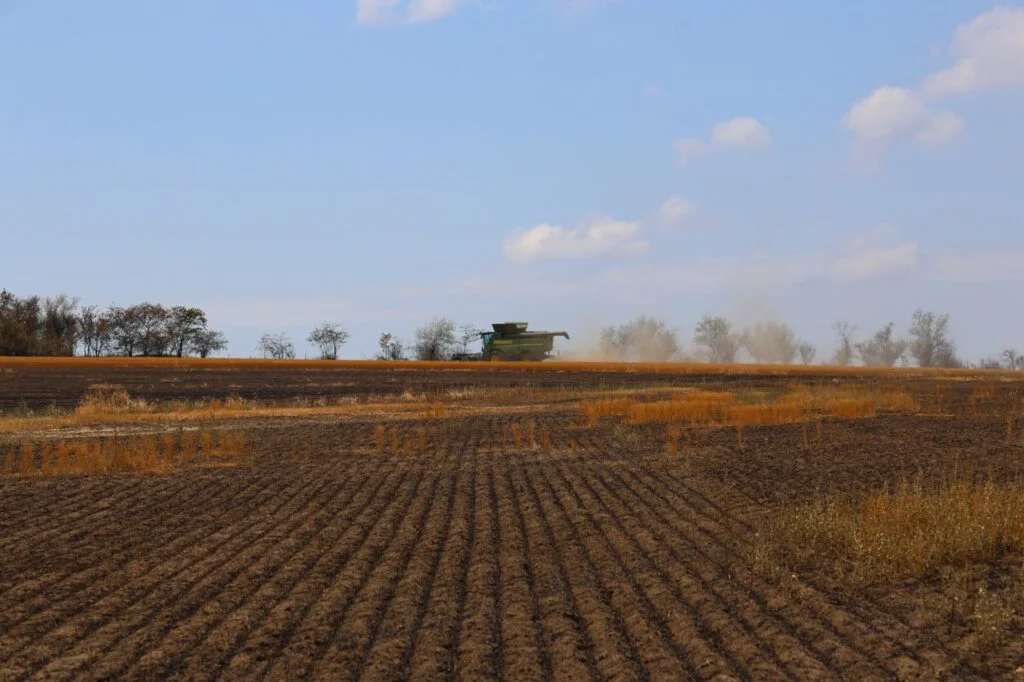
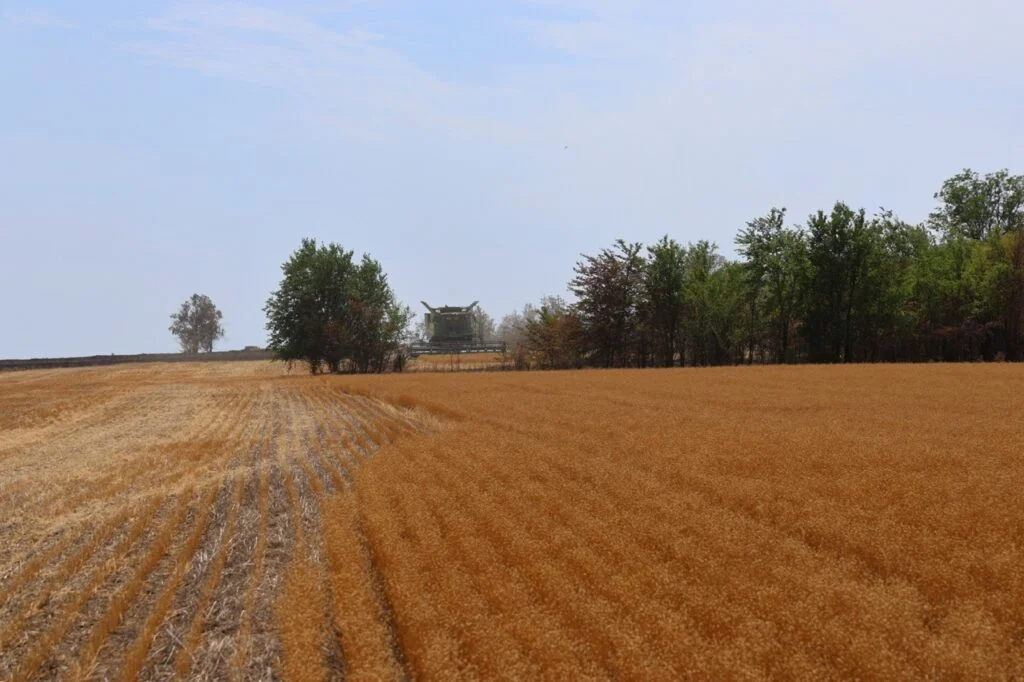
The field the combine is driving through is a kind of “patchwork quilt”: burned sections alternate with intact ones.
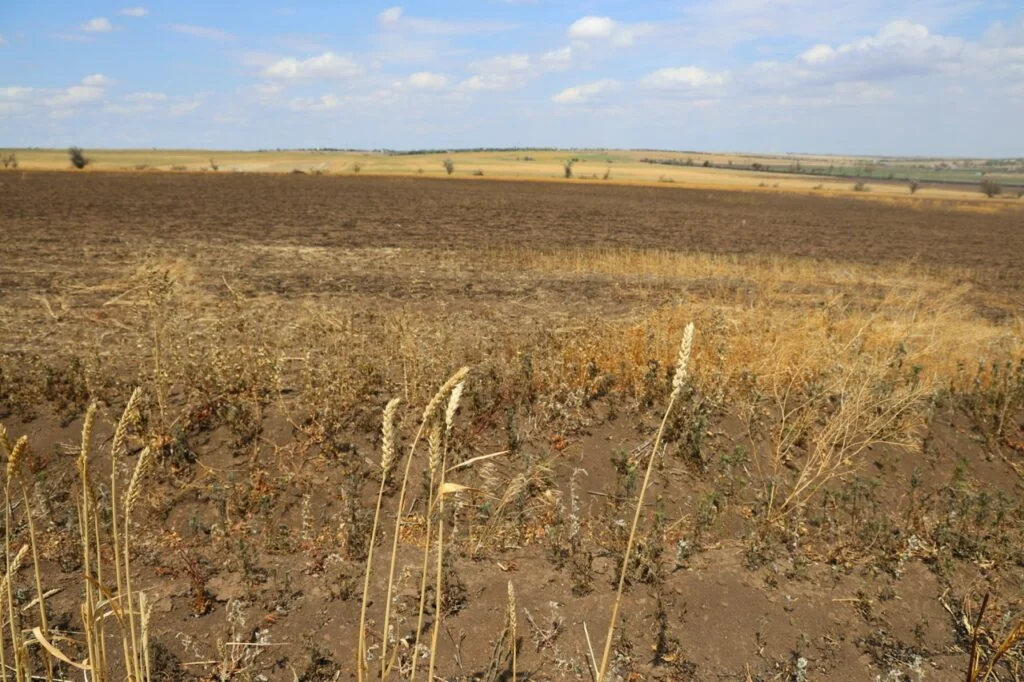
«Here, – says the director of the enterprise «УКАН» Andriy Povod, – there was such an Armageddon! There was shelling. The weather was very windy. We were extinguishing the fields, and the wind fanned the flames. Across the road our neighbors almost had their wheat field burned. Then the village caught fire. Heat, shelling, wind… It burns very intensely. The neighbors extinguished part of the field, “held it off” with a disc harrow, and with the help of neighbors we extinguished with water here as well. And we saved part of it. Our losses on that field are about six hectares. In monetary terms – about 180 thousand hryvnias».
Farming during the war forces creativity and innovation. One of them is minimizing the use of trucks in potentially dangerous zones.
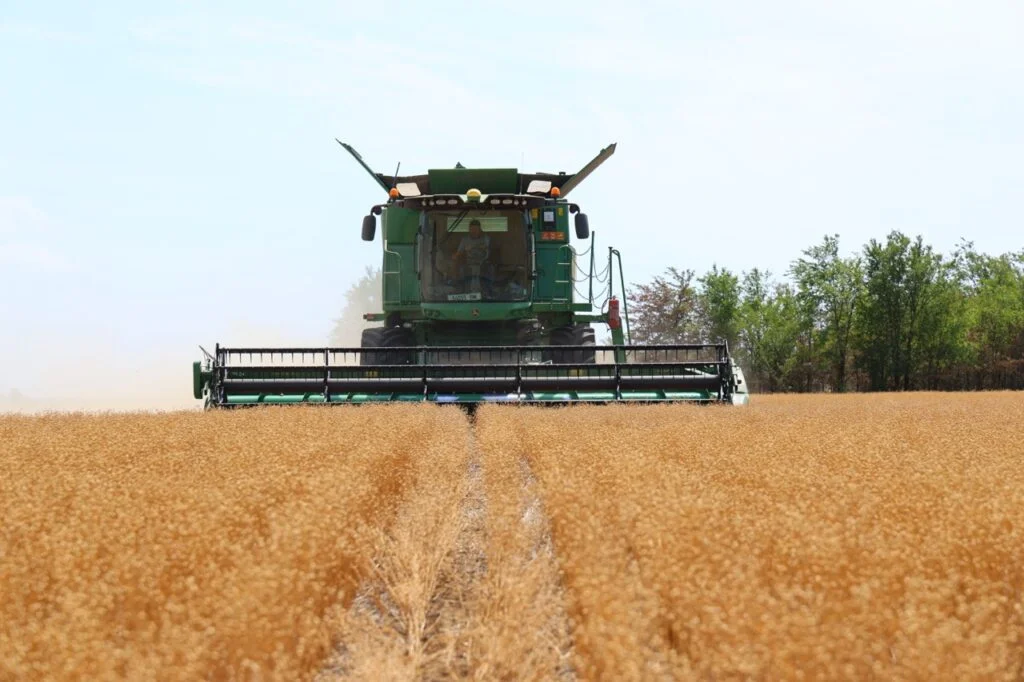
«We, – says Andriy Povod, – try not to send trucks into the field. A bunker-unloader works, the combine operator collects the crop into the bunker, and only in a safe location is it transferred into the trucks. Trucks are one of the priority targets for the Russians. They interest them more than agricultural machinery».
The director says that flax yielded well, everything else had mixed success, if you don’t count the losses due to the war. Asked about plans for next year (what and where they will sow), he answered: «I don’t know yet. We’ll see».
This publication was created within the project of the Institute for War & Peace Reporting (IWPR) “Strengthening Public Oversight” with financial support from Norway.