

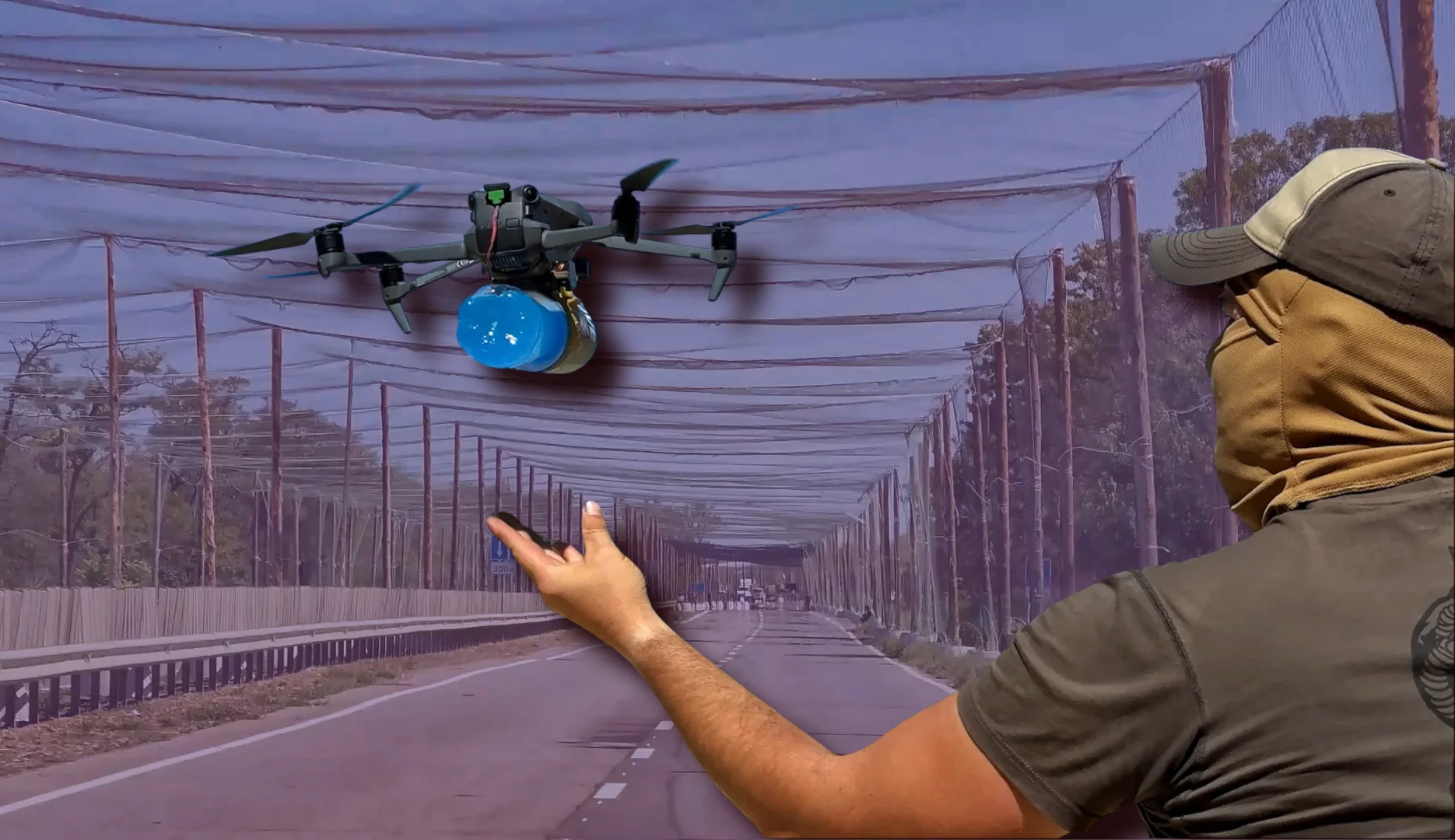
Kulyk Street in the Dniprovskyi district of Kherson — although not the most dangerous in the city, it is used by passenger and freight vehicles and public transport, but residents try to drive along this street as quickly as possible because enemy FPV drones fly into this part of the city quite often. So when drivers saw special equipment in the middle of the road, they were noticeably nervous at first because they had to slow down. But they calmed down and even rejoiced when they understood what the equipment was there for.
In Kherson, anti-drone nets are finally being installed en masse over roadways on some city streets, as well as on a section of the M-14 highway, that is, on the exit from Kherson toward Mykolaiv. Russian social media pages have been reporting for several months about the alleged taking of this exit from the city “under drone control.” Local officials and Ukrainian military personnel assert that this is not true.
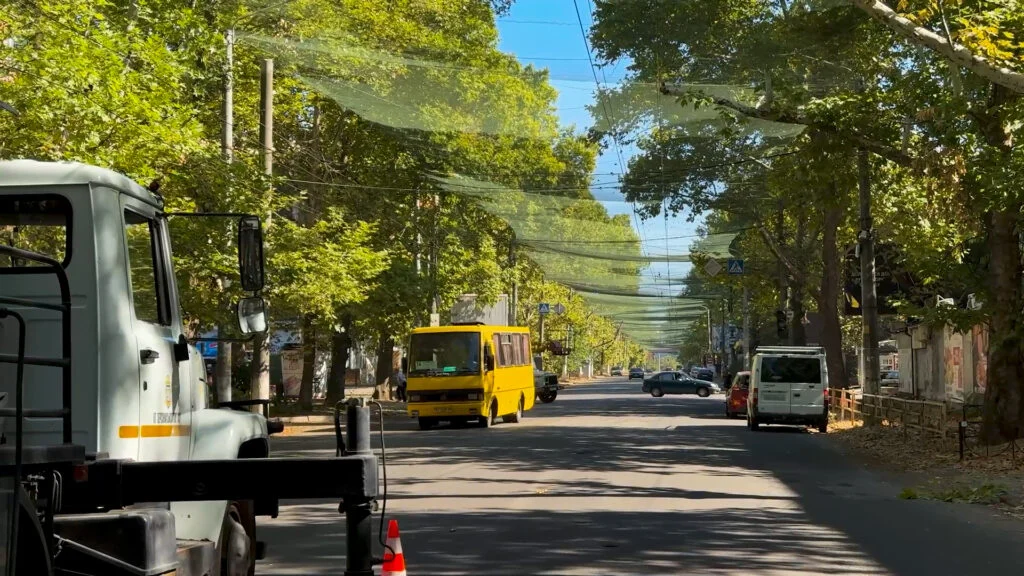
The advisability and even necessity of installing anti-drone nets in Kherson and in the right-bank part of the region under Ukraine’s control have been discussed and written about for months. According to the head of the Kherson Regional Military Administration, Oleksandr Prokudin, nets as a means of protection against enemy drones have been used in the region for a year. But we are only now seeing such a large-scale installation of them.
Security costing 300 million UAH
In Kherson region, they plan to protect 264 kilometers of roads with anti-drone nets. The total cost of these measures is 300 million UAH. Allocating them from the regional budget is not possible. The regional authorities, Prokudin said, turned to the government for help, and 80 million UAH is expected to be allocated in September.
Prokudin says that critical infrastructure facilities (primarily energy and gas facilities) have been equipped with net protection against drones for a year already: “In the front-line Kherson region, unlike other regions of the country, it is not possible to provide physical protection of such facilities using concrete and metal structures. Therefore the only option for us is nets. There is already a system according to which such protection is made. It is usually done in three layers with nets of different mesh sizes, to counter drones of different types.”
At the request of journalists to comment on the words of the head of the charitable organization “Narodnyi Tyl” (People’s Rear), Heorhii Tuka, that free anti-drone nets were allegedly offered to Kherson region but the RMA refused them, Prokudin replied: “I want to say that he did not apply anywhere. Maybe he just wanted to hype and talk about something, but we had no information that he contacted us and that we refused. We saw it in his interview. When they contacted him, he didn’t even know who told him this.”
And earlier the head of the Kherson RMA Oleksandr Prokudin called the statement “hu**nya” by the former head of the Luhansk Regional State Administration and ex-deputy minister for temporarily occupied territories Heorhii Tuka — the statement that the Kherson administration had refused two trucks with free anti-drone nets and instead announced a tender to purchase new ones.
But Tuka himself said that he spoke with the deputy head of the RMA, Olha Maliarchuk, and she explained to him why the nets proposed by “Narodnyi Tyl” were not suitable for Kherson region. Do the head of the RMA and his deputies really work so separately from each other?
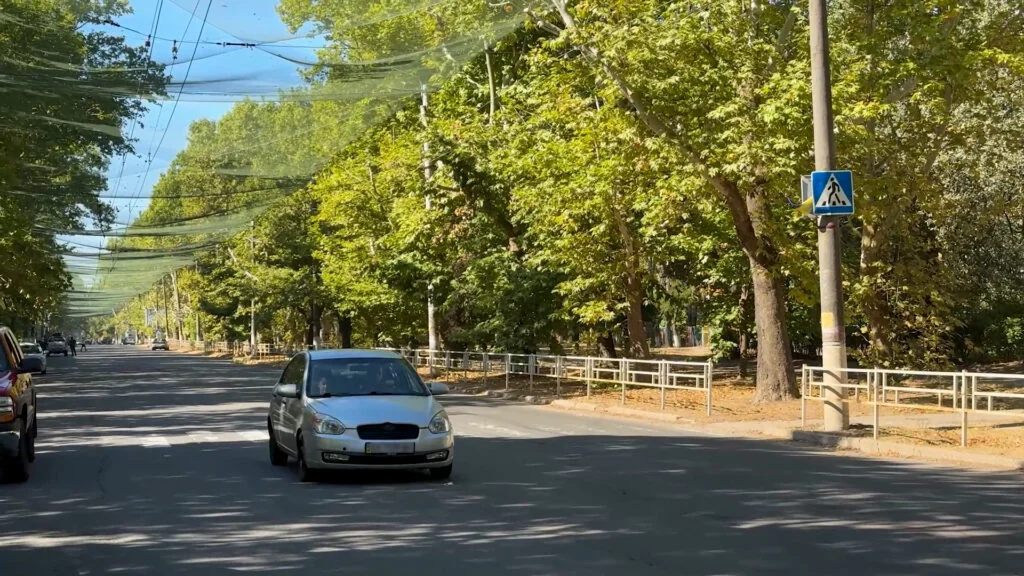
Prokudin also commented on claims that the nets being installed in Kherson region are allegedly low quality: “All those videos about us buying nets that are of poor quality and tear in the wind — that’s complete nonsense. In the areas where this happened, one net was burned by a car that was on fire nearby; that was a side net. And another car simply left the road, hit the net and tore it.”
According to Prokudin, seven kilometers of roads are now covered with nets. Work continues. Some 250 people are involved in the work (employees of the enterprise “Kherson Communal Motor Transport Service” and other organizations) and more than 10 units of equipment.
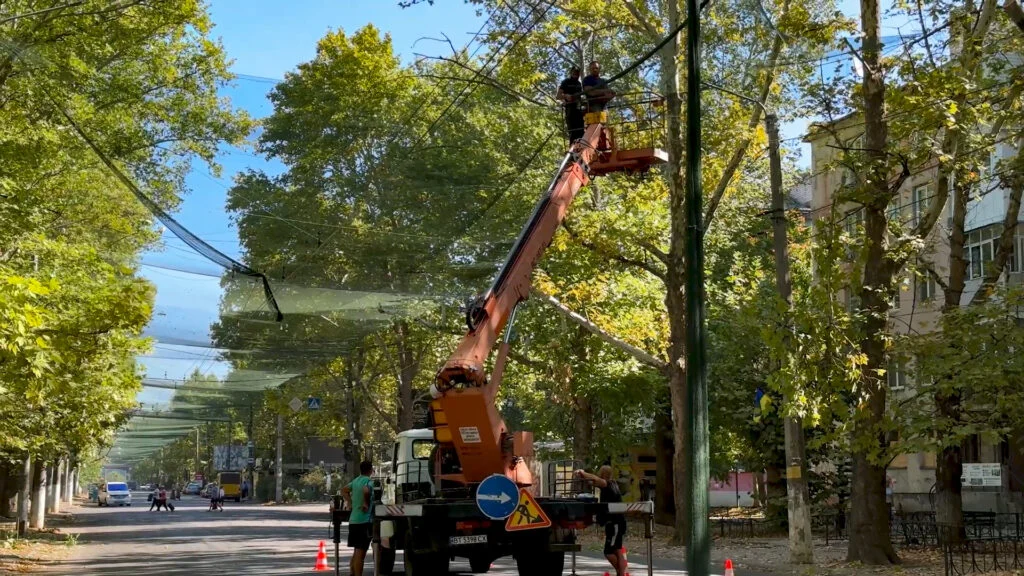
“We,” says Prokudin, “planned to cover about a kilometer a day, but it does not always work out. Sometimes we do 500 meters a day. This installation is not only the consumption of the net itself, but also of accompanying materials. This includes drilling, posts, concrete structures, cables, and fastenings. We do everything according to military recommendations. The cost of one kilometer is about one million hryvnias.”
The Department for Civil Protection and Defense of the Kherson Regional State Administration bought netting for 5.1 million UAH. The net was purchased to ensure the safety of the civilian population when providing administrative and medical services.
However, even within the regional administration not all officials share Prokudin’s view on the effectiveness of the nets. According to the deputy head of the Kherson RMA, Oleksandr Tolokonnikov, anti-drone nets do not provide a complete guarantee of protection from enemy drone attacks.
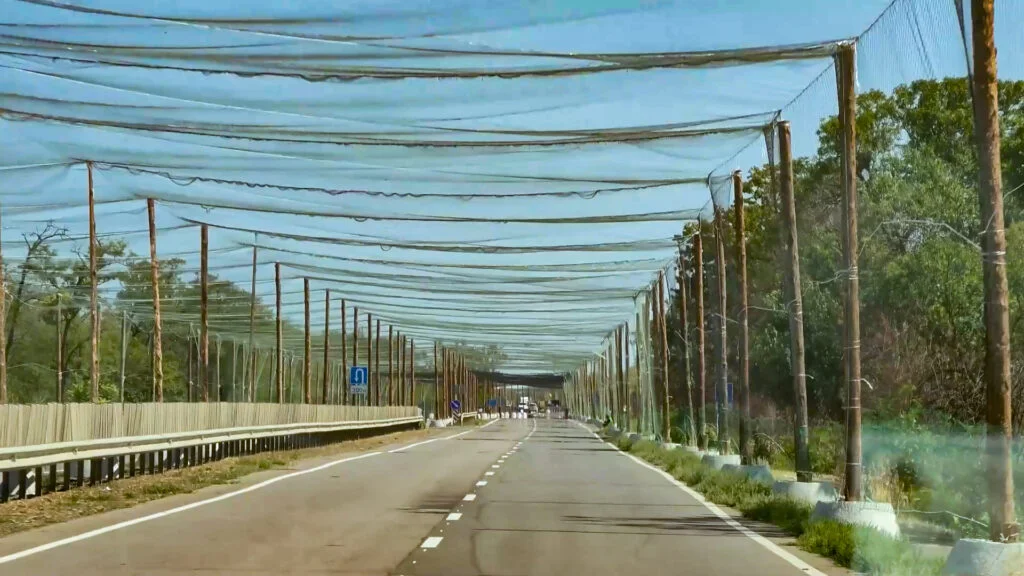
While speaking with journalists, the head of the RMA also said that he considers the rumors about “drone control” of the M-14 highway and an imminent “blockade of Kherson” to be greatly exaggerated: “I myself drive on this highway. There is danger, but the situation is much better than the Russians are saying. The work to protect the highway is being carried out by the State Special Transport Service. There is enough material for this.”
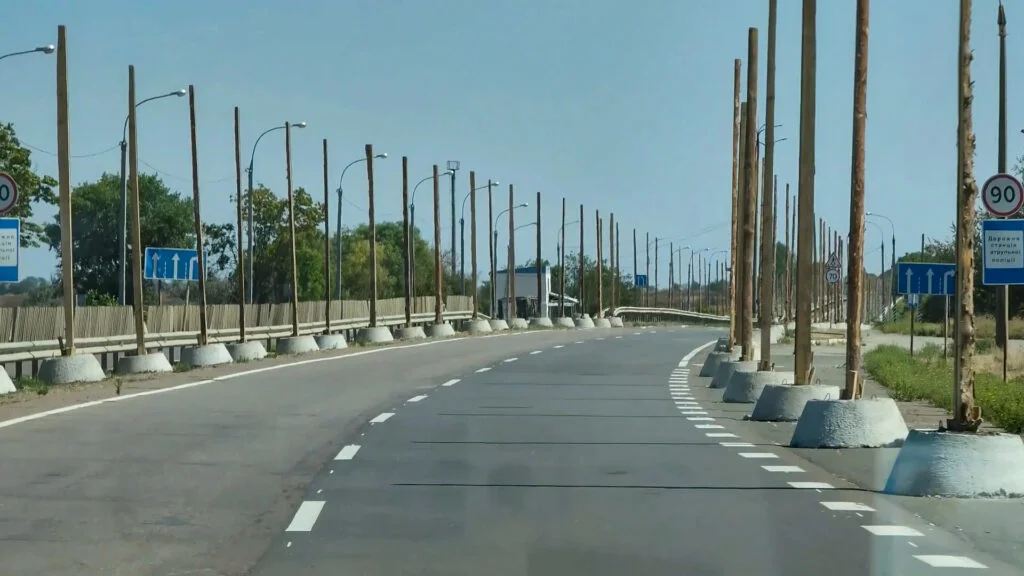
“The best of possible means of passive protection”
“Nets are the best of the possible means of passive protection against drones,” a serviceman of the Armed Forces of Ukraine who asked not to be named told MOST.
According to the serviceman, nets best protect against FPV drones based on Mavic-type quadcopters and against dropping explosive devices from drones.
“The most popular ammunition dropped from drones, the VOG-17 (a Soviet 30-mm grenade launcher round designed to engage personnel and equipment — MOST), often does not detonate on the net. The net catches FPV drones well. It can stop the Russian strike drone ‘Molniya.’ But after a ‘Molniya’ (this drone will most likely detonate), if an FPV drone or munition detonates on the net or after artillery shelling, urgent repairs are required. Actually, installing the net is half the job. It will be effective only if there is the ability to promptly repair damaged sections,” the serviceman says.
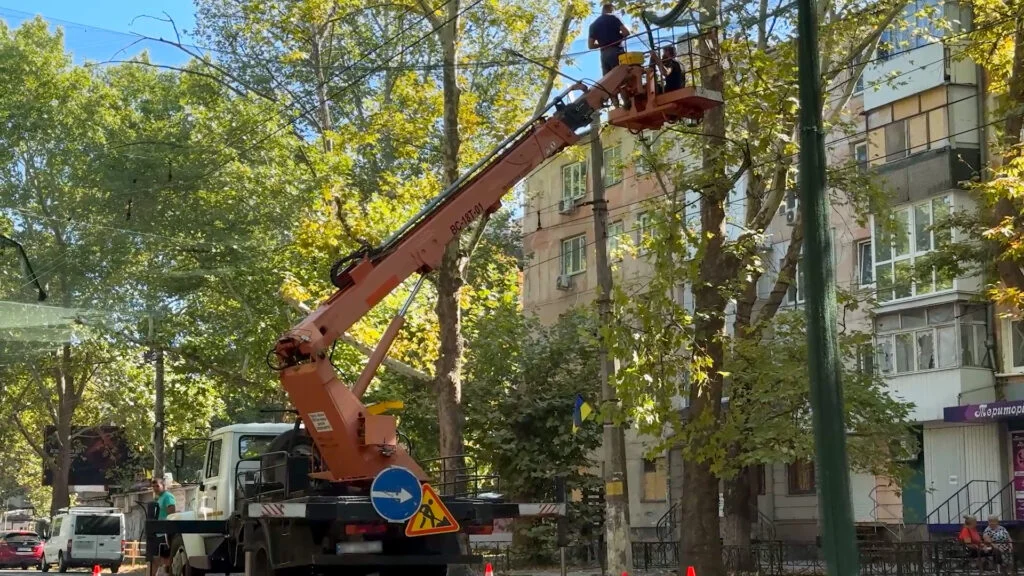
Is the Kherson RMA ready to ensure proper maintenance of the anti-drone nets? Considering the situation in Kherson region, the answer to that question will be known soon.
Right direction, but…
Which nets are most effective in the conditions of Kherson region? How can the population of the region be protected from Russian drones? Ukrainian military personnel are seeking answers to these questions at a special testing range, where they will test different types of nets using different drones and recreate dangerous Kherson realities as accurately as possible.
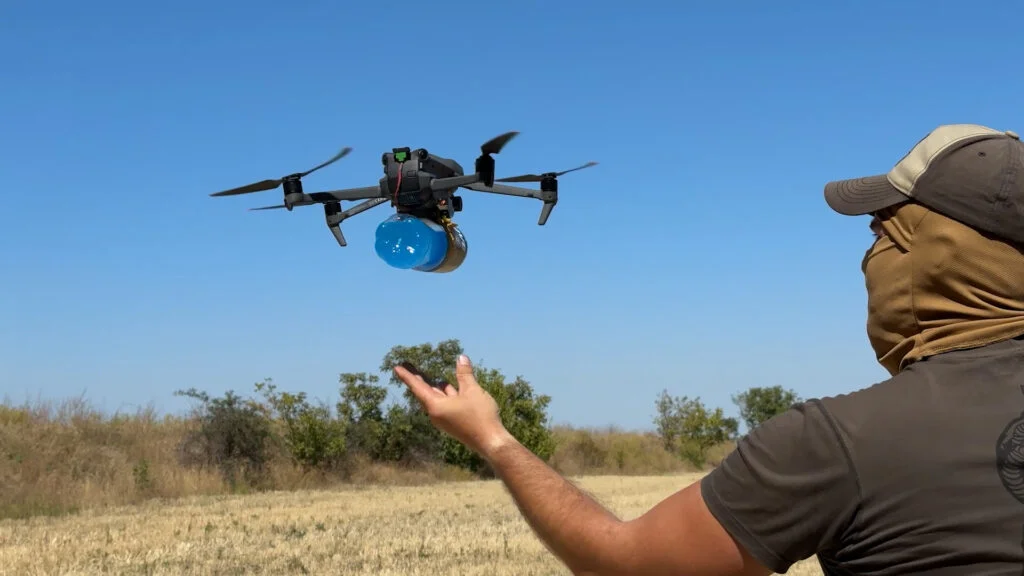
“We catch drones with nets like catching butterflies or fish,” says one of the servicemen who are researching counter-drone measures.
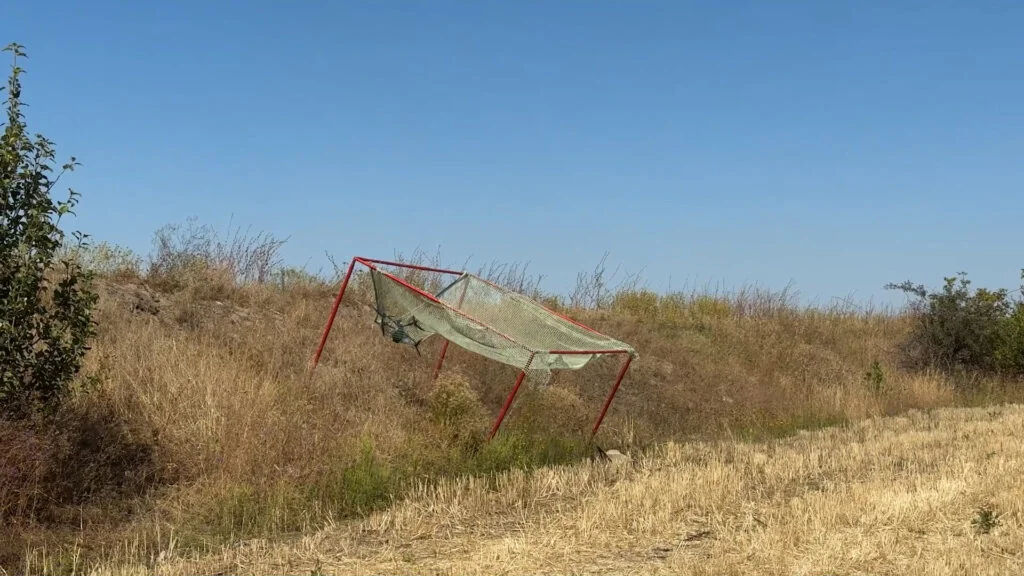
Journalists were shown how nets can cope with FPV drones and with munitions dropped from them.
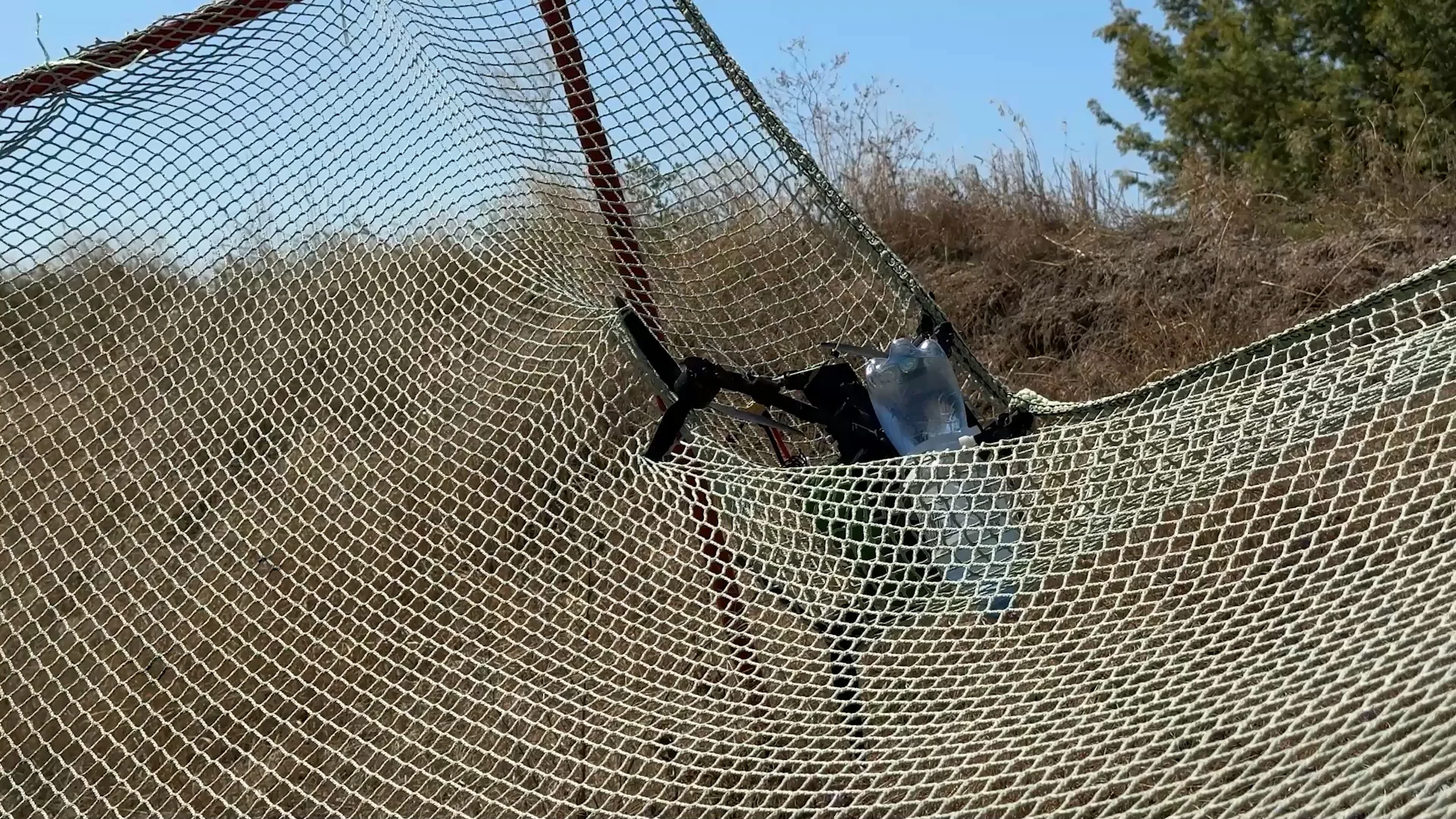
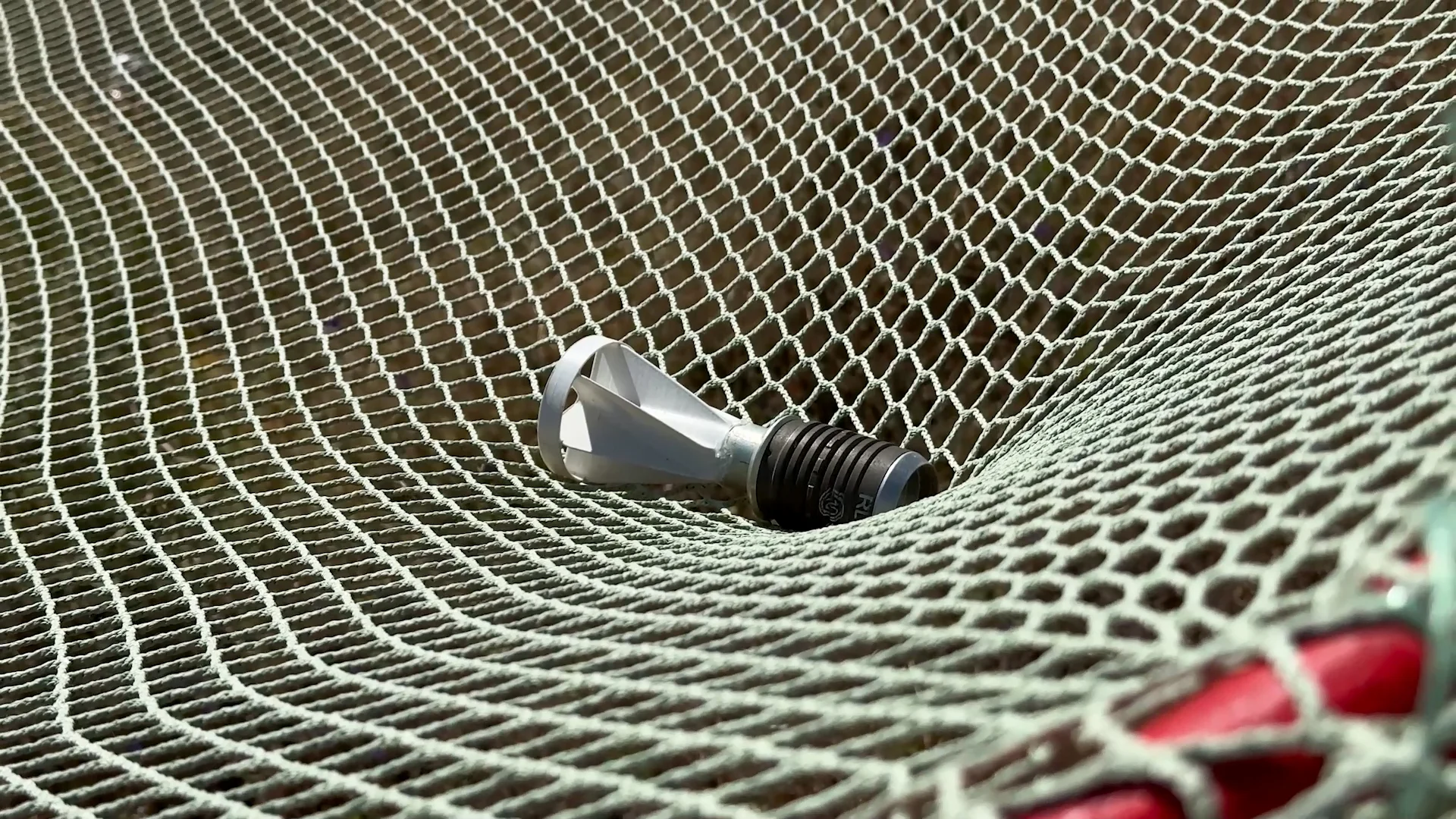
“We will demonstrate,” says the serviceman, “the principle and effectiveness of the work. We will use a standard FPV quadcopter-type drone with a mass-scale mock-up of a one-kilogram charge. This could be a shaped charge that the Russians use against vehicles. It could be a fragmentation charge. We will also use drops from Mavic ‘wedding’ drones, which are no longer wedding drones but bring death.”
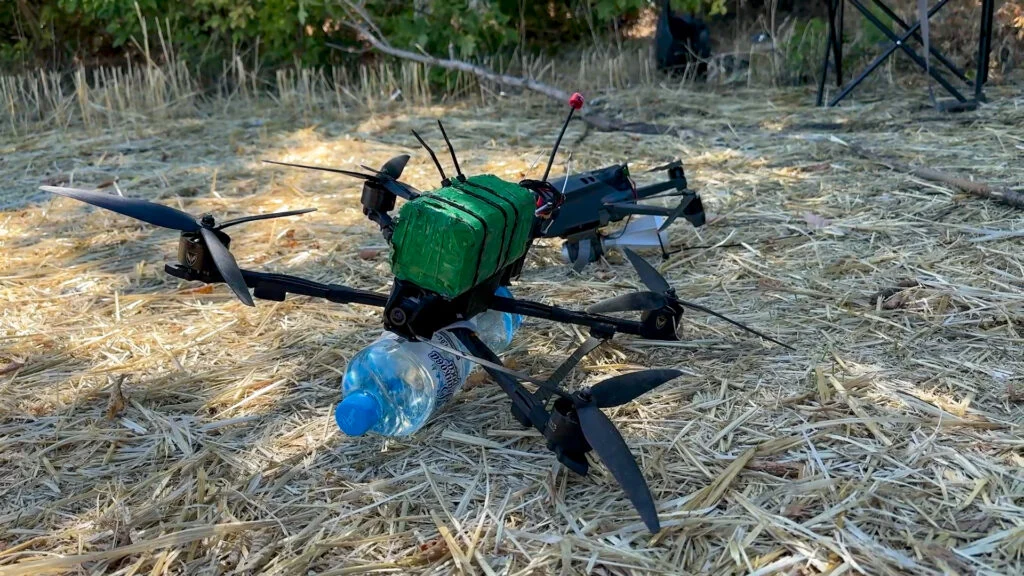
The net stopped both FPV drones and munitions dropped from them. Asked about the effectiveness of protection against fiber-optic drones, the serviceman replied that nets also work fairly well in that case. He added: “Nothing gives 100% protection. Perhaps prayer, and even that is not always, unfortunately.”
According to the serviceman, each drone or munition stopped by a net is at least one life saved, and sometimes ten or twenty, if the potential target is transport.
“But,” the serviceman noted, “it is necessary to use proven nets. That is why we are dealing with this issue, why my guys and I run tests, sparing neither drones, nor time, nor resources. Because proper preparation for any task, any mission, is 90% of success.”
Speaking about the difference in approaches to conducting war by Ukrainians and Russians, the serviceman emphasized that the main difference is the presence of moral principles among our soldiers and the absence of them among the Russians: “We understood this back in 2014. Our targets are Russian military personnel, their objects, and equipment. We do not touch civilians either in territory occupied by Russia or outside our country. In contrast, Russians like to kill Ukrainians, and they derive the greatest pleasure when victims cannot resist. That is why they arrange drone ‘safaris’ on people.”
According to Oleksandr Prokudin, Russian forces use 2,500–2,700 drones of various types in Kherson region each week. Therefore protection against them is a guarantee of survival.
However, another Ukrainian serviceman we spoke with noted that if anti-drone protection is provided only by nets, its effectiveness is very doubtful.
“The direction is right, but the resources are calculated very superficially. Nothing works if it is not comprehensive. Nets, EW, interceptors, strikes on launch points, fire groups,” the serviceman said about the RMA’s “net campaign.”