

“In my opinion, people who have seen the war, all that horror that happens at the front and managed to survive it, are no longer afraid of anything. The same goes for people who lost their relatives in this war,” says Daria Mazur — the wife of the fallen fighter of the “Kherson” battalion, Pavlo Mazur.
Pavlo Mazur died in 2014 while exiting the encirclement in Ilovaisk. Since then Daria’s life has been devoted to veterans’ issues and their families, helping the families of fallen heroes. At first on a volunteer basis, then at KNP “Oberig” KOR, later — in the Interregional Department in Kherson region, the Autonomous Republic of Crimea and the city of Sevastopol of the Ministry for Veterans Affairs of Ukraine, and after the occupation of Kherson — directly at the Ministry.
Already after the de-occupation of Kherson, when the OVA was creating a veterans’ affairs department, she returned to Kherson at the invitation to head it.
MOST spoke with Daria Mazur about the problems of veterans and their families, the work of the department under constant combat conditions, veteran spaces, and the necessary changes in veteran policy.
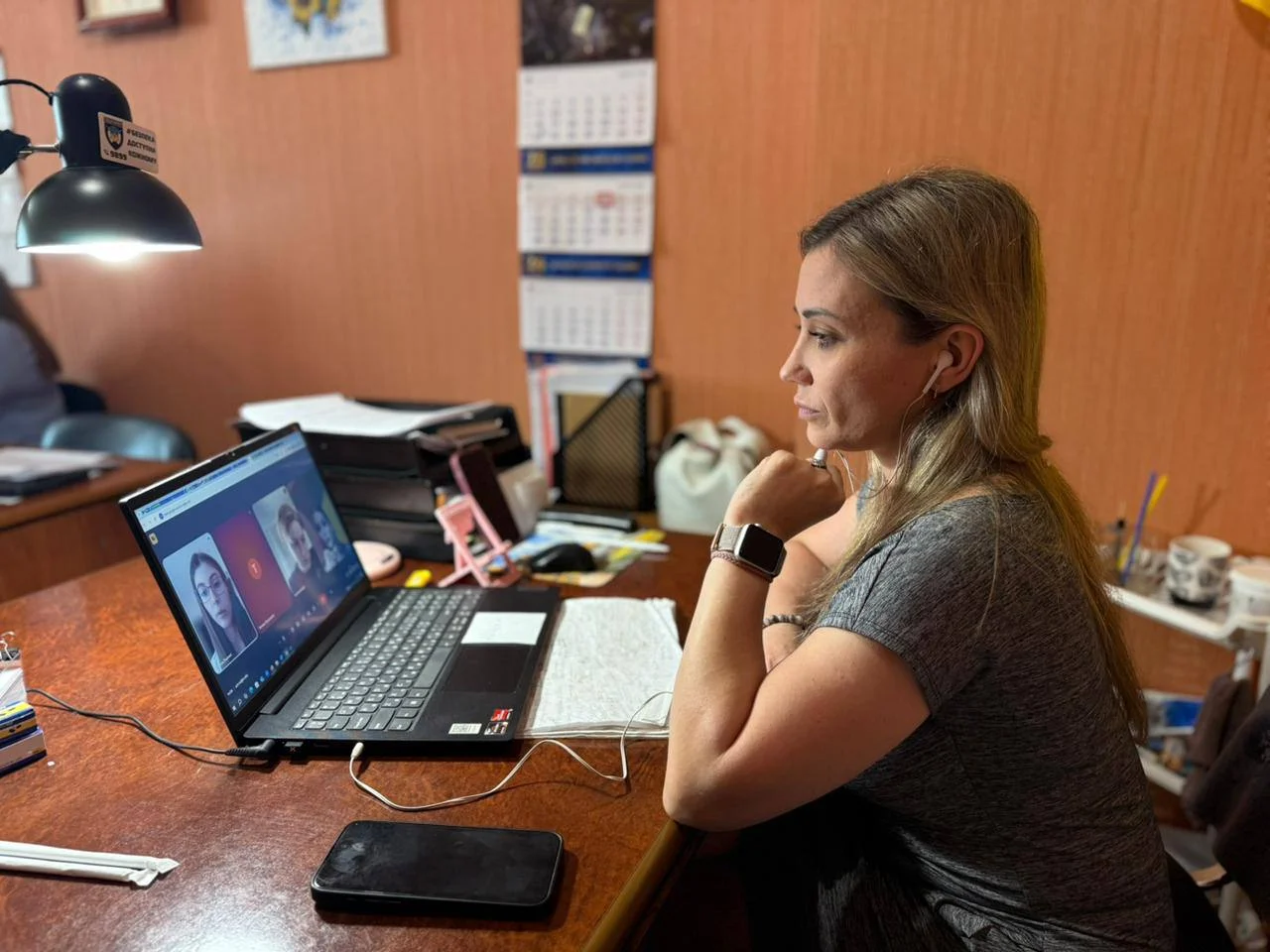
— You worked in similar fields in Kyiv and Kherson. How different are these two worlds? Because Kherson today is the front line, the city exists constantly under shelling. In Kyiv the situation is calmer in terms of security.
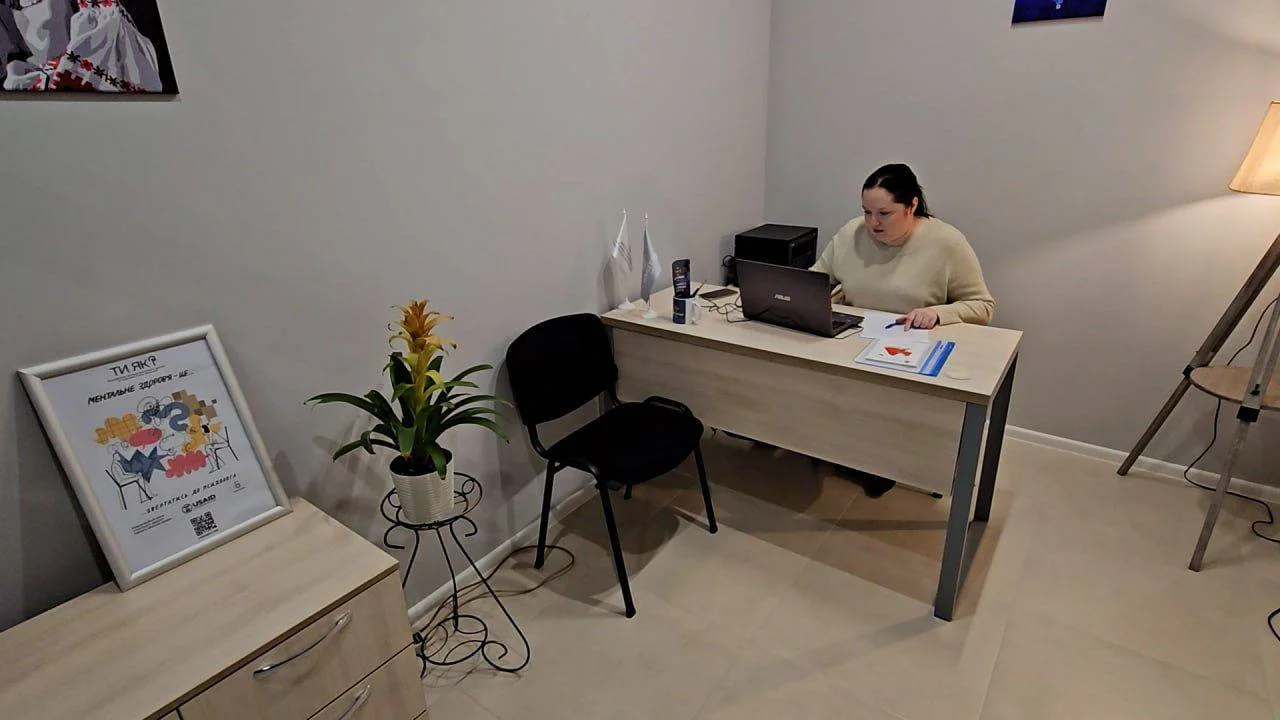
The first thing that distinguishes the situation in Kherson — is probably a severe shortage of human capital. There are very few professional specialists here, especially psychologists, psychotherapists or lawyers. For example, there is currently a great need for specialists providing psychological services. Because of the security situation many have left. In Kyiv a veteran can choose a specialist to work with. That option does not exist here. And a psychologist — is a person you need to want to open up to, someone you can trust. We implement this program mostly thanks to NGOs and charitable foundations. They come and provide psychological support here in person or remotely.
Also sanatorium facilities, for example. We completely lack sanatorium-resort treatment. We cannot fully provide this service, unfortunately, so that funds would remain in the region and services would be provided to our defenders. Because all the facilities that previously could provide such a service either remained in occupation on the left bank, or were destroyed.
— And how is this process happening now?
At present this service from the state budget has been shifted to local budgets, which generally makes its provision much more complicated. The local budgets of Kherson communities do not have the same capacity as in other regions where enterprises that generate income operate. This is a painful topic for us. In fact, communities cannot cover the cost of vouchers.
The Ministry of Social Policy has its own program, but there are restrictions on the categories of people who can receive sanatorium-resort treatment. It covers persons with disabilities resulting from the war. The fund for persons with disabilities also provides vouchers to its categories.
But if a veteran returns to the community being simply discharged due to age or health and does not have a disability, it is very difficult for them to obtain this service.
Therefore many are now IDPs in other regions, and because they are registered as IDPs in a particular region, people can use the program there. Regions understand the specifics of our region and accommodate our people, taking them into their programs.
— How many appeals does the department receive per year?
In 2025 we received almost 2.5 thousand appeals under our regional program — about providing one-time assistance in case of a soldier’s death, annual support for families of the deceased, financial assistance for persons with disabilities due to the war, for families of prisoners of war, for families whose relatives are considered missing. Then about 40 appeals were submitted directly by residents of Kherson region regarding clarification of information on local programs, why they were denied in some programs, etc. There are appeals on arranging benefits, requests for public information.
Last year, for example, we paid out assistance totaling over UAH 30.3 million. Although at the beginning of 2025 we had UAH 18.6 million allocated. But as applications came in, our expenditures were increased and an additional more than UAH 17 million was allocated. These are different types of cash assistance – from one-time payments in case of the death of a defender to various programs supporting the families of veterans and fallen heroes.
— And how many people are registered with the department in the region?
There are 5,602 people. These are families of the deceased together with children, children of combatants, demobilized combatants, and persons with disabilities as a result of the war. These are those who have directly appealed to us for one service or another. Most of them are IDPs. We cannot give an exact number for those who actually reside in the community because people move. Today a person is here, tomorrow due to active fighting they have left. The numbers change every day.
— In your opinion, what should the state change or improve in veteran policy at the national level?
Bureaucratic aspects first and foremost. A veteran often finds it difficult to receive a service, especially if they have a disability, precisely because of long waits for documents, queues, and the fact that various certificates must be obtained from different places. Some of them refuse to apply for assistance at all, knowing how many miles of bureaucracy they will have to go through. The state is moving toward digitalization, I think this will improve the situation.
Again, rehabilitation — directly after returning from service. Many programs are being developed by the Ministry of Veterans, but they are more oriented toward regions with a more stable security situation. At the state level, it would be possible to review the possibility of financing frontline territories specifically in these areas.
Before the full-scale invasion, family rehabilitation was gaining popularity, when a veteran returned home and went to recuperate together with their family. Its duration was then reduced from 24 to 12 days, but even that was enough to restore emotional bonds and strengthen family relationships. It would be good to return to this family rehabilitation in order to preserve family values in the families of our veterans and help them return to civilian life together.
— During the war society should have learned to properly perceive veterans. Instead we still have problems with this. In your opinion, how can this perception be cultivated in society and what should the state and local authorities do in this regard?
Regarding state policy, I believe all of this should start in kindergarten. The current generation will be replaced by a new one that must be raised to respect the people who ensured their ability to live in their own independent country. If children are taught critical thinking from an early age, then in a more conscious age young people form their own opinions and positions. Now there is access to information and children understand what is really happening.
In the de-occupied part of Ukraine veterans should be popularized as people who are not afraid of anything: brave, strong, intelligent people. Also involve defenders in teaching, conduct lessons of courage, which we actually had since 2014. Many veterans before the war were athletes, coaches. They should be given the opportunity to return to their pre-war activities: open sports sections for children, return to sports themselves. Students must see that our defenders are conscious, adequate people. To break the prejudiced notion that all veterans have PTSD or some mental disorders.
Of course, before integrating into social life they must undergo rehabilitation and recovery. Here the work must be two-sided: we as a society must help veterans recover and adapt to civilian life so that they want to return and do not feel unnecessary. They will help us raise the right generation of Ukrainians by their own example.
I know for sure that in any field nothing is impossible for a war veteran. People who survived the war and were able to recover from it will not be frightened of anything in civilian life.
– Let’s talk more about veteran spaces. How successful is it to ensure their operation given the security situation?
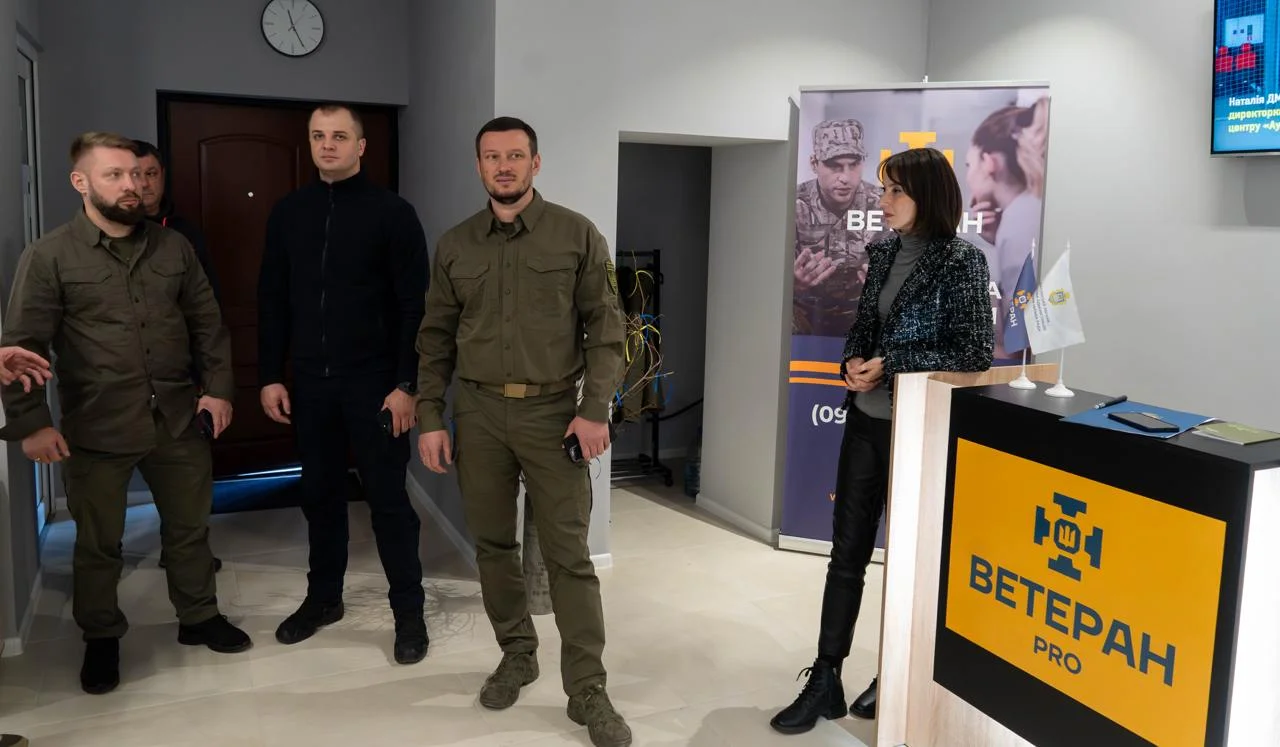
In the de-occupied part of Kherson region we have opened 4 veteran spaces. In Kherson this is “Veteran PRO”. We opened it in 2024, and today the premises where we opened it are already in the red zone. So we relocated it to another premises in a safer area.
Due to security circumstances and staffing issues, the space cannot provide services in full as it was planned initially and as the Ministry of Veterans envisions. We have caseworkers there who provide consultative and informational services, direct veterans, help them and their families obtain the necessary certificates, etc.
However, there is a successful experience in Muzykivka. A physical fitness and sports rehabilitation hall is currently being equipped there, and they are looking for a rehabilitator. Of course, there are few willing to go and work there, but the space operates.
There is also an open space in Blahodatne of Chornobaivka community, in Borozenske community, Velyka Oleksandrivka, and Novoraisk communities. Caseworkers operate there who know where to apply to provide any assistance to veterans, involving lawyers and psychologists.
Thirty-five positions for caseworkers have been introduced. Twenty-three specialists are employed. This is in every de-occupied community, and there are even positions for those that are occupied – their institutions are relocated and they work remotely. This includes Bekhterska community. Incidentally, the caseworker there is a veteran.
– And overall, are many veterans involved in work at such centers?
Yes. Even in our department of 11 people, 9 have a direct personal connection to veteran policy. I am the wife of a fallen soldier, and we also employ 6 wives of combatants, the mother of an Emergency Service employee, and a veteran.
Likewise, in the veteran spaces the caseworkers are wives of fallen soldiers, wives of combatants, relatives of the missing, and veterans. These are all people with personal experience who understand the specifics of loss, so to speak, and of course for them this work is, first and foremost, about their own experience and a sincere desire to help make the process of arranging social payments, rehabilitation, and return to civilian life easier.