

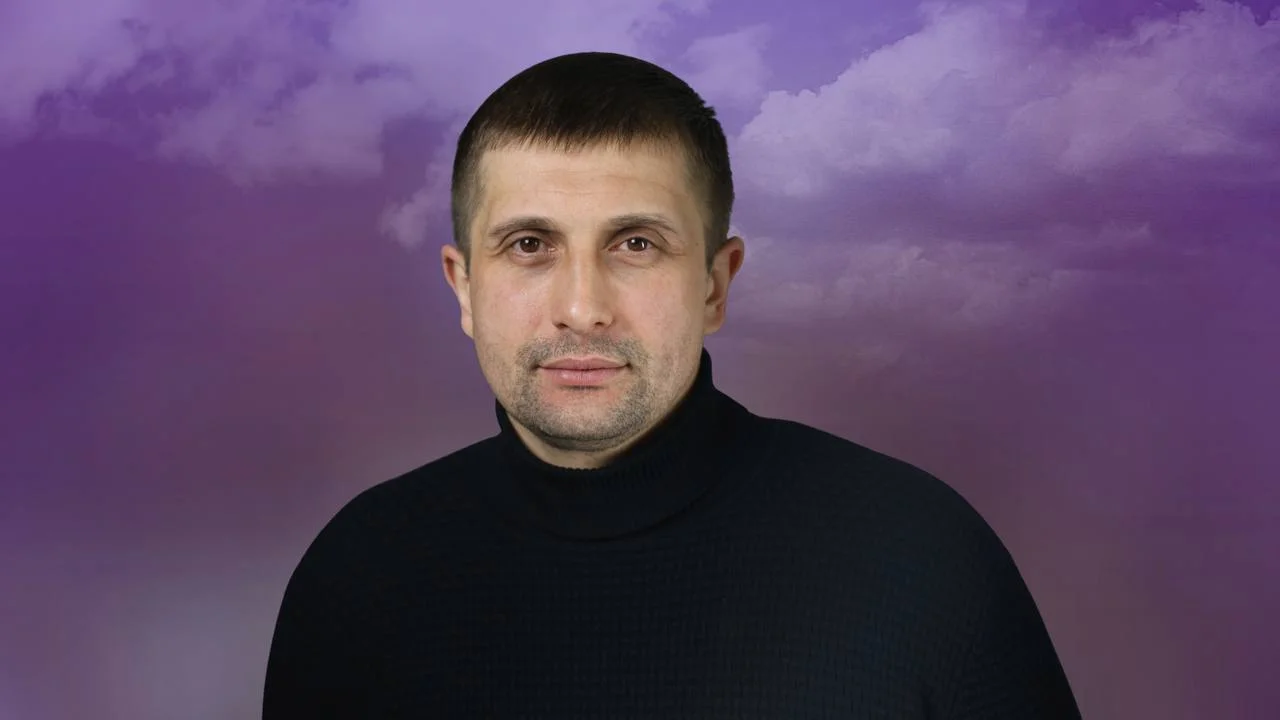
Sergiy Kozyr is one of those managers who came into high politics from regional executive power. Since 2019 he worked at the Kherson Regional Military Administration — from the head’s adviser and deputy to the head of the administration. And later he became a member of parliament.
We managed to speak with Sergiy Kozyr only in 2026. We talked about his arrival at the Kherson RMA and team formation, about infrastructure projects and contracts, about the 2021 by-elections and the mechanics of the “position exchange.” We also discussed his assistants and toxic personnel stories.
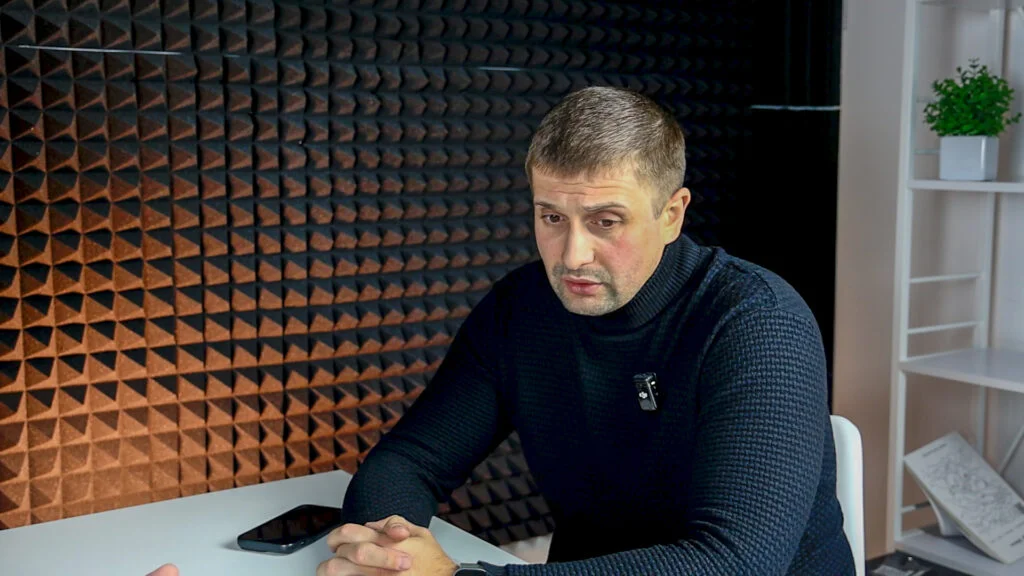
– Let’s start with 2019. How did Sergiy Kozyr end up in Kherson region?
There was a presidential program called “Lift.” I learned about it when they were appointing the head of the regional state administration, Yurii Husiev.
– Husiev was appointed because he’s a friend of Arahamiia (Davyd Arahamia – MP, head of the parliamentary faction of the political party “Servant of the People”, – MOST).
I don’t know who is a friend and who is not.
– We know. So there are already questions about the “Lift” program at this stage.
What does Husiev have to do with the program? I applied to participate in it back then.
– So you were walking along… and decided to apply. Right?
Yes. One hundred percent. You may believe it or not. I have nothing to hide. At that time I lived in Pavlohrad and was moving to Kyiv. I was selling an apartment, selling a car. I even remember where it happened. On the road between Kyiv and Reshetylivka a girl called and said I was invited for an interview. There were three or four interviews.
I took a lie detector test, then came to Kherson region, talked with Yurii Husiev, then went again to the President’s Office and had another interview there.
– So your former workplace at Akhmetov played no role in this?
– I never worked for Akhmetov a single day.
– For whom then?
– I worked in Donetsk at state-owned mines, and later at “Pavlohradvuhillia.” Well, regarding Akhmetov it’s such a conditional story… We all back then received electricity and everything else from Akhmetov (92.11% of shares of “Pavlohradvuhillia” belong to JSC “Avdiivka Coke Plant”, controlled by Rinat Akhmetov’s company System Capital Management, and another 7.82% to affiliates of that company, – MOST).
– So your appointment is not related to ties between Akhmetov and Vadym Novynskyi with Husiev?
Not at all.
– So we can say you honestly came in from the street and they entrusted you, a person from outside, to lead?
Honestly. I can confirm that under any lie detector. There were three such people in the country.
– Who else?
Two of Husiev’s deputies came in with him: me and Svitlana Chepyha. And there was Andrii Onishchenko – head of Henichesk district administration.
– So you kind of came from the street and were immediately entrusted to administer million-hryvnia state contracts for the “Big Construction” and everything else?
I joined as an adviser at the time the appointment process was underway. Then I was appointed. I did what I was assigned.
I worked in a mine all my life, I worked in production all my life. I had worked in a mine since 2003. By the time I moved to Kherson region I had almost 15 years of experience. In Donetsk I worked in managerial positions. When I arrived in Pavlohrad, I worked in production because I understood that there are many managers like me. I had the best workshop. At that time it produced the most and set records (according to the biography published in open sources, Sergiy Kozyr from January 2015 to August 2019 worked at “DTEK Pavlohradvuhillia” and “Donetsk Coal Energy Company” at 10 different positions – from mining foreman to first deputy general director, in most positions less than a year; while working in Donetsk Kozyr from 2004 to 2014 held 12 different positions at coal enterprises, and in most – also less than a year, – MOST). But then I realized for myself that there was a chance and I needed to move to Kyiv, because Pavlohrad is a rather depressed town.
– But you brought part of your team from Pavlohrad, which (you don’t like this name, but…) in the regional administration was called “miners.”
Why would I not like that name?
– We even had a somewhat elevated-tones argument about this once.
That’s how you treat it. For me, “miners” or “miners” — I don’t care at all.
– What should they have been called?
I didn’t bring anyone from Pavlohrad or Donetsk.
– Vitalii Karavaiev, who during your time in the Kherson RDA worked as deputy director of the Department of Territorial Development, head of the Construction and Financial Support Department, seems to have come from Pavlohrad.
Well he is from Pavlohrad, but I met him in Kherson.
– But gradually you pulled several people you had known for a long time. Eduard Naumenko (during Kozyr’s tenure as head of the Kherson RDA he worked as his deputy, – MOST) – he’s a close godfather, right?
We worked together in Donetsk, and we have been friends since 2007.
– So one can say this was your group? These people ended up in Kherson region after you.
I’ve been friends with Eduard for a long time. We worked together in Donetsk, then in Pavlohrad. Then I came to Kherson region and invited him because I needed someone to lean on. Believe me, the work and approach of civil servants in the Kherson regional administration at that time were mediocre. I don’t know what principles they were guided by, but for me it was important to accomplish the task set by the President at that time.
– Well, that same Naumenko was almost immediately made head of the tender committee for roads, construction, and so on.
No, he was not the head of the tender committee (according to the protocol of the tender committee of the Department of Construction and Infrastructure of the Kherson RDA, it was chaired by the chief specialist of the Quality, Technical Control, New Technologies and Operational Maintenance Division, Eduard Naumenko, – MOST).
At that time the Infrastructure Minister, Oleksandr Kubrakov, set the task to create agencies under regional administrations that could take on the roads. And he (Naumenko, – MOST) went through the entire legal registration procedure, all the tax steps, that is, he created that agency from scratch. Then they recruited people there. He was the head of that agency. The tenders were handled by other people who, in principle, now work in the administration (Kherson RMA, – MOST) in the same direction. They worked and, believe me, they were required to deliver more from him (Naumenko, – MOST) than from anyone else.
– Requirements are one thing, responsibility is another. They say that in Svitlana Vasina’s WhatsApp ((ex-director of the Department of Territorial Development of the Kherson RDA, – MOST)), who was detained by NABU (Vasina was charged with overstating the cost of technical surveys of social infrastructure objects damaged by the war, – MOST), a correspondence was found, including with people from your team, going back to 2020, where she diligently recorded various schemes. Have you heard about this? And if it turns out to be true?
There are law enforcement agencies for that. I always said when I worked in Kherson region, and I say now, if there are any questions about me, I am ready to go to law enforcement with anyone. I know for sure that my conscience is clear. I worked like that student who first works for credits so that later the credits work for him. I work for a career, and I am most interested only in a career in my life. And when I worked in Kherson region, I worked like that. So if there are any recordings or anything else concerning members of my team…
– Did you hear this tale or not?
No, I hear it from you for the first time. Look, I definitely did not influence that. If you have come to the question of tenders, you can see how many tenders were held under me…
– But you were the first to cancel tenders for local roads by your orders. In 2021 there was an order. There were several such subventions for which you canceled tenders.
No, let’s check. That definitely did not happen. I remember that in 2020 there was a rule that up to a certain amount direct contracts could be concluded. And I definitely did not cancel anything there. All our road works went through tenders. You can look at all the winners of those tenders. I had winners – more than 40 companies. So there were no favorites. Whoever won built the roads.
It was hard to work with them (the tender winners, – MOST) because many came without personnel and equipment and simply sold subcontracts. But we worked, involved law enforcement. We terminated contracts with many, relaunched with new ones… Look, I have nothing to hide here.
– You do. And members of your “miners” group?
Look, I can only answer for myself and what I see in the mirror. About those I communicated with… Well, I can vouch for Eduard… But again, I can be 100% sure only about myself. If there are questions about team members… When I worked in the administration there were many people. Who they are, how they are… There were never entirely new people.
– How did you become head of the administration? How did it happen?
Well I really did not want that to happen.
– You’re building a career, and that’s a new step.
My family lived in Kyiv. Since 2019, even before I started working in the administration. I moved to Kyiv in May or June. I arrived in Kherson region in August. So my family was in Kyiv, the children went to school there, my wife was in Kyiv. So, honestly, at that time I did not plan to stay in Kherson region that long. But… then it turned out this way.
– How does it happen technically? I’m curious. Did someone call you? Kyrylo Tymoshenko (Deputy Head of the President’s Office of Ukraine in 2019–2023, – MOST) or who?
No. When Yurii Husiev was offered to head Ukroboronprom and he agreed, he called me and said: “I will propose you as Acting. There will be an interview with the President. Whether they keep you [in the post] — that will be your work.”
And during that period the President visited Kherson region three times, and I presented all the programs of the “Big Construction”: for ambulatories, the airport, checkpoints, the bridge crossing…
– Some ambulatories were never completed. In Arkhanhelske (a village in Vysokopillia community in Kherson region, – MOST) an ambulatory that was not put into operation was bombed during the hostilities.
No, it was commissioned. Everything was done. The only obstacle was that the former head of that village proposed solid-fuel heating instead of gas heating. Changes were made to the project, and later they returned to the gas heating option.
– In photos recently taken in Stara Zburivka on temporarily occupied Kherson region territory, the local ambulatory stands unused and forsaken.
But it was completed. I remember coming there, observing the commissioning process. So all the objects that were built in Kherson region, I presented them all to the President because I was responsible for them and knew all the specifics.
– Is it true that the head of the regional council Oleksandr Samoilenko and his future first deputy Yurii Sobolevskyi initially helped you, promoted you for the position of head of the RMA through their contacts in Kyiv, and then began to “undermine” you?
I don’t know, I didn’t discuss this with them. I don’t know whether they promoted me or not.
– And then, when they began to “undermine” you a bit, whispering in Kyiv?
Let them whisper. Nobody pushed me anywhere. First of all, I was working my job, and when Yurii Husiev went to Ukroboronprom, I had an agreement with him that I would also go to work where it would be better for me.
– Well, you got back at Sobolevskyi last year, taking the party organization away from him.
What do you mean — took away?
– We’ll talk about that later. There was some kind of revenge, it seems.
I never take revenge on anyone. Why would I throw a stone at every barking dog? We move forward and do our job.
– But the dog still barked?
They always bark.
– Let’s go back to past matters. I can’t help asking about something. Although the question might be silly. The fall of the flagpole in 2021 — was that some sign or not?
What sign! It was a construction miscalculation by the builders. The strap snapped and the flagpole fell. If that hadn’t happened, that flagpole would have been the best in Ukraine. First, built at zero hryvnias from the budget. Second, it was made in a format like the Burj Khalifa (the tallest skyscraper in the world, located in Dubai, built using a reinforced-core technology that allows the structure to remain stable during strong winds, – MOST), meaning it could light up any flag of any country or any organization that would visit us.
– That flagpole still lies cut into pieces at one of the municipal enterprises.
Descendants will remember. But now another one stands, erected, by the way, also without budget expenses after the de-occupation of Kherson region, on the second day.
– On which the Russians immediately started “dumping”.
Look, whether they “dump” or not, it stands. The gestalt is closed, that’s the main thing.
– How did you become a candidate for MP? Tell us this story, briefly. I know it, let’s say, a bit behind the scenes. Initially they planned to nominate, or rather put forward, Liza Merezko — a swimmer, European, World and Paralympic champion.
Look, I have nothing to do with party history and candidate approvals. On March 1, 2021 I was appointed head of the regional state administration, and on March 2 I asked Kyrylo Tymoshenko about the elections. I said: “Since [Ihor] Kolykhaiev won the mayoral election [of Kherson], there will be a by-election [for the parliamentary seat in district No. 184]. We are doing good things under the President’s aegis. We need to decide on a person whom we will involve to create a positive image…”
– So it was necessary to use administrative resources?
No, why administrative resources? Not administrative resources. Everyone has their own administrative resource. Someone “sows” the district (referring to address plaques from Ihor Kolykhaiev’s charitable fund, – MOST) with signs and apples. Someone has other tools. This is not about administrative resources. Okay, I can give that administrative resource: take it, build.
– Kolykhaiev also apparently did that with state money, it turned out.
Well, I don’t know. I never discuss a person behind their back. Why? I only said: “Let’s prepare someone. Take this person, they need to be prepared.” Because I understood that sooner or later the question would arise how to help someone in elections. My position was: just tell me who and let them work. I received no answer.
I also asked Yurii Sobolevskyi: “Yur, whom are we preparing?” He said: “We’re waiting until the higher party leadership decides.” And they decided with three days left until the deadline for party candidate submissions.
– Kolykhaiev persuaded Liza Merezko not to run, she declined.
And so? I don’t know, I don’t remember what happened.
– I remember clearly. I’ll remind you.
Go ahead. I remember there was Liza Merezko, but I don’t know why or what. I really don’t remember anymore.
– Kolykhaiev financed Liza’s participation in competitions, and he simply asked her not to run.
Yes, I recall something like that, but I don’t remember on whose behalf she would have run.
– For “Servant of the People.”
For Servant? Maybe. Kolykhaiev promoted Hennadii Lahuta. Then Kyrylo Tymoshenko called me and said: “The President decided that you will run in the elections.” I said: “What have I done wrong? Better kick me out. Why is this needed? I warned you. And there is about a month until the elections. It’s very hard when you haven’t worked in this area, didn’t give it systemic attention.”
– Especially in such a difficult district.
And since I hadn’t given it systemic attention, it was, of course, going to be hard. We did our work there, but meetings with people were needed, communication. When you do something and report about it on Facebook and people hear it secondhand — that’s one story. When you meet them or your team works with them, that’s different. But we had a team, I’m a team person. The President said: “We will work.” So on September 29, 2021 I set off on the campaign tour.
– How did the exchange of your position as head of the RDA for a mandate take place? Did you take part in this process or did it happen without you?
No, I didn’t take part. From September 29 until the end of October I had eight to nine meetings with voters every day. I would leave home around six or seven in the morning and return late in the evening. During that period I was in Kyiv twice. I don’t even remember for what issues. It was definitely related to the elections. I don’t remember details anymore.
I know how that exchange went. I don’t know why it was done. Later I understood why the President sent me. Because I had a rating, not very high, but I had the lowest negative rating.
– Nobody there saw or knew you.
They didn’t know anything bad about me.
– But they didn’t know anything good either.
They knew the good: the actions and deeds I did in Kherson region. For example, repairing the road from Beryslav to Velyka Oleksandrivka. That road was destroyed. A lot of roads like that were done.
– And they still look decent, despite being destroyed during the war.
During my two and a half years of work in Kherson region that road was a record in capital investments. And that wasn’t because I was running for parliament — back then I didn’t even know about that. We simply invested funds because we paid attention to the route: road to the sea, to Henichesk district. For Kherson region tourism is an important sector, so the road was a priority.
– Let’s return to the exchange. How did you find out there would be an exchange, that your post would be given to Lahuta so he wouldn’t have to win the elections?
Look, I learned about it during one of my trips to Kyiv. I understand that Kolykhaiev traveled to the capital and said: “We will win according to the polls.”
– Whom did he go to? Tymoshenko?
I think so. Probably to him. I don’t know exactly where he went. Kyrylo was handling those elections.
Our team said that I had a higher rating. They said they beat us by 8%. We said we beat them by 8%. The worst thing for me would have been a draw. I worked there a whole month. Kolykhaiev pursued his own interests. Hennadii [Lahuta] was just a technical candidate. Although he is a very good guy. I think he is one of the most decent people among them. I feel sorry for him, but we have what we have.
I was very good friends with him, and when we became opponents in the election it was very uncomfortable for both of us.
– Had you known him before?
He worked as deputy head of the regional council. Later I found out about the exchange plan (about exchanging the MP mandate for the head of the RDA seat, – MOST). I said: “Why do that? We will win anyway.” I was sure of it. Our team said the same. But they did what they did. I didn’t make that decision.
– How did you feel about it personally? I remember the day when we all gathered on the third floor of the administration, in the corridor, those strange stories, that whole surreal scene.
I have my own story and thoughts about it, but I will certainly not voice them on camera.
– Well that (appointing Hennadii Lahuta head of the Kherson RDA, – MOST) was a mistake.
From my side, it definitely should not have been done. We would have stayed in our positions and everything would have been fine for our political force. Why they did it — I don’t know.
– Kolykhaiev knew how to persuade people.
I don’t think he did. Maybe it was the other way around. Well, it’s such a story.
– Was someone persuading him?
Look, I said I have my own story, my own view of the whole process.
– Did Avakov play some role there or not?
I don’t know about that at all. I heard that he was somehow involved or known there.
– Let’s say politically close.
– Close — you can say about a husband and wife, but about men I can’t say.
– Politically close.
Maybe. I wasn’t into politics and probably wouldn’t have been at all if not for these elections. Even while working in the administration I didn’t pay attention to the political affiliation of people. I worked with someone as a person who occupies a post. Whoever they were, from whatever party — I didn’t care whether they were from “Servant of the People”, from European Solidarity, or from “Salda’s Bloc”, “Our Land”, OPZZH…
I treated them like in a mine: a person came to get a salary for doing their job, not for party membership.
– How did Olga Osypenko become your assistant (former assistant of the liquidated pro-Russian MP Illia Kyva, who became a deputy of the occupation Kherson regional Duma from “United Russia” and was sentenced in absentia in Ukraine to 10 years in prison, – MOST)?
We met her when Stremousov and some other, let’s say, dubious characters initiated a public campaign regarding passenger transport. There was a “war” at the station square.
That Olga Osypenko came to Yurii Husiev, explained the situation, he called me and said: “Deal with it.” When I dived into the problem, I wanted to reform the passenger transportation sphere, create a transparent contest with clear criteria.
There were many issues. For example, cargo vehicles were converted into passenger ones.
– You saw what they used to carry tourists to the sea.
Yes. And the agencies responsible for this somehow didn’t notice these things.
– Ihor Pastukh was running everything there.
Exactly. He was there. But I can’t say he did everything because I didn’t hold a candle to that.
There were, in principle, many people in that department involved in what happened. Later he (Pastukh, – MOST) left, and someone else left.
– No, Pastukh was not in the department, he was at Ukrtransbezpeka.
But there are questions both to the department and to Ukrtransbezpeka. I investigated it, and Olga helped as a professional lawyer. Later the issue more or less got on the right track.
– Then it ended with a shooting at the “New Day” press club. There weren’t any proper tracks there.
Well, look, you just had to bring everything to a logical conclusion.
– Did you ever speak with law enforcement leadership about this, explaining that one of the influential branches in the story with the shooting, with Stremousov, with Osypenko — was the police? Osypenko is a continuation of a “hand” from Liuteranska (The Main Department of the National Police in Kherson region is located at 4 Liuteranska Street, – MOST).
I don’t know where or what that is. I didn’t trace the connections.
– Did you talk to Oleksandr Prokudin about this when he was head of police?
We talked. Clearly, by that time Pastukh was no longer head of Ukrtransbezpeka, he had been suspended, and we talked with the acting head. There was a constant struggle with carriers, struggle with trucks that damaged our roads. Honestly, let’s say plainly, nothing came of it. And it’s still like that across Ukraine: they drove with overloads before and continue to do so. Not everything succeeded, but…
– And how did Olga Osypenko become your assistant? That’s interesting. A person who worked with Kyva suddenly was walking down the street, and you decided…
No. We worked with her — she was a professional lawyer, competent. At that time she was in Kherson. She also worked in Nova Kakhovka. They needed a lawyer there who would work with citizens and provide assistance. I would come every two weeks to Kherson region. In Nova Kakhovka my public reception office was open, where she collected all the information, we responded professionally and reported to people. That’s all. During the occupation I told her: “Leave, we will continue to work.”
– And what did she say?
She said: “I’m planning to leave.” At my request she helped and worked with some of our public organizations. Then for some reason she didn’t leave. Well, she didn’t leave — we put her on unpaid leave, basically, and that was it. Then she went to Kazakhstan, I remember. When we learned about her cooperation with the Russians, of course, we removed her from the team.
– Everything is clear with Osypenko. How did you gather these “tainted” prosecutors around you: Korol, Stryzhak?
Who is Stryzhak?
– He was your adviser in the Kherson RDA. A former prosecutor of Kalanchaцьkyi district. He had a comical criminal case where he secretly brought a knife into the courtroom to a defendant, who then attempted to stab himself. A ridiculous, phantasmagoric story. I remember he became your adviser.
Well, someone must have brought him, someone introduced him.
– How does that happen? Someone brings Korol to you and says: “Here — a good prosecutor.”
I am not almighty, I can’t close all issues. There is work with law enforcement, work in other directions.
– But when you appoint a person as an adviser or assistant even on a public basis, you at least check their background a bit?
You told me about that Stryzhak, and I definitely did not take him.
– I wrote about it. We had an article “Collecting a criminal-prosecutorial flash royal: another odious ex-prosecutor appeared among the governor’s advisers”.
I will read it. Maybe I missed something. Maybe this interview should have been conducted earlier. I don’t have a super-powerful team.
– And now you have many assistants. The same Korol.
I worked with many of them back in Kherson region, very few completely new people.
– On the Parliament website among your assistants there is an Andrii Yelenich. He is the director of PJSC “Ukratomenenergobud”, as far as I understand.
We met when we were building the bridge crossing in Kherson, and I took him as an assistant because he is professionally versed in legal matters.
– So a person from a company that received the largest contract and the most budget money during your tenure as head of the RDA became your assistant. It looks strange. I checked transactions, you were paying them regularly.
The company received that contract back in 2017.
– I’m not saying you brought them in. But money went to them after the President visited and inspected the bridge construction.
Then Yurii Husiev was head of the RDA, and I was tasked to complete the bridge crossing by Ukraine’s 30th Independence Day. The bridge crossing was completed.
– The first stage.
Yes. No more money was given, only for the first stage. Later everything stopped and we couldn’t continue because the project was developed as an integrated complex. So even putting it into operation was impossible, and it worked in a test mode until it was closed. So the bridge crossing physically exists.
– But work continued there. Lahuta later ousted that company, those odd people.
My task was to build it, and I built it. People did the work. By the way, understanding there would be such background, I created a working commission that included law enforcement and everyone who might have questions. They attended meetings, we handed them all the documents, they saw everything and had a consultative voice.
We said: “Look, here we plan to pay, if there are questions, raise them now so there won’t be any later.” And in every protocol they were present. So I definitely insured myself.
– It’s just odd that the head of a company receiving 100-million-hryvnia contracts became your assistant.
I came to Kherson region only with a friend who went through a long path with me. I needed people I could rely on. You would come to me and work with you. If we had done this interview earlier, maybe you would have worked in media services.
– No.
Hypothetically. So, look, I don’t care at all, and you see I made mistakes and didn’t pay attention to something. I treat everyone as a person who can professionally answer a particular question. And contracts play no role. That story doesn’t interest me at all.
– You came to the interview wearing a fleece with the inscription “IDPs of Ukraine.” Let’s talk about the hypothetical IDP party. We’ll call it your public organization for the sake of argument, although it’s not only you. It positions itself as the main player on this “field” of internally displaced persons, of occupied and de-occupied territories. Obviously it will likely become a party. Do you have an understanding of this marginal path you are now taking to become an influential political force?
There is nothing marginal in this. It’s a very difficult issue and nobody wants to deal with it.
– Let’s be without populism.
Communicating with people is the hardest job there is. Because every person has their own opinion, every person has their own, excuse me, “cockroaches.”
– But if you build a party, you need 5% support.
Why do you assume we are building a party?
– In conversations your parliamentary colleagues already call it a party. I said: “I’ll have an interview with Kozyr.” They suggested asking you about the IDP party.
Ask them about their party. Why didn’t they join our party since 2022 and go this path with us? They didn’t meet people, didn’t help people, didn’t solve their issues. First and foremost, we are about helping people.
– You hand out gifts, various packages. I received a photo of one of these packages. Do you have an understanding of state policy regarding IDPs? What will we do? Obviously we are going to the EU. Probably, after some ceasefire, we will be asked where our politicians are on each direction, including IDPs. Do you understand what to do about this?
Look, you’ve probably heard my interviews many times. I can confidently state that there is no coherent state policy on dealing with internally displaced persons, people affected by the war. There hasn’t been one since 2014.
– Will the NGO “IDPs of Ukraine” write it or not?
The NGO can write anything, but this is a complex of approaches.
– I was told that your group “IDPs of Ukraine” (MPs from “Servant of the People”: Maksym Tkachenko, Sergiy Kozyr and Ruslan Horbenko, – MOST) are a bit offended by the President’s Office and by the Cabinet and by everyone. And this grievance has united you. But on the other hand, who should write this policy?
According to legislation, it should be done by the Cabinet of Ministers of Ukraine. It doesn’t do it. We told the previous prime minister, and I met with that prime minister more than once. Now there are some more than ten programs for internally displaced persons, but they are scattered programs. Who is responsible for housing reconstruction? The Ministry of Recovery. Who is responsible for payments to IDPs? The Ministry of Social Policy. Who is responsible for important issues for Kherson region like property rights? The Ministry of Justice. Everything is scattered and there is no single body. In my view, there should be a single body. What it should be called is another question. It should definitely be subordinated to the executive branch and be either a ministry or some agency.
Most likely it should be a ministry, like the Ministry of Reintegration used to be. It just needs to be reformatted now because that Ministry of Reintegration then was too scattered.
– Now we are again pointing the finger at some collective Cabinet that must develop the policy. Wouldn’t it be better for your future political force if you developed it?
I am working on this now. We had a meeting with the President two months ago, we raised the issue. The President heard and understood. The President is being told that IDPs are very bad people. And in the Cabinet they say: “They don’t work, they do nothing.” That is said by people who simply do not understand the issues of displaced persons at all. I am sure that regarding IDPs the “average temperature in the ward” is normal: they are citizens of Ukraine like everyone else. We are now working on drafting a vision of state policy. Believe me, it will be a fundamental thing that will cover the entire spectrum of the state’s work.
– So why don’t you create this policy, present it and move forward?
I have already presented at least two or three programs, from which then someone ripped off a piece and launched a program. I say: “Look, for an organism to live it must be whole. The heart cannot beat without a brain or vice versa.” But somehow we do it otherwise.
And now we are doing it “for dummies,” laying out the vision. And we will start showing it. But there is also intellectual or authorship rights. When you create something you must understand that someone might come and take a part to later say: “It doesn’t work.”
– That is why you mentioned the President. Obviously without the President this won’t work in a country that is a fully presidential republic.
There was a recent meeting with the President. We raised this issue again, we are preparing and hope to present the program to the President in March.
– Is the President afraid of IDPs as a difficult electorate? Is he afraid of them? The problem is not so much the President being afraid of displaced people as his entourage being afraid.
He is told that everything is fine. That everything is okay and that displaced people are very bad, they are marginal. That they don’t want to, they can’t, they don’t do. That’s the easiest explanation.
– It seems to me you also do the easiest thing: handing out conditional “buckwheat,” playing populism.
What buckwheat?
– The NGO spent, as I understand it, about UAH 170 million last year on this.
Who?
– Your NGO “IDPs of Ukraine.”
I didn’t count that.
– Public sources show that, it seems, UAH 172 million came to the NGO in a year. Whose money is it, by the way?
Our task is simply to find people who want to help. Our task is communication. We find such people. For example, recently we were in Odesa and found a person who wants to help and says: “I am ready to help.” We work with Kherson hubs for IDPs.
There is a person who says: “I have new children’s clothes, they need to be distributed. I don’t want to be named.” Although this is a very influential and well-known businessman in Odesa. He helps. We use this to distribute. In this format we work.
Now he is working there to help, including with certificates through ATB. We say, many people come to us asking for help.
– Well, UAH 170 million — who invested in the NGO over the year?
We cooperate with many. We have many directions that work only with IDPs. We took on a large part of assistance to the military. We don’t publicize that because there are things that don’t need publicity.
– Can you name who finances it?
Ukrainians. People who want to.
– Ukrainians, clear. Say, Ruslan Horbenko — he’s Ukrainian. They say he invested the most. Who else?
Someone donates, someone helps otherwise, auctions are held, other events. Our task is advocacy, to find people who want to help and connect them with people who need help. And when people receive help, to collect that information on which the current state policy is now being built. We need to find out what people affected by the war need. In our country very few people can do this professionally. Believe me, my colleagues and I can definitely compete with anyone in the country on issues concerning internally displaced persons.
– So far it looks a lot like populism. I noticed your colleague from Luhansk, the former producer (Maksym Tkachenko, – MOST). He behaves in public like playing a role, and it looks very insincere.
Look, we help people.
– But your goal is still political activity.
We do not pursue political activity as a goal.
– If there will be a party?
Anything can happen in the future. Today we are not considering that.
First, I am a representative and head of the regional branch of the “Servant of the People” party. I have been in that party since the start of the election process and did not leave. The public organization “IDPs of Ukraine” has been working since March 2022. Back then nobody thought about a party or elections.
You remember how many funds and NGOs there were at the beginning. It’s good when people helped people. Now very few remain who went through that marathon. And how long it will last is unknown. Every year we say there will be some elections.
Look, I more than anyone want those elections. If there are elections there will be some clarity about the war. If there is clarity about the war then there will be a process that will give us the opportunity to obtain a fair peace and at least live a bit for our country and our children.
– Back to “Servant of the People.” How did you remove Yurii Sobolevskyi?
Whom did I remove? Why do you say that? (laughs)
– There was a long underground backstage struggle. Although he never complained about it, at least to me.
I never fought with him for that branch. Believe me. Absolutely not.
– As far as I know, you constantly criticized his work in Kherson region, including when talking with the then party leadership.
Why do you say that? I didn’t want to go there at all. Why would I? Explain the logic why I would want to come here. To do what?
– To put things in order and make it work.
Look, I can put things in order if someone asked me to go. Davyd Arahamia said: “You will go to Kherson region.”
After that I didn’t see Yurii, although we had worked together before. Obviously, maybe there were misunderstandings somewhere.
– I know they were serious.
No. You don’t know what “serious” is, you don’t know my character. I never quarreled with anyone.
– Well you didn’t beat him (Yurii Sobolevskyi, – MOST).
Why beat him?
– I’m joking.
Trust me, I never quarreled with him, and everything is still fine. I don’t know what happened between him and the party leadership that was before this, but this was his choice. He left by personal statement.
– Well, he was ousted, I would say. It really looked like that.
No, you’re mistaken. Although you have a lot of information, perhaps you don’t know it or no one can tell it because only one or two people hold it. And those one or two people are probably me or…
– Or they tell me, but off the record (not for publication, – MOST), I can’t tell more.
Maybe. Believe me, nothing bad came from my side, and I certainly did not rush here.
– But you entered the party organization as a “new broom,” and many heads flew off.
If I go somewhere, it either works, or I won’t work there. I am not used to half measures.
– Did you dismiss many people or not? There was already some staff. I saw in party reports that people received salaries from the state budget.
They still receive salaries. First of all, I told Yurii to expel from the ranks those collaborators who were undoubtedly tainted and we knew that for sure.
– Why didn’t you expel them? I asked him about this but didn’t get a proper answer.
I asked him many times. Why should I stand next to people who, even if they have no suspicions, have stories written about them in your media? I said, let’s expel them. If tomorrow it turns out that someone we considered a collaborator is some hero of a secret front, I will apologize for expelling him. But so far such incidents haven’t occurred.
– Sobolevskyi told in the corridors that one person will soon return and we will have to apologize. I think unlikely. His brother definitely won’t return, because he was liquidated.
We work with the Security Service of Ukraine, with the relevant agencies that provide us with information. Of course, they have some procedural restrictions.– You expelled collaborators, that’s good. I mean the apparatus, the structure in each district. Almost every community has people. That’s the party structure. I think it’s a lot of people.
Why many people? No. There is a lawyer, a secretary, and now we opened additional offices.
– They say a banner was installed in Velyka Oleksandrivka that can be seen from a very long distance.
Aha! And a four-storey building was erected in two days, banners so big you can see them from space (laughs). Come on! It’s an ordinary building. It’s good that people talk about us. That means we are working in the right direction. Our task is to help people. To revive the trust that should be in the party.
Clearly, a party cannot replace military administration or other things. Because a party is a mechanism: people, deputies, who even now cannot perform their direct duties everywhere because military administrations have been set up, but no one deprived them of their obligation to communicate with those who elected them. They are community opinion leaders, they are known, they are neighbors. And we must talk to them and convey certain information, including to the administration.
– Do you contact your deputies? Do they do anything?
In our region there are generally 247 deputies from the “Servant of the People” party, if I’m not mistaken. We expelled 12 people from September to the end of December, conducted a full audit. We contacted each of them, found out where the person is. That is, who sees and is ready to revive their work given the current circumstances. More than 70 deputies are ready to continue working in the new existing conditions. The party head Oleksandr Kornienko already held meetings with them.
I also had an online meeting with them today. I talked to some in person. I understand they may find themselves in circumstances where they will need help. We must help deputies so they can then help the people who elected them. Military administrations at the local level simply cannot physically communicate with every person.
– And what is “Servant of the People” about now? Once Kornienko, the new/old head, said it should become sexy. What is the party about now?
Military, IDPs, helping people. Any assistance that brings us closer to victory. Those directions. They were voiced at the general meeting…
– What is the party ideology, if you break it down?
It is human-centered. That is human capital — people first and foremost. The task of the party is to work and provide help to those people who, first of all, remain here, who have not left Ukraine — God forbid they don’t move abroad or worse — go into occupation.
– About your district. What are you most proud of in these four years?
It’s hard to be proud of anything. I started working in the Verkhovna Rada on November 16, 2021, and on February 24, 2022 the large-scale Russian invasion began. With the help of Oleksandr Kornienko, we managed to purchase ambulances for communities with state subvention funds. We also bought modern X-ray machines for the hospitals in Novovorontsovka and Velyka Oleksandrivka. Fortunately, they were preserved and are working.
However, it is very difficult to evaluate what I did and didn’t do. People should assess that.
– How do people react when you come to the district? What do they say?
I don’t distance myself from anyone, I’m not afraid. I have no security, I communicate with people in the district on all topics. Sometimes questions arise that I can’t find answers to. Not because they are unsolvable. One deputy is not a warrior in the field. Many things are hard to “push through.” For laws you need 226 votes. But the issues that can be solved at the local level, in cooperation with the head of the military administration, are being solved.
– By the way, you had strained relations with Oleksandr Prokudin, but in an interview he told us you have good relations.
I have no bad relations with anyone.
– I heard there were.
Why would they be bad?
– According to several sources, it happened after your people weren’t allowed into reconstruction matters, including in your district. When Donetsk companies came in.
Well you ask who brought the Donetsk companies there.
– It wasn’t you.
Bring me someone who said any of my people or those affiliated with me were lobbying any companies. I don’t care who builds, where they build and how. That’s the military administration’s area of responsibility.
– But this is your district. Your district is being rebuilt now.
Look, I will come with the head of the military administration and we will open it together.
– They built many underground schools. None of them are functioning. You asked what happened?
Of course, we sent inquiries. We will ask everything once we receive answers. We will ask everything. My task as a deputy: in my district we need to do this and that. We communicate with the head of the military administration and officials in relevant fields. The task is to have funds in the budget so implementation is possible locally. I did that, asked colleagues to support initiatives for implementation. This is done across the country, not only in Kherson region.
– I understand. But if I were an ordinary person I would find it very strange: to invest UAH 90 million — and bury it in the ground, and the schools stand unused. It’s a surreal story.
We need to find out why they don’t work because there are many bureaucratic mechanisms. Everything is tied up in bureaucracy regarding commissioning.
– I even asked community heads why when Svyrydenko (Yuliia Svyrydenko – Prime Minister of Ukraine, – MOST) came to open that school you didn’t tell her it wouldn’t work. People are afraid.
Who?
– The leadership.
During the war that’s not something to be afraid of. My criticism was only about one thing: building underground schools in the city of Kherson. I talked a lot about it at different levels.
– Did you find out how that happened?
At some meeting it was said that there needed to be an alternative to online education. I also supported that because children must return to offline learning. There was COVID, then the large-scale invasion, and we understand our children haven’t been at school for over a year.
But when I heard they wanted to build underground schools in Kherson, I asked: “How will we transport children there?” I’m not even talking about construction. Suppose we have a magic wand and the schools appeared. Will we transport children through underground passages? Bring them in by military vehicles? No one answered those questions.
And that was one of the reasons they wanted to remove the education minister. Only the help from Fedorov (Mykhailo Fedorov – Minister of Defence of Ukraine, former Minister of Digital Transformation, – MOST) allowed him to stay.
– So the question had resonance, much bigger than one region.
It was a complex issue because it concerned schools and getting everyone back to offline. It was about cutting 10,000 teachers. I had questions. How to cut? Where will the teacher go? How do we work with children who remain in occupied territories? I proposed developing a state policy. The Ministry of Education is just a small link. You need a more comprehensive approach. In my view the Ministry and the Cabinet should oversee those processes.
– So we concluded public policy should be handled by a collective nobody.
Not a collective nobody, but responsible people with names who receive salaries.
– But Ukraine lacks an institute of political responsibility.
We will come to that.
– Farmers, including those in your district, have not received any compensation for crop losses. Is there any understanding what to do?
They have received something. I met with our farmers in June in Vysokopillia. You can see it in my Facebook reports.
– I spoke with two of them in early January. They said the issue wasn’t resolved.
In mid-January the issue was settled. Not as fully as hoped, but some support was given — UAH 4,500 per hectare.
– While they spent more than UAH 20,000 per hectare.
Before that there was nothing at all. We fought on this for over half a year. We raised and worked this issue with Taras Vysotskyi (Deputy Minister of Economy, Trade and Agriculture of Ukraine, – MOST). I raised it with farmers at a meeting with the Prime Minister in Mykolaiv. Thanks in part to the military administration, Kherson region prepared all the necessary acts.
Legally and according to all laws Kherson region was prepared. Last week I posted that the Cabinet adopted a resolution according to which farmers will receive UAH 4,500 per hectare but for land up to 2,000 hectares. Obviously, this isn’t much compared to losses, but UAH 4,500 is better than nothing.
Again, we continue to work with farmers. I understand there are many issues to resolve for them because we know how they demined fields and what they did. Their work differs from agrarians in other regions.
– About the state enterprise “Pioner” (State Enterprise “Experimental Farm “Pioner” of the Institute of Climate-Oriented Agriculture NAAS of Ukraine”, located in the village of Liubymivka of Novovorontsovka community and is in the process of liquidation, – MOST) do you know anything?
I know Kolykhaiev once dealt with it.
– Four days after the liberation of Kherson and the right-bank Kherson region they appointed a person from Vitalii Kim’s circle director there (head of Mykolaiv Regional Military Administration, – MOST), and at the end of 2025 the enterprise began to be liquidated. What will happen to it?
I will send an inquiry about this. By the way, it’s my district.
– Last question. Suppose the war ends. Elections are held and you are re-elected to parliament. What will you be doing there?
I wouldn’t pose the question like that. I would first ask: do I plan to go back at all?
– Well, answer your own question.
In the current realities and in the work that exists now, definitely no.
– Why?
Because you need to do things that help people. In the current realities it’s very hard to do them.
– You and your collective made it so that you are not taken into account.
I wouldn’t say we did that ourselves.
– Those who took envelopes for pressing the right buttons did that.
You need to ask them who took them and who pressed the button. Before the large-scale invasion I worked in parliament for two months.
– Were envelopes offered in those two months?
I didn’t receive any and I wasn’t going to.
– Were you offered?
No one offered. I didn’t come for an envelope. I came for the work. So definitely nobody offered anything.
– You didn’t want politics, but now do you like it?
So-so. You were right: I didn’t want politics, I didn’t strive for it. Politics dragged me here. We’ll see. I certainly want to help people. I want to help Kherson region because during all the years of independence the region lagged behind despite having such potential. It’s unclear why. Although it’s somewhat clear why.
– Roman Holovnia (I don’t know if you watched his interview with us or not) said he fell in love with the left-bank Kherson region when he started business there and said Kherson region is generally unloved.
Unloved. One can say it wasn’t worked on, that’s true. It’s unloved and very much so. Perhaps it was loved but not enough effort and funding were invested. Yet it could have been turned into a gem and shown in practice, not just in words, a real policy of de-occupation and reintegration of occupied regions.
– Thank you for your time, for this interview. I hope this conversation wasn’t too boring for you.
Thank you. Take care of yourselves.