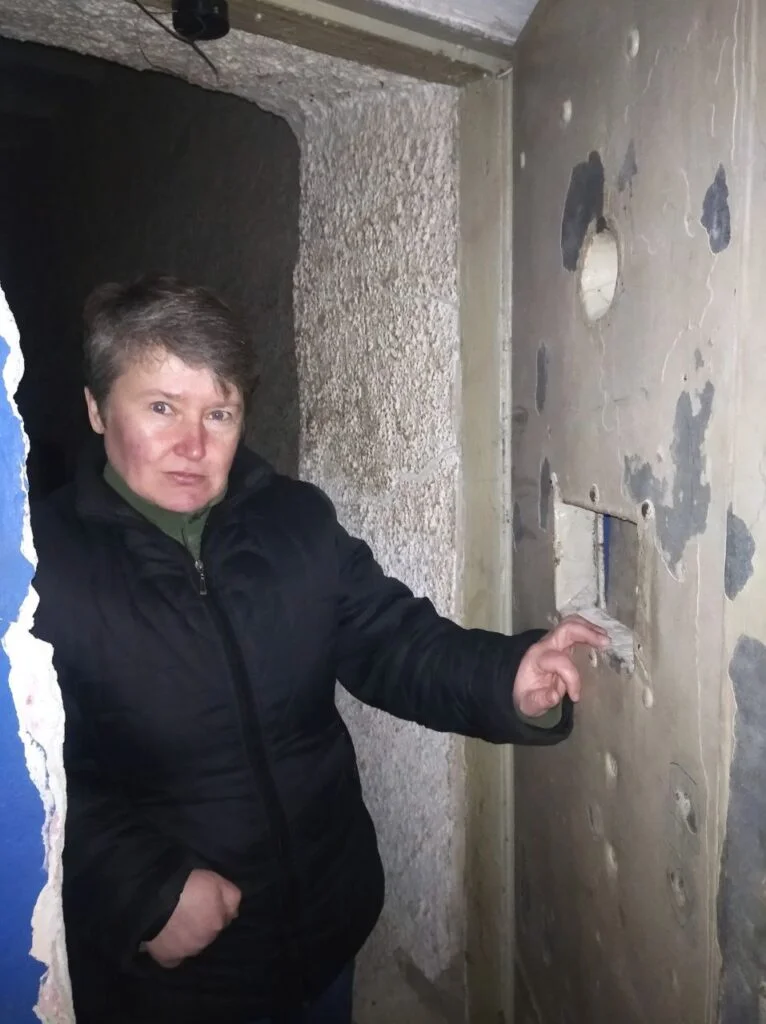
According to law enforcement, during the occupation of the right bank of Kherson region Russian forces set up at least 12 torture chambers there. The regional prosecutor’s office reported that during the full-scale invasion 1979 cases of abduction or disappearance of people were recorded in the region. These are community heads, deputies, former law enforcement officers, ATO participants, journalists, public activists, volunteers, simply people who took part in protests against the occupiers. The investigation currently knows of the release of 1002 citizens, and also that 925 people are still being illegally held by the occupying forces. 49 abducted people died as a result of torture or due to lack of medical assistance. And these are only official figures; the real statistics may be many times worse. Kherson resident Olena Tarasenko was also held in the occupiers’ dungeons. The woman recounted what she had to endure “in the basement” of the former pre-trial detention center of the Kherson police.
Blue-and-yellow flag in the occupied city
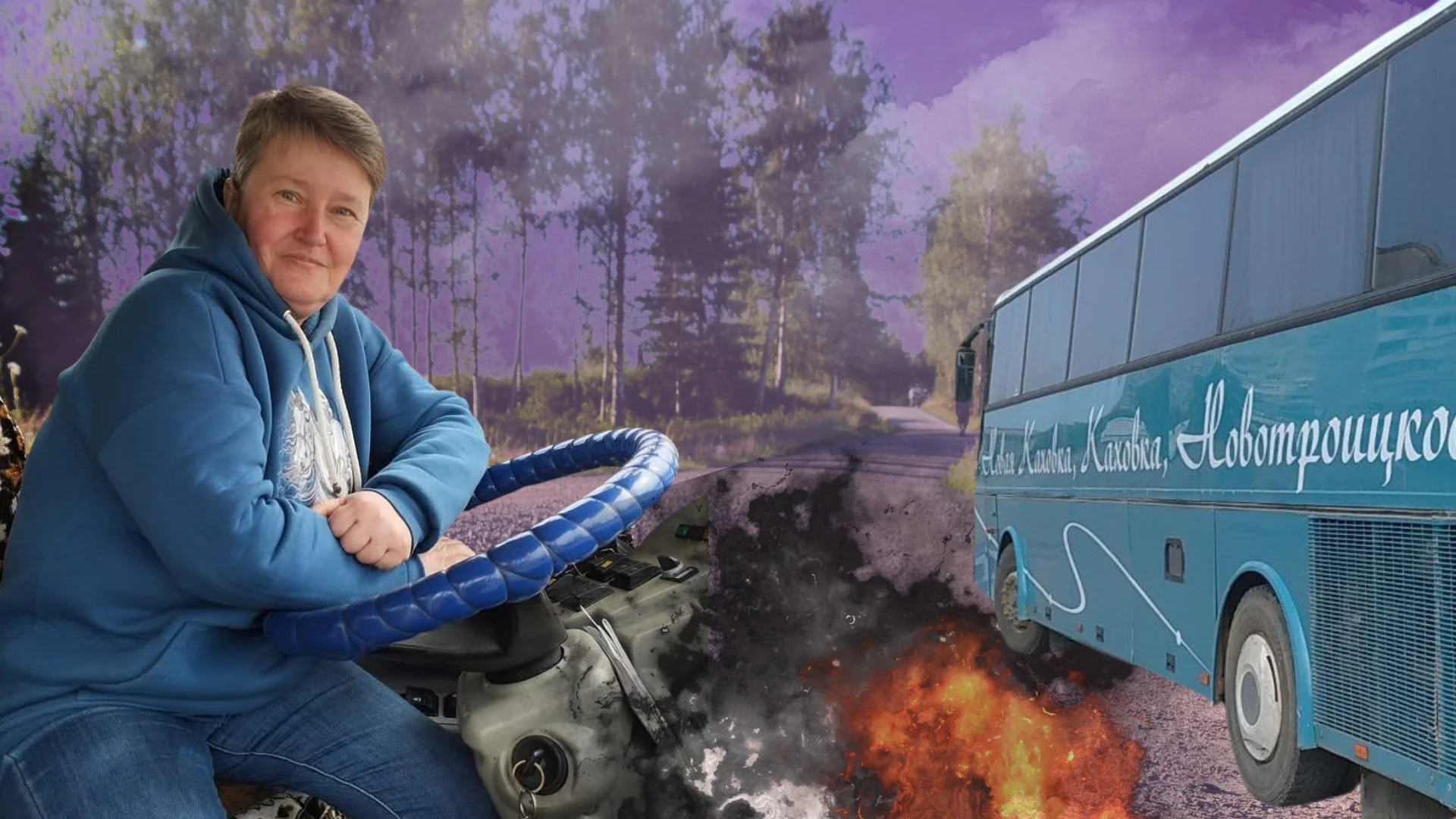
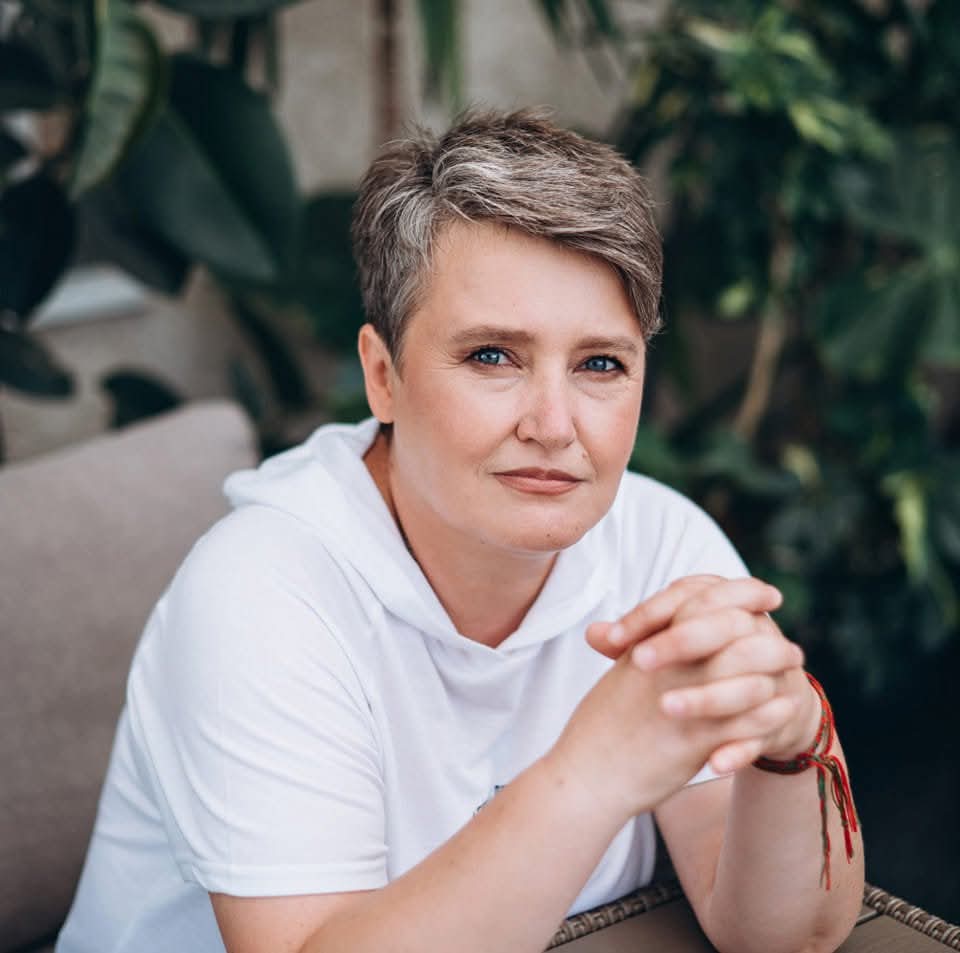
Olena Tarasenko is 47 years old. Many Kherson residents, especially older people, know her as a trolleybus driver. She gave almost 30 years to the municipal enterprise “Khersonelektrotrans”. She worked on her 3rd route even during the occupation of Kherson.
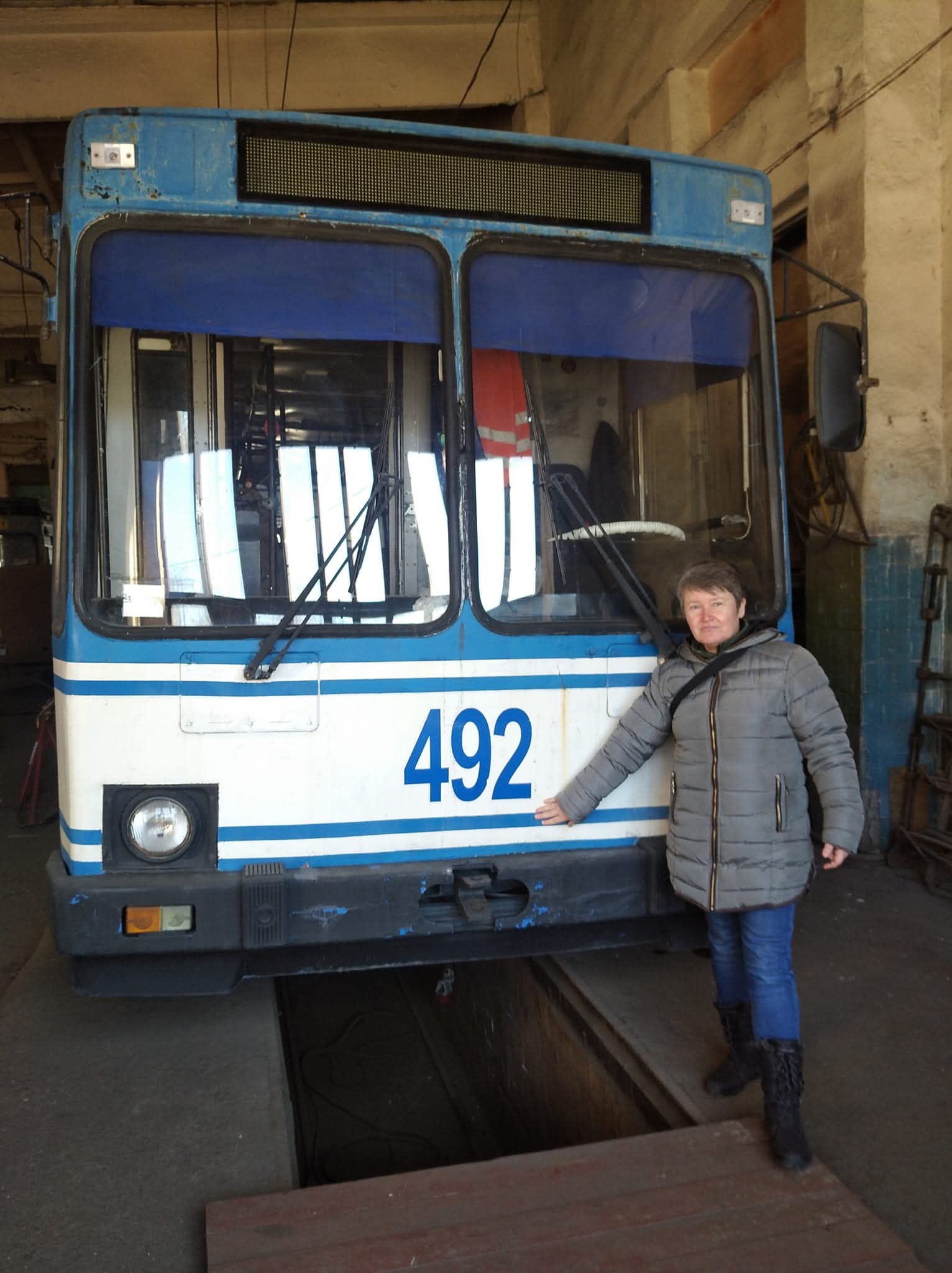
The woman recalls how she transported passengers to the sounds of artillery in the first days of the war, when fighting was taking place on the approaches to Kherson. Then chaos began in the city, people cleared out products in shops and markets. On trolleybuses residents headed somewhere they could obtain already scarce medicines and some food. Some people were able to leave Kherson, but a large number stayed, hoping that the Armed Forces would repel the enemy advance and the Russians would not enter the regional center.
“My 81-year-old mother said — she wouldn’t leave her house. And my son, who was then 17, declared that he wouldn’t go anywhere without his grandmother. And me — without him where would I go? So I had to stay,” recalls Olena Tarasenko.
After Kherson was taken by Russian troops, trolleybuses did not operate for some time. According to Olena, the municipal enterprise’s staff received an order from management — not to come to work for the time being. But the downtime was short. The woman remembers that in that same March 2022, when residents actively protested against the occupiers, she was already working on the route. Several times she picked up demonstrators who were being pursued by armed soldiers.
“The rallies were not only on Svobody Square and near the Ukraine cinema, but also by the bust of Taras Shevchenko, in the Perekopskaya area, although not as massive. And there were times when the occupiers dispersed people, and I, driving by, would stop right in the middle of the road and take about 20–30 people. It happened near the officers’ house. I picked up a whole crowd, and then there was a turn on route 3, so we quickly escaped from the soldiers, who had already begun to shoot. People thanked me,” the woman says.
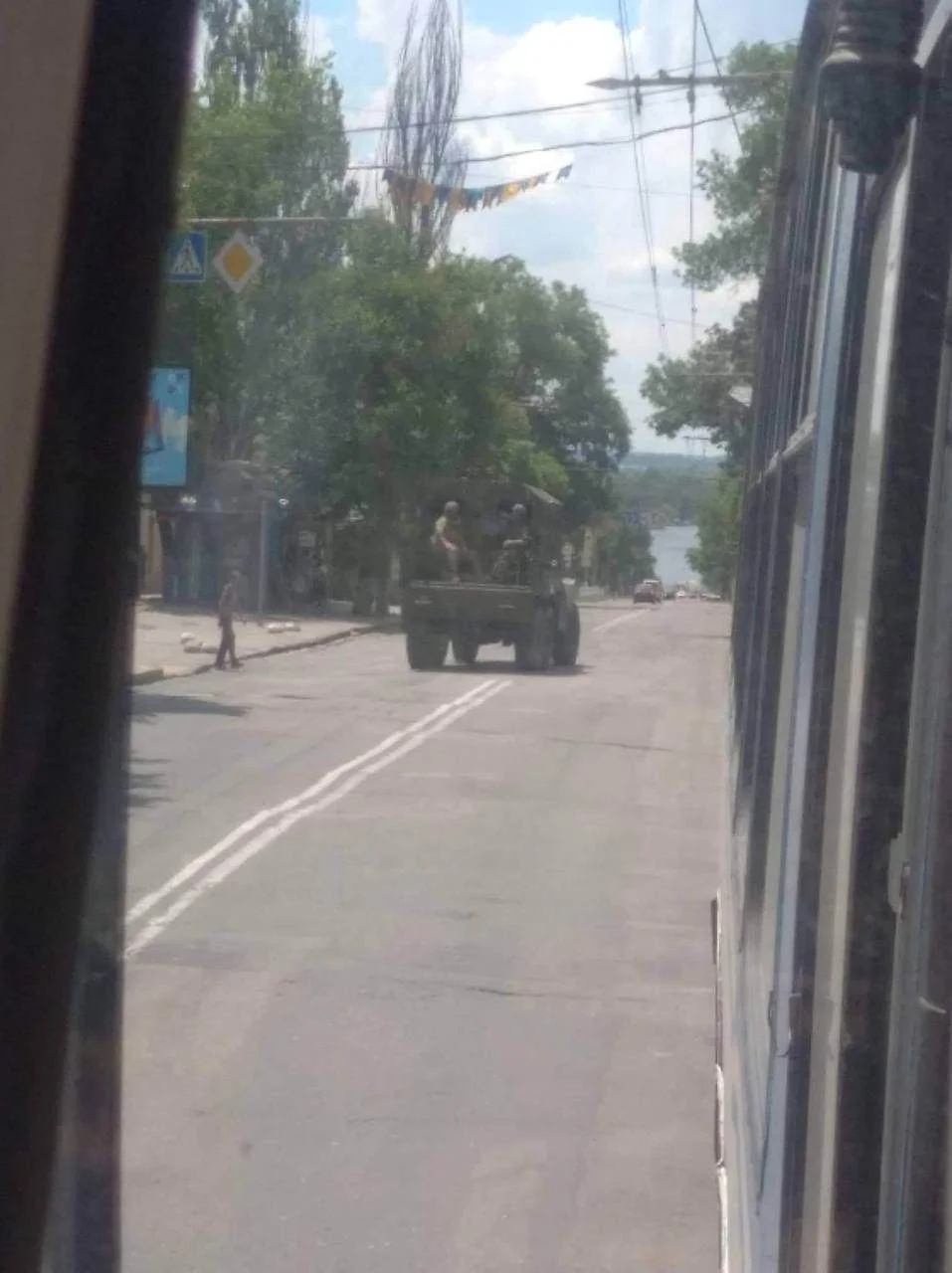
Already in the first month of the occupation, the Russians began detaining Kherson residents who resisted the uninvited guests. They “took” people after rallies, conducted raids in homes, having lists of patriots on hand. Public figures, opinion leaders disappeared one after another in the city, and later information appeared that they were being kept “in the basement”. Russian soldiers dispersed rallies with stun grenades and with automatic rifle shots. In this way the Russians managed to suppress visible resistance of Kherson residents, but that does not mean people submitted. In a city that did not expect a “Russian peace”, where tragic events at Buzkovyi Park had already occurred, residents actively helped the Armed Forces — with donations, and the braver ones passed along information about concentrations of enemy equipment, etc. At that time displaying a Ukrainian flag was no small act of courage. For that they could easily take you “to the basement”. Paradoxically, Olena Tarasenko drove a trolleybus with a blue-and-yellow little flag in the cab for as many as five months in the occupied city. The woman even managed to keep a photo with it — direct proof of how Kherson residents perceived the ridiculous slogan of the “brothers” “Россия здесь навсегда”.
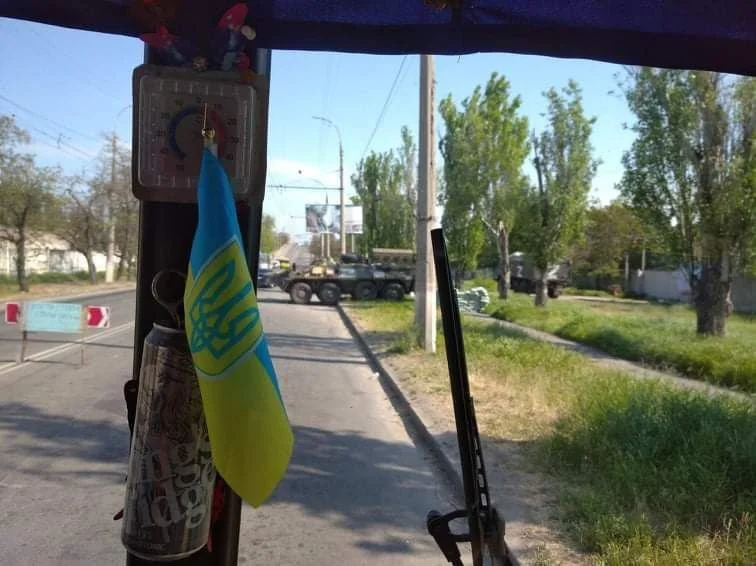
“Yes, I had a Ukrainian little flag hanging on the front panel. And it was like that until mid-July. And my conductor and I collected Ukrainian music onto a flash drive. All the passengers listened to it. In May, journalist Anzhela Slobodyan and I filmed a story about the blue-and-yellow flag in my cabin and it aired in a telemarathon (journalist Anzhela Slobodyan went through Russian captivity, — MOST). The tension from the occupation in the city grew every day. And people, entering a trolleybus with Ukrainian songs, said they were resting here with their souls,” Olena recalls.
A path to freedom is possible
According to Olena Tarasenko, by July talk began in Kherson that the occupiers would take Ukrainian youth into the army. Then she asked her son: “So, will you go shoot at your mother and grandmother? Or shall we try to leave?”. The answer was obvious — the son had to be taken out. The woman began looking for ways to get out of occupied Kherson. She says that already then, if you didn’t have connections with certain volunteers, you had to wait about three months for a free evacuation. There were also money problems: ATMs no longer worked and there was nowhere to get cash in hryvnias. But her searches led Olena to volunteers from the “Kherson/evacuation/free” community. At that time, as is known, the city felt a shortage of drivers.
“For me it was a bit of stress because I had driven a trolleybus all my life, and that is still a mechanical gearbox. Preparing for this trip, I hired an instructor at DOSAAF, and the test drive around the city was in a passenger car. And on August 12 I arrived in Kakhovka, there I transferred to a double-decker bus and evacuated 50 people from occupied Kherson region. Through Vasylivka — to Zaporizhzhia. And then I also carried out evacuation from Kherson itself on small buses. All these were free trips. You ask if I wanted to take off and not return to the occupation from free Zaporizhzhia? Well, that was some kind of drive,” the woman says.
On the second trip Olena Tarasenko evacuated her son from the occupation. The third — she planned to take her mother, but the elderly woman did not dare the difficult journey.
Around September 10 the evacuation team returned from Zaporizhzhia to Kherson in several buses. And they couldn’t make the next trip. The occupiers said they would not let them to the territory controlled by Ukraine because the drivers were not the owners of the vehicles. They warned: “Don’t move, otherwise they will simply lock you up in Vasylivka (Zaporizhzhia region, — MOST) and take the buses.” Olena recalls how she and several other drivers waited for technical passports to be issued. They hoped to once again evacuate Kherson residents to territory controlled by Ukraine. But it was not meant to be…
Captivity in a hat with the trident
Olena remembers that evening clearly. How a neighbor brought a list of medicines that needed to be bought in Zaporizhzhia when there was an opportunity. Thanks to evacuation trips Olena supported many acquaintances, bringing from the controlled territory what had become scarce in occupied Kherson. The woman was about to lie down when someone knocked on the door…
“It was about half past nine. I thought it was probably aunt Nadya who forgot something and returned. I opened the door and they were already bringing me in on the muzzles of guns. Five Rosgvardiya officers, burly, taller than 180 cm, fully equipped, in body armor, helmets, balaclavas, and their leader — gray-haired, about 60, he did not hide his face and was without gear. Mom began to wail: ‘Where are you taking my child, for what?!’. And they showed her photos of some dead people, supposedly at the site of an explosion, and said: ‘Your daughter is a spotter’. Of course, these were fabrications. When they led me out of the apartment, they told me to keep my hands in front of me. We went down from the 5th floor and on each landing there was a rifleman. Well, they came to take ‘Bin Laden’, so to speak,” Olena says.
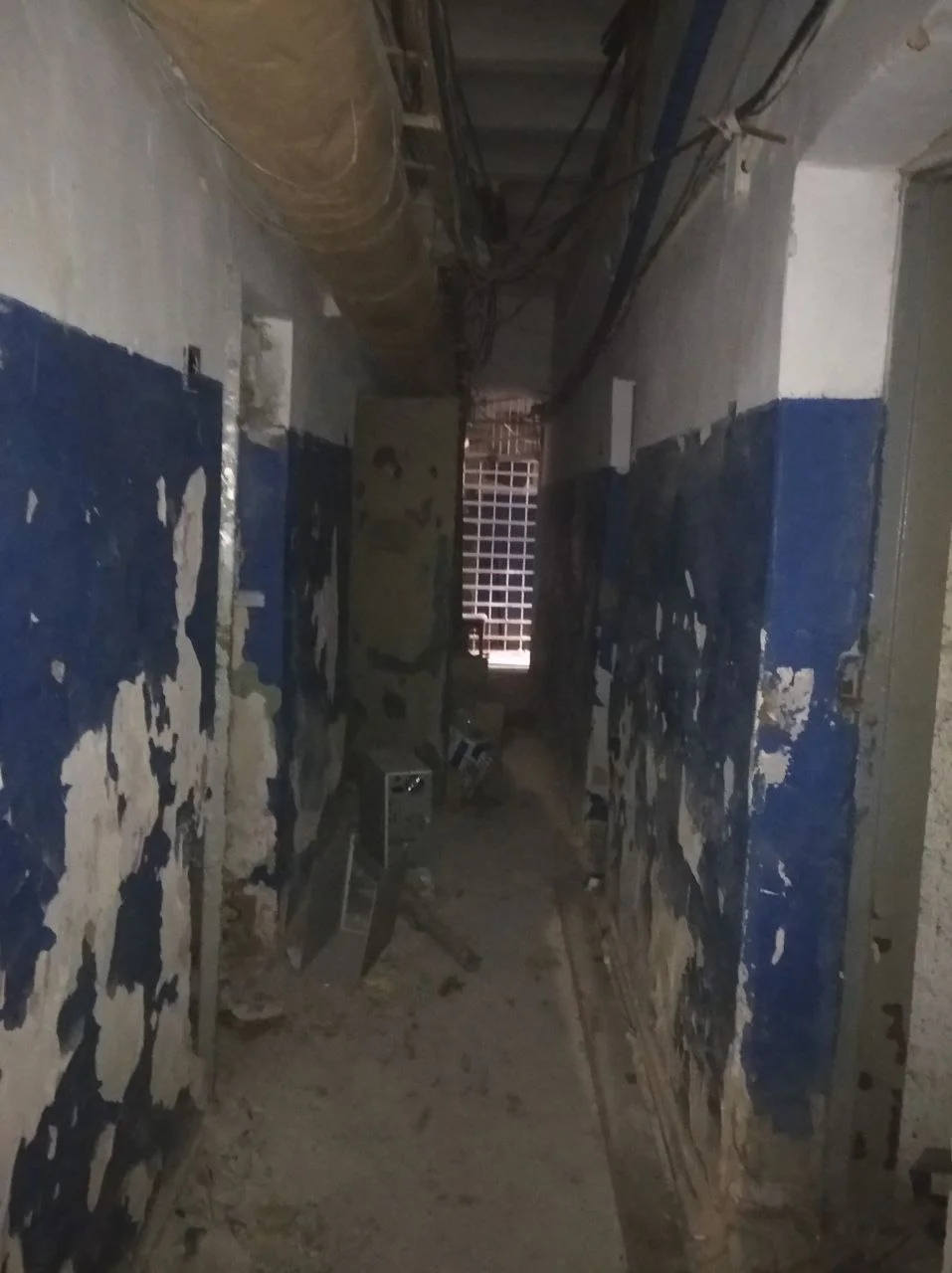
Then the woman was put into a minibus. They gave her a hat, forcing her to pull it down to her chin so she wouldn’t see where they were taking her. Olena says she only heard them pass the checkpoint on Ostrov, and then — the bridge. Then there was cobblestone — its characteristic sound gave it away. The woman was taken out and led down long stairs. Immediately in her head flashed: “So I ended up in the basement.” Much later, after liberation and not immediately, Olena learned — she had been held in the former pre-trial detention center on the territory of the captured Department of Internal Affairs (Luteranska St., 4 — MOST).
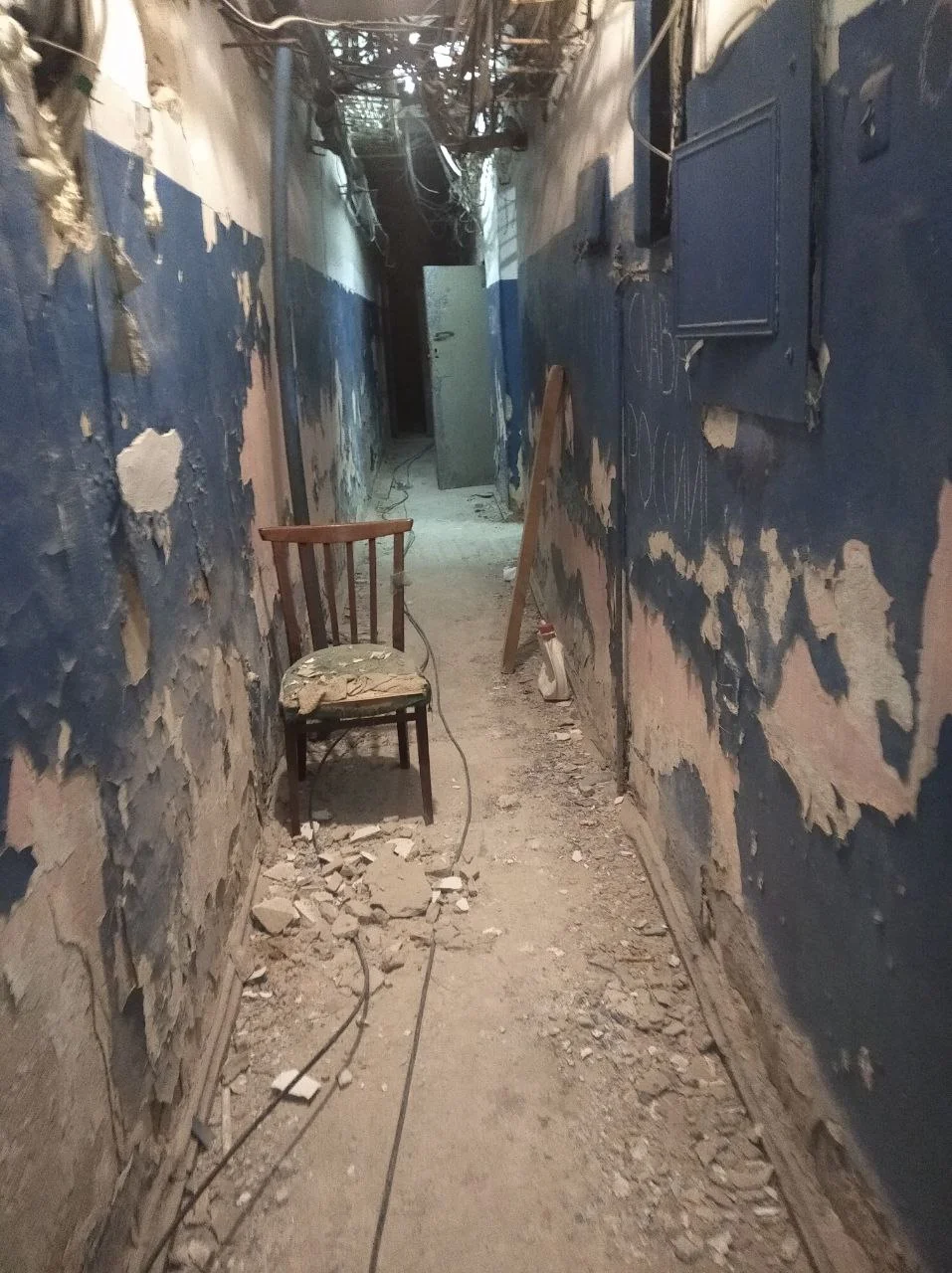
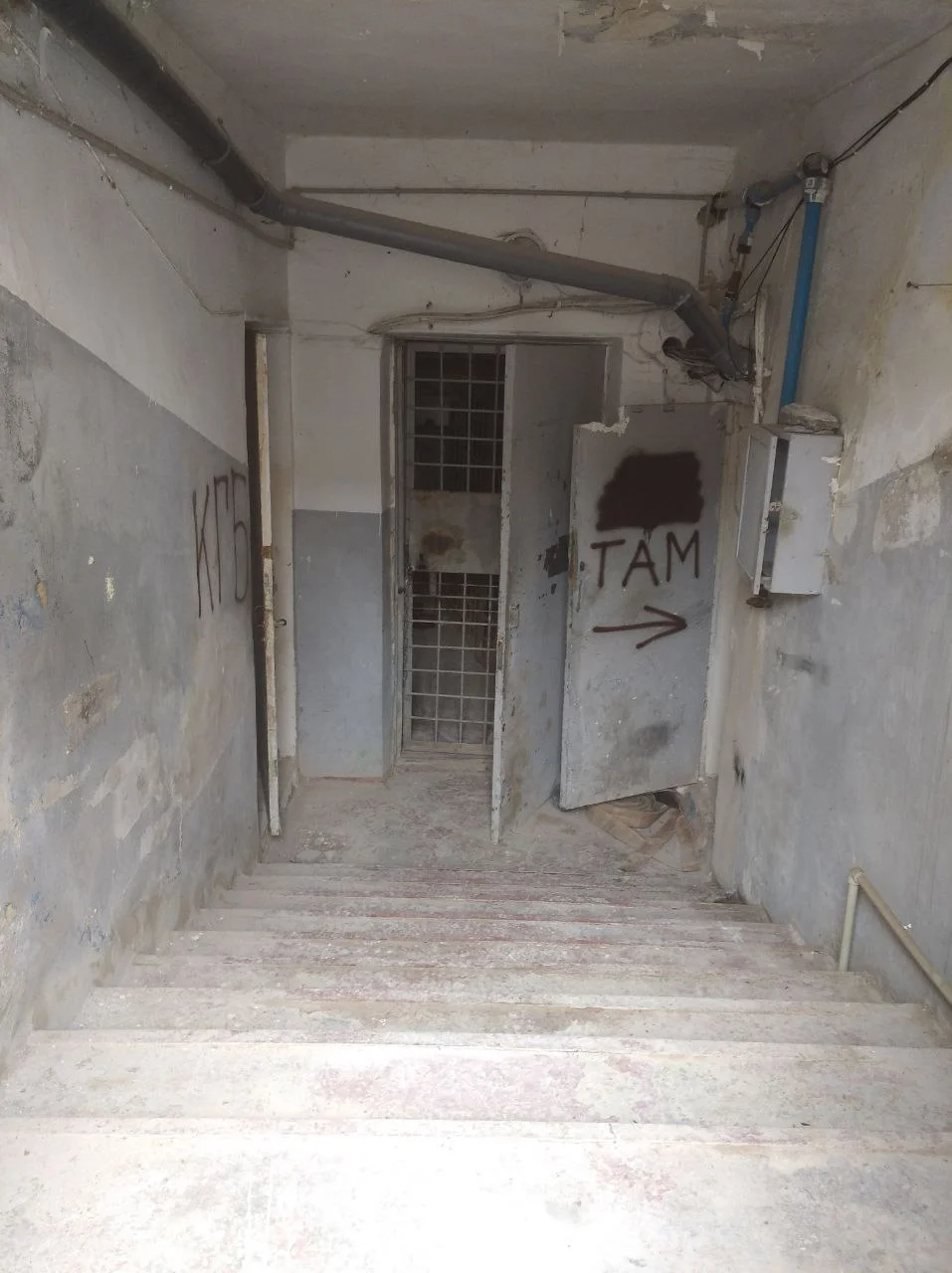
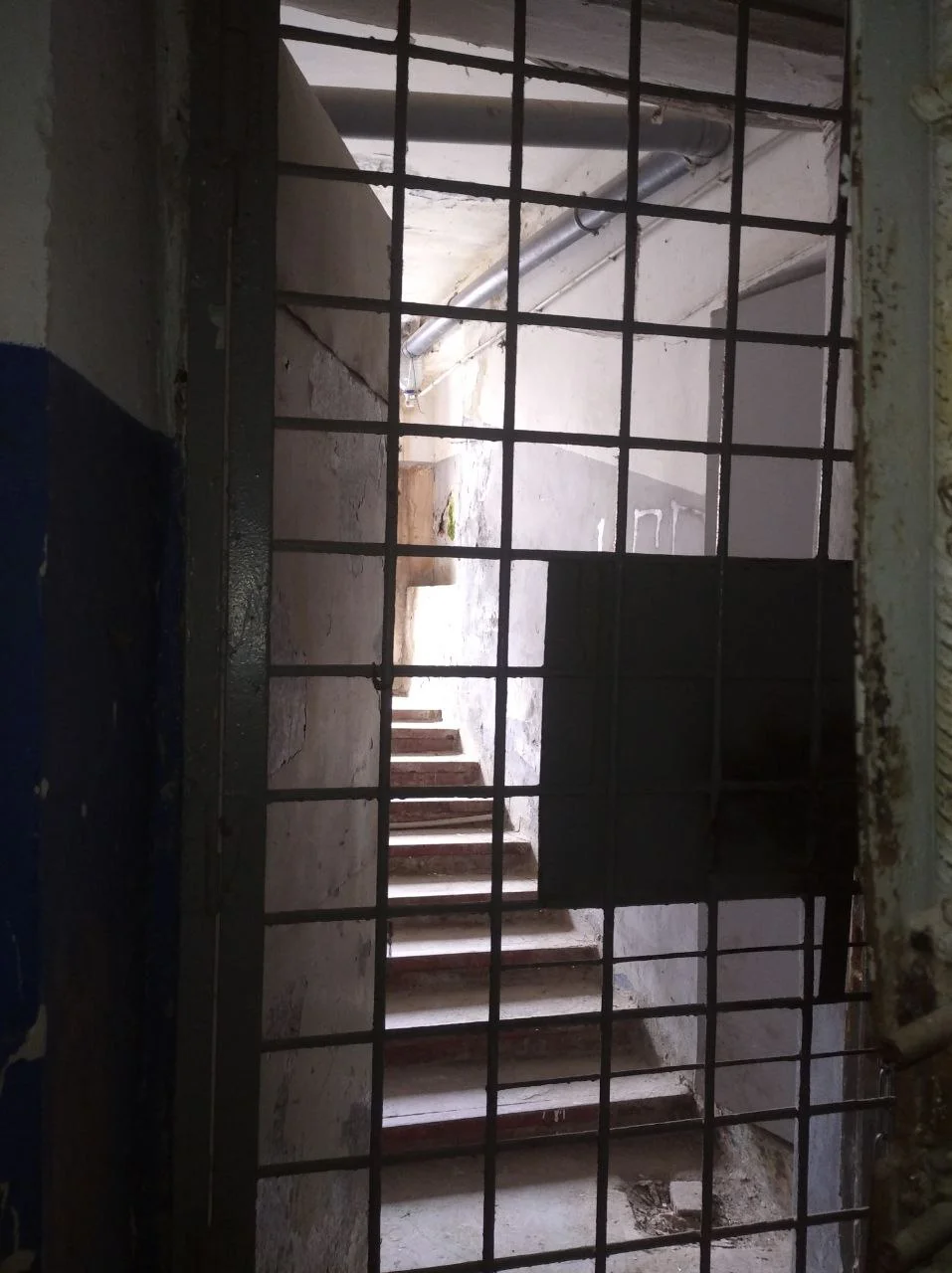
“Inside they handed me over to other occupiers. They began pushing me with words: ‘Davai, go, run, lift your leg’. The cells were not locked with a key but propped with heavy metal pipes, so the occupier shouted at me to lift my leg. And I, still with the hat pulled down to my neck, could not see that pipe. Then he nudged one with his foot, grabbed me by my jacket: ‘Get in!’. Under my feet I felt a rotten floor, I thought I would fall through. Then he struck me with the butt of a rifle under the shoulder blade so hard that I jumped into that cell. And here I hear a woman’s voice: ‘Take off the hat, he has already closed the door’. I lifted the hat and turned it back. And that woman said to me: ‘God sent you to me! Now look what’s on your forehead!’. As it turned out, it was a Ukrainian police hat — with a trident-shaped patch. Probably it had been lying in the Department of Internal Affairs building; the occupiers took it for arrests, not bothering that it had the Ukrainian emblem,” Olena recalls.
Who they shared the ration with
The woman who met Olena had already been “sitting” for the 18th day. When she was brought in, it was hot outside. And in the cell of the old police isolation ward, where those who committed the most serious crimes were once held, it was cool. The occupiers brought the captive some camouflage trousers. She sat in them — former head of Bilozerka community Antonina Cherednyk. Although Olena had known her since 2014, she says she did not immediately recognize how exhausted the woman looked. The occupiers had detained her again and again — trying to force cooperation, demanding she re-register the enterprise she headed under Russian law at that time.
After three days a third prisoner appeared in the cell — Alla. She was accused of trading weapons. One occupier said: “I am not supposed to keep you here, but I can’t release you either, because you were brought here for something! We will hold you until the circumstances are clarified.” And the person was held for two weeks — just like that.
The three women also had to see “plants.” Olena Tarasenko recalls that during the Russian pseudo-referendum (23–27 September 2022, — MOST) two Russian women were placed into their cell. It looked suspicious and the Ukrainian inmates sensed it warily.
“They told us that the Russian army had already captured Mykolaiv, Odesa, and Zaporizhzhia. They were a volunteer and her mother, who held the position of head of some village council on the occupied left bank. It was the pseudo-referendum, and in one of the ‘polling stations’ the older woman got into a quarrel with a local collaborator who reproached her, saying why, as a Russian citizen, she grabbed a position if there are ‘their own’, and she went where the voting was taking place. For that, they say, the ladies ended up ‘in the basement’. But I think they might have been plants, because they listened so closely to what we said and tried very hard to win our trust. They were settled with us exactly for one day,” Olena remembers.
Prisoners in the torture chamber were fed once a day — porridge from a mixture of grains, seasoned with fat left from the canned meat that had been eaten. The ration was brought in the morning — one third of a plastic plate. People drank water from a tap with a wall pipe. Olena recalls they slept on a wooden slatted platform that was inclined, so the body was constantly sliding. Instead of a mattress there were police overcoats, instead of a pillow — hats. They were taken to the toilet once a day, and once the women were completely forgotten for two days. A plastic five-liter can, cut at the top, came to the rescue. Olena told such shocking details. But that was not the worst…
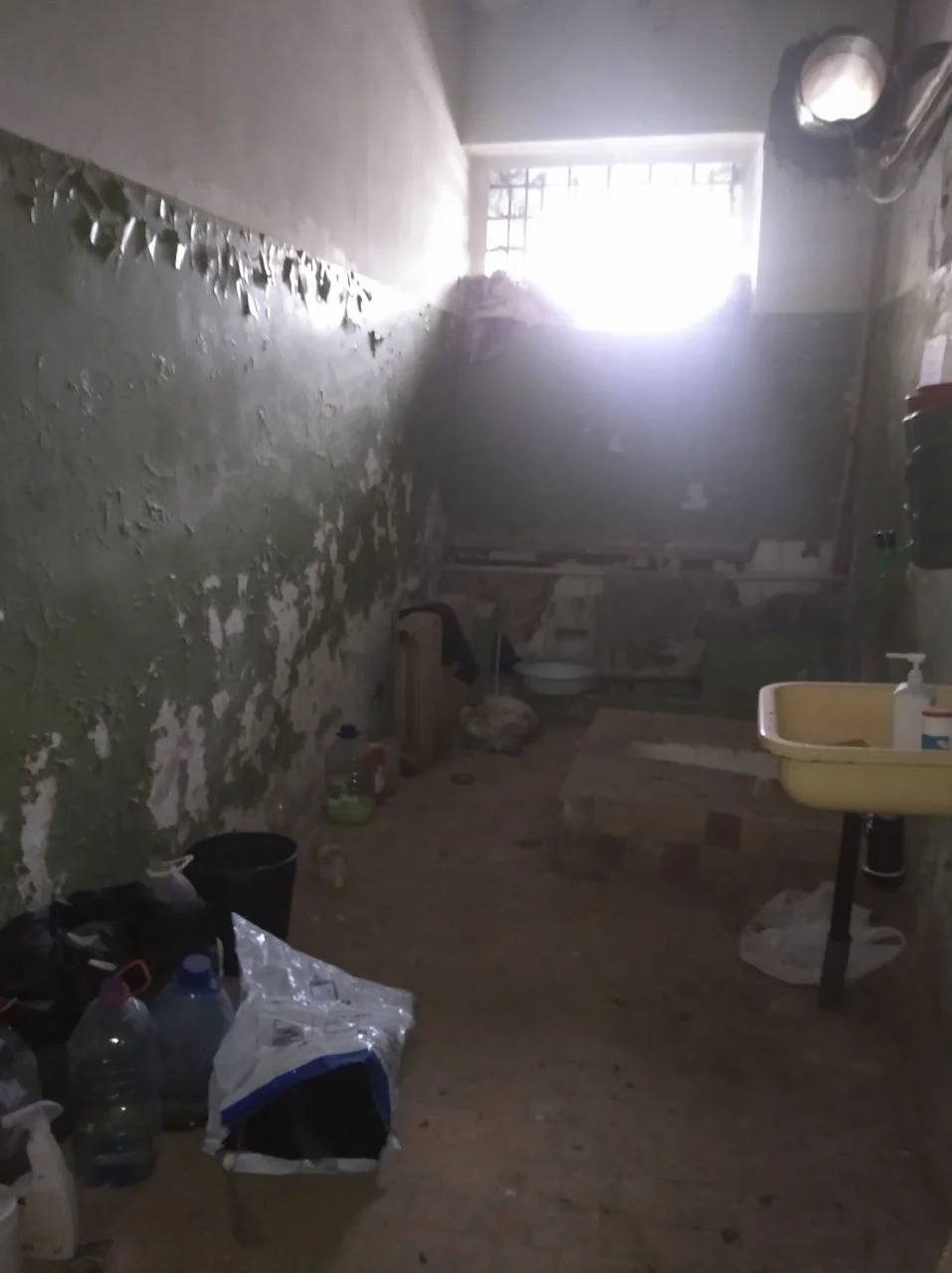
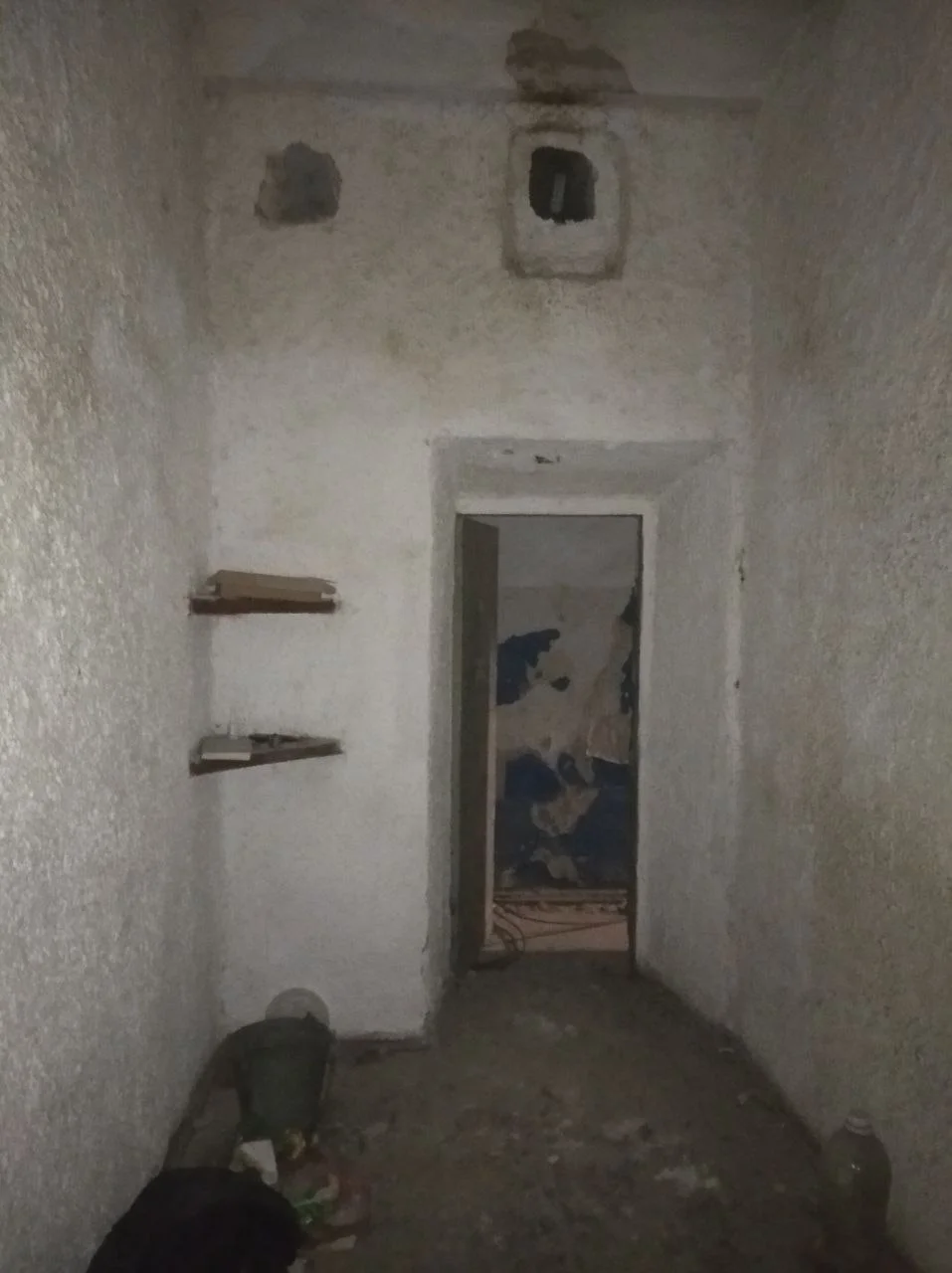
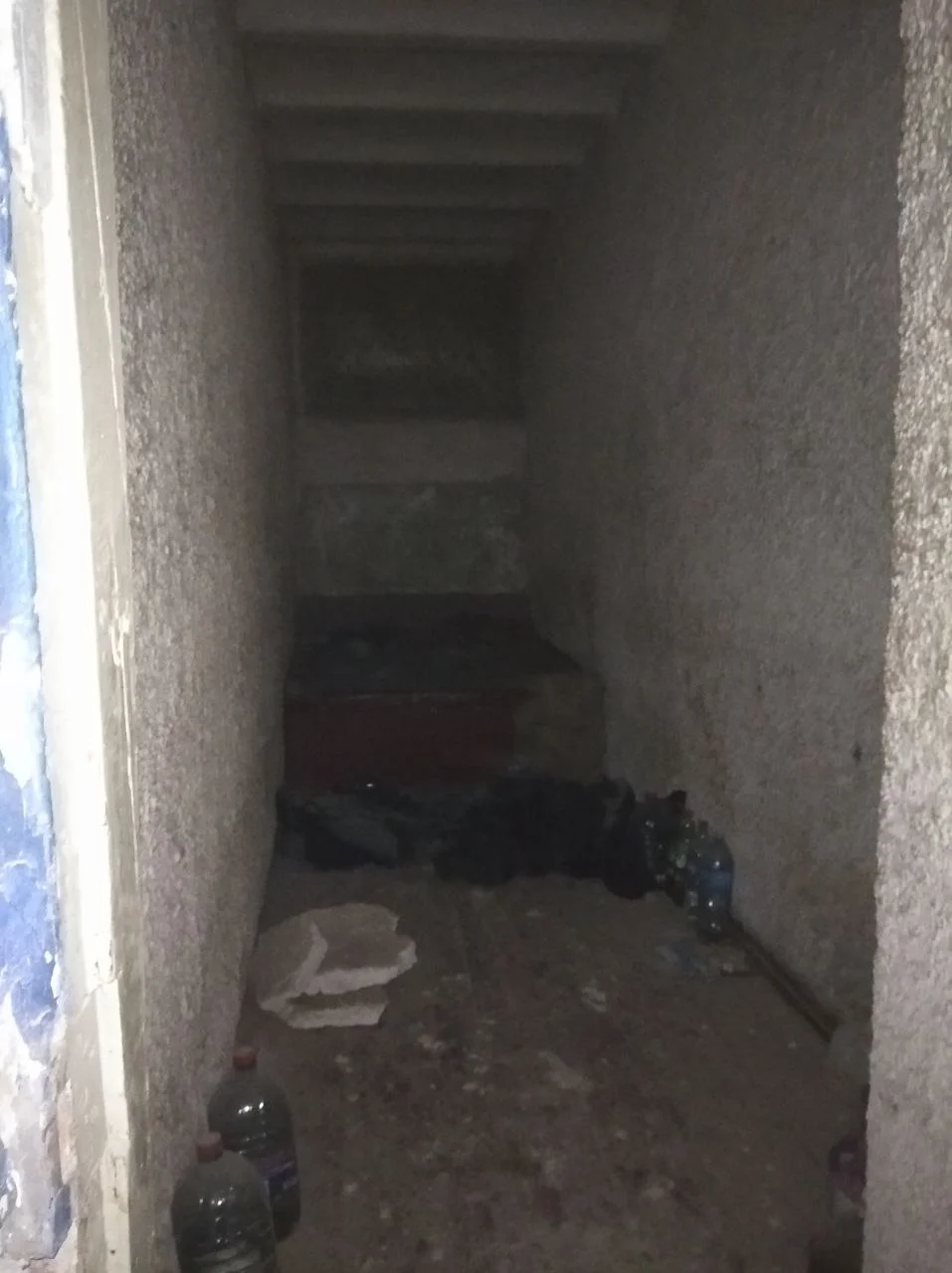
When the electric current is not about light
Olena Tarasenko was taken out for interrogation, forced to put on that same hat with the trident on the reverse. Everything took place in a small room about 2×3 meters. The woman recalls flags hanging on the pipes — Russian and Soviet. They put her in a chair with metal armrests, rolled up her sleeves and tied her bare hands with tape. Then the torture began.
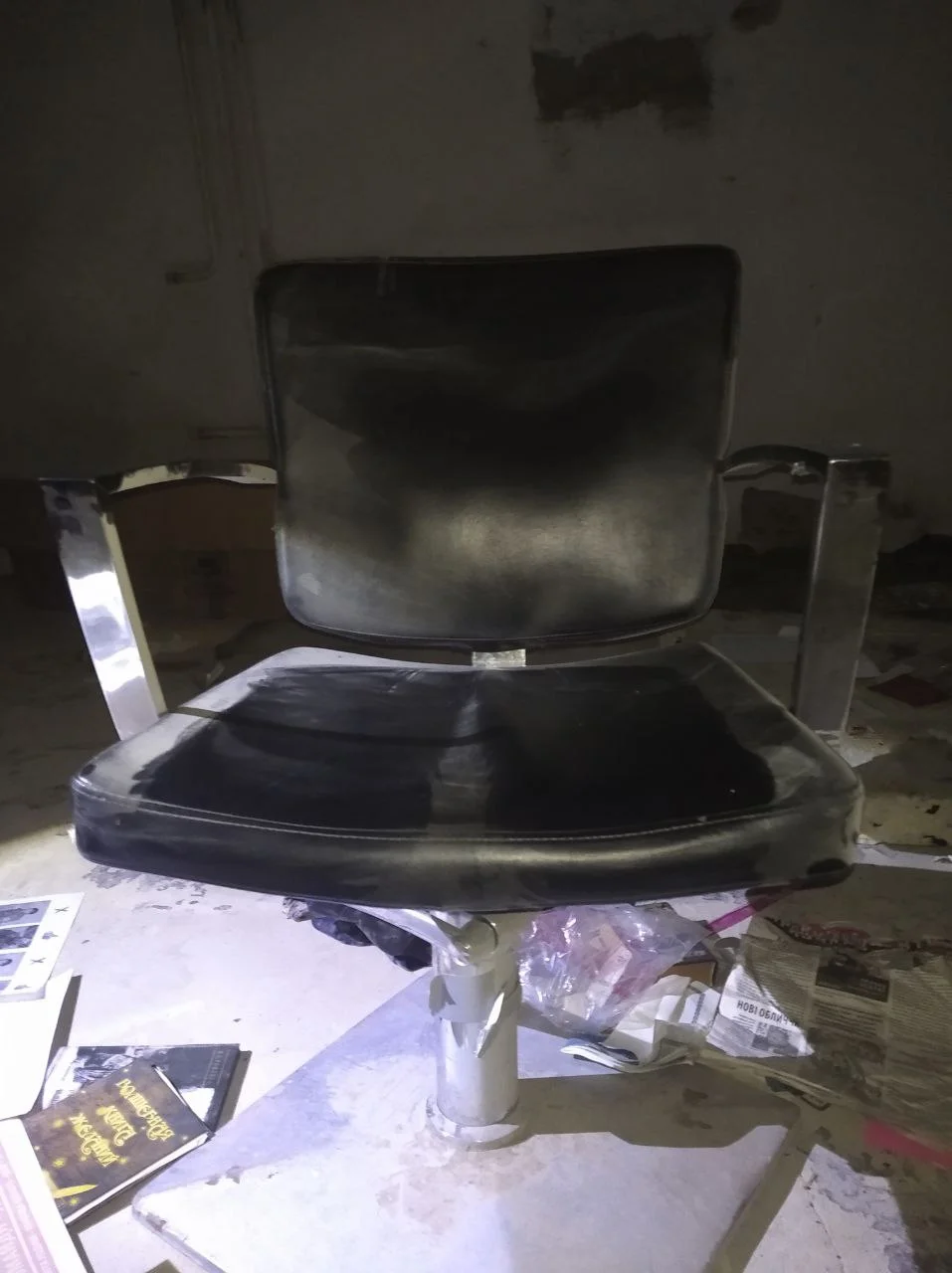
“And then I felt something being attached to my index fingers. These were office binder clips with wires on them. I did not understand what it was until I felt an electric shock. My muscles ached for probably a week and a half after that. One occupier sat at the table in front of me. Another walked behind my back. Their faces were covered. Their nicknames were ‘Voron’ and ‘Patrick’, as I later learned. Someone of them said to me: ‘Do you understand what will happen to you if you don’t talk?’. And they were interrogating me about the center that one volunteer headed:
-Where is she?
-I don’t know, we haven’t seen each other since the beginning of the war, – I say. Electric shock…”, — recalls Olena Tarasenko.
As is known, the head of the Kherson center for supporting ATO fighters had already been detained by the occupiers more than once. What were they trying to get from Olena by interrogating her about that volunteer? However, there is no point in looking for logic in the actions of the Russians. And the worst thing, according to Olena, was hearing how the enslaved men were being tortured. Judging by the sounds, the occupiers committed extremely brutal tortures against them.
“They came ‘to work’ every morning at 10. And they started taking men to interrogations. A person goes there voluntarily, but sometimes they were dragged back… When they beat — there is a very specific sound. They screamed so much that we didn’t know what they were doing to them. But you could hear it so clearly, as if it was happening right next door,” the woman says.
After the ordeal
Olena Tarasenko spent 9 days in Russian captivity. On September 30, already after the ‘referendum’, she heard the coveted “With your things — out!”. And even before that an occupier told her: “I wouldn’t have allowed this, but thanks to your patrons they will no longer apply methods of moral and physical pressure to you.” Who those “patrons” were, who and why could have intervened for her, Olena still has no idea. Perhaps they were volunteers from the evacuation team. Before leaving the basement the woman was forced to put on that same hat pulled down to her chin. They put her in a car, brought her to Ostrov. They let her out before reaching her house, ordered her to stand facing a tree and count to 50, and only then turn around. The hat that Olena wanted was taken as a keepsake and not returned. The woman does not hide that she returned immediately, and in response the occupier showed a fist. She managed to make out a black Hyundai and remember the plates. She later handed them over to Ukrainian law enforcement.
“Entering the apartment, I immediately threw off all my clothes and stuffed them into the washing machine, along with my sneakers. I took a shower — I really wanted to wash off not only the physical dirt but the moral dirt too. To be honest, I wanted to just dive into the river, fully clothed, with my head under,” Olena recalls.
Why did the occupiers detain her? Olena still does not know the answer to that question. No charges were announced to her during the interrogation. It remains a mystery who “handed her over” to the Russians. There is an investigation on the fact of illegal deprivation of liberty as a result of Russian aggression. Olena has been recognized as a victim. The police told the woman that most likely Voron and Patrick, who tormented her, are no longer among the living — they were eliminated.
She began to value life more
Olena waited for the liberation of Kherson at home. After that she went to Ternopil to friends. She stayed there until May 2023. And coming to visit her elderly mother, she took and remained. Then — flooding of part of Kherson: the occupiers blew up the Kakhovka HPP dam. Olena helped evacuate people from areas where the “big water” stood. Later the woman joined the team of the NGO KhOC “Successful Woman”. She was invited there by the head of that public organization Anzhela Lytvynenko (who died in a traffic accident in May 2025, — MOST). Then the organization opened a safe space for women and teenage girls in Kherson. Legal and psychological assistance, dances, English, yoga, a creative workshop. Olena worked there as a case manager, organizer of info sessions. She remains on the “Successful Woman” team to this day. She lives in a city under constant drone, Grad, and artillery attacks. She says she is not going to leave, because home is still better than being away. After captivity Olena began to value life more.
“When it’s the 21st century outside, and you sit and through the wall people are being tortured. And the worst thing is that you can’t help them. Like in that stupid dream. For a long time I couldn’t believe this was reality. I believe God spared me, because there are people who went through much more in captivity than I did. I just perceive the smell of a basement differently now,” says Olena Tarasenko.
Olena has already gone down several times into the former pre-trial detention center on Luteranska and into the same cell where she spent 9 terrible days: with investigators and journalists. And when asked about her feelings — the answer was: “I just looked at this place with the eyes of a free person.”