

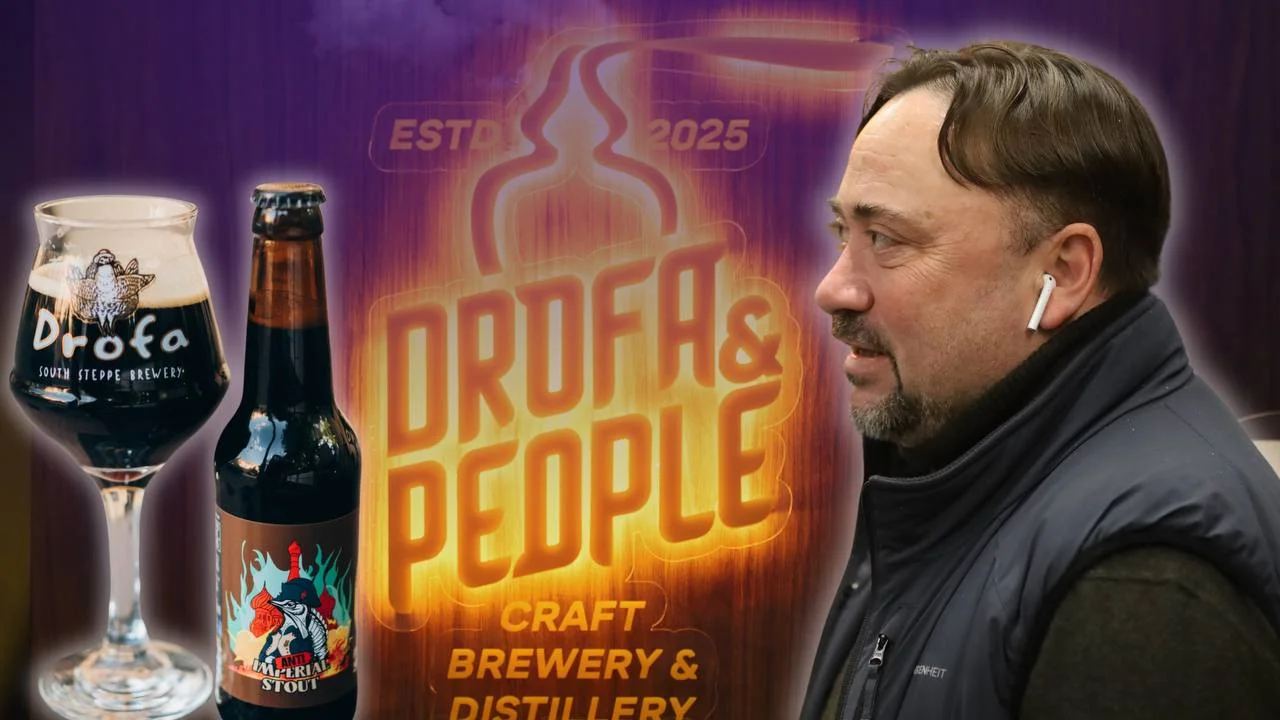
We were ready for the visit. But we were not ready for the first moment. For what would welcome us was not a look or a greeting, but a smell.
A thick, warm smell of black bread, as if it had just been sliced. It knocks you off your feet, covers you and leads you on. It becomes warm both outside and in the soul. And because of that, you even get a little lost. However, a few minutes are enough to understand: this place does not work with the eyes. This place is about tastes and smells.
In the backyard, under an umbrella worn by sun, winds and bad weather, Yuriy Zelinskyy is waiting for us.
“Sit at the table. This is our lounge area,” he calls to us. However, we came to this enterprise not only to hear its story, but also to see and feel, to some extent, its product.
So, having passed through long corridors with racks, boxes and work equipment, we enter the workshop. The place where malt comes to life. It is here that it ceases to be a grain and becomes the basis of flavor. It is ground, poured with hot water, and the sugars are patiently released. This is where beer begins.
Many of you have seen Kherson beer “Drofa,” but you have hardly seen or know how it is produced. We looked not only at how beer is brewed in Kherson today, but also at how the southern steppe brewery turned into a distillery as well.
Here, under shelling and drones, Kherson brewers brew more than two dozen varieties of beer. It is bottled and sent all over Ukraine.
“The idea was this: we were distributors of a number of Ukrainian beer brands in Kherson and we had a pub — the John Howard Pub. But Kherson didn’t have its own good real beer. And we decided that maybe we should start. We knew who we were selling to and where we would sell,” says Yuriy Zelinskyy, co-founder of the brewery.
In 2019 he already had a ready sales team. And everything aligned so that when they brewed the first beer — it immediately became a hit in Kherson.
“We were very far from production and from the idea, so when we started building the plant we came to understand how it is really done. But we had no special knowledge and we found a person — Ms. Tetyana, who set the technology for us. And she taught our guys to work independently. And to independently develop different styles,” he adds.
We asked about the naming and the logo right away, while walking the long corridors toward the workshop.
“Well, you know, for a brewery it’s interesting when there’s some little animal or bird on the logo. I said, somehow, let’s call it ‘Drofa.’ Only we have this bird, represented in Askania-Nova, a bit near Donbas and in the steppe Crimea. It is a southern and very beautiful bird. Plus, the name is short. It’s memorable,” Yuriy continues. He is genuinely surprised to this day that this bird is familiar only to the south. Other regions of the country know little about it and therefore very often read the name “Drofa” with the stress on the first syllable.
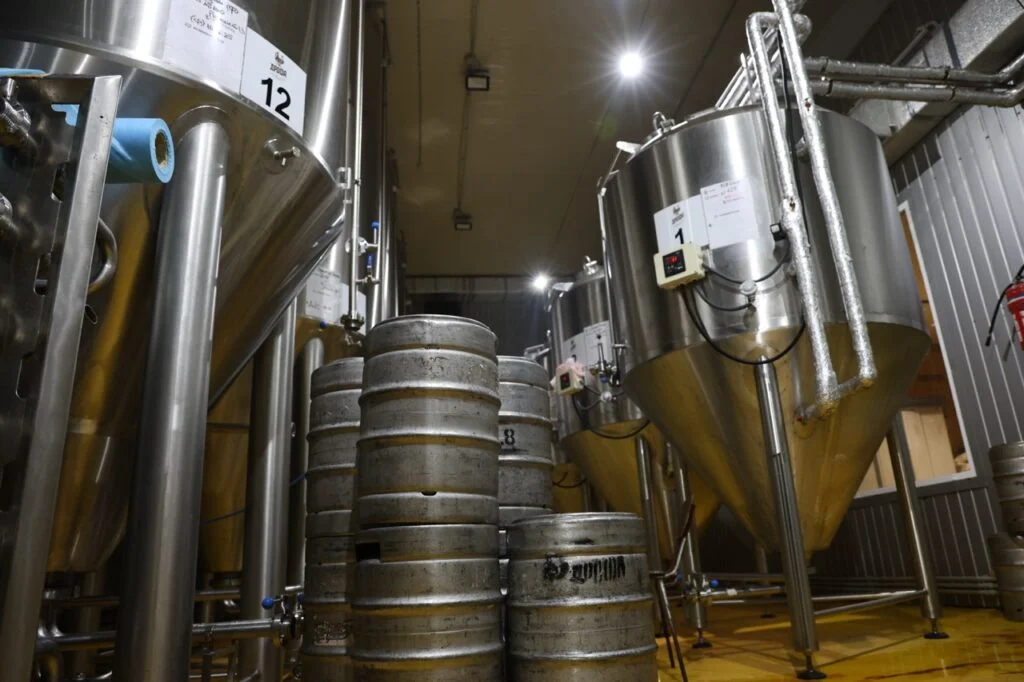
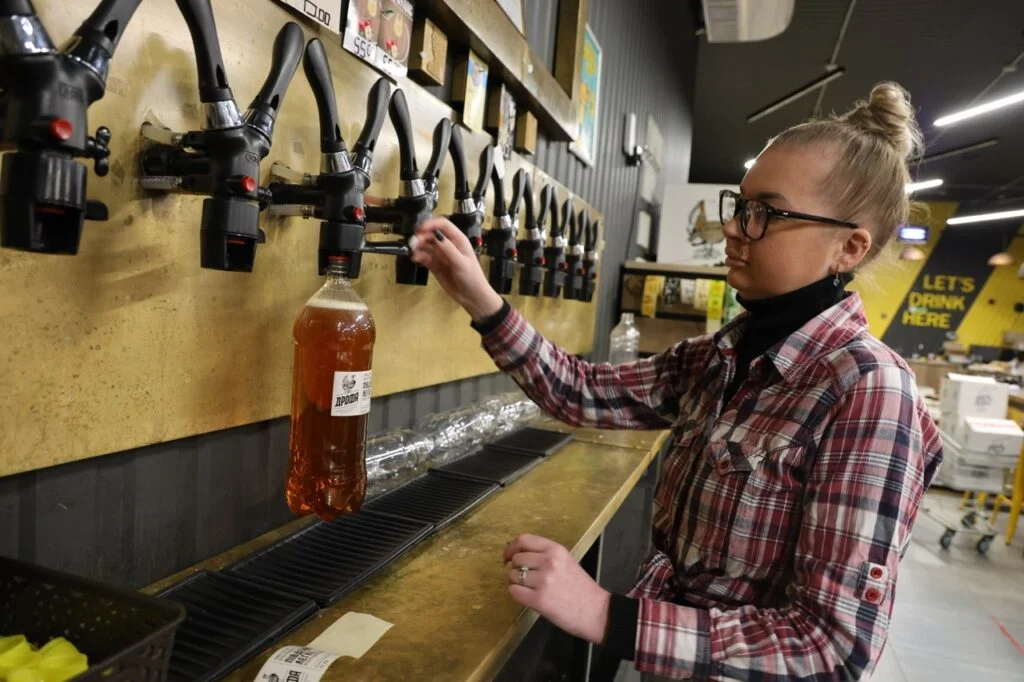
Thus the brand and the name for many types of beer were born. And how the beer itself is born — we saw in the workshop. High ceilings, metal kettle-cylinders and constant movement create the feeling that the process has its own life. It’s somehow unusual to plunge into it suddenly, since a few minutes earlier we were in the shop. Kherson “Drofa” is production and shop as one whole. The company’s office is also located here.
The technological process was explained to us by Yuriy as he walked past the beer filtration unit. There we could see a fizelur filter through the window. Somewhat complicated words for newcomers, but they sounded exciting and simple. He says they sell beer in filtered and unfiltered versions — the difference is not only in clarity, but also in the character of the drink.
It all starts with malt. The brewery works with domestic malt — notably from Obolon — and imported: German and Belgian, and for certain styles they buy special malts.
“Many people when they hear the word malt do not always understand what it is. Malt is barley that has sprouted a little, then it is dried. Then this shoot falls off, but the protein that is in the grain remains. By the way, it can also be wheat or rye, but mostly barley. When the shoot falls off, the protein turns into starch.
The starch will later turn into sugar,” Yuriy explains. He eagerly looks among the sacks for roasted malt to give us a taste of what will become the basis for a tasty dark beer. To the taste, these grains seemed to take a sip of dark stout, which triggers all the taste receptors.
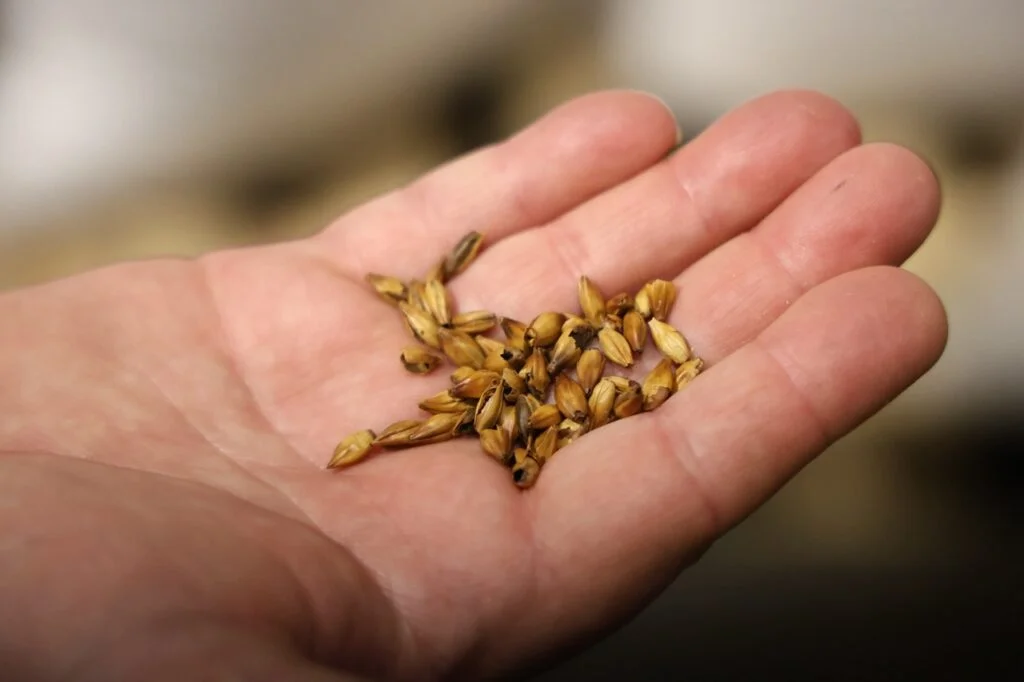
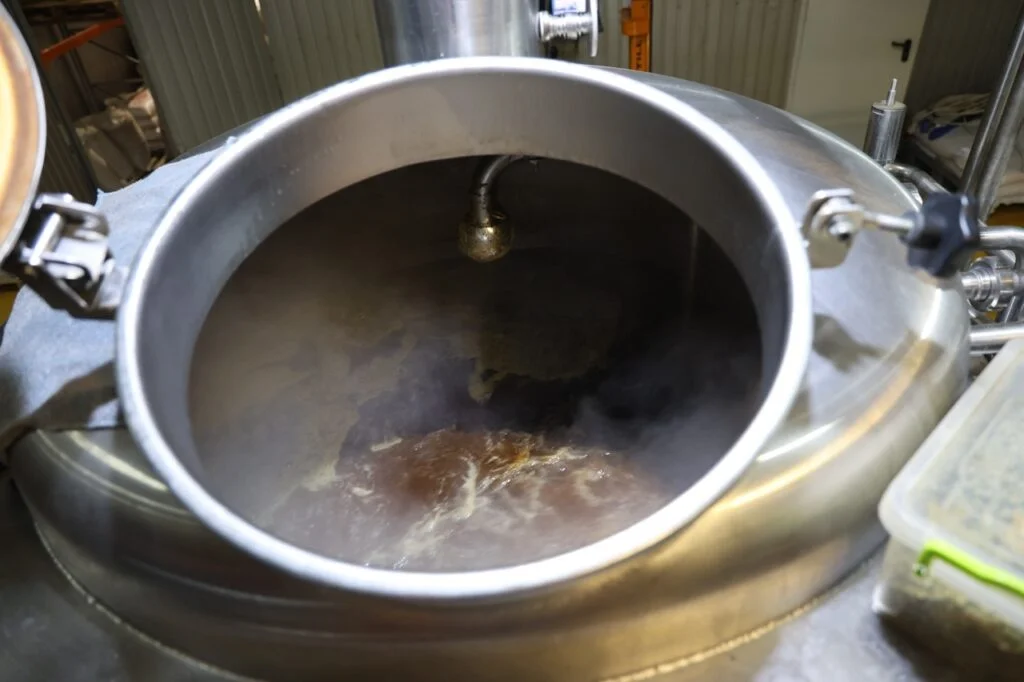
Next, the malt is crushed and poured with hot water. Gradually the sugars — the basis of the future beer — are “extracted” from it. Then yeast is added: it eats the sugar and produces alcohol and carbon dioxide. The process seems complex, but here they explain it without unnecessary pomposity, as a sequence of simple actions where each stage has its meaning.
We can see these stages right opposite the malt bin. Here, concentrated and with movements that seem practiced to automatic perfection, brewer Oleksandr shows the equipment already in operation: the malt is cooked, filtered, the wort moves to the brew kettle and is brought to a boil. It is at this stage that the hops are added. And these hops form the aroma. Afterwards the wort passes through a centrifuge, where it is separated from the hops, and only then is it pumped to fermentation with the addition of yeast.
“This is our new style. It will soon be on tap. We are developing another trademark called ‘Legerovych.’ So right now we have ‘Legerovych Lager filtered.’ And this here is ‘Legerovych Blanche’ with the addition of wheat. It’s a light drinkable beer,” Yuriy points to one of the tanks.
Walking through the workshop and inspecting all the new equipment for a journalist’s eye, we reach a room that makes it clear from the threshold — a completely different product is born here. The bread aroma has changed to the smell of alcohol.
A small distillation shop is somewhat cramped for four people. But the main thing here is the still — copper-colored equipment that you might expect to be a moonshine still from Soviet times, but it is not.
In this shop a double distillation takes place: first a primary distillation — from beer wort or wine or malt wort, then a secondary distillation.
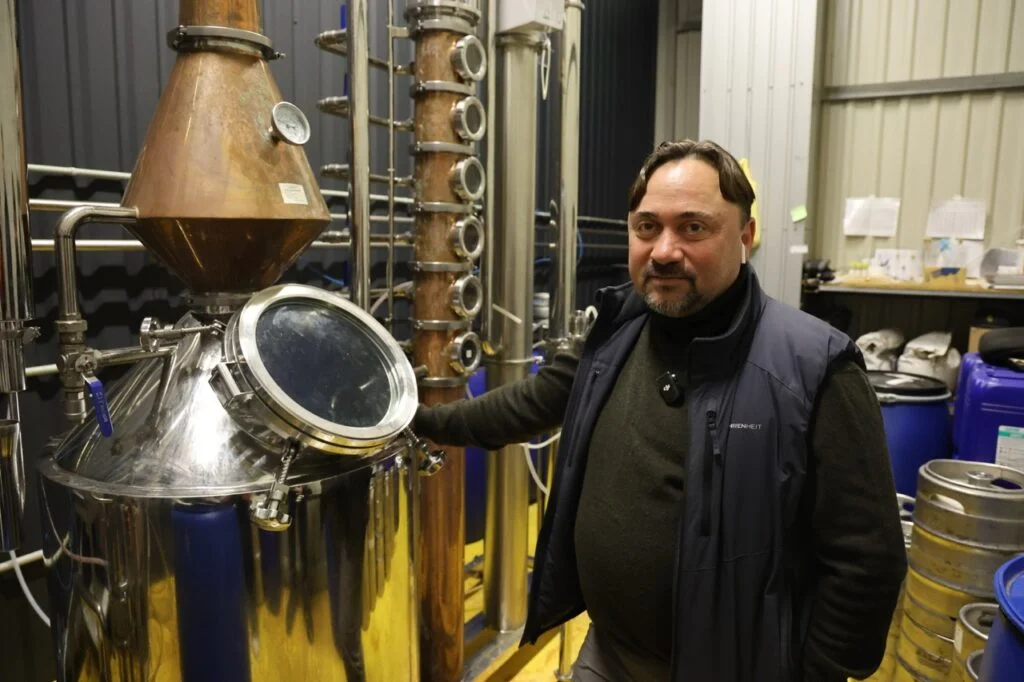
“We obtain a distillate with strength of 20–25–27 degrees, then we distill it again and get a strength of about 65 degrees. Then we bottle it into barrels or age it on chips. By the way, the equipment was purchased from a production in Bila Tserkva and is made by an individual entrepreneur whose owner is originally from Kherson,” Yuriy explains to us. And there is pride in the fact that the equipment is made by a Kherson native.
How did the distillate end up here as well? This story turned out to be no less interesting to us than the beer production process. And to fully cover and show it, we visit two more locations: the distillate bottling shop and the shop where the finished product is already on the shelves.
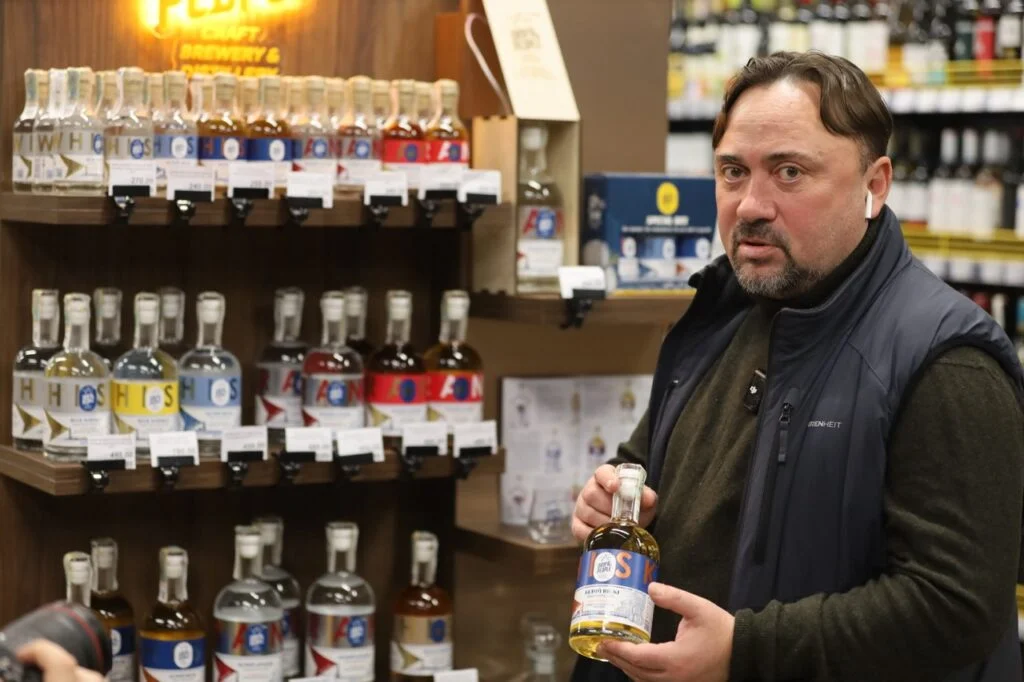
“The idea to make distillates came from our colleagues. When they asked us what we do with beer leftovers, we said — we pour them away. They were very surprised, because it is a very good start for production, as they then called it, of beer spirit,” Yuriy recalls and leads us into another room.
At first it was almost friendly: beer leftovers were given to an acquaintance who distilled it, and the finished product was shared among them. But the turning point was the beer exhibition in Kyiv in 2024. There, alongside distilleries from Ukraine and Georgia presenting brandy, calvados, chacha, Yuriy poured their beer spirit and invited people to guess what it was made from. No one guessed.
“Because it has a very interesting aroma — ripe yellow fruits. In beer the alcohol is already aromatic, because during brewing hops are added that saturate it with aromas. That’s how we realized that we can make really interesting drinks,” he explains.
Thus a separate direction appeared. The brewery began to produce three types of distillates: from wine, from malt and from beer wort (beer). All of them in a pure, clear form. Birviski — a distillate from beer. White whisky — a distillate from malt, the base that has not yet been put into a barrel for aging and color. White brandy — a distillate from wine, what in Italy is called acquavite.
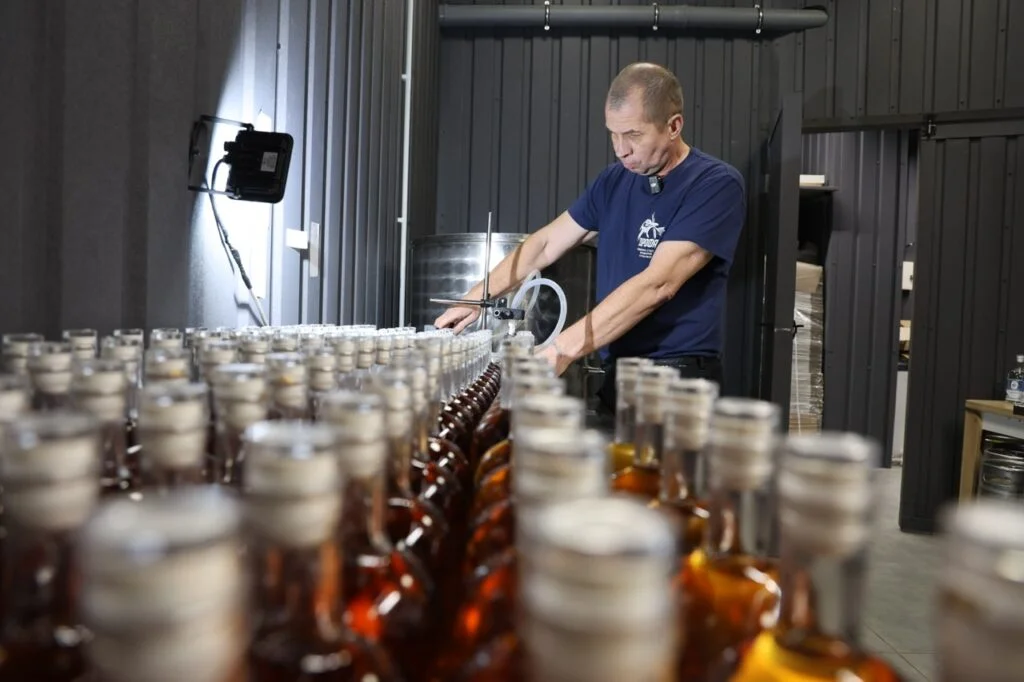
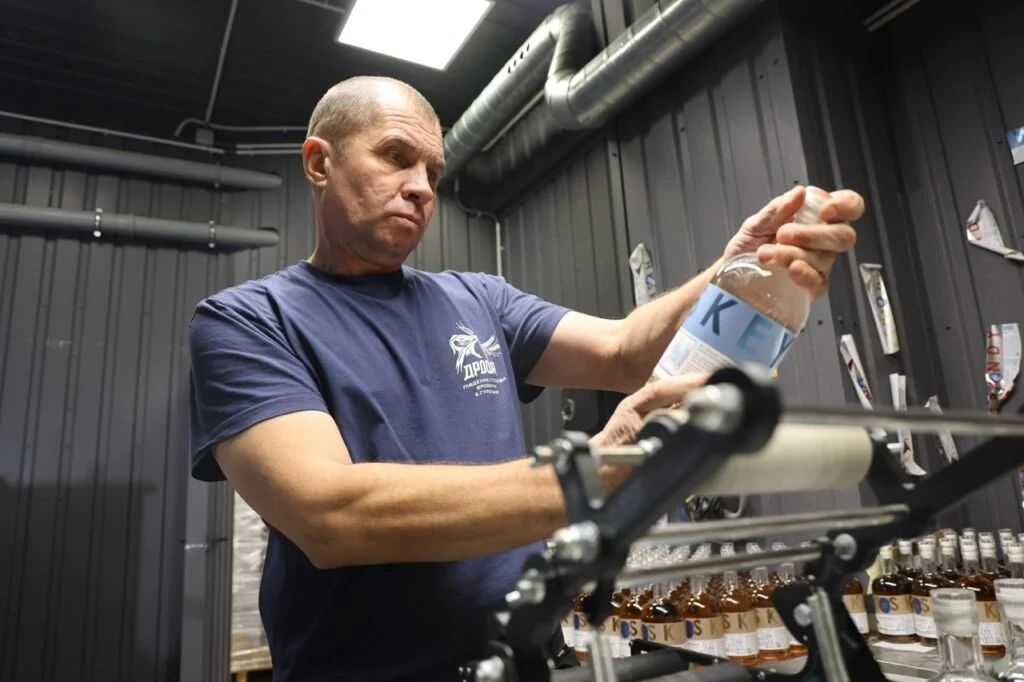
In the distillate bottling shop the process looks almost like meditation. Just one worker — Serhiy, who works manually with each individual bottle. We caught the bottling of white whisky — a clear and transparent drink. On the tables nearby there was already corked birviski, or beer spirit, as it is called in the Czech Republic and Slovakia. In Germany this drink is known as bierbrand, in France — as brandy, in the USA — as beer whiskey. The essence is the same: it is a distillate from beer obtained by double distillation.
“Since beer is made from malt, like whisky, the name ‘beer whisky’ seems appropriate to us,” Yuriy says.
The batch being bottled now is special. It is a distillate from a barrel previously used for white wine of the Chardonnay variety, filled before the full-scale war. The barrel stood through the entire occupation — the Russians simply did not find it. At that time the brewery owners planned to keep it until victory. But later, after a tasting, the drink was sent to the Ukrainian Craft Distillery 2024 competition, where it received a gold medal in its category, as well as second place among sixteen new drinks of various styles. Later the same beer spirit was awarded a gold prize at a European competition in London.
The aging of this distillate is thirty months. The batch is small — only 700–800 bottles.
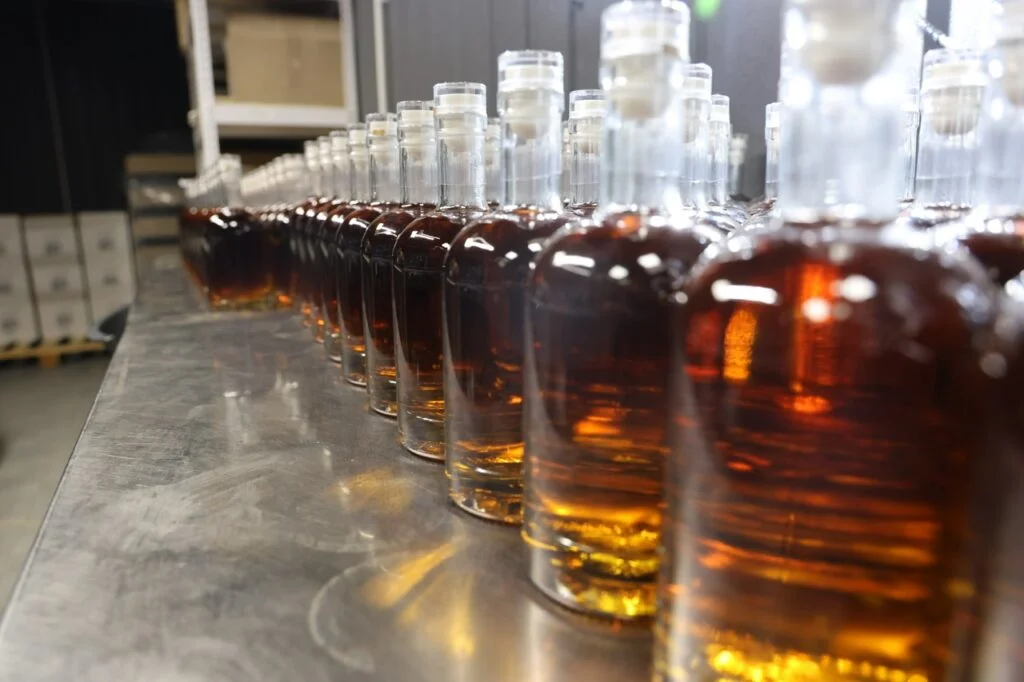
Everything here is done by hand — from bottling to corking. Worker Serhiy demonstrates the process: bottles are corked, labeled, packaged and prepared for shipment to stores. They can bottle about two hundred bottles a day. Manual labor simply does not allow more.
“We decided to go into the segment of not very cheap drinks,” Yuriy explains. “Because physically we cannot make more than a thousand bottles a month. But we can guarantee quality.”
No colorants or aromatic additives are used here. They even consider spices unnecessary. New releases from barrels after bourbon, sherry, red and white wine are ahead. But this requires time. A year, two, three.
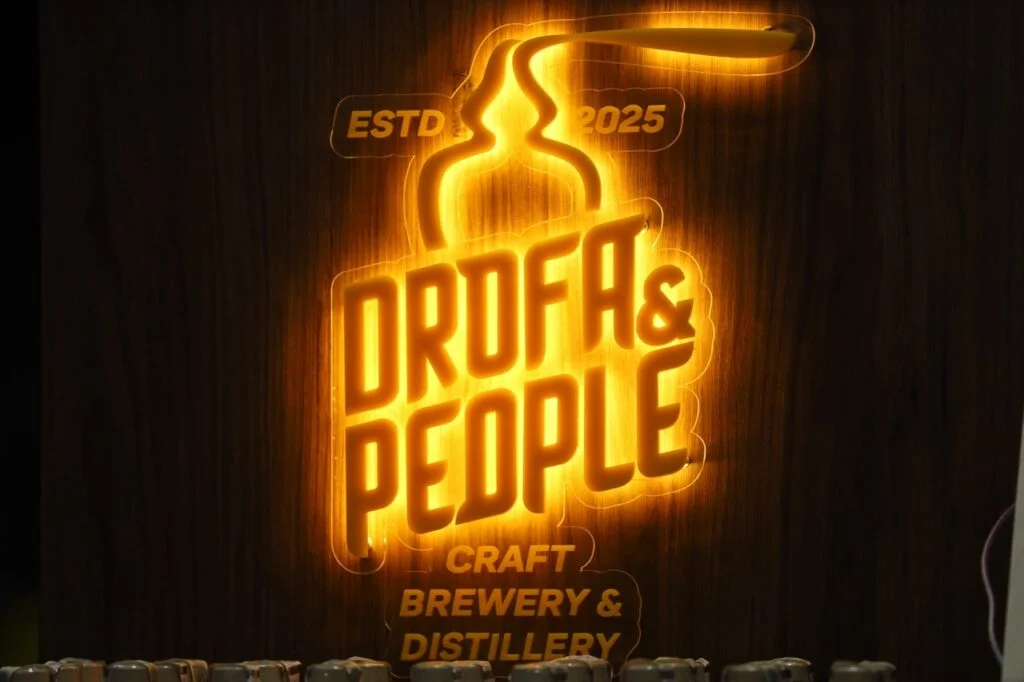
“We understood that this should be a separate trademark of distillates. And since recognition for ‘Drofa’ already exists, we decided that our trademark will be ‘Drofa and People’,” Yuriy says.
Among the bottles, stories and aromas it becomes clear that “Drofa and People” is really not just about drinks. From the very beginning — it is a team that believes in its work.
“It still wasn’t finished. The new office of the southern steppe brewery…,” Yuriy says sadly, showing us a room chaotically filled with furniture and more like a warehouse. Its windows are covered with OSB boards. You can feel the cold seeping through the cracks.
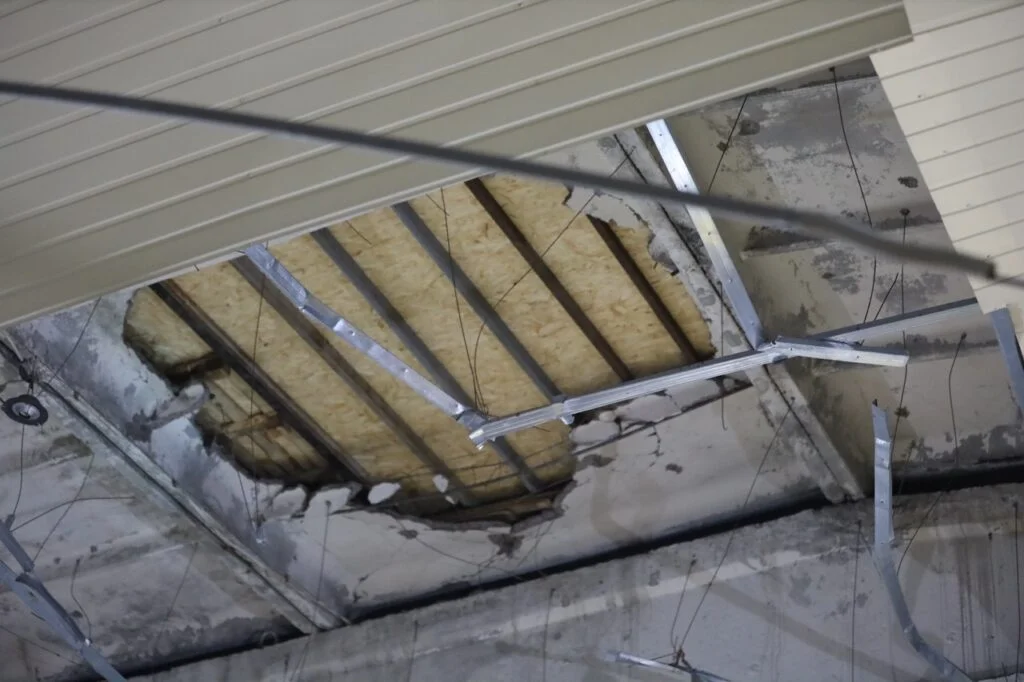
“Unfortunately, there are no windows, but people still work,” he adds, looking around the half-empty space. The “Drofa” premises have repeatedly been attacked by the Russian army. Smashed windows are one of the signs. Another is a huge hole in the reinforced concrete ceiling of the brewing shop. In May 2025 an artillery shell hit there. Fortunately, the workers had time to move to shelter. The strike hit the place where finished products were stored: it damaged refrigerators, tore apart pipelines.
Earlier during the tour in the workshop Yuriy showed us this place and pointed out a stainless steel table — the storekeeper’s workplace. A fragment flew through the tabletop and tore it with terrifying ease.
During the occupation of Kherson Yuriy was not in the city. People came to the production site with orders from the occupation administration and said that everything was being transferred to the management of… “someone”.
“People came in, placed their own guards, told our employees to stay at the production to somehow keep it running. We understood that Kherson would be liberated, we believed in that. So people stayed so that the production would be under supervision for some time,” Yuriy recalls.
The Russians then sold the beer and later fled. They did not have time to take the equipment.
“As you can see, it is large and heavy, it’s not something you just take and carry out. But they walked around here and showed the Russians in their reports how nice ‘their’ production is and how they will sell beer all the way to Moscow. But things did not happen as they imagined,” Yuriy adds with a smile.
The operation of the production now is in extremely difficult conditions of frontline Kherson. A constant shortage of workers and contractors who could quickly repair or adjust equipment. Problems with electricity due to shelling and blackouts. They run on a generator, but round-the-clock operation is impossible — leaving a large, working generator overnight means taking a risk. Because of this, technological processes are constantly disrupted: the power goes out — something burns out, something has to be stopped and started again.
The hardest thing is for the people. They are very tired.
Drone attacks have become part of daily reality. Near the shop entrance there was a spill: one grenade exploded, another did not. The facade and a car were damaged. People were not hurt. Again — fortunately. After this a concrete shelter of local manufacture was installed next to the entrance so there would be somewhere to hide in danger.
At the same time the team is considering the option of moving part of the equipment to Odesa and launching a new production with partners. But Kherson will not disappear from this chain. Distillates and beer production will remain here — in small volumes, primarily for their own city.
Volumes and contracts with Rozetka and MAUDAU are being prepared. In 2026 the products are planned to be made available on these marketplaces as well.
After talks about beer, distillates, blackouts and the difficulty of life in the city we go outside. Reality immediately reminds itself — somewhere nearby you can hear the sound of a drone, probably a Russian “Molniya,” flying to another part of Kherson, past the production. The smell of black bread wafting from the slightly open doors of the shop no longer seems surprising. It becomes part of this space — just like the people who work here.
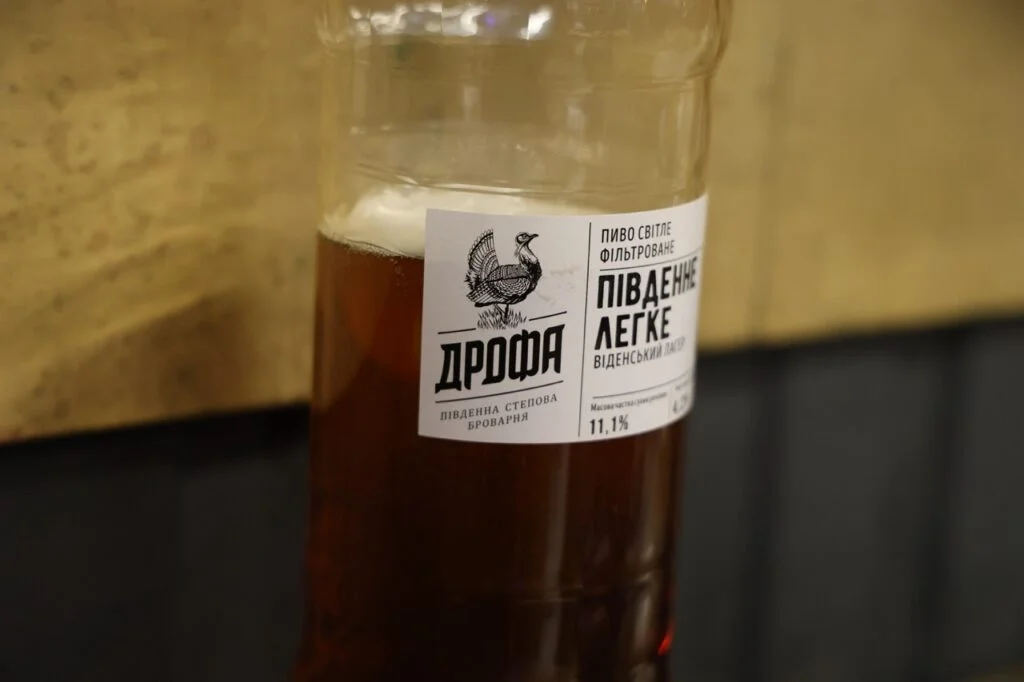
The trademark “Drofa and People,” which today unites both beer and distillates, is not only about marketing. It is an accurate formulation of everything that happens here. In Kherson and beyond. This is no longer a story about drinks — it is a story about people who create a sense of place and pass it on.
One of the viewers under the video report we filmed during this visit wrote that “Drofa” beer is Kherson’s calling card. The best taste of his city. The southern atmosphere he compares to the sea in Odesa: even if you haven’t seen it for a long time, you still remember it. He confessed that he had not been to Kherson for more than three years, but still remembers the smell in the shop.
Perhaps that is the main thing: from people — to people. What they remember and support.