

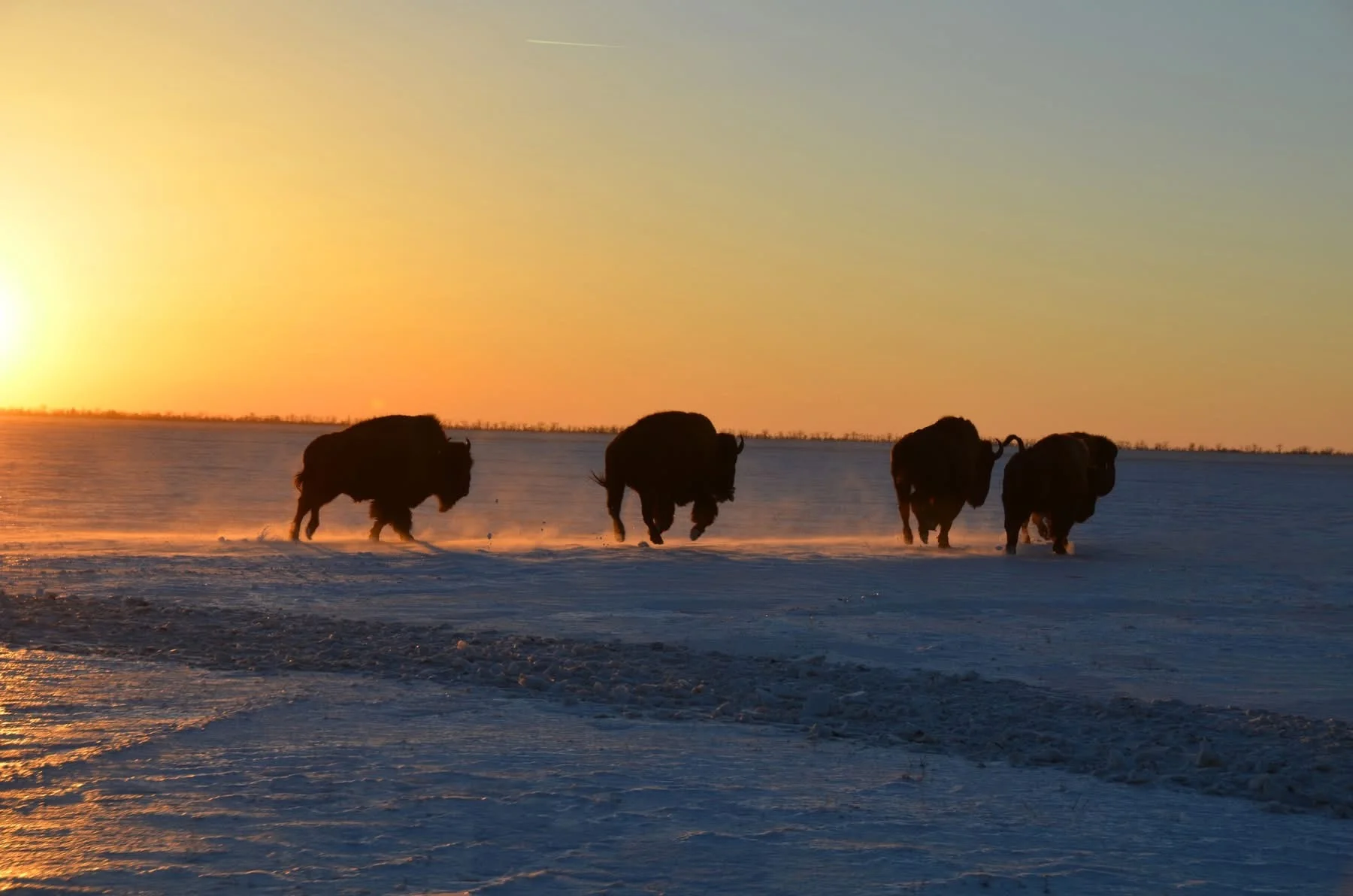
The Biosphere Reserve “Askania-Nova” warns of a threat to the conservation of populations of hoofed animals due to adverse weather conditions and a shortage of fodder.
The reserve itself reported this.
According to scientists, dry weather from spring to late autumn 2025 led to the almost complete destruction of the grass cover in the Velyky Chapelsky area. Hoofed animals even ate last year’s dry grass, which is confirmed by satellite images showing significant gaps in the vegetation cover.
Light rains at the end of November caused a short-term regrowth of steppe grasses, but they were quickly eaten by ungulates and white-fronted geese that winter in the region. The fodder harvested by the occupying administration on the reserve’s plots, due to low yields and late mowing times, according to specialists’ estimates, may be sufficient only until the end of January 2026.
Assistance from neighboring farms is practically impossible, as the drought has affected a significant part of the occupied south of the Kherson and Zaporizhzhia regions, as well as the north of Crimea.
The reserve warns that under such conditions there is a risk of a mass winter die-off among saigas, bison, fallow and red deer, mouflons, as well as kulans and Przewalski’s horses.