


Mechyslav Chekanovych – Honored Inventor of Ukraine, Candidate of Technical Sciences, full member of the Academy of Construction, lecturer of the Department of Construction, Architecture and Design. At Kherson State Agrarian-Economic University he teaches courses directly related to his practical work: «Reinforced Concrete and Masonry Structures», «Inspection and Methods of Strengthening Building Structures», «Testing of Building Structures Based on Scientific Research» and others.
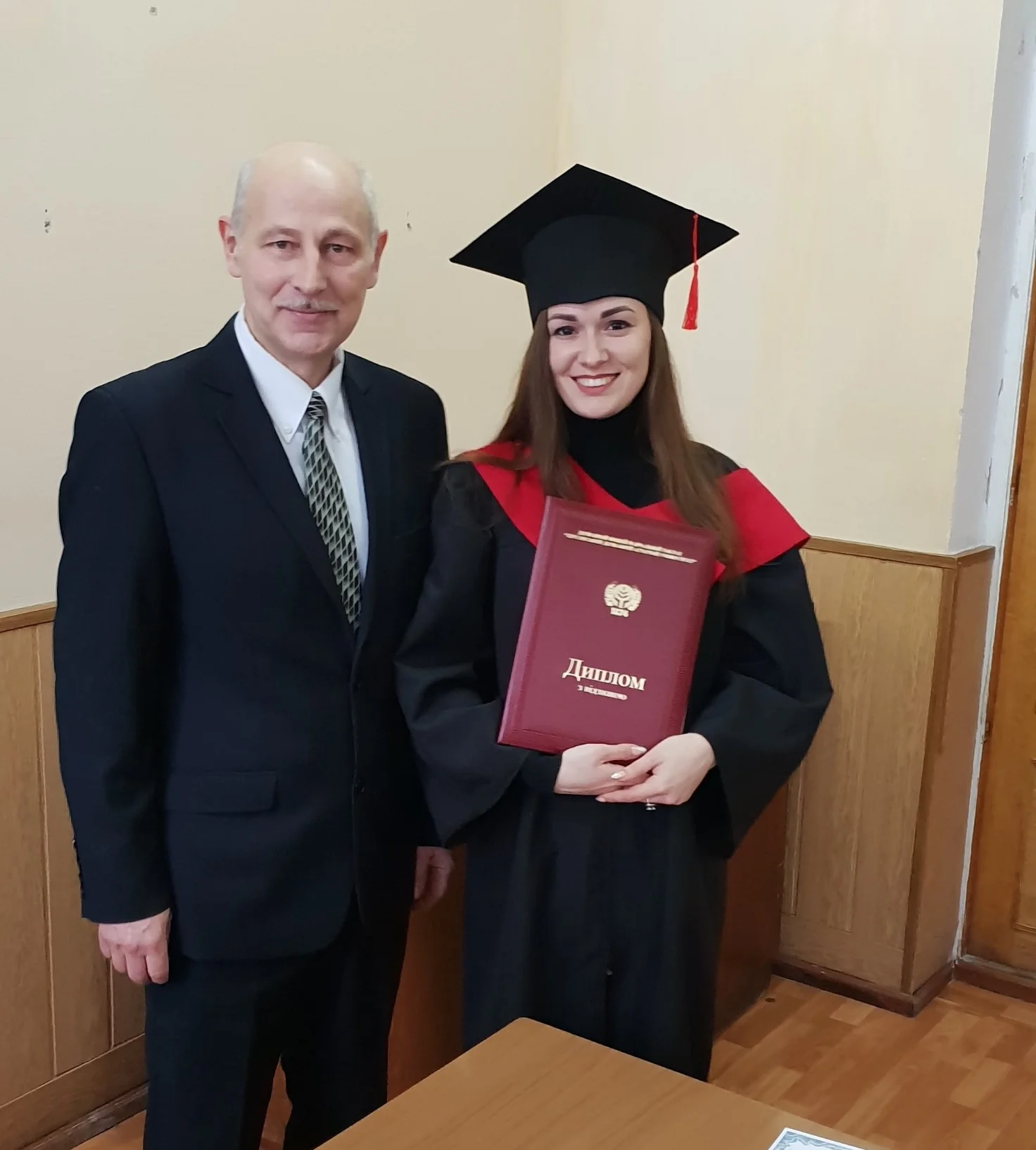
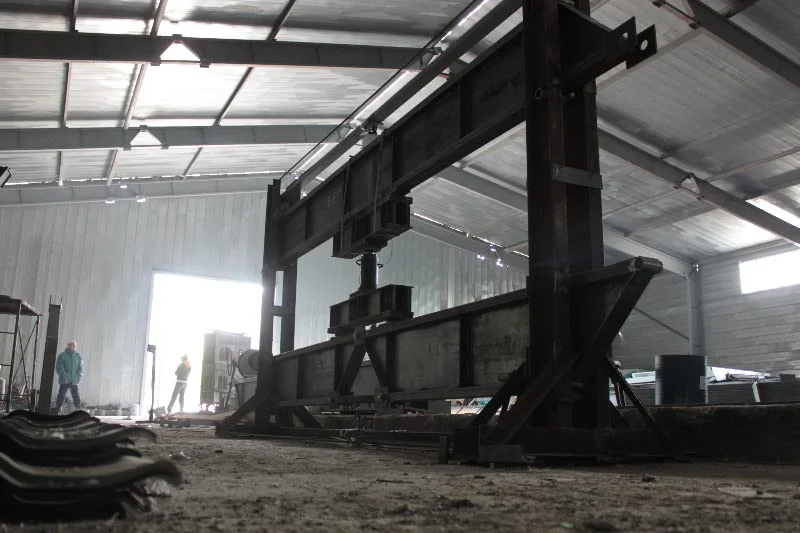
In the scientific output of the Candidate of Technical Sciences there are 357 scientific and educational-methodical works, among them patents, monographs and teaching aids. He has participated in leading congresses, forums and international conferences on construction. Chekanovych is a specialist in the field of reinforced concrete structures; he developed and studied methods for creating stronger structures using prestressed reinforced concrete, which significantly increase their load-bearing capacity, stiffness and durability.
Moreover, Mechyslav Chekanovych is a certified leading expert of Ukraine in the inspection of buildings and structures. At a time when hostilities have not subsided and Russia inflicts massive strikes on Ukraine every day, his work takes on particular significance.
MOST spoke with the expert about the discoveries the war has brought to the field of inspection of buildings and structures, about the future reconstruction of the country and the acute need for professionals.
Already during the full-scale war Mechyslav Chekanovych studied the destruction of the largest structures in Ukraine. Among them are the DniproHES, which Russian propagandists so often mention in their videos and dream of destroying, as well as the Kyiv and Kaniv HPPs. These are extremely complex studies, but vitally necessary — both for further restoration and for understanding how structures behave under different types of strikes.
“When these facilities were built, no one anticipated that they would have to withstand missile strikes. And today we carry out inspections and arrive at new conclusions, sometimes even discoveries. For example, the Kaniv HPP suffered significant damage after a missile strike: at the point of impact there was destruction. And 5–8 meters away there are high-voltage transmission lines that by all rights should have been destroyed. But they survived. Why? It turned out that deformation joints played a role. If you “cut” the structure with such joints, the damage does not spread further. That is, a missile can destroy one section, but beyond the joint everything remains intact. These deformation joints were never designed with missile strikes in mind”, – Chekanovych explains.
Inspection of such massive structures as hydroelectric power plants or bridges is extremely complex. To determine the nature and extent of damage, it is necessary to create models, perform calculations, position columns of machines in different locations and identify the worst load scenarios. Concrete strength is measured by ultrasonic methods and the impact-echo method – both effective even under wartime conditions.
According to Mr. Mechyslav, if previously the maximum load on bridges was about 80 tons, now it is necessary to account for 100-ton loads so that structures can withstand military equipment. Next come complex calculations and conclusions regarding the degree of damage to the object.
“Sometimes the results are very unpredictable. But these studies are vital to preserve or restore a structure. There was a case when there was a small hole on top of a bridge; it was covered with a metal sheet and patched with asphalt. But underneath there was a large spallation of concrete — this is a serious danger. This is a known effect dating back to World War II: the first tanks had armor that a shell could not penetrate, but the crew still died — steel fragments flew inside. Here it is the same: an impact from above, and the main damage is underneath. If vehicles continue to move over such a bridge, the destruction will only worsen. This is one of the new conclusions about the behavior of reinforced concrete structures”, – the expert notes.
Another feature of concrete’s response to missile and bomb strikes the scientist names is delamination — when cracks run inside the structure.
“We knew that concrete could be damaged from above or below. But that it would delaminate internally — this we encountered for the first time. It also happens that an impact occurs in one place, and the largest crack appears several meters away. All these observations make it possible to develop new methods to prevent such failures”, – he says.
Mechyslav Chekanovych emphasizes: to prevent catastrophes caused by the destruction of facilities as a result of hostilities, inspections must involve leading experts — specialists who understand well how structures work and have experience in designing and inspecting hundreds and thousands of objects.
“By the time we publish any new standards regarding inspections, a lot of time will pass. Today the standards for buildings date from 2016, and for bridges — from 2022. Both were written before the war. Buildings have four categories of technical condition, bridges have five. And in case of war we do not have a substantiated unified regulatory framework. But work like this must continue without delay. The only way out is to involve leading experts in the inspection of structures who have SS3 category certificates — these are the most experienced and the most responsible professionals who can do this”, – Chekanovych is convinced.
As for what the future reconstruction will look like, the Candidate of Technical Sciences also has his own view. Of course, he considers safety to be the primary issue.
“First and foremost after the war we will continue to face the acute issue of security, – Mr. Mechyslav is confident. – Therefore the so-called “safety cores”, where people could ride out shelling, must be mandatory. This must be taken into account in construction. In Israel, for example, such rooms exist in every building — there are concrete walls, everything can be closed, and there are essential supplies. You can make shelters for two apartment buildings — in the middle in a basement room. This is rational and will help save lives”.
According to Mr. Mechyslav, one of the most important issues in the post-war period will be the inspection of structures. It is a kind of “diagnosis” that will help determine where the greatest damage is, whether it can be restored, and how to reinforce the building.
“The most reliable today are buildings made of monolithic reinforced concrete. Second are brick buildings, since they are quite massive and can protect against mortar shelling. Less protected are panel buildings, where the panel thickness is only from 14 to 22 centimeters without accounting for insulation, and if there is damage at a fastening point, it will simply collapse. And of course the most popular will be light structures — they are the easiest to erect, but they are also the most vulnerable to destruction. Therefore shelters, “islands of safety”, and refuges for such buildings will be mandatory. Recently we also conducted research — I involved master’s students — and found that multilayer structures withstand impacts very well. Like with the tanks I mentioned earlier. What was done to protect the crew? Strong armor on top, and multilayering below. Upon impact, fragments then do not fly inside, and the structure remains intact. The same goes for buildings. We conducted research on building structures where, in addition to reinforced concrete, metal sheets were used. Beneath metal the concrete does not crumble. Better are pipe-concrete structures or structures in a metal casing. Such structures will be the most resilient and have the greatest strength. In China skyscrapers are built this way — a tube is filled with concrete, and it is both strong and best resists impacts. These are my own studies, which will be useful for future reconstruction”, – the scientist explains in detail.
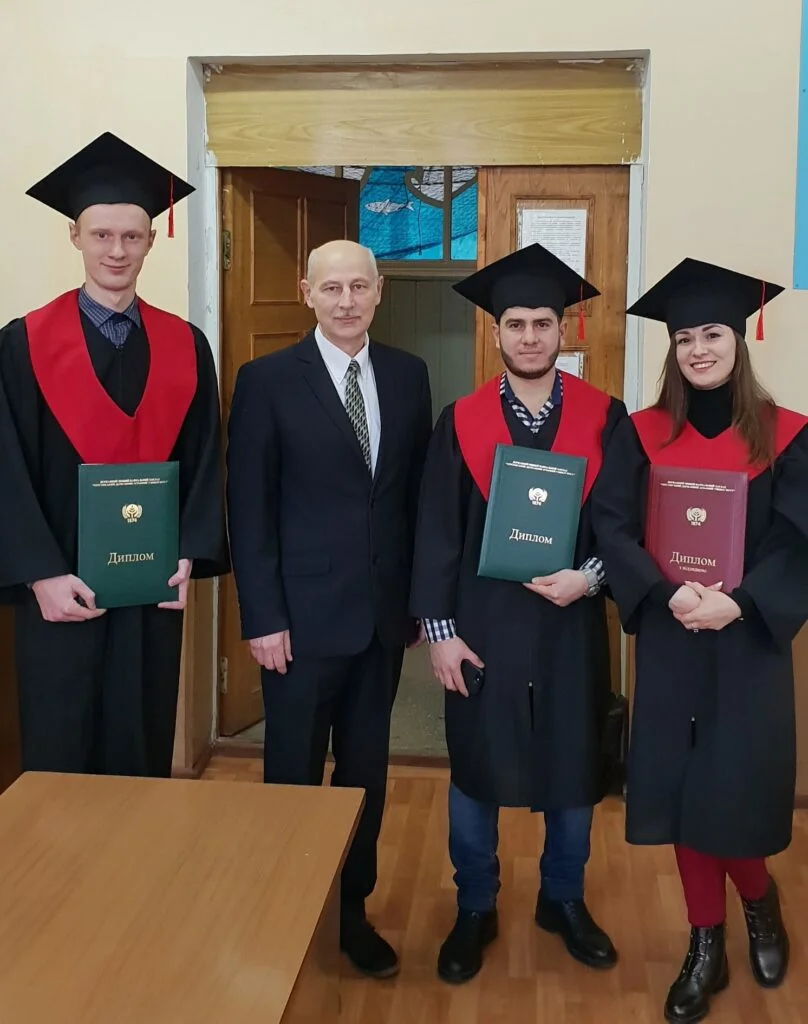
Mechyslav Chekanovych speaks about working with students with particular warmth. At the Department of Construction, Architecture and Design he teaches several courses and is convinced: only a specialist who himself has ties to industry can give good knowledge, and a student who is involved in the process can gain good skills. Therefore the lecturer tries to involve practicing designers, experts and professionals in classes.
“If I have inspected thousands of them, then I have experience I can share with students. I have a student who even today travels, rebuilds under fire and at the same time has not missed a single class. Some of our students continue their work in the European Union. For example, there are those who arrived in Munich and immediately got a job. Not as laborers, but as engineers. They studied building and structure inspection, went there and their experience was appreciated”, – notes Mr. Mechyslav.
Currently the lecturer also organizes international and all-Ukrainian conferences, gathering on the platform of Kherson State Agrarian-Economic University the best specialists in construction, inspection and infrastructure restoration. There they share developments, findings, achievements and experience and search for methods on how to inspect and restore buildings and structures.
During the occupation of Kherson Mechyslav Chekanovych remained in the city and continued to teach. Some of the students, however, changed professions.
“I remember how the Antonivskyi Bridge was shelled by HIMARS. And I received a message “How did we hit the bridge?” Back then the occupiers were tracking all our phones, and of course I was in their field of view too. I thought: if I write “Well done” they will come for me. I wrote briefly: “Pros”. And the reply to me was: “Well, who did we learn from!” That is, my graduates were the ones striking the bridge. Can you imagine how hard it is to destroy something when your profession is to build, preserve, create the new? But they had to do it, and they did it really like pros — so that tanks could not pass, but it would have been easy for us to restore it. When the Russians retreated, they blew up the supports, destroyed everything. And ours thought about how to preserve it”, – shares Chekanovych.
The lecturer also recalls that after the de-occupation of Kherson the defense of master’s theses was held right at the Point of Invincibility in a tent opposite the Central Market. At that time the head of the commission was in an identical tent in Kyiv.
“Imagine — shelling, danger, lack of communications, and we are holding master’s defenses. And not a single one missed — everyone came to the defense. Even students who at that time were at the front joined in. Such are the realities”, – he recalls.
Mechyslav Chekanovych says: war in reality is nothing like what was described in books or shown in films. Mr. Mechyslav’s findings today help not only in the rear for rebuilding buildings, but also at the front.
“Remember how in books or films they described someone covering themselves with a pillow from a bullet and surviving? What a lie. In reality we understand that this is impossible. We now know that embankments must be made huge. Make blocks of monolithic massive concrete, create multilayering so that fragments do not fly off from the inside. This helps our guys survive”, – Chekanovych concludes.