

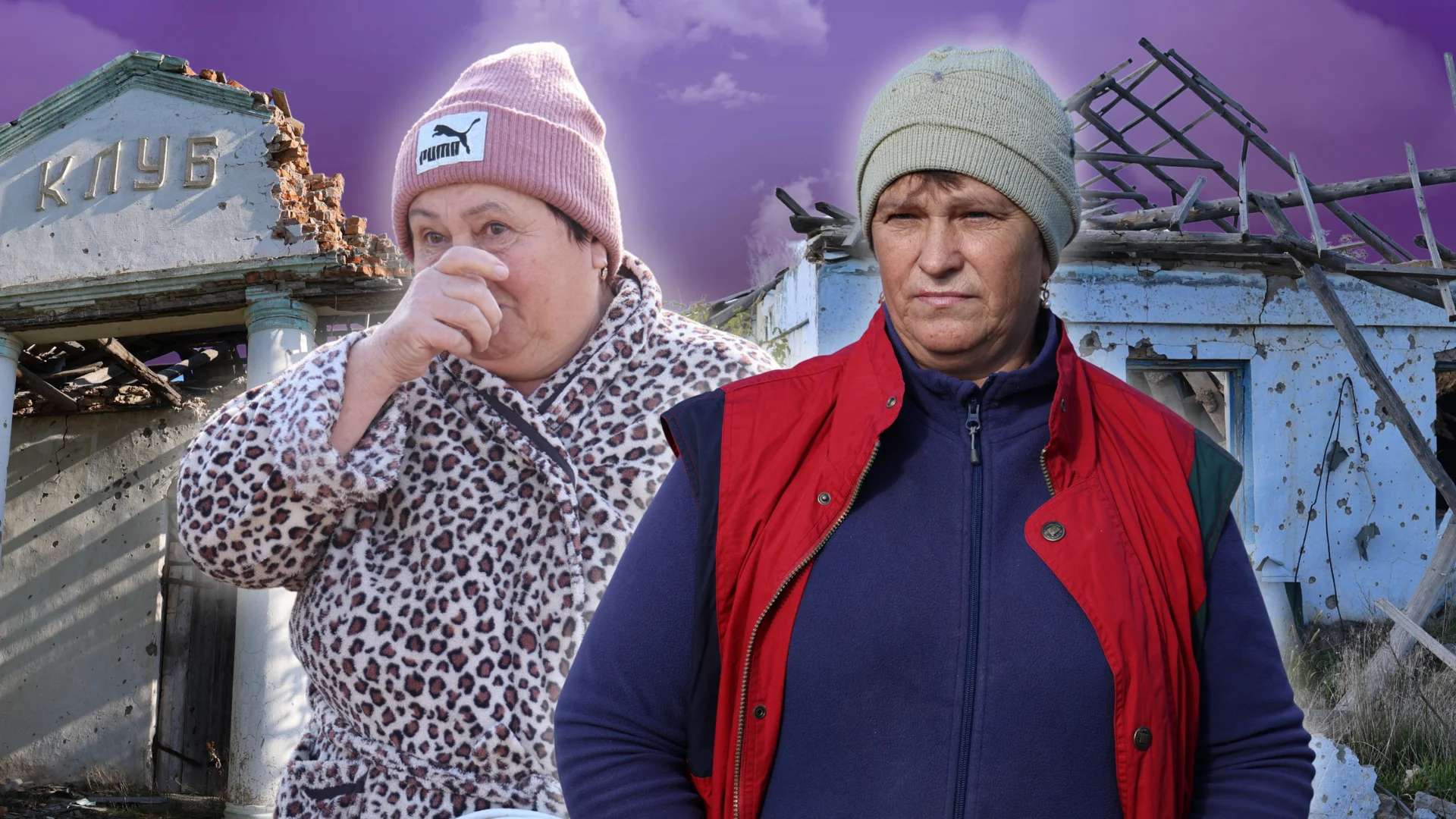
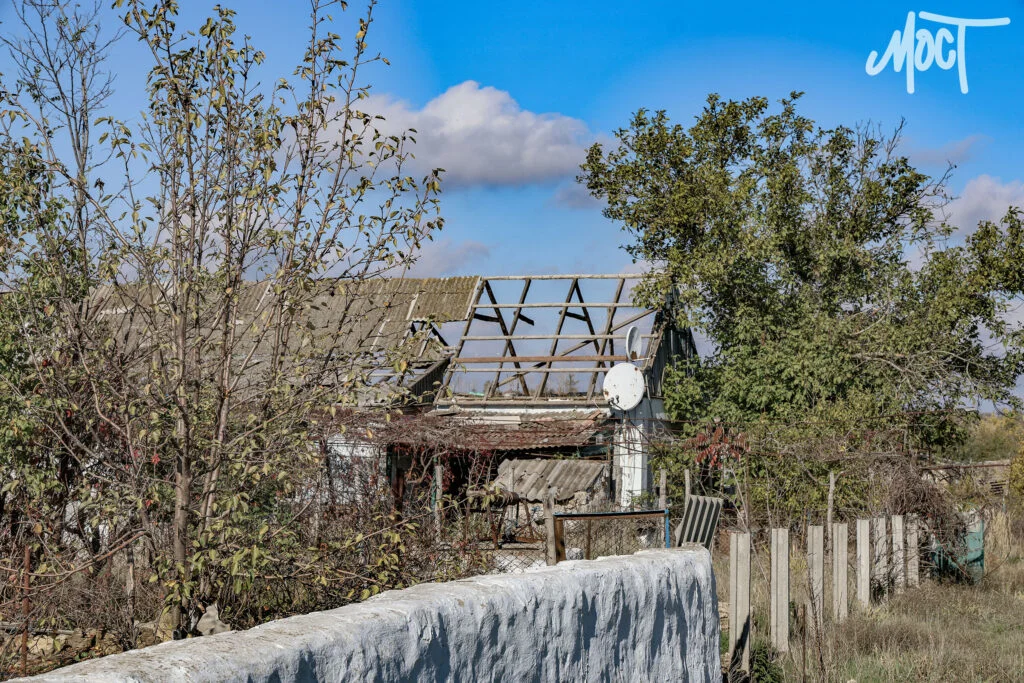
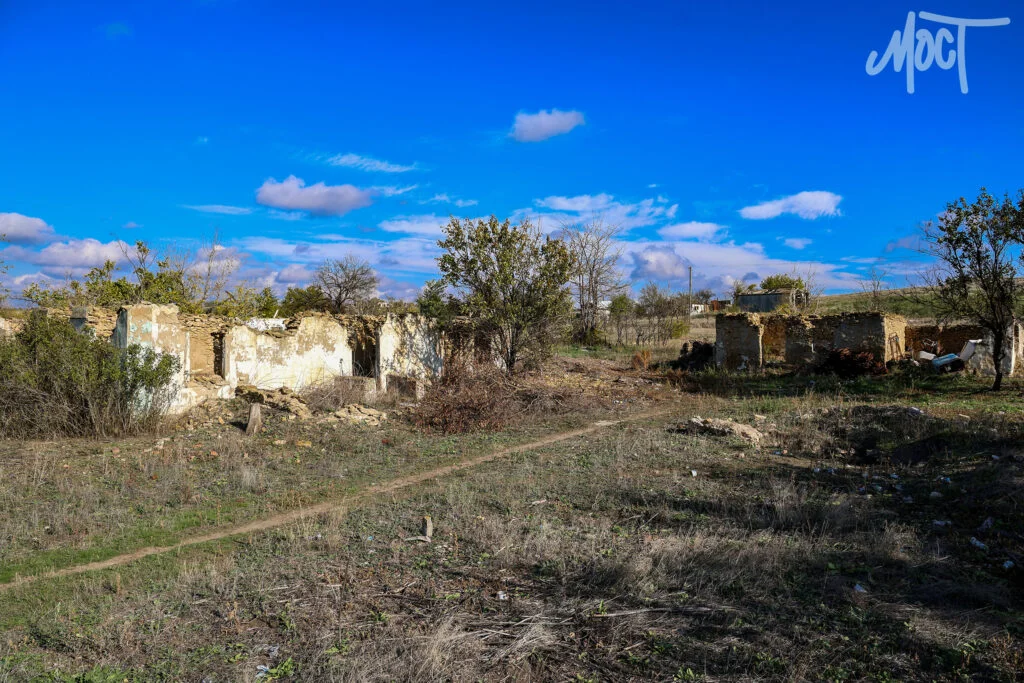
If you walk or drive along some of the streets of Mala Seydemynukha, you get the impression that the settlement is empty and completely destroyed, that life here will never return.
Beside the ruined club building is a children’s playground—a reminder that the village once had a future.
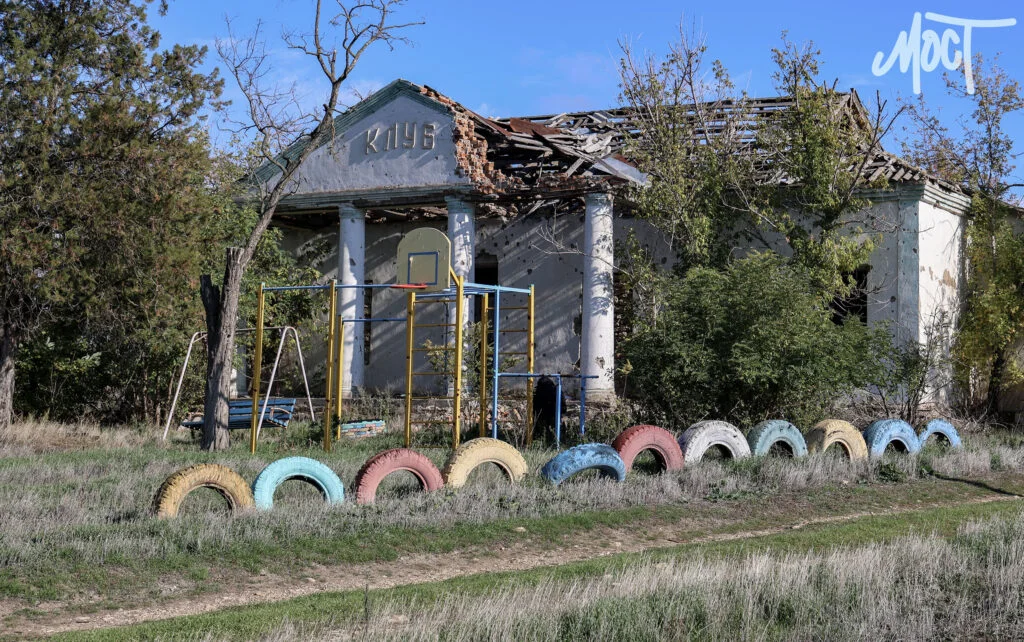
However, people live here. True, the current population is five times smaller than in February 2022.
Now Mala Seydemynukha, located in the Kalynivska community of Beryslav Raion in Kherson region, is in such a state that it’s hard to say whether it will survive to its 200th anniversary in 2040.
However, over its 185-year history the village has endured shocks that left its future in serious doubt. But it stood firm.
The Holy Family among the Ruins
Together with Nataliya Muravchuk, the elder of the Blahodativka starostynskyi district, on whose territory Mala Seydemynukha is located, we walk along one of the village streets. We see a yard where there is life, and this even clashes with the huge number of broken buildings on this street.
A woman is tending her garden. We approach the yard. We greet her. We ask if this yard is really the only one on the street where people live.
«Almost, – the woman replies. – Valya still lives at the end of this street, but otherwise – no one else».
The woman does not want to give her name. We ask if it is not sad to live like this.
«It’s sad, – says the village resident. – When my husband is not at home, there’s no one to talk to. But we do not give up. Look, I’m planting winter garlic. And our neighbors probably won’t return. They don’t plan to. Those who wanted to return have already returned. No one else will come back. The houses are all destroyed. There’s nothing to return to. Although… If after liberation the village had been rebuilt on a large scale, probably many more people would have returned. But as it is now, it’s very difficult. Especially if a person is alone».
Walking down the street is the owner of this yard – the husband of the woman we are speaking with. He also does not want to introduce himself. We ask how the couple make a living. They answer that they feed themselves with their household and seasonal work in the community center – Kalynivske. In particular, the man is a combine operator.
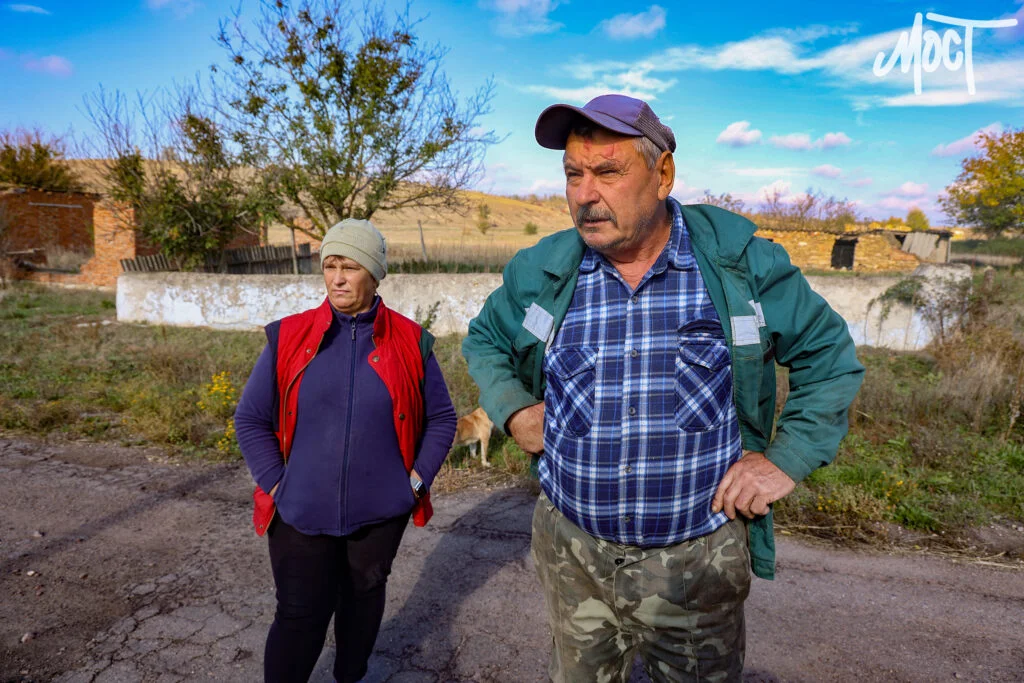
«Once, – the woman recounts life before 2022, – we kept three cows, four pigs. Now only the bees remain. The war took away the desire to keep a large farm».
By the way, 2025 was an unfavorable year for agriculture with spring frost and prolonged drought, and it was bad for beekeepers too.
«We have to feed the bees, – the man says. – There’s almost no honey. The bees didn’t even gather enough for themselves. There was nothing to collect from. There were neither decent sunflowers nor acacia. Only a little was collected when the rapeseed was in bloom».
When asked about life in 2022 the couple say that during the occupation they went to Mykolaiv region, and after the final liberation of the village (fighting in this area lasted from September to early November) they still decided to return. They didn’t make that decision immediately. At first, when they came back soon after liberation and saw that the house was damaged, they wanted to move elsewhere. But when they learned about real estate prices in other regions, they decided it was better to repair the house they had.
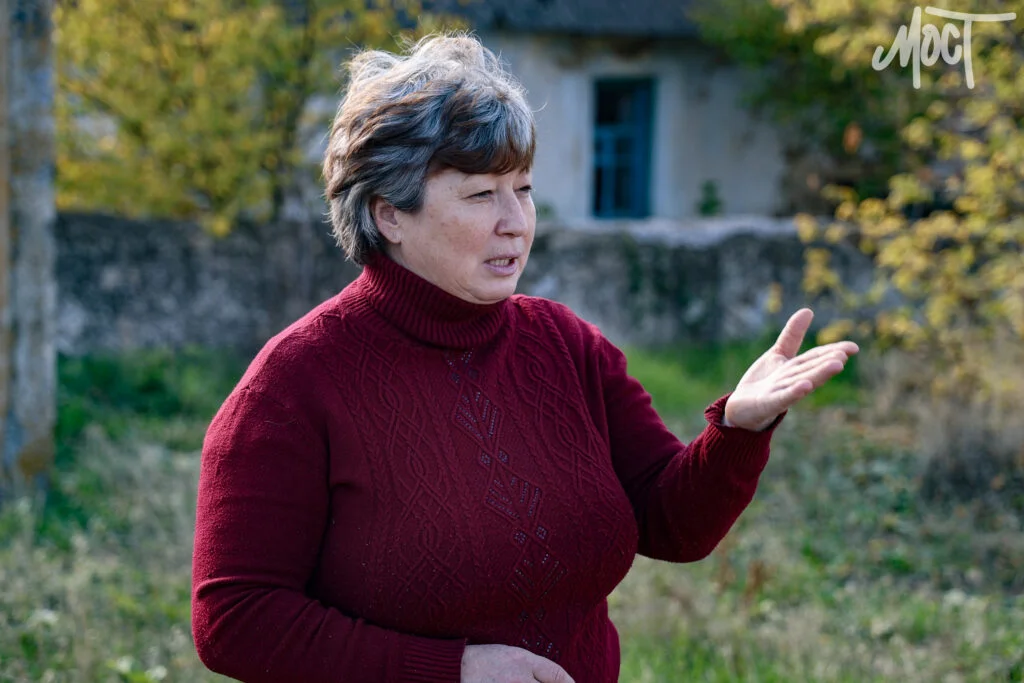
We walk along the street and visit another resident – Valentyna.
«How do we live? Day to evening, evening to morning. That’s how we live. There’s no other way. It’s very sad without neighbors. I dream that the village will be reborn, that there will be more people here», – says a resident of Mala Seydemynukha.
She says she took up embroidery in 2022 when the war forced her to leave her native village. She lived for two years with relatives in western Ukraine. She watched how her aunt, who has been doing embroidery for many years, worked and decided to try it herself.
Valentyna shows an embroidered picture depicting the Holy Family – Mary, Joseph and baby Jesus: «I made this as a gift for my brother’s 60th birthday. I worked on it for about a month. There are also embroidered icons; they are with my daughter».
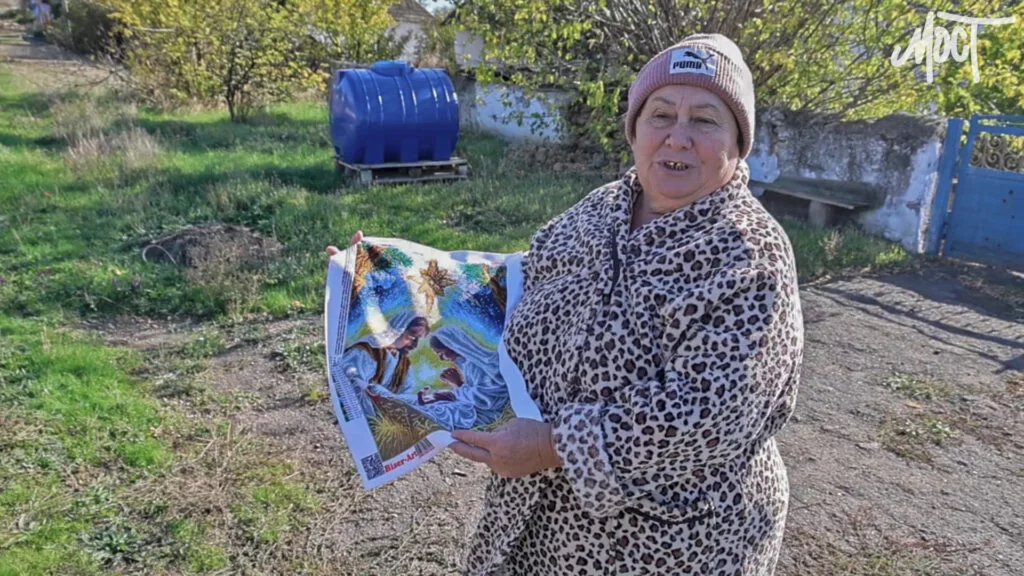
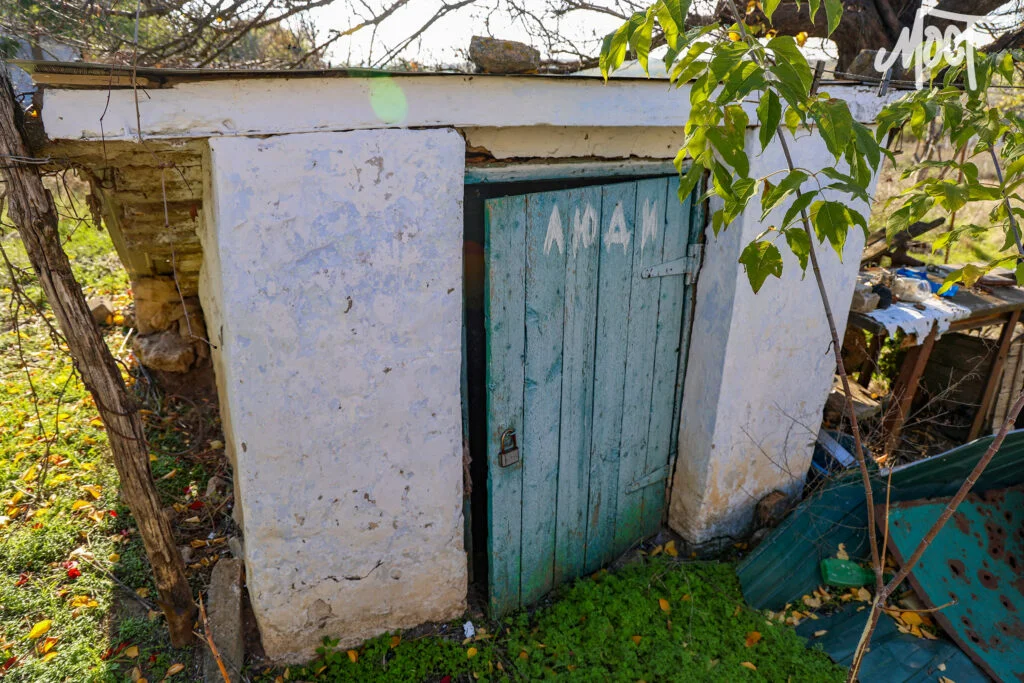
The woman lives in the summer kitchen – the only surviving building on her property. Such life is not very comfortable, but she says it’s still better than being displaced. Embroidery is perhaps the only consolation in the almost lonely life on what was once a populous village street that is now almost entirely ruins.
«It was a good village, – Valentyna recalls life before the full-scale Russian invasion, – friendly. Of course, there were quarrels, that happens. But overall we lived well, celebrated holidays together. These are native places. My parents are buried here».
12 yards, 21 people
Mala Seydemynukha for at least the first hundred years of its history was a Jewish agricultural colony founded in 1840 (by other sources in 1841) by settlers from the Vitebsk Governorate. The village’s name comes from the phrase “Sde Mnukha”, which in Hebrew means “Quiet Field”.
In 1919, during the Civil War, units of the Volunteer Army under Anton Denikin entered the village and carried out a pogrom that caused the decline of Mala Seydemynukha. But the village later revived. In 1929 it was renamed Shterndorf (“Star Village” in Yiddish), and in 1945 the historical name was restored. The village suffered during the Holodomor of 1932–33, when about 30 residents died. Of the 218 people conscripted from the village during World War II, 189 died. And on September 17, 1941, in Shterndorf the Nazis shot 340 Jews, including 94 women and 175 children.
After all these shocks the village recovered. But in 2022 a new catastrophe happened, after which restoring the village will be far more difficult than ever before.
«As of February 2022, – says the elder of the Blahodativka starostynskyi district Nataliya Muravchuk, who herself is a resident of Mala Seydemynukha, – 116 people lived in the village. Relatives from Kherson came to some residents then and brought children. People thought that villages wouldn’t interest the Russians, and that it would be calmer here. It was not meant to be. The front line ran along the Inhulets River, which is nearby».
Russian forces entered Mala Seydemynukha in March 2022. According to the elder, the possibility to leave the village appeared on April 2: «The first to leave were families with children. Those who had no transport walked on foot to Kalynivske. More than half of the residents left the village. During the entire occupation 54 people remained here».
The occupation lasted until September 2022. After that the village was a combat zone for more than two months.
«When Ukrainian troops entered the village, – Nataliya Muravchuk recounts, – they evacuated residents. It was very dangerous here. People were evacuated under extremely difficult conditions because shelling continued. They were taken to Blahodativka, then across the bridge to Mykolaiv region to Bereznehuvate. During the fighting in Mala Seydemynukha only 12 people remained, including me and my father. We left on October 20 and returned on November 9».

Now, according to the elder, 21 people live in the village across 12 yards.
«Sometimes, – the elder says, – a yard is only the surviving summer kitchen, like for one of our residents. Her house is destroyed, as you saw. Only four families keep livestock. There is no shop in the village. People go by bus to Novohredneve or to Snihurivka or Velyka Oleksandrivka to shop. Usually if someone goes for something for themselves they ask their neighbors if they need anything. People give them money and they shop for several fellow villagers».
Until recently free social bread was delivered to Mala Seydemynukha. However, its distribution has been completely stopped for more than two months. Nataliya Muravchuk says that now most residents of the village, including herself, bake bread at home for their needs.
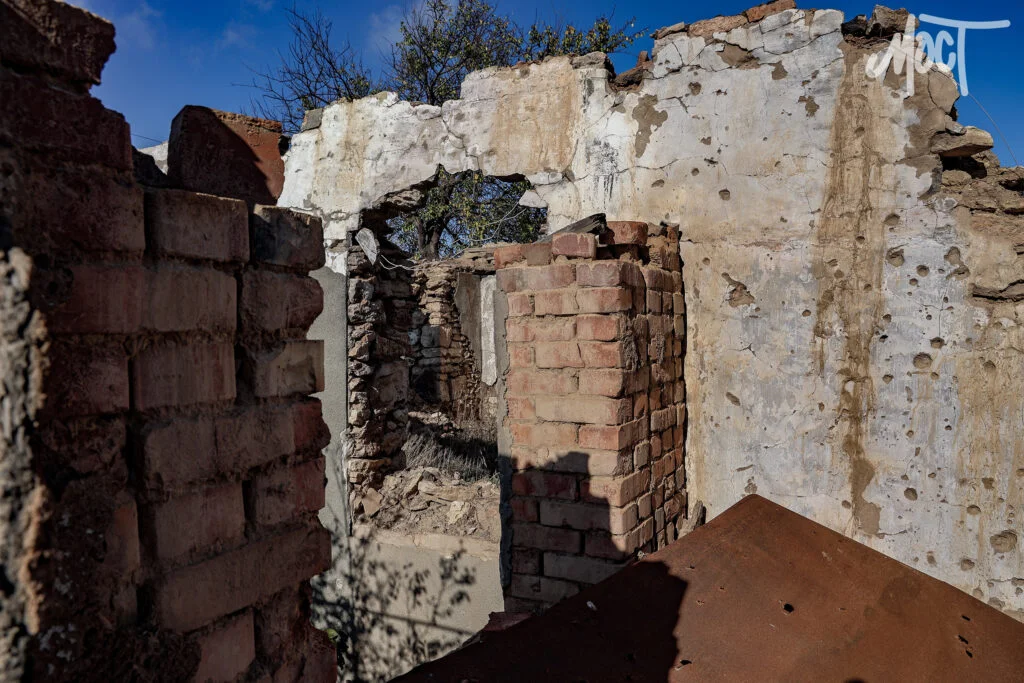
We walk through the village on the asphalt sidewalk, or rather what’s left of it, a reminder of past good and prosperous years.
«On the territory of the Blahodativka village council, – says Nataliya Muravchuk, – there used to be the Shevchenko collective farm – a large enterprise. They kept about six thousand sheep there alone. That’s why the villages here used to be prosperous».
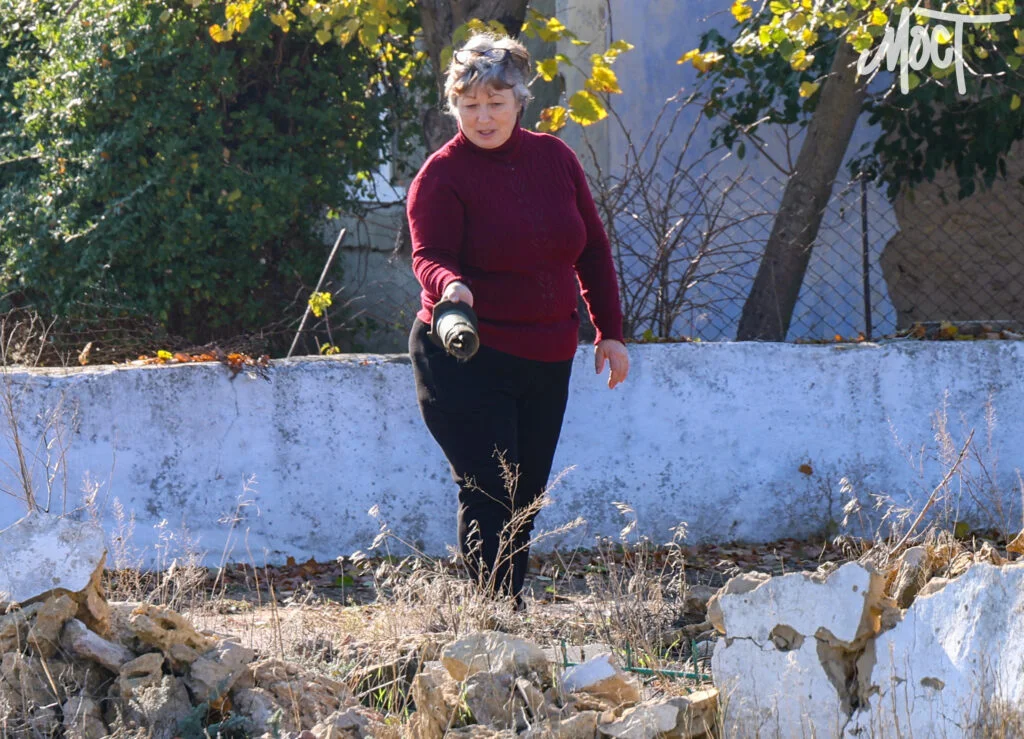
However, even during independent Ukraine Mala Seydemynukha lived fairly well thanks to agriculture.
“They buried my mother in the garden”
The Orekhov family is home to the oldest resident of the Kalynivska community – 89-year-old Iryna Hryhorivna. Other family members are her son and his wife.
The family would have been larger if not for the tragedy that occurred on September 7, 2022. On that day the wife’s mother died.
«It was very terrible, – the woman recalls. – My mother lived nearby. It so happened that I spoke to her in the morning, and in the afternoon a heavy shelling began; there was a hit on my mother’s house, and… It was incredibly hard: pulling the dead mother out of the house, digging a grave. They buried my mother in the garden. After the liberation of the village an exhumation and reburial were carried out».
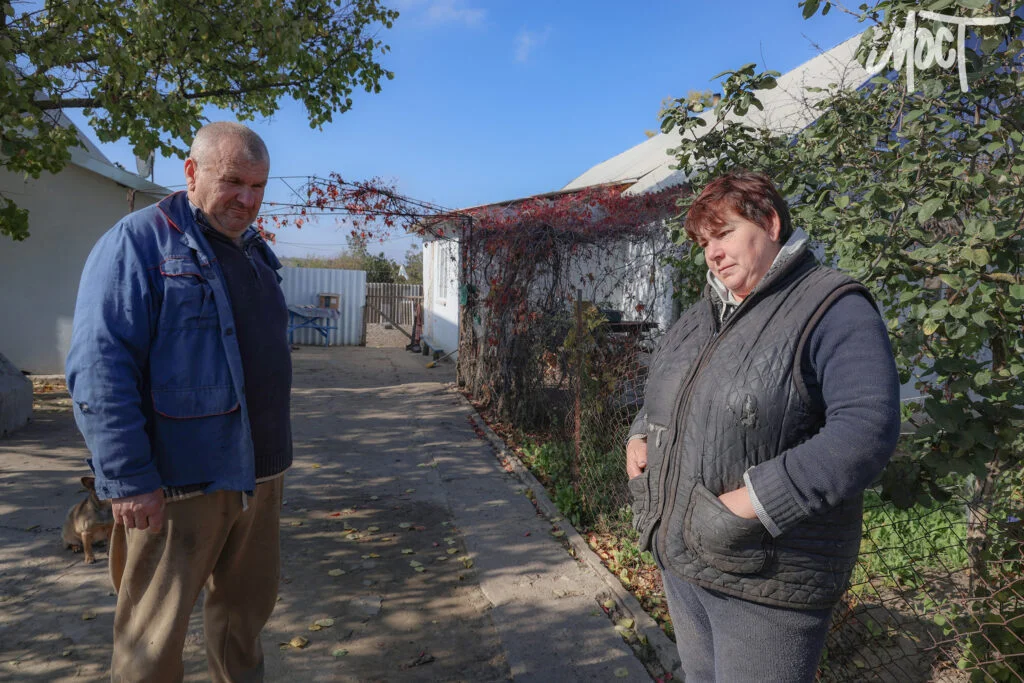
The couple recall that very fierce fighting took place in the village then. They saw how two Ukrainian scouts heroically died engaging in an unequal fight with Russians.
On November 3, 2022, soldiers of the 61st Separate Infantry Steppe Brigade of the Armed Forces of Ukraine liberated Mala Seydemynukha.
«This, – Nataliya Muravchuk shows us the Ukrainian flag, – our soldiers raised it as soon as they finally drove the Russians out of the village. The flag is now, as you can see, not in very good condition. But I took it down and I keep it as a relic. I hope there will be a village museum and I will donate it there».

The Orekhov couple say that during the occupation and the fighting for liberation they did not leave the village for a long time because of the husband’s mother: Iryna Hryhorivna firmly did not want to leave the village where she had lived for over 70 years. But in September they had to leave because it was deadly dangerous to stay. The incentive to return was the wish of the 89-year-old elder.
Iryna Hryhorivna has lived in Mala Seydemynukha since the late 1940s. She was born in Ternopil region. During World War II she lost her father.
«At night, – she recalls about those times, – some people came and asked to be shown the way. Father went out with them, and in the morning people found his body near the church. I was a child then, so I don’t know who came. It could have been Soviet soldiers, because they were already in our village at that time».

We talk about the Russian occupation of the village. Iryna Hryhorivna says the occupiers came to them too. They even tried to reassure the elderly woman. They said, “This will be over soon.” At that time, in March 2022, the Russians were confident of a quick capture of Ukraine.
The younger generation of this family is trying to build a more or less normal life. In conversation the couple say that living in a sparsely populated village is sad, although from spring to autumn there are “distractions” in the form of restoring the farm and agricultural work, and in winter the sadness covers them more strongly. From time to time they speak by phone with former neighbors. Those say they do not want to return to either completely destroyed or, at best, heavily damaged houses in the village.
“If help had come right away…”
Another resident, Yurii Ivanovych – an older man dressed only in a T-shirt despite the cool weather and with a loud voice – says that during the Russian occupation of Mala Seydemynukha he went to Odesa, and returned because life in a big city did not suit him.
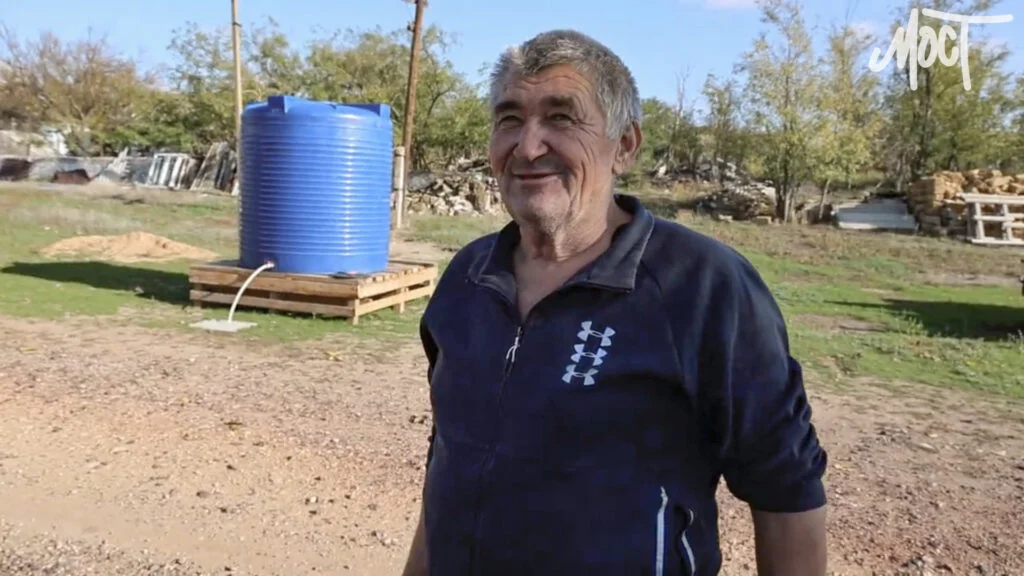
«Once, – he tells about living in Odesa, – there was shelling. It hit somewhere nearby… And I thought that you can die anywhere now. So I returned. It’s quieter and calmer here. I love fishing, and there’s good fishing here, the bites are decent, big fish are found».
Svitlana, who lives nearby, says she has no right to complain about life as a displaced person during the period when she was forced to leave the village.
«I was very lucky, – the woman says. – We found housing with a woman who helped us a lot: she didn’t take a single penny, fed us, clothed us. We still keep in touch. Our relationship is like family».
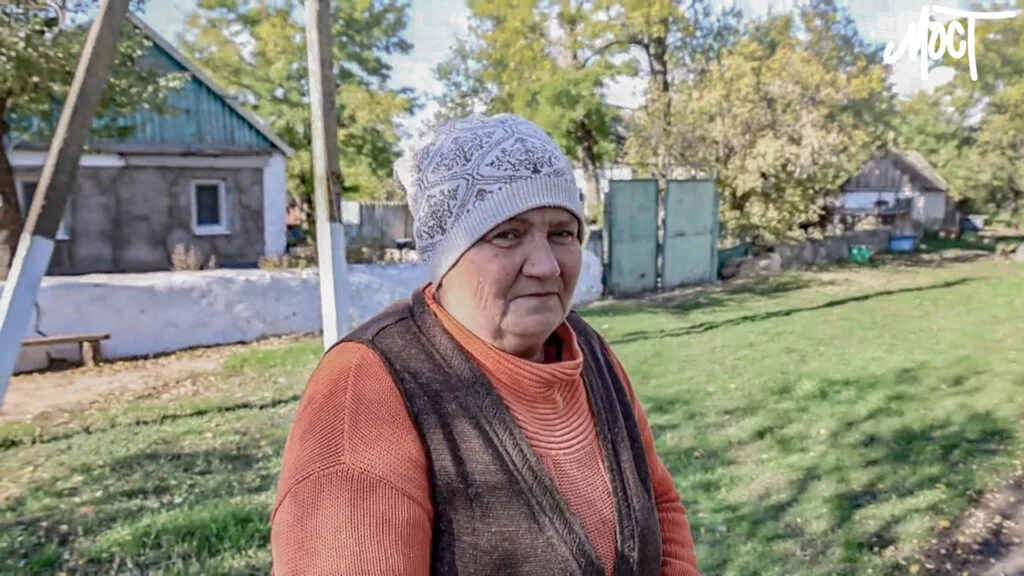
But Svitlana returned when the situation in her native village allowed.
«If help had been provided to people right away, – she says, – many more residents would have returned. I returned because I saw that we, the displaced, are not needed by anyone. Yes, I was lucky, but I still missed my native village and life was not the same as at home».
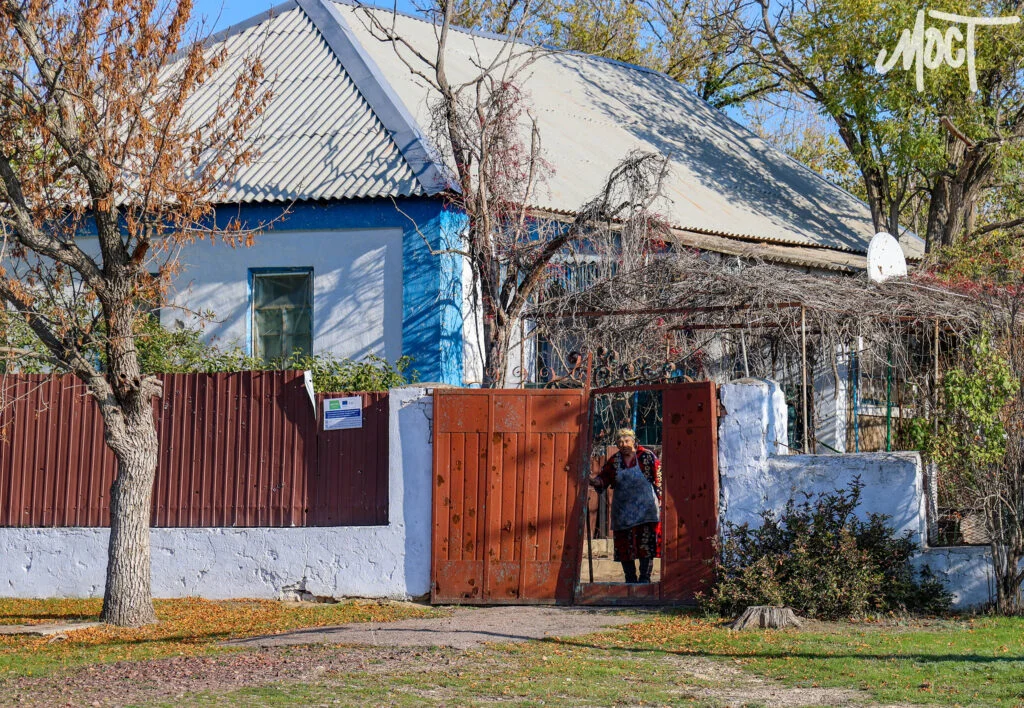
The woman says she still hopes that Mala Seydemynukha will be reborn after these shocks. But for now life is returning to the village slowly because the war has taken a heavy toll.
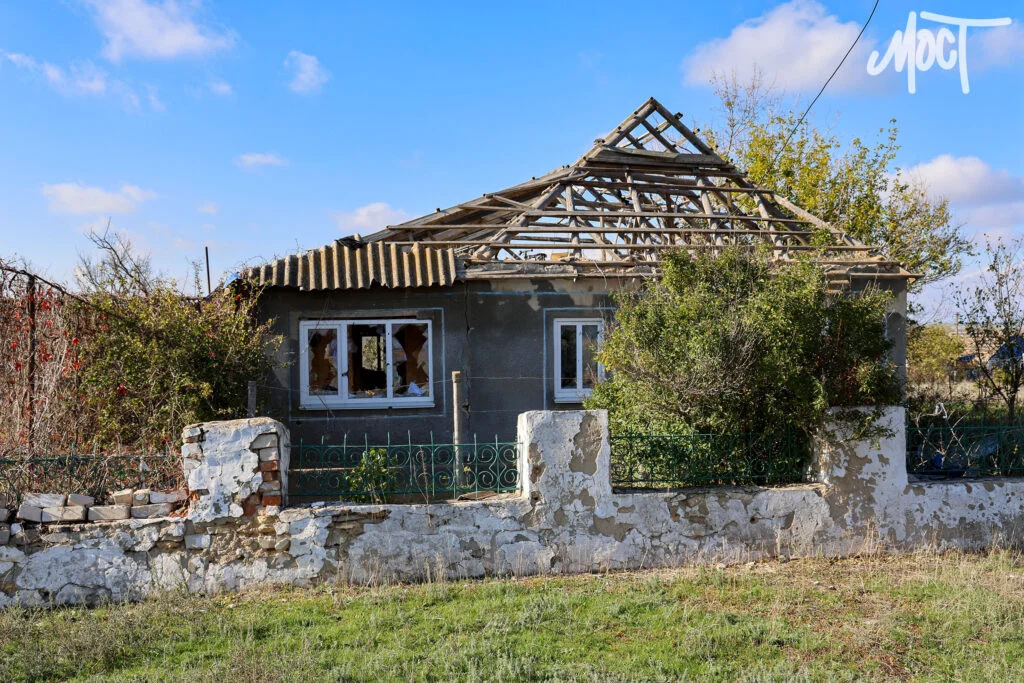
Therefore it is hard to predict what the future of the village will be, where 21 people now live among the ruins, where it is still not hard to find shell casings and fragments – .