

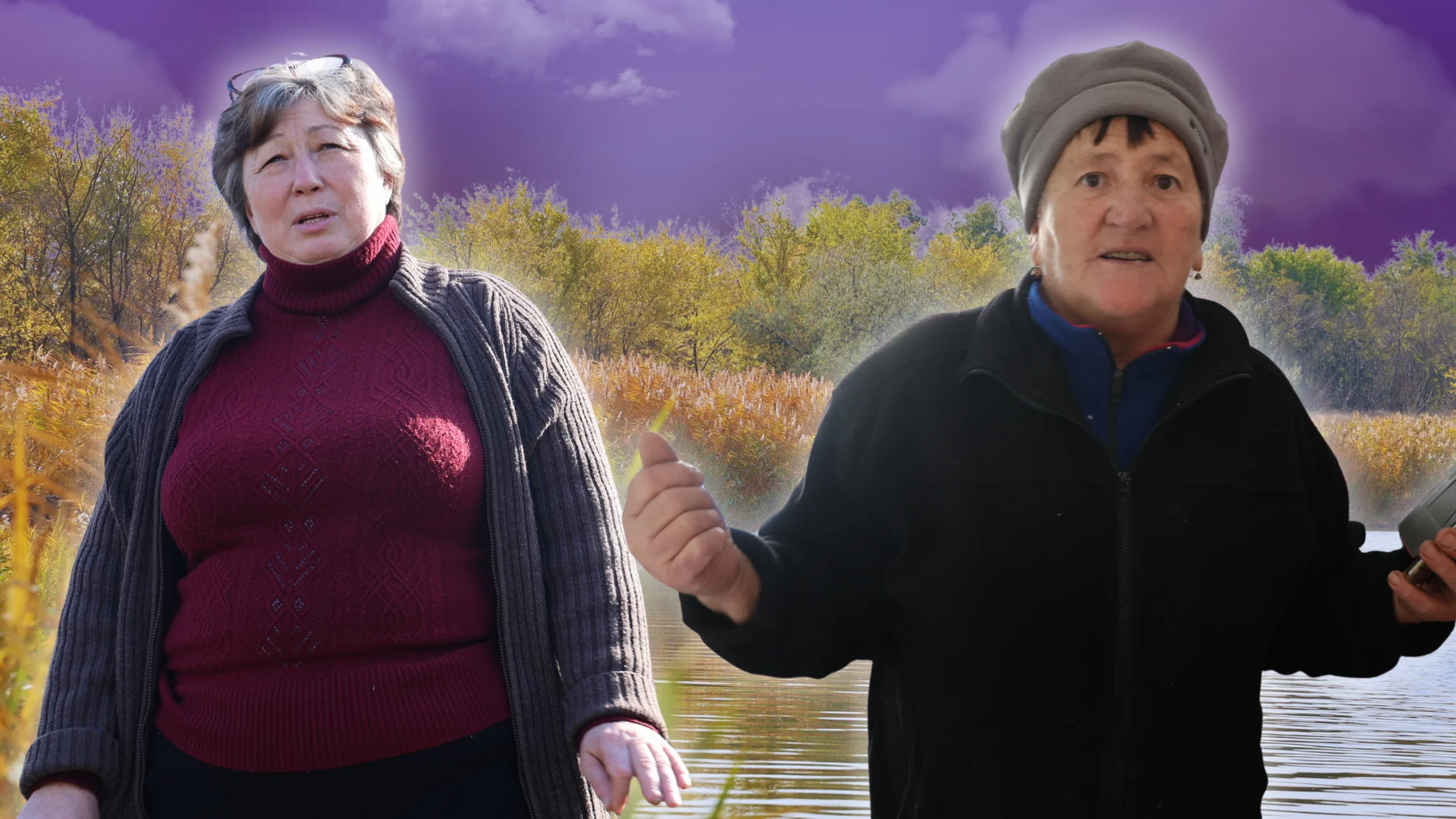
Various reference sources state that the population of the village Novogrednieve of the Kalynivska hromada, Beryslavskyi district of the Kherson region is a little more than 200 people. However, Natalia Muravchuk, the starosta of the Blahodativka starosta district, on whose territory Novogrednieve is located, says that for a long time there have not been many people living in the village. Now – 56.
Even the war did not significantly affect the population. Some left the village, some went to fight. Unfortunately, there are also casualties. But conversely, some residents of destroyed villages and dangerous territories of the Kherson region have chosen Novogrednieve as their new place of residence.
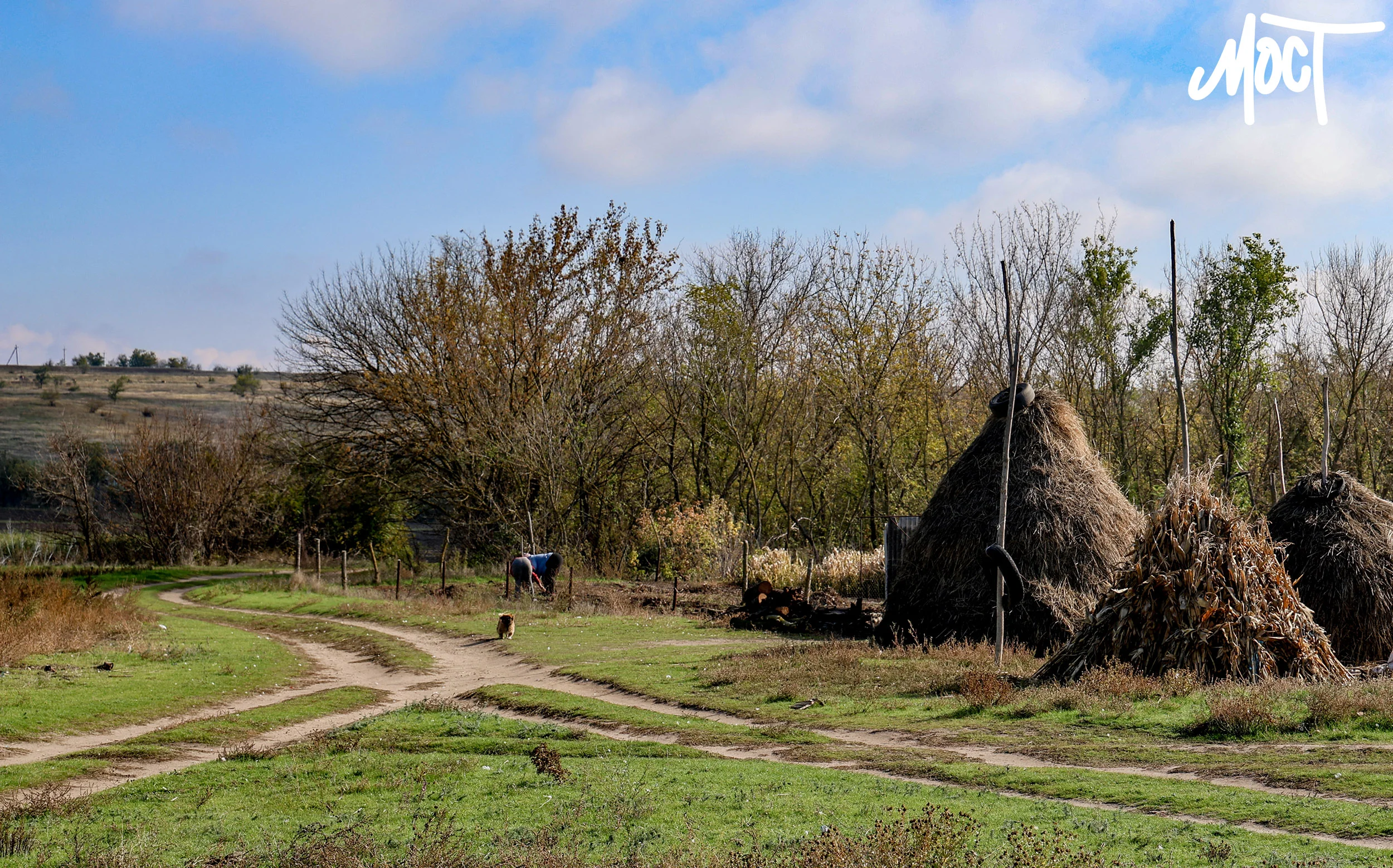
Founded at the end of the 19th century, the village throughout its history was a place where people lived calmly, measuredly, and with dignity. That is why they loved their small homeland. And now Novogrednieve embodies that kind of life, strange as it may be in current times.
There is fish, but no one to fish
“Our fishermen used to catch carp of 6–8 kilos, and silver carp up to 20 kilos and more”, – says Natalia Muravchuk.
We approach the fishing spots equipped on the bank of the Inhulets River. We ask the starosta whether the war has affected the amount of fish in the river.
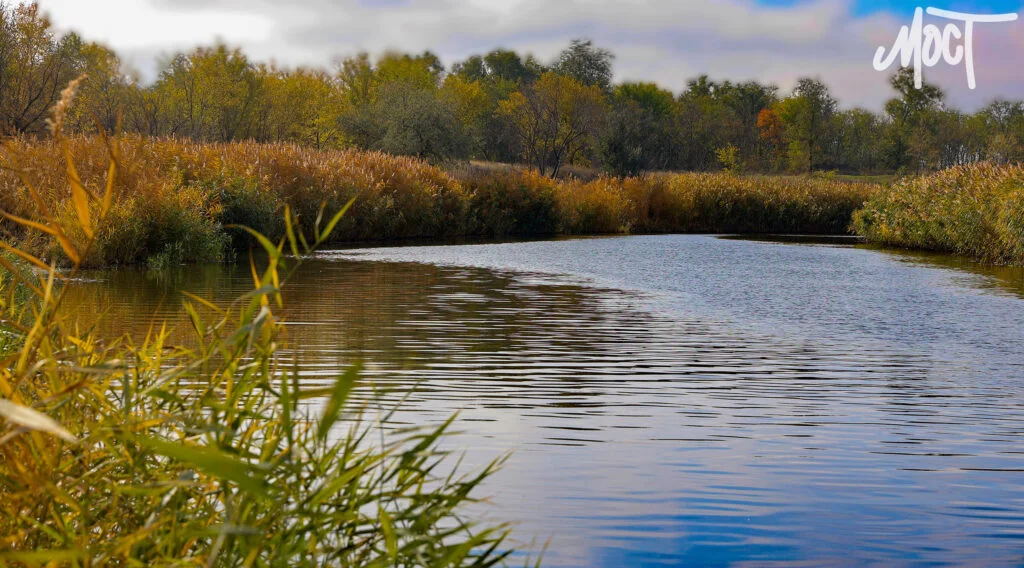
“It did. There used to be more fish. There are also fewer fishermen”, – replies the starosta.
On the bank we see a fisherman – an older man.
“They brought the fish inspection to you”, – the starosta jokes, addressing him.
The fisherman, unhappy with photo and video shooting, says: “Maybe you shouldn’t film? I’m not photogenic”.
But curiosity and the desire to talk to new people take over.
“Viktor”, – he introduces himself.
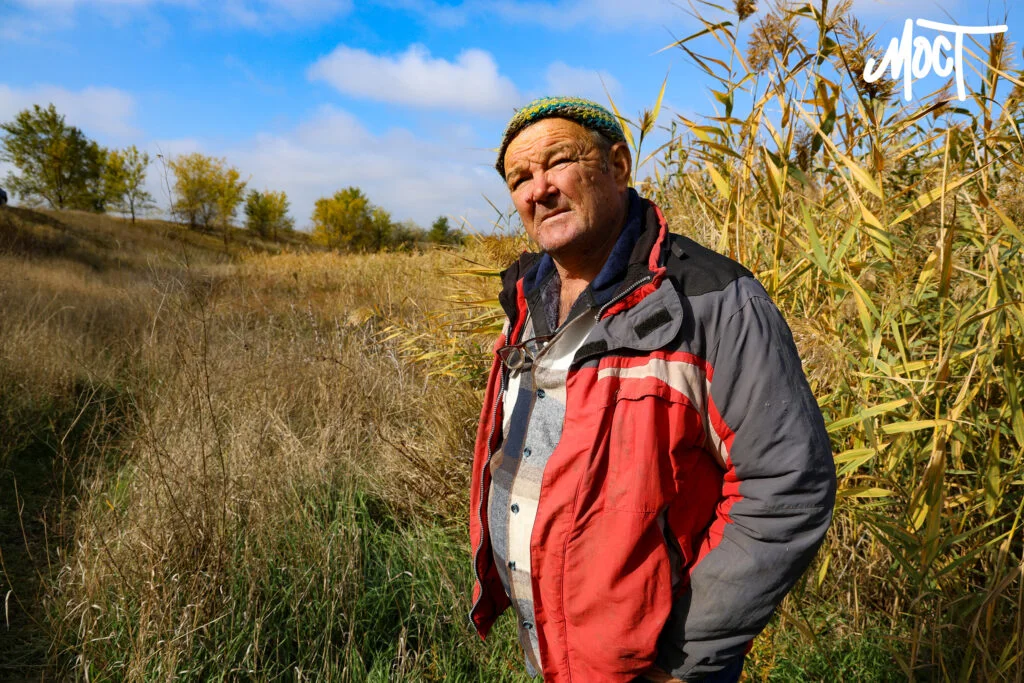
He says that the fishing this time was unsuccessful: the fish bite poorly. And usually local residents catch crucian carp, carp, grass carp, and silver carp in the Inhulets.
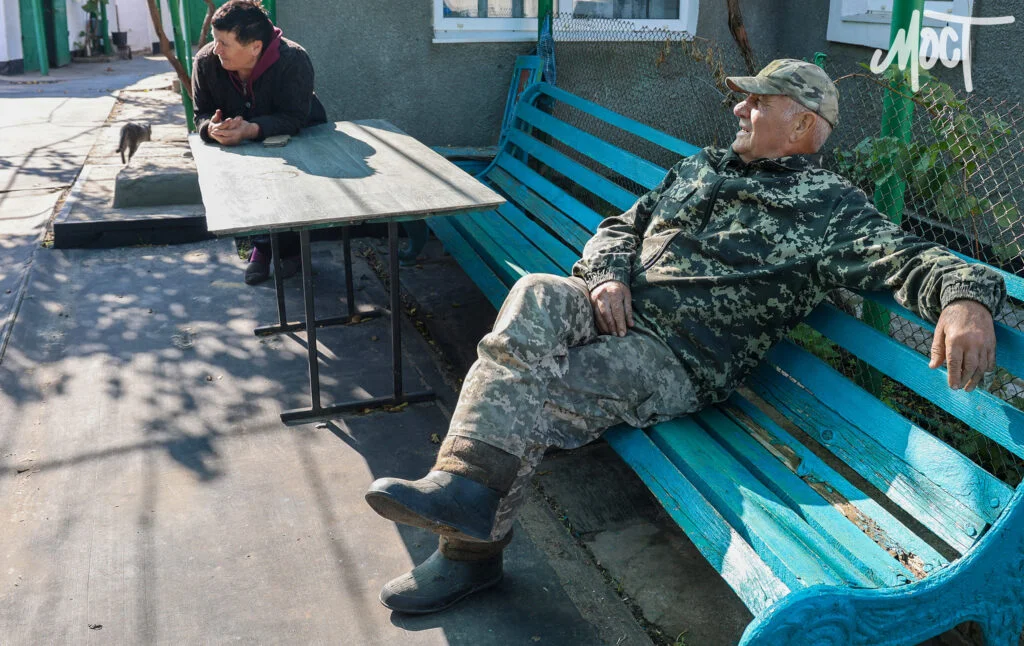
Viktor is from Blahodativka. In response to a question about life he answers: “We live on what the charities help with. They bring us humanitarian aid. They bring drinking water. Thanks to the starosta, she constantly looks for sponsors. We grow something in the gardens. Some work for local farmers. And we, the pensioners, sometimes do something: I help someone to re-roof or do something else”.
Now the Inhulets is mostly fished by local pensioners. There were few working-age men in these parts even before. And lately…
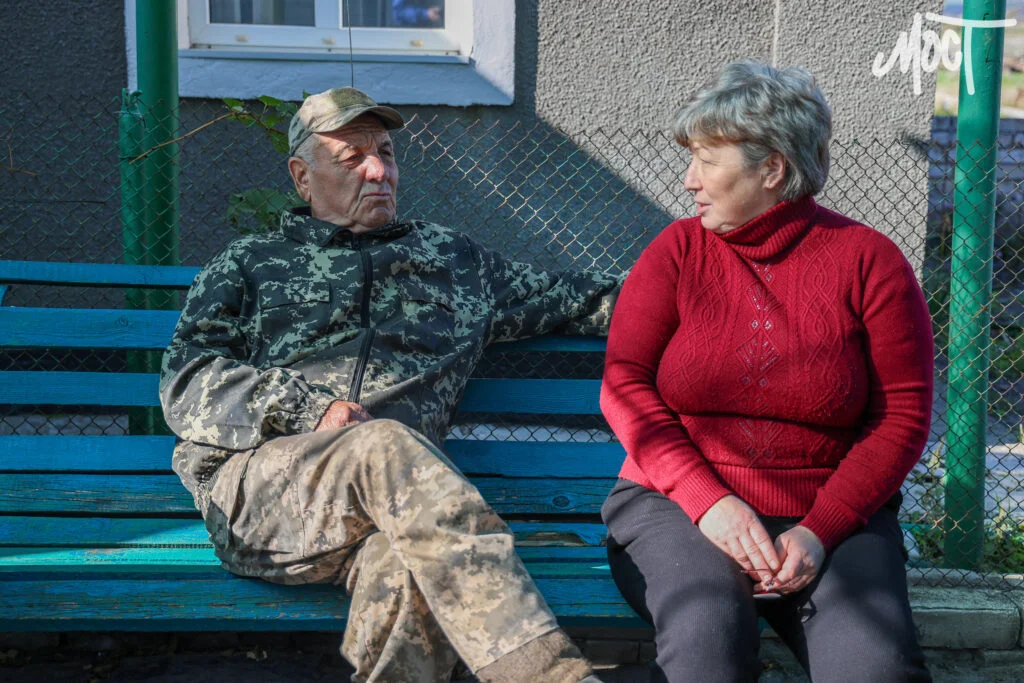
“In our village, – says Natalia Muravchuk, – the majority of the population is of pension age. Therefore there are not many mobilized to the Armed Forces of Ukraine. And among them there are the dead, there are missing persons. There are also those who are in captivity. We really want them to return home. Actually, we want everyone to return with victory”.
“Displaced people are coming to us”
Unlike many villages in the right-bank part of the Kherson region, Novogrednieve looks fairly good, although it has “wounds” left by the war: here and there on the streets you can see overgrown remains of buildings destroyed in 2022.
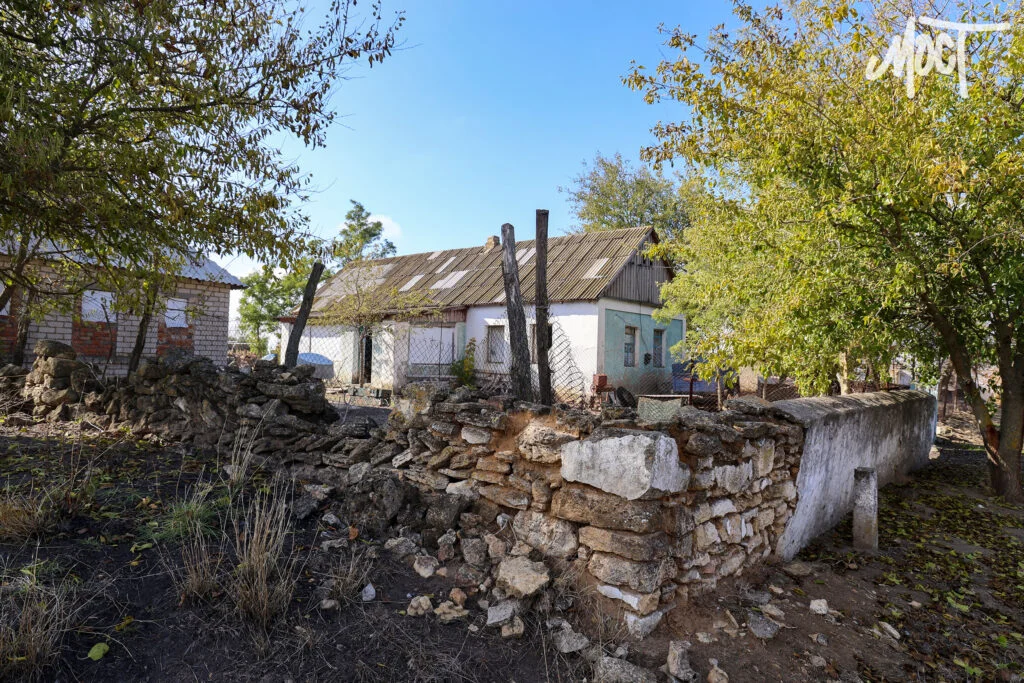
The starosta says that this village, like others in the Blahodativka starosta district, received significant assistance both from the state and from charitable organizations.
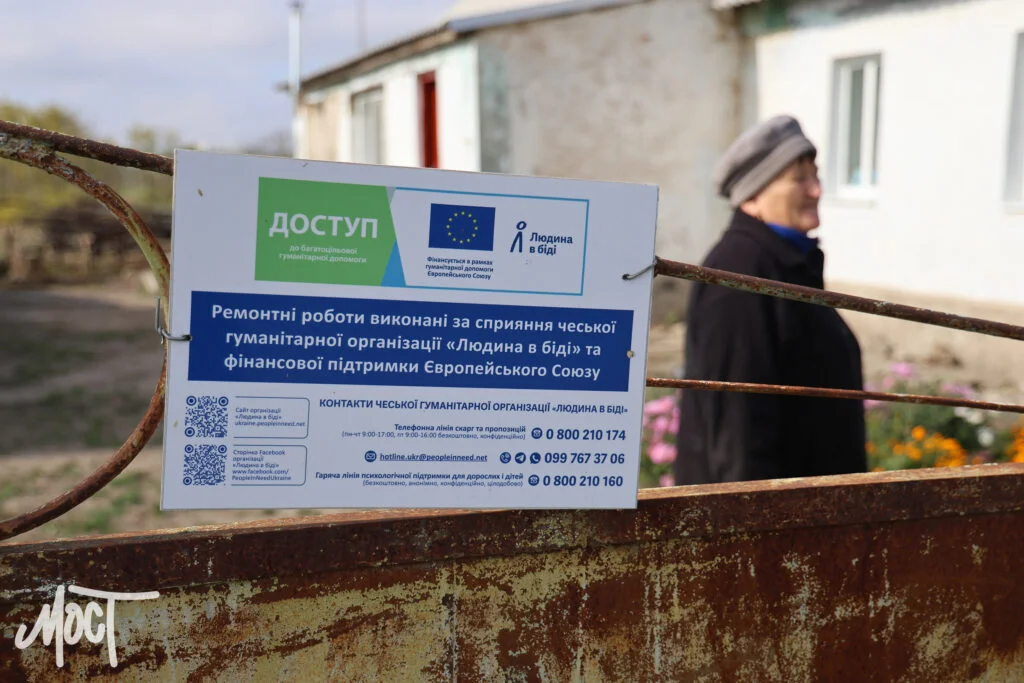
“Thanks to such help people repaired roofs, installed windows and doors”, – says Natalia Muravchuk and admits that in October 2022 after liberation from the Russian occupation, which lasted almost eight months, it was hard to believe that the destroyed buildings could be restored even in the foreseeable future.
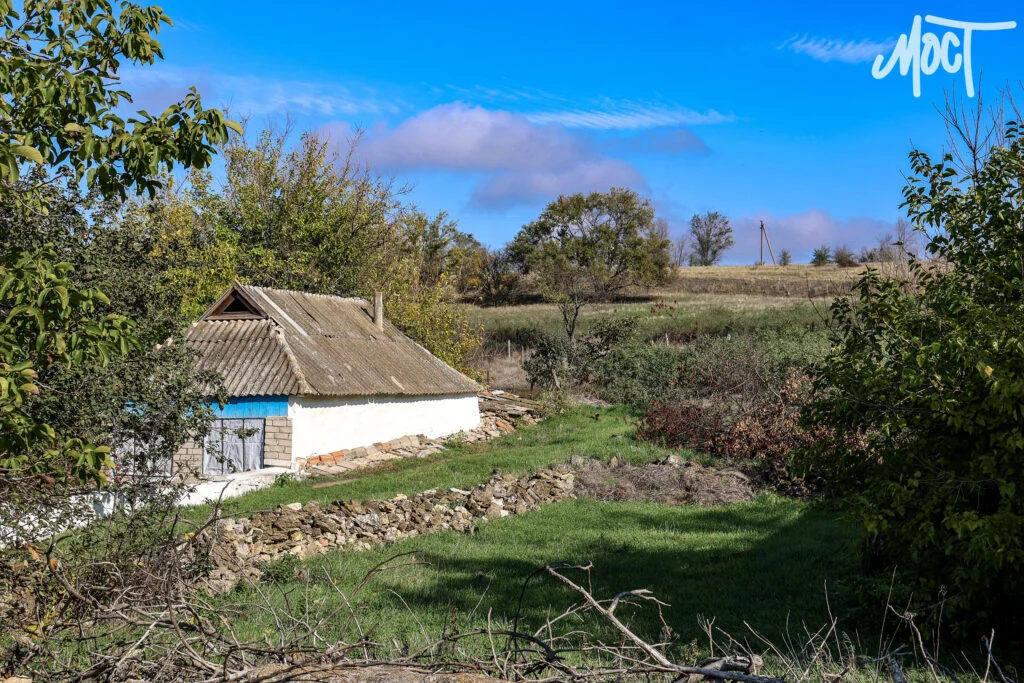
“We thought, – says the starosta, – the war is ongoing. We thought it would not be about us in such a situation. But people received help both from the state under the eRecovery program (єВідновлення), and from Ukrainian and foreign charitable organizations. In particular, from Solidarity, ZOA in Ukraine, ‘Lyudyna v bіdi’ (People in Need), ADRA, the Spadshchyna Charitable Foundation. Recently the volumes of aid have significantly decreased, but that is understandable. There are settlements that need help much more than we do”.
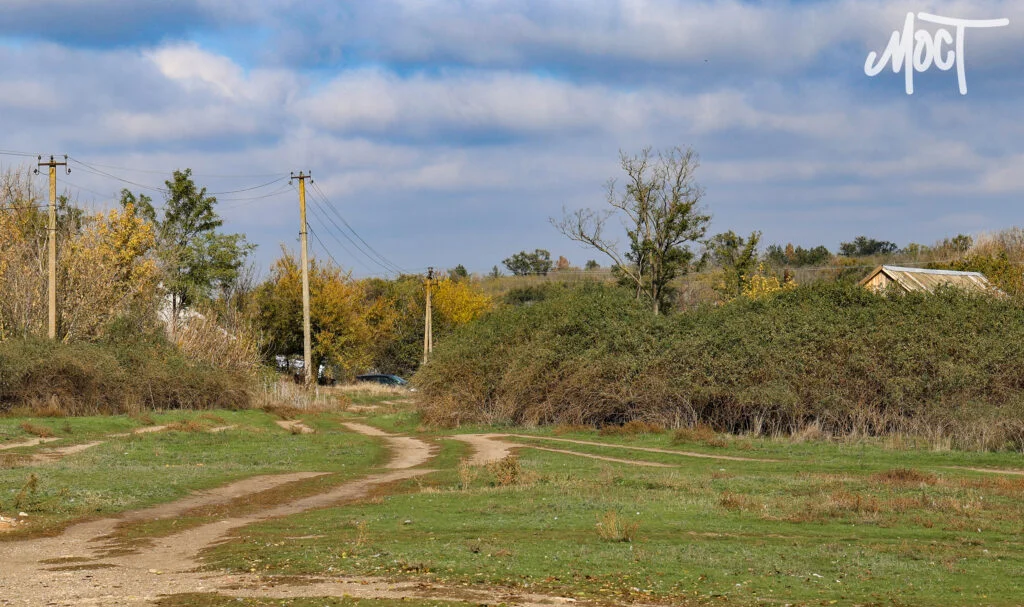
Natalia Muravchuk says that now the situation in Novogrednieve is such that the village has become attractive to people forced to move from destroyed settlements of the Kherson region or from dangerous territories.
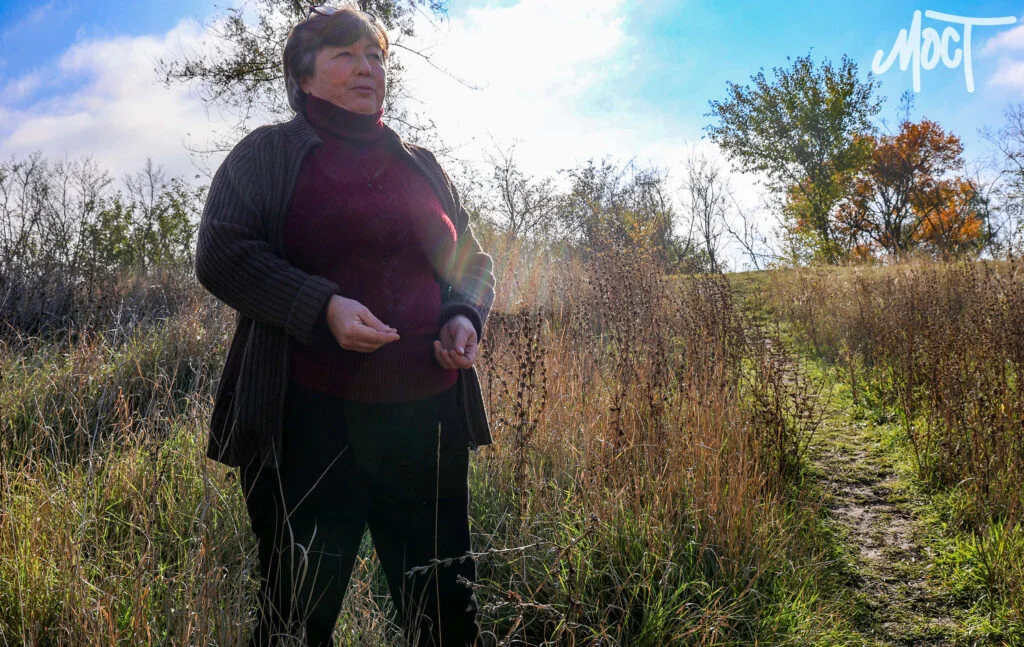
“Displaced people”, – says the starosta, – “take vacant houses and settle there. We help as we can to get them back on their feet a little. These are residents of the Kherson region who do not want to leave the oblast. There are people from Beryslav, from Burgunka, from Tyaginka. For many of them their own housing is destroyed. Some of these people will probably receive housing certificates and may leave. And there are those who have even rebuilt damaged houses and, I think, are intent on living here”.
Tetyana, her husband, daughter and granddaughter moved to Novogrednieve at the end of March 2025. Tetyana and her husband lived in the village of Olhivka, the daughter and granddaughter in the village of Vyrivka.
“Olhivka, – the woman says, – was completely destroyed, the Russians leveled it to the ground. They shelled it from November 2022. We lived in such conditions for three years. We hid in the basement. We miraculously survived when a strike drone hit the house. Then we moved to my daughter’s, but after two months we were forced to leave even from there with the whole family. Now Vyrivka is almost completely destroyed by Russian artillery and drones. And my classmate lives in Novogrednieve. He is the one who helped us find the house where our entire family lives now. They help us settle in. Everything is fine with us”.
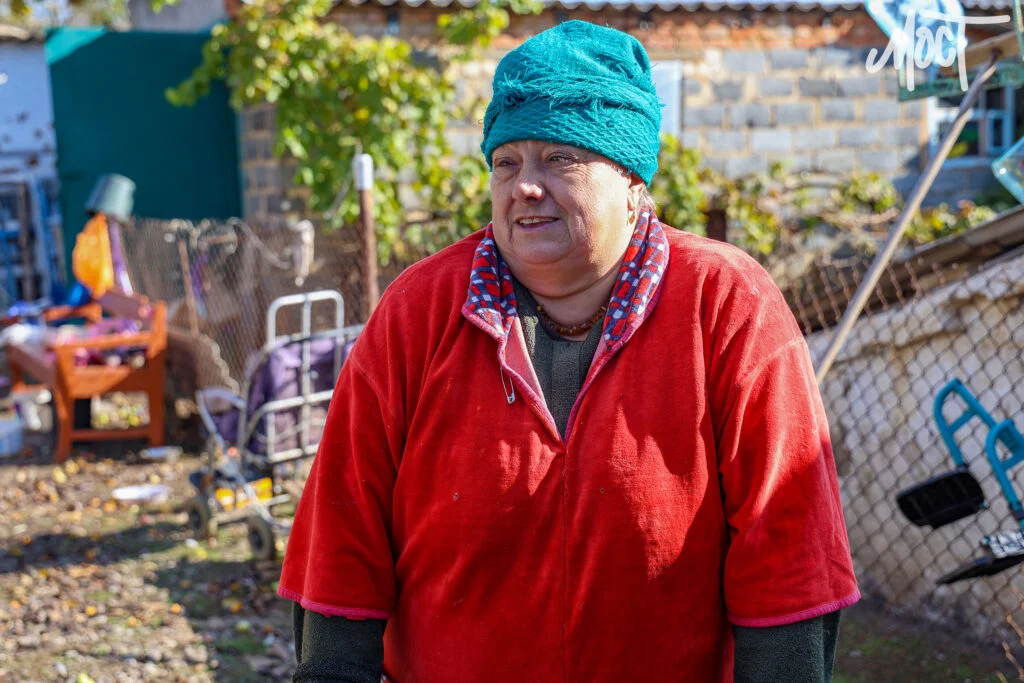
According to Tetyana, neither she and her husband nor her daughter and granddaughter have anywhere to return. The option of moving to another region is not being considered due to a difficult financial situation: the older couple live only on their pension, the daughter has health problems, and the granddaughter has a disability. And they do not want to leave their native land.
“Olhivka”, she says sadly, “was a beautiful village on the riverbank. When the Russians came in 2022, they were amazed. They said: ‘Can people live so beautifully? Can villages be as beautiful as yours?’ When they first entered our houses they said: ‘How is this possible? In every house we enter there are toilets, carpets, shower cabins, the yards are paved!’ It was just strange to them. But we are a hardworking people. What we wanted, we had. We worked, cared, prepared for retirement with my husband so that everything would be nice. Our house was big, beautiful… It was”.
Tetyana says that Olhivka has effectively not existed since August 2024, when the last residents were evacuated from there. She admits that she does not believe in the village’s reconstruction because there is no one left to live there: “According to official data 860 people lived in the village, but in fact more than a thousand, taking into account those who often visited their parents or had a house and used it as a dacha. Everyone scattered. Many people are in Kryvyi Rih, also in Cherkasy, Chernivtsi, in Pryluky… And many other places. And some are abroad. We keep in touch with our fellow villagers, we call each other. Our village used to be friendly. Where can our family run to? We are on our land”.
Vira Serhiivna left Kherson in May 2022 and has not visited the city since. She says she left because she could not bear to see the Russian occupiers, to tolerate them feeling like masters. At first she lived in Odesa, but life for a lone pensioner in a big city is not easy. Therefore she decided to move to Novogrednieve, where a cousin sister and brother live. Relatives helped find and arrange an empty house where the woman will live at least until spring. And maybe she will continue to live here if the situation in the regional center does not improve enough to allow safe presence in the Korabel (Ostriv) neighborhood.
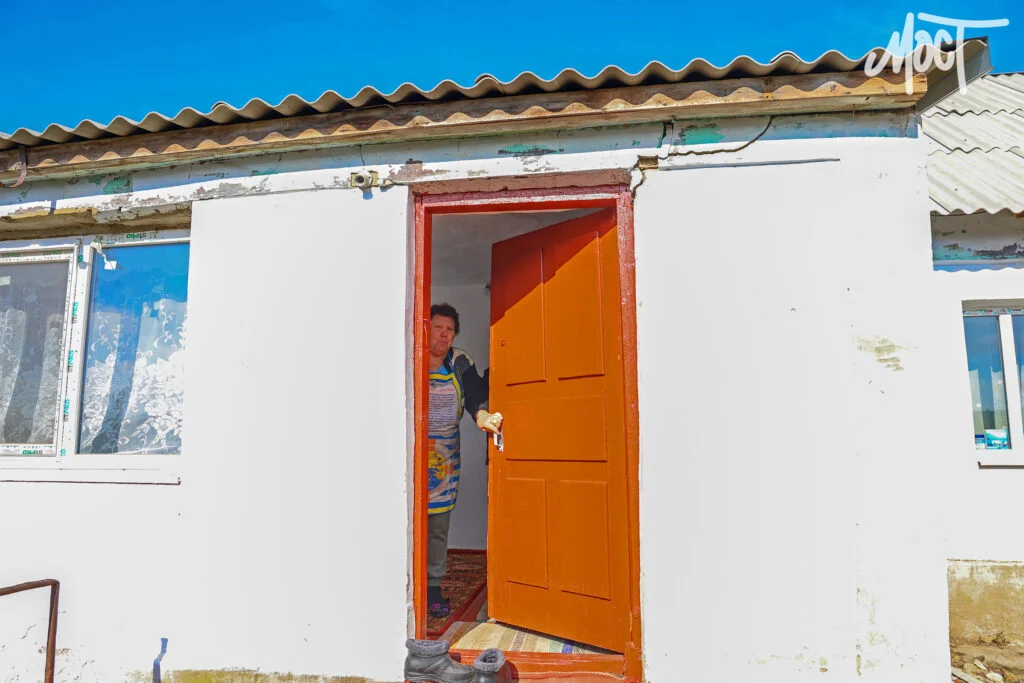
The yard of the house where the displaced woman from Kherson, who has become a resident of Novogrednieve for an indefinite time, now lives does not look like the yard of temporary housing. It is clean, well kept, with many flowers: marigolds, roses, chrysanthemums, even a garden cactus.
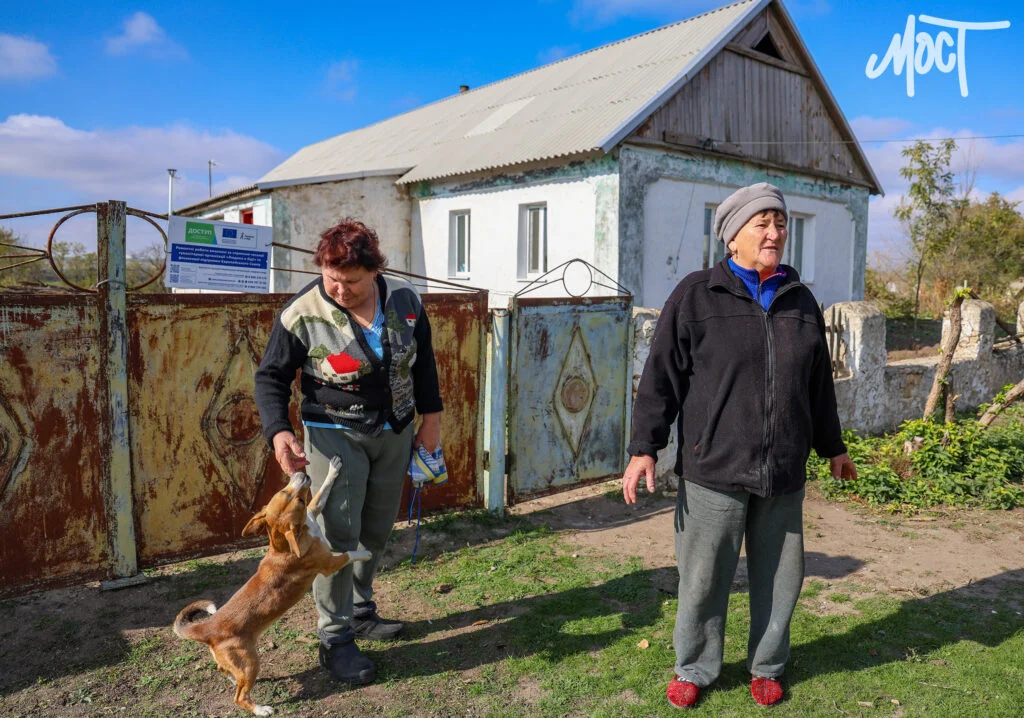
“In spring I plan to plant more flowers”, – says Vira Serhiivna. “And although I like working the land, I plan to return to Kherson. Although I don’t know when I will be able to do that”.
While in Novogrednieve, we could not help but visit Mykola Sokolenko – a local who in 2022 hid and cared for an injured Ukrainian serviceman.
Back then, in July 2023, the house of the Sokolenko couple – Mykola and Olha – was terrifying to look at. It had been so badly damaged as a result of the flood. After the destruction of the Kakhovka HPP dam, water rose in several rivers, including the Inhulets, which heavily flooded Novogrednieve.
More than two years ago MOST correspondents spoke with Mykola and Olha when the couple was at least trying to put in order the belongings they managed to save from the heavily damaged house.
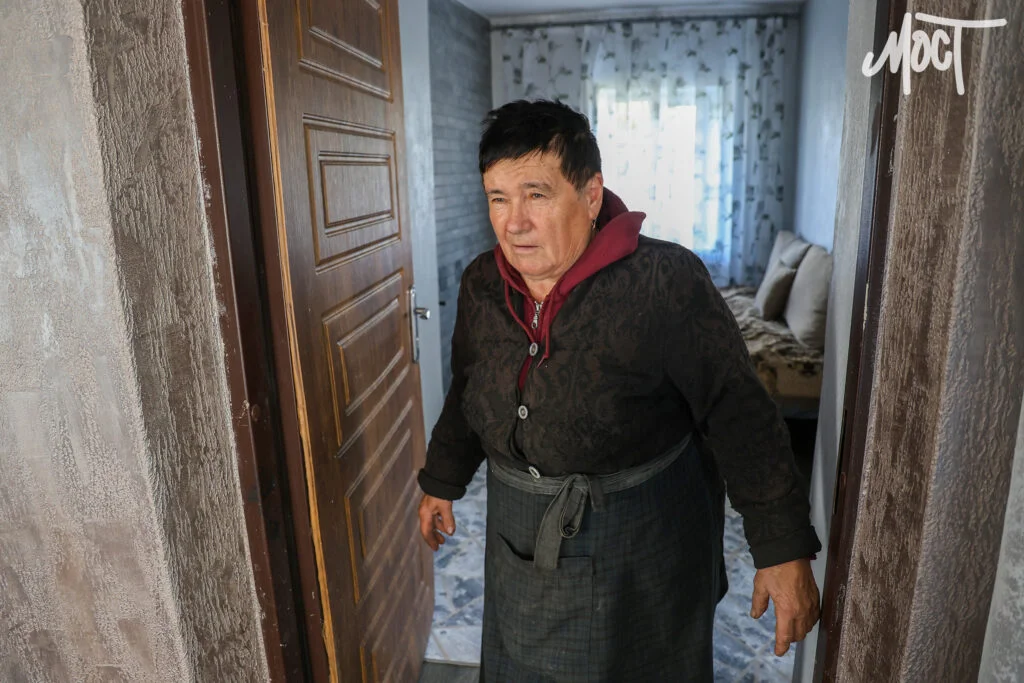
And now Olha Sokolenko shows the almost repaired house: “There is still some work to be done, but look how much has been done. The state allocated money under the eRecovery program, and charities helped: they re-roofed us”.
On the house where the couple lives there hangs a Ukrainian flag – faded and frayed by the wind
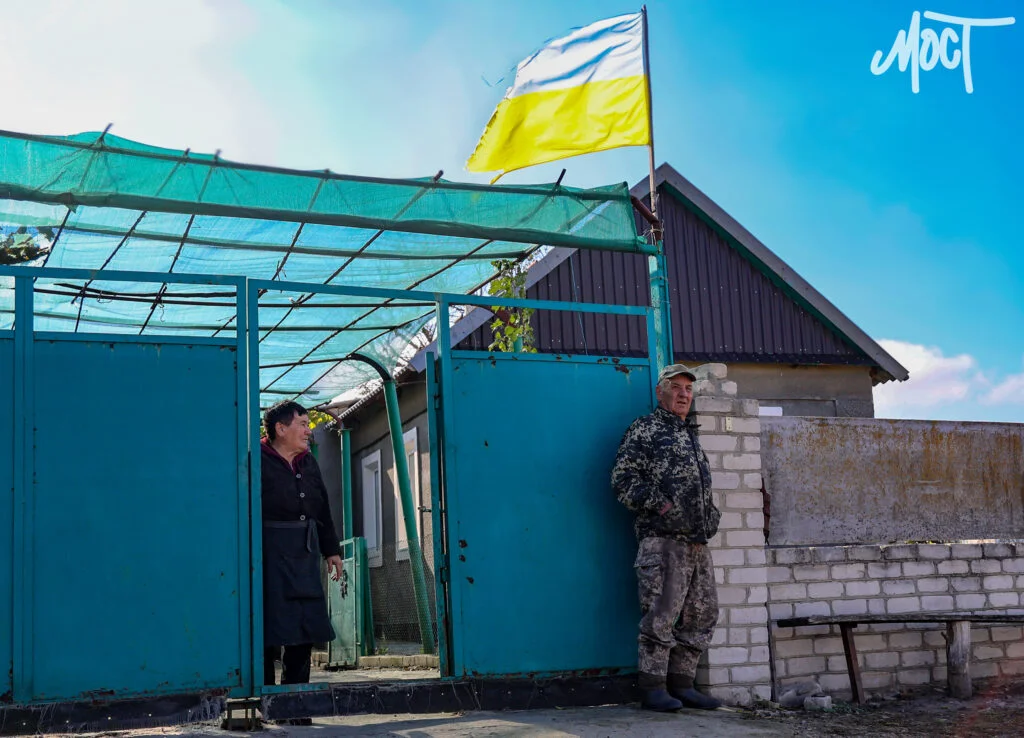
“There will be a new one there today”, – says the homeowner.
Waiting for fuel
Tetyana Mykolaivna, a resident of Novogrednieve, shows her yard: “It was smashed here. It was damaged here. The roof was blown off there. And here – the summer kitchen. I would repair it, but I never get around to it. And there is no resource left”.
However, the main house and the main outbuildings the family restored thanks to state assistance and charities. But damage to property is not the greatest misfortune of this family.
In November 2022, shortly after the liberation of Novogrednieve from Russian occupation, during enemy shelling Tetyana Mykolaivna’s husband was seriously wounded. Ukrainian soldiers saved him, among them was a doctor. The soldiers quickly provided first aid to the wounded man and, despite the shelling (the front line then ran near the village), took him to the town of Bereznehuvate in Mykolaiv region, to the hospital.
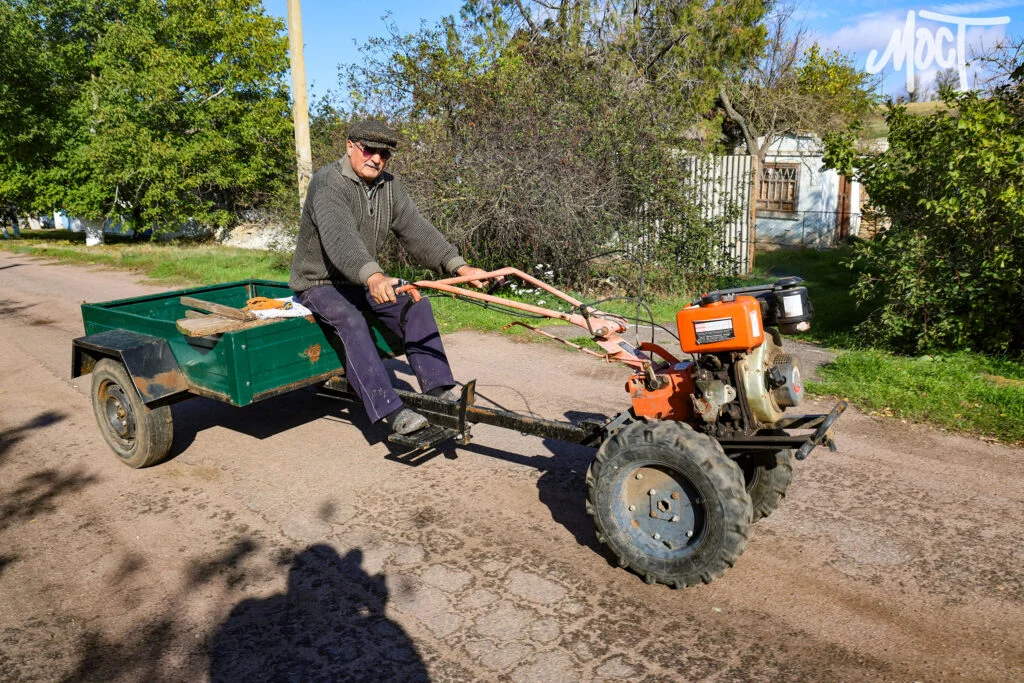
Now Novogrednieve is preparing for winter, and the most acute problem is fuel, because the village is not gasified. Many residents hope for help from the state and charities. Because this small village is not affluent.