

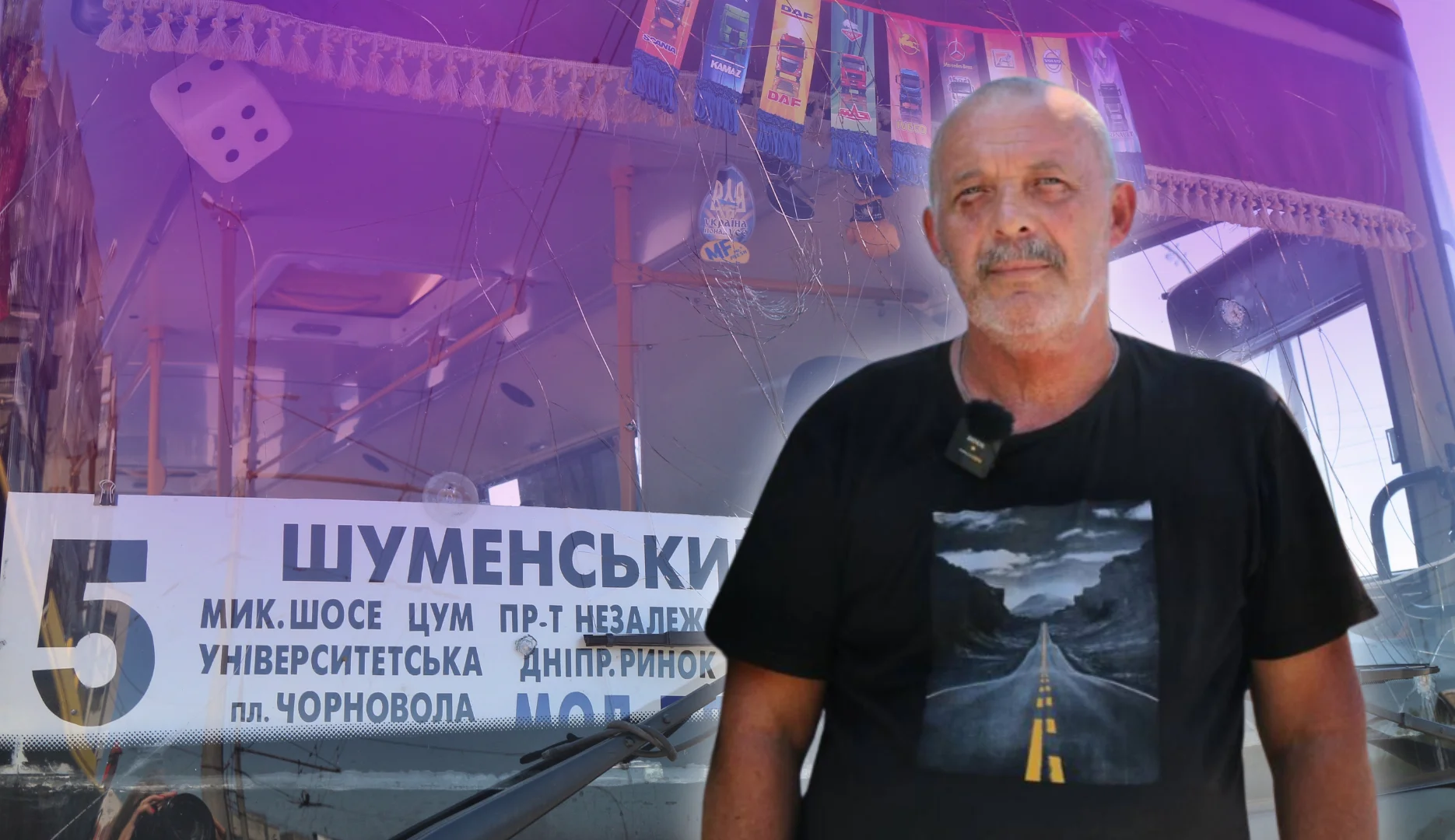
From the Dnipro market to the final stop (which is now – near Pavlo Dubynda Square) the Kherson route No. 5 bus most often travels empty of passengers. Only occasionally it brings two or three people there, who then walk to the even more dangerous than the Dnipro district neighborhoods Kindiyka and Skhidny (public transport does not go there), to check their homes they left because of constant shelling.
At the final stop the bus does not linger. It picks up passengers if they are waiting, and – as quickly as possible – leaves. Because Dubynda Square and the adjacent areas – although not a “red zone” – are already a very dangerous part of the city. There are usually few passengers here. Lately – no more than five people at the stop, and more often – none at all. And about a year ago residents of Kindiyka and Skhidny used to take the bus from this stop to the city. There used to be many people gathered. Now there are almost no people there.
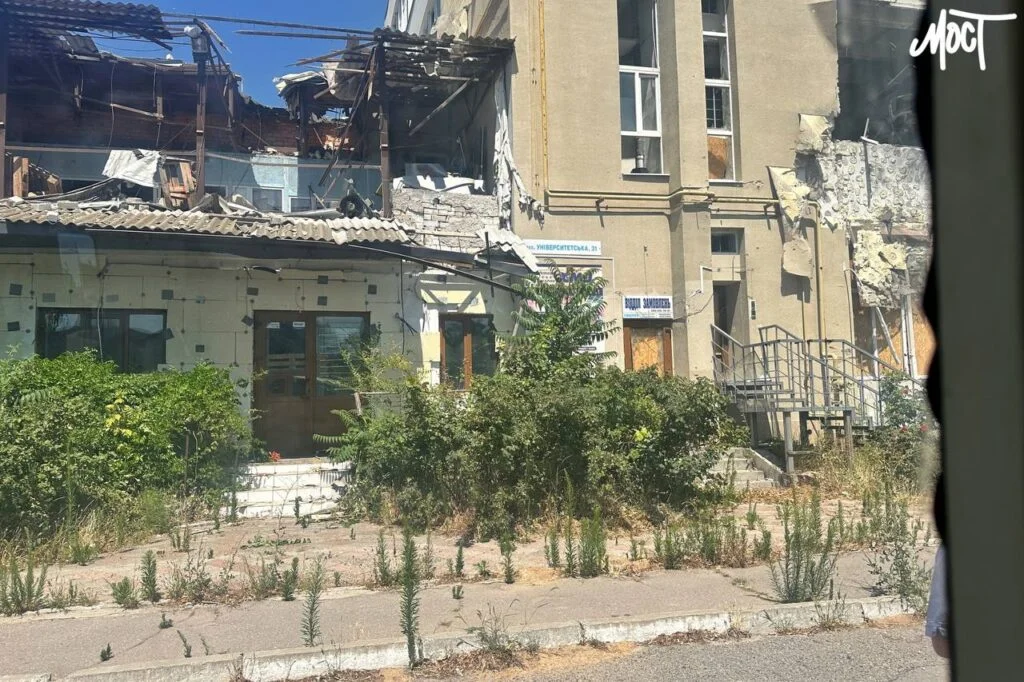
«Notice, on the trees something like cobwebs is gleaming. It’s fiber-optic cable that Russian drones fly on» – says Oleksandr, the bus driver, as we drive along Universytetska Street.
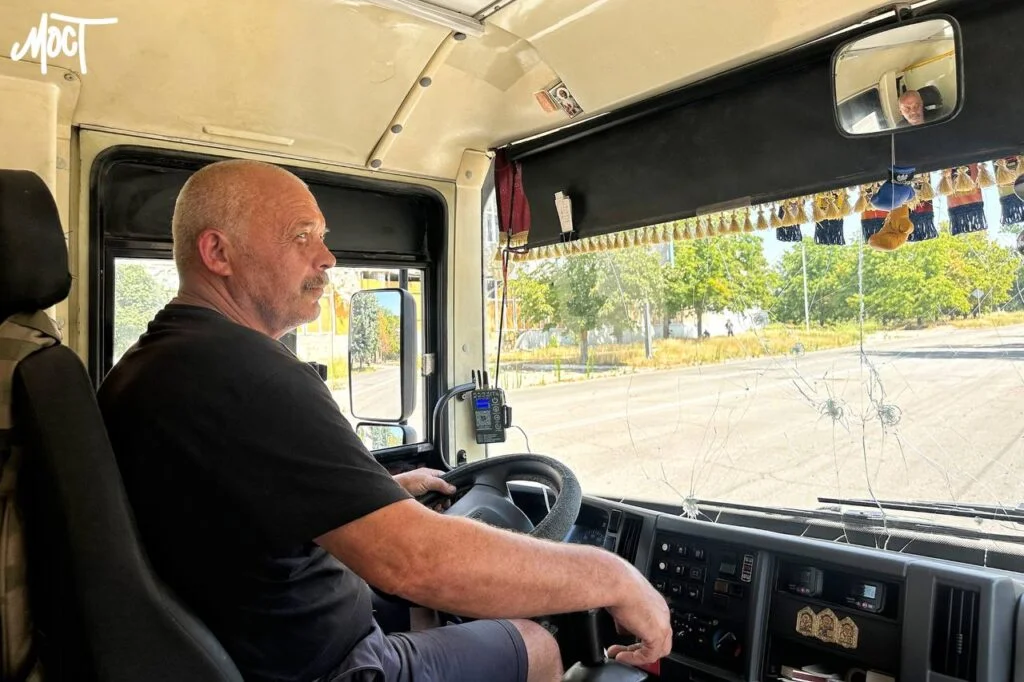
We pass shops and cafes – they have long been closed because these places are dangerous. The shop fronts are boarded with OSB panels. The walls are dented.
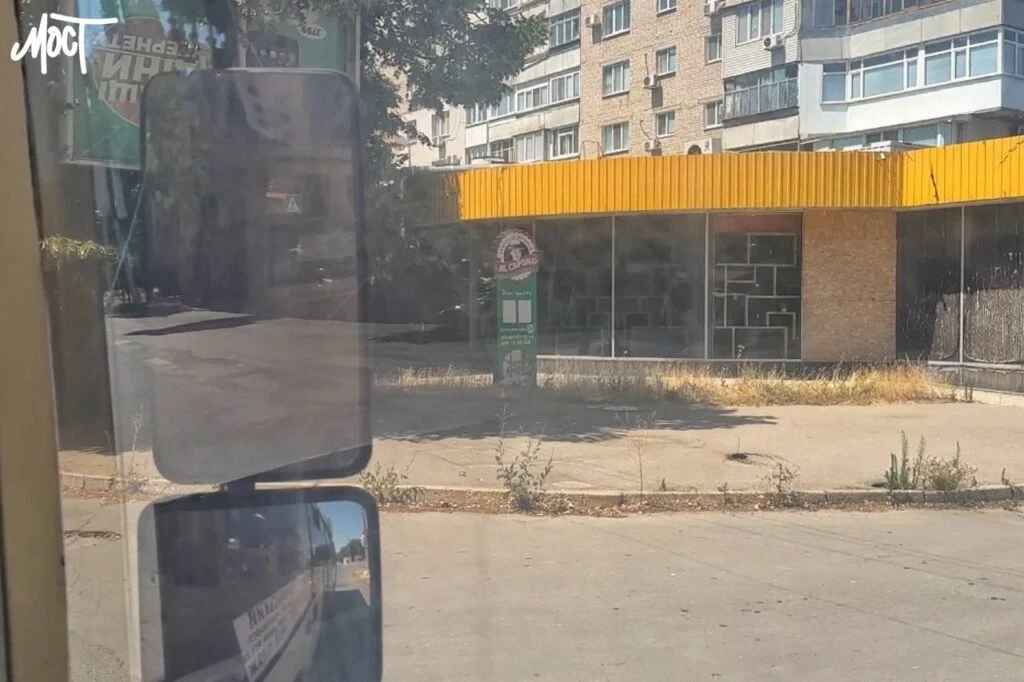
In place of some structures – ruins.
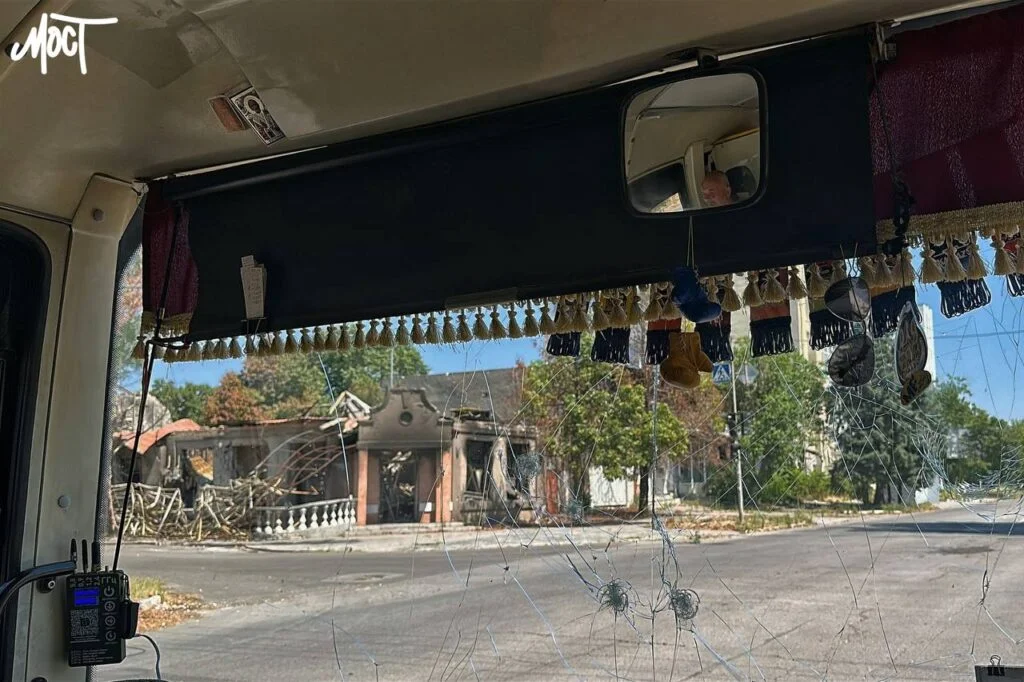
On the roadsides – remains of cars burned during artillery shelling and drone attacks.
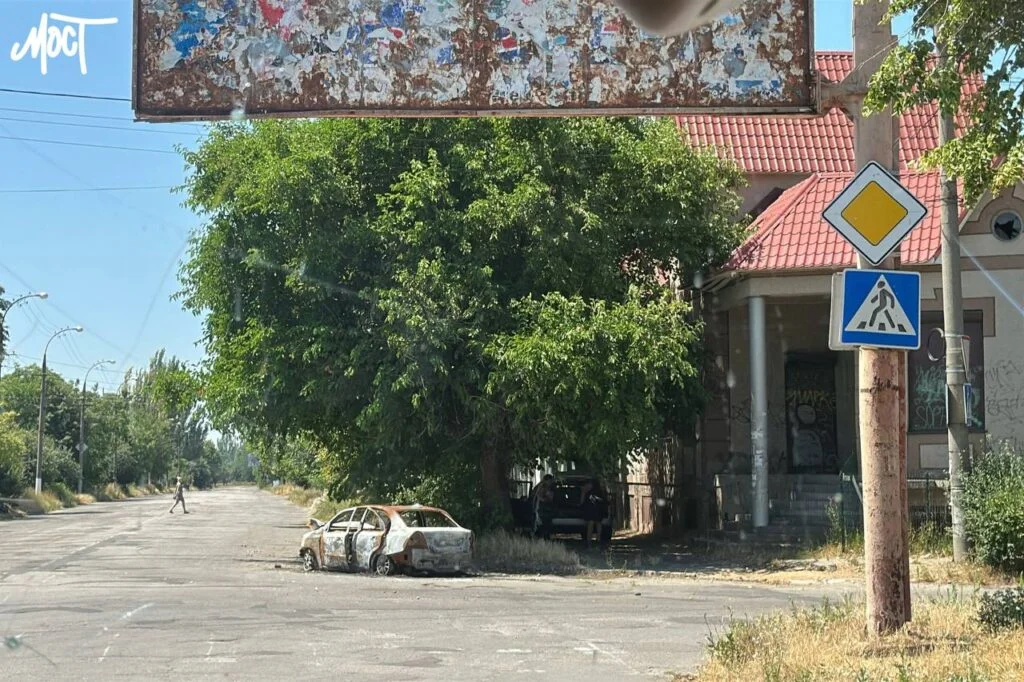
On most residential building windows there are also OSB panels instead of glass.
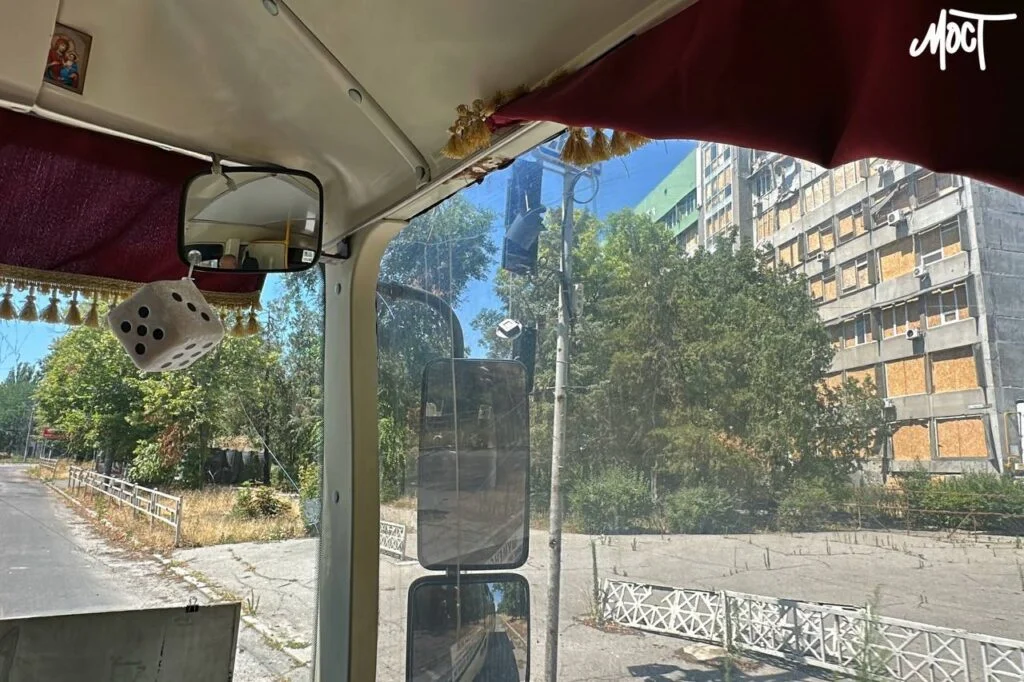
You can drive here for a long time without seeing a single passing car on the road, and not a person on the sidewalk.
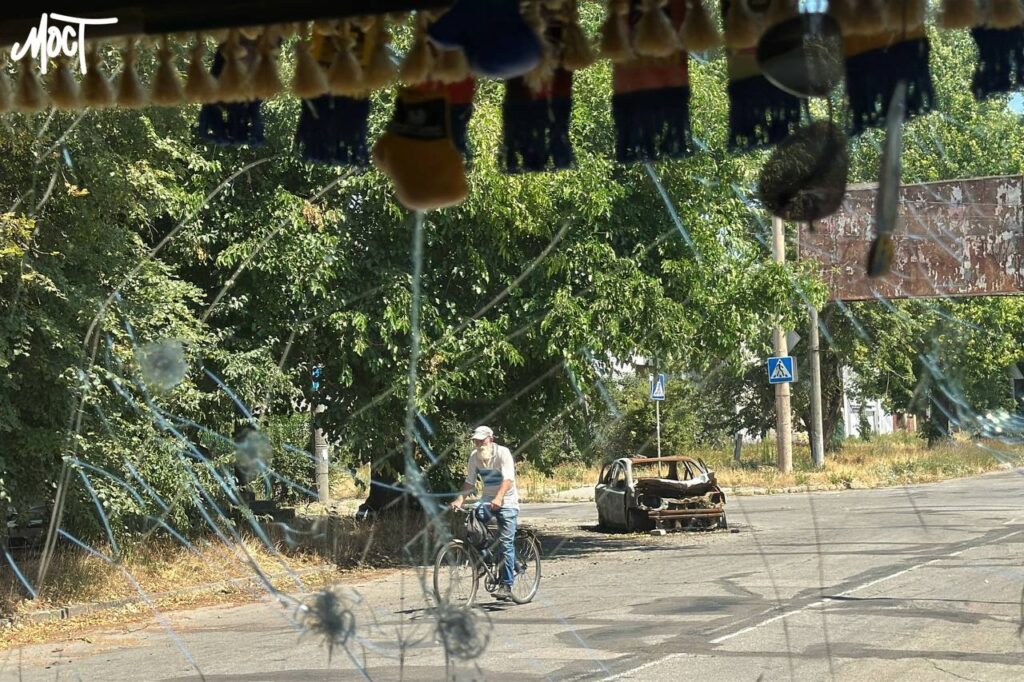
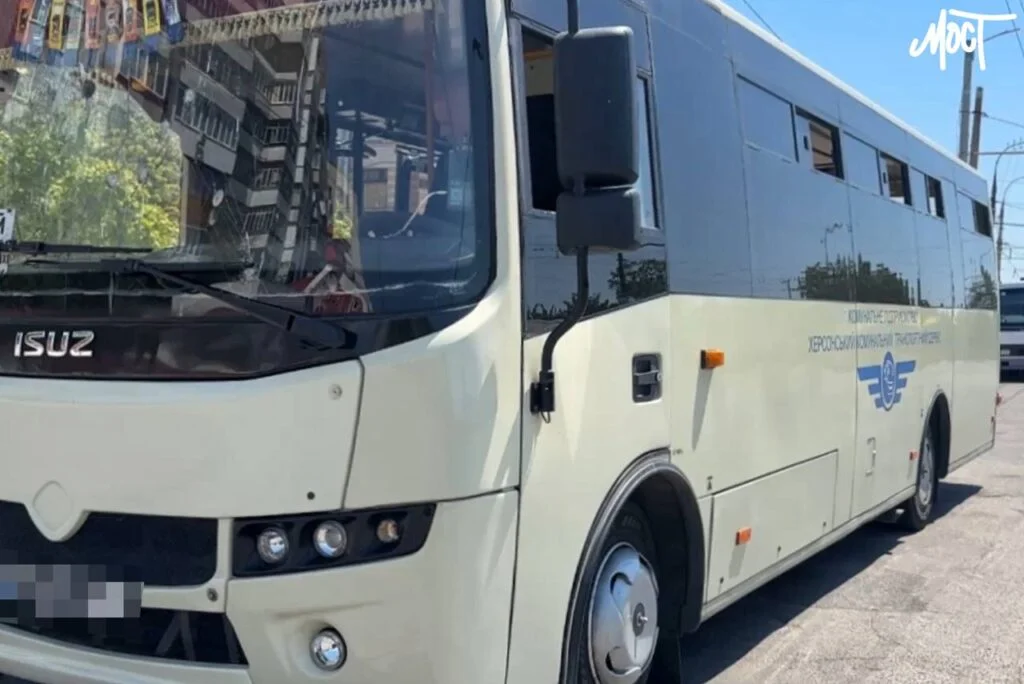
However, Kherson is not a ghost town. According to the regional military administration, about 60 thousand people live in the city. Municipal services are operating, including an integral part of them – public transport. The route network is now formed taking security aspects into account. That is, trolleybuses and route minibuses run only where it is relatively safe. Some routes have to be canceled because of danger.
«In 2024, – Oleksandr recounts, – I worked on the route to Sadove (a village in the Kherson community, a suburb of the regional center, – MOST). They paid extra for that direction. We carried passengers, helped deliver humanitarian aid. But the route was closed on December 1, 2024 after the buses came under fire. One vehicle was very seriously damaged. I was also hit by shelling there, I managed to turn around in time and drive back».
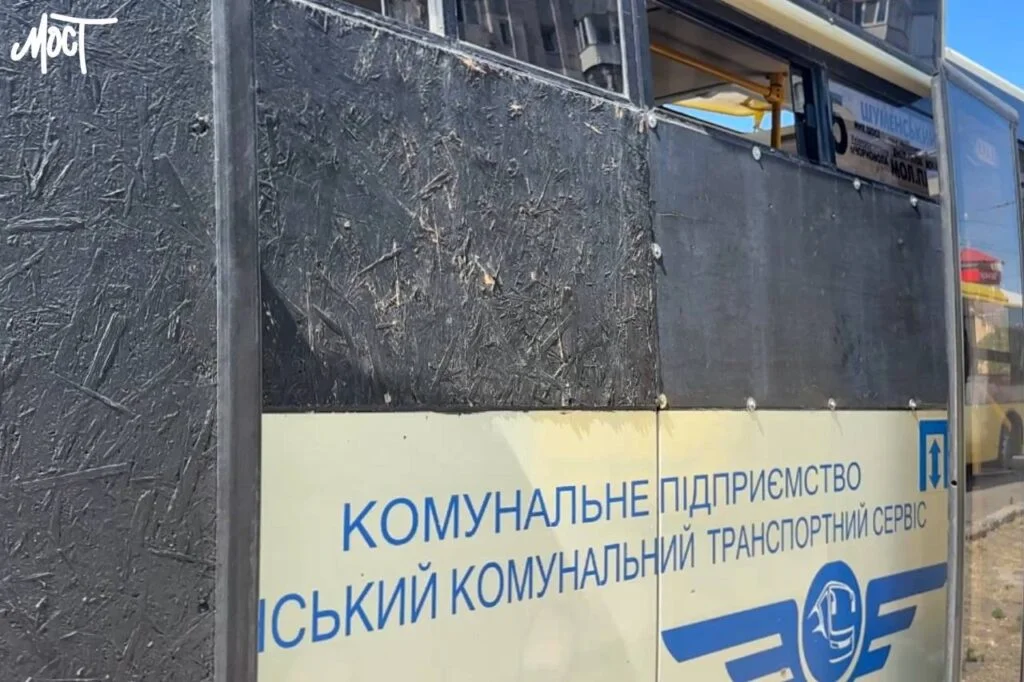
Now route No. 5 runs from the Kherson neighborhood Shumenskyi to the KhBK neighborhood, and not as before to Kindiyka (a peripheral neighborhood of the city) – one of the most dangerous areas of Kherson. It is impossible to drive there not only because of Russian artillery and drones, but also because of petal mines scattered from them, on which several passenger buses have detonated.
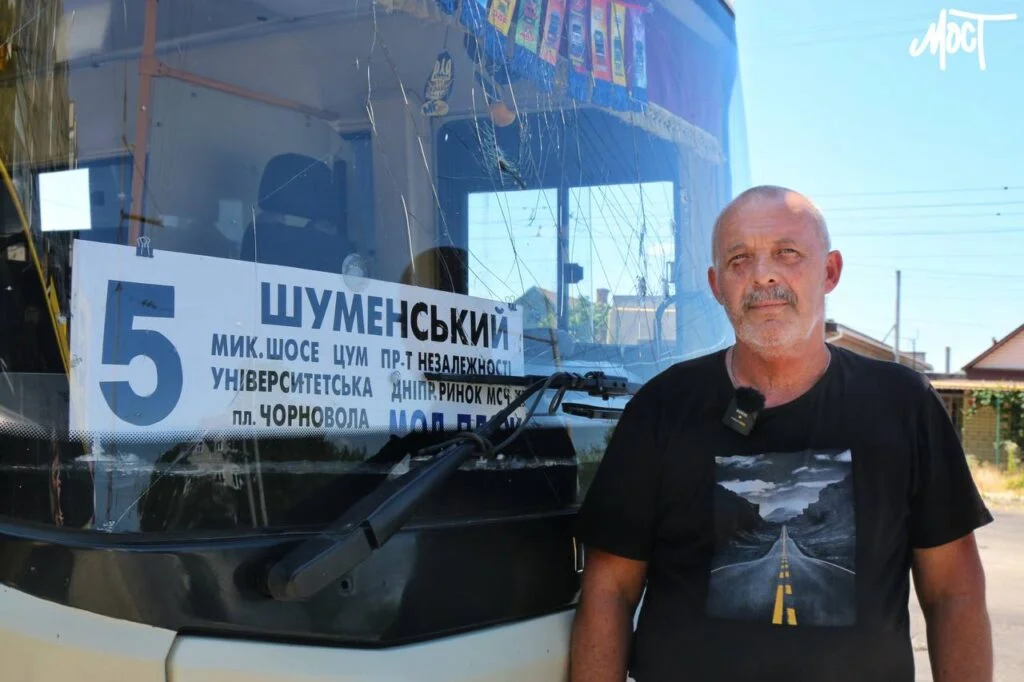
Together with Oleksandr, an employee of the municipal enterprise “Kherson Municipal Transport Service” (KHTS), we ride the route through the dangerous and sparsely populated Dnipro district and central part to the relatively safe Shumenskyi, where by Kherson standards life is bustling.
«In Kherson, – Oleksandr sighs, – danger is everywhere. Only that in some places it is greater, and in others you can still somehow live».
To confirm his words, our conversation is constantly interrupted by the alarming signals of the “tsukorok,” “vanilla sugar” (the folk name of the device, whose prototype resembled a sugar bowl in shape) – a frequency analyzer that notifies about the presence nearby of a reconnaissance or attack drone.
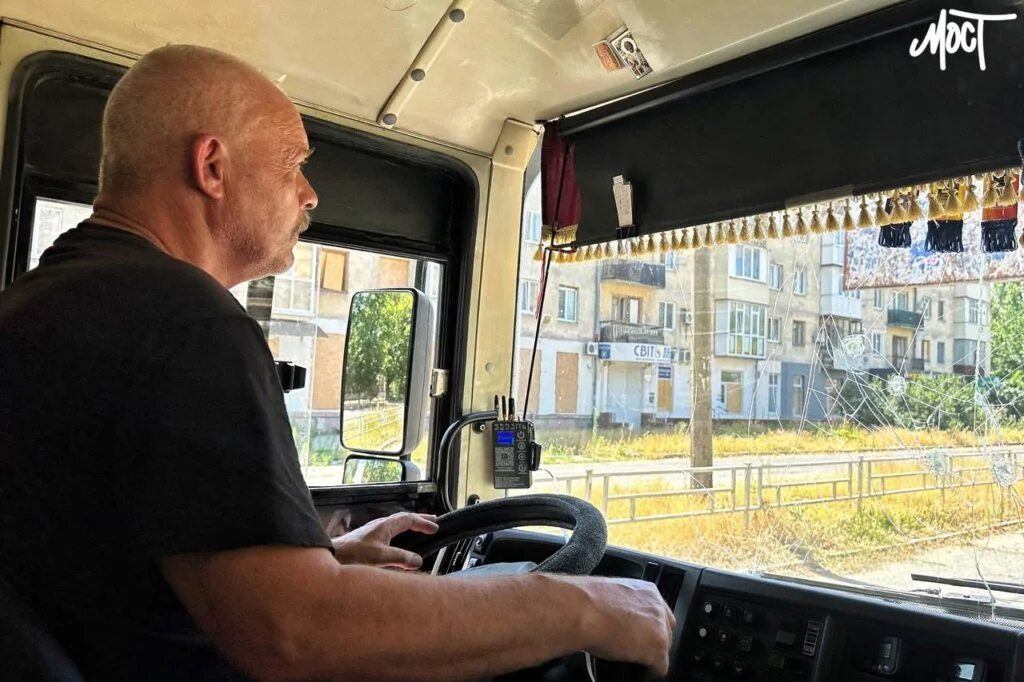
The purpose of this device is to prevent its owner from encountering an enemy munition. And now the analyzer almost constantly beeps: it “reports” which drones are in the air near us and what threat they pose.
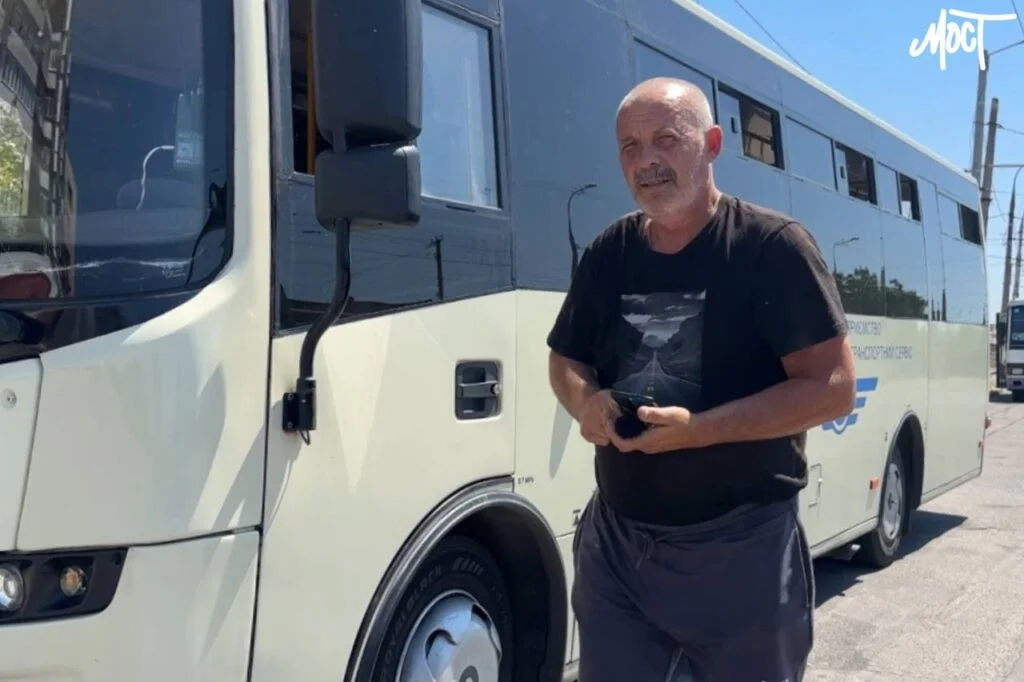
In Kherson the “tsukorok” – an unfailing companion and helper of the minibus driver, although not all drivers have such a device. Without it now, our interlocutor says, “it’s like being in the dark.” He recounts that recently at the intersection of Chornomorska and Universytetska streets the detector warned of an approaching enemy drone. They had to brake. The drone flew on toward Kulyka Street. It flew very low, almost over the bus roof. The driver and passengers clearly heard the ominous buzzing.
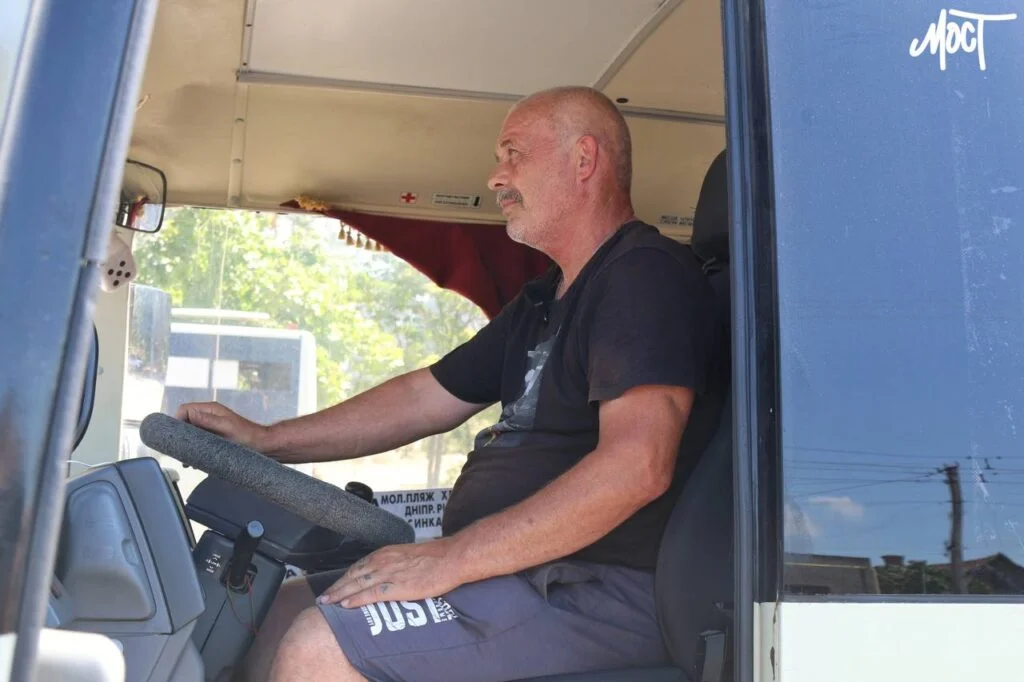
«This is, – says Oleksandr, pointing to his analyzer – a relatively simple drone detector. It only shows the level of threat in percentages, warning that some hostile craft is flying nearby – reconnaissance or attack. But it wouldn’t hurt to have a better detector that intercepts video from drone cameras, because forewarned is forearmed».
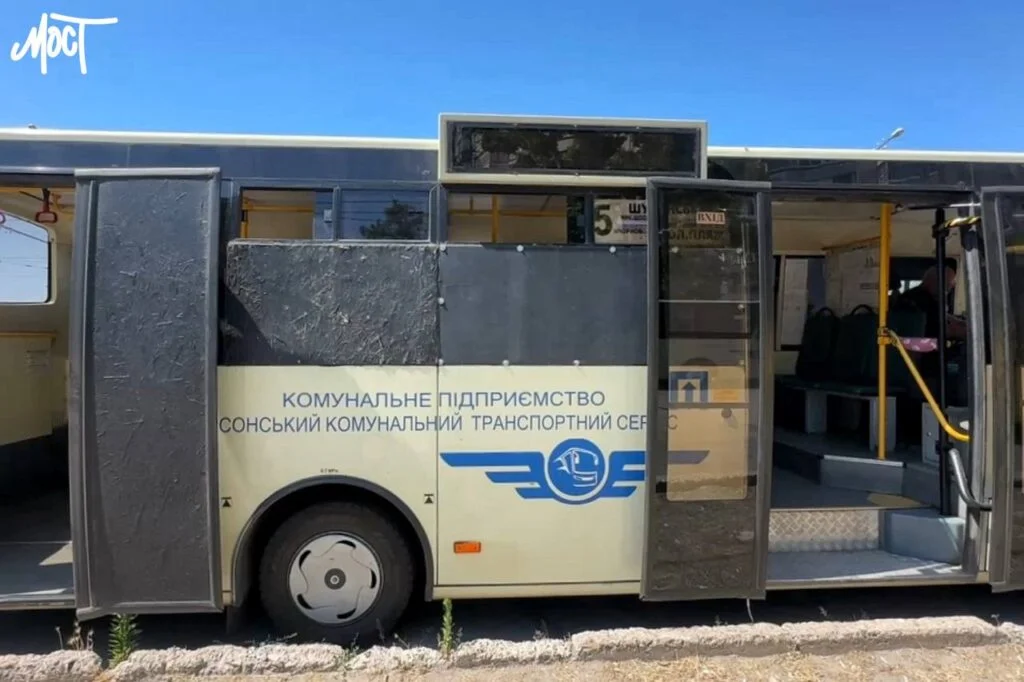
The minibus driver compares himself to a juggler: «I am like a juggler: you have to pay attention to everything. At the same time I watch the road, the mirrors, the passengers, the fares, the threat from the sky and the drone analyzer. The minibus driver – like a juggler under the circus dome. Only we don’t have a dome».

According to Oleksandr, recently Russian drones have not paid much attention to public transport, hunting mainly for private cars, but you still cannot relax. Because sometimes the enemy develops an unhealthy interest in public transport.
Thus, in January 2025 Russian forces attacked with a drone route bus No.3 in the Korabelnyi district of Kherson. At that time one person was killed and nine others were injured.
In May Russian forces in the Dnipro district of Kherson attacked with a drone a passenger bus. A 65-year-old woman sustained blast and concussive injuries. The bus suffered heavy damage.
The driver says that there have been moments in his work when he had to be nervous. Once on Universytetska a Russian drone dropped an explosive on a car driving behind. He says that recently a Russian drone dropped an explosive near the rear wheel of one of the KHTS buses. This has happened to other buses as well.
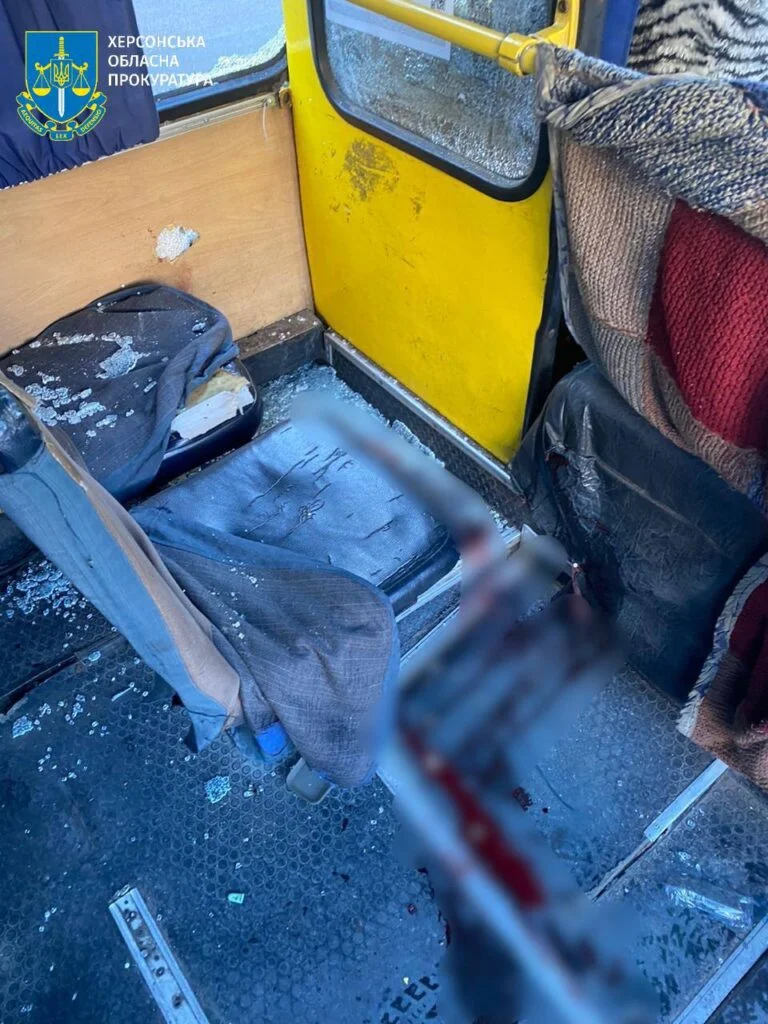
In March a Russian drone attack occurred on a passenger bus in Kherson. At that time one woman was killed and ten more people sustained injuries of varying severity. After the explosion the driver drove the bus to a medical facility so that the victims could receive the necessary assistance as quickly as possible.
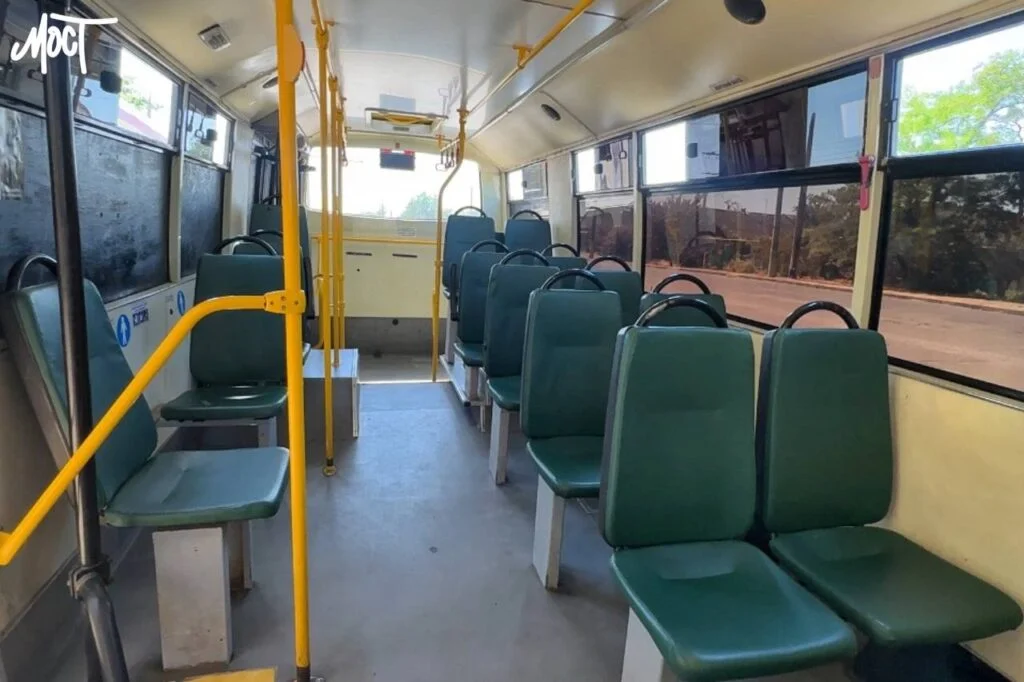
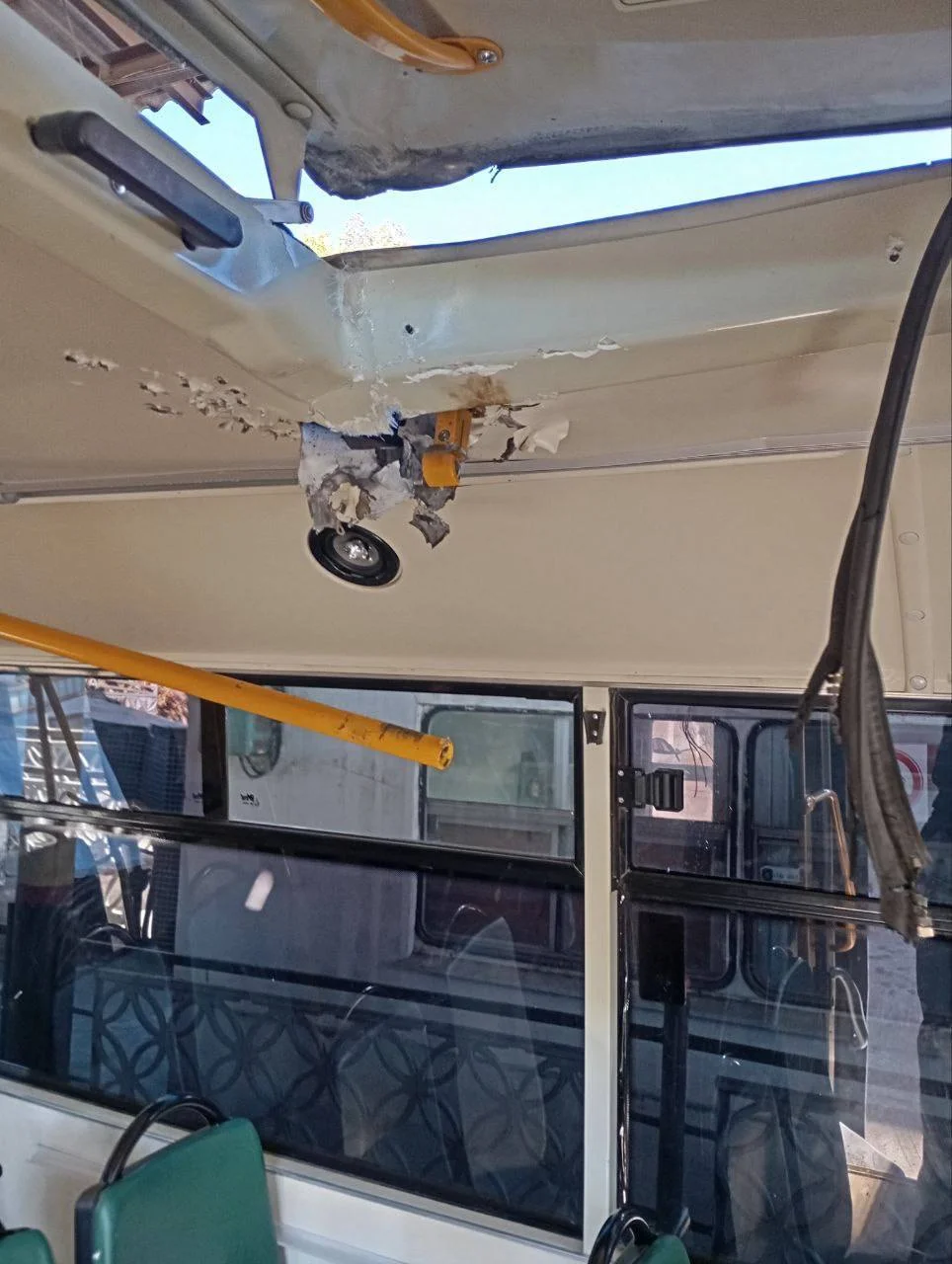
At the enterprise they showed us the bus damaged in January 2025 as a result of enemy shelling, which used to run route No.5 when there was still transport connection with Kindiyka. Then three people were injured.
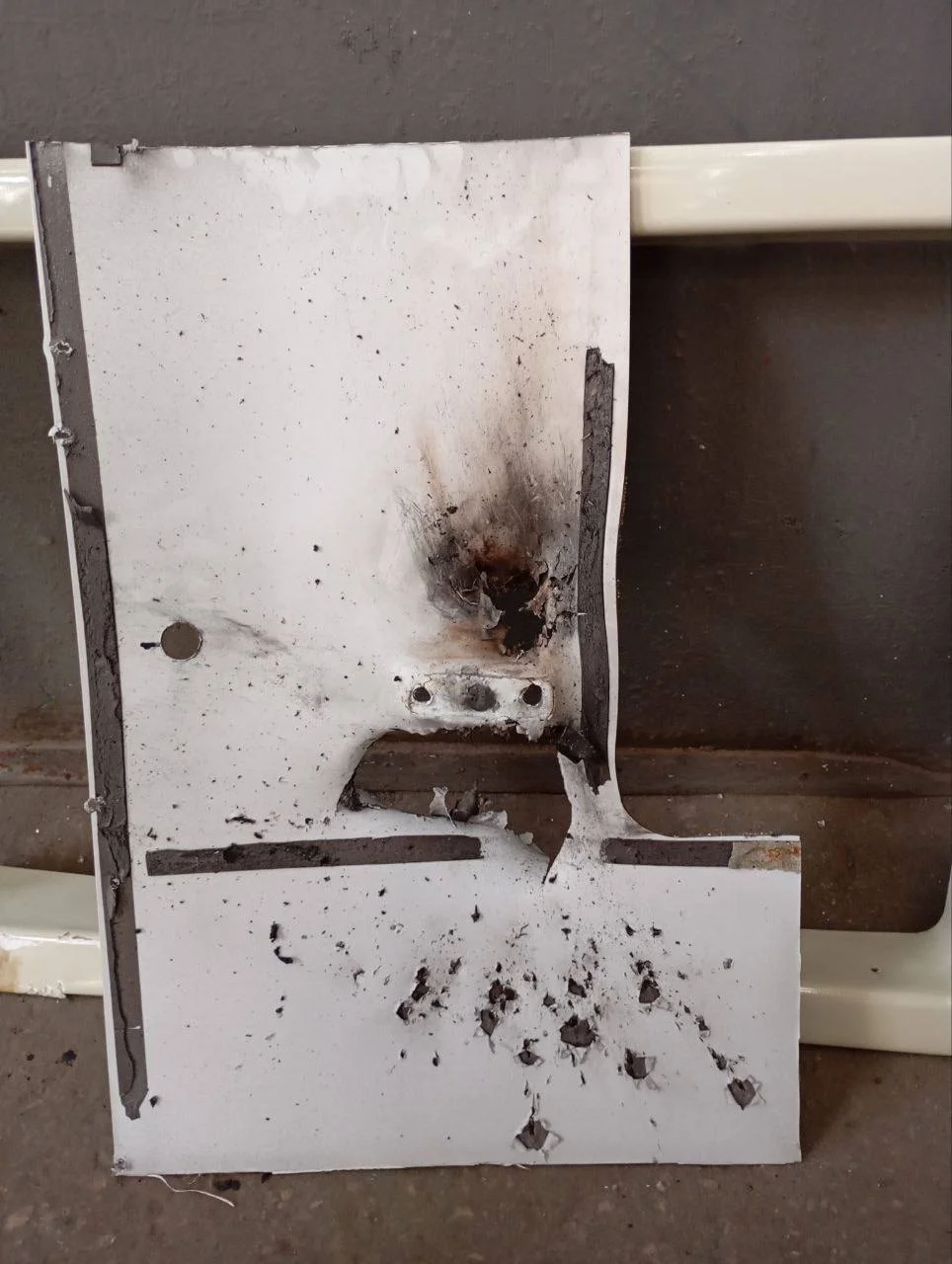
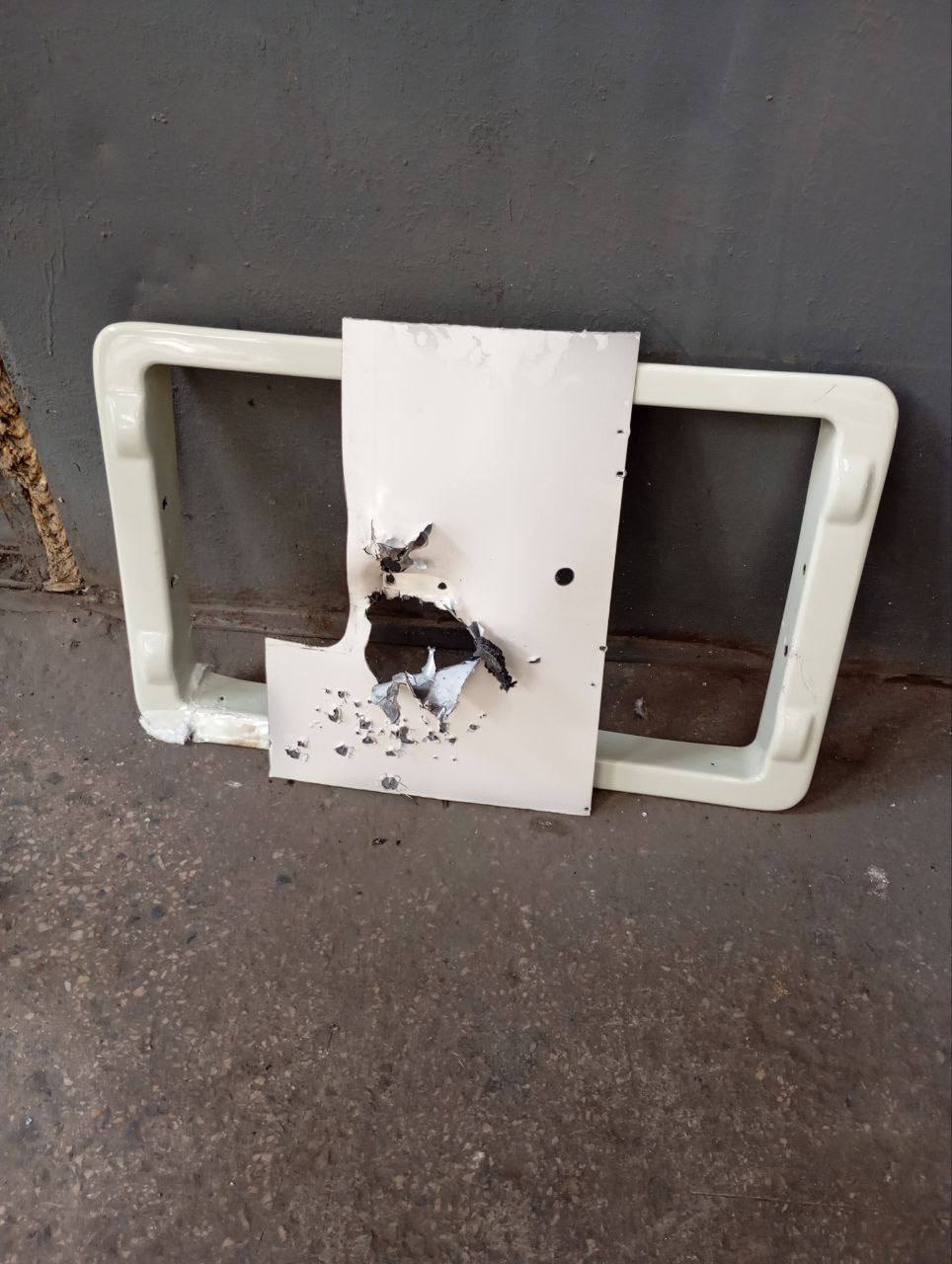
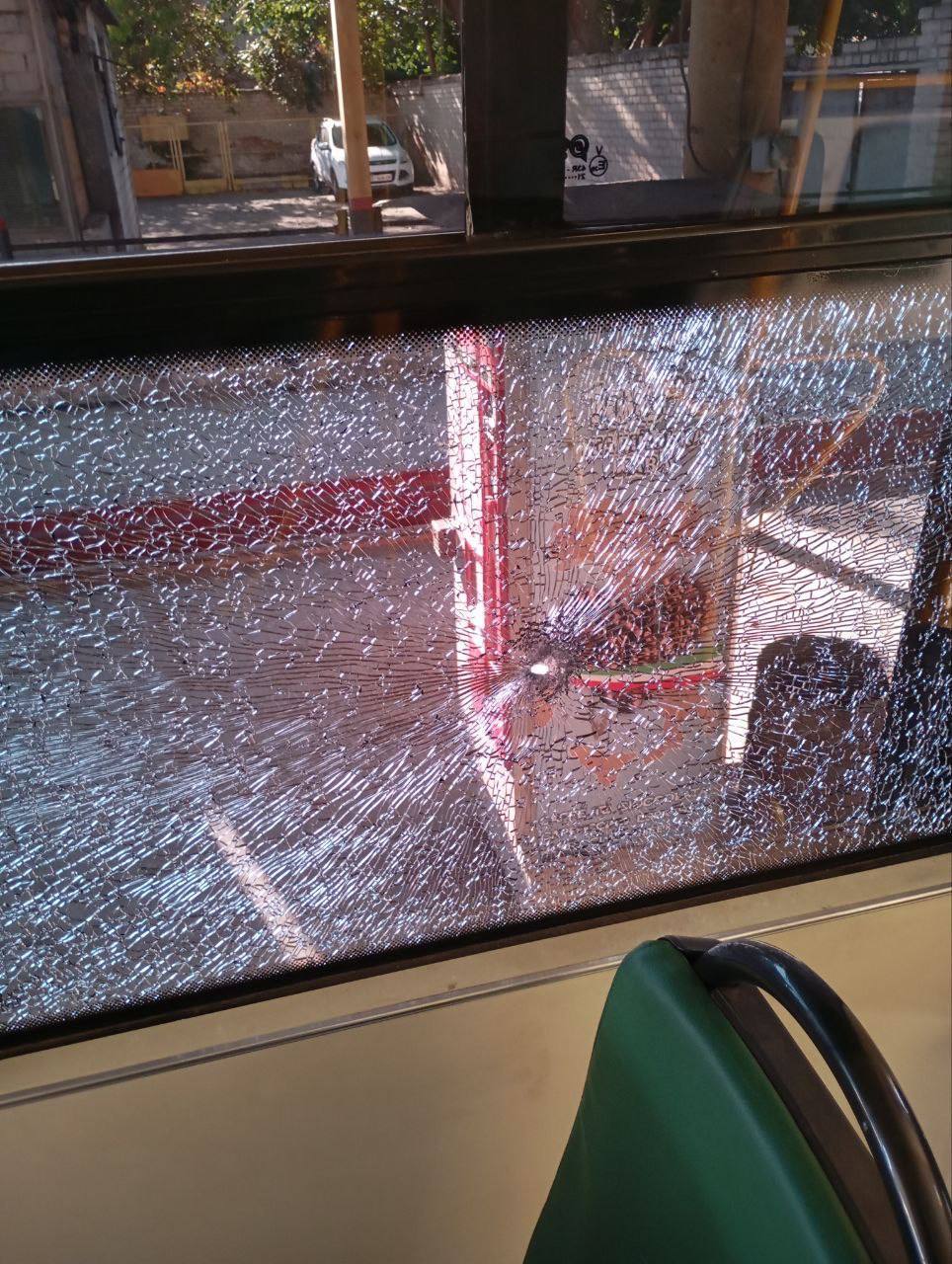
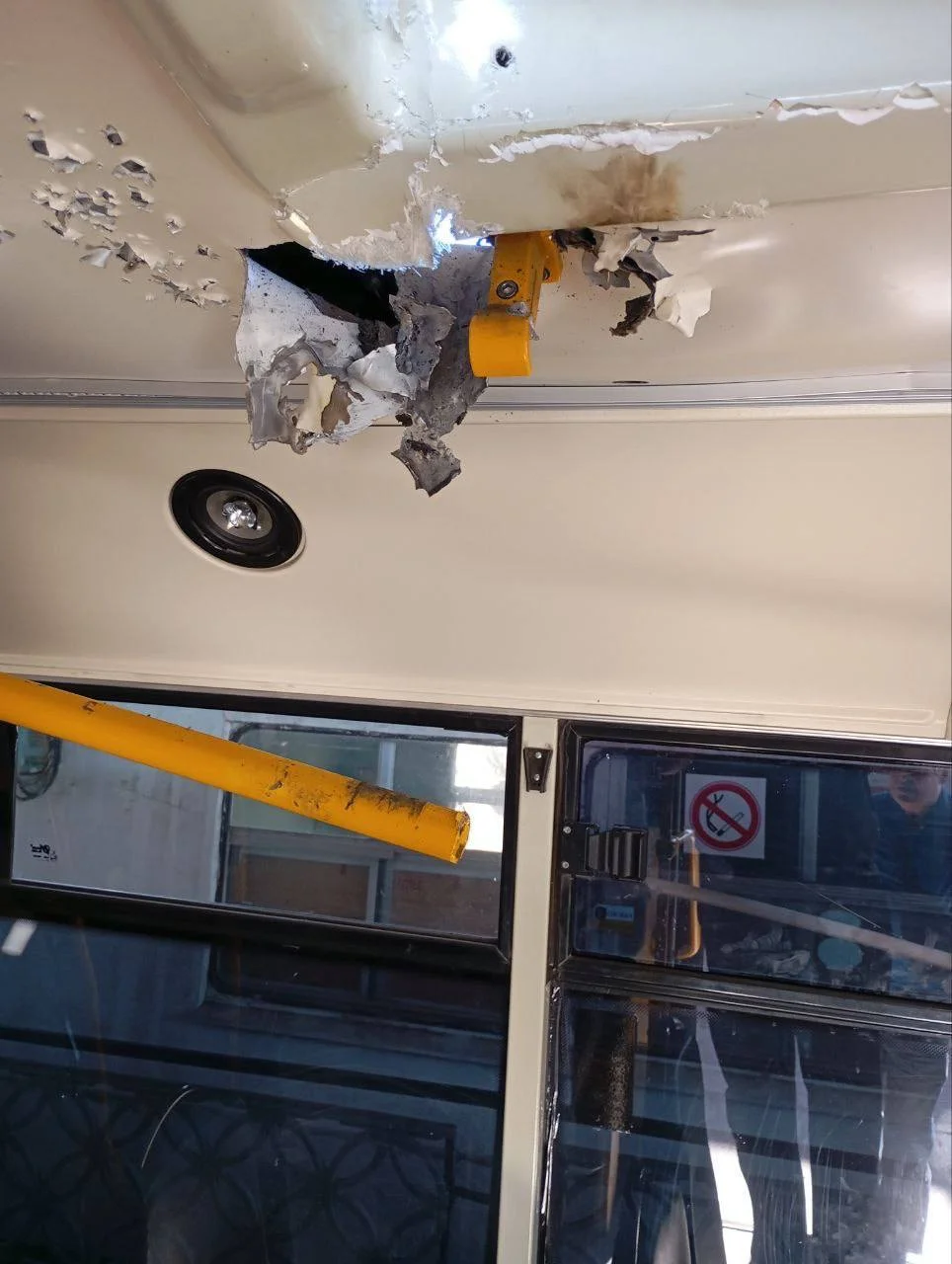
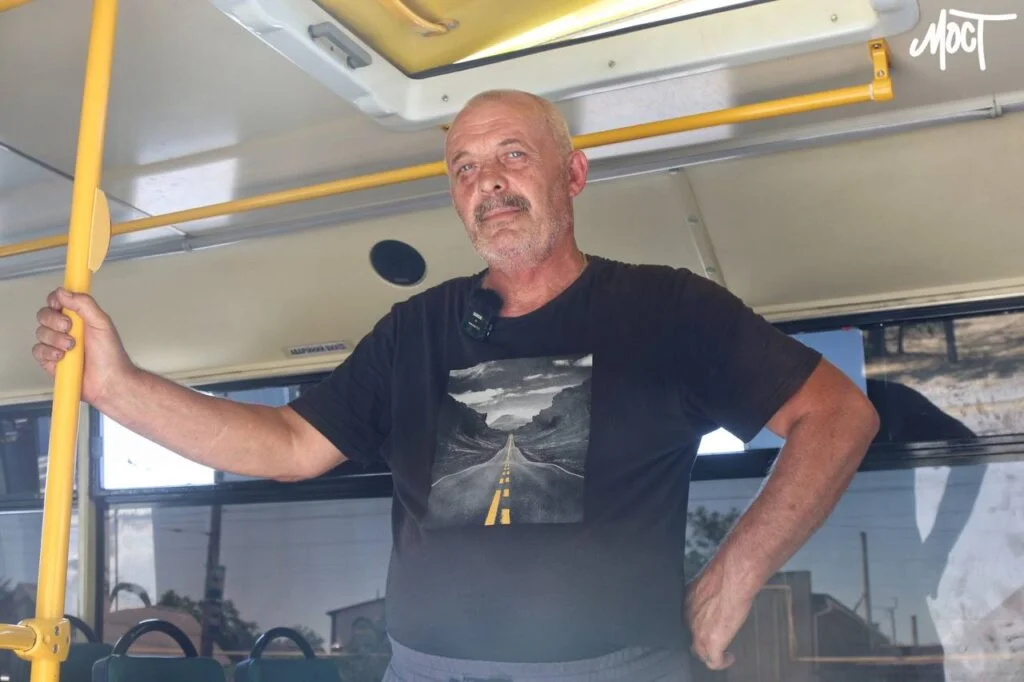
Oleksandr joined the enterprise in the autumn of 2022, almost immediately after the de-occupation of Kherson.
«During the occupation, – the driver says, – I stayed in Kherson, actually, as did my whole family. And now no one wants to leave. I suggest my daughter and son leave, they say: “No, we will stay here.” That’s how we live».
He says that now it is no longer scary to go out on the routes. He was afraid when he started working, but over time he got used to it. He began work on route No.17, which connected the Shumenskyi neighborhood with the suburban settlement Antonivka. Then he moved to route No.5.
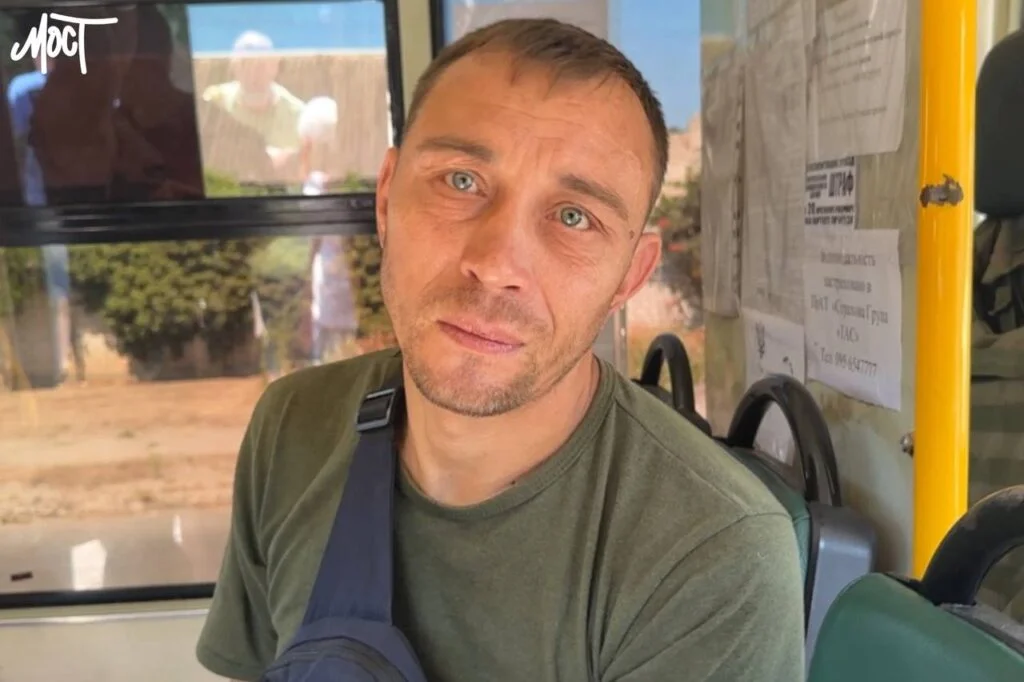
«Is it scary to drive on this route? Well, living is scary too. What can you do? But the fact that the minibuses run is good. Very good», – one of the passengers interjects in our conversation.
He then gives the driver 10 hryvnias (that is how much a minibus ride costs now in Kherson; trolleybus travel is free) and asks: “Please stop at Telmana.” That is, on Dmytro Dontsov Street. Not everyone in the city has yet gotten used to the decommunized and decolonized toponyms.
This trip was one of the last on this route No.5. Recently the route was changed for security reasons: now it goes not along Universytetska Street, but along Kulyka Street.
This material was created within the project of the Institute for War and Peace Reporting (IWPR) “Strengthening Public Oversight” with financial support from Norway