

“Three times more of them moved into the village than the number of us who live here”, – so, instead of the usual “hi” our phone conversation with my father began in March 2022. I asked him twice: “How moved in, so are they definitely orcs?”. For me it was unexpected and at the same time terrifying – why would they need a village that you can’t always even find on a map: remote, in the steppe, small. My now-destroyed Sukhy Stavok…
After the deoccupation I visited the village three times – January 2023, when I still didn’t fully believe the village was gone and wanted to see everything with my own eyes. The second time – to say goodbye to my grandmother, whom we managed to bury in the local damaged cemetery, and the third time, in the spring of this year, – for funeral rites, again at the cemetery. Unfortunately, that is what my entire Sukhy Stavok has become.
I called relatives and friends from the village several times a day – I was very worried about them, because I knew how the Russians behaved in the previously occupied Vysokopillia and Velyka Oleksandrivka. My parents had a small shop, so we understood that our house would definitely interest the occupiers. In the first weeks the villagers bought almost all the supplies, and the Russians came in several times – they were only looking for alcohol.
My relatives didn’t tell me everything that was happening, at the time no one fully understood why the Russians had come. What is there to take from a village where up to a hundred people lived? And they took everything… or rather took away everything – the village was erased to zero, mined, with no slightest chance of restoration.
When I was little, my grandfather told me that our Sukhy (that’s how everyone shortens the village name) used to be a hamlet of a few houses. A few kilometers from here there used to be another settlement, I don’t remember its name. It was from there that most people moved to Sukhy.
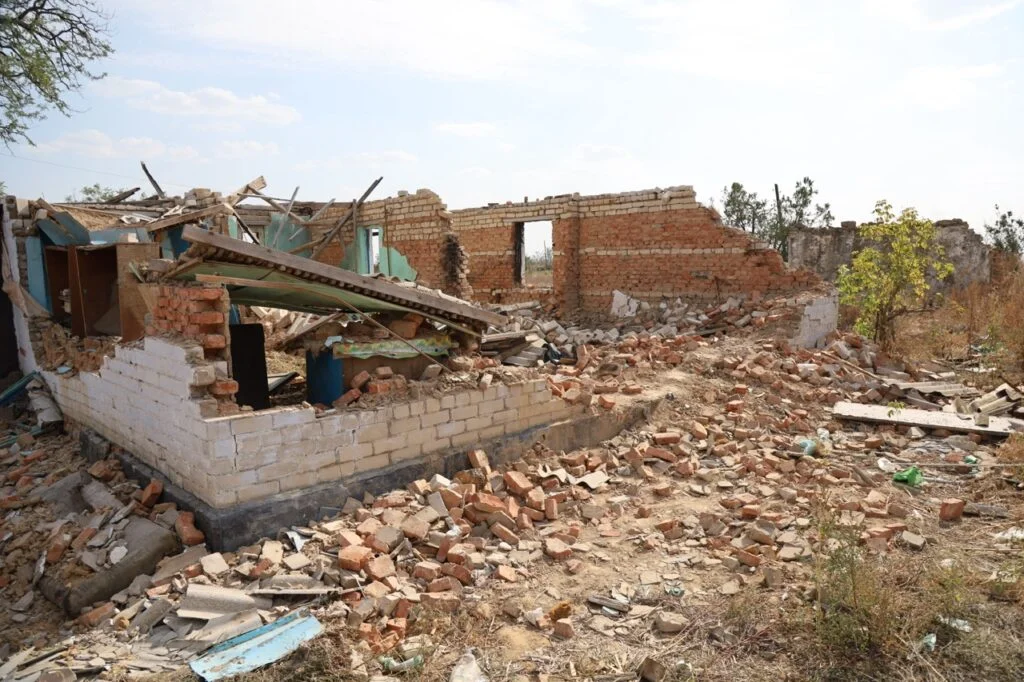
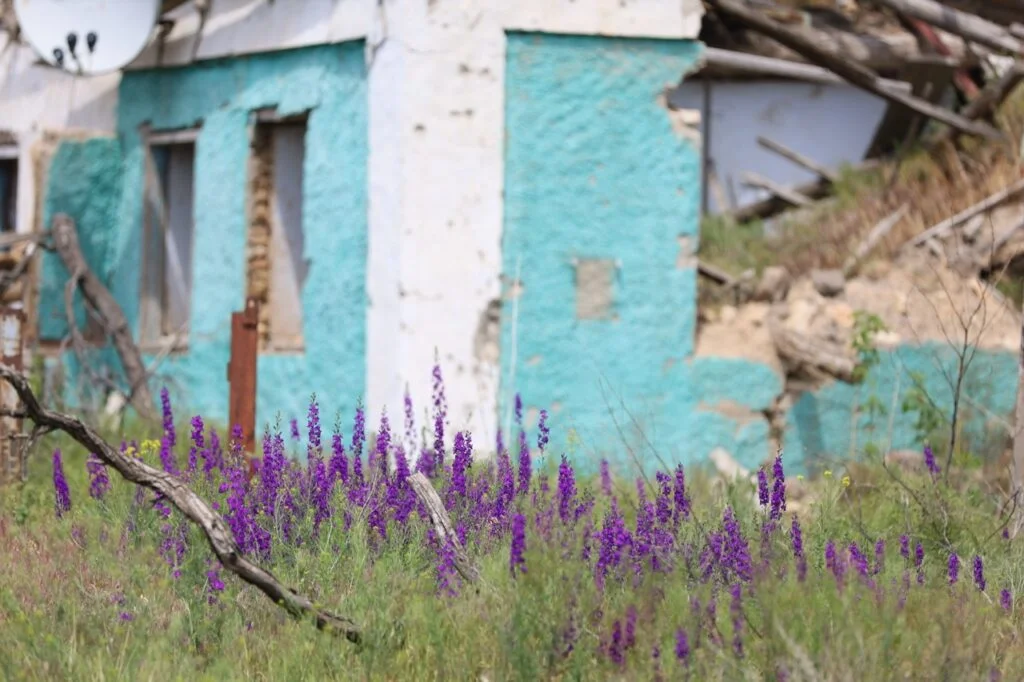
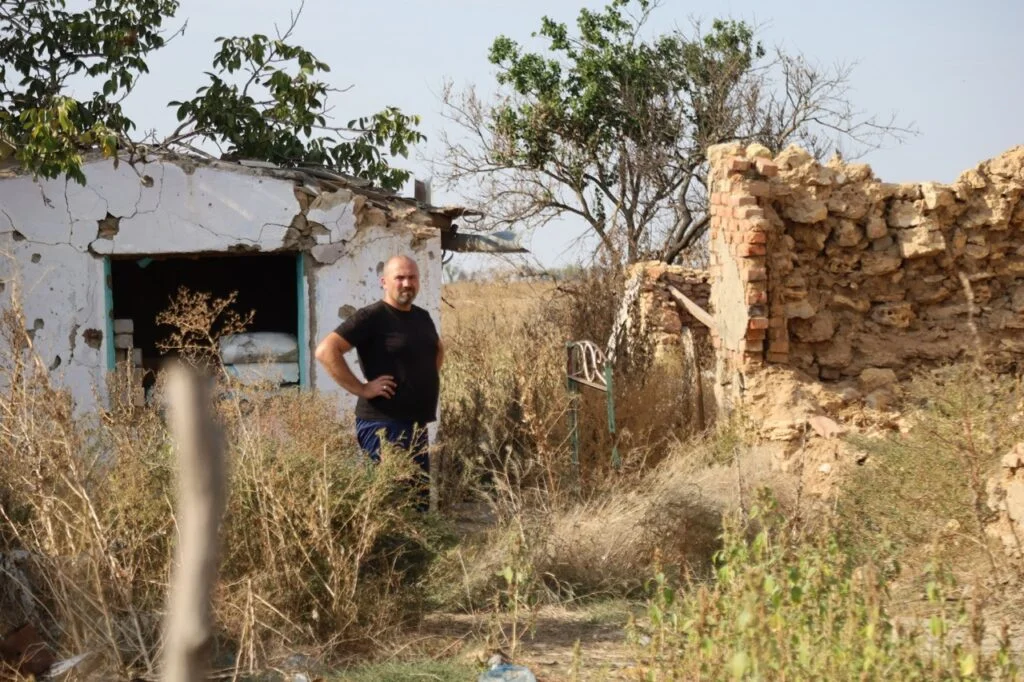
The village Sukhy Stavok belongs or belonged, since it now exists only on paper, to the Kalynivska community in the Beryslav area. It was no worse or better than others, although small, it was cozy. And everything felt so family-like – every other person was either a relative, an in-law, or a godparent. And that’s no joke. We all knew everything about each other… And today I can’t recognize at first glance whose house is whose – they all look the same: piles of bricks, junk, metal and things that looters hadn’t yet managed to completely take. They took what the occupiers hadn’t had time to steal. (By the way, beyond the remains of the shop I still haven’t gone back onto the yard…
My father and several other families from the village left among the first in April 2022. In neighboring villages the Russians were already taking cars from evacuees, so we understood – either we’ll be lucky, or not. (When we went through Russian checkpoints, we tied a white rag to the side mirrors, and the “column” of several cars was accompanied by the local priest (for some reason we thought the Russians would be ashamed in front of God). We headed towards Mykolaiv, but already in Kalynivske the Russians said – we only let people into Kherson. So dad stayed with me at the HBK for two weeks, then (with a large column from the Factory) he managed to leave for Novyi Buh. My husband and I stayed in Kherson.
On the phone my aunt always said – “the rashists are delighted with the village.” They told the locals – “I would stay here myself. You have such beautiful houses and nature.” To the question: “Why did you start the war?” they answered with a rehearsed phrase – “We are protecting you”.
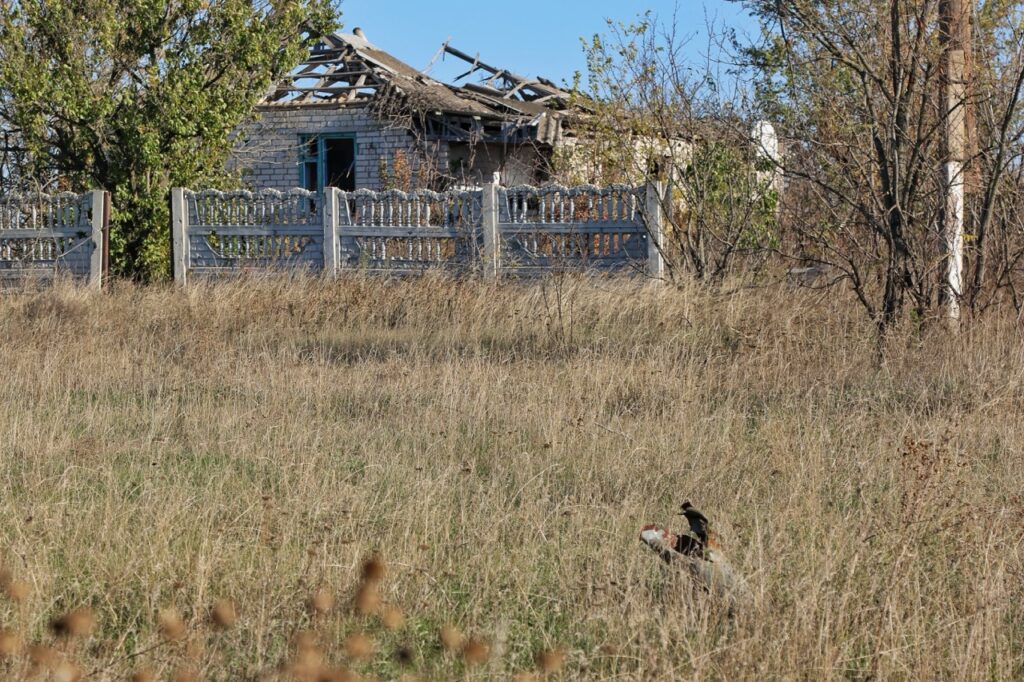
At first people were not allowed to leave the village at all, food was brought by the headman of Blahodativka, he was killed in June 2022. Later, again in a column, they were allowed to go to Beryslav. Due to constant pressure and shelling life became unbearable, there was no water, no electricity, no communication, people began to leave. Closer to the liberation, locals spent most of their time in cellars – it was very dangerous outside. Explosions after explosions.
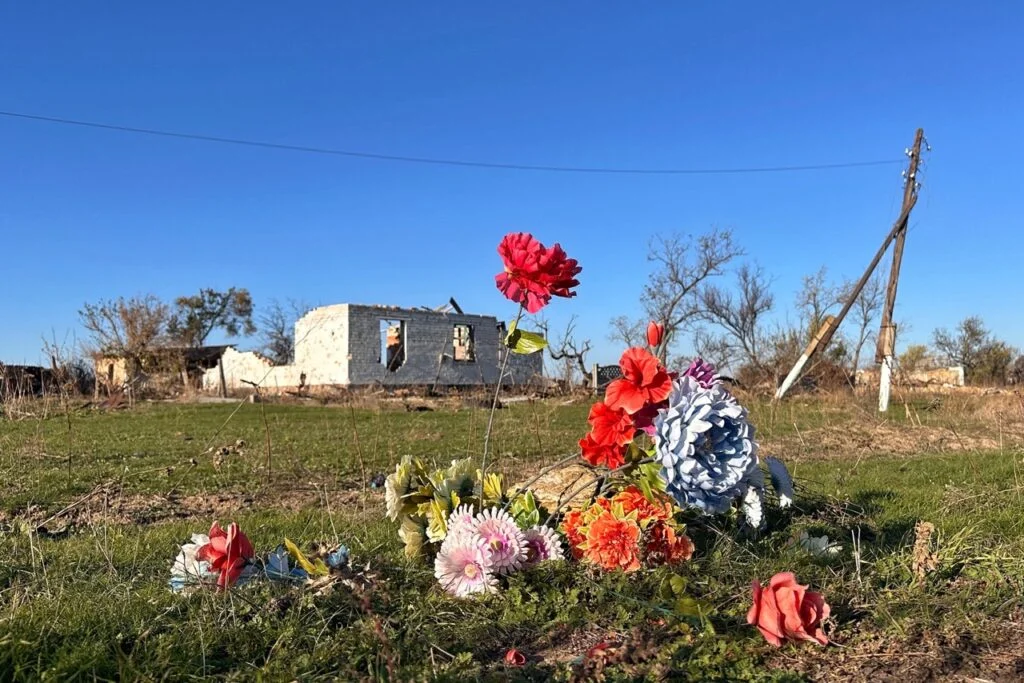
This place is very important to me personally. My uncle Roma and his wife Natasha died here. He was 39, she was 30. They left their two-year-old son with Natasha’s mother, and they themselves were going to say goodbye to my grandmother and grandfather – they planned to leave the village in the morning. They didn’t make it literally 300 meters, they were run over by a Russian KAMAZ. As the villagers told, practically the whole village ran to the scene of the tragedy, relatives and friends rushed at the Russians with bare hands. They shouted that they would shoot them too. Both were buried in the Mykolaiv region…
The village was liberated by Ukrainian defenders in less than six months of occupation. And then the real hell began, the Russians shelled houses with all possible weapons, including aviation. Sukhy stands in the middle of the steppe, there was nowhere to hide, only fields and groves cut by shells, not the most reliable place to hide. As far as I know, people who stayed at home until the last were evacuated by the Ukrainian Armed Forces from that hell, you couldn’t call those days anything else, every second was precious. The explosions did not stop.
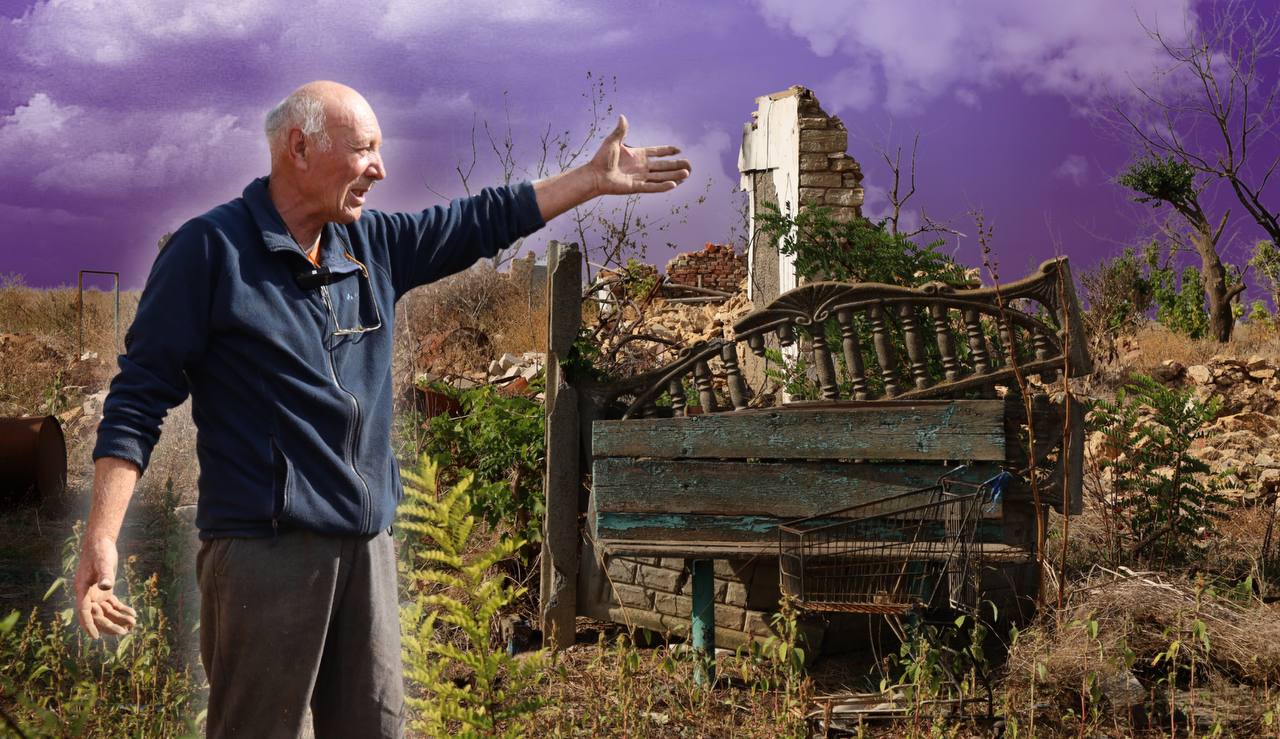
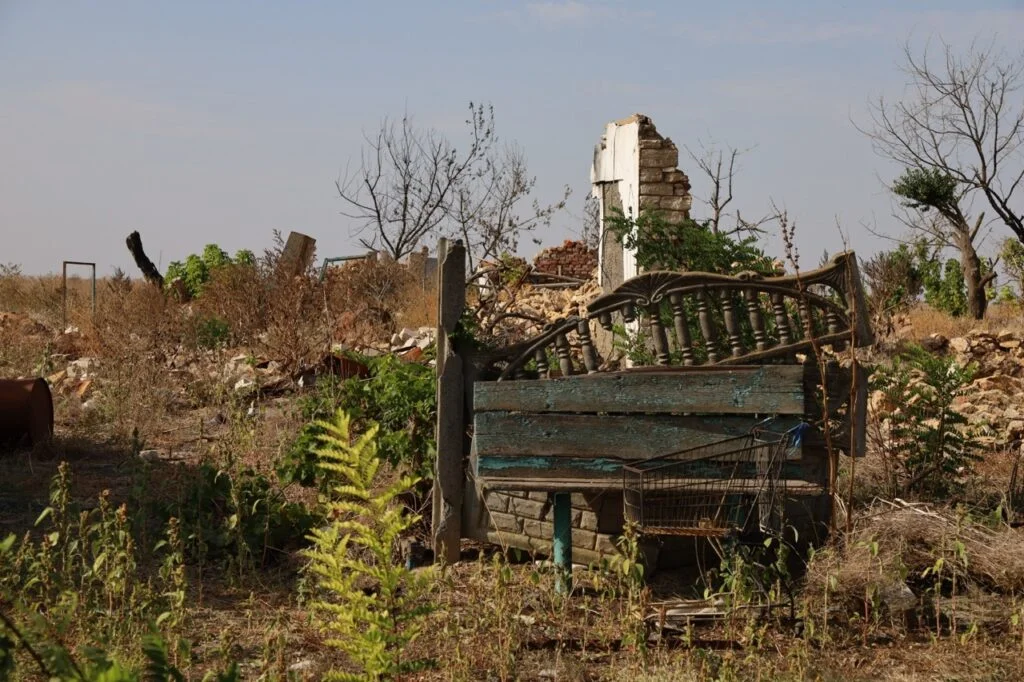
Besides the houses that had been passed down through generations, villagers lost all their belongings, livestock. It was thanks to the livestock that most people survived: they sold milk, meat. Some still managed to sell cows for pennies, many had them eaten by the orcs, and even more were killed. Our family didn’t survive anything at all – a Russian missile hit our homestead. Even during the occupation of Kherson I saw videos on Russian propaganda channels showing a missile flying into the place of my childhood. The only reminder of our home is the walls of the shop and the bench that my father and I made when I was still a schoolgirl. We made it properly, it survived. So I don’t even have photos from school, from graduation…
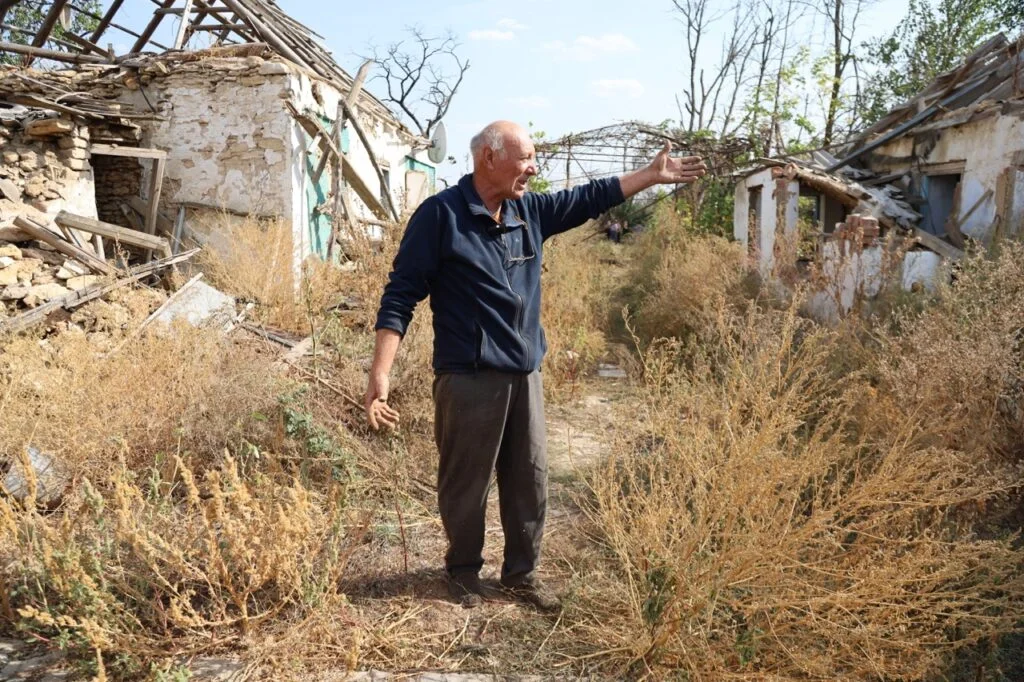
And I had a very hard time coping with the news of the death of my neighbor. Zhenka, not Yevhen, for us he was exactly Zhenka — he lived right here. A little older than me, so we spent our whole childhood playing football, “war games”, and went swimming in the pond one and a half kilometers from the village. He joined the Armed Forces of Ukraine and died while carrying out a combat mission. He was 40.
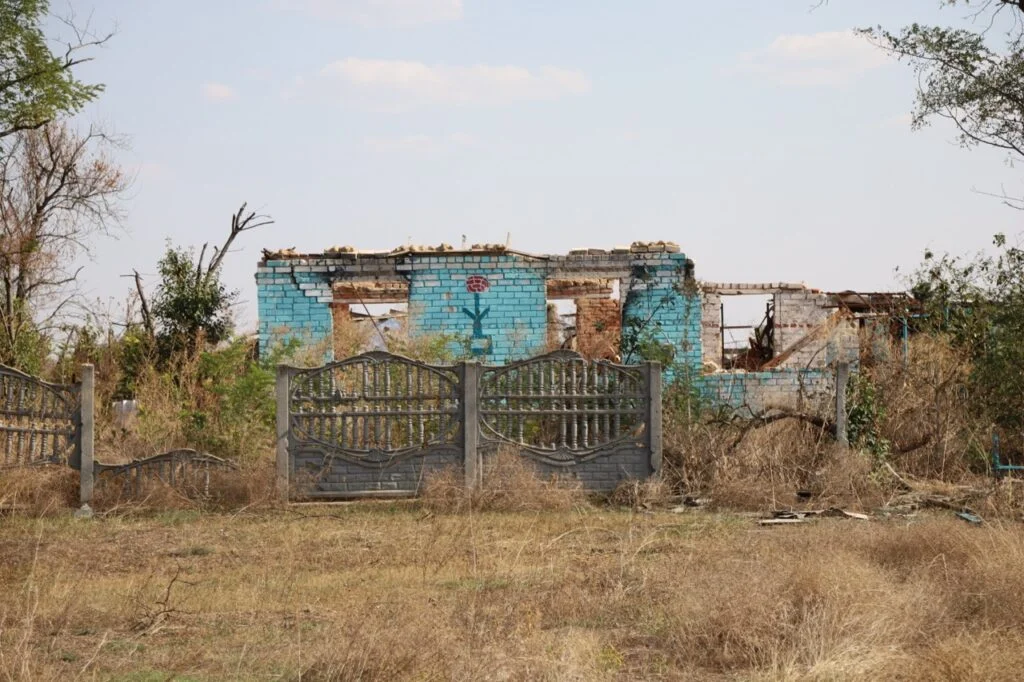
In the first months after the deoccupation villagers often came home, they believed that our Sukhy would be rebuilt. But that remains a dream. However, although destroyed, it is not forgotten. We remember Sukhy Stavok first and foremost – its inhabitants. And we believe there will be life there, maybe not now, but there will be.