

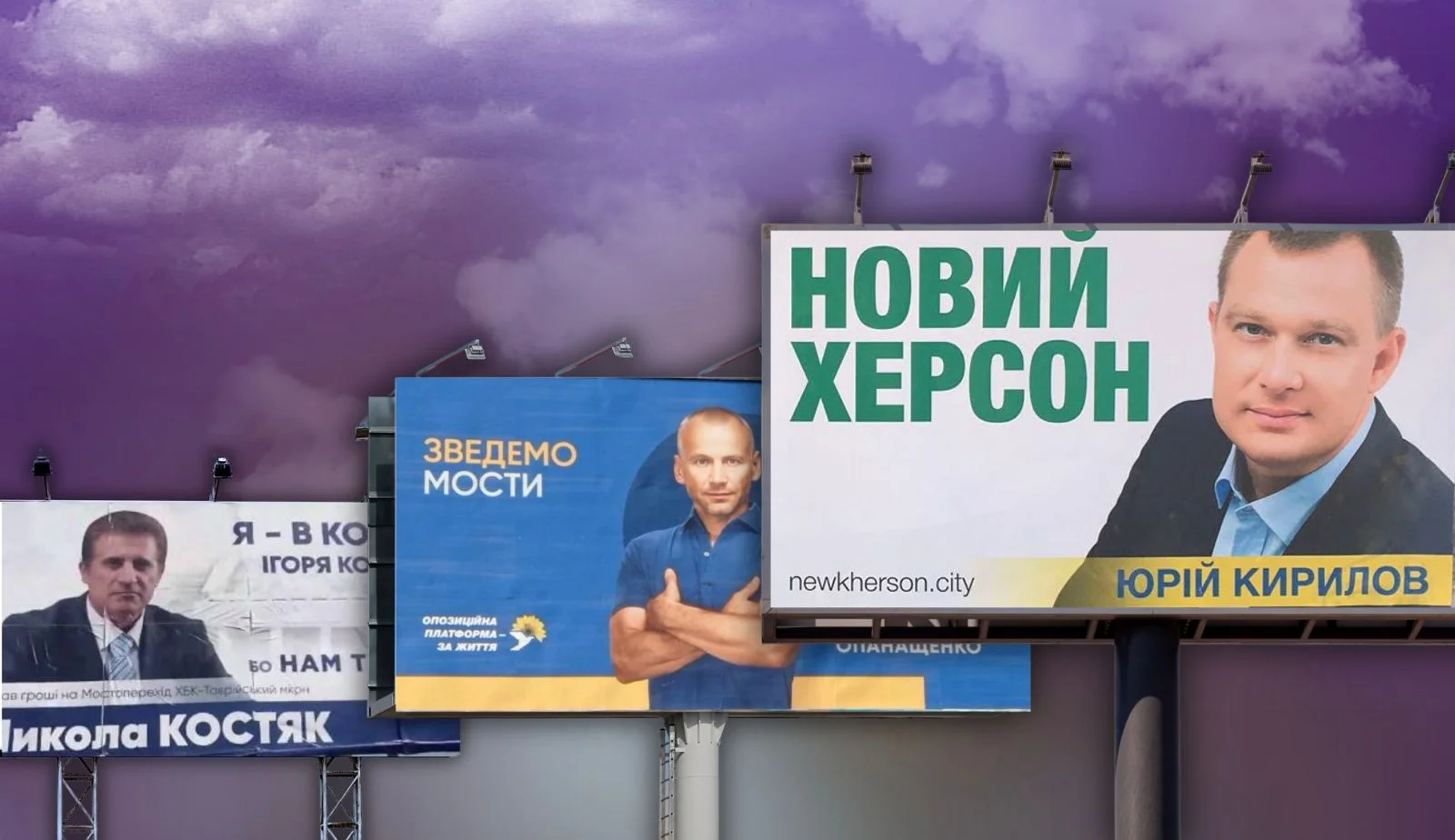
On October 25, 2020, Kherson residents elected a new local government, unaware that already a year and a half later most of these councils would find themselves under occupation, some of their elected officials would betray or try to sit on two chairs, with all the consequences. Over these years there would also be examples of heroism, courage and self-sacrifice. MOST tried to look back and tell the story of the shortest and, at the same time, the longest term of office of community heads and local deputies in the history of independent Ukraine.
Deputies of local councils, as well as city, village and settlement heads, are elected in Ukraine for five years, so the term of office of deputies of all levels elected in October 2020 was supposed to end around November 2025, with the election of new deputies and community heads at the regular elections that were supposed to take place tomorrow. But Russia’s full-scale invasion changed those plans.
What were these five years like for the local authorities of Kherson region?
Elections after the administrative reform
The 2020 elections were the first after a large-scale decentralization reform: enlargement of districts, creation of new communities, liquidation of old local councils. On June 12, 2020 the Government made a decisive decision and created communities where it had hesitated during the previous almost four years. And the local elections were already held in the new 49 enlarged communities of Kherson region within 5 districts, which replaced 298 local councils and the old 18 districts.
One could write here that those elections were the dirtiest in Kherson’s history, but the level of dirt is a matter of taste and previous exposure.
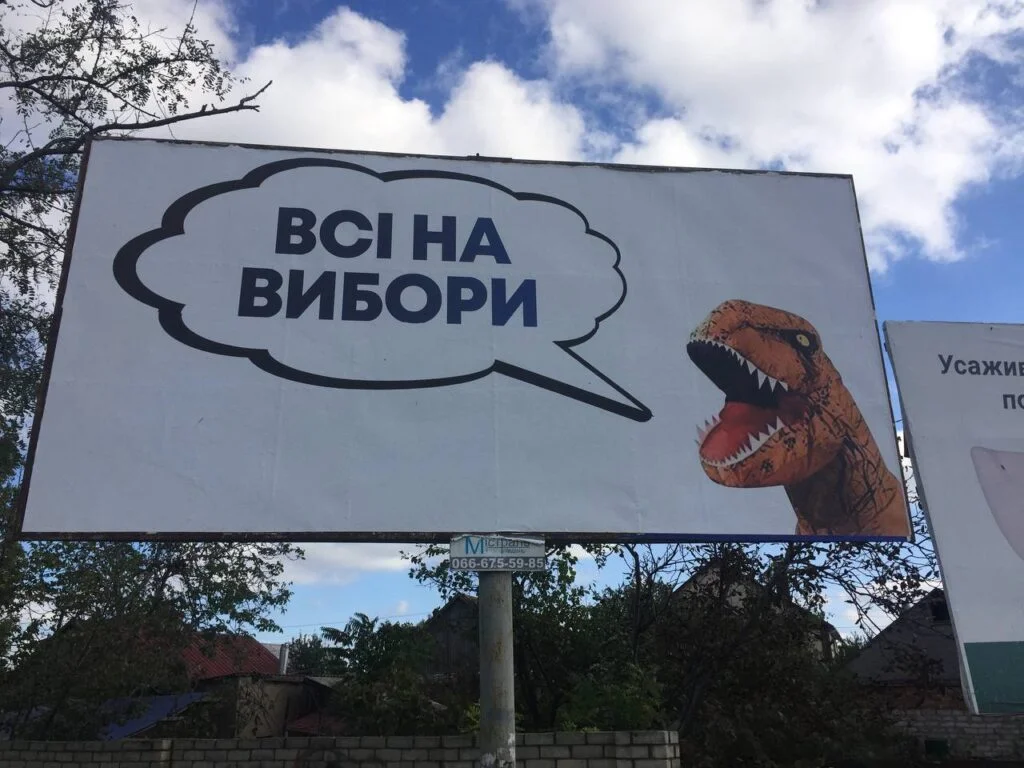
A unique feature of these elections in the regional center was a talent contest, when candidates for the mayor of Kherson began to dance and sing. The director of the School of Humanitarian Labor Artem Kiyanovskyi and the future traitor Volodymyr Saldo danced, and former deputy Oleksandr Tkach sang.
This phenomenon even made its way into Roman Bondarchuk’s film “The Editorial Office,” which was being filmed in Kherson region at the time of the elections.
By the way, dancing and singing didn’t help. Saldo still did not become mayor, Artem Kiyanovskyi and his party Nash Krai failed to get into the city council, and Oleksandr Tkach remained a taxi driver.
True, already in 2021 the daughter who worked for Ihor Kolykhaiev managed to arrange for her father to become the director of one of the municipal enterprises, but that was more about the daughter’s talents than Tkach’s vocal abilities. He, by the way, betrayed in 2022 and went to work for the Russians. Unlike Kiyanovskyi, who, however, dropped out of Kherson politics and quietly lives in Mykolaiv.
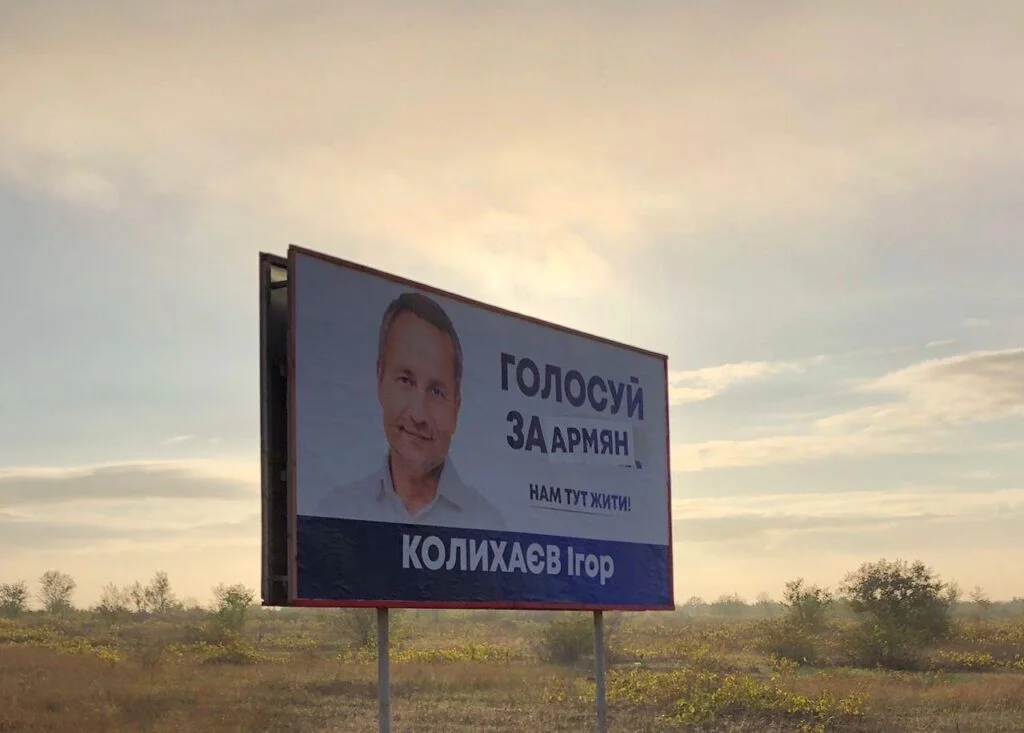
It must be said that the clowning helped Ihor Kolykhaiev. He swept into Kherson politics riding a dinosaur and during his entire victorious campaign was a virtual candidate.
Sooner, when he became mayor of Kherson, it became clear why the team made that decision — Kolykhaiev should not have been shown to people. Especially to the intelligent ones. The mayor of the regional center could not pronounce a sentence without his trademark… “blya”.
The Kherson city council matched him in tone. The majority of those who became deputies came to the council to make money. Which, in principle, was embedded in the philosophy of at least the two previous convocations. But only one deputy truly managed to make money — Vitaliy Bielobrov. He insured the municipal transport with the company he worked for, and with the bonuses bought himself a car.
All other elected officials mostly only tried to get something. Someone bought kiosks cheaply from entrepreneurs that Kolykhaiev was going to demolish, and then decided with him to preserve them. Someone collected recyclables at the city landfill, and someone, like deputy Andriy Tkachenko, simply became an advisor to Kolykhaiev and received a modest, or even laughable, salary only for pressing buttons in the hall once a month as the mayor needed.
Kolykhaiev at that time tasted easy money and turned the city into a corrupt cesspool, collecting tribute from everyone — from the market director to an ordinary janitor.
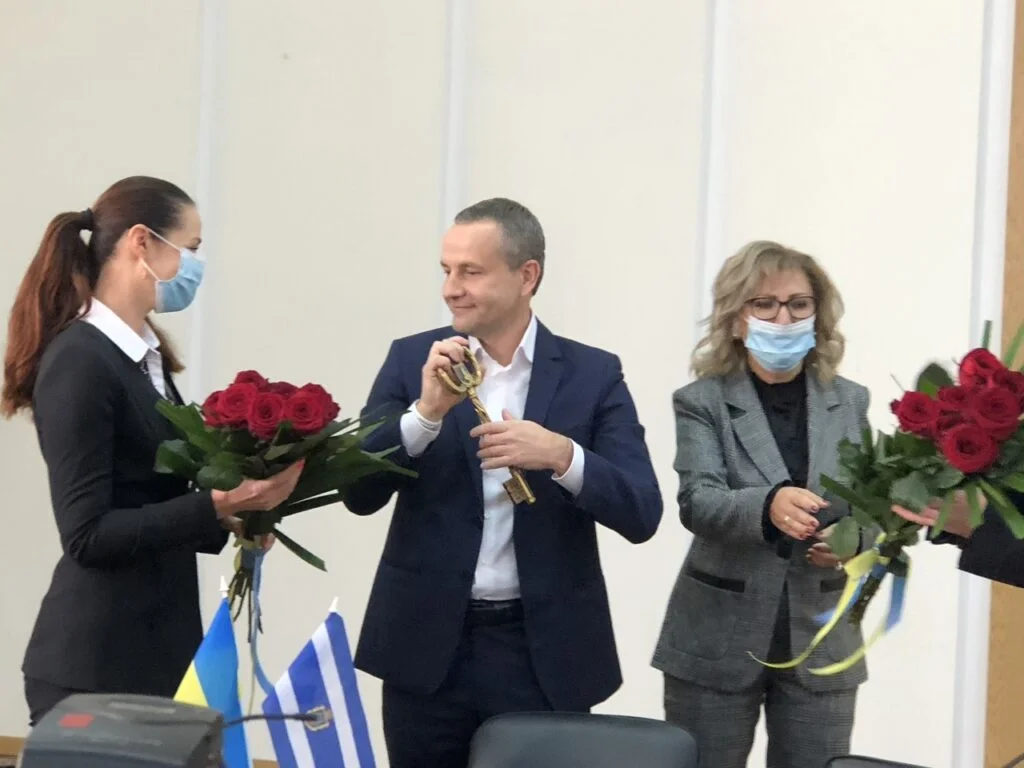
It should be added that in the city council there was, for perhaps the first time, no strong opposition. The remnants of the Servant of the People faction slightly criticized the mayor — those whom Kolykhaiev had thrown with positions and distribution of resources — and a couple of lunatics from European Solidarity voiced criticism. Everyone else dutifully pressed the buttons.
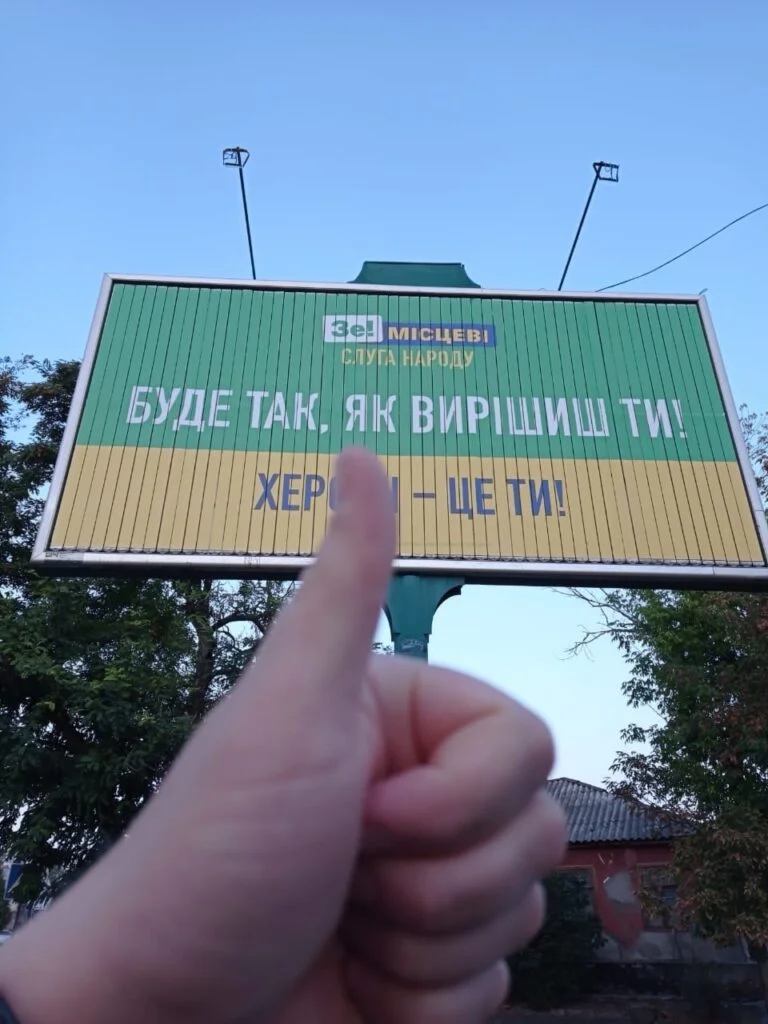
The Servants of the People, who lost the elections badly, fell into deep marginality. Their mayoral candidate Yuriy Kyrylov, whose political technologist was former metal scrap buyer Yuriy Poputko, finished only fourth, even behind Mykhailo Opanashchenko.
So, Kherson residents did not lose much from the disappearance of local self-government.
A similar situation developed in the regional council. The elections, unexpectedly for everyone, were won by the pro-Russian OPZZh, which, however, through behind-the-scenes agreements between Yuriy Boyko and the President’s Office, gave the chair of the regional council to the director of the Central Market Oleksandr Samoylenko, who represented the weak political force of the President. Samoylenko was generally an “accidental passenger” in Kherson politics. His career rise was helped by an old acquaintance with the then-ex-assistant to the President Serhii Shefir.
By way of compromise, two “first deputy” positions were even created in the regional council, seating the election winner Yehor Ustynov and the President’s person Yuriy Sobolevskyi in those chairs. That political anecdote then amused everyone who followed local politics.
In the region’s communities, sometimes unexpected candidates also won. In Kochubeyivska community the mega-star Ivan Dudar lost the election, who in distant 2015 was the first to create an amalgamated territorial community in Kherson region; in neighboring Vysokopillia the victory went to Ihor Kolykhaiev’s protégé Hanna Shostak-Kuchmiak by a margin of 1 vote, and in Askania-Nova they unexpectedly elected a member of OPZZh, Vadym Polishchuk.
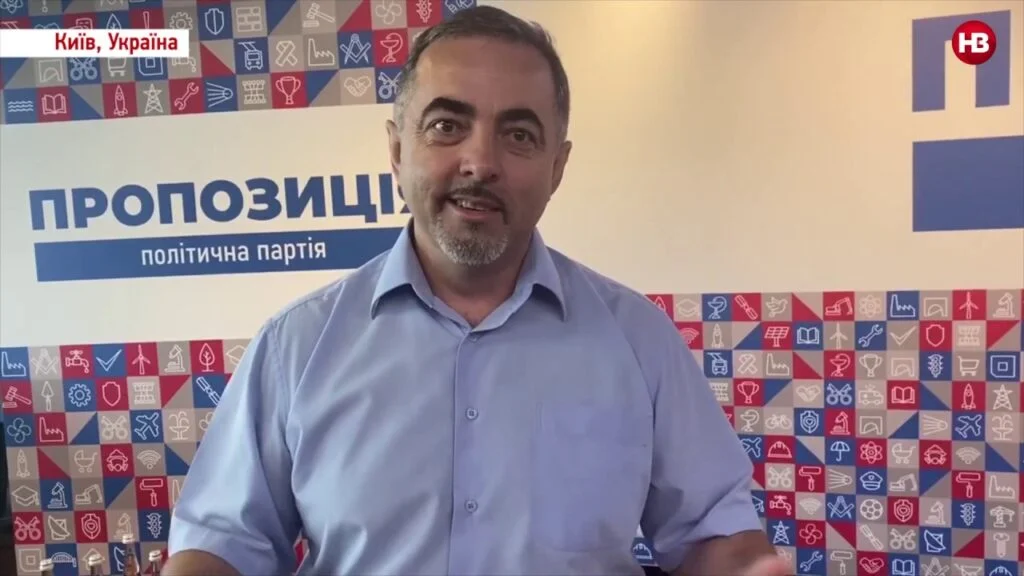
The mayor of Kakhovka Andriy Dyachenko lost the elections badly. For this purpose Karl Sturen managed to unite all the antagonists of the acting mayor who ran for mayor and on the lists of Servant of the People, OPZZh, Batkivshchyna and European Solidarity. The lively pre-election campaign with doses of black PR and a double gave the candidate from “Proposition” no chance.
There was also a double in the elections for the mayor of Beryslav, but that did not prevent Oleksandr Shapovalov under the banners of Ihor Kolykhaiev’s party “We Live Here” from being elected mayor for the fourth time.
It should be noted that despite the then mega-popularity of President Zelensky, among the elected community heads the winners were independents. Only 12 nominees of Servant of the People received a mandate of voters’ trust, another four winners were nominees of the “We Live Here” party and four of OPZZh, and one each from Batkivshchyna, Nash Krai and Samopomich.
The structure of governance, the distribution of taxes, and the power in the region in general also changed. Community heads gradually became more independent. However, the vast majority of them oriented themselves toward Deputy Head of the Regional State Administration Dmytro Butriy, making him the most influential person in local politics.
But overall, dependence on the center gradually decreased and it was noticeable.
2022: occupation, collaborators and resistance
On February 24, 2022, deputies of Kherson City Council were sitting in the small hall of the Kherson City Council waiting for Kolykhaiev. The mayor was in his office, drinking coffee and muttering the mantra that everything would be fine. As eyewitnesses say, then he looked even more like a madman. Deputies patiently waited for the mayor, reading news about the advance of Russian troops across Ukraine and particularly on the left bank of Kherson region.
Deputy Volodymyr Saldo, who was at that meeting, looked confident and encouraged others. He cursed Russia and said that the aggressor had to be repelled. Later deputies recalled this with a smile, but at that time no one wanted to smile.
The city council secretary Halyna Luhova, a woman prone to hysterics, was almost the only one who did not lose herself and ran several times into Kolykhaiev’s office. She persuaded the regional center’s mayor to come down a floor and talk to the deputies. On the third or fourth time Ihor Kolykhaiev agreed and for half an hour told the deputies what to do.
“But that story resembled the speech of a political agitator, because apart from slogans there was no concreteness,” one of the deputies told the author then.
After that meeting the deputies dispersed, and Volodymyr Saldo went to the mayor’s office. It is believed that there he offered Kolykhaiev his help, but what actually happened there no one knows.
Meanwhile, the heads of law enforcement agencies and the regional authorities left the city. Hennadiy Lahuta stated that he had left for a backup command post, but what he commanded there no one knows.
The system of power collapsed and Kherson residents were left only with the path of self-organization and resistance.
The head of the OVA Hennadiy Lahuta disappeared for 50 days, the regional center’s mayor raved about community cleanups and planting flowers, and community leaders gradually found themselves in a basement, left the area, or went to cooperate with the Russians.
Until the autumn of 2022 the state seemed bewildered, and community leaders only heard calls to leave.
Life without councils and executive committees
On June 3, 2022 the President created the Henichesk City Military Administration, headed by Dmytro Butriy’s godson, deputy head of Chornobaivka settlement council Yevheniy Rodionov. Soon the Verkhovna Rada vested the head of the military administration with the powers of local self-government, which gave him the right to act unilaterally on behalf of the mayor, the executive committee and the city council.
By May 2023 the President had formed military administrations in all communities of Kherson region, which were mostly headed by yesterday’s community heads and people from the “police brotherhood.” In the de-occupied communities of the right-bank Kherson region the military administrations became real authorities. Administrations of the occupied left-bank communities perform their functions in exile.
The creation of military administrations did not end the powers of deputies of local councils and community heads whom the President did not appoint as heads of military administrations, such as the mayor of Skadovsk Oleksandr Yakovliev or the mayor of Nova Kakhovka Volodymyr Kovalenko or the mayor of Oleshky Yevhen Ryschuk. Such community heads continue to receive salaries while being on standby.
The same applies to city council secretaries. Although Halyna Luhova was unlucky in this regard, as Roman Mrochko dismissed her from the post by his order in June 2023 and she lost an appeal.
Apparently for the purpose of saving budget funds, in December of the same year the head of Kherson District Military Administration Mykhailo Lynetskyi put the entire executive apparatus of the Kherson District Council, headed by its chair Valentyna Pokotylova, on standby.
Something similar could have been done by Oleksandr Prokudin with the executive apparatus of the Kherson Regional Council, where about 12 million UAH is allocated for the salaries of half a hundred officials. After the liberation of Kherson the regional council resumed meetings, however, there was not much point in them. The functions and powers of the regional council have been transferred to the head of the OVA, so the regional council acts online more as a political body that demonstrates the presence of authorities in the liberated part of Kherson region.
The level of the regional council’s influence is evidenced by resigned deputy mandates.
Kherson district councils
Perhaps the only council that holds sessions, as it turned out, is the Suvorov District in the city council. There they dutifully hold online meetings and adopt some decisions. Although there is not much point in the existence of this and the other two Kherson district councils.
In April 2025 the chair of the Korabelnyi District Council Nataliya Chornenka even changed her chairmanship for the post of deputy mayor of Kherson for matters related to the activity of the council’s executive bodies.
It was expected that district-in-city councils would remain only until the next local elections. That is — until October 2025.
In 2020–2021 almost all city councils (including Kherson’s) adopted decisions on the termination of the activity of district-in-city councils after the end of the 2020–2025 term. Thus: from today, so to speak, the powers of these councils would formally have come to an end, and they should have ceased to exist. But the state of war “froze” this process.
Who runs the region today
Currently the power system in Kherson region looks like this. Its vertical is headed by the head of the regional state (military) administration appointed by the President. All vertical power is concentrated in his hands. In addition to the existing powers of the RSA, all powers of the regional council have been transferred to him. He unilaterally adopts the budget, changes to the budget and almost all important decisions. The only thing he cannot do is make decisions concerning communal property and some other matters.
The head of the military administration has delegated part of the decisions to a very strange body — the Regional Defense Council. This body, which consists of security forces and officials, adopts various decisions. For example, it sets the duration of the curfew, the hours for selling alcohol, bans alcohol sales in some communities. It even gives permissions to make procurements without tenders. This is a very controversial issue and there are already many criminal proceedings related to these decisions, but there is no other body. And the defense council allows shifting responsibility onto a collective body of irresponsibility.
In addition, as we have already written above, there are 49 village, city and settlement military administrations whose chiefs are vested with local self-government powers. They are subordinate to the head of the regional administration and are appointed by the President upon his submission.
In the territories entrusted to them they also make all important decisions. This system has shown itself, in principle, quite well. In wartime it, in most cases, works effectively despite the absence of certain democratic bases, discussions, and deputy oversight.
As a system of checks and balances there are law enforcement agencies, especially now when there is an intense conflict between the leadership of the prosecutor’s office and the regional authorities. Therefore the heads of local military administrations have become hostages to this conflict. The prosecutor’s office is pursuing Oleksandr Prokudin, formally and informally through attacks on heads of military administrations and suspicions.
Military administrations are also monitored by a handful of journalists and media that act as a form of public oversight.
* * *
The Constitution of Ukraine guarantees the continuity of local self-government. On October 8, 2025 the Verkhovna Rada adopted a resolution that during the state of martial law local self-government bodies must function. Therefore deputies and community heads elected in 2020 continue to perform their duties until the next local elections are held. When they will take place — only the Almighty knows. However, the final word will be for the Verkhovna Rada, which must set the date for such post-war elections.
It is no secret that some heads of military administrations live in the paradigm of future elections, and Roman Mrochko even managed to start an early election campaign, for which he apparently paid with his position. The fact that the reboot of local self-government after the cessation of martial law will definitely take place — is a fact.