


Due to Russia’s full-scale invasion and targeted shelling of public infrastructure, frontline communities remain without water. In such cases, people look for water in nearby sources — wells, ponds, rivers.
In a joint piece by “Skhidnyi Variant” and “MOST” we explain how frontline communities are solving the problem of access to drinking water
Frontline territories experience a shortage of quality water resources
Frontline communities in Donetsk region consistently face disruptions in water supply due to Russian shelling. Damage to critical infrastructure — pumping stations, water mains and canals, including the Siverskyi Donets-Donbas channel — has resulted in water being delivered on a schedule or disappearing entirely for days or weeks. Russian occupiers deliberately target critical infrastructure to deprive the civilian population of access to essential resources. Each new strike can derail repair work and leave people without access to drinking water.
The Siverskyi Donets-Donbas canal, which until 2022 was the heart of the region’s water supply system, suffered numerous damages as a result of shelling and combat. The pipeline runs through territory that witnessed fierce fighting. In particular, in Kharkiv region, where the Russian army began its offensive in February 2022, part of the water main was destroyed.
In September 2024 shelling damaged the canal’s pumping stations, which reduced the volumes of water supplied to Sloviansk, Kramatorsk, Druzhkivka and Kostiantynivka. Water was supplied according to a schedule, and in some places it was absent for days.
The water supply situation remains difficult in Donetsk oblast. The Donetsk Regional Center for Disease Control and Prevention reports that water bodies are shelled by the enemy almost every day:
“Damage and destruction of the water supply system continue. Thus, on July 29 as a result of enemy shelling there was no water supply in the town of Bilytske, Pokrovsk district. On July 28 and 29 — in the city of Druzhkivka, Kramatorsk district, due to power outages caused by shelling. On July 31 water supply to the “Pivdennyi” neighborhood of the city of Lyman, Kramatorsk district, is provided on a reduced schedule. And on August 1 due to a sudden power outage at a pumping station, water supply was partially suspended in the city of Kramatorsk and completely in the cities of Druzhkivka and Kostiantynivka. On August 3 in the city of Druzhkivka there is no water supply due to lack of water inflow to the city”.
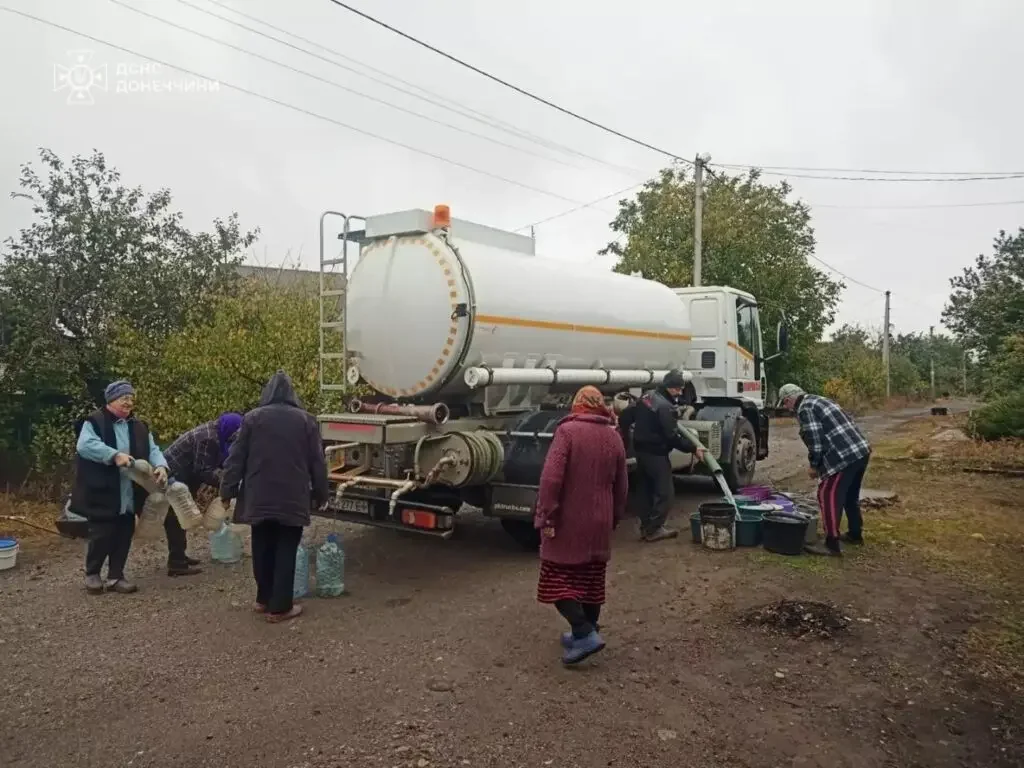
Currently the water supply situation remains difficult in Pokrovsk and Kramatorsk districts. In particular, in Sviatohirsk and Dobropillia communities, which are frontline. This was told to Skhidnyi Variant by the public organization “Avalist”, which supplies drinking and technical water in the region.
“The main reason is, of course, the shelling. Shells and rockets break networks, pipes, water mains; it takes time to repair this. But repair work in communities is complicated while shelling is ongoing. Crews cannot go out and work properly. That is why communities turn to us with requests, send letters asking to provide water”, — says the project assistant for “Immediate response to life-saving needs and protection issues for populations affected by the conflict in eastern Ukraine” at NGO “Avalist”, Oleksii.
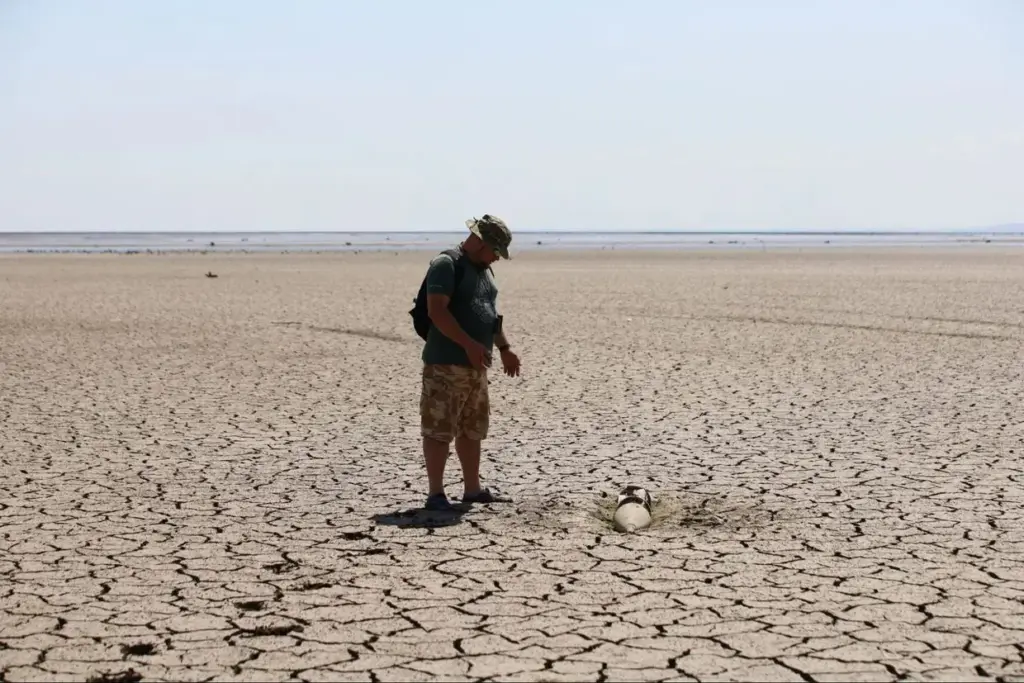
Deoccupied settlements in Kherson region also faced the problem of absence or shortage of drinking and technical water. Existing networks are either outdated or were severely damaged by shelling. To all these difficulties was added another serious problem — the destruction of the Kakhovka HPP dam by the Russians. The lowering of the reservoir level affected the wells, making access to water in many communities even more difficult.
“Physically we had water in the existing well, but there was no effectively functioning network or investments. When the occupiers blew up the HPP and the reservoir began to disappear, we faced the question of providing water to the population even in the most critical context. Imagine everything gone — a catastrophe, there is no water at all. You can’t live long on transported water, that’s certain”, — says the head of the Novovorontsovka settlement military administration, Andrii Seletskyi.
On top of this are problems with attracting investments and issues with contractors who were unable to restore water supply in the community.
The official notes that Novovorontsovka community has serious structural problems with water supply. The master plan shows that sections of the water mains in different projections overlapped and were often built back in the 1980s, with separate pipelines for neighborhoods and enterprises, yet they all fed from one system. Some pipes, likely made of cast iron, have long worn out. Because of this some sections were closed off and water simply leaked from the network: even before the full-scale invasion the difference between water used and water paid for reached 30:1, indicating significant resource losses.
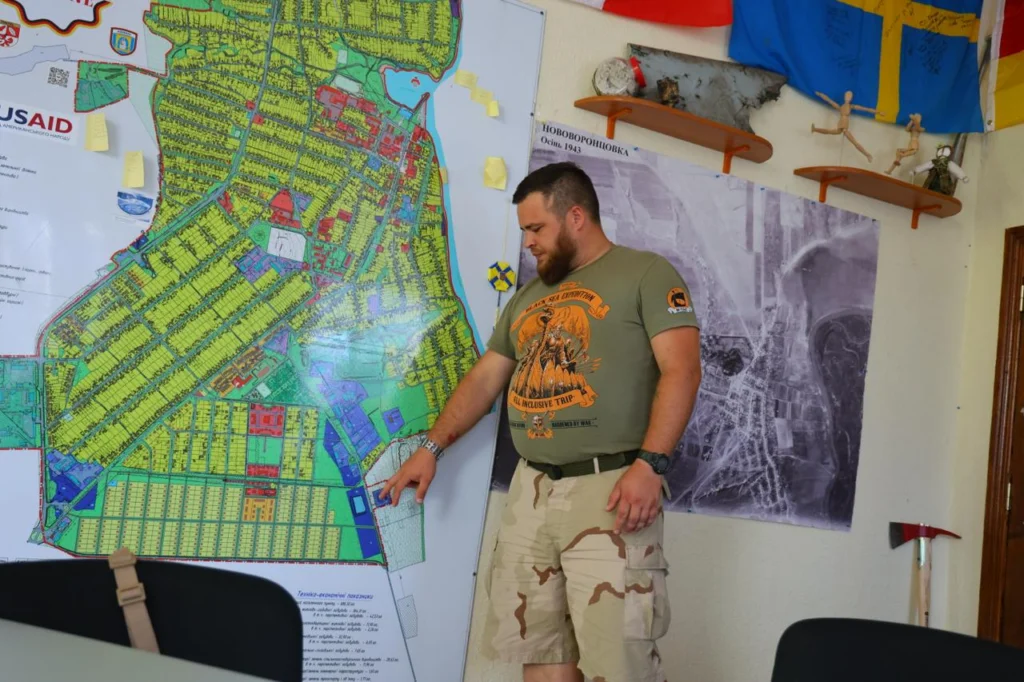
The situation worsened after the Kakhovka HPP dam was blown up, when water disappeared entirely. That was when local authorities began to approach the issue more systematically and comprehensively, seeking solutions to restore stable water supply and alternatives that would help residents access water in critical situations.
Water delivery by the SES and NGOs: solutions for Donetsk
Mostly communities in Donetsk today receive water assistance from local authorities, rescue workers of the State Emergency Service (SES) and the charitable foundation “Avalist”.
SES rescuers deliver water to frontline settlements upon request where there is a need and the security situation allows. Alternative water supply sources operate to provide drinking water to the population, and containers for free water distribution have also been installed.
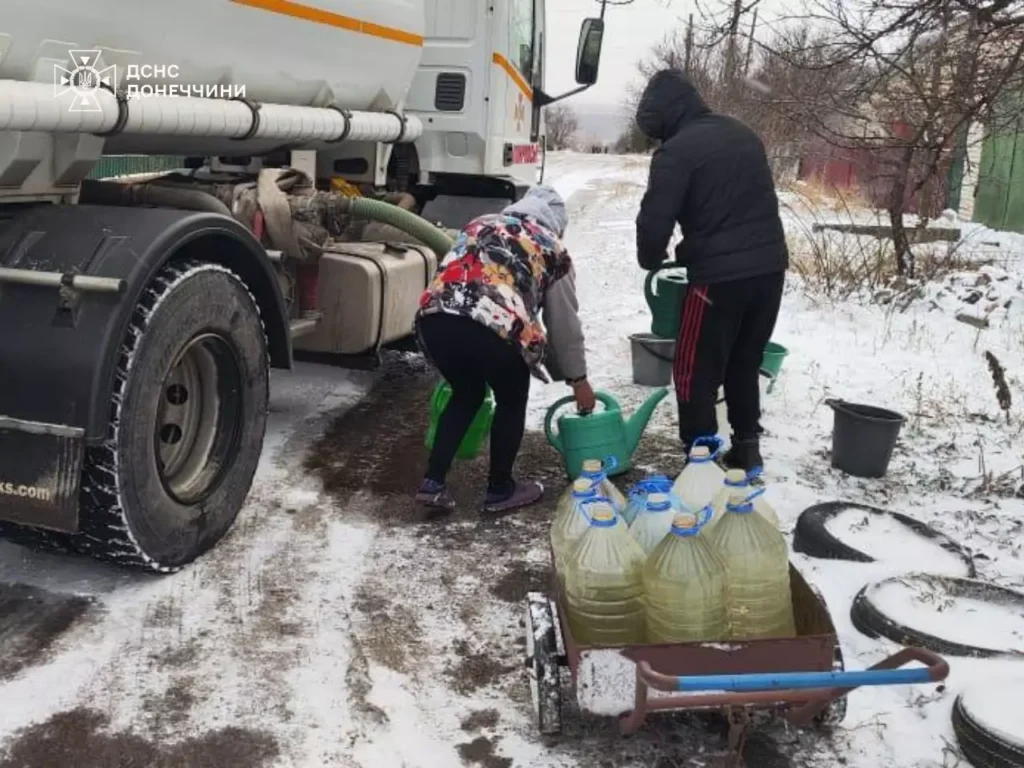
As of now, rescuers in Donetsk oblast deliver technical water only to frontline Druzhkivka. And not daily. This was told to Skhidnyi Variant by the press service of the Main Department of SES in Donetsk oblast. Rescuers coordinate with local authorities and receive requests from them for delivery of technical water. They use special tanker trucks for this.
“We receive information about the need to deliver water from local authorities. We deliver as much water as necessary, based on people’s needs. They can fill as much water as they need. And we will continue to deliver water throughout the day until all residents have taken enough water. If necessary, tankers are refueled and return to the people”, — says the head of the communications and public relations department of the Main Department of SES in Donetsk oblast, Veronika Bakhal.
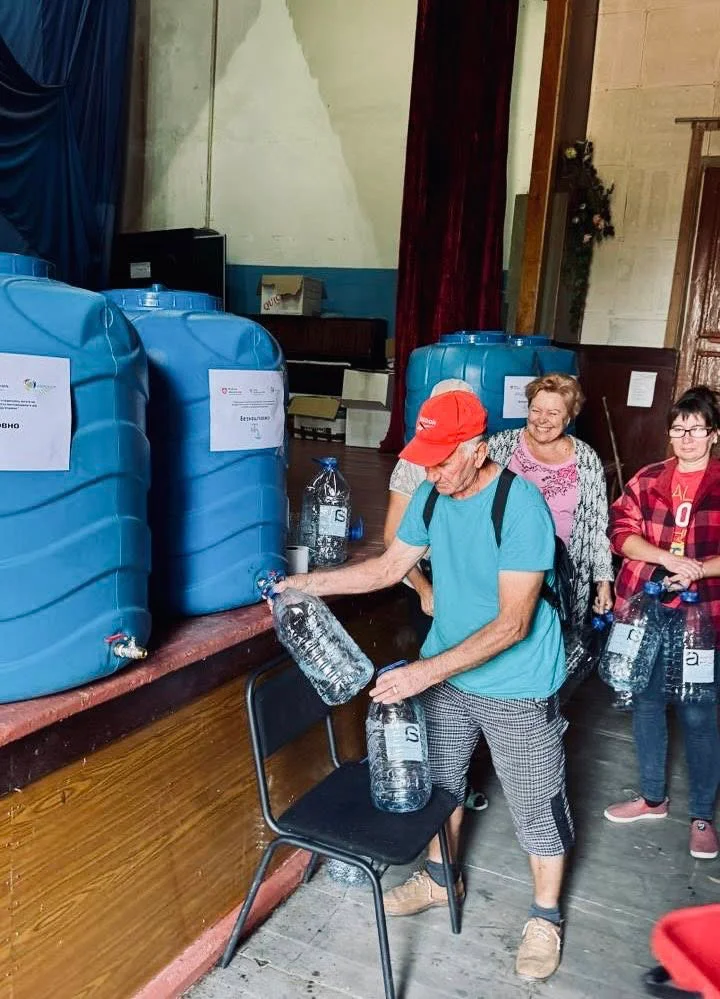
For example, in Druzhkivka community of Kramatorsk district, which currently lacks centralized water, a systematic support for residents with drinking water was established several weeks ago: a mechanism for daily delivery of technical water operates, and thanks to humanitarian resources drinking water is also provided.
Residents of frontline communities already know the points where rescuers deliver water. Additional information and the delivery schedule are published by local authorities. There is no fixed delivery schedule in settlements where water supply is absent; everything depends on the security situation. You can follow information about deliveries on the official pages of city administrations on social networks.
The public organization “Avalist” has been providing drinking and technical water to frontline communities in Donetsk since the start of the full-scale invasion. A local community that needs water supply submits a request to “Avalist”. Then representatives of the organization conduct research: what exactly the community residents lack. Depending on the results, they determine which types of assistance to provide, including water supply.
“We try to mobilize as quickly as possible from the moment the city administration submits a request. But delivery can be affected by various factors. In particular enemy shelling, which does not always allow us to quickly reach frontline communities. We go to all locations. Regardless of whether it is a city, village, or settlement — we deliver water to any populated place. We first visit locations to see where water containers are placed, their condition, and whether there is shelter nearby. Because in case shelling starts while people are collecting water nearby, there must be a shelter”, — says the project assistant for “Immediate response to life-saving needs and protection issues for conflict-affected populations in eastern Ukraine” supported by Malteser International at NGO “Avalist”, Oleksii Repnikov.
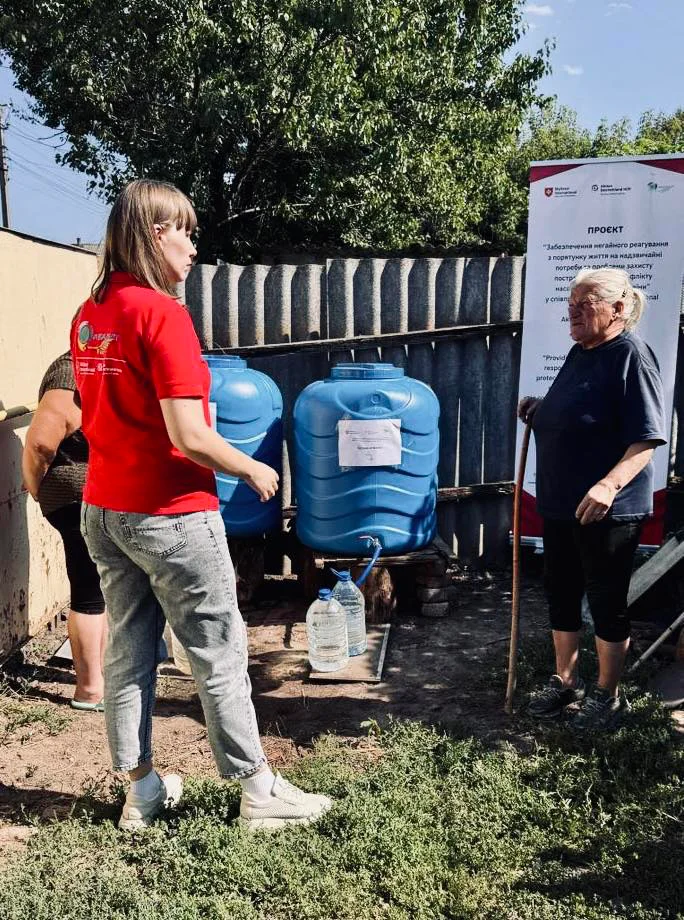
Representatives of the organization bring drinking water and fill special containers — barrels from which locals then draw water.
“There are always people in the community who monitor these containers and how people draw water so that everything remains sterile and protected. Every time we deliver water we check all the barrels to ensure they don’t leak, that everything is sealed and hygienic, and that the taps are in proper condition. We do not purify the water ourselves; it arrives to us already treated. Drinking water has previously undergone all tests and we have all quality certificates”, — says Oleksii.
Residents of frontline communities are not limited in the amount of drinking water they can take. This was told by the deputy head of the Southeast region unit of NGO “Avalist”, Yelyzaveta Hluzytska:
“Before delivery we conduct research: we find out how many people remain in the settlement so as to bring enough water. Usually we bring extra as a reserve. Because the population in Donetsk is moving quickly due to the shifting frontline. And the number of people in communities may increase due to displaced persons. But we conduct research on an ongoing basis, so we know who and how much needs what”.
Overall the water supply situation in Donetsk oblast remains difficult. As soon as the Russian army comes closer, it increases the intensity of shelling, including of critical infrastructure. Unfortunately, there comes a time when repair crews can no longer work due to danger. Then the population is left completely without water.
“Regarding emergency water supply, we have the capacity to cover all populated places. Local communities already know about us, we actively cooperate with them so they provide water to the population. At the moment we are coping with our own resources”, — says Yelyzaveta.
Currently “Avalist” delivers water only in Kramatorsk district. Until July 21 there was the possibility to operate in Dobropillia community, but due to the deterioration of the security situation trips there were suspended.
At the same time residents of Donetsk are still urged to leave frontline territories to protect not only themselves but also volunteers and repair workers who deliver water and repair water mains at the risk of their own safety.
Drilling wells, restoring old wells and a steppe river: experience from Kherson region
Andrii Seletskyi says: simply drilling wells is not a complete solution. There was a big risk that funds would be allocated while losses through the network would remain unchanged. Among the key solutions eventually implemented in the community were drilling new wells, finding donors to co-finance replacement of the water main, restoring old wells and the steppe river.
The first initiatives to search for water and drill wells met with skepticism: there was a belief that there is no water in Novovorontsovka. As early as 2017 a private company searched for water at 15 points here, but the results were disappointing. Moreover, the documents remained with the business and the community received nothing.
After the Kakhovka HPP dam collapse and the reservoir’s depletion the state proposed a project to bring artesian water from 20 kilometers away from Novovorontsovka. However, local authorities considered it utopian and opposed it, insisting on more realistic steps. The search continued: two old capped wells were found on the southern plots where water was indeed present — even after the HPP disaster.
Further drilling work encountered problems: one well collapsed due to technology violations, another hit gas, and drone attacks stopped the process.
“I proposed to the regional authorities to look for donors. As a result, UNICEF took on six wells, Project HOPE — two. As of July 2025 four wells are already fully ready, a fifth is being completed, a sixth is in the process of drilling, and Project HOPE has started work on two more”, — says Andrii Seletskyi.
In parallel, the Agency for International Cooperation of the Association of Municipalities of the Kingdom of the Netherlands VNG International, in partnership with the Association of Water Supply Operators in the Netherlands, launched the project “Reconstruction of Kherson region water supply systems: immediate actions and sustainable solutions.” According to reports from the Kherson Regional State Administration, this project foresees restoration of water supply and wastewater facilities in Vysokopillia, Novovorontsovka, Chornobaivka and Kherson communities. As part of the project, Andrii Seletskyi attended specialized training in the Netherlands.
Thus work began in Novovorontsovka to replace the water main, and Huawei in partnership with international donors helped install solar power plants to provide autonomous operation of wells. Plans include connecting new facilities to the network and scaling this solution to other villages.
Today the community has first results: water appeared even in neighborhoods where since the 1980s it had been supplied only a few times a week and in tiny volumes. Ahead lies replacement of worn pipes, elimination of illegal connections and creation of a resilient supply system so that every resident can rely on quality water.
The backup water source — wells and the steppe river. Here Andrii Seletskyi applied his own knowledge of local history and regional studies.
He recalled that the settlement has old wells that existed 100–150 years ago. Back then there was no reservoir, so wells were dug down to the natural aquifer, which still retains water today.
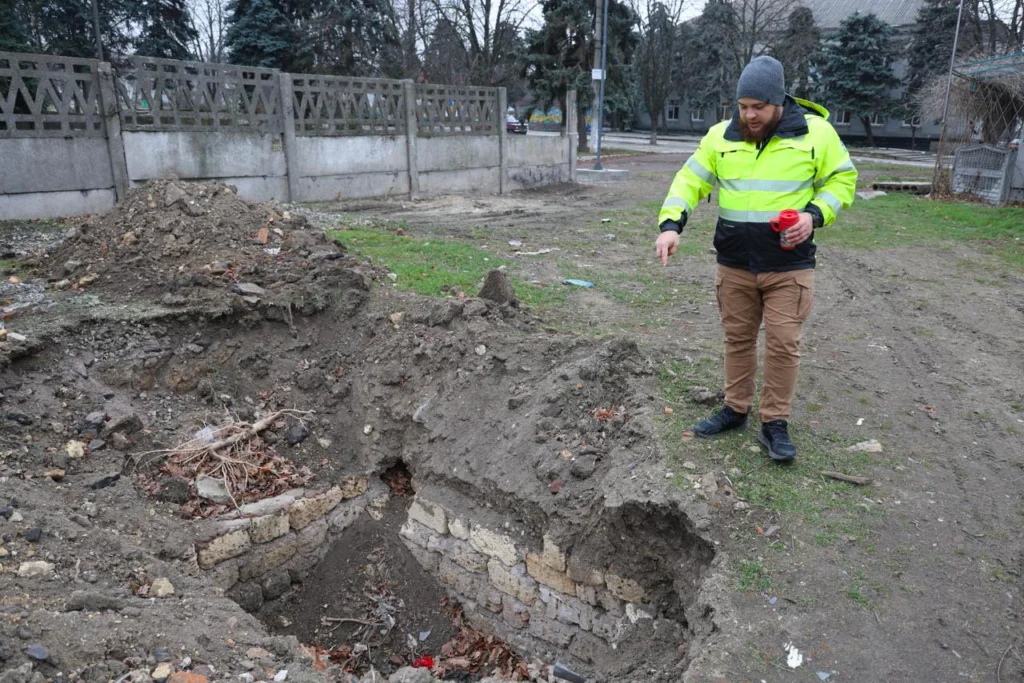
Some wells Andrii Seletskyi remembered himself, others he learned about from long-time residents. As a local historian and activist, he had long dreamed of finding and restoring all the old wells of the community.
“This is not only about water. First, we touch history, because old wells preserve unique finds. Second, the well has always been a place of meeting and socializing. So, while restoring water supply, we also return to communities part of their historical memory”, — explains the head of the Novovorontsovka SVA.
These works began in 2023 with research of old photographs and an aerial photo that Andrii purchased from a German archive. The first well they began to clean was located on the grounds of the local museum.
Local utility workers manufactured special equipment to be able to descend deep and clean the well. They removed four trailers of waste, and still there was no water. The team began to doubt whether the effort made sense. But, not stopping and continuing the work, they eventually achieved results — water began to flow.
Now this well yields 4–5 cubic meters of water per hour — thanks to donors an osmosis unit was connected to it, and now people can draw water.
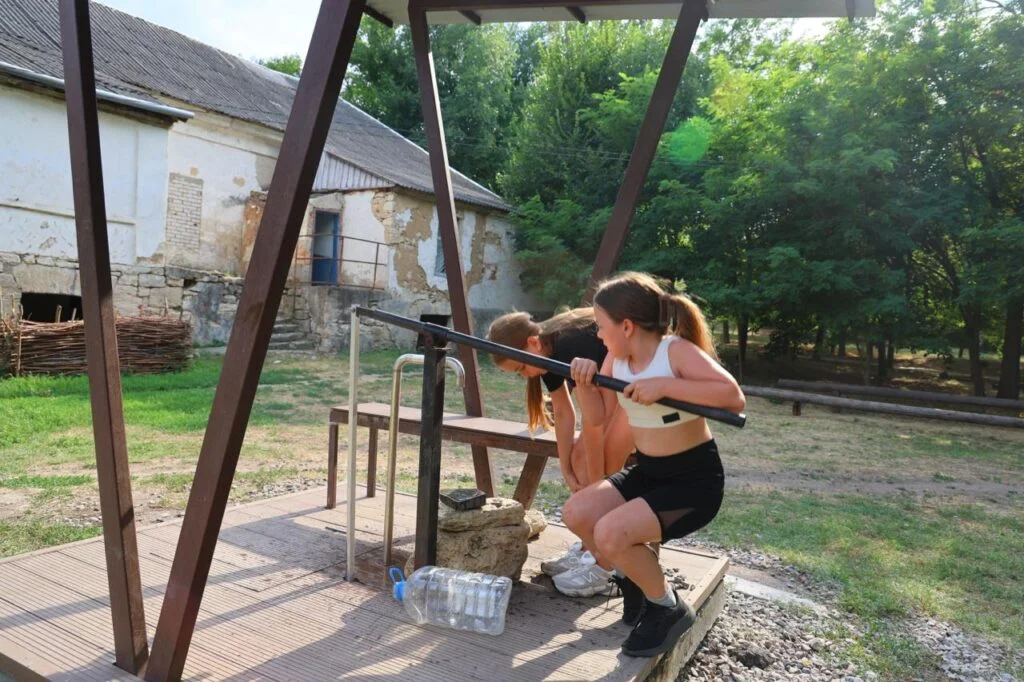
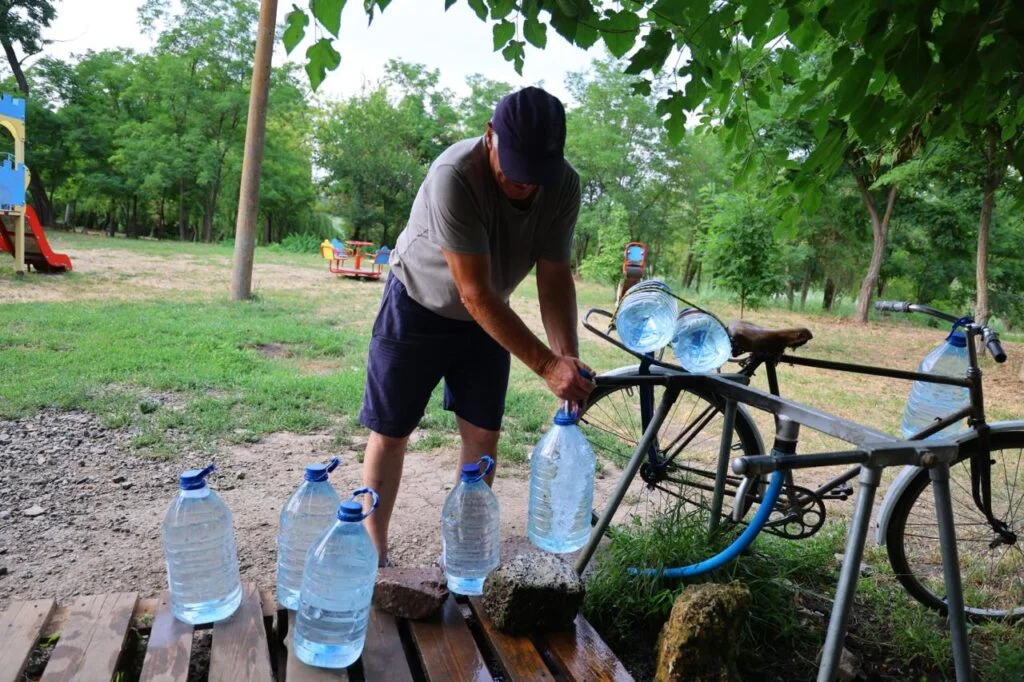
Local authorities appreciated the work done and saw its prospects.
“When we began restoring wells in 2023, it was a unique experience for me. In a year we managed to restore ten, another one in 2024. At first people were skeptical: they said the water there was not potable, only technical. And indeed, it had elevated nitrate levels and was hard. But when trouble came — people still started to take it”, — says Andrii Seletskyi.
To keep the well suitable for use, the community together with an enterprise from Kryvyi Rih manufactured a special structure. It allows convenient water drawing while preventing contamination.

The community did not have funds to restore such a number of wells — it would cost 1.1 million UAH. So donors had to be involved in this matter as well.
In addition, in Novovorontsovka they are rescuing an underground steppe river whose exact name is unknown.
“I don’t know what river this is. I believe it is the old Cossack river Ternivka, which appears on maps from the 17th–18th centuries and even on Guillaume Le Vasseur de Beauplan’s map (a military engineer-fortifier and cartographer who created the first version of the general map of Ukraine, — MOST). It looks more like a stream than a river, but we at least restored its outlet, because it used to flow in a different direction. Now it has an easier outlet and it fills our park lake”, — Andrii Seletskyi previously told MOST.
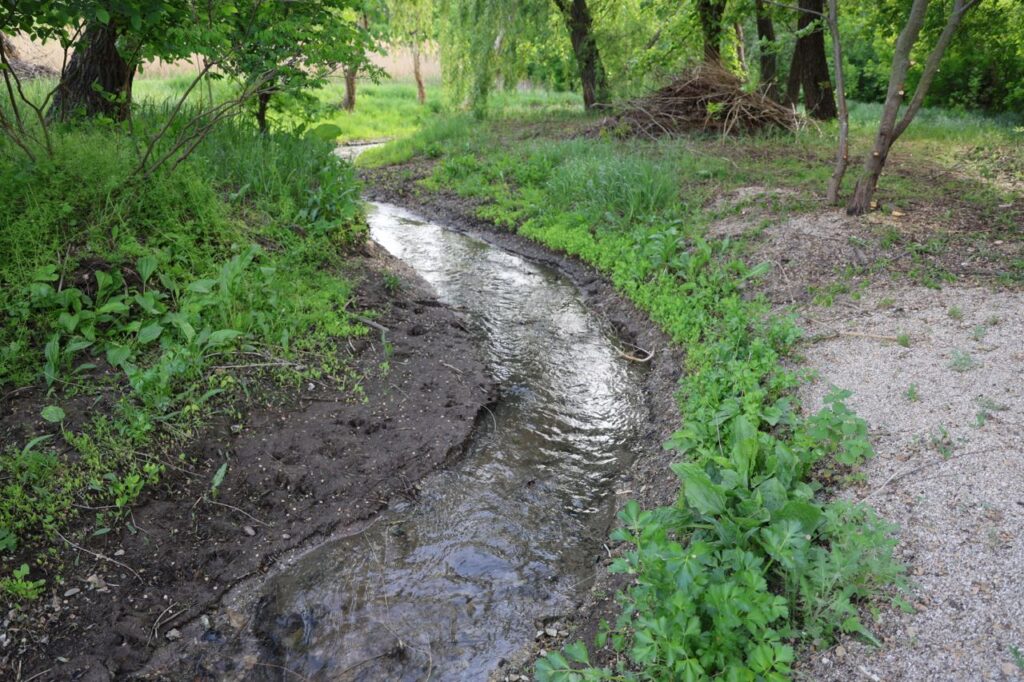
In May 2024 during a visit of the MOST team to Novovorontsovka the head of the settlement administration personally showed the river and the work to clear it.
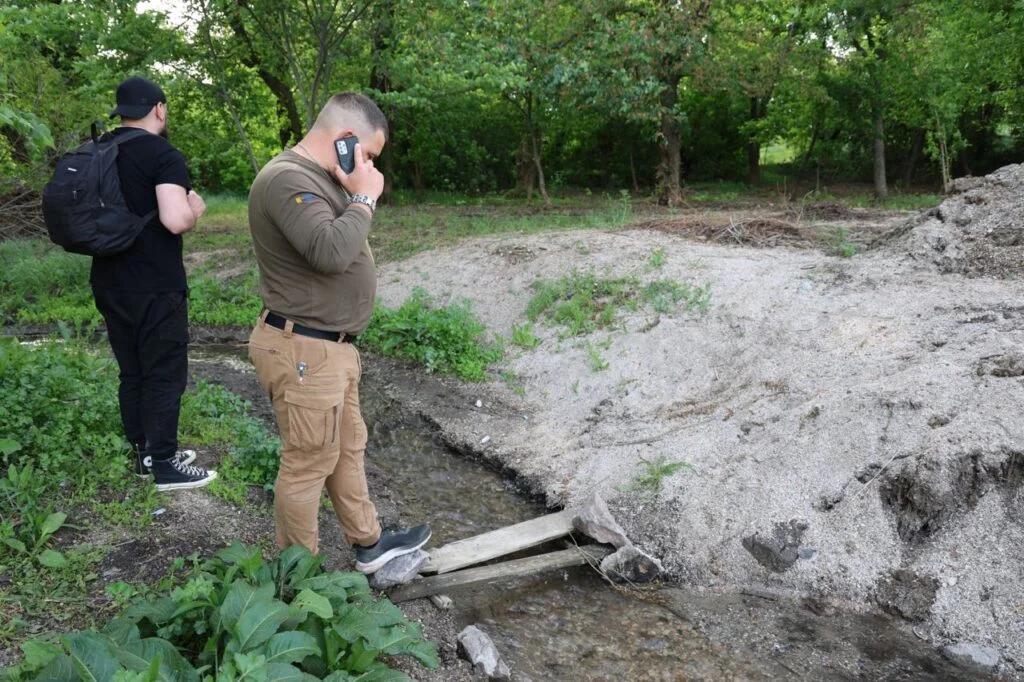
According to Andrii Seletskyi, the river is unique because it is formed from groundwater. For this reason the water there is clean and pleasant to taste, but for now it cannot be drunk — the river still needs additional purification.
The restored river can become not only a recreational area and a fish spawning site, but also an alternative source of technical water.
Does this really work? Results of water supply for frontline communities
It turned out that water was indeed present in the Novovorontsovka wells — the skepticism was wrong. In addition, the cleared old wells and the river became sources of technical water that partially compensated for shortages.
The most effective step was replacing the old water main. Fully implemented, the solution will reduce water losses and debts. Today, thanks to UNICEF support, the population receives delivered drinking water, and consumption without watering gardens amounts to about 1.5 thousand cubic meters per day. Technical water used for irrigation is consumed even more. Until the entire water main is replaced, assessing the community’s real needs remains conditional.
The community’s main priority is replacing the old water main and determining real water needs. According to Andrii Seletskyi, scaling to other regions requires two steps:
- Assessment of water quality. If it is poor quality — new pipes, treatment facilities and an isolated water main are required, which implies building new infrastructure.
- Determination of real needs to avoid unnecessary expenses: drilling a large number of wells that won’t be needed is too expensive.
The official also adds that non-isolated cesspools and drought remain problems.
“Almost all old pits are in direct contact with groundwater, which leads to contamination by nitrates and sulfates. Therefore the construction of new isolated treatment plants is a priority”, — says Andrii Seletskyi.
Combating drought remains one of the key tasks. The depletion of the Kakhovka reservoir changed the microclimate and made the steppe zone of Kherson region even drier.
“Water is needed not only for the population but also for the agricultural sector. The issue of irrigation remains critically important for business, and its solution requires a comprehensive approach”, — notes Andrii Seletskyi.
Since the start of the full-scale invasion, SES specialists have delivered more than 77 thousand cubic meters of water in Donetsk. Of these, 48 thousand cubic meters were technical and over 29 thousand cubic meters were drinking water.
NGO “Avalist” delivered over 5 million liters of drinking water just in 2024. On average, representatives of the organization deliver 100 thousand liters per month.
“We deliver water every week. In some locations — once a week, in others — twice a week, depending on the needs of the population. We look at whether more delivery is needed — we bring more and adjust the amount. People on the ground already know on which day and at what time water will be brought and plan their visit to collect water”, — says Oleksii.
The article was created in collaboration with the online publication “Skhidnyi Variant”. Authors: Inha Pavlii, Natalia Maistrenko, Serhii Nikitenko